2027 How to Become a Nurse in Wisconsin

Co-Founder and Chief Data Scientist
Becoming a nurse in Wisconsin means choosing the right nursing role, completing an approved education program, passing the appropriate NCLEX exam, and applying for licensure through the Wisconsin Department of Safety and Professional Services. The process is manageable, but the details matter: an LPN, RN, nurse practitioner, nurse-midwife, and nurse anesthetist do not follow the same education path, scope of practice, or career timeline.
This guide is for future nursing students, career changers, out-of-state nurses moving to Wisconsin, and current nurses considering advancement. It explains the main pathways, licensing steps, education options, salary and job outlook information, compact license rules, common mistakes, and practical ways to compare programs before you invest time and money.
Quick Answer: How do you become a nurse in Wisconsin?
To become a nurse in Wisconsin, choose whether you want to become an LPN, RN, or advanced practice nurse; graduate from an accredited or state-approved nursing program; pass the NCLEX-PN for practical nursing or the NCLEX-RN for registered nursing; submit your licensure application to the Wisconsin Department of Safety and Professional Services; complete any required background check or documentation; and renew your license on schedule. Nurses licensed in another state may qualify through endorsement or, when eligible, through the Nurse Licensure Compact.
Key Things You Should Know About Becoming a Nurse in Wisconsin
- Wisconsin needs more nurses: Wisconsin is facing a significant nursing shortage, with projections indicating a need for over 20,000 additional nurses by 2030. Demand is tied to an aging population, retirements, and continued need for care in hospitals, clinics, long-term care, home health, and community settings.
- You must complete an approved education pathway: RNs usually complete either an Associate Degree in Nursing (ADN) or Bachelor of Science in Nursing (BSN), while LPNs complete a practical nursing program. Advanced practice nurses need graduate-level education and specialty preparation.
- The NCLEX is required for initial licensure: RN candidates take the NCLEX-RN, and LPN candidates take the NCLEX-PN. Passing the exam is a required step before independent licensed practice.
- Wisconsin RN pay is competitive: As of 2023, the average salary for registered nurses in Wisconsin is approximately $75,000 per year. Actual earnings depend on location, shift, specialty, experience, education, and employer type.
- The outlook is positive but not automatic: The Bureau of Labor Statistics projects a growth rate of 6% for registered nursing positions through 2031. Wisconsin-specific opportunities can vary by region, facility, and specialty.
- Professional support can matter: Wisconsin nurses can use professional organizations, employer training, tuition reimbursement, mentorship, and flexible scheduling options to continue developing after licensure.
- Steps to becoming a nurse in Wisconsin
- Education requirements for Wisconsin nurses
- Types of nurses who can practice in Wisconsin
- Wisconsin nursing licensure requirements
- Wisconsin nursing license types
- Compact license rules for Wisconsin
- Whether you can practice without a license
- The current state of nursing in Wisconsin
- Nursing job outlook and salaries in Wisconsin
- Moving into an advanced nursing role
- LPN program options in Wisconsin
- Top nursing education opportunities in Wisconsin
- Career value of an LVN or LPN-style pathway
- Continuing education and mentorship
- Continuing education and license renewal
- Specialized nursing certifications
- Midwifery opportunities for nurses
- Interdisciplinary healthcare careers
- Managing nursing education costs
- Why an RN to BSN program may make sense
- Medical billing and coding as a related healthcare skill RN to BSN planning education expenses related healthcare careers Wisconsin nursing education job outlook
What are the steps to becoming a nurse in Wisconsin?
The fastest way to understand the Wisconsin nursing process is to start with the license you want. LPNs, RNs, and advanced practice nurses share some basic requirements, but the education level, exam, scope of practice, and timeline are different.
Wisconsin nursing pathways at a glance
| Path | Typical education | Required exam or credential | Best fit for |
| Licensed Practical Nurse | State-approved practical nursing program | NCLEX-PN | Students who want a shorter route into hands-on nursing care under RN or provider supervision |
| Registered Nurse | ADN, BSN, or approved nursing diploma pathway | NCLEX-RN | Students who want broader clinical responsibility, more job settings, and a stronger base for advancement |
| Advanced Practice Registered Nurse | Master’s or doctoral nursing education, depending on specialty | National specialty certification and state credentialing requirements | Licensed nurses who want advanced clinical roles such as NP, CNM, CRNA, or CNS |
1. Choose the nursing role you want first
- If you want to enter the workforce quickly, an LPN pathway may be the most direct option.
- If you want the broadest range of hospital, clinic, specialty, and leadership options, becoming an RN is usually the stronger long-term foundation.
- If you want to diagnose, prescribe within your authorized scope, manage complex care, or specialize at a high level, you will need an advanced practice pathway.
2. Complete the required nursing education
- LPN candidates complete an approved practical nursing program.
- RN candidates complete an accredited or approved registered nursing program, commonly through an ADN or BSN route.
- Advanced practice candidates complete graduate education, such as an MSN or doctoral degree, and meet specialty certification requirements.
3. Pass the appropriate NCLEX exam
- LPN candidates take the NCLEX-PN.
- RN candidates take the NCLEX-RN.
- The exam is designed to assess whether a candidate is prepared for safe entry-level nursing practice.
4. Apply for Wisconsin licensure
After completing your program and exam requirements, submit your application to the Wisconsin Board of Nursing through the Wisconsin Department of Safety and Professional Services. The original licensing cost details cited for Wisconsin include $73 for credentialing and $200 for the examination, though applicants should always verify current fees directly before applying.
5. Use endorsement if you are already licensed elsewhere
Nurses who already hold a license in another state may be able to apply for Wisconsin licensure by endorsement. This usually requires proof of current licensure and may require additional documentation depending on your background, residency status, compact license eligibility, and disciplinary history.
6. Keep your license active
- Wisconsin nursing licenses must be renewed on the required schedule. The original guidance notes renewal every two years for RNs and every odd-numbered year for LPNs.
- Do not assume renewal rules are identical for every nursing credential. APRN, prescriptive authority, employer, and specialty certification requirements may differ.
- Before each renewal period, confirm current requirements with the Wisconsin Department of Safety and Professional Services rather than relying only on school or employer summaries.
If your long-term goal is advanced practice, it is helpful to compare the clinical and educational differences between family nurse practitioner and doctoral practice pathways. Research.com’s guide to FNP vs DNP differences explains how scope, training, and career goals can vary.
Nurses who continue into advanced practice may find different salary patterns by setting. Home health care services offer the highest average annual salary for nurse practitioners in the United States, according to 2023 data from the U.S. Bureau of Labor Statistics, at $148,960. Vocational rehabilitation services follow at $139,640. The business, professional, labor, political, and similar organizations sector offers an average annual salary of $137,310, while grant-making and giving services are listed at $137,300. Psychiatric and substance abuse hospitals are reported at $134,540.
What are the educational requirements for becoming a nurse in Wisconsin?
Wisconsin nursing education requirements depend on the license level. The key decision for most students is whether to pursue an LPN program, an ADN, or a BSN. All three can lead to healthcare employment, but they do not offer the same scope of practice, advancement potential, or graduate school options.
How to compare Wisconsin nursing education options
| Education option | Typical completion time stated | Leads toward | Main advantage | Main trade-off |
| Practical nursing program | Often about one year | LPN licensure | Shorter entry route into nursing support and direct patient care | More limited scope and often lower pay than RN roles |
| Associate Degree in Nursing | Typically two years of study | RN licensure | Efficient route to RN eligibility | Some employers may prefer or encourage BSN completion |
| Bachelor of Science in Nursing | About four years to complete | RN licensure | Stronger preparation for leadership, specialty, public health, and graduate study | Usually requires more time and total tuition than an ADN |
| MSN or DNP | Additional years of study after RN preparation | Advanced practice, leadership, or specialized roles | Can open doors to NP, CNM, CRNA, CNS, educator, or leadership work | Requires graduate admissions, clinical hours, and larger financial commitment |
- Choose an approved and accredited program: Wisconsin nursing students should look for programs that meet state approval requirements and hold recognized nursing accreditation when applicable. Accreditation can affect licensure eligibility, transfer options, graduate admission, and employer confidence.
- Understand ADN versus BSN outcomes: An ADN can be a practical route to RN licensure, while a BSN may be better for students who want leadership roles, public health, specialty units, military nursing, or graduate school later.
- Consider bridge pathways if you already work in healthcare: Medical assistants and other allied health workers may want to compare transition routes, including medical assistant to LPN online options, before choosing a full nursing pathway.
- Check online and hybrid requirements carefully: Many nursing programs include online coursework, but clinical training is hands-on. Ask where clinical placements occur, who arranges them, and whether the program is approved for Wisconsin licensure.
- Plan for the NCLEX early: Graduation alone is not enough. Your program should prepare you for the NCLEX-RN or NCLEX-PN, including test-style practice, remediation support, and transparent pass-rate information.
- Do not treat continuing education as an afterthought: While some summaries state that Wisconsin does not mandate continuing education for license renewal, employers, APRN credentials, certifications, and specialty roles may still require ongoing education. Always verify current DSPS and credential-specific rules.
What types of nurses can legally practice in Wisconsin?
Wisconsin recognizes several nursing and nursing-adjacent roles. The major difference is scope of practice: what the professional is legally trained and authorized to do. Choosing the wrong role can limit your responsibilities, earning potential, or graduate school options.
- Registered Nurses: RNs assess patients, administer medications, coordinate care, educate patients and families, and work across hospitals, clinics, community health, public health, long-term care, and specialty settings. To become an RN, candidates complete an approved nursing program and pass the NCLEX-RN. Licensed RNs who want a bachelor’s degree can compare affordable RN to BSN online programs.
- Licensed Practical Nurses: LPNs provide basic nursing care, monitor patient status, assist with activities of daily living, and administer certain treatments under supervision. They complete a practical nursing program and pass the NCLEX-PN.
- Advanced Practice Registered Nurses: APRNs include nurse practitioners, clinical nurse specialists, certified registered nurse anesthetists, and certified nurse-midwives. These roles require graduate-level preparation and national specialty certification.
- Certified Nursing Assistants: CNAs are not licensed nurses, but they are essential members of care teams. They assist with daily care tasks and must complete state-approved training and competency testing.
When comparing schools, look for recognized nursing accreditation such as the Commission on Collegiate Nursing Education or the Accreditation Commission for Education in Nursing (ACEN). Accreditation is not just a quality label; it can affect licensure, transfer credit, graduate school admission, and employer recognition.
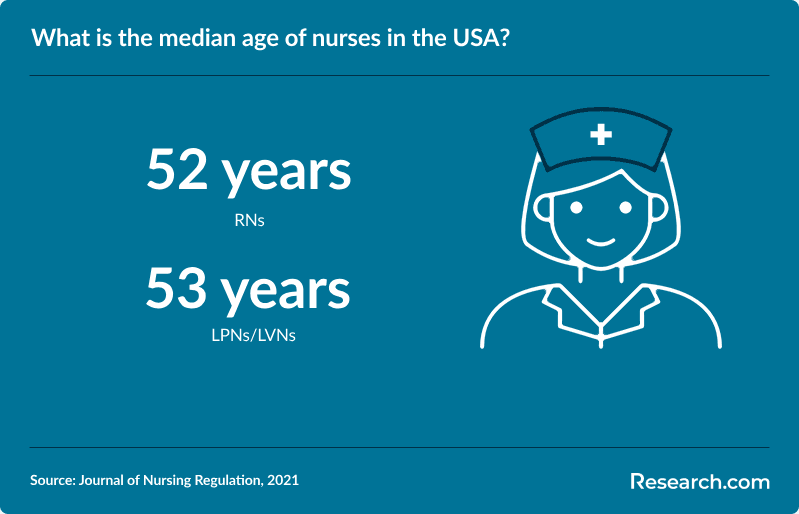
The nursing workforce is also aging. The median age of RNs is 52 years, and for LPNs/LVNs, it is 53 years. That creates both a workforce challenge and a career opportunity for new nurses entering the profession.
What are the licensing requirements for nurses in Wisconsin?
Wisconsin nursing licensure is handled by the Wisconsin Department of Safety and Professional Services. Your exact checklist depends on whether you are applying as a new graduate, practical nurse, registered nurse, advanced practice nurse, compact nurse, or endorsement applicant.
Wisconsin nursing licensure checklist
| Requirement | What it means | Why it matters |
| Approved nursing education | Complete an eligible nursing program such as an ADN, BSN, diploma pathway, or practical nursing program | You generally cannot sit for the required exam or apply for licensure without qualifying education |
| Recognized accreditation or approval | Programs may be accredited by the Commission on Collegiate Nursing Education (CCNE) or ACEN, depending on program type | Accreditation helps protect licensure eligibility, transferability, and employer acceptance |
| NCLEX exam | RN candidates take the NCLEX-RN; practical nurse candidates take the NCLEX-PN | The exam confirms readiness for safe entry-level nursing practice |
| DSPS application | Submit the required state licensure forms and documentation | Your license is not active until the state grants it |
| Fees | The original cited application fees are $100 for registered nurses and $75 for practical nurses | Applicants should budget for state and testing costs and confirm current fees before applying |
| Background check | Wisconsin requires a criminal background review, including fingerprinting in applicable cases | Prior criminal or disciplinary history may require extra documentation |
| Renewal | Nurses must renew on the required state schedule | An expired license can interrupt employment and legal practice |
Some licensing summaries also cite fingerprinting costs of around $50 and state that renewal includes completing 30 hours of continuing education. Because renewal and continuing education requirements can differ by credential, role, and date, applicants should use DSPS as the final authority before filing or renewing.
What types of nursing licenses are available in Wisconsin?
Wisconsin nursing credentials are not interchangeable. An RN license does not authorize every advanced practice function, and an LPN license does not carry the same scope as an RN license. Before enrolling, match your target job to the correct license.
- Registered Nurse license: This license is for graduates of approved registered nursing programs who pass the NCLEX-RN. RNs provide assessments, medication administration, patient education, care coordination, and clinical judgment within their authorized scope.
- Licensed Practical Nurse license: This credential is for practical nursing graduates who pass the NCLEX-PN. LPNs provide focused nursing care, often under RN, physician, or provider supervision.
- Temporary permits: Wisconsin offers temporary options for eligible RN and LPN candidates in certain situations while exam or licensure processing is underway. Applicants should confirm current permit rules before accepting a position.
- Licensure by endorsement: Nurses licensed in another state may apply through endorsement if they meet Wisconsin requirements and provide required verification.
- Limited or refresher-related pathways: Nurses who have not practiced for five years or more may need a refresher process before returning to full practice.
Specialized nursing can also affect pay and career options. For example, nurses interested in cosmetic procedures can review aesthetic cosmetic nurse salary details to understand how that niche differs from traditional bedside or clinic nursing.
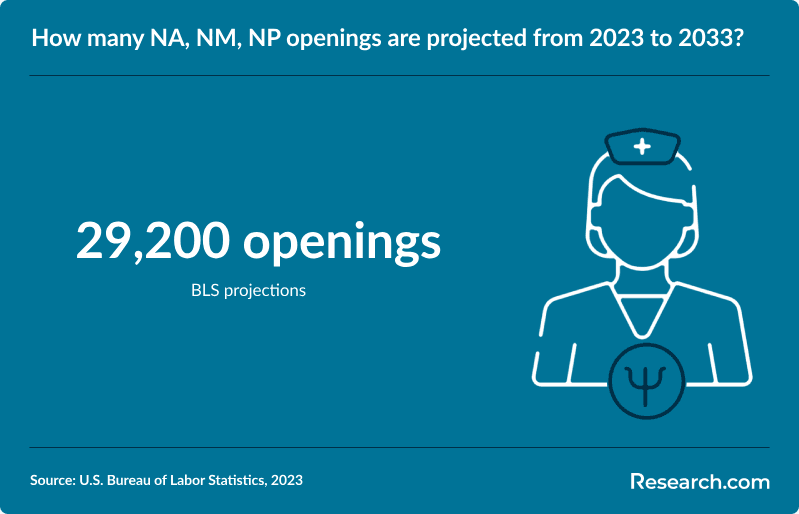
Advanced practice demand is also visible nationally. There is a predicted trend of about 29,200 openings for nurse anesthetists, nurse midwives, and nurse practitioners each year, on average, over the next decade.
Can a Compact nurse practice in Wisconsin?
Yes. Wisconsin participates in the Nurse Licensure Compact. As of April 10, 2022, Wisconsin is a member of the NLC, which allows eligible nurses with a multistate license to practice across compact states without applying for a separate license in each state.
- Primary residence matters: To hold a Wisconsin multistate license, a nurse generally must have Wisconsin as the primary state of residence or meet the compact rules for changing residency.
- Compact practice is not rule-free: A compact nurse practicing in Wisconsin must follow Wisconsin nursing laws and practice standards while providing care in the state.
- Temporary credentials may help during transitions: Nurses in good standing from another state may be able to apply for temporary authorization while a permanent Wisconsin credential is processed.
- Non-compact nurses need a Wisconsin pathway: Nurses from non-compact states cannot rely on a multistate license. They must apply for Wisconsin licensure, typically by endorsement if already licensed elsewhere.
- Renewal still applies: Compact status does not remove renewal obligations. Nurses must keep the applicable license active and compliant.
If your long-term goal is to move from clinical nursing into executive leadership, healthcare operations, or system administration, you may also compare quick executive MHA programs in healthcare administration after you understand your nursing license path.
Can you practice as a nurse without a license in Wisconsin?
No. You cannot legally practice as an RN or LPN in Wisconsin without the appropriate active nursing license or authorized temporary credential. Nursing tasks such as assessment, medication administration, care planning, and licensed patient care are regulated because they affect patient safety.
What happens if someone practices nursing without a license?
- Legal consequences: Unlicensed practice can lead to penalties, investigation, fines, and legal action.
- Career damage: A record of unlicensed practice can make future licensing and employment more difficult.
- Patient safety risk: Nursing licensure exists to confirm that a person has met education, exam, and professional standards before providing regulated care.
What can you do before becoming licensed?
- Work in a lawful healthcare support role, such as a nursing assistant role if you meet that role’s requirements.
- Complete clinical rotations only as authorized by your nursing program and supervision rules.
- Do not represent yourself as an RN or LPN until Wisconsin has issued the appropriate credential.
The concern is not limited to Wisconsin. The WHO predicts a shortage of over 18 million healthcare professionals by 2030, with half of those individuals representing the nursing profession.

What is the state of nursing in Wisconsin?
Wisconsin offers strong opportunities for nurses, but the market is not the same in every city, facility, or specialty. Hospitals, outpatient centers, long-term care facilities, home health providers, public health agencies, and community clinics all hire nurses, but their schedules, workloads, pay structures, and advancement options can differ substantially.
- Demand remains strong: The state’s need for nurses is connected to an aging population, retirements, increased care complexity, and ongoing demand in multiple healthcare settings.
- Wisconsin has a large licensed workforce: Recent data cited in the original research notes over 100,000 registered nurses and licensed practical nurses actively practicing in the state.
- The shortage creates openings but also pressure: A nursing shortage can improve hiring prospects, but it may also lead to staffing strain, overtime, burnout risk, and high expectations for new nurses.
- Cost of living can support career value: Wisconsin’s cost of living is generally described as lower than the national average, particularly for housing, though affordability varies by city and household situation.
- Major employers are healthcare systems and care facilities: Hospitals, outpatient care centers, long-term care facilities, University of Wisconsin Health, Aurora Health Care, community health organizations, and public health employers are important parts of the Wisconsin nursing landscape.
Students who want a faster route into nursing should compare cost, graduation outcomes, clinical placement support, and licensure eligibility. A useful starting point is Research.com’s review of the most affordable online accelerated nursing programs with high graduation rates.
What is the job outlook for nursing in Wisconsin?
The Wisconsin nursing job outlook is favorable, especially for RNs and nurses willing to work in high-need settings. According to the Wisconsin Department of Workforce Development, employment of registered nurses is projected to grow by 7.5% from 2020 to 2030, faster than the average for all occupations.
As of May 2022, the average annual salary for registered nurses in Wisconsin was approximately $75,000, or about $36 per hour. Pay can differ by metro area, specialty, shift differential, union status, education level, and years of experience.
Wisconsin RN salary examples cited
| Area or role | Salary figure cited | What to remember |
| Milwaukee-Waukesha-West Allis | Average salary of around $78,000 | Large metro areas may offer more employers and specialty roles |
| Madison | Average salary of approximately $76,000 | Academic medical centers and specialty care can shape opportunities |
| Green Bay | Average salary nearing $74,000 | Regional demand can still be strong outside the largest metros |
| Licensed Practical Nurses | Averaging around $50,000 per year | LPN work can be a strong entry point but usually pays less than RN roles |
| Nurse anesthetists | Salaries often exceeding $150,000 annually | CRNA roles require advanced education, certification, and significant responsibility |
Top-paying industries identified for nurses include outpatient care centers, specialty hospitals, and home healthcare services. These settings may pay differently because of patient acuity, staffing needs, reimbursement models, and scheduling demands.
Specialized and advanced nursing roles can lead to different compensation levels. According to a 2024 survey by PayScale and separate data from the U.S. Bureau of Labor Statistics, certified nurse midwives have the highest average annual salary among the listed specialties, at $131,570. Adult-gerontology nurse practitioners follow at $107,530. Nurse educators and aesthetic nurses earn an average of $86,530 and $80,321 per year, respectively. Neonatal registered nurses and ICU nurses have average annual salaries of $78,182 and $77,540, respectively. Psychiatric nurses are listed at $75,246, public health nurses at $72,314, and pediatric nurses at $68,323.
How can I transition to an advanced nursing role in Wisconsin?
To move into an advanced nursing role in Wisconsin, first become an RN, build clinical experience, choose a specialty, complete the required graduate program, earn national certification where required, and apply for the appropriate Wisconsin credential. The most common advanced practice routes include nurse practitioner, certified nurse-midwife, clinical nurse specialist, and nurse anesthetist pathways.
Before enrolling, compare admission requirements, clinical hour expectations, faculty support, certification exam preparation, and whether the program aligns with Wisconsin practice rules. If you are focused on NP practice, review Research.com’s guide to nurse practitioner education requirements in Wisconsin.
What nursing programs are available for those interested in LPN careers in Wisconsin?
Wisconsin LPN programs are typically offered through technical colleges, vocational schools, and approved practical nursing programs. These programs focus on foundational nursing skills, patient care, medication basics, documentation, and supervised clinical experience.
An LPN route can make sense if you want to enter nursing sooner, gain bedside experience, and later bridge into RN education. It may be less ideal if your goal is immediate hospital specialty practice, advanced practice nursing, or leadership work. Students who need flexibility can compare online LPN programs in Wisconsin, but should confirm clinical placement requirements and state approval before enrolling.
What are the top nursing education opportunities in Wisconsin?
The best Wisconsin nursing education option is the one that matches your current license status, schedule, budget, and career goal. A first-time student may compare ADN and BSN programs. A working LPN may look for LPN-to-RN options. A licensed RN may choose RN-to-BSN, MSN, DNP, or certificate programs.
Questions to ask before choosing a Wisconsin nursing program
- Is the program approved for Wisconsin nursing licensure?
- Does it hold recognized nursing accreditation?
- What are the NCLEX pass rates and graduation rates?
- Who arranges clinical placements?
- Can credits transfer if I continue to a BSN, MSN, or DNP?
- What are the total costs, including fees, books, uniforms, background checks, exam fees, and travel to clinical sites?
- Does the schedule work for employed students?
- What academic support is available if I struggle in pharmacology, clinical skills, or test preparation?
Nurses aiming for advanced clinical practice can compare the best NP programs in Wisconsin to evaluate curriculum, specialization options, and clinical training support.
What are the Career Benefits of Pursuing an LVN Pathway in Wisconsin?
Wisconsin commonly uses the term LPN rather than LVN, but the practical nursing concept is similar: a shorter, hands-on pathway into regulated nursing care. This route can help students gain clinical confidence, earn healthcare experience, and decide whether to continue toward RN education.
The trade-off is that LPN scope, pay, and advancement options are more limited than RN pathways. If you are researching this route using LVN terminology, review how to become an LVN in Wisconsin and confirm how Wisconsin classifies the credential.
How can continuing education and mentorship accelerate my nursing career in Wisconsin?
Continuing education and mentorship can help Wisconsin nurses move from entry-level competence to specialty readiness. New nurses often benefit from preceptors, residency programs, unit-based educators, and professional networking. Experienced nurses can use continuing education to prepare for certification, charge nurse responsibilities, graduate study, informatics work, public health roles, or leadership.
Online learning can be useful for working nurses, especially when it is tied to a clear career outcome. Research.com’s list of the best online nursing programs in Wisconsin can help nurses compare flexible options while continuing to work.
Is staying current with continuing education essential for maintaining your nursing license in Wisconsin?
Staying current is essential for safe practice, even when formal continuing education rules vary by credential. Nurses should separate three things: state license renewal, employer-required training, and specialty certification renewal. These are related, but they are not always the same.
Before each renewal period, verify your exact requirements through DSPS and your credentialing body. For a focused overview, review Research.com’s guide to the requirements for nursing licensure in Wisconsin.
What specialized nursing certifications can boost my career in Wisconsin?
Specialized certifications can strengthen your credibility in areas such as critical care, oncology, pediatrics, emergency nursing, public health, informatics, case management, or maternal-child health. Certification is not a substitute for state licensure, but it can signal advanced knowledge and may support specialty hiring, leadership opportunities, or compensation discussions.
Before pursuing a certification, ask whether your employer recognizes it, whether you meet clinical experience requirements, how often renewal is required, and whether your facility offers reimbursement. Students comparing degree foundations can start with the best nursing schools in Wisconsin.
How can embracing midwifery opportunities enhance my nursing career in Wisconsin?
Nurse-midwifery may be a strong fit for RNs interested in reproductive health, prenatal care, labor and birth, postpartum care, and patient-centered family health. It requires advanced education, supervised clinical preparation, certification, and compliance with Wisconsin practice requirements.
This path is best for nurses who want a specialized advanced practice role and are prepared for graduate-level science, clinical decision-making, and significant responsibility. To understand the route in more detail, review how to become a nurse midwife in Wisconsin.
Can exploring interdisciplinary healthcare careers enhance your nursing trajectory in Wisconsin?
Related healthcare fields can broaden a nurse’s career options, especially for nurses interested in administration, pharmacy collaboration, informatics, quality improvement, compliance, revenue cycle management, or patient education. Interdisciplinary knowledge can also help nurses communicate more effectively with other clinical and administrative teams.
However, a related career is not always a shortcut. Some fields require separate degrees, exams, or licenses. For example, nurses interested in medication systems and pharmaceutical care can compare requirements through Research.com’s guide on how to become a pharmacist in Wisconsin.
How can I manage nursing education expenses in Wisconsin?
Nursing school costs include more than tuition. Students should budget for textbooks, lab fees, uniforms, health screenings, background checks, transportation to clinical sites, licensing fees, NCLEX registration, technology, and lost work hours if the schedule is intensive.
Ways to reduce nursing education costs
- Compare total program cost, not just tuition per credit.
- Ask whether prerequisite courses can be completed at a lower-cost institution and transferred.
- Look for employer tuition reimbursement, especially if you already work in healthcare.
- Apply for nursing scholarships, state grants, workforce shortage funding, and school-based aid.
- Choose an accredited program so credits and credentials are more likely to be recognized later.
- Avoid borrowing more than your expected entry-level salary can reasonably support.
Prospective practical nursing students can compare affordability using Research.com’s overview of LPN program cost options.
Why should I consider an RN to BSN program in Wisconsin?
An RN to BSN program can be worthwhile for licensed RNs who want broader career mobility, stronger preparation for leadership, public health, management, graduate school, or specialty practice. It is especially useful for ADN-prepared RNs whose employers prefer or encourage bachelor’s-level education.
The best RN to BSN choice depends on transfer credit, tuition, employer reimbursement, schedule flexibility, required clinical or practicum experiences, and completion timeline. Working nurses who need a shorter format can compare RN to BSN online options.
How Can Diversifying into Medical Billing and Coding Enhance Your Healthcare Career in Wisconsin?
Medical billing and coding knowledge can help nurses understand documentation, reimbursement, claims, compliance, and the administrative side of patient care. This can be useful for nurses interested in case management, utilization review, quality improvement, clinic leadership, insurance roles, or healthcare administration.
It is not a replacement for nursing licensure, but it can be a valuable complementary skill. To explore this administrative healthcare route, review how to become a medical biller and coder in Wisconsin.
Common mistakes to avoid when becoming a nurse in Wisconsin
| Mistake | Why it can hurt you | Better approach |
| Choosing a program without checking approval or accreditation | You may risk licensure, transfer credit, or employer recognition | Confirm state approval and recognized nursing accreditation before applying |
| Looking only at tuition | Fees, books, clinical travel, supplies, exams, and lost work hours can change the real cost | Calculate the full cost of attendance and ask for a written fee estimate |
| Assuming online means fully remote | Nursing programs require hands-on clinical training | Ask where labs and clinical placements happen and who arranges them |
| Ignoring NCLEX outcomes | A degree is not enough if you are not prepared to pass the licensing exam | Review NCLEX pass rates, remediation support, and test-prep resources |
| Assuming all nursing salaries are guaranteed | Pay varies by region, shift, specialty, experience, and employer | Compare local job postings and ask employers about differentials and advancement |
| Waiting too long to plan advancement | Prerequisites, experience requirements, and graduate admissions can take time | Map your next credential before you need it |
What do nurses say about becoming a nurse in Wisconsin?
- I chose to practice in Wisconsin because of the strong sense of community. The support from colleagues and the emphasis on teamwork in hospitals here is remarkable. Wisconsin has a high nurse-to-patient ratio, which allows us to provide better care. Plus, the state offers competitive salaries—around $70,000 annually on average for RNs—which is a significant advantage. Sally
- Working as a nurse in Wisconsin has been incredibly rewarding. The state has a robust nursing workforce, and there are numerous continuing education opportunities available. I appreciate the focus on professional development, which helps me stay current in my field. The Wisconsin Nurses Association also advocates for our rights and interests, making it easier to navigate workplace challenges. Mark
- Wisconsin's healthcare system is known for its innovation and quality. I’ve had the chance to work with cutting-edge technology and participate in research initiatives. The state’s commitment to healthcare access means that nurses are in high demand, providing job security. Additionally, the work-life balance here is commendable, with many facilities offering flexible scheduling options. Cindy
These personal accounts should be read as individual experiences, not guarantees. Workplace culture, staffing, salary, and flexibility vary widely by employer and unit. The Wisconsin Department of Workforce Development also anticipates a 10% growth in nursing jobs over the next decade, which supports a generally positive outlook for new and experienced nurses.
Related Articles for Nearby States
- 2027 How to Become a Nurse in Minnesota
- 2027 How to Become a Nurse in Iowa
- 2027 How to Become a Nurse in Illinois
- 2027 How to Become a Nurse in Michigan
- 2027 How to Become a Nurse in Indiana
- 2027 How to Become a Nurse in Missouri
- 2027 How to Become a Nurse in Ohio
- 2027 How to Become a Nurse in South Dakota
- 2027 How to Become a Nurse in Nebraska
- 2027 How to Become a Nurse in Kentucky
Key Insights
- Start with the license, not the school: Decide whether you want to become an LPN, RN, or advanced practice nurse before comparing programs.
- Accreditation and state approval are non-negotiable: A convenient or low-cost program is not worth the risk if it does not support Wisconsin licensure.
- RN pathways offer broader mobility: An ADN can be efficient, while a BSN may support leadership, specialty, and graduate education goals.
- Wisconsin is a compact state: Eligible nurses with a multistate license may practice in Wisconsin, but compact rules and state practice laws still apply.
- You cannot practice nursing without authorization: Wait until Wisconsin has issued the required license or temporary credential before performing regulated nursing duties.
- Salary depends on more than the license: Location, specialty, shift, employer type, experience, and education all influence earnings.
- Plan for long-term growth early: Certifications, RN to BSN programs, graduate degrees, mentorship, and specialty experience can help nurses move into higher-responsibility roles.
References:
- Nursinglicensemap.com. Become a Nurse in Wisconsin – Licensure & Requirements. Nursinglicensemap.com.
- Nursejournal.org. Nursing In Wisconsin: Requirements, Licensing, and Salary Outlook. Nursejournal.org.
- Department of Safety and Professional Services. Wisconsin Board of Nursing information. Department of Safety and Professional Services.
- Smiley, R., Ruttinger, C., Oliveira, C., Hudson, L., Allgeyer, R., Reneau, K., Silvestre, J., & Alexander, M. The 2020 National Nursing Workforce Survey. Journal of Nursing Regulation.
- Tacy, J., McElwain, S., & Fletcher, A. Strategies for success that led to 99.98% school of nursing retention. Journal of Nursing Education and Practice.
- U.S. Bureau of Labor Statistics. Licensed practical and licensed vocational nurses. U.S. Bureau of Labor Statistics.
- U.S. Bureau of Labor Statistics. Occupational Outlook Handbook - Nurse anesthetists, nurse midwives, and nurse practitioners. U.S. Bureau of Labor Statistics.
Other Things You Should Know About Becoming a Nurse in Wisconsin
To become a nurse in Wisconsin, complete an accredited nursing program (ADN or BSN) and pass the NCLEX-RN exam. Apply for a Wisconsin nursing license through the Wisconsin Board of Nursing. Consider joining professional nursing associations for further support and development.
The Wisconsin Board of Nursing's website offers up-to-date resources and guidelines. Consider joining the Wisconsin Nurses Association for networking opportunities and access to continuing education. Regularly reviewing updates on licensing requirements and participating in local workshops can also be beneficial as you prepare for your nursing career in Wisconsin.