Research.com is an editorially independent organization with a carefully engineered commission system that’s both transparent and fair. Our primary source of income stems from collaborating with affiliates who compensate us for advertising their services on our site, and we earn a referral fee when prospective clients decided to use those services. We ensure that no affiliates can influence our content or school rankings with their compensations. We also work together with Google AdSense which provides us with a base of revenue that runs independently from our affiliate partnerships. It’s important to us that you understand which content is sponsored and which isn’t, so we’ve implemented clear advertising disclosures throughout our site. Our intention is to make sure you never feel misled, and always know exactly what you’re viewing on our platform. We also maintain a steadfast editorial independence despite operating as a for-profit website. Our core objective is to provide accurate, unbiased, and comprehensive guides and resources to assist our readers in making informed decisions.

2026 How to Become a Speech Language Pathologist in Vermont: Requirements & Certification

Imed Bouchrika, PhD

by Imed Bouchrika, PhD

Co-Founder and Chief Data Scientist

Table of Contents
  1. Step-by-step pathway to become an SLP in Vermont
  2. Minimum education required for Vermont SLP licensure
  3. What speech-language pathologists do day to day
  4. Certification and licensing process in Vermont
  5. Legal and ethical responsibilities for Vermont SLPs
  6. Speech-language pathologist salary in Vermont
  7. Vermont SLP job market and hiring outlook
  8. Career growth and advancement options
  9. SLPs and early childhood education in Vermont
  10. Challenges to consider before entering the field
  11. Working with Vermont special education teams
  12. When accelerated programs may make sense
  13. Collaboration with school psychologists
  14. Financial support for education and professional costs
  15. Using psychological insight in clinical practice
  16. Diversifying into related therapeutic fields
  17. Mental health collaboration and SLP outcomes
  18. Additional training and certifications for Vermont SLPs
  19. Innovation shaping speech-language pathology
  20. Professional networking in Vermont
  21. Collaboration with school counselors

How can you become a speech language pathologist in Vermont?

The Vermont SLP pathway is best understood as a sequence: complete the right education, build supervised clinical competence, pass the national exam, apply for licensure, then choose a practice setting that matches your strengths. Planning early matters because missing prerequisites, choosing a non-accredited program, or misunderstanding fellowship rules can delay licensure.

StepWhat you need to doWhy it matters
1. Complete undergraduate preparationEarn a bachelor’s degree and complete communication sciences, linguistics, biology, psychology, statistics, or related prerequisites required by graduate programs.Graduate admission is competitive, and missing prerequisites can add time before you can begin a master’s program.
2. Earn an accredited master’s degreeComplete a graduate program in speech-language pathology, such as the Master of Science in Communicative Sciences and Disorders at the University of Vermont.A master’s degree is the standard academic credential for SLP licensure and independent practice.
3. Complete supervised clinical trainingUse graduate practica and the post-graduate clinical fellowship to develop direct patient-care skills under supervision.Clinical experience shows that you can evaluate, treat, document, and communicate professionally with clients and teams.
4. Pass the Praxis examTake the Praxis Examination in Speech-Language Pathology after your academic preparation.The exam is a key requirement for certification and is part of the Vermont licensing process.
5. Apply for Vermont licensureSubmit required documentation, including education, exam results, supervised experience, and background-related materials.You must hold the appropriate Vermont license before practicing independently as an SLP in the state.
6. Continue professional developmentComplete required continuing education and keep up with evidence-based practice, technology, and state rules.Ongoing learning protects clients and helps clinicians remain effective across changing service models.

If cost is a major concern, compare tuition, clinical placement support, and online flexibility before applying. Research.com resources on low-cost online speech pathology degrees and affordable speech pathology master’s in the USA can help you identify options to review, but you should still confirm whether any program meets Vermont licensing expectations.

Praxis performance data cited in the original article shows consistently high pass rates. In the 2022-2023 academic year, the pass rate was 94.10%, with 8,582 individuals taking the exam. In 2021-2022, the pass rate was 93.70% among 8,226 test-takers. In 2020-2021, the pass rate was 94.80%, with 7,718 individuals taking the exam. In 2019-2020, the pass rate reached 96.50%, with 8,787 test-takers. These figures suggest that many candidates who complete appropriate preparation are able to meet the exam standard, but they do not guarantee an individual result.

What is the minimum educational requirement to become a speech language pathologist in in Vermont?

The minimum professional education for a Vermont speech-language pathologist is typically a master’s degree in speech-language pathology or a closely aligned field that satisfies state licensure requirements. A bachelor’s degree alone may help you enter related support roles or prepare for graduate school, but it is not enough for independent SLP practice.

Education stageTypical lengthWhat to look forBest fit
Bachelor’s degreeFour yearsPrerequisites in communication sciences, human development, speech and hearing science, statistics, and related subjects.Students preparing for graduate admission or exploring the field before committing to a clinical career.
Master’s degree in speech-language pathologyAdditional two yearsAccreditation, clinical practicum placements, Praxis preparation, faculty expertise, and Vermont licensure alignment.Future licensed SLPs who want to work in schools, hospitals, rehabilitation, private practice, or early intervention.
Doctoral studyVariesResearch focus, academic mentoring, specialization, and funding opportunities.Clinicians aiming for university teaching, research leadership, advanced specialization, or policy work.

The full academic timeline commonly spans six years: four years for the bachelor’s degree and two more years for the master’s program. Program costs cited for the complete course of study range from $20,000 to $50,000, depending on school choice, residency status, delivery format, fees, and other expenses.

When comparing programs, prioritize accreditation and supervised clinical access over convenience alone. A program accredited by the Council on Academic Accreditation in Audiology and Speech-Language Pathology (CAA) is designed to meet professional standards for graduate education in the field. The University of Vermont is one in-state option to review because it offers graduate preparation in communicative sciences and disorders. Students comparing broader options can also review top-ranked speech-language pathology programs.

Questions to ask before enrolling in an SLP master’s program

  • Is the program accredited by the appropriate speech-language pathology accreditor?
  • Does the curriculum prepare students for the Praxis Examination in Speech-Language Pathology?
  • How are clinical placements assigned, and can students complete placements in Vermont?
  • What support is available for students who enter without a communication sciences bachelor’s degree?
  • How does the program help students prepare for licensure documentation?
  • What are the total costs, including tuition, fees, travel for clinical placements, books, technology, and exam-related expenses?

What does a speech language pathologist do?

Speech-language pathologists evaluate and treat people who have difficulty communicating, understanding language, producing speech sounds, using their voice, speaking fluently, swallowing safely, or using cognitive-communication skills after illness or injury. Their clients may include toddlers with delayed language, students with articulation or fluency disorders, adults recovering from stroke or traumatic brain injury, and older adults with swallowing or neurological conditions.

Core responsibilityWhat it may involveCommon settings
AssessmentScreening, formal testing, observation, case history review, and collaboration with families or care teams.Schools, hospitals, clinics, rehabilitation centers, private practice.
Diagnosis and treatment planningIdentifying communication or swallowing needs and setting measurable therapy goals.Healthcare, early intervention, special education, outpatient therapy.
Direct therapyProviding individual or group sessions to improve articulation, language, fluency, voice, cognition, or swallowing.Schools, home-based services, hospitals, skilled nursing, telepractice.
Family and team consultationTeaching strategies to caregivers, teachers, aides, and medical professionals so clients receive consistent support.IEP teams, care coordination meetings, discharge planning, family training sessions.
Documentation and complianceMaintaining treatment notes, progress reports, evaluation reports, billing records, and legal documentation.All professional practice settings.

Successful SLPs combine clinical reasoning with strong interpersonal skills. Empathy helps clients feel safe during therapy. Clear communication helps families understand goals and strategies. Analytical thinking supports accurate interpretation of assessment results. Patience is essential because progress can be gradual. Creativity helps clinicians adapt therapy materials when resources, attention, age, culture, or setting call for a different approach.

  • : "

    “The most meaningful moments often happen after weeks of small gains. A child finally tells a parent what they want, or an adult finds a reliable way to communicate again after an injury. That is the work: clinical skill, persistence, and respect for each person’s voice.”

    "

What is the certification and licensing process for a speech language pathologist in Vermont?

Vermont licensure is the legal authorization to practice as a speech-language pathologist in the state. Certification, such as ASHA certification, is a professional credential that may strengthen employment options and demonstrate that a clinician meets nationally recognized standards. Many candidates pursue both.

After completing the necessary graduate education, candidates typically move into supervised practice. Vermont’s pathway includes a clinical fellowship requirement of 1260 hours of supervised practice over a minimum of 36 weeks. This period is not just a formality. It is where new clinicians learn how to manage caseloads, communicate with families, document services, apply ethical judgment, and refine intervention skills in real settings.

Candidates must also pass the national examination for speech-language pathologists, commonly the Praxis II exam. The minimum score cited for meeting American Speech-Language-Hearing Association standards is 162. If you are unsure how licensure works across states, Research.com’s guide on how to get licensed as a speech pathologist can help you understand the broader process before you review Vermont-specific rules.

Vermont applicants should also expect fingerprinting and background checks as part of the licensing process. Applicants generally submit proof of education, supervised clinical experience, exam results, and required application materials. Because fees and forms can change, verify current requirements with Vermont’s licensing authority before applying.

RequirementWhat to prepareDecision tip
Graduate educationOfficial transcripts and evidence that your program meets professional standards.Confirm requirements before enrolling, especially if considering an online or out-of-state program.
Clinical fellowshipDocumentation of 1260 hours completed over at least 36 weeks under appropriate supervision.Choose a fellowship site that offers consistent mentorship, not just a job opening.
Praxis examPassing score documentation, with 162 cited as the minimum score for ASHA standards.Ask graduate programs about Praxis preparation and recent student outcomes.
Background requirementsFingerprinting and background check materials as required by Vermont.Start early so administrative processing does not delay employment.
Continuing education45 hours of professional learning every three years for a Level I license and 90 hours for a Level II license.Select CE that supports your setting, such as dysphagia, school-based practice, autism, AAC, or telepractice.

What ethical and legal guidelines should you observe as a speech language pathologist in Vermont?

SLPs in Vermont are responsible for protecting clients, practicing within their competence, respecting confidentiality, and following state and federal rules. Ethical practice is especially important because many clients are children, older adults, medically vulnerable patients, or people who depend on the clinician to communicate needs and preferences clearly.

Legal responsibilities

  • Maintain the correct license: Do not provide services that require SLP licensure until you are properly authorized to practice in Vermont.
  • Stay within scope: Assessment, diagnosis, and treatment must align with speech-language pathology practice standards and your own competence.
  • Document accurately: Evaluation results, goals, progress notes, service minutes, and discharge recommendations must be clear and defensible.
  • Follow school and healthcare rules: School-based SLPs must understand IEP processes, while healthcare SLPs must follow facility, billing, safety, and privacy requirements.

Confidentiality and client rights

  • Protect client records and avoid discussing identifiable information without appropriate consent or legal authority.
  • Follow HIPAA where applicable and comply with state privacy expectations.
  • Use secure communication methods when coordinating with families, educators, physicians, and other providers.
  • Explain recommendations in language clients and families can understand so they can participate meaningfully in decisions.

Common ethical tension points

  • Balancing high caseloads with the need for individualized services.
  • Serving rural communities when specialist referrals are limited.
  • Recommending assistive technology or therapy intensity when funding is constrained.
  • Avoiding conflicts of interest when working across schools, private practice, or contract roles.

Ethical SLP practice requires more than good intentions. It requires current knowledge, careful documentation, honest communication, and a willingness to seek supervision or referral when a client’s needs fall outside your expertise.

How much can you earn as a speech language pathologist in Vermont?

Salary estimates for Vermont SLPs differ by data source and employment setting. The original article cites an average salary of approximately $80,000 per year and a median salary of around $78,000. It also notes national figures of about $85,000 for average salary and $83,000 for median salary. Another section cites an average annual salary of around $75,000, while the career advancement section cites around $77,500. Treat these numbers as reference points rather than guarantees.

Salary figure citedContextHow to interpret it
Approximately $80,000 per yearAverage salary for SLPs in Vermont cited near the top of the article.A useful statewide benchmark, but individual earnings depend on employer, setting, and experience.
Around $78,000Median salary cited for Vermont.Median pay can be more representative than average pay when high or low earners skew the average.
Around $75,000Average annual salary cited in the Vermont job market discussion.May reflect a different source, year, or setting mix.
Around $77,500Average annual salary cited in the advancement discussion.Another practical midpoint to consider when estimating return on education.
About $85,000 average and $83,000 median nationallyNational comparison figures cited in the original article.Shows that Vermont pay may be slightly below some national estimates, depending on the source.

When evaluating pay, look beyond the annual salary. A school position may offer predictable hours, academic-year scheduling, retirement benefits, and student loan-related advantages, while a healthcare or private practice role may provide different pay structures, productivity expectations, or specialty opportunities. Ask employers about benefits, supervision, workload, continuing education support, travel, documentation time, and telepractice expectations before accepting an offer.

What is the job market like for a speech language pathologist in Vermont?

The Vermont SLP job market is shaped by schools, healthcare access, rural geography, aging-related needs, and demand for early identification of communication and swallowing disorders. The article cites a 25% projected growth rate from 2019 to 2029 for SLP demand, which is described as much faster than the average for all occupations. It also cites 10.3% growth for SLPs in Vermont from 2014 to 2024. Because these projections come from different periods, use them as directional indicators rather than a single forecast.

  • Schools remain a major employer: Many Vermont SLPs serve students through evaluations, IEP services, classroom consultation, and intervention plans.
  • Healthcare demand is broad: Hospitals, rehabilitation facilities, skilled nursing settings, and outpatient clinics may need SLPs for swallowing, cognition, voice, and communication needs.
  • Rural access creates opportunity and complexity: Underserved communities may need clinicians, but travel, limited resources, and interdisciplinary coordination can be challenging.
  • Specialized skills can improve competitiveness: Experience with autism, AAC, dysphagia, bilingual service delivery, early intervention, or telepractice may make a candidate more attractive.
  • Cost of living matters: Vermont’s lifestyle, natural environment, and community appeal should be weighed against housing, transportation, and regional salary differences.

Workforce shortage data from the American Speech-Language-Hearing Association’s SLP Health Care Survey Report also signals rising concern. In 2018, 27% of respondents reported SLP shortages. That figure increased to 29% in 2019, 34% in 2021, 36% in 2022, and 47% in 2023. These percentages highlight pressure in the workforce, although shortage levels can vary by setting and location.

For job seekers, the strongest strategy is to build a focused clinical profile before graduation. If you want school-based work, gain experience with IEPs, literacy-related language needs, and classroom collaboration. If you want healthcare, seek placements involving dysphagia, neurological rehabilitation, documentation, and interdisciplinary care. If you want rural practice, ask about travel expectations, telepractice tools, supervision, and support systems.

What career and advancement opportunities are available for a speech language pathologist in Vermont?

Speech-language pathology can lead to more than one type of career. Many Vermont SLPs begin in direct service roles and later move into specialty practice, supervision, program leadership, research, consulting, teaching, or private practice ownership. Advancement depends on clinical competence, documentation quality, leadership ability, specialty training, and the needs of your employer or community.

Career stageTypical rolesHow to grow
Entry-level SLPClinical fellow, school-based clinician, outpatient therapist, rehabilitation SLP.Seek strong supervision, manageable learning opportunities, and varied clinical exposure.
Experienced clinicianIndependent SLP, specialty provider, telepractice clinician, early intervention provider.Develop expertise in areas such as AAC, dysphagia, autism, fluency, voice, or cognitive-communication.
Lead or supervisory SLPTeam lead, clinical supervisor, program coordinator, mentor for new clinicians.Build leadership, compliance, coaching, scheduling, and program evaluation skills.
Advanced or alternative pathAdministrator, researcher, educator, consultant, advocate, private practice owner.Consider doctoral study, business training, policy work, teaching, or interdisciplinary specialization.

If you are still choosing where to study, reviewing cheapest audiology programs and related graduate pathways can help you compare cost and specialization options. However, lower tuition should not be the only deciding factor; clinical placement quality and licensure alignment are often just as important.

How can speech-language pathologists bolster early childhood education in Vermont?

SLPs can strengthen early childhood education by helping teachers identify language delays, design communication-rich classrooms, and use strategies that support vocabulary, listening, early literacy, social communication, and expressive language. In Vermont, this work is especially important when children need early intervention before communication difficulties affect classroom participation and school readiness.

Strong collaboration may include classroom observation, teacher coaching, small-group language activities, parent education, screenings, and consultation during curriculum planning. SLPs can also help educators distinguish between articulation concerns, language delays, hearing-related communication barriers, and broader developmental needs. Professionals who want to understand the classroom side of this partnership may benefit from reviewing how to become an elementary school teacher in Vermont.

What challenges should you consider as a speech language pathologist in Vermont?

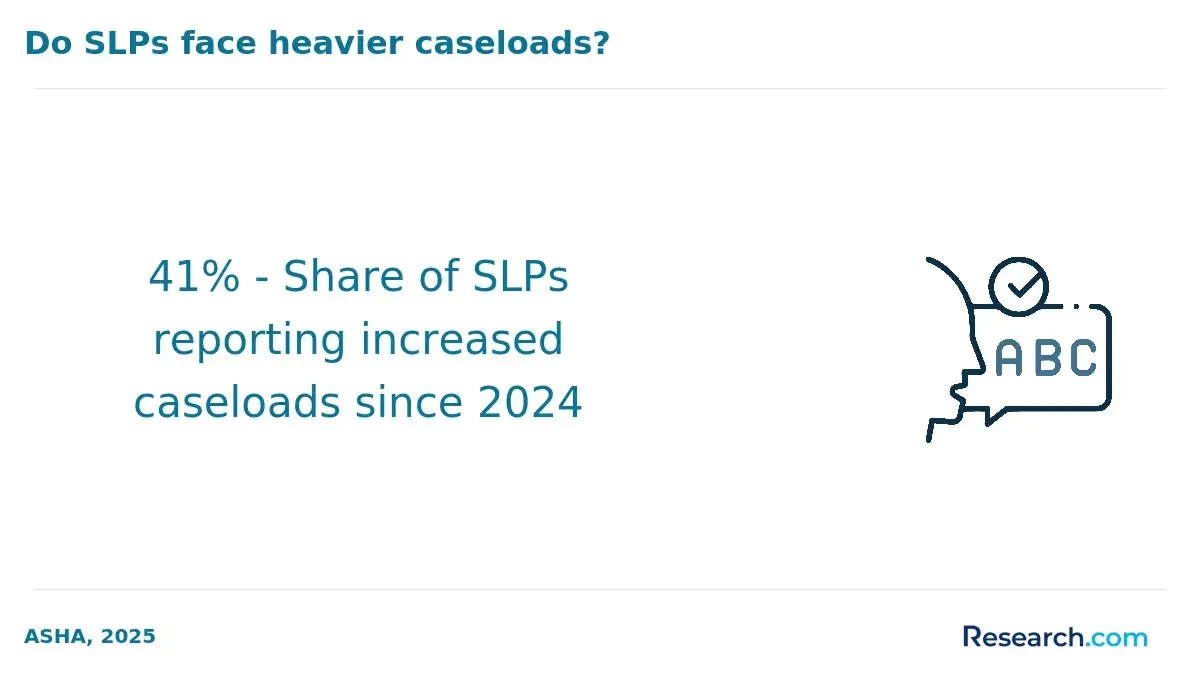
Speech-language pathology is meaningful work, but it is not an easy career. Vermont SLPs may face large caseloads, travel between service sites, documentation pressure, limited specialist access, and the need to serve clients across a wide age and needs spectrum. Knowing these challenges before entering the field can help you choose the right program, employer, and specialty.

Common challengeWhy it mattersBetter strategy
Choosing a program without checking accreditationA non-aligned program can create licensure problems or reduce employer confidence.Confirm accreditation and Vermont licensing compatibility before enrolling.
Looking only at tuitionLow tuition may not offset weak clinical placement support, travel costs, or delayed graduation.Compare total cost, placement quality, exam support, and time to completion.
Underestimating caseload demandsHigh caseloads can affect planning time, documentation quality, and client outcomes.Ask employers about caseload size, service model, paperwork time, and support staff.
Ignoring rural practice realitiesRural service can involve travel, fewer referral options, and broader clinical responsibilities.Build skills in telepractice, interdisciplinary coordination, and flexible service delivery.
Assuming salary outcomes are guaranteedPay varies by location, employer, setting, experience, and specialty.Compare offers based on salary, benefits, workload, supervision, and growth potential.

The article also notes that 98% of hourly-wage SLPs hold a master's degree, making graduate education highly desirable for better pay. Regionally, the South had the most SLPs in 2023, with a total of 74,807. These figures provide workforce context, but Vermont-specific career decisions should focus on licensure, local demand, and employer fit.

Which U.S region has the most number of SLPs?

How can speech-language pathologists collaborate with special education systems in Vermont?

School-based SLPs in Vermont often work as part of special education teams. Their responsibilities may include evaluations, IEP goal development, therapy, progress monitoring, classroom consultation, and communication with families. Effective collaboration helps students receive services that are legally appropriate, educationally relevant, and practical for classroom implementation.

SLPs bring expertise in speech sound production, language comprehension, expressive language, fluency, voice, pragmatic communication, and assistive communication tools. Special education teachers bring insight into academic access, accommodations, behavior supports, and daily classroom performance. When these roles are coordinated, students receive more consistent support across therapy sessions and the classroom.

Professionals who want a broader understanding of school-based services can review how to become a special education teacher in Vermont. This can help future SLPs understand IEP team roles, classroom pressures, and the educational systems their services must fit within.

Is an Accelerated Educational Pathway Right for You in Vermont?

Accelerated programs may appeal to students who want to move through coursework faster, career changers who already hold a bachelor’s degree, or working professionals who need a structured route into graduate preparation. The trade-off is intensity. A faster timeline can mean heavier course loads, less scheduling flexibility, and more pressure during clinical training.

Before choosing an accelerated option, ask whether the program includes the required clinical experiences, prepares students for the Praxis exam, and supports licensure in Vermont. If you are comparing faster pathways, review accelerated speech pathology programs and then verify each program’s accreditation and state licensure fit directly with the school.

How Can Collaborating with School Psychologists Benefit Your Practice?

School psychologists and SLPs often work with the same students, especially when communication difficulties overlap with learning, attention, behavior, social-emotional development, or cognitive concerns. Collaboration can make assessments more complete and interventions more realistic.

For example, an SLP may identify language processing difficulties that affect classroom comprehension, while a school psychologist may provide insight into attention, executive functioning, or emotional regulation. Together, they can help teams avoid one-dimensional explanations for student struggles. To understand this adjacent profession, review how to become a school psychologist in Vermont.

What financial support options can help reduce educational and professional costs?

SLP preparation can be expensive because it usually includes undergraduate study, graduate tuition, clinical placement costs, exam fees, licensing costs, and continuing education. Students should build a funding plan before accepting admission, not after the first tuition bill arrives.

  • Compare total program cost, not only advertised tuition.
  • Ask graduate programs about assistantships, scholarships, grants, and tuition discounts.
  • Review whether clinical placements require travel, relocation, or unpaid time away from work.
  • Check whether future employers offer continuing education reimbursement or licensure support.
  • Ask whether school-based employment may align with loan forgiveness or educator-related financial support.

Some students exploring school-based careers also compare funding routes across education professions. For a related perspective, see how to become an English teacher in Vermont, then verify which funding options apply specifically to SLP training.

How Can Integrating Psychological Insights Enhance Clinical Practice in Vermont?

Communication does not happen in isolation. Anxiety, attention, trauma, memory, motivation, family stress, and learning differences can all affect therapy participation and progress. SLPs are not psychologists unless separately trained and licensed, but understanding psychological principles can improve clinical observation, collaboration, and referral decisions.

Useful applications include designing goals that account for behavior and attention, recognizing when emotional factors interfere with communication, collaborating on student support plans, and using motivational strategies during therapy. Clinicians interested in this interdisciplinary perspective can explore resources connected to the best psychology schools in Vermont.

Can Speech-Language Pathologists Benefit from Diversifying into Related Therapeutic Fields in Vermont?

Some SLPs expand their impact by building knowledge in related areas such as family systems, counseling collaboration, assistive technology, literacy, autism support, or neurological rehabilitation. Diversification can be valuable when it deepens your existing scope rather than pulling you into services you are not qualified to provide.

Marriage and family therapy is one adjacent field that may interest clinicians who want to better understand family communication, relationship patterns, and emotional context. SLPs considering a separate credential should review Vermont requirements carefully. Research.com’s guide on how to become a MFT in Vermont can help clarify that distinct pathway.

Can Integrating Mental Health Practices Enhance Speech-Language Pathology Outcomes in Vermont?

Mental health concerns can influence communication, especially in children with social communication needs, adults recovering from injury, people who stutter, and clients adjusting to voice, swallowing, or neurological changes. SLPs should not replace mental health professionals, but they can collaborate with counselors, psychologists, social workers, and physicians to create more complete care plans.

This collaboration may include coordinated goals, referral planning, shared family education, and strategies that reduce avoidance or frustration during therapy. Clinicians who want to understand the separate mental health pathway can review Vermont mental health counselor requirements in Vermont.

What Additional Training or Certifications Can Enhance a Speech-Language Pathologist's Career in Vermont?

Additional training can help Vermont SLPs become more competitive and more effective, especially in areas where employers need specialized support. Useful focus areas may include autism spectrum disorder, augmentative and alternative communication, dysphagia, bilingual service delivery, literacy and language intervention, fluency, voice, telepractice, early intervention, and supervision.

Choose professional development based on your setting and client population. A school-based SLP may prioritize IEP compliance, classroom consultation, literacy-language connections, and AAC. A healthcare SLP may prioritize swallowing, neurological communication disorders, cognitive-communication, and documentation. If you are reviewing Vermont-specific career expectations, this guide to Vermont SLP career requirements can serve as a planning reference.

What do speech language pathologists say about their careers in Vermont ?

  • : "

    “The work feels personal in Vermont because communities are connected. Helping a child communicate more clearly or supporting an adult after an injury can change daily life for an entire family.” Anna

    "
  • : "

    “Small-town practice often means strong relationships with families, teachers, and healthcare providers. That trust can make therapy more effective, especially when everyone is working toward the same goals.” Joel

    "
  • : "

    “One of the best parts of practicing here is the variety. A clinician may work with young children, students, adults, and older patients across very different communication needs.” Sue

    "

What innovative strategies are driving the future of speech-language pathology in Vermont?

Several practice trends are shaping SLP work in Vermont. Telepractice can help reach rural or underserved communities when used appropriately. Digital tools can support home practice, data collection, therapy engagement, and family communication. Interdisciplinary care is also becoming more important as communication needs intersect with education, mental health, neurological care, and aging services.

Innovation should still be evidence-based. New tools are useful only when they improve access, accuracy, engagement, or outcomes. Before adopting a platform or therapy product, SLPs should ask whether it protects privacy, supports measurable goals, fits the client’s needs, and complements rather than replaces clinical judgment.

How can speech-language pathologists build valuable professional networks in Vermont?

Networking helps SLPs find supervision, referrals, mentorship, continuing education, clinical resources, and interdisciplinary partners. In a smaller state, professional relationships can be especially valuable because school districts, healthcare facilities, early intervention programs, and private practices often need to coordinate services across regions.

  • Join professional meetings, workshops, and continuing education events connected to speech-language pathology.
  • Build relationships with special education directors, pediatricians, audiologists, occupational therapists, psychologists, counselors, and rehabilitation teams.
  • Seek mentorship during the clinical fellowship and again when moving into a new specialty.
  • Participate in online groups carefully, using them for professional learning while protecting client confidentiality.
  • Develop strong information-management habits for research, documentation, and resource sharing. For an adjacent perspective, review how to become a librarian in Vermont.

Could Collaborating with School Counselors Strengthen Your Practice?

School counselors can help SLPs understand student stressors, peer relationships, attendance concerns, family context, academic planning, and social-emotional needs. This collaboration is especially useful when communication goals involve self-advocacy, social language, classroom participation, confidence, or transition planning.

SLPs and school counselors can coordinate support while respecting confidentiality and role boundaries. For example, an SLP may help a student practice communication strategies for asking for help, while a counselor supports the student’s coping skills and school adjustment. To understand the counseling side of this partnership, see how to become a school counselor in Vermont.

Key Insights

  • Vermont SLP licensure generally requires a master’s degree, supervised clinical experience, Praxis results, background-related requirements, and continuing education.
  • The clinical fellowship requirement cited here is 1260 hours over a minimum of 36 weeks, so candidates should choose fellowship sites with strong supervision and realistic caseload expectations.
  • The Praxis score cited for ASHA standards is 162, and pass rates in recent academic years were 94.10%, 93.70%, 94.80%, and 96.50% across the years listed in this guide.
  • Salary figures cited for Vermont range across approximately $75,000, $77,500, $78,000, and $80,000, which shows why applicants should compare specific job offers rather than rely on a single statewide number.
  • Demand indicators are favorable, including the cited 25% growth projection and ASHA shortage reports rising from 27% in 2018 to 47% in 2023.
  • The best program choice is not always the cheapest or fastest. Accreditation, clinical placements, Praxis preparation, licensure alignment, and total cost matter more.
  • School-based SLPs should be ready for IEP collaboration, educator consultation, documentation, and communication with families; healthcare SLPs should prepare for swallowing, cognition, medical documentation, and interdisciplinary care.
  • Common mistakes include ignoring accreditation, underestimating graduate school costs, assuming online programs automatically satisfy Vermont requirements, and accepting jobs without asking about caseloads and support.

References:

  • Vermont Office of Professional Regulation. Speech-language pathologist licensing information. ASHA.
  • Vermont Agency of Education. Speech-language pathologist educator information. State of Vermont.
  • University of Vermont Professional and Continuing Education. SLPA professional certificate. Learn.uvm.edu.
  • SpeechPathologistPrograms.com. Vermont speech-language pathologist salary guide. Speechpathologistprograms.com.
  • SpeechPathologistPrograms.com. Vermont speech-language pathology licensing guide. Speechpathologistprograms.com.
  • SpeechPathology.com. Vermont SLP continuing education requirements. Speechpathology.com.
  • SpeechPathologyGraduatePrograms.org. Vermont speech therapist career pathway overview. Speechpathologygraduateprograms.org.
  • SLPJobs.com. Speech-language pathologist jobs in Vermont. SLPjobs.com. Vermont JobLink. Per diem speech language pathologist listing. Vermontjoblink.com.
  • University of Vermont. Graduate and institutional information. UVM.

Other Things You Should Know About Speech-language Pathologist Degrees

What are the specific licensing requirements to become a speech language pathologist in Vermont in 2026?

To become a speech-language pathologist in Vermont in 2026, candidates must complete a master's degree in speech-language pathology, pass the Praxis exam, and complete a clinical fellowship. Additionally, they must apply for state licensure and may also consider obtaining the Certificate of Clinical Competence in Speech-Language Pathology (CCC-SLP) from ASHA for enhanced professional recognition.

How long does it take to become a speech language pathologist?

Becoming a speech-language pathologist (SLP) in Vermont is a rewarding journey that typically spans several years, combining education, practical experience, and certification. Here’s a breakdown of the estimated timeline:

Education (6-7 years)

  • A bachelor’s degree (4 years) in communication sciences or a related field lays the foundation. Imagine immersing yourself in courses that explore the intricacies of human communication.
  • Following this, a master’s degree in speech-language pathology (2-3 years) is essential. Picture yourself engaging in hands-on clinical practice, working with diverse populations to enhance their communication skills.
  • Exam (1-2 months)
  • After completing your master’s, you’ll need to pass the Praxis Examination in Speech-Language Pathology. This exam tests your knowledge and readiness to enter the field. Think of it as a rite of passage, validating your expertise.
  • Licensing (1-2 months):
  • In Vermont, obtaining a state license requires submitting your exam results and proof of your educational credentials. This step is crucial for practicing legally and confidently.
  • Certification (1-2 months):
  • Finally, pursuing the Certificate of Clinical Competence in Speech-Language Pathology (CCC-SLP) from the American Speech-Language-Hearing Association (ASHA) enhances your professional credibility.

In total, expect to invest approximately 7-9 years to become a licensed and certified speech-language pathologist. This journey, while demanding, is filled with opportunities to make a profound impact on individuals’ lives, helping them find their voices and communicate effectively. Embrace the process, and remember that every step brings you closer to a fulfilling career dedicated to enhancing communication and connection.

What steps are necessary to obtain licensure as a speech language pathologist in Vermont in 2026?

To become licensed as a speech language pathologist in Vermont in 2026, you must earn a master’s degree from an accredited program, complete a clinical fellowship, and pass the Praxis exam. Additionally, you must submit an application to the Vermont Secretary of State’s Office of Professional Regulation and meet their qualification standards.

Related Articles
2026 How to Become a Speech Language Pathologist in Illinois: Requirements & Certification thumbnail
2026 How to Become a Speech Language Pathologist in West Virginia: Requirements & Certification thumbnail
2026 How to Become a Speech Language Pathologist in Mississippi: Requirements & Certification thumbnail
2026 How to Become a Speech Language Pathologist in California thumbnail
Careers JUN 17, 2026

2026 How to Become a Speech Language Pathologist in California

by Imed Bouchrika, PhD
2026 How to Become a Speech Language Pathologist in North Dakota: Requirements & Certification thumbnail
2026 How to Become a Speech Language Pathologist in Michigan: Requirements & Certification thumbnail

Recently Published Articles

Newsletter & Conference Alerts

Research.com uses the information to contact you about our relevant content.
For more information, check out our privacy policy.

Newsletter confirmation

Thank you for subscribing!

Confirmation email sent. Please click the link in the email to confirm your subscription.