2027 What Can You Do With a Communication Disorders Degree?

Co-Founder and Chief Data Scientist

Reviewed by Rhea Paul, PhD
SLP Education & Research Expert
A communication disorders degree can lead to work soon after graduation - or serve as the first step toward becoming a speech-language pathologist or audiologist. The difference matters: many clinical roles require years of additional education and supervised training.
If you are choosing a major, planning graduate school, or weighing an entry-level job, this guide maps the roles available at each stage. You will learn how credentials, accreditation, costs, and job prospects affect the path that makes sense for you.
Key Things You Should Know
- A bachelor's degree can support roles such as speech-language pathology assistant, hearing-care support worker, or research assistant, but it does not independently qualify you to practice as an SLP or audiologist.
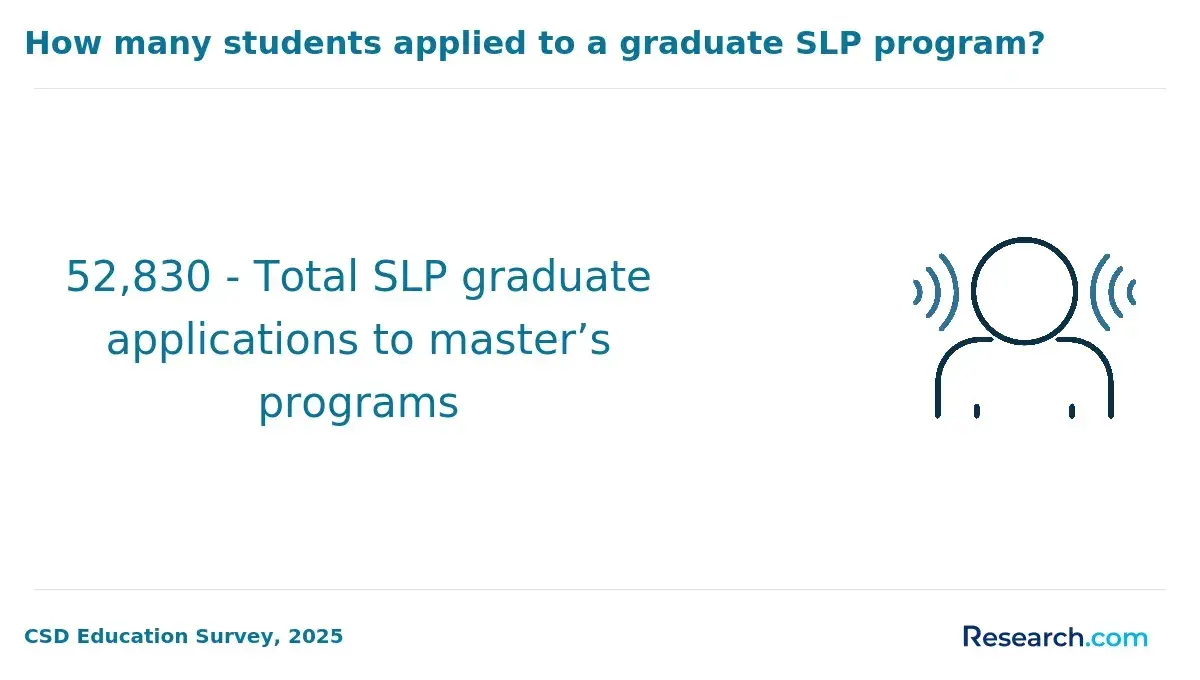
- SLPs generally need a master's degree and state licensure; clinical audiologists generally need an AuD and state licensure. The U.S. Bureau of Labor Statistics projects 17% employment growth for SLPs from 2025 to 2035.
- Before enrolling, check graduate-program accreditation, your intended state's credential rules, clinical placement arrangements, and total cost—not just the degree title or advertised tuition.
- What jobs and practice settings are open to graduates with a communication disorders degree? Career paths
- How does a communication disorders major prepare you for speech-language pathology and audiology? Grad prep
- Which communication disorders careers require state licensure or ASHA certification, and which do not? Licensure rules
- What entry-level roles can you hold with only a bachelor's in communication disorders? Bachelor roles
- How should students evaluate communication disorders programs for admissions, practicum, and career support? Choosing programs
What jobs and practice settings are open to graduates with a communication disorders degree?
A communication disorders degree—often called communication sciences and disorders, or CSD—examines speech, language, hearing, swallowing, and the conditions that affect them. The jobs it opens depend heavily on whether your highest credential is a bachelor's degree, an SLP master's degree, or a clinical doctorate in audiology.
The comparison below separates potential workplaces from the credentials typically needed for clinical responsibility. A job title alone does not establish what services you may legally provide.
| Career direction | Typical work and settings | Usual credential threshold |
| Speech-language pathologist (SLP) | Assess and treat communication and swallowing disorders in schools, hospitals, clinics, and other settings | Master's degree, supervised training, and state licensure |
| Audiologist | Evaluate hearing and balance concerns and provide hearing-related care in clinics, hospitals, and other settings | AuD and state licensure for clinical practice |
| Speech-language pathology assistant (SLPA) | Carry out permitted support activities under an SLP's supervision, often in schools or clinics | State-specific education, training, and credential requirements |
| Non-clinical or support professional | Assist with research, patient coordination, hearing-care operations, or accessibility projects | Varies by employer and duties |
If you want to diagnose and manage patients independently, plan for graduate study. If you want to test your interest before making that investment, a supervised support or non-clinical role can offer a closer view of the work.
How does a communication disorders major prepare you for speech-language pathology and audiology?
A CSD major builds a foundation in speech and hearing science, language development, anatomy, phonetics, and communication disorders. Coursework and observation can help you decide whether you prefer SLP's emphasis on communication and swallowing, audiology's emphasis on hearing and balance, or a different application of those skills.
The major is preparation, not a professional practice credential. Graduate programs set their own prerequisite policies, including how they evaluate science and statistics coursework. Students changing majors may need additional classes; comparing requirements early can prevent an avoidable delay. For example, check whether prospective programs accept your anatomy and physiology courses for SLP leveling rather than assuming any similarly named course will count.
To choose between the two clinical paths, seek observation opportunities in both. An SLP's work may involve language therapy, speech sound treatment, or swallowing care; an audiologist's work centers on evaluating hearing and balance and managing hearing-related needs. The day-to-day fit matters as much as the degree name.
Which communication disorders careers require state licensure or ASHA certification, and which do not?
State licensure is legal permission to practice; certification is a separate professional credential. SLPs and audiologists generally need licenses in the states where they practice. The American Speech-Language-Hearing Association (ASHA) offers the Certificate of Clinical Competence in Speech-Language Pathology (CCC-SLP) and in Audiology (CCC-A), but ASHA certification is not a universal substitute for a state license.
Rules for SLPAs, hearing-care support positions, and school-based work vary more. A state may require an assistant credential, registration, specified supervision, or an additional school credential. ASHA also offers an assistant certification, but whether it is useful or required depends on the jurisdiction and employer. Non-clinical roles such as research coordination or accessibility support generally do not require an SLP or audiology license, provided the employee does not perform restricted clinical duties.
Check the licensing board and, for school jobs, the state education agency where you intend to work. Do this before accepting a role labeled "therapist" or "assistant": employers' job titles do not override state scope-of-practice rules.
What entry-level roles can you hold with only a bachelor's in communication disorders?
With a bachelor's degree, you may qualify for SLPA work where you meet state requirements, as well as positions such as research assistant, patient-services coordinator, hearing-clinic support worker, or disability-services assistant. Employers may value your familiarity with communication needs, documentation, and working with clients or families. Clinical assistant tasks must remain within the permitted scope and supervision arrangement.
Choose an entry-level job partly for what it will teach you. School-based assistant work can reveal whether you enjoy helping deliver therapy; a hospital support role may show whether a medical setting suits you; research work may appeal if you prefer evidence and program evaluation. None should be treated as a shortcut to independent SLP practice.
If graduate school is your goal, use employment to identify gaps in your application and confirm prerequisites with each prospective program. Applicants considering speech pathology admissions after retaking courses should ask schools how repeated grades are evaluated rather than assuming a new grade replaces the original one.
How do accredited communication sciences and disorders programs shape your professional options?
For prospective SLPs and audiologists, accreditation becomes especially important at the graduate level. ASHA's Council on Academic Accreditation in Audiology and Speech-Language Pathology (CAA) accredits eligible graduate programs in those fields; it does not provide the same professional accreditation to a bachelor's CSD major. Check a graduate program's current status directly with CAA or ASHA EdFind, and verify how that status relates to certification and your intended state's licensure rules.
At the undergraduate level, compare how well the curriculum meets graduate prerequisites, whether observation or research opportunities are accessible, and how clearly the school documents graduates' next steps. A lower-priced bachelor's program may be a sound choice if it prepares you for the graduate programs you want; an expensive program name alone does not establish a better return.
Because professional preparation usually extends beyond the bachelor's degree, compare the full education bill: prerequisites, graduate tuition and fees, travel, and living costs during clinical training. Published online speech pathology master's tuition is a starting point, not a complete cost estimate; ask schools which fees and placement-related expenses are excluded.
What is the typical education and clinical training pathway from communication disorders major to SLP?
The SLP route usually runs from undergraduate preparation to a qualifying master's program, supervised clinical training, and state licensure. Graduates who want ASHA's CCC-SLP must also meet its separate certification requirements, including a supervised clinical fellowship. Exact sequencing and authorization to work during training depend on the state.
These stages help you identify where to confirm requirements before committing to a program:
- Complete a bachelor's degree and the prerequisites required by your target SLP master's programs.
- Enter a graduate program with accreditation status appropriate to your certification and licensure goals, and complete its academic and supervised clinical requirements.
- Meet applicable examination, supervised postgraduate experience, and state licensing requirements; confirm how any clinical fellowship fits your state's rules.
A full-time master's program commonly takes about two years after prerequisites, but clinical schedules, part-time enrollment, and leveling coursework can change that timeline. Treat an online accelerated master's in communication disorders as a scheduling option to investigate—not a way to waive clinical training. Ask when placements begin and whether the pace leaves room for the required hours.
What is the typical pathway from communication disorders degree to becoming an audiologist?
Clinical audiologists generally complete an undergraduate degree followed by a Doctor of Audiology (AuD), which commonly takes about four years of graduate study. AuD training combines coursework with supervised clinical experience. Graduates must then satisfy the licensing rules of the state where they plan to practice; ASHA certification is a separate consideration.
A CSD bachelor's can be useful preparation, but audiology programs set their own admissions prerequisites. Compare programs' clinical sites, required travel, graduation outcomes, and state licensure disclosures. A research-oriented doctorate is not automatically interchangeable with the clinical preparation expected for audiology practice.
Choose this path if hearing and balance assessment, hearing technology, and ongoing patient care appeal to you. If your main interest is language development or swallowing disorders, the SLP route is likely a closer match.
In what non-clinical fields can you leverage a communication disorders background and skills?
CSD knowledge can transfer to disability services, health education, assistive-technology support, clinical research operations, patient advocacy, and accessible-content work. These roles may use your understanding of communication barriers without requiring you to diagnose or treat a disorder. Job requirements vary: an employer may prioritize writing, data analysis, project coordination, or technology skills alongside subject knowledge.
This route makes sense if you enjoy improving services or systems more than delivering clinical care, or if graduate clinical training is not the right investment. Build a portfolio that demonstrates the work you want to do—for example, accessible educational materials or documented research tasks—and read job descriptions closely. A CSD degree alone may not satisfy requirements for specialized technology, teaching, or counseling positions.
How do salaries and job outlook compare across communication disorders-related professions?
The U.S. Bureau of Labor Statistics (BLS) reports a median annual wage of $97,870 for speech-language pathologists in May 2025. That figure describes workers already in the occupation, not the expected pay for someone with a CSD bachelor's or a newly licensed SLP. Pay can differ by setting, location, experience, and schedule; a prospective medical speech-language pathologist salary should be evaluated against the duties and qualifications of the specific job.
BLS projects SLP employment to grow 17% from 2025 to 2035, with about 12,500 openings annually on average. Strong national demand may improve the range of jobs worth exploring, but it does not predict hiring in a particular school district, hospital, or city.
For audiology, assistant, and non-clinical paths, compare occupation-specific BLS figures and local job postings rather than applying the SLP median to every CSD graduate. When weighing return on investment, compare the credential a job requires, your likely total education costs, and whether you would still want the work if pay or location differs from your initial plan.
How should students evaluate communication disorders programs for admissions, practicum, and career support?
Start with the career you want, then work backward to its credential requirements. For each prospective program, verify prerequisite and admissions policies, graduate accreditation where relevant, eligibility for your intended state, and who is responsible for securing clinical placements. An online label does not mean clinical hours can be completed remotely or near your home.
Use the following questions when speaking with admissions and clinical-placement staff; written answers make programs easier to compare:
- Which of my completed courses meet your prerequisites, and what would I need to take before enrolling?
- Where can I verify your current accreditation status and your licensure disclosures for my intended state?
- Who arranges clinical sites, what travel or campus attendance is required, and what happens if a local placement is unavailable?
- What is the estimated total cost, including mandatory fees and likely clinical-travel expenses, and what financial aid applies?
- What outcomes do you publish for completion, required examinations, and placement support?
If speed matters, compare the actual sequence of coursework and placements rather than an advertised minimum duration. For instance, examine how 24-month online speech pathology programs handle clinical hours and any required travel. The best fit is the program you can complete, afford, and use toward the credential you need—not necessarily the one with the shortest headline timeline.
References:
- U.S. Bureau of Labor Statistics - Speech-Language Pathologists https://www.bls.gov/ooh/healthcare/speech-language-pathologists.htm
- ASHA EdFind - Accredited Speech-Language Pathology Programs https://find.asha.org/ed/
- O*NET OnLine - Speech-Language Pathologists https://www.onetonline.org/link/summary/29-1127.00
- James Madison University - Master of Science (M.S.) in Speech-Language Pathology (Distance Education / Online) https://www.jmu.edu/chbs/csd/online_ms/index.shtml
- Idaho State University - Master of Science in Speech-Language Pathology (Online/Distance Education) https://www.isu.edu/slp/programs-offered/slp-graduate-program/
- California State University-San Marcos - Online MS in Speech-Language Pathology https://www.csusm.edu/slp/programs/mastersonline/index.html
- Delaware Valley University - Master of Science in Speech-Language Pathology (M.S.) https://delval.edu/programs/graduate-programs/speech-language-pathology
- Nova Southeastern University - SLP Program - Master of Science in Speech-Language Pathology https://osteopathic.nova.edu/degrees/masters/speech-language-pathology/index.html
Other Things You Should Know About Speech Pathology
Yes. Many SLP master's programs consider applicants from other majors, but they may require prerequisite or leveling courses before admission or before graduate coursework begins. Check each program's course list and how added classes affect your timeline and cost.
No. It can provide relevant experience where you meet state requirements, but it is not a universal admission requirement and does not replace graduate clinical training. Observation, research, and other relevant experience may also help you assess career fit.
To practice as a speech-language pathologist, you must hold a state license in the state where you work, and most states also require the CCC-SLP from ASHA. Many employers expect a master’s degree plus about 400 supervised clinical hours and passing the Praxis Speech-Language Pathology exam.
It may be if you value the subject and would consider assistant, research, or other related work after graduation. Compare those options with majors that offer a more direct route to your alternative career. The strongest financial case for CSD depends on a realistic plan for the jobs or graduate training you intend to pursue.