
2027 Speech Pathology Degrees Explained: Are They Classified as Professional Degrees?

Co-Founder and Chief Data Scientist

Reviewed by Rhea Paul, PhD
SLP Education & Research Expert
Prospective speech-language pathologists often face a practical question before applying: is a speech pathology degree simply an academic credential, or is it a professional degree tied to licensure, clinical training, and regulated practice? The answer matters because approximately 60% of speech pathology graduates enter clinical roles that require a graduate-level professional degree for certification and employment.
In most clinical career paths, the professional credential is not the bachelor's degree alone. Students typically need a graduate program with accredited coursework, supervised clinical experiences, and alignment with state licensure expectations. Understanding that distinction helps applicants compare programs accurately, avoid non-licensure tracks, estimate costs, and plan for certification, specialization, and long-term salary growth.
This guide explains how professional speech pathology degrees are classified, who they are designed for, what programs and training requirements are common, how accreditation affects licensure, and what students should consider before committing to this career pathway.
Key Benefits of Professional Speech Pathology Degrees
- Professional speech pathology degrees enhance career advancement by qualifying graduates for leadership roles in clinical and educational settings.
- Graduates often see higher earning potential, with a median salary 20% above related health fields, ensuring a strong return on educational investment.
- These degrees are essential for eligibility in regulated positions, supporting long-term job stability in a growing healthcare sector.
What Is Considered a Professional Speech Pathology Degree?
A professional speech pathology degree is a graduate-level program designed to prepare students for supervised clinical practice, certification, and state licensure as speech-language pathologists. In practical terms, this usually means a master's degree or higher that includes required coursework, clinical placements, and preparation for professional credentialing standards.
This distinction is important because not every program with “speech,” “communication disorders,” or “speech-language pathology” in the title leads to the same outcome. A bachelor's degree can provide foundational preparation, and a post-baccalaureate program can help students complete prerequisites, but clinical licensure typically depends on completing an accredited graduate professional program. The demand for licensed speech-language pathologists is expected to grow by 21%, making the credential pathway especially important for students who want access to regulated clinical roles.
What makes the degree “professional”?
- Licensure alignment: The program is structured to satisfy state board expectations for speech-language pathology practice.
- Clinical preparation: Students complete supervised experiences that build competence in assessment, treatment planning, documentation, and client interaction.
- Certification readiness: Coursework and training support eligibility for professional credentialing exams and post-graduate clinical requirements.
- Practice-focused curriculum: The program connects speech, language, swallowing, hearing, cognition, and communication science to real client care.
Common misconceptions
- Myth: Any degree labeled as speech pathology fully prepares students for licensure and clinical work.
Fact: Only graduate programs with applied clinical training and licensure-focused requirements generally meet professional practice standards. - Myth: Speech pathology programs are mostly theoretical and similar across schools.
Fact: Professional programs vary in clinical placement quality, specialization options, faculty expertise, and licensure alignment. - Myth: Any speech pathology credential guarantees certification eligibility.
Fact: Students must confirm that the program meets the requirements of the relevant licensing board and recognized certification bodies.
Students comparing professional degrees across fields should focus less on the label and more on whether the program leads to the credential required for the job they want. For example, someone interested in technology-adjacent healthcare careers might also compare the structure of an online AI degree, but speech pathology licensure follows its own regulated clinical pathway.
Who Should Pursue a Professional Speech Pathology Degree?
A professional speech pathology degree is best suited for students who want to become licensed speech-language pathologists or qualify for clinical roles in schools, hospitals, rehabilitation centers, private practices, early intervention programs, and related settings. Enrollment in speech pathology graduate programs has increased by over 20% in the last decade, reflecting both student interest and demand for trained practitioners.
This path is a strong fit for people who are interested in communication, language development, disability support, healthcare, education, and evidence-based intervention. It also requires patience, emotional maturity, careful documentation, and the ability to work with clients and families across age groups and needs.
Good candidates for this degree
- Recent graduates with backgrounds in communication sciences, psychology, linguistics, education, biology, or related fields.
- Career changers who want a regulated healthcare or education-focused profession with a clear licensure pathway.
- School-based professionals who want to move into speech-language pathology roles that require professional credentials.
- Healthcare workers interested in rehabilitation, swallowing disorders, neurogenic communication disorders, or pediatric services.
- Students seeking specialization in areas such as autism support, voice disorders, fluency, bilingual assessment, dysphagia, or augmentative and alternative communication.
Common misconceptions
- Myth: Only applicants with prior healthcare experience should pursue this degree.
Fact: Programs commonly admit recent graduates, early-career professionals, and career changers, provided they meet prerequisite and admissions requirements. - Myth: A professional degree is unnecessary for specialized speech pathology work.
Fact: Many specialized and regulated roles require a qualifying graduate degree, supervised training, and state licensure. - Myth: Strong communication skills alone are enough for the field.
Fact: Communication skills help, but students also need scientific knowledge, clinical reasoning, ethical judgment, and the ability to follow evidence-based protocols.
Students should be honest about the demands of the profession. Speech-language pathology can be rewarding, but it involves clinical documentation, caseload management, collaboration with families and other professionals, and ongoing continuing education. Those comparing different affordable professional pathways may also review options such as online engineering degrees to understand how training models and career requirements differ across fields.
What Are the Most Common Professional Speech Pathology Degree Programs?
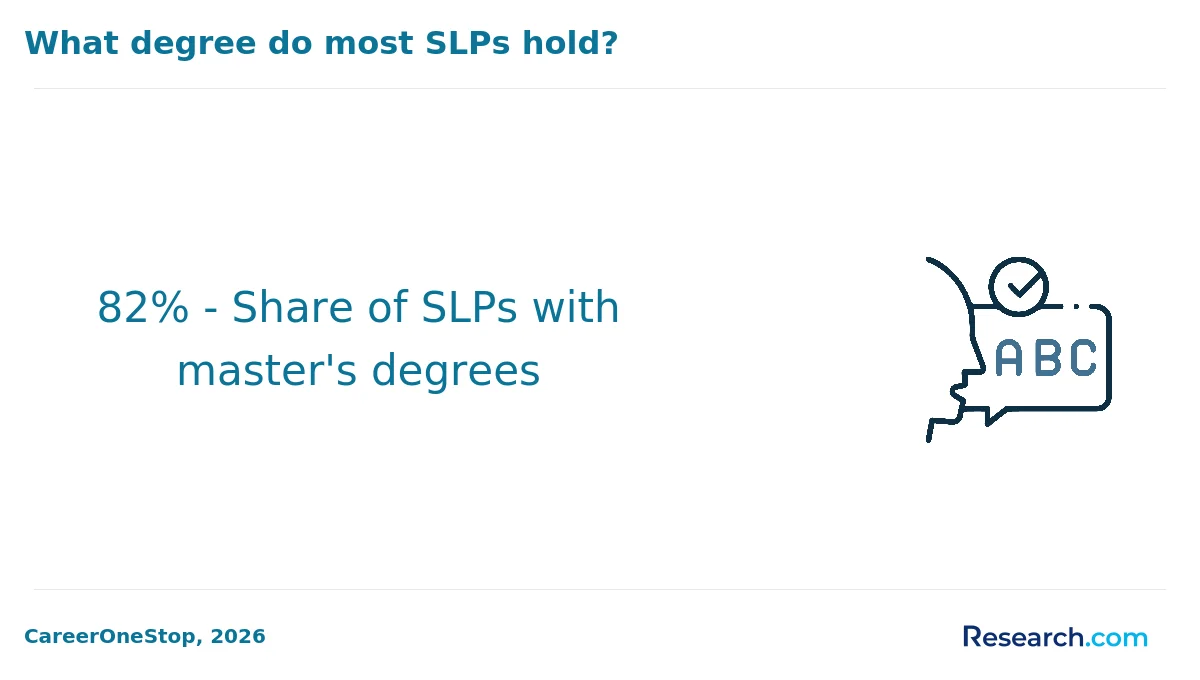
The most common professional pathway in speech pathology is a master's-level speech-language pathology program. Enrollment in master's level programs is growing steadily, reflecting a 21% expected workforce increase from 2020 to 2030. Students should compare programs by accreditation, clinical placement support, prerequisite expectations, delivery format, and how well the curriculum matches their intended work setting.
Applicants researching affordable or flexible graduate options can use curated lists of slp master's programs as a starting point, then verify accreditation, licensure alignment, and clinical placement requirements directly with each school.
| Program type | Who it is for | Typical purpose |
| Master of Science in Speech-Language Pathology | Students preparing for clinical speech-language pathology practice | Combines advanced study in communication sciences with supervised clinical training for licensure-oriented roles. |
| Master's Degree in Speech-Language Pathology | Applicants seeking the standard professional credential for most SLP careers | Focuses on diagnosis, intervention, treatment planning, ethics, and clinical readiness. |
| Certificate and Post-Baccalaureate Programs | Students who need prerequisites before applying to a graduate program | Provides foundational coursework but usually does not replace the professional master's degree required for licensure. |
How to compare programs
- Accreditation: Confirm whether the speech-language pathology program has the programmatic accreditation needed for licensure eligibility.
- Clinical placement model: Ask whether the school arranges placements or requires students to find their own sites.
- Format: Online, hybrid, and campus programs can all be viable, but clinical requirements still involve supervised hands-on training.
- Prerequisites: Students without a communication sciences background may need additional coursework before admission or enrollment.
- Specialization fit: Review whether the program offers training relevant to pediatric, medical, school-based, adult neurological, voice, or swallowing-related practice.
The right program is not always the fastest or cheapest option. It is the one that supports licensure eligibility, provides dependable clinical training, and prepares graduates for the population and setting they intend to serve.
Are Professional Speech Pathology Degree Programs Accredited?
Yes, many professional speech pathology degree programs are accredited, but accreditation is not automatic. Students must verify both institutional accreditation and programmatic accreditation before enrolling because these designations affect licensure eligibility, access to federal financial aid, and employer confidence in the credential. Nearly 90% of speech pathology programs in the U.S. hold accreditation from specialized bodies, showing robust oversight within the field.
For speech-language pathology, the Council on Academic Accreditation in Audiology and Speech-Language Pathology (CAA) is the primary specialized accrediting body to check. Institutional accreditation applies to the college or university as a whole, while programmatic accreditation evaluates whether the professional program meets field-specific academic and clinical standards.
Institutional vs. programmatic accreditation
| Accreditation type | What it evaluates | Why it matters |
| Institutional accreditation | The overall college or university | Supports academic legitimacy and access to federal financial aid. |
| Programmatic accreditation | The speech-language pathology program itself | Helps determine whether graduates meet professional and state licensure expectations. |
Common misconceptions
- Myth: All speech pathology programs are automatically accredited and recognized for professional practice.
Fact: Programs must undergo formal review by recognized accrediting bodies; students should verify status before applying. - Myth: Institutional accreditation alone guarantees licensure eligibility.
Fact: Institutional accreditation is important, but speech pathology students also need to check programmatic accreditation and state board rules. - Myth: Accreditation has little impact on career or financial support.
Fact: Accreditation can affect federal financial aid, licensure eligibility, certification pathways, and employer acceptance.
Accreditation checks should be part of any professional degree search. Students comparing adjacent graduate fields, such as an online master's in psychology, should use the same principle: verify the credential required for the occupation, not just the name of the degree.
Before committing to a speech pathology program, contact the school, review the accreditor's public listing, and confirm requirements with the licensing board in the state where you plan to practice.
What Are the Admission Requirements for a Professional Speech Pathology Degree?
Admission to professional speech pathology degree programs is competitive because schools must evaluate both academic readiness and clinical potential. Acceptance rates often fall between 30% and 50%, so applicants should prepare early, especially if they need prerequisite courses or relevant observation experience.
Requirements vary by program, but most admissions committees look for evidence that an applicant can handle graduate science coursework, communicate clearly, work ethically with clients, and persist through intensive clinical training.
Common admission requirements
- Bachelor's Degree: Applicants generally need a degree from an accredited college or university. Some programs prefer or require coursework in communication sciences and disorders, while others accept students from related fields if prerequisites are completed.
- Prerequisite Courses: Common prerequisites may include biology, linguistics, psychology, communication sciences, statistics, anatomy, or hearing science. Students changing fields should map these requirements before applying.
- Minimum GPA: A cumulative GPA around 3.0 is usually required, though competitive applicants may need stronger academic records depending on the program.
- Letters of Recommendation: Strong letters should speak to academic ability, professionalism, reliability, empathy, writing skills, and readiness for graduate-level clinical training.
- Personal Statement: The statement should explain why the applicant wants to enter speech-language pathology, what populations or settings interest them, and how their background has prepared them for the profession.
- Relevant Experience: Volunteer work, observation hours, tutoring, healthcare exposure, school-based experience, or work with people with communication needs can strengthen an application.
- Standardized Tests: GRE scores may be required by some programs, while others have made testing optional or removed it from consideration.
How to strengthen an application
- Complete prerequisites with strong grades before the application deadline whenever possible.
- Choose recommenders who can provide specific examples rather than generic praise.
- Use the personal statement to show informed commitment, not only personal inspiration.
- Research each program's clinical model, faculty interests, and licensure outcomes before applying.
- Explain career changes clearly if your undergraduate major is outside communication sciences.
One graduate described the process as both demanding and clarifying. “The hardest part was balancing prerequisites with a full course load while working,” he said. He also emphasized that meaningful volunteer experiences helped him understand client care and write a stronger personal statement: “Those hours gave me real-world insight that shaped my personal statement and helped me connect with interviewers on a deeper level.”
What Courses and Practical Training Are Required in a Professional Speech Pathology Degree?
Professional speech pathology degrees combine advanced coursework with supervised clinical training. The goal is not only to teach communication science but also to prepare students to evaluate clients, design interventions, document care, collaborate with other professionals, and meet licensure and certification expectations.
Curricula vary by institution, but most programs cover speech, language, hearing, swallowing, cognitive-communication disorders, research methods, ethics, and clinical practice across the lifespan.
Core academic areas
- Anatomy and Physiology of Speech and Hearing: Students study the structures and systems involved in speech production, hearing, respiration, phonation, articulation, and swallowing.
- Phonetics and Speech Development: Coursework builds skill in analyzing speech sounds, understanding speech acquisition, and identifying articulation or phonological patterns.
- Language Development and Disorders: Students learn how language develops and how delays or disorders may affect children, adolescents, and adults.
- Audiology and Hearing Science: These courses help students understand hearing loss, screening, auditory processing, and the relationship between hearing and communication.
- Neurological Bases of Communication Disorders: Students examine how brain injury, neurodegenerative disease, stroke, and developmental conditions affect speech, language, cognition, and swallowing.
- Assessment and Treatment Planning: Training covers diagnostic tools, case history review, goal writing, intervention selection, progress monitoring, and client-centered care.
- Ethics and Professional Practice: Students learn documentation standards, confidentiality, cultural responsiveness, scope of practice, and professional responsibilities.
Practical training components
- Simulated practice: Students may begin with structured practice before working directly with clients.
- On-campus clinic work: Some programs provide supervised services through university clinics.
- External practica: Placements may occur in schools, hospitals, rehabilitation centers, private clinics, or community settings.
- Supervision by licensed professionals: Students receive feedback from qualified speech-language pathologists while developing clinical judgment.
- Documentation and case management: Clinical training includes writing reports, tracking progress, planning sessions, and communicating with families or care teams.
Completing the required coursework and supervised experiences supports eligibility for national certification and state licensure, while also building the communication, critical thinking, and problem-solving skills needed for client care. Students weighing return on investment across academic fields may find broader salary context in guides to majors that make the most money, but speech pathology earnings depend heavily on licensure, setting, region, and experience.
How Much Do Professional Speech Pathology Degrees Cost?
Professional speech pathology degrees require careful financial planning because students must budget for more than tuition. On average, tuition for speech pathology programs ranges between $20,000 and $70,000 for the entire graduate program. Research shows that the average price for speech pathology programs hovers around $40,000 to $50,000 in the U.S.
The total cost depends on school type, residency status, program format, clinical placement requirements, fees, location, and whether the student can work while enrolled. A lower advertised tuition may not be the least expensive option if it comes with high travel costs, limited placement support, or longer time to completion.
Major cost categories
- Tuition and fees: This is usually the largest expense. Public, private, online, hybrid, and campus-based programs can vary widely in total price.
- Clinical practica costs: Students may need to pay for supervision-related fees, background checks, health screenings, immunizations, liability coverage, or travel to placement sites.
- Books and supplies: Textbooks, assessment materials, software, and clinical tools can add recurring costs each term.
- Licensure and examination fees: Graduates should budget for certification exams, state licensure applications, and related professional requirements after completing the degree.
- Living expenses: Housing, transportation, childcare, and reduced work hours can significantly affect the real cost of attendance.
Questions to ask before enrolling
- Is the listed tuition the full program cost or only the per-term rate?
- Are clinical placements arranged by the school, or must students secure their own?
- Will travel or relocation be required for practica?
- What fees are not included in the tuition estimate?
- How many terms does the typical student take to finish?
- What percentage of students receive scholarships, assistantships, or other support?
Students should compare net cost, not just sticker price. That means factoring in scholarships, assistantships, employer support, loan interest, licensing costs, and expected work flexibility during the program. Those still exploring lower-cost undergraduate pathways before committing to a graduate clinical degree may also compare options such as the easiest bachelor's degree to get online, while keeping in mind that speech-language pathology licensure requires a specific graduate pathway.
Do Professional Speech Pathology Degrees Qualify for Financial Aid?
Yes, professional speech pathology degrees can qualify for financial aid when the student attends an eligible accredited institution and program. Around 75% of speech pathology grad students utilize some type of financial aid to manage expenses and stay committed to their education.
Graduate students should build a funding plan early because aid packages may include loans, scholarships, assistantships, employer tuition benefits, and public service-related options. Availability varies by school, student status, and employment setting.
Common financial aid options
- Federal loans: Students in eligible accredited graduate programs can access options such as Direct Unsubsidized Loans and Grad PLUS Loans.
- School scholarships: Departments may offer merit-based, need-based, diversity-focused, or service-related awards.
- Graduate assistantships: Some students may receive tuition support or stipends for teaching, research, clinic, or administrative work.
- Employer tuition assistance: Healthcare systems, schools, and related employers may help fund education for employees who meet service or employment conditions.
- Public service loan forgiveness pathways: Graduates working in qualifying public service roles may be able to pursue relief if they meet program requirements.
Common misconceptions
- Myth: Professional speech pathology degrees do not qualify for federal financial aid because they are specialized graduate programs.
Fact: Eligible students in accredited programs can generally access federal graduate loan options. - Myth: Scholarships are the only aid worth pursuing.
Fact: Assistantships, employer support, and qualifying public service programs may substantially affect affordability. - Myth: Financial aid automatically makes the degree affordable.
Fact: Loans must be repaid, and students should compare total borrowing against realistic career plans and expected employment settings.
A graduate of a professional speech pathology degree described the aid process as confusing at first but manageable with support. “I was worried whether I'd qualify for any assistance due to the program's specialist focus. Fortunately, my school's financial aid office guided me through applying for federal loans and finding relevant scholarships.” She also noted that employer tuition aid after securing a hospital position helped reduce repayment pressure.
Are Professional Speech Pathology Degrees Required for Certain Careers?
Yes. A professional speech pathology degree is generally required for careers that involve independent clinical practice as a speech-language pathologist. Students exploring speech pathology careers must understand this requirement before choosing a program because licensure rules and employer standards determine which roles they can legally and practically pursue. Job growth in this field is expected to increase by 17% from 2025 to 2035, highlighting the importance of completing the correct credential pathway.
The master's degree is commonly the key professional credential for speech-language pathology practice. A bachelor's degree may support assistant-level, support, or preparatory roles depending on the state and employer, but it usually does not qualify someone for full clinical licensure as a speech-language pathologist.
Careers commonly tied to professional credentials
- School-based speech-language pathologist: Works with children and adolescents on speech, language, fluency, voice, and communication needs in educational settings.
- Medical speech-language pathologist: Provides services in hospitals, rehabilitation centers, skilled nursing facilities, or outpatient clinics, often with adults recovering from neurological injury or illness.
- Pediatric speech-language pathologist: Supports infants, toddlers, children, and families in clinics, schools, hospitals, or early intervention settings.
- Voice or fluency specialist: Works with clients experiencing voice disorders, stuttering, or related communication challenges.
- Dysphagia-focused clinician: Assesses and treats swallowing-related disorders in appropriate clinical settings.
Common misconceptions
- Myth: A professional speech pathology degree is not essential to become licensed.
Fact: Earning a master's or higher-level degree from an accredited professional program is generally mandatory to qualify for state licensure. - Myth: Working in schools or healthcare settings does not require a professional degree.
Fact: Many school and healthcare roles require professional credentials because of state regulations, payer rules, or employer policies. - Myth: Any speech pathology program provides sufficient training for clinical practice.
Fact: Accredited professional programs integrate coursework and supervised clinical experience needed for licensure eligibility. - Myth: A non-professional degree will not limit advancement.
Fact: Without the required professional credential, graduates may be restricted to support roles or may be ineligible for many clinical positions.
Students should check the licensing requirements in the state where they plan to work before enrolling. Requirements can affect not only degree choice but also clinical hours, examinations, supervised post-graduate practice, and continuing education.
Do Professional Speech Pathology Degrees Lead to Higher Salaries?
Professional speech pathology degrees can improve access to roles with stronger earning potential because they are usually required for licensed clinical practice. However, the degree alone does not guarantee a specific salary. Pay depends on setting, location, experience, specialization, caseload, employer type, additional credentials, and local demand.
The main financial value of the professional degree is that it opens the door to licensed speech-language pathologist positions that are typically unavailable to people without the qualifying graduate credential. That access can affect long-term earnings, mobility, and advancement opportunities.
What affects salary after graduation?
- Work setting: Schools, hospitals, rehabilitation facilities, private practices, and outpatient clinics may use different pay structures.
- Geographic region: Cost of living, local demand, and state funding can influence compensation.
- Experience: Entry-level clinicians usually earn differently from experienced practitioners, supervisors, or specialists.
- Specialization: Skills in medical speech pathology, dysphagia, bilingual services, voice, fluency, or augmentative and alternative communication may affect opportunities.
- Credentials and continuing education: Ongoing professional development can support advancement, but it does not replace experience and performance.
Common misconceptions
- Myth: Holding a professional speech pathology degree automatically means earning much higher salaries than other degrees.
Fact: The degree can qualify graduates for better-paid clinical roles, but actual pay depends on role, region, experience, and employer. - Myth: Completing the degree guarantees rapid promotions and pay raises.
Fact: The degree is a foundation. Advancement also requires clinical competence, professional development, strong documentation, and reliable work performance. - Myth: Shorter non-professional programs save money and lead to similar outcomes.
Fact: Lower upfront cost can be misleading if the credential does not qualify the graduate for licensure or clinical roles.
Students should evaluate return on investment by comparing total program cost, expected borrowing, licensure requirements, placement support, and the types of roles graduates actually obtain. A professional speech pathology degree can support higher long-term earning potential, but only when it leads to the credential and employment pathway the student intends to pursue.
What Graduates Say About Their Professional Speech Pathology Degree
- Nico: "Choosing a professional speech pathology degree was one of the best decisions I've made. The program's flexibility helped me balance work and study, which mattered because the average cost of attendance was a serious investment. The degree changed my career path and gave me access to clinical opportunities I could not have pursued before."
- Latisha: "Looking back, the professional speech pathology degree gave me the structure and flexibility I needed while continuing to work. The average costs made me think carefully before enrolling, but the training, supervised experience, and credentials helped me move forward professionally."
- Anos: "I pursued a professional speech pathology degree because I wanted work that felt meaningful and practical. The adaptable schedule helped me manage family responsibilities while completing the program. With the average cost of attendance in mind, I value how the degree strengthened my credibility and opened career advancement opportunities."
Other Things You Should Know About Speech Pathology Degrees
Most state licensure boards require at least 300 supervised clinical practicum hours before a speech-language pathology graduate can apply. Programs accredited by the Council on Academic Accreditation in Audiology and Speech-Language Pathology must document those hours, along with a passing Praxis Speech-Language Pathology exam score.
In 2027, the key accrediting body for speech pathology programs in the U.S. is the Council on Academic Accreditation in Audiology and Speech-Language Pathology (CAA), which ensures that programs meet rigorous academic and professional standards.
References
- U.S. Bureau of Labor Statistics - Speech-Language Pathologists https://www.bls.gov/ooh/healthcare/speech-language-pathologists.htm
- ASHA EdFind - Accredited Speech-Language Pathology Programs https://find.asha.org/ed/
- Audiology and Speech-Language Pathology Interstate Compact https://aslpcompact.com/compact-map/
- California State University-East Bay - Online Master of Science in Speech-Language Pathology https://ce.csueastbay.edu/programs/speech-language-pathology/
- University of Scranton - Master of Science (M.S.) in Speech-Language Pathology https://www.scranton.edu/academics/pcps/health-and-human-performance/programs/speech-language-pathology/index.shtml
- Pennsylvania Western University - Master of Science in Speech-Language Pathology https://online.pennwest.edu/programs/speech-language-pathology-grad/index.php
- Maryville University - Master of Science in Speech-Language Pathology https://www.maryville.edu/masters/speech-language-pathology/
- Emerson College - Master of Science (M.S.) in Communication Disorders (Speech@Emerson, online) https://speech.emerson.edu/


