
2027 Is Demand for Speech Pathology Degree Graduates Growing or Declining?

Co-Founder and Chief Data Scientist

Reviewed by Rhea Paul, PhD
SLP Education & Research Expert
Choosing a speech pathology degree is a workforce decision as much as an academic one. Students want to know whether the field can support steady employment, whether demand is concentrated in certain settings, and how education level, licensure, technology, and location affect career outcomes. According to the U. S. Bureau of Labor Statistics, employment for speech-language pathologists is projected to grow 17% from 2025 to 2035, much faster than the average for all occupations. That growth is encouraging, but it does not mean every graduate will see the same opportunities. Demand varies by state, employer type, specialization, and whether a candidate meets clinical credentialing requirements.
This guide explains where demand for speech pathology graduates is strongest, what is driving that demand, which occupations and industries are hiring, how degree level affects employability, and how AI and telepractice are changing the profession. It is designed for prospective students, current speech pathology majors, and career changers who need a practical view of the job market before committing time and money to the field.
Key Things to Know About the Demand for Speech Pathology Degree Graduates
- Employment for speech pathology graduates is expected to grow 17% from 2025 to 2035, much faster than the average for all occupations, driven by aging populations and increased awareness of speech disorders.
- Rising demand in schools, healthcare, and rehabilitation centers contributes to strong job prospects, with an estimated 3,300 new positions annually across the U.S.
- Specializations in pediatric or geriatric speech pathology and telepractice adoption enhance long-term opportunities by addressing diverse client needs and expanding service accessibility.
What Factors Are Driving Demand for Speech Pathology Degree Professionals?
Demand for speech pathology professionals is being shaped by healthcare needs, school-based services, insurance access, and technology. For students, the key takeaway is that this is not a single-employer career path. Speech-language pathologists and related professionals work across medical, educational, community, and private-practice settings, so demand often remains broad even when one sector slows.
- Demographic shifts: An aging population increases the need for assessment and therapy related to stroke, dementia, neurodegenerative conditions, swallowing disorders, and age-related communication challenges. This supports hiring in hospitals, rehabilitation centers, skilled nursing facilities, and home health settings.
- School-based service needs: Children with speech delays, language disorders, learning differences, and developmental conditions often receive services through schools. Early intervention and special education requirements continue to make education one of the most important employment settings for speech pathology graduates.
- Policy and insurance coverage: Expanded access to healthcare services, including provisions under laws like the Affordable Care Act, can increase the number of people able to receive speech-language evaluation and therapy. Coverage rules still vary, so graduates should understand reimbursement and documentation expectations in their target setting.
- Telepractice and digital care: Teletherapy has made it easier to serve rural, homebound, and underserved populations. It also expands flexible work options, although clinicians must still follow state licensure rules, privacy requirements, and employer policies.
- Specialized employer needs: Employers increasingly value experience with autism spectrum disorders, pediatric language development, dysphagia, bilingual or multilingual care, augmentative and alternative communication, and neurological rehabilitation. Students who build focused clinical experience may be more competitive.
- Accreditation and credentialing expectations: Demand is strongest for graduates whose education meets professional and licensure requirements. Prospective students should confirm that a program’s accreditation status and clinical training structure align with the career they want.
Students comparing speech pathology with adjacent helping professions may also review options such as online master’s in social work programs, especially if their interests include counseling, case management, schools, healthcare, or community services.
Which Speech Pathology Occupations Are Seeing the Highest Growth Rates?
The strongest growth in speech pathology is concentrated in roles connected to healthcare, aging populations, early intervention, schools, and technology-enabled care. The U.S. Bureau of Labor Statistics projects a 17% employment increase across all healthcare occupations from 2025 to 2035, which points to continued opportunity for clinicians who can work in medical and therapeutic environments. Within speech pathology, growth depends heavily on degree level, state licensure, and clinical specialization.
- Speech-language pathologists in medical settings: These professionals work in hospitals, rehabilitation centers, outpatient clinics, and related healthcare environments. Employment is expected to grow by approximately 17% through 2035, supported by demand for therapy related to stroke, traumatic injury, neurodegenerative disease, swallowing disorders, and complex communication needs. A graduate-level degree in speech pathology is typically required.
- School-based speech-language pathologists and special education coordinators: Schools need professionals who can evaluate communication disorders, support individualized education plans, collaborate with teachers, and help students access instruction. Growth is connected to early identification, special education services, and regulatory mandates. Advanced degrees and appropriate education or speech pathology certification are typically expected for higher-responsibility roles.
- Audiologists specializing in speech disorders: Audiologists who work with speech-related hearing loss, auditory processing concerns, and assistive technologies benefit from advances in diagnostic tools and hearing devices. Doctoral-level education is generally required for this role.
- Communication specialists for aging populations: As older adults need support for communication, cognition, and swallowing-related concerns, professionals with gerontology knowledge and speech pathology training may find opportunities in long-term care, rehabilitation, and home-based care.
- Telepractice clinicians: Remote speech therapy has expanded access to care and created opportunities for clinicians who can deliver services through secure platforms. Most have graduate degrees, state licensure, and training in telepractice standards, privacy, documentation, and remote assessment limitations.
Students exploring related behavioral science or human services pathways may compare speech pathology with options such as a fast track psychology degree, but they should note that clinical speech-language pathology usually has specific graduate education and licensure requirements.
Which Industries Hire the Most Speech Pathology Degree Graduates?
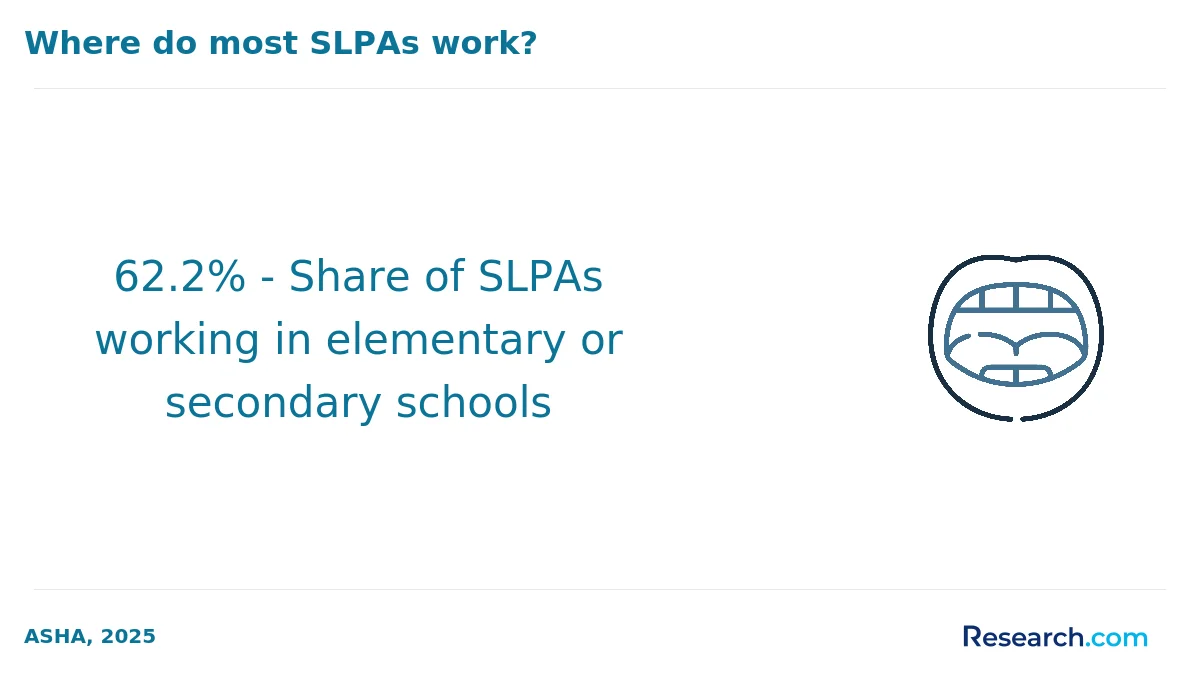
Speech pathology graduates are hired most often in healthcare and education, but the field also includes private practice, long-term care, research, academia, and telehealth. The best industry for a graduate depends on preferred patient population, tolerance for documentation requirements, schedule needs, and interest in medical versus educational work.
- Healthcare: Hospitals, rehabilitation centers, outpatient clinics, and specialty medical practices hire speech pathology professionals to evaluate and treat communication, cognitive-communication, voice, fluency, and swallowing disorders. Medical settings can be fast-paced and may require collaboration with physicians, nurses, occupational therapists, physical therapists, and dietitians.
- Education: Public and private schools employ speech pathologists to support children with speech delays, language difficulties, learning disabilities, and communication needs that affect classroom participation. This path may appeal to graduates who want predictable academic calendars and long-term work with children, though caseloads and paperwork can be demanding.
- Long-term care facilities: Skilled nursing homes and assisted living centers hire speech pathology specialists to help older adults maintain or regain communication and swallowing function. These settings often involve complex medical histories and close coordination with interdisciplinary care teams.
- Private practice: Independent clinics and small practices provide therapy for children, adults, families, and specialized client groups. Private practice may offer more control over treatment focus and scheduling, but it can also require business development, billing knowledge, and careful management of insurance or private-pay models.
- Research and academia: Universities, research centers, and training programs employ professionals who study communication disorders, develop interventions, teach future clinicians, and contribute to evidence-based practice. These roles often require advanced research preparation and may be more competitive.
Graduates should compare industries by more than job availability. Workload, supervision, autonomy, benefits, documentation systems, patient complexity, and opportunities for specialization can differ sharply from one setting to another.
How Do Speech Pathology Job Opportunities Vary by State or Region?
Speech pathology opportunities vary widely by geography because demand follows population size, school enrollment, healthcare infrastructure, state budgets, licensure rules, and provider shortages. A strong national outlook does not guarantee equal access to openings in every community.
- High-demand states: States like California, Texas, and New York often have many openings because they have large populations, extensive school systems, major hospitals, rehabilitation centers, and diverse patient needs. These states may also offer more specialized roles, though competition and cost of living can be higher.
- Urban versus rural markets: Urban areas typically have more employers and specialized settings. Rural areas may have fewer posted openings but can offer broader responsibilities, less competition, and opportunities to serve communities with limited access to care.
- Healthcare and education concentration: Regions with large hospital networks, children’s hospitals, university medical centers, school districts, and rehabilitation providers usually create more consistent hiring demand.
- Licensure differences: State licensure requirements can affect mobility. Graduates who want to relocate or practice through teletherapy should check state-specific requirements before accepting work across state lines.
- Cost-of-living trade-offs: Higher pay in metropolitan areas may not translate into better financial outcomes if housing, transportation, childcare, and taxes are also higher. Graduates should compare real purchasing power, not salary alone.
- Remote and hybrid work: Telepractice can reduce geographic barriers, but remote work depends on employer policy, payer rules, client suitability, privacy requirements, and state licensing policies.
A practical job search should include both preferred locations and backup markets. Graduates who are flexible about geography, setting, or patient population may have stronger early-career options.
How Does Degree Level Affect Employability in Speech Pathology Fields?
Degree level has a direct effect on employability in speech pathology because many clinical roles require graduate education, supervised clinical experience, and state licensure. A lower-level degree can help students enter the field in support roles, but it usually does not qualify them for independent clinical practice as a speech-language pathologist.
- Associate degree: An associate degree may support entry-level work in healthcare, education, or therapy support, depending on state rules and employer needs. It can be a useful first step, but it rarely leads directly to licensed clinician roles.
- Bachelor's degree: A bachelor’s degree provides foundational knowledge in communication sciences, language development, anatomy, acoustics, and disorders. Graduates may qualify for assistant, research, administrative, or related support roles, but most clinical speech-language pathology careers require additional graduate study.
- Master's degree: A master’s degree is the professional norm for certified speech-language pathologists and is typically necessary for direct patient care. Students comparing program formats should examine accreditation, clinical placement support, licensure alignment, total cost, and completion timelines; carefully reviewed online slp masters programs may be useful for those who need flexibility while preparing for clinical practice.
- Doctorate degree: A doctorate can support advanced clinical specialization, leadership, teaching, research, and academic roles. It may improve competitiveness for certain positions, but students should weigh the additional time and cost against their specific career goals.
The safest approach is to start with the role you want, then work backward to the required credential. For example, a student who wants direct clinical practice should verify licensure requirements before enrolling, while someone interested in leadership can compare clinical graduate study with nonclinical leadership options such as an online EMBA.
What Skills Are Employers Seeking in Speech Pathology Graduates?
Employers look for speech pathology graduates who can combine clinical knowledge with judgment, communication, documentation discipline, and adaptability. Technical ability matters, but so does the capacity to build trust with clients, manage caseloads, and work within healthcare or school systems.
- Clear communication: Clinicians must explain evaluations, therapy goals, progress, and home practice strategies to clients, families, caregivers, teachers, and medical teams. Strong communication also helps reduce misunderstandings and improve follow-through.
- Clinical reasoning: Employers value graduates who can interpret assessment results, identify priorities, adjust treatment plans, and recognize when a referral or additional evaluation is needed.
- Empathy and interpersonal skill: Speech pathology often involves frustration, anxiety, family stress, and slow progress. Clinicians need patience, cultural awareness, and the ability to motivate clients without overpromising results.
- Evidence-based intervention: Graduates should understand current treatment approaches and know how to apply evidence to individual cases rather than relying on one-size-fits-all therapy activities.
- Technology literacy: Telepractice platforms, electronic health records, data tracking tools, digital therapy resources, and AI-supported applications are increasingly common. Employers want clinicians who can use technology while protecting privacy and maintaining clinical quality.
- Documentation and organization: Accurate notes, progress reports, billing support, school records, and compliance documentation are central to the job. Poor documentation can create clinical, legal, and reimbursement problems.
- Collaboration: Speech pathology work often overlaps with physicians, nurses, teachers, occupational therapists, physical therapists, psychologists, social workers, and families. Employers need team-oriented professionals who can advocate for clients without working in isolation.
A recent speech pathology graduate described the transition from school to practice as more emotionally complex than expected. Technical training helped, but real progress required careful listening, patience, and repeated adjustments to therapy plans. “I quickly realized that beyond technical knowledge, being attentive and flexible made a huge difference,” he recalled. His experience reflects a common employer priority: graduates must be clinically prepared, but they must also be resilient, observant, and willing to keep learning.
How Does Job Demand Affect Speech Pathology Graduate Salaries?
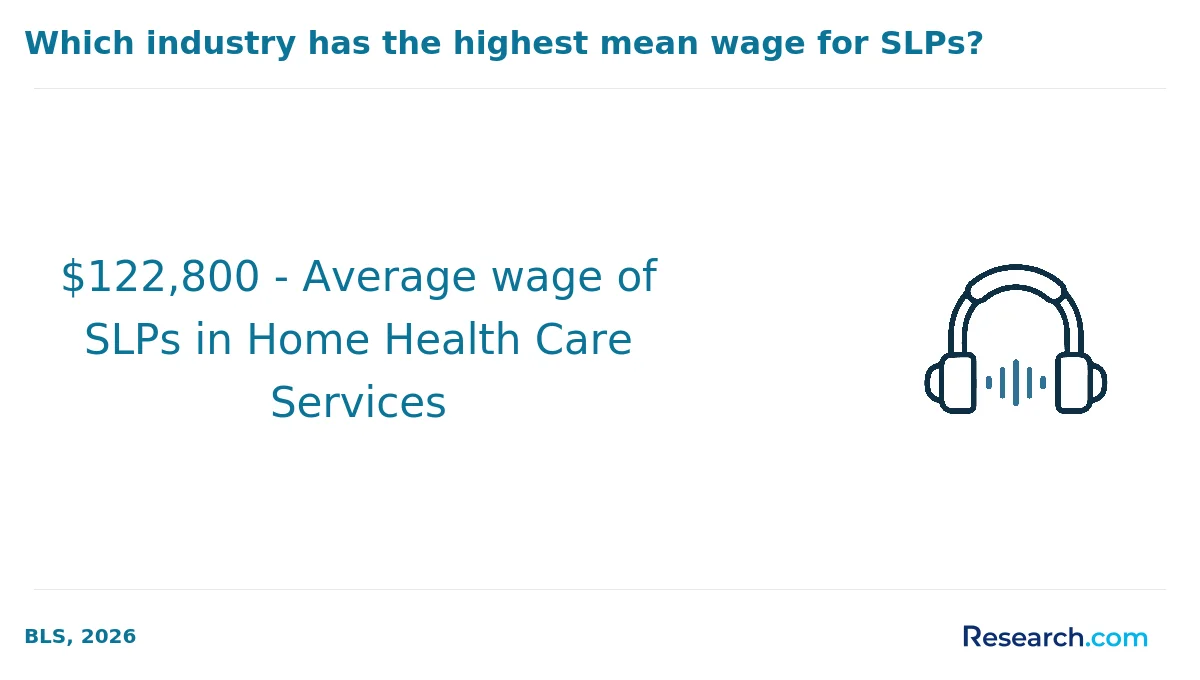
Job demand affects speech pathology salaries by influencing how aggressively employers recruit, how much bargaining power candidates have, and how quickly wages rise in shortage areas. The U.S. Bureau of Labor Statistics reports a median annual wage of around $81,000 for speech-language pathologists, but actual pay varies by region, setting, experience, specialization, and employer budget.
- Starting salaries: In high-demand markets, employers may offer stronger entry-level pay, hiring bonuses, better benefits, or faster interview timelines to secure qualified candidates. New graduates should still compare supervision, workload, and licensure support, not salary alone.
- Wage growth: Persistent demand can support raises over time, especially for clinicians who develop specialized expertise, take on complex caseloads, supervise others, or move into leadership roles.
- Long-term earnings: Stable job availability can improve negotiating power and make it easier to change employers when compensation stalls. However, earnings are still shaped by reimbursement rates, school budgets, healthcare funding, and local labor supply.
- Supply and demand balance: When a region has too many graduates competing for similar roles, salaries may be less flexible. Where shortages exist, employers may improve compensation, benefits, scheduling, or professional development support.
- Setting differences: Medical, school, private practice, and long-term care settings may compensate differently because they operate under different funding models. Candidates should evaluate total compensation, including health insurance, retirement benefits, paid time off, productivity expectations, and unpaid documentation time.
Salary should be considered alongside job fit. A higher offer may be less attractive if caseloads are unsustainable, supervision is weak, or the role does not support licensure and professional growth.
How Is AI Changing Demand for Speech Pathology Professionals?
AI is changing how speech pathology professionals work, but it is not eliminating the need for clinicians. The U.S. Bureau of Labor Statistics projects a 17% growth in employment from 2025 to 2035, and AI is more likely to shift employer expectations than replace the judgment, rapport, and individualized decision-making required in therapy.
- Automation of routine tasks: AI-supported tools may assist with documentation, data review, scheduling, screening, or initial pattern recognition. This can free clinicians to spend more time on interpretation, therapy planning, family education, and direct care.
- More technology-centered roles: Employers may need clinicians who can evaluate digital tools, manage teletherapy workflows, interpret AI-generated insights, and help organizations adopt technology safely.
- Higher expectations for digital skill: Graduates should be comfortable with telepractice platforms, data privacy, electronic records, remote assessment limits, and technology-assisted therapy materials. AI output should be checked against clinical evidence and professional judgment.
- Changing hiring priorities: Candidates who can combine clinical competence with responsible technology use may stand out. Employers may prefer graduates who understand both the benefits and risks of AI-assisted care.
- Ethical and practical limits: AI cannot replace the human elements of therapy, including motivation, cultural context, emotional support, nuanced diagnosis, and real-time adjustment to client behavior. Clinicians remain responsible for clinical decisions.
A recent graduate described AI as both useful and challenging: “Starting my career, I felt both intrigued and challenged by the new technologies. Learning to use AI tools required patience, but these systems helped me tailor therapy plans more precisely. It wasn't just about adapting to devices; it meant embracing ongoing education and collaboration with tech experts. This experience made me more confident about job security and growth, knowing I can blend clinical skills with evolving technology to better serve my patients.”
Is Speech Pathology Considered a Stable Long-Term Career?
Speech pathology is generally considered a stable long-term career because demand is tied to essential services in healthcare and education. People need support for communication, swallowing, language development, neurological recovery, and participation in school, work, and daily life. Those needs do not disappear during ordinary economic cycles.
- Long-term employment trends: The long-term job outlook for speech pathology graduates is positive, with the U.S. Bureau of Labor Statistics forecasting faster-than-average growth. Demand in healthcare and education supports steady job availability across multiple employer types.
- Industry reliance: Schools, hospitals, rehabilitation centers, clinics, and long-term care facilities rely on speech pathology professionals to meet required or medically necessary service needs. This reliance can help buffer the field from some economic volatility.
- Adaptability across settings: Speech pathology professionals can move among schools, clinics, hospitals, private practice, long-term care, and telepractice depending on credentials, interests, and local opportunities.
- Specialization options: Pediatric communication, geriatric care, neurological disorders, dysphagia, fluency, voice, autism spectrum disorders, bilingual services, and augmentative and alternative communication can all support career development.
- Need for continuing education: Stability depends on keeping skills current. Graduates who maintain licensure, build clinical expertise, and adapt to technology are better positioned for long-term employability.
Students who are comparing career stability with earning potential may also want to review degrees associated with high earnings to understand how speech pathology fits into the broader education-to-career landscape.
Is a Speech Pathology Degree Worth It Given the Current Job Demand?
A speech pathology degree can be worth it for students who want a clinically focused career, are prepared for graduate-level education, and understand the licensure path before enrolling. Current demand is strong, supported by faster-than-average employment growth, an aging population, demand for rehabilitative therapy, increased awareness of childhood communication disorders, and the continued need for services in schools and healthcare settings.
The degree is most valuable when it leads to the credential required for the role a student wants. Graduates with advanced degrees, such as a master's in speech pathology, are particularly well-positioned because many clinical roles require specialized preparation in evaluation, diagnosis, intervention, ethics, and supervised practice. Students should confirm program accreditation, clinical placement availability, state licensure alignment, and total cost before committing.
Worth also depends on career fit. Speech pathology can offer meaningful work and stable demand, but it can also involve high caseloads, documentation pressure, emotionally demanding cases, and ongoing professional education. Students who enjoy communication science, patient or student interaction, structured problem-solving, and interdisciplinary work are more likely to find the field sustainable.
For individuals comparing graduate timelines, one-year online master's programs may be useful as a general reference point, but speech pathology students should be cautious: speed should never come at the expense of accreditation, supervised clinical training, or licensure readiness. Overall, given current labor market conditions, a speech pathology degree can be a practical long-term investment when the program, cost, credential path, and career goals are well aligned.
What Graduates Say About the Demand for Their Speech Pathology Degree
- Pollun: "Pursuing a speech pathology degree was one of the best decisions I made for my career. The knowledge I gained has been invaluable, and the return on investment exceeded my expectations. Now, I find great fulfillment helping clients overcome communication challenges every day."
- Bee: "Reflecting on my journey, choosing a speech pathology degree opened doors I hadn't imagined. Beyond the financial benefits, this field allowed me to grow personally and professionally in meaningful ways. My work has a direct, positive impact on people's lives, which makes it all worthwhile."
- Andrew: "My professional experience confirms that a speech pathology degree offers a solid ROI in both opportunity and skill development. The rigorous training prepared me to excel in diverse clinical environments, and I appreciate how it has shaped my approach to patient care. I'm proud to be part of such a vital healthcare discipline."
Other Things You Should Know About Speech Pathology Degrees
In 2027, hospitals, schools, private practices, and rehabilitation centers are actively hiring speech pathology graduates. These employers seek professionals to address the increasing demand for services following recent healthcare policies and educational reforms emphasizing speech therapy for diverse populations.
In 2027, regions experiencing the highest demand for speech pathology graduates include urban areas such as New York City and Los Angeles, driven by large healthcare networks and educational institutions investing heavily in speech-language pathology services due to population density and increased awareness.
In 2027, the demand for speech pathology graduates is influenced by factors like aging populations, increased awareness of speech disorders, and policy changes in healthcare funding. These elements drive growth, creating job opportunities in diverse settings like schools, hospitals, and private practices.
References
- U.S. Bureau of Labor Statistics - Speech-Language Pathologists https://www.bls.gov/ooh/healthcare/speech-language-pathologists.htm
- ASHA EdFind - Accredited Speech-Language Pathology Programs https://find.asha.org/ed/
- ETS Praxis - Speech-Language Pathology (5331) https://praxis.ets.org/test/speech-language-pathology-5331.html
- University of North Carolina at Greensboro - Speech-Language Pathology, M.A. (Online) https://csd.uncg.edu/graduate/masters-of-arts-online/
- West Virginia University - Speech-Language Pathology, M.S. - Online https://medicine.hsc.wvu.edu/communications-sciences-and-disorders/speech-language-pathology-ms/future-students/curriculum/online-slp-program/
- California State University-Northridge - Master of Science in Communicative Disorders (Online) https://tsengcollege.csun.edu/programs/CDS
- Baylor University - Master of Science in Speech-Language Pathology (Online) https://csd.robbins.baylor.edu/graduate/online-csd-graduate-program
- Auburn University, Montgomery - Master of Science in Speech-Language Pathology https://www.aum.edu/degree/ms-speech-language-pathology/


