2027 Are Speech Pathologists in Demand? SLP Job Growth & Shortage

Co-Founder and Chief Data Scientist

Reviewed by Rhea Paul, PhD
SLP Education & Research Expert
If you are considering speech-language pathology, a strong national job outlook is encouraging - but it does not tell you whether jobs will be available where you want to live or work. This guide separates projected growth from actual hiring needs, explains where shortages are most likely to affect opportunities, and puts salary and training requirements in context. You will leave with a practical way to judge whether becoming a speech-language pathologist (SLP) fits your career goals and how to investigate your local market before committing to graduate school.
Key Things You Should Know
- Yes. The U.S. Bureau of Labor Statistics (BLS) projects 17% growth in speech-language pathologist employment from 2025 to 2035 - much faster than the average for all occupations.
- BLS projects about 12,500 SLP openings per year, on average, over that decade. Openings include both new positions and replacements, so they are not a count of unfilled jobs today.
- The national median annual wage was $97,870 in May 2025, but pay and hiring prospects depend on location, setting, schedule, and experience.
- Are speech pathologists in demand, and what does the latest employment data show? SLP Demand Today
- How fast is speech-language pathologist employment expected to grow compared with other healthcare careers? SLP Job Growth
- Is there a speech-language pathologist shortage, and where are shortages most severe? SLP Shortage Areas
- Which populations and healthcare settings are driving demand for speech pathologists? Demand Drivers
- How can students and career changers evaluate speech-language pathology programs and job prospects? Career Planning Guide
Are speech pathologists in demand, and what does the latest employment data show?
Yes - speech-language pathologists are in demand nationally. SLPs evaluate and treat communication and swallowing disorders in settings that range from schools to hospitals. The latest BLS occupational outlook projects substantial employment growth, while its annual-openings estimate points to recurring opportunities as workers change occupations or leave the labor force.
Those measures answer different questions. Projected growth estimates the change in the number of jobs over a decade; annual openings also include positions created when workers need to be replaced. Neither measures how many employers are hiring in a particular town this month. Before making an education or relocation decision, compare the national outlook with current postings, local employers, and the qualifications those postings require.
How fast is speech-language pathologist employment expected to grow compared with other healthcare careers?
BLS projects 17% SLP employment growth from 2025 to 2035, much faster than the average for all occupations. That makes the long-term outlook favorable, but growth alone is not a fair way to choose among healthcare careers: occupations differ in workforce size, training costs, licensing rules, and day-to-day work.
For an apples-to-apples career comparison, use the same BLS projection period for every occupation and examine annual openings alongside growth. Then compare the work itself. SLPs typically provide ongoing assessment, therapy, documentation, and coordination with families or care teams. Someone more interested in hearing assessment might investigate audiology; someone drawn to broader daily-living rehabilitation might investigate occupational therapy. Each has a distinct education and licensure path.
Is there a speech-language pathologist shortage, and where are shortages most severe?
Recruitment difficulties can be real without there being one measurable, nationwide SLP shortage. A shortage means employers cannot readily fill positions under the pay, workload, location, and credential conditions they offer. National growth projections do not establish how many positions remain unfilled or which community has the greatest unmet need.
Hard-to-staff school districts, rural communities, and specialized clinical services may face tighter recruiting conditions than desirable urban markets. A posted vacancy also does not reveal whether an employer can offer manageable caseloads, supervision, or competitive pay. If a location matters to you, review several months of postings and ask employers about time to fill, turnover, caseload expectations, and whether openings are permanent or temporary. A shortage is most useful to a job seeker when it translates into positions they are qualified and willing to accept.
Which populations and healthcare settings are driving demand for speech pathologists?
SLP demand spans the lifespan. Schools need clinicians to assess and support students with speech, language, and communication needs. Healthcare employers treat adults with swallowing or communication difficulties associated with conditions such as stroke and neurological disease. Aging-related care needs and children's access to services both help sustain demand, though the mix differs by community.
Setting matters as much as patient population. Pediatric work may involve families, teachers, and educational plans; medical work may require close coordination with nurses, physicians, and rehabilitation teams. Neither setting is automatically a better entry point. Students should seek observation and clinical experiences with the populations they hope to serve, then check whether nearby employers hire new graduates into those roles.
Which states employ the most speech pathologists and offer the strongest projected opportunities?
Large states such as California, Texas, New York, and Florida employ substantial numbers of SLPs. But a large existing workforce is not the same as the strongest opportunity for an individual applicant. State rankings and projections can change, and statewide figures can conceal major differences between metropolitan and rural areas.
The measures below answer different questions about a state market. Use the latest BLS state employment estimates and state labor-agency projections together rather than treating either one as a job guarantee.
| Measure | What it tells you | What it misses |
| State SLP employment | How large the existing workforce is | Competition and vacancies in your preferred area |
| Projected annual openings | Expected hiring from growth and replacement | Whether openings match your setting or experience |
| Current local postings | Which employers are recruiting now | Unadvertised hiring and positions posted repeatedly |
| State licensing rules | Whether you can qualify to practice there | Whether an employer will hire or supervise you |
A move to a high-employment state may widen your search, but it may also raise living costs or put you in a competitive metro market. If you plan to study online while pursuing nearby clinical experience, investigate placement arrangements before assuming they are available; descriptions of fastest online slp programs with local practicums are a starting point, not confirmation of a placement in your area.
How do SLP job openings vary across schools, hospitals, clinics, and nursing facilities?
Employers hire for different patient needs and working conditions. The comparison below helps explain why two openings with the same job title may require different experience or offer different schedules.
| Setting | Typical work | Hiring consideration |
| Schools | Student evaluations, therapy, education-team collaboration, and documentation | District calendars, caseloads, and any school-specific credential rules |
| Hospitals | Communication and swallowing care, often alongside medical teams | Medical skills, patient acuity, and possible weekend coverage |
| Outpatient clinics | Scheduled pediatric or adult assessments and therapy | Patient mix, cancellations, and productivity expectations |
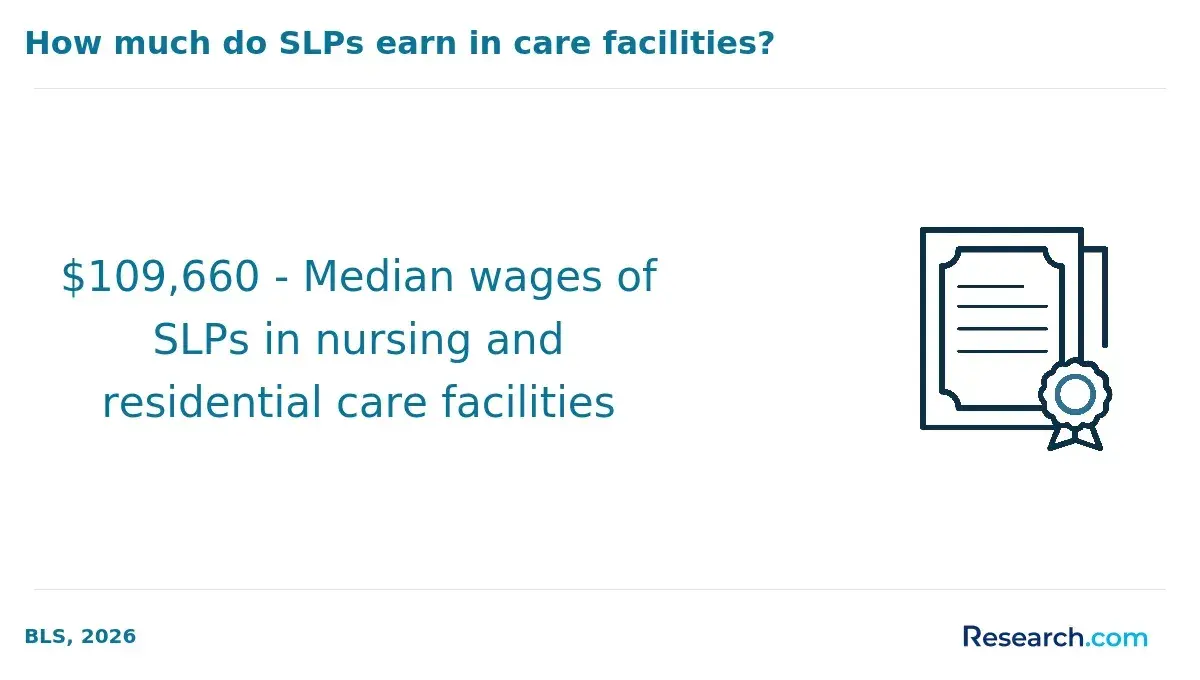
| Nursing facilities | Rehabilitation and swallowing care for residents | Facility coverage, documentation, and productivity expectations |
Schools may recruit around the academic calendar, while healthcare services generally operate year-round. A hospital opening may be less accessible to a new graduate without relevant clinical training; a school opening may carry a large caseload or additional state education requirements. Ask about supervision, documentation time, and employment status - not just the posted salary.
Clinical placements can help students test these differences before accepting a first job. When comparing flexible programs, verify the actual practicum requirements in accelerated online slp degrees; faster coursework does not eliminate the need for supervised clinical preparation.
What education, accreditation, and licensure requirements must aspiring speech pathologists meet?
In the United States, entry into SLP practice generally requires a master's degree in speech-language pathology, supervised clinical training, and a state license. States may also require an examination and a post-graduate supervised experience. School employment can involve separate state education-agency rules. The American Speech-Language-Hearing Association's Certificate of Clinical Competence is a professional credential that some employers require or prefer; it is not a substitute for a state license.
Check a prospective graduate program's current status with the Council on Academic Accreditation in Audiology and Speech-Language Pathology (CAA) and review the licensing board's rules for the state where you intend to work. Accreditation, graduation, certification, and licensure are related but distinct steps. Do not assume an online program's availability in your state means its graduates automatically meet that state's licensing requirements.
A bachelor's degree in another field need not end your plans, but missing communication sciences and disorders prerequisites can add coursework and cost. Compare options for applying to online csd bridge programs with each graduate program's own prerequisite policy before enrolling in classes that may not count.
How do speech-language pathology salaries compare across settings, experience levels, and states?
The BLS reports a median annual SLP wage of $97,870 in May 2025. A median is the midpoint of wages for employed SLPs - not an entry-level offer or a prediction of what a particular graduate will earn. Its hourly equivalent was $47.05, but actual take-home income also depends on hours worked and benefits.
Pay varies with geography, employer, experience, and duties. A school contract and a year-round healthcare position may not be directly comparable if calendars, paid time off, retirement benefits, or expected hours differ. Specialized medical responsibilities or leadership roles may change earning potential, but advancement usually requires relevant experience and is not automatic. Explore career advancement for speech pathologists alongside actual job postings, and compare total compensation rather than headline pay alone.
What factors could increase or reduce future demand for speech-language pathologists?
Demand may rise as communities need more services for children and adults with communication or swallowing disorders. Whether that need becomes a funded job depends on school budgets, healthcare reimbursement, staffing models, and access to care. A growing population of potential patients does not automatically mean every employer can add positions.
Telepractice can change where some services are delivered and expand employers' reach, but clinicians still need to follow applicable licensure, privacy, and service-delivery requirements. Digital tools and AI may assist with documentation or therapy materials; they should not be treated as evidence that clinical assessment and professional judgment are becoming unnecessary.
Training costs can also affect the supply of new clinicians. If debt is a concern, compare total tuition, fees, living costs, and placement-related expenses - not just an advertised per-credit rate. Reviewing budget-friendly online speech pathology programs may help you narrow options, provided you verify current costs, accreditation status, clinical arrangements, and state licensure disclosures directly with each school.
How can students and career changers evaluate speech-language pathology programs and job prospects?
Start with the job and location you want, then work backward to a program. Strong national demand is a reason to investigate SLP - not a reason to overlook program cost, clinical fit, or local hiring conditions. This sequence can keep an appealing format or short completion timeline from obscuring a poor career fit.
- Review local school and healthcare postings for required credentials, schedules, and experience; note which settings actually interest you.
- Confirm each program's current CAA status and ask whether its curriculum is intended to meet licensing requirements in your target state.
- Ask who secures clinical placements, what travel may be required, and whether placements cover your preferred population and setting.
- Calculate total attendance costs, including prerequisites, fees, travel, and income you might forgo; compare them with realistic local compensation and repayment obligations.
- Speak with practicing SLPs about caseloads, supervision, and work-life fit before committing.
A common mistake is choosing a program because it is fast or online without checking its clinical placement model or licensure disclosures. Another is treating the national median wage as a starting salary. Use a speech pathology graduate application checklist to organize program questions, then obtain current answers from schools and state boards. SLP may be a good fit if you enjoy sustained, individualized clinical work; if you mainly want a quick route into healthcare, compare the training time and daily responsibilities of other roles first.
References
- U.S. Bureau of Labor Statistics - Speech-Language Pathologists https://www.bls.gov/ooh/healthcare/speech-language-pathologists.htm
- ASHA EdFind - Accredited Speech-Language Pathology Programs https://find.asha.org/ed/
- Audiology and Speech-Language Pathology Interstate Compact https://aslpcompact.com/compact-map/
- Auburn University, Montgomery - Master of Science in Speech-Language Pathology https://www.aum.edu/degree/ms-speech-language-pathology/
- Delaware Valley University - Master of Science in Speech-Language Pathology (M.S.) https://delval.edu/programs/graduate-programs/speech-language-pathology
- University of North Carolina at Greensboro - Speech-Language Pathology, M.A. (Online) https://csd.uncg.edu/graduate/masters-of-arts-online/
- California State University-San Marcos - Online MS in Speech-Language Pathology https://www.csusm.edu/slp/programs/mastersonline/index.html
- Idaho State University - Master of Science in Speech-Language Pathology (Online/Distance Education) https://www.isu.edu/slp/programs-offered/slp-graduate-program/
Other Things You Should Know About Speech Pathology
Often, yes. Graduate programs commonly require specific prerequisite courses, which you may need to complete before admission or through an approved leveling pathway. Check each program's policy before paying for coursework.
That depends on state rules and the employer. Many graduates work under a provisional or comparable authorization while completing required supervised experience. Confirm the permitted duties and supervision requirements with the relevant state licensing board.
Online delivery alone does not determine eligibility. Check the program's current accreditation status, its state-specific licensure disclosure, clinical training arrangements, and your target licensing board's requirements.
Most U.S. states require passing the Praxis Speech-Language Pathology exam, officially Praxis Test 5331, for licensure. The American Speech-Language-Hearing Association also requires supervised clinical experience and a Clinical Fellowship before the Certificate of Clinical Competence can be awarded.