2027 Security Administrator Careers: Skills, Education, Salary & Job Outlook

Co-Founder and Chief Data Scientist
Becoming a security administrator is a practical career choice for people who want hands-on technology work with clear responsibility: keeping systems, networks, and data safe. The challenge is knowing how to enter the field without wasting time on the wrong degree, certification, or entry-level job. Employers often want a mix of systems knowledge, networking skills, security judgment, and proof that you can respond calmly when something goes wrong.
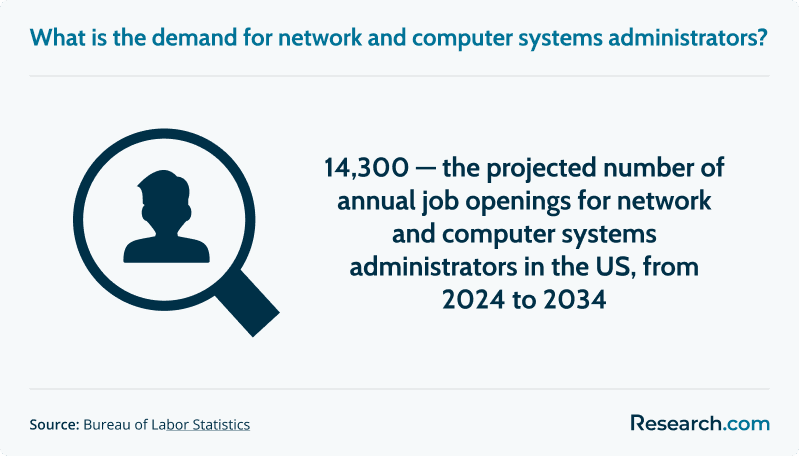
The opportunity is real. Demand for security administrators remains strong, with nearly 29,000 job openings projected and salaries commonly ranging from $88,000 to $97,000. The field rewards professionals who understand network security, systems administration, access control, incident response, and risk management. A bachelor's degree and credentials such as CompTIA Security+ are common starting points, but practical experience matters just as much.
This guide, crafted by expert career advisors with over ten years of experience, explains what security administrators do, which skills and certifications matter, how much they can earn, where the career can lead, and how to decide whether this path fits your goals.
Key Things You Should Know About Security Administrator Careers
- The typical earning potential for a security administrator in the United States is about $79,000 annually, reflecting a solid, competitive salary in cybersecurity.
- This field is stable and growing faster than average, propelled by rising cybersecurity needs that ensure strong job security over the long term.
- A bachelor's degree in computer science, information technology, or a related area is generally required to start, with professional certifications like CompTIA Security+ or CISSP enhancing opportunities.
- Success depends on skills such as network security, risk assessment, intrusion detection, firewall management, incident response, critical thinking, and effective communication.
- Career advancement can progress from security administrator to senior security administrator, then to roles like security analyst, security engineer, or IT manager, with top-level potential as a chief information security officer (CISO).
What do security administrators do?
Security administrators protect an organization's information systems by managing the tools, policies, and access controls that reduce cyber risk. Their work sits between systems administration and cybersecurity operations: they configure security technologies, monitor networks, investigate suspicious activity, enforce permissions, and help employees follow safe technology practices.
The role matters because most organizations rely on digital infrastructure for daily operations. A security administrator helps keep that infrastructure available, confidential, and trustworthy. When security is working well, employees can access what they need, customers can trust the organization with sensitive information, and business operations are less likely to be interrupted by attacks or avoidable mistakes.
A day in the life of security administrators
A typical day may include reviewing security alerts, checking firewall or intrusion detection logs, updating access permissions, patching systems, documenting risks, or helping another IT team troubleshoot a security issue. Some days are routine and documentation-heavy. Others require fast decisions during an incident, such as a suspected phishing compromise, malware alert, unusual login pattern, or attempted network intrusion.
Security administrators usually work with system administrators, network engineers, help desk teams, compliance staff, managers, and sometimes outside vendors. Success is not measured only by stopping attacks. It is also measured by how well the organization prevents avoidable risks, responds to incidents, keeps accurate records, and improves security practices over time.
What are the key responsibilities of security administrators?
Security administrators are responsible for the daily controls that keep systems protected. The exact duties vary by employer size and industry, but most roles combine monitoring, configuration, access management, user education, and incident response.
- Monitor network traffic, system logs, and security alerts for suspicious activity or signs of compromise.
- Install, configure, and maintain firewalls, intrusion detection systems, anti-virus tools, endpoint protection, VPNs, and related security platforms.
- Run vulnerability assessments and support penetration testing to identify weaknesses before attackers can exploit them.
- Respond to security incidents by investigating alerts, containing problems, documenting evidence, and applying corrective measures.
- Develop, update, and enforce security policies, authorization roles, password rules, and access control procedures.
- Review user permissions so employees have the access they need without unnecessary privilege.
- Train staff on phishing prevention, secure password use, data handling, and safe use of security tools and systems.
- Prepare reports for IT leaders, auditors, or management that explain risks, incidents, remediation work, and security status.
The most challenging vs. the most rewarding tasks
The hardest part of the job is often first-line response when a threat is unfolding. Security administrators may need to make quick decisions with incomplete information, coordinate with multiple teams, and protect critical systems without disrupting essential operations. The pressure can be high because a delayed or careless response may increase damage.
The most rewarding part is seeing prevention work. Finding a serious vulnerability before it is exploited, stopping a suspicious login pattern, or helping employees avoid a phishing attack provides direct evidence that your work protects people, data, and operations. For students comparing long-term academic options, security administration can fit well with college majors for the future because the work is tied to durable technology and risk-management needs.
What are the key skills for security administrators?
Security administrators need enough technical depth to understand how systems are attacked and enough communication skill to make security rules usable for nontechnical employees. Employers typically look for candidates who can troubleshoot, document clearly, manage risk, and keep learning as threats change.
Technical hard skills
- Firewall technologies: configuring rules, reviewing traffic, limiting unnecessary exposure, and supporting secure network segmentation.
- Network protocols: understanding HTTP, SMTP, SSL, IPSec, DNS, and related protocols so you can recognize normal and abnormal activity.
- Intrusion detection and prevention systems: using IDS/IDP tools to identify suspicious patterns, tune alerts, and support incident response.
- Operating systems: securing, auditing, and troubleshooting Linux, UNIX, and Windows environments.
- Access control: managing user accounts, permissions, authentication methods, and least-privilege policies.
- Vulnerability management: scanning systems, prioritizing findings, coordinating patching, and verifying remediation.
Crucial soft skills
- Communication: explaining risks, incidents, and policy changes clearly to technical and nontechnical audiences.
- Attention to detail: noticing unusual patterns in logs, permissions, configurations, and alerts.
- Analytical problem-solving: tracing a security issue from symptoms to root cause and choosing a practical fix.
- Organization: maintaining procedures, reports, audit evidence, and incident documentation.
- Judgment under pressure: balancing urgency with accuracy during security events.
The one overlooked skill that separates the good from the great
The most overlooked skill is adaptability. Security tools, attacker methods, compliance expectations, and business systems change constantly. A strong security administrator does not rely only on what worked last year; they keep testing assumptions, learning new platforms, and adjusting controls as the environment changes.
For example, an adaptable security administrator who notices a new vulnerability trend can review exposure, coordinate patching, update detection rules, and brief stakeholders before the issue becomes a major incident. That proactive mindset is often what separates a competent technician from a trusted security professional.
Students who are still choosing an academic route can compare easiest bachelor degree options, but the best choice is not simply the easiest one. Look for a program that builds practical IT, networking, systems, and security foundations you can apply in internships, labs, or entry-level technology roles.
A security administrator career is usually built in stages. Most people do not begin by managing security for an entire organization. They first learn how computers, networks, users, and systems operate, then move into roles where security becomes a larger part of the job.
- Build foundational IT knowledge. Learn computer hardware, operating systems, troubleshooting, user support, and basic system administration. Help desk, desktop support, or junior IT roles can be useful starting points.
- Develop networking competence. Study how networks, protocols, routing, DNS, VPNs, firewalls, and secure connections work. Security administrators must understand what normal network behavior looks like before they can spot risk.
- Pursue security-specific education. Use a degree program, certificate program, lab platform, or structured self-study plan to learn access control, cryptography basics, vulnerability management, incident response, and security policy.
- Gain practical experience. Look for internships, junior systems roles, network support positions, security operations center work, or internal IT projects that let you handle real tools and real documentation.
- Earn professional credentials. Start with a foundational certification such as CompTIA Security+, then choose more advanced credentials based on your target role, industry, and experience level.
- Specialize as your career direction becomes clearer. After you understand the broader security environment, you can focus on areas such as cloud security, network security, compliance, automation, or application security.
The key is sequence. Certifications are useful, but they are strongest when paired with hands-on IT experience. A candidate who can explain how they secured a system, investigated an alert, documented a policy, or supported a vulnerability fix will usually be more convincing than someone who has only studied theory.
Many security administrator roles prefer a bachelor's degree in cybersecurity, information systems security, computer science, or a closely related technical field. Some employers also consider related degrees such as security management or criminal justice, especially for positions that combine technology, compliance, investigations, or risk management.
Certifications help employers verify that you understand core security concepts. CompTIA Security+ is a common entry-level credential because it demonstrates broad foundational knowledge. More advanced certifications, including Certified Information Systems Security Professional (CISSP), may improve eligibility for senior, leadership, or specialized security roles.
On-the-job training is also important. Security administrators often learn employer-specific systems, vendor tools, documentation practices, escalation procedures, and compliance requirements after being hired. Formal supervised hours are not generally mandated, but internships, junior IT roles, and mentorship from experienced security staff can make the transition much smoother.
Are advanced degrees or niche certifications worth the investment?
Advanced degrees such as a master's in cybersecurity or information assurance can be valuable for professionals targeting leadership, architecture, risk management, or specialized roles in large organizations and regulated industries. Specialized credentials such as CISSP or Certified Information Security Manager (CISM) can also strengthen a resume when the role requires mature security judgment and documented experience.
The trade-off is cost, time, and eligibility. Some advanced certifications require significant preparation and experienced work prerequisites. A graduate degree can also require a major financial commitment. Before enrolling, compare the requirement against the roles you actually want. If most target postings ask for a bachelor's degree, Security+, and hands-on experience, an advanced degree may be better saved for a later promotion strategy.
Working professionals who want a shorter route to graduate-level credentials can review fast paced master's degree programs, especially if they need flexibility while employed. When possible, also check whether your employer offers tuition assistance, certification reimbursement, paid training time, or access to vendor courses.
The best education plan is practical and targeted: build the foundation first, earn credentials that match job postings, and invest in advanced study when it clearly supports your next career move.
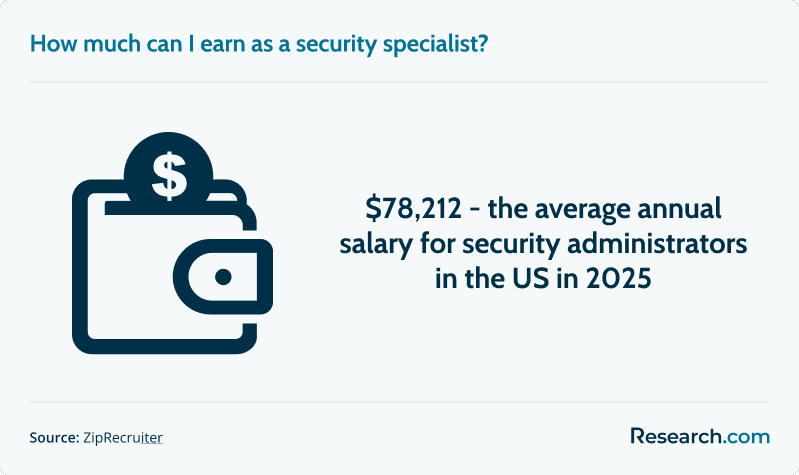
The median annual salary for security administrators is $97,000 as of 2027. This midpoint suggests that the role can offer strong compensation for professionals who combine systems knowledge, security tooling, documentation skills, and incident-response capability.
For those asking about security administrator starting salary 2025, entry-level professionals can expect to earn around $73,000 per year, representing the 25th percentile. Senior-level Security Administrators can see salaries reaching approximately $128,000 annually. The difference reflects the value of experience, specialized skills, trust, and the ability to handle higher-risk responsibilities with less supervision.
Pay can vary significantly by employer, location, industry, and technical environment. Banking, healthcare, and government are commonly higher-paying sectors because security failures can carry major financial, legal, privacy, and operational consequences. Tech hubs and government centers may also offer premium wages because competition for skilled security workers is stronger.
Certifications can influence earnings, but they do not work alone. Credentials such as CompTIA Security+ or CEH are most useful when paired with demonstrable experience: securing systems, managing access, responding to incidents, writing reports, supporting audits, and improving controls. To increase earning potential, focus on building a record of measurable security work rather than collecting certifications without a clear career purpose.
The projected growth rate for security administrator roles through 2028 is 5%, which is about as fast as the average for all occupations. This points to a stable outlook rather than explosive growth. Organizations still need professionals who can administer security controls, protect systems, manage access, and support incident response, especially as digital operations become more complex.
The key factors shaping the future outlook
Several forces support ongoing demand. Cyber threats continue to evolve, which keeps pressure on employers to maintain strong defenses. Cloud computing and digital transformation have also changed the security administrator's work: protecting only on-premises networks is no longer enough for many organizations. Security teams now need to manage identity, remote access, cloud configurations, endpoint tools, and monitoring across distributed environments.
Regulatory and compliance expectations are another driver. As privacy rules and industry security requirements become more important, employers need workers who can document controls, support audits, follow security policies, and help reduce risk in a measurable way.
For students choosing where to study, the best accredited online universities can provide flexible pathways into cybersecurity, information systems, or computer science. Accreditation matters because it can affect credit transfer, financial aid eligibility, graduate school options, and employer confidence in the degree.
Security administrators usually work in IT, cybersecurity, infrastructure, or information security departments. Common employers include organizations in computer systems design and related services, finance and insurance, and information technology and telecommunications, which together account for nearly half of the field's opportunities.
The work environment can be office-based, hybrid, or remote, depending on the employer's systems and security policies. Some tasks can be handled remotely through secure administrative tools, cloud dashboards, ticketing systems, monitoring platforms, and VPN access. Other duties may require office presence, especially when working with physical infrastructure, sensitive environments, hardware, or internal response teams.
A typical workday blends independent technical work with collaboration. Security administrators may review alerts alone, then coordinate with network engineers, system administrators, department managers, or compliance staff to fix a risk. Standard business hours are common, but evening or weekend work may be required for incident response, maintenance windows, system upgrades, or urgent vulnerabilities.
Anyone considering this career should be comfortable with occasional schedule disruption. Cybersecurity problems do not always happen at convenient times, and some organizations need security coverage outside normal office hours.
A security administrator career can be rewarding, stable, and intellectually engaging, but it also comes with pressure. The right fit depends on whether you enjoy technical detail, responsibility, continuous learning, and occasional urgency.
Pros
- Meaningful impact: Your work helps protect sensitive data, business operations, customers, and employees.
- Strong problem-solving: The role offers complex technical challenges involving systems, networks, users, and risk.
- Continuous learning: New tools, threats, regulations, and platforms keep the work from becoming static.
- Transferable skills: Experience in access control, monitoring, incident response, and policy can support many cybersecurity career paths.
- Visible value: Preventing incidents, closing vulnerabilities, and improving audit readiness can make your contribution clear to leadership.
Cons
- Stress during incidents: Security events can require fast decisions and careful coordination under pressure.
- Repetitive support tasks: Password resets, access requests, account reviews, and policy reminders can become routine.
- High attention demands: Small configuration errors or missed alerts can create meaningful risk.
- Constant change: Staying current with tools, threats, compliance expectations, and system upgrades takes ongoing effort.
- Potential after-hours work: Maintenance and incident response may occasionally interrupt evenings or weekends.
This career is a strong fit for people who like practical technology work and can stay calm when problems are unclear. If you need to balance education with employment, comparing the cheapest online universities for job holders may help you build relevant skills while continuing to work.
Security administration is not a dead-end role. It can lead to senior technical positions, management, architecture, compliance, cloud security, or specialized cybersecurity work. Advancement usually depends on three things: proven experience, stronger certifications or education, and the ability to connect technical decisions to business risk.
Advancement opportunities
- Entry-level IT roles: Help Desk Technician, System Administrator, or Network Administrator positions can provide the foundation for a later security administrator role.
- Security Administrator: This role builds on systems and networking experience and often benefits from credentials such as CompTIA Security+.
- Senior Security Administrator: More experienced professionals handle complex systems, mentor junior staff, lead remediation efforts, and may pursue certifications such as CISM or CISSP.
- Security operations and engineering roles: Information Security Analyst, Security Engineer, and Information Security Engineer positions can expand responsibilities into detection, response, architecture, or tool implementation.
- Management roles: IT Security Manager or Security Manager positions add budgeting, staffing, policy ownership, vendor coordination, and executive reporting.
- Architecture and strategy roles: Computer Network Architect or security architecture positions focus on designing secure systems and long-term infrastructure plans.
Specialization tracks
- Cloud Security: Focuses on protecting platforms such as AWS, Azure, and Microsoft 365, including identity, access, configuration, and compliance.
- Network Security: Centers on firewalls, VPNs, intrusion detection and prevention, segmentation, and secure network architecture.
- Compliance and Governance: Supports requirements such as HIPAA, NIST, and GDPR through risk assessments, documentation, controls, and audit readiness.
- Security Automation: Uses scripting, SOAR platforms, and API integrations to reduce manual work and speed up response.
- Application Security: Works with development teams to identify and remediate vulnerabilities throughout the software lifecycle.
To move up, document your achievements. Track incidents resolved, vulnerabilities remediated, access processes improved, audits supported, and tools implemented. Specific outcomes make promotion conversations and job applications much stronger.
If security administration interests you, several related careers may also fit. The best alternative depends on whether you prefer hands-on defense, design, consulting, testing, leadership, or compliance.
- Information Security Analyst: Monitors threats, investigates alerts, supports incident response, and recommends security improvements. This is one of the closest transitions from security administration.
- Security Architect: Designs secure systems and infrastructure. This path is a better fit for professionals who enjoy planning, architecture, and long-term technical strategy.
- Security Consultant: Assesses organizational risk, evaluates controls, recommends improvements, and may work with multiple clients or industries.
- Penetration Tester (Ethical Hacker): Tests systems for exploitable weaknesses. This role is more offensive and technical, requiring strong knowledge of vulnerabilities, exploitation methods, and reporting.
- Security Manager: Leads security operations, policies, teams, vendor relationships, and compliance work. This path suits professionals who want more leadership responsibility.
These careers share a security foundation but differ in daily work. If you like configuring tools and maintaining controls, security administration may be the best fit. If you prefer investigation, consider analyst roles. If you enjoy building systems, look at architecture or engineering. If you want to lead people and policy, management may be the stronger long-term goal.
- : "As a security administrator, I constantly manage firewalls and monitor intrusion detection systems to keep our network secure. Watching how relentless cyberattacks target critical infrastructure made me deeply aware of the responsibility I carry every day. It is not just protecting data; it is safeguarding the trust our customers place in us. Knowing my work prevents potential chaos motivates me to stay vigilant and proactive in defending our systems. — Anaya"
- : "When I first started as a security administrator, facing complex configurations and endless vulnerabilities was overwhelming. There were times I doubted whether I could keep up, especially with the constant evolution of threats and tools like SIEM platforms. But I pushed myself, learned continuously, and accepted that feeling uncertain is part of growing in this role. Every step forward builds confidence, even when self-doubt lingers. — Lucas"
- : "One of the most fulfilling parts of my role is conducting detailed security audits and then helping clients fix their weak points. After identifying risks with penetration tests, seeing the relief and thanks from those I have assisted makes the long hours worthwhile. Sharing my insights and watching organizations strengthen their defenses is the real reward here. It reminds me that the work I do has a tangible impact beyond just technical fixes. — Nadia"
Key Findings
- Security administrators protect systems, networks, users, and data through monitoring, access control, vulnerability management, policy enforcement, and incident response.
- A bachelor's degree in cybersecurity, information systems security, computer science, or a related field is common, while CompTIA Security+ is a widely used entry-level certification.
- The median annual salary is $97,000 as of 2027, with entry-level professionals around $73,000 per year and senior-level Security Administrators reaching approximately $128,000 annually.
- The projected growth rate through 2028 is 5%, indicating stable demand supported by cyber threats, cloud adoption, and compliance requirements.
- The strongest candidates combine technical skills in networks, operating systems, firewalls, IDS/IDP tools, and access control with communication, documentation, and calm decision-making.
- Career advancement can lead to senior security administrator, information security analyst, security engineer, IT security manager, security manager, computer network architect, cloud security, compliance, automation, or application security roles.
- This career is best suited for people who enjoy practical technical work, continuous learning, and responsibility for protecting critical systems.
Other Things You Should Know About Security Administrator
Security administrators in the United States typically earn about $70,000 to $120,000 a year in 2027, with higher pay for senior roles and industries such as finance, healthcare, and government. Payscale and the U.S. Bureau of Labor Statistics track these wages and show strong variation by location and experience.
In 2027, mastering advanced threat detection and response methodologies like machine learning-based intrusion detection systems and zero trust architecture are vital for security administrators. These methodologies enhance proactive threat management, ensuring robust organizational security.
For aspiring security administrators in 2027, certifications such as CompTIA Security+, Certified Information Systems Security Professional (CISSP), and Certified Information Security Manager (CISM) are highly recommended. These credentials enhance credibility and demonstrate expertise in cybersecurity fundamentals and advanced strategies.
- Security administrator Performance Goals And Objectives https://simbline.com/phrases/performance-goals/security-administrator
- How to Become a Network Security Administrator in 2025? [Step-by-Step] https://www.knowledgehut.com/blog/security/how-to-become-network-security-administrator
- Learn How to Become a Security Administrator (Education & Salary) https://www.cybersecurityeducation.org/careers/security-administrator/
- 6 Security Administrator Interview Questions and Answers for 2025 | Himalayas https://himalayas.app/interview-questions/security-administrator
- Security Administrator Job Description https://www.betterteam.com/security-administrator-job-description
- System Administrator - Alternative Careers and Similar Jobs (Updated for 2025) https://resumeworded.com/career-profiles/system-administrator-career-profile
- Meet the People of TSA https://jobs.tsa.gov/testimonials
- Security Administrator Salary – How Much Can You Earn as a Security Administrator? | Cyber Security Jobs https://www.cybersecurityjobs.com/security-administrator-salary/
- Information Security Analysts : Occupational Outlook Handbook: : U.S. Bureau of Labor Statistics https://www.bls.gov/ooh/computer-and-information-technology/information-security-analysts.htm
- A Day in the Life of a Security Administrator | Main Responsibilities https://www.cyberdegrees.org/careers/security-administrator/day-in-the-life/