2027 Entrepreneurship vs. Business Degree: Explaining the Difference

Co-Founder and Chief Data Scientist
Choosing between an entrepreneurship degree and a business degree comes down to the kind of business career you want to build. In 2024, both paths can teach management, marketing, finance, leadership, and decision-making, but they are designed for different outcomes. Entrepreneurship programs are built around identifying opportunities, testing ideas, finding funding, and launching or growing ventures. Business programs give students broader preparation for roles in established organizations, including corporate management, finance, operations, marketing, and strategy.
This guide explains how the two degrees compare in curriculum, admissions, skills, difficulty, cost, and career outcomes. It is written for students deciding on a major, working adults considering a degree, and prospective graduate students who want a practical way to match an academic program with their career goals.
Key Points About Pursuing an Entrepreneurship vs. Business Degree
- Entrepreneurship degrees focus on starting and managing new ventures, with curricula emphasizing innovation; business degrees cover broader topics like finance and marketing.
- Average tuition for entrepreneurship programs ranges from $15,000 to $25,000 annually, slightly higher than some business degrees due to specialized content.
- Career outcomes diverge: entrepreneurship grads often launch startups, while business degree holders typically pursue corporate roles; both programs usually last four years.
What are entrepreneurship degree programs?
Entrepreneurship degree programs prepare students to create, test, fund, and manage new ventures. They are a strong fit for students who want to start a company, join an early-stage startup, lead innovation projects, or bring new products and services to market inside an existing organization.
The coursework usually combines business fundamentals with venture-focused training. Students often study marketing, finance, startup law, sales, leadership, operations, and business planning, then apply those subjects through projects such as pitch competitions, market research assignments, incubator work, feasibility studies, and mentorship with entrepreneurs.
Most bachelor's programs in the U.S. require approximately 120 credits and typically take four years to finish. Some accelerated online options may reduce this timeframe, but students should compare total cost, course intensity, transfer policies, and access to advising before choosing a faster route.
Admission requirements vary by school, but applicants typically need a high school diploma or equivalent, ACT/SAT scores where required, a minimum GPA near 3.0, a personal statement, letters of recommendation, and sometimes a resume. Students comparing programs should also check whether the school or business unit is accredited by AACSB, ACBSP, or IACBE. Accreditation does not guarantee a job or business success, but it can signal that the program has met recognized standards for business education.
What are business degree programs?
Business degree programs provide broad training in how organizations operate, compete, manage people, allocate resources, and make strategic decisions. They are often the more flexible option for students who want access to many career paths rather than preparing mainly for startup creation.
A typical undergraduate business curriculum includes accounting, finance, marketing, management, economics, business law, operations, organizational behavior, and business analytics. Students may later specialize in areas such as finance, human resources, marketing, supply chain management, international business, or entrepreneurship, depending on the school.
Undergraduate programs generally span four years, while master's degrees usually require two years to complete. The added time in graduate study is often used for advanced coursework, leadership development, capstone projects, internships, or specialization in a field such as finance, analytics, or management.
Admission into undergraduate business programs typically requires a high school diploma and standardized test scores such as the SAT or ACT where required. Many institutions also review GPA, essays, interviews, extracurricular activities, and evidence of leadership or quantitative readiness. At the graduate level, requirements are usually more selective and may include professional experience, recommendations, essays, and school-specific testing policies.
What are the similarities between entrepreneurship degree programs and business degree programs?
Entrepreneurship and business degrees overlap because entrepreneurship is built on core business knowledge. A founder still needs to understand pricing, budgeting, customers, operations, legal risk, hiring, and strategy. Likewise, business graduates increasingly need entrepreneurial thinking as companies look for employees who can improve processes, spot market opportunities, and adapt to change.
- Core business coursework: Both programs commonly include management, accounting, marketing, finance, economics, and organizational behavior. These courses help students understand how companies earn revenue, control costs, manage teams, and serve customers.
- Transferable skills: Students in both paths build communication, leadership, problem-solving, teamwork, presentation, and decision-making skills. These abilities matter whether a graduate joins a corporation, works for a small business, enters consulting, or starts a venture.
- Applied learning: Both degrees may use case studies, group projects, presentations, simulations, internships, and capstone assignments. Entrepreneurship programs may lean more heavily on venture creation, but business programs also use practical assignments to connect theory with workplace decisions.
- Flexible formats: Many schools offer campus-based, online, and hybrid options. Students comparing formats should look closely at internship access, faculty interaction, networking opportunities, and career services, not just convenience.
- Program length: Bachelor's degrees generally take about four years, while master's programs last one to two years, depending on the institution, enrollment status, transfer credit, and curriculum design.
- Admissions overlap: Entry criteria typically include a high school diploma, standardized test scores where required, recommendation letters, and sometimes personal statements or interviews. Some schools admit students to a general business program first and allow them to choose a specialization later.
Because of this overlap, students should not assume that one degree is automatically more “practical” than the other. The better choice depends on the program's curriculum, experiential opportunities, faculty background, employer connections, and how closely the degree matches the student's goals. Students who want a shorter route to graduation may also compare options such as an accelerated undergraduate degree.
What are the differences between entrepreneurship degree programs and business degree programs?
The main difference is purpose. Entrepreneurship programs are designed around creating and scaling new ventures. Business programs are designed around understanding and managing organizations more broadly. Both can lead to business careers, but they train students to approach problems from different angles.
- Primary focus: Entrepreneurship programs emphasize opportunity recognition, innovation, startup development, funding, customer discovery, and growth. Business degrees focus more broadly on management, finance, marketing, accounting, operations, and strategy in established organizations.
- Classroom experience: Entrepreneurship education often includes pitch practice, prototype development, business plan work, venture simulations, and feedback from mentors or investors. Business programs often rely more on structured coursework, case analysis, quantitative assignments, research, and functional business projects.
- Risk orientation: Entrepreneurship students are trained to work with uncertainty, test assumptions, pivot, and make decisions with incomplete information. Business students are often trained to assess risk, improve processes, use data, and make decisions within established systems.
- Specialization options: Business degrees commonly offer tracks such as finance, marketing, accounting, human resources, supply chain, and management. Entrepreneurship programs are more likely to concentrate on innovation, venture finance, social entrepreneurship, small business management, and product development.
- Career preparation: Business degrees often align with corporate roles that have clearer job titles, entry-level pathways, and advancement ladders. Entrepreneurship degrees may be better suited for students who want to launch companies, work in startups, lead innovation teams, or pursue less traditional career paths.
- Outcome predictability: A business degree may provide a more direct route into defined roles such as analyst, manager, coordinator, or specialist. An entrepreneurship degree can offer more autonomy, but outcomes may depend heavily on venture performance, market timing, funding, and personal networks.
Students who are unsure should compare actual course lists rather than relying only on the major name. Some business degrees include strong entrepreneurship concentrations, and some entrepreneurship programs are housed inside rigorous business schools with substantial finance, analytics, and management coursework.
What skills do you gain from entrepreneurship degree programs vs business degree programs?
Both degrees build business literacy, but they emphasize different skill sets. Entrepreneurship programs develop a founder's mindset: spotting opportunities, testing ideas, persuading stakeholders, and adapting quickly. Business programs develop organizational competence: analyzing performance, managing functions, coordinating teams, and making structured decisions.
Skill Outcomes for Entrepreneurship Degree Programs
- Opportunity recognition: Students learn to identify unmet needs, evaluate markets, and determine whether an idea has commercial potential.
- Creative problem-solving: Coursework often pushes students to design solutions, test assumptions, revise business models, and respond to customer feedback.
- Market analysis and customer discovery: Students practice researching target customers, analyzing competitors, estimating demand, and positioning products or services.
- Pitching and persuasion: Entrepreneurship programs commonly train students to communicate value clearly to customers, partners, lenders, investors, and team members.
- Leadership and human relations: Students learn to lead small teams, manage informal structures, build relationships, and handle uncertainty in startup environments.
- Practical experience through practicum: By working at least 20 hours weekly in real-world settings, students apply classroom concepts while building resilience, judgment, and adaptability.
Skill Outcomes for Business Degree Programs
- Core business functions: Graduates gain a foundation in accounting, finance, marketing, management, operations, and strategy, which can apply across many industries.
- Data analysis and financial modeling: Many programs emphasize interpreting financial statements, evaluating performance, building forecasts, and using data to support decisions.
- Operational thinking: Students learn how organizations improve efficiency, allocate resources, manage supply chains, and coordinate departments.
- Strategic decision-making: Business coursework often teaches students to evaluate competitive position, industry conditions, organizational goals, and long-term trade-offs.
- Professional communication: Students practice writing reports, giving presentations, collaborating in teams, and communicating with managers and stakeholders.
- Technology integration: Curricula increasingly include AI and big data tools that prepare students to use technology for analysis, planning, and business improvement.
If you want to build something from the ground up, the entrepreneurship skill set may feel more relevant. If you want a broad credential that can support roles in many departments and industries, the business skill set may offer more flexibility. Students can also add targeted training through certificate courses that pay well, especially in analytics, project management, digital marketing, or finance.
Which is more difficult, entrepreneurship degree programs or business degree programs?
Neither degree is universally harder. The more difficult option depends on how you learn, how comfortable you are with ambiguity, and which subjects match your strengths. Business programs can be demanding because they require structured analysis, quantitative work, exams, case studies, and performance across several functional areas. Entrepreneurship programs can be demanding because students must create, test, defend, and revise ideas in realistic and often uncertain conditions.
Business programs usually have more predictable academic expectations. Students may complete exams, financial analyses, research papers, presentations, accounting assignments, and case studies with defined grading criteria. This structure can be challenging, especially in finance, accounting, statistics, and analytics courses, but students often know what is expected and how they will be assessed.
Entrepreneurship programs may feel harder for students who prefer clear answers. Assignments often involve business plan submissions, customer interviews, pitch decks, venture simulations, product concepts, and mentor feedback. A strong idea may still fail a market test, and students must be able to revise quickly without treating that failure as the end of the project.
A practical way to decide is to ask which challenge you are more willing to repeat: solving structured business problems with data and theory, or developing ideas in uncertain environments where feedback can change the direction of your work. Both paths require discipline. They simply reward different strengths.
Students considering graduate study should also weigh workload against cost and schedule. Comparing cheap masters programs can help identify options that balance affordability, academic rigor, and career value.
What are the career outcomes for entrepreneurship degree programs vs business degree programs?
Career outcomes differ most in predictability. Business degree graduates often pursue defined roles in established organizations, where job descriptions, promotion paths, and compensation structures may be clearer. Entrepreneurship degree graduates may pursue startup, innovation, consulting, or small-business paths where income and advancement can vary more widely.
Career Outcomes for Entrepreneurship Degree Programs
Entrepreneurship graduates often look for work that involves innovation, growth, market expansion, and new venture creation. Some launch companies immediately, while others first gain experience in sales, product development, operations, consulting, or business development before starting their own venture.
- Startup Founder: Launches and manages new business ventures, develops products or services, builds teams, seeks customers, and works to grow revenue.
- Business Development Manager: Identifies growth opportunities, builds partnerships, evaluates new markets, and supports expansion strategies.
- Innovation Consultant: Advises organizations on new products, internal innovation, process improvement, customer needs, and competitive positioning.
The upside can be significant for graduates who build successful ventures or enter high-growth environments. The trade-off is that income, job stability, and advancement may depend on market demand, funding, execution, and timing.
Career Outcomes for Business Degree Programs
Business degree graduates are commonly prepared for roles in corporations, nonprofits, government agencies, financial institutions, healthcare organizations, technology companies, retail firms, and professional services. The demand for business and financial operations is projected to remain strong, with median wages around $76,850 as of 2024.
- Sales Manager: Leads sales teams, sets revenue goals, monitors performance, manages client relationships, and supports market growth.
- Operations Manager: Oversees daily business operations, improves processes, coordinates departments, and works to increase efficiency and productivity.
- Financial Manager: Plans and directs financial activities, including budgeting, forecasting, reporting, risk management, and long-term financial strategy.
Business degrees may appeal to students who want broader access to entry-level business roles and a more structured employment path. Entrepreneurship degrees may appeal to students who value autonomy, innovation, and the possibility of building something independently. Students comparing total education costs can also use resources such as the cheapest per credit hour online college guide when planning their degree path.
How much does it cost to pursue entrepreneurship degree programs vs business degree programs?
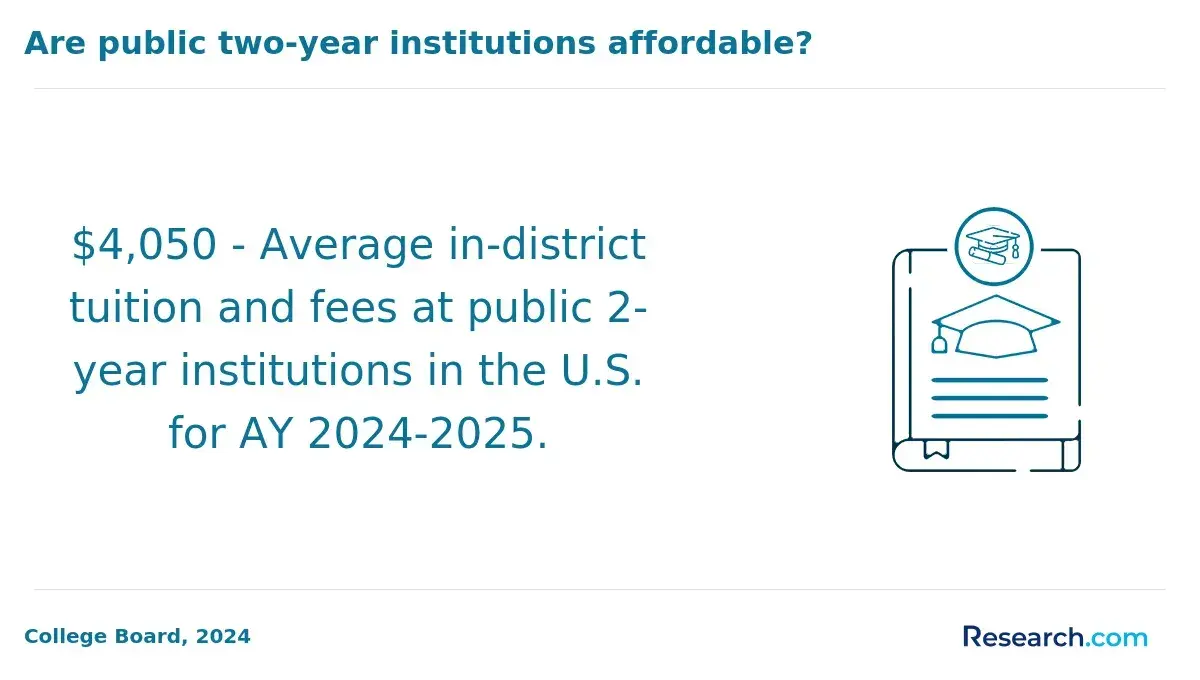
The cost of an entrepreneurship or business degree depends on school type, residency status, delivery format, program level, fees, transfer credits, and living expenses. The major itself is usually not the only cost driver. A public in-state program, private college, online university, community college pathway, or graduate business school can produce very different total costs.
For entrepreneurship bachelor's programs, tuition can be as low as $8,854 annually for in-state students at public universities, while private institutions like Babson College can charge over $58,000 per year. The University of Houston, for example, sets tuition for Texas residents at about $11,234 annually. Graduate-level entrepreneurship courses typically cost around $13,379 for in-state attendees and $28,778 for out-of-state students.
Business degree tuition follows a similar pattern. Public four-year schools average $11,610 per year for in-state students and approximately $30,780 for out-of-state learners. Private nonprofit colleges charge an average of $43,350 annually. Graduate business programs, including MBAs, usually cost more, especially at private universities with strong networks, brand recognition, and extensive career resources.
Lower-cost pathways may include associate degrees, certificates, transfer programs, employer tuition benefits, and online study. Certificates and associate degrees are often available through community colleges. Online options like Nexford University provide entrepreneurship degrees with monthly payments around $320, which may appeal to students who need a more budget-friendly or flexible payment model.
Students should compare the full cost of attendance, not tuition alone. Fees, textbooks, technology costs, transportation, housing, lost work hours, and interest on loans can affect affordability. Financial aid, scholarships, grants, employer reimbursement, and transfer credit can reduce out-of-pocket cost, but eligibility varies by student and institution.
How to Choose Between Entrepreneurship Degree Programs and Business Degree Programs
The best choice is the degree that matches your preferred work environment, risk tolerance, learning style, and career plan. Do not choose entrepreneurship only because you like the idea of being your own boss, and do not choose business only because it sounds safer. Compare the curriculum, experiential learning, alumni outcomes, cost, accreditation, advising, internships, and employer connections.
- Choose entrepreneurship if your main goal is venture creation: This path fits students who want to start a company, join a startup, lead innovation projects, or develop new products and services.
- Choose business if you want broader career flexibility: A business degree can support roles in finance, marketing, operations, management, human resources, sales, analytics, and administration.
- Consider your learning style: Entrepreneurship often favors project-based learning, experimentation, pitching, customer discovery, and feedback. Business programs often provide more structured coursework, case studies, exams, and functional specialization.
- Assess your risk tolerance: Entrepreneurship may involve less predictable career outcomes but more autonomy. Business careers may offer clearer job titles, defined advancement paths, and more stable entry points.
- Review the actual courses: Program names can be misleading. A business degree with an entrepreneurship concentration may be ideal for students who want both structure and startup exposure.
- Think about your first job after graduation: If you need a clear entry-level role quickly, business may offer more obvious pathways. If you are already building a venture or have access to a startup ecosystem, entrepreneurship may be more directly useful.
- Compare support systems: Entrepreneurship students should look for incubators, pitch events, mentors, legal clinics, and startup funding resources. Business students should look for internships, career fairs, employer partnerships, analytics labs, and strong advising.
A practical decision rule is this: choose entrepreneurship if you want your degree to help you build, test, and grow new ventures; choose business if you want a broader foundation for working across many kinds of organizations. Students who want both can major in business and minor or concentrate in entrepreneurship, or choose an entrepreneurship program housed within a strong business school.
What Graduates Say About Their Degrees in Entrepreneurship Degree Programs and Business Degree Programs
- Rose: "Completing the entrepreneurship degree program pushed me beyond my limits academically, but the challenge was worth it. The hands-on startup incubator and mentorship sessions gave me real-world experience that textbooks alone could not provide. I have since launched my own tech company and remain optimistic about the industry's growth ahead."
- Jessie: "The business degree program combined theory with practical case studies in a way that deepened my understanding of global markets. Collaborative projects with local businesses strengthened my problem-solving skills in workplace settings. That experience gave me confidence as I moved into a strategic role in corporate finance."
- San: "The networking opportunities and specialized digital marketing training were what stood out most in the entrepreneurship program. The income increase after graduation exceeded my expectations and confirmed the value of applied learning. The program was rigorous, but it prepared me for a competitive business environment."
Other Things You Should Know About Entrepreneurship Degree Programs & Business Degree Programs
Many entrepreneurship programs require a capstone business plan or startup pitch before graduation. At some universities, this is completed in the final year and may count for 3 to 6 credit hours. The project is usually reviewed by faculty, and sometimes by local entrepreneurs or investors.
In 2027, employers acknowledge entrepreneurship degrees for their focus on innovation and strategic thinking, often valuing them for positions requiring creativity and leadership. However, traditional business degrees are still favored for their comprehensive approach to established business practices, particularly for roles in corporate environments.
References
- Do I need a degree to be an entrepreneur? https://globalbanking.ac.uk/blog/do-i-need-a-degree-to-be-an-entrepreneur/
- Business vs. Entrepreneurship Degree: What’s the Difference? https://potomac.edu/business-vs-entrepreneurship/
- Understanding entrepreneurship: From concept to societal impact https://esmt.berlin/knowledge/what-is-entrepreneurship
- What Can You Do With an Entrepreneurship Degree? | American Public University https://www.apu.apus.edu/area-of-study/business-and-management/resources/what-can-you-do-with-an-entrepreneurship-degree/
- The Costs and Benefits of College for an Entrepreneur — The James G. Martin Center for Academic Renewal https://jamesgmartin.center/2019/02/the-costs-and-benefits-of-college-for-an-entrepreneur/
- Business Administration vs. Entrepreneurship| University of Bridgeport https://www.bridgeport.edu/news/business-administration-vs-entrepreneurship/
- What Can I Do With an Entrepreneurship Degree? https://www.cesarritzcolleges.edu/en/news/what-can-i-do-with-an-entrepreneurship-degree/
- Job burnout and work engagement in entrepreneurs: How the psychological utility of entrepreneurship drives healthy engagement - ScienceDirect https://www.sciencedirect.com/science/article/pii/S0883902622000842
- Ten Types of Business Degree Specializations | AIU https://www.aiuniv.edu/degrees/business/articles/10-types-of-business-degree-specializations-you-can-pursue
- Entrepreneurship salary - What you earn after studying | CBS https://www.cbs.de/en/blog/entrepreneurship-salary