
2027 Intellectual Property Attorney Careers: Skills, Education, Salary & Job Outlook

Co-Founder and Chief Data Scientist
Becoming an intellectual property attorney is a serious career decision because the path combines law, technology, business strategy, and often a scientific or creative domain. It can be a strong fit if you want legal work that protects inventions, brands, software, designs, creative works, or confidential business information—but it is not the fastest route into law.
The key questions are practical: Do you need a technical degree? Which area of IP law fits your background? How much education and licensing are required? What kind of work will you actually do, and is the salary worth the time investment? This guide explains the role, responsibilities, skills, education requirements, salary potential, job outlook, work environment, advancement options, and related careers so you can decide whether intellectual property law matches your goals.
Key Things You Should Know About Intellectual Property Attorney Career
- Typical earning potential for intellectual property attorneys is around $199,306 per year nationally, with entry-level salaries near $100,841 and experienced professionals earning up to $256,000 or more, particularly in specialized markets like California.
- The field shows strong demand for legal expertise in intellectual property, compliance, and corporate transactions, indicating a stable and active job market as of 2025, even though specific 10-year growth projections are unavailable.
- To get started, a Juris Doctor (J.D.) degree and passing the bar exam are essential, and many intellectual property attorneys enhance their qualifications with technical undergraduate degrees in science or engineering.
- Success in this career requires expertise in patent, trademark, and copyright law, combined with skills in legal research, client counseling, and technical knowledge relevant to specific industries.
- Advancement can lead to significantly higher salaries, with top earners making over $278,000 annually, reflecting growth opportunities influenced by skill level, location, and experience.
What do intellectual property attorneys do?
Intellectual property attorneys help clients secure, manage, monetize, and defend legal rights in intangible assets. These assets may include patents, trademarks, copyrights, trade secrets, licensing rights, proprietary technology, product names, logos, creative works, software, formulas, designs, and confidential business processes.
The role varies by specialty. A patent attorney may work closely with engineers or scientists to protect a new invention. A trademark attorney may help a company clear and register a brand name. A copyright attorney may advise a media, software, publishing, or entertainment client. A trade secrets attorney may help a business protect confidential information through contracts, policies, and enforcement strategies.
What the work looks like in practice
Much of the job is analytical and document-heavy. IP attorneys review technical materials, research legal standards, evaluate ownership rights, draft applications and agreements, and advise clients on risk. They may also negotiate licenses, respond to government office actions, send cease-and-desist letters, or represent clients in disputes.
The best IP attorneys do more than file paperwork. They help clients make business decisions: whether to pursue protection, how broad that protection should be, when to enforce rights, when to settle, and how to use intellectual property as a competitive asset.
What are the key responsibilities of intellectual property attorneys?
Intellectual property attorneys are responsible for helping clients protect valuable ideas and reduce legal exposure. Their work often sits at the intersection of law, business planning, product development, research, branding, and litigation strategy.
Common responsibilities include:
- Advising on IP protection strategy: Recommending whether a client should pursue a patent, trademark, copyright registration, trade secret protection, licensing arrangement, or a combination of these tools.
- Preparing and filing applications: Drafting and submitting patent, trademark, or copyright materials to the appropriate government agencies and responding to examiner questions or objections.
- Conducting clearance and infringement analysis: Reviewing existing patents, marks, creative works, or confidential information to assess originality, ownership, and legal risk.
- Drafting and negotiating agreements: Creating licensing agreements, nondisclosure agreements, assignment agreements, settlement agreements, joint development agreements, and other contracts involving IP rights.
- Enforcing client rights: Monitoring unauthorized use, preparing cease-and-desist letters, negotiating resolutions, and supporting litigation when disputes cannot be settled.
- Supporting business transactions: Conducting due diligence in mergers, acquisitions, investments, partnerships, and product launches to identify IP value and legal exposure.
- Managing IP portfolios: Helping clients track renewals, deadlines, international filings, ownership records, and portfolio priorities.
The most challenging vs. the most rewarding tasks
The most challenging work often involves litigation, enforcement, and high-value transactions. These matters can require fast judgment, technical understanding, detailed factual analysis, and careful communication with clients whose business interests may be at stake.
The most rewarding work is seeing legal protection turn into real-world value. A granted patent, a protected brand, a successful licensing deal, or a resolved infringement dispute can help a client launch a product, attract investment, defend market share, or preserve creative control.
If you are comparing long-term education investments, reviewing certifications for high paying jobs may help you think more strategically about credential value, specialization, and career return.
What are the key skills for intellectual property attorneys?
Intellectual property attorneys need legal precision, subject-matter fluency, and client-facing judgment. The strongest candidates can translate complex technical or creative issues into clear legal strategies and business recommendations.
Technical hard skills
- Legal research: IP attorneys must interpret statutes, regulations, agency guidance, case law, and procedural rules. Strong research skills are essential for prosecution, counseling, transactions, and disputes.
- Legal writing and drafting: The work depends on clear, accurate documents, including applications, briefs, legal opinions, office action responses, agreements, and client memoranda.
- Patent, trademark, copyright, and trade secret knowledge: Attorneys do not need to practice in every IP area, but they should understand how different protections work and where they overlap.
- Technical analysis: Patent work, in particular, often requires the ability to understand scientific or engineering concepts and explain them in legally meaningful language.
- Negotiation: Licensing, settlement, coexistence, assignment, and joint development agreements all require negotiation skills that balance legal protection with commercial practicality.
Essential soft skills
- Critical thinking: IP questions rarely have simple answers. Attorneys must evaluate facts, legal risk, business objectives, and timing.
- Attention to detail: Missed filing dates, unclear ownership language, or vague claim terms can create serious consequences.
- Analytical reasoning: Attorneys must compare inventions, marks, creative works, claims, contracts, and market facts to identify risk and opportunity.
- Active listening: Clients may not know which facts are legally important. Good attorneys ask better questions and clarify what the client is trying to achieve.
- Professional communication: IP attorneys often explain complex issues to executives, inventors, designers, engineers, founders, and opposing counsel.
The overlooked skill: business judgment
Business acumen separates competent IP attorneys from strategic advisors. Clients usually do not want protection for its own sake; they want protection that supports revenue, investment, product development, brand recognition, or competitive positioning.
For example, an attorney negotiating a patent license must understand more than the legal language. The deal may need to account for the client’s market position, future product roadmap, competitor behavior, exclusivity concerns, and enforcement costs. Without that commercial context, an agreement may be legally correct but strategically weak.
For readers considering additional education before law school or specialization, exploring the easiest masters degree can provide context on graduate study options, though IP law still requires careful attention to licensure and professional requirements.
Intellectual Property Attorney Careers: A Step-by-Step Guide to Getting Started
The path to becoming an intellectual property attorney is structured but demanding. You need the right academic foundation, legal training, licensing, and practical experience. Patent law may require additional technical qualifications, while trademark, copyright, licensing, and trade secret work may allow more varied undergraduate backgrounds.
- Choose an undergraduate path that supports your intended IP specialty. Patent-focused students often benefit from engineering, computer science, biology, chemistry, or another technical field. Students interested in trademarks, copyright, entertainment, media, fashion, publishing, or brand protection may come from business, arts, communications, political science, or related fields.
- Build strong writing, research, and analytical skills early. IP law depends on precision. Undergraduate research, technical writing, debate, internships, and legal support roles can all help.
- Earn a J.D. from an accredited law school. During law school, take intellectual property courses, join relevant clinics or journals if available, and seek internships with law firms, corporate legal departments, government agencies, or judges handling IP matters.
- Pass the required bar exam and meet state licensing requirements. You cannot practice as an attorney without satisfying the requirements of the jurisdiction where you intend to practice.
- For patent practice, qualify for and pass the USPTO registration exam. Patent attorneys must meet USPTO requirements, which generally makes undergraduate technical preparation especially important.
- Gain supervised experience. New IP attorneys typically develop judgment by working under experienced lawyers on filings, research, client counseling, negotiations, and disputes.
- Specialize over time. As you gain experience, you may focus on patents, trademarks, copyright, trade secrets, licensing, IP litigation, portfolio management, or a specific industry such as technology, life sciences, media, or consumer products.
The best approach is to work backward from the type of IP work you want to do. A future patent attorney should plan academic choices differently from someone aiming for trademark litigation or copyright licensing.
What education, training, or certifications are required?
All intellectual property attorneys need legal education and attorney licensure. The exact preparation depends on the IP specialty, especially whether you plan to practice patent law.
Core education requirements
- Undergraduate degree: A Bachelor of Science (B.S.) or Bachelor of Arts (B.A.) is the typical starting point. Patent-focused students usually need or strongly benefit from a STEM background such as engineering, computer science, biology, chemistry, or a related field. Students interested in copyright, trademark, licensing, or brand protection may come from arts, business, political science, communications, or other fields.
- Juris Doctor (J.D.): A J.D. degree from an accredited law school is mandatory for attorneys who want to practice law.
- State bar license: Graduates must pass the state bar exam and meet character, fitness, and other licensing requirements in the jurisdiction where they plan to practice.
- USPTO registration exam for patent attorneys: Patent attorneys must pass the USPTO registration exam, administered by the United States Patent and Trademark Office (USPTO), and must meet the technical education requirements associated with patent practice.
Training that improves career readiness
Law school coursework is only part of preparation. Practical experience matters because IP work is highly procedural and client-specific. Useful training can include:
- Internships or summer associate roles at IP law firms
- Corporate legal department internships, especially in technology, media, life sciences, or consumer brands
- Clinics focused on patents, trademarks, copyright, entrepreneurship, or technology law
- Judicial clerkships or research assistantships involving IP, commercial disputes, or administrative law
- Legal writing, contract drafting, trial advocacy, and negotiation training
Some students begin their academic path with lower-cost undergraduate options before transferring or continuing toward advanced study. For early-stage planning, cheapest associate degree online resources may help compare affordability, though future attorneys should verify transfer policies, accreditation, and law school admission requirements before enrolling.
Are advanced degrees or niche certifications worth the investment?
An LL.M. in Intellectual Property Law can be useful for attorneys who want deeper specialization, international credibility, academic preparation, or a stronger credential in a competitive market. It may be particularly relevant for attorneys shifting into IP from another legal field or focusing on niche areas such as biotechnology, software, entertainment, or international IP.
However, an LL.M. is not required for most IP attorney roles. Many successful attorneys rely on a J.D., bar admission, USPTO registration when needed, strong experience, and continuing legal education (CLE). Before committing to an advanced degree, compare the cost, time away from full-time work, employer expectations, and likely impact on your target role.
A practical rule: pursue additional credentials when they solve a clear career problem, such as qualifying for a specialty, entering a competitive market, or building expertise your current experience does not provide.
What is the earning potential for intellectual property attorneys?
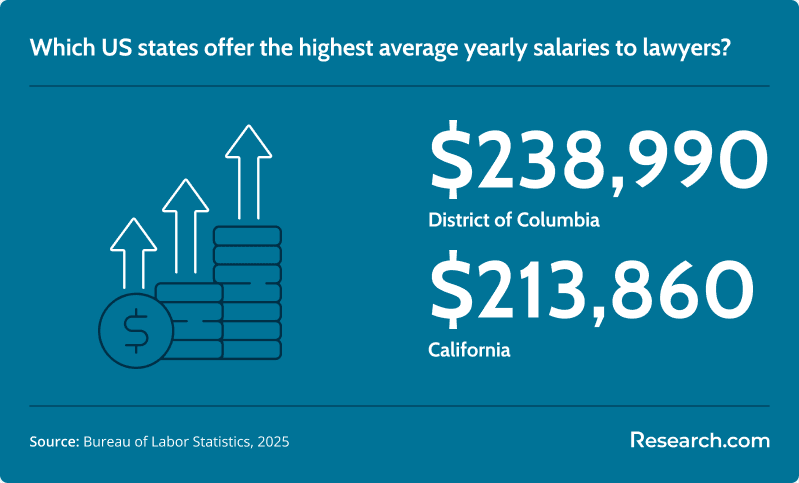
Intellectual property law can be one of the higher-paying legal practice areas, but compensation depends heavily on location, employer type, specialty, technical background, years of experience, and business development ability.
Intellectual property attorney starting salary typically begins at $156,500 for those entering the field, setting a solid financial foundation in 2025. The median annual salary for intellectual property attorneys is $199,306. The intellectual property attorney salary range 2025 spans from $156,500 for entry-level positions to $256,000 or more for senior-level earners, with top performers reaching up to $278,000 annually.
What can raise or lower earnings?
- Specialty: Patent attorneys with strong technical backgrounds may command higher compensation in technology, engineering, pharmaceuticals, or life sciences markets.
- Employer: Large law firms, major technology companies, and specialized IP boutiques may pay differently from small firms, nonprofits, government agencies, or academic institutions.
- Experience level: Senior attorneys, partners, in-house leaders, and attorneys who manage major client relationships often have higher earning potential.
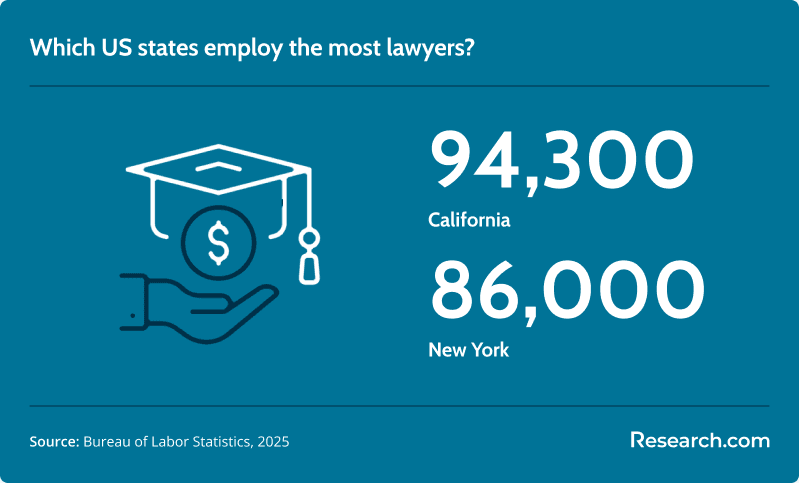
- Geography: Compensation often reflects local legal markets, industry concentration, and cost of living.
- Litigation and transactions: High-stakes disputes, portfolio strategy, complex licensing, and mergers or acquisitions involving IP can increase demand for experienced attorneys.
Salary should be weighed against education costs, bar preparation expenses, time in school, work-life expectations, and the competitiveness of the legal market you plan to enter.
What is the job outlook for intellectual property attorneys?
The employment of lawyers, including intellectual property attorneys, is projected to grow 4% from 2024 to 2034, which is about as fast as the average for all occupations. For IP attorneys, demand is supported by continued innovation, digital business models, brand competition, software development, life sciences research, entertainment distribution, and global commercialization.
Factors shaping demand
- Emerging technologies: AI, blockchain, digital content, software, data-driven products, and advanced manufacturing raise new questions about ownership, infringement, licensing, authorship, and enforcement.
- More valuable intangible assets: Companies increasingly depend on brands, proprietary platforms, algorithms, formulas, designs, and creative assets that require legal protection.
- IP litigation and enforcement pressure: Competitive markets can lead to disputes over patents, trademarks, copyrights, trade secrets, and licensing obligations.
- Global commercialization: Businesses that sell internationally often need coordinated IP filing, enforcement, and licensing strategies across jurisdictions.
- Broader client base: IP protection is no longer only a concern for large corporations. Startups, creators, small businesses, universities, and independent inventors also need guidance.
The outlook is strongest for attorneys who combine legal training with industry knowledge. A lawyer who understands a client’s technology, creative process, or market strategy can provide more useful advice than one who treats IP as a purely procedural matter.
For students still comparing affordable undergraduate pathways before law school, a cheap online college may reduce upfront education costs, but future law applicants should verify accreditation, transferability, academic rigor, and admissions outcomes.
What is the typical work environment for intellectual property attorneys?
Intellectual property attorneys usually work in law firms, corporate legal departments, government agencies such as the U.S. Patent and Trademark Office, universities, research organizations, or specialized consulting environments. Nearly half of these professionals are employed by legal services firms, while others work for corporations—especially technology companies—and a smaller share hold federal government roles.
The day-to-day environment is often office-based and deadline-driven. Attorneys may spend long blocks of time reviewing documents, drafting filings, analyzing technical materials, preparing legal opinions, or researching legal standards. They also meet with clients, inventors, executives, engineers, designers, product teams, opposing counsel, and agency examiners.
Schedule and flexibility
The intellectual property attorney typical work schedule often follows standard business hours, but extended hours including evenings and occasional weekends are common, especially near filing deadlines or trial preparations. Litigation, major transactions, urgent enforcement matters, and government filing deadlines can create periods of intense workload.
Remote and hybrid work options have grown more feasible for research, drafting, portfolio management, and client calls. However, in-person work may still be required for court appearances, depositions, client strategy sessions, negotiations, team meetings, and certain employer expectations.
Who fits this environment best?
This career tends to suit people who are comfortable with sustained concentration, detailed writing, technical or creative subject matter, professional deadlines, and client accountability. It may be less appealing to those who dislike dense documents, adversarial disputes, administrative procedures, or unpredictable workload spikes.
What are the pros and cons of intellectual property attorney careers?
Intellectual property law can be intellectually rich and financially rewarding, but it is also demanding. Before committing, weigh the benefits against the education requirements, licensing process, workload, and pressure that come with protecting high-value assets.
Pros
- High earning potential: IP law can offer strong compensation, especially for attorneys with technical expertise, litigation experience, licensing skills, or major client relationships.
- Intellectually challenging work: The field requires problem-solving across law, technology, business, branding, and creative industries.
- Direct connection to innovation: Attorneys often help clients protect inventions, creative works, product identities, research investments, and commercial opportunities.
- Multiple specialization paths: You can focus on patents, trademarks, copyright, trade secrets, licensing, litigation, transactions, or industry-specific work.
- Transferable legal and business skills: IP attorneys build experience in research, negotiation, contracts, risk analysis, portfolio management, and strategic counseling.
Cons
- Long education and licensing path: Becoming an attorney requires law school, bar admission, and for patent attorneys, USPTO registration requirements.
- High attention to detail: Small errors in filings, agreements, deadlines, or claim language can create major consequences.
- Workload pressure: Litigation, transactions, and filing deadlines may require long hours, including evenings and occasional weekends.
- Continuous learning: IP law changes as technology, markets, regulations, and court decisions evolve.
- Client expectations can be intense: IP assets may be central to a company’s revenue, valuation, reputation, or competitive position.
The career is a better fit if you enjoy complex analysis and can tolerate ambiguity, pressure, and detailed drafting. It is a weaker fit if you want a predictable schedule, minimal documentation, or a short training path.
If you are still building your educational foundation, reviewing top online universities with national accreditation can help with early planning, but law school applicants should always confirm how a degree will be viewed by target law schools and licensing bodies.
What are the opportunities for advancement for intellectual property attorneys?
Advancement in intellectual property law can follow several routes: promotion within a law firm, leadership inside a corporation, specialization in a high-demand IP niche, or transition into business, policy, academia, or consulting. The best path depends on whether you prefer client development, litigation, counseling, management, or technical specialization.
Common advancement paths
- Associate or junior IP attorney: Early-career attorneys typically conduct research, draft filings, support due diligence, prepare agreements, and assist senior lawyers on client matters.
- Mid-level or senior IP attorney: With experience, attorneys manage more complex matters, communicate directly with clients, supervise junior attorneys, and shape strategy.
- Partner or shareholder: In law firms, advancement may depend on legal skill, client relationships, leadership, business development, and profitability.
- In-house IP counsel: Attorneys may move into corporate roles managing portfolios, product counseling, licensing, enforcement, and risk across a business.
- Head of IP, chief IP counsel, or general counsel: Senior in-house attorneys may lead legal teams and guide company-wide intellectual property strategy.
Specialization paths for IP attorneys
- Patent law: Focuses on protecting inventions and technological innovation. This path often requires a technical background and patent bar certification.
- Trademark law: Centers on brand names, logos, slogans, trade dress, registration strategy, disputes, and portfolio management.
- Copyright law: Protects creative works such as music, literature, art, software, film, photography, and digital media.
- Trade secret law: Involves confidential information, employee mobility, nondisclosure agreements, internal policies, and enforcement.
- Licensing and commercialization: Focuses on monetizing IP through agreements, partnerships, technology transfer, and revenue-generating deals.
- IP litigation: Handles disputes involving infringement, validity, ownership, unfair competition, and enforcement strategy.
Attorneys who advance fastest often develop a clear niche and become known for solving a specific type of problem for a specific type of client.
What other careers should you consider?
If intellectual property law interests you but the full attorney path does not fit your goals, several related careers may offer similar subject matter with different education, licensing, workload, or responsibility levels.
- Patent Examiner: Reviews patent applications and evaluates whether inventions meet legal and technical standards. This role can appeal to people who enjoy technical analysis but prefer a government or examination-focused environment.
- IP Consultant: Advises companies or individuals on intellectual property strategy, portfolio organization, competitive positioning, commercialization, or risk. Some roles may require legal credentials, while others emphasize business or technical expertise.
- Technology Transfer and Licensing Specialist: Helps universities, research institutions, startups, or companies commercialize inventions through licensing, partnerships, and rights management.
- In-House Counsel (IP focus): Provides legal advice within an organization, often working closely with product, research, marketing, engineering, and executive teams.
- Trademark Attorney: Focuses specifically on trademark clearance, registration, enforcement, disputes, and brand portfolio management within the broader IP field.
- IP Paralegal or IP Specialist: Supports attorneys with filings, docketing, portfolio management, searches, renewals, and client communications. This can be a useful entry point for learning the field before law school.
- Contracts or Licensing Manager: Works on commercial agreements involving software, media, technology, content, or brand rights, often combining legal operations and business negotiation.
Use these alternatives to clarify what you actually want from the field. If you want to practice law, represent clients, and provide legal advice, the attorney route is necessary. If you mainly want to work with innovation, brands, technology, or creative assets, a related non-attorney role may also be worth considering.
Here's What Professionals Say About Their Intellectual Property Attorney Careers
- Rajesh: "Navigating the complexities of patent law requires not only legal expertise but also genuine empathy for the inventors behind the ideas. I take pride in breaking down the technical jargon so clients truly understand the protection their innovations receive. My colleagues and I balance sharp legal insight with a good sense of humor, which keeps the process approachable even under pressure. This profession demands integrity at every turn, and that's a standard I am committed to upholding daily."
- Caroline: "During my early years handling IP litigation, the workload was relentless with 16-hour days that tested my limits. It wasn't just the hours; it was the constant need to adapt to ever-evolving case details and manage high stress with composure. That intense environment forged a resilience I never knew I had and sharpened my practical approach to complex disputes. Looking back, it was those grueling demands that taught me the most enduring lessons in this field."
- Rose: "Winning a high-stakes trademark dispute was one of the most rewarding moments of my career. I remember how thoroughly preparing every motion and anticipating the opposition's strategies felt like a chess match, and my client's thankfulness made all the late nights worthwhile. Seeing the client confidently move forward with their brand intact affirmed why I remain so passionate about protecting creative work. The challenge and satisfaction of this case reminded me that my expertise makes a real difference in people's lives."
Key Findings
- Intellectual property attorneys protect and manage legal rights in patents, trademarks, copyrights, trade secrets, licenses, and related business assets.
- The career is especially strong for people who enjoy detailed legal analysis, technical or creative subject matter, negotiation, and strategic business counseling.
- A J.D. degree from an accredited law school and state bar licensure are required to practice law. Patent attorneys must also pass the USPTO registration exam and meet technical education requirements.
- Intellectual property attorney starting salary typically begins at $156,500 in 2025, the median annual salary is $199,306, and senior-level earners may reach $256,000 or more, with top performers reaching up to $278,000 annually.
- The employment of lawyers, including intellectual property attorneys, is projected to grow 4% from 2024 to 2034, about as fast as the average for all occupations.
- Common work settings include law firms, corporate legal departments, government agencies, universities, research organizations, and specialized IP practices.
- The main trade-off is clear: the field offers strong compensation, specialization, and intellectually meaningful work, but it requires long training, precise drafting, constant learning, and periods of intense workload.
Other Things You Should Know About Intellectual Property Attorney
You must pass the bar exam in the state where you want to practice, since intellectual property attorneys are licensed lawyers first. In most states, that means passing the Uniform Bar Examination or a state-specific exam, then meeting character and fitness requirements and completing any required ethics testing.
In 2027, intellectual property attorneys can expect an average annual salary of around $140,000. However, this can vary significantly based on factors such as location, experience, and specialization within the IP field.
References
- Intellectual property lawyers: Salary, career path, job outlook, education and more - RaiseMe https://www.raise.me/careers/legal/lawyers/intellectual-property-lawyers/
- Intellectual Property and Legal Jobs | Adamson & Partners https://adamsons.com/en/candidates
- What does a Commercial (IT/IP) Lawyer do? https://www.taylorroot.com/career-advice/what-does-a-commercial-lawyer-do/
- Alternative Career Paths for Attorneys: A Comprehensive Guide to 50+ Non-Traditional Legal Careers https://www.bcgsearch.com/article/900056120/Alternative-Career-Paths-for-Attorneys-A-Comprehensive-Guide-to-50-Non-Traditional-Legal-Careers/
- IP/IT lawyer – tasks, prospects & salary | Hays https://www.hays.de/en/job-profiles/ip-it-lawyer
- Essential Skills to become a successful Patent Attorney - IP Careers https://www.ipcareers.co.uk/profession-overview/essential-skills-for-patent-attorneys/
- Merlin Wright Associates | Navigating a Career as a Patent Attorney Amid Uncertain Times https://mwaip.com/navigating-a-career-as-a-patent-attorney-amid-uncertain-times/
- Alternative Career Paths: Is a Career in Patent Law Right for You? - EpiCypher https://www.epicypher.com/resources/blog/alternative-career-paths-is-a-career-in-patent-law-right-for-you/
- Everything You Need to Know About Becoming an Intellectual Property Lawyer https://www.nesl.edu/blog/detail/everything-you-need-to-know-about-becoming-an-intellectual-property-(ip)-lawyer
- IP Lawyers and their Responsibilities - Novotech Patent Firm https://novotechip.com/ip_questions/what-is-the-role-of-an-ip-lawyer/


