
2027 Health Coaching Careers: Skills, Education, Salary & Job Outlook

Co-Founder and Chief Data Scientist
Health coaching is a practical career path for people who want to help clients turn health advice into daily behavior change. The decision is not simply whether you enjoy wellness; it is whether you are willing to build credible training, practice coaching skills, document outcomes, and work within appropriate professional boundaries.
The field blends nutrition awareness, behavior change methods, communication skills, and client accountability. Some roles are wellness-focused, while others sit inside healthcare, employee benefits, community health, or chronic disease support programs. Certification can matter, especially for employers that want coaches trained through recognized pathways such as the National Board Certified Health & Wellness Coach credential.
This guide explains what health coaches do, what skills and credentials employers look for, how much health coaches can earn, where they work, and how to decide whether this career fits your strengths. It also outlines advancement options and related careers so you can compare health coaching with similar roles before investing in education or certification.
Key Things You Should Know About Health Coaching Career
- The typical earning potential for a health coach is around $71,700 annually, with entry-level positions starting near $49,880 and experienced coaches earning over $112,900 per year.
- Health coaching is a stable and growing field, with job opportunities expected to increase by 7% between 2023 and 2033, adding about 6,700 new positions each year.
- A bachelor's degree in a health-related field such as nutrition, exercise science, psychology, public health, or nursing is preferred, though relevant certification and experience can also open doors.
- Success depends on strong skills in motivational interviewing, behavior change coaching, communication, active listening, empathy, goal setting, and basic health science knowledge.
- Career advancement can lead from entry-level coach to senior coach, program manager, corporate wellness director, or specialized roles in healthcare or management, with opportunities for private practice, consulting, or education as well.
What do Health Coaches do?
Health coaches help clients make realistic, sustainable changes to improve physical, emotional, and lifestyle-related well-being. Their work is not the same as diagnosing illness, prescribing treatment, or replacing licensed medical care. Instead, they support clients as they set goals, identify barriers, strengthen motivation, and follow through on healthier routines.
A health coach may work with clients on nutrition habits, physical activity, sleep, stress management, tobacco cessation, weight-related goals, medication adherence support, or chronic disease lifestyle management. The exact scope depends on the employer, training, certification, and whether the coach works independently or as part of a clinical team.
The value of the role is accountability. Many people know what they “should” do for their health but struggle to turn advice into repeatable action. Health coaches bridge that gap by helping clients choose manageable steps, track progress, learn from setbacks, and build confidence over time.
A Day in the Life of Health Coaches
A typical day may include individual coaching sessions, group wellness workshops, intake assessments, progress reviews, care team meetings, documentation, and follow-up messages. Some coaches work in person in clinics, hospitals, community organizations, or corporate settings; others deliver sessions by phone or video.
Strong coaches spend less time lecturing and more time listening. They ask focused questions, reflect what clients say, help clients define meaningful goals, and avoid one-size-fits-all advice. In healthcare settings, they may coordinate with physicians, nurses, dietitians, therapists, or case managers to keep client support aligned with the broader care plan.
Common work products include wellness plans, session notes, goal-tracking summaries, referral recommendations, and client progress reports. The best outcomes usually come from small, consistent behavior changes rather than dramatic short-term plans.
What are the key responsibilities of Health Coaches?
Health coaches are responsible for helping clients move from intention to action. The role combines education, behavior-change support, documentation, and collaboration. Responsibilities vary by setting, but most health coaching jobs include the following:
- Meet with individuals or groups to understand health goals, readiness for change, lifestyle patterns, and obstacles.
- Help clients create practical wellness plans with measurable goals, timelines, and behavior strategies.
- Use coaching techniques such as active listening, motivational interviewing, reflection, and accountability check-ins.
- Track client progress, document session notes, and adjust goals when barriers or priorities change.
- Provide evidence-informed education on topics such as nutrition, physical activity, stress management, sleep, and preventive health.
- Encourage clients through setbacks without using shame, pressure, or unrealistic promises.
- Coordinate with healthcare professionals when a client needs medical, mental health, nutrition, or other specialized support.
- Maintain confidentiality, professional boundaries, and accurate records according to employer policies and applicable standards.
The Most Challenging vs. The Most Rewarding Tasks
The hardest part of health coaching is helping clients sustain change when life becomes stressful, motivation drops, or old habits return. Coaches must be patient, structured, and realistic. Progress is often uneven, and a coach cannot control a client’s environment, finances, family responsibilities, medical conditions, or readiness to act.
The most rewarding part is seeing clients gain confidence and independence. A strong coaching relationship can help a client move from feeling stuck to making repeatable choices that improve energy, health literacy, daily routines, and quality of life.
For students who want an affordable and fast academic starting point before pursuing specialized coaching training, 6-month online associate degree programs may be worth comparing with longer degree pathways.
What are the key skills for Health Coaches?
Successful health coaches need both technical knowledge and people skills. Technical knowledge helps a coach understand wellness topics and evidence-based behavior change. Interpersonal skills determine whether clients feel heard, respected, and capable of taking action.
Key Hard Skills
- Health promotion: Understanding how to encourage preventive behaviors, healthier routines, and wellness planning.
- Behavior change methods: Applying goal setting, habit formation, motivational interviewing, and readiness-to-change concepts.
- Basic nutrition and fitness literacy: Explaining general wellness principles while knowing when to refer to licensed professionals.
- Client assessment and planning: Gathering relevant information, identifying priorities, and creating achievable action plans.
- Documentation and health information technology: Recording sessions, tracking outcomes, and using digital platforms responsibly.
- Care coordination: Communicating clearly with healthcare teams, wellness departments, or community partners.
Essential Soft Skills
- Empathy: Understanding a client’s lived experience without judgment.
- Active listening: Hearing the concern beneath the words and reflecting it accurately.
- Clear communication: Explaining choices, next steps, and expectations in simple language.
- Trust-building: Creating a safe relationship where clients can be honest about setbacks.
- Adaptability: Adjusting strategies when a client’s schedule, health status, or motivation changes.
- Judgment and decision making: Recognizing when coaching is appropriate and when referral is necessary.
The One Overlooked Skill That Separates the Good from the Great
Strategic leadership often separates entry-level coaches from those who move into program development, supervision, or organizational wellness roles. A strong coach can help one client. A strategic coach can also identify patterns, improve workflows, support team goals, and design programs that serve many clients more effectively.
For example, a coach in a healthcare organization might notice that clients with similar barriers are missing follow-up appointments. A strategic response could involve better reminder systems, group education sessions, referral coordination, or revised intake questions. That type of leadership can improve outcomes beyond individual sessions.
If you need an accessible academic pathway while building these broader skills, open admission online colleges can help you compare programs with flexible entry requirements.
Health Coaching Careers: A Step-by-Step Guide to Getting Started
The best way to start a health coaching career is to build the right foundation before paying for advanced credentials or launching a private practice. Employers and clients look for credibility, supervised practice, communication skill, and a clear understanding of professional scope.
- Clarify your target setting. Decide whether you want to work in corporate wellness, healthcare, fitness, community health, digital coaching, or private practice. The setting affects which credentials and experience matter most.
- Build an educational foundation. Consider coursework or a degree related to health, psychology, nutrition, exercise science, public health, social work, addiction studies, or integrated health and wellness.
- Complete health coach-specific training. Choose training that teaches coaching methods, behavior change, ethics, client communication, documentation, and scope of practice.
- Gain supervised practice. Practice with real or simulated clients, receive feedback, and learn how to handle resistance, setbacks, goal changes, and referral situations.
- Pursue professional certification when it fits your goals. Certification can improve credibility with employers, healthcare organizations, and clients, especially when it is recognized in the setting where you want to work.
- Develop a portfolio of experience. Keep records of coaching hours, sample wellness plans, program contributions, outcomes summaries, and professional references.
- Continue professional development. Add specialization, leadership training, or advanced education as your career direction becomes clearer.
A common mistake is choosing the fastest certificate without checking whether employers in your area recognize it. Before enrolling, review job postings, ask programs about graduate outcomes, confirm exam requirements, and compare total costs.
What education, training, or certifications are required?
Health coaching requirements vary by employer and work setting. Some entry-level wellness roles accept relevant experience plus coach training, while healthcare organizations may prefer candidates with an associate or bachelor’s degree in areas such as Social Work, Psychology, Addiction Studies, or Integrated Health and Wellness.
Certification is often important because it signals that a coach has completed structured training and understands professional standards. Two commonly cited credentials are the National Board Certified Health & Wellness Coach (NBC-HWC), issued through the National Board for Health & Wellness Coaching, and the ACE Health Coach Certification, issued by the American Council on Exercise.
Practical experience is also part of the pathway. On-the-job training may include 150 to 2,000 hours of field experience, internships, or coaching sessions, depending on the certification level pursued. Many bachelor’s and master’s programs include internships or practicums that help students meet experiential expectations. For NBC-HWC certification, candidates must complete 50 documented coaching sessions and pass a board exam.
How to choose a training or certification program
- Check recognition: Look at job postings and employer preferences before choosing a credential.
- Confirm eligibility requirements: Some certifications require specific training, coaching hours, exams, or documentation.
- Review curriculum depth: Strong programs cover coaching skills, behavior change, ethics, equity, documentation, and referral boundaries.
- Ask about supervised practice: Feedback from experienced coaches is essential for skill development.
- Calculate total cost: Include tuition, exam fees, renewal fees, continuing education, books, and technology costs.
Are advanced degrees or niche certifications worth the investment?
Advanced degrees, such as a master’s in Wellness or Public Health, may be worthwhile if you want leadership roles, program design responsibilities, teaching opportunities, research-related work, or positions inside larger healthcare or public health systems. They can also help candidates compete for roles that require broader knowledge of population health, policy, evaluation, or administration.
Niche certifications can be valuable when they align with a specific market need, such as corporate wellness, fitness coaching, stress management, or chronic disease lifestyle support. However, they are not automatically profitable. Entry-level roles or regions with less regulation may not reward additional credentials with immediate salary gains.
If cost is a concern, compare flexible options such as the cheapest online masters programs before committing to a graduate degree. The best investment is the credential that fits your target job, budget, timeline, and long-term career plan.
What is the earning potential for Health Coaches?
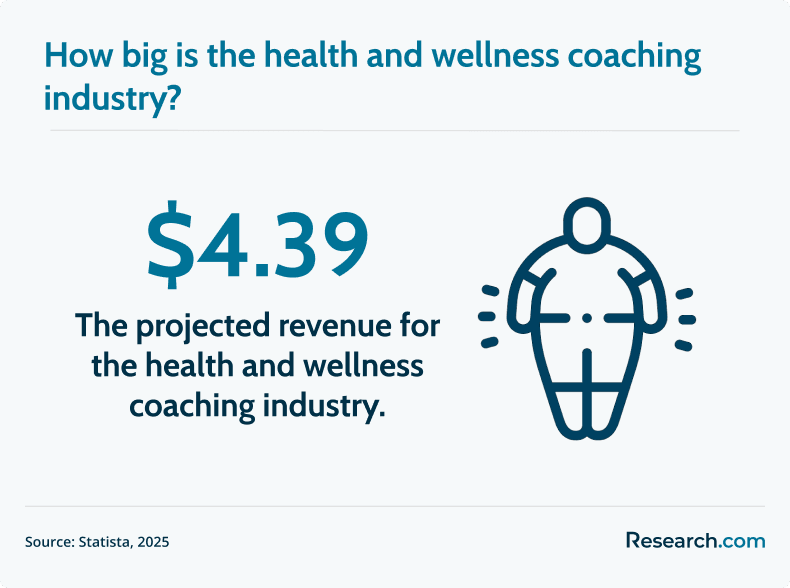
Health coach earnings vary widely by setting, experience, credentials, client population, and location. The average income picture for 2025 lists a national median salary of $71,700. Entry-level positions earn around $49,880, while experienced professionals with advanced skills, specialized credentials, or higher-responsibility roles can reach salaries near $112,900.
Those figures should be treated as planning benchmarks, not guarantees. A coach working full time for a hospital, insurer, employer wellness program, or government agency may have a different compensation structure than an independent coach building a client base. Benefits, schedule stability, caseload expectations, and administrative support also affect the true value of a job offer.
Factors that influence pay
- Work setting: Corporate wellness, healthcare facilities, community programs, private practice, and digital health companies may pay differently.
- Credentials: Recognized certifications can improve competitiveness for structured roles.
- Experience: Coaches who can document outcomes, manage complex cases, or mentor others may qualify for higher-level positions.
- Specialization: Chronic disease support, workplace wellness, stress management, nutrition-focused coaching, or fitness-related coaching can affect earning potential.
- Location: Local demand, cost of living, and employer budgets shape salaries.
- Employment model: Salaried roles may offer stability and benefits; private practice can offer flexibility but usually requires marketing, billing, and client acquisition.
When comparing offers, look beyond the headline salary. Ask about caseload size, paid documentation time, supervision, continuing education support, certification reimbursement, schedule flexibility, and whether the role includes sales or client recruitment responsibilities.
What is the job outlook for Health Coaches?
The job outlook for health coaching roles is positive. The projected growth rate is 7% from 2023 to 2033, compared with the 4% average growth expected for all occupations during the same period. The field also benefits from broader interest in prevention, chronic disease management, employee wellness, and virtual care.
The Key Factors Shaping the Future Outlook
Aging and chronic health needs: As more people manage long-term conditions, healthcare systems and community organizations need support roles that help clients follow lifestyle recommendations and stay engaged between appointments.
Employer wellness investment: Corporate wellness programs continue to create opportunities for coaches who can support healthier habits, stress reduction, and employee engagement.
Healthcare team integration: Coaches may be used in clinics, hospitals, population health programs, and care management teams to reinforce provider recommendations and improve follow-through.
Digital health growth: Telehealth and app-based coaching expand access but also raise expectations. Coaches may need comfort with video sessions, messaging platforms, digital documentation, and remote client engagement.
Credential expectations: As the field matures, employers may place more weight on recognized training, documented coaching hours, and certification. Candidates should compare programs carefully rather than assuming every certificate carries the same value.
If you are comparing online education options that can support entry into this field, the list of top schools online can help you identify programs to research further.
What is the typical work environment for Health Coaches?
Health coaches work in a range of public, private, clinical, community, and corporate environments. Evidence shows that about 24% work in hospitals, 21% in government settings, and 18% in ambulatory healthcare services. Others may work in fitness centers, wellness companies, nonprofit organizations, insurance programs, digital health platforms, or independent practice.
The work environment affects the pace and responsibilities of the job. In a hospital or clinic, a coach may collaborate closely with medical staff and document in structured systems. In corporate wellness, the focus may be employee engagement, workshops, health challenges, and preventive education. In community settings, coaches may address access barriers, health literacy, and culturally responsive support.
A typical workday often includes client sessions, follow-up communication, documentation, planning, team meetings, and program activities. Many roles operate during standard business hours, but evening or weekend sessions may be needed to accommodate clients. Remote work is possible in some coaching models, particularly for telehealth or digital wellness programs, but hands-on or team-based roles may require regular in-person presence.
Before accepting a role, ask about schedule expectations, caseload size, documentation requirements, travel, remote-work policies, and how success is measured. These details can shape job satisfaction as much as the job title itself.
What are the pros and cons of Health Coach careers?
Health coaching can be meaningful, flexible, and growth-oriented, but it is not an easy shortcut into healthcare. The work requires emotional stamina, professional boundaries, and comfort with gradual progress. A clear view of the benefits and drawbacks can help you decide whether the career fits your temperament and goals.
Pros
- Meaningful client impact: Coaches can help people make changes that improve daily life, confidence, and long-term wellness.
- Strong relationship-building: The role is built around trust, empathy, and ongoing support.
- Variety of settings: Opportunities may exist in healthcare, corporate wellness, community health, digital coaching, and private practice.
- Room for specialization: Coaches can focus on nutrition habits, fitness, stress management, chronic disease support, workplace wellness, or other areas.
- Continuous learning: The field rewards professionals who stay current on behavior change, wellness research, and technology.
Cons
- Slow or uneven progress: Clients may struggle with motivation, relapse into old habits, or face barriers outside their control.
- Emotional fatigue: Supporting clients through setbacks can be draining, especially without supervision or peer support.
- Scope limitations: Coaches must avoid diagnosing, prescribing, or providing services that require licensure.
- Client acquisition pressure: Independent coaches often need marketing, sales, scheduling, billing, and retention skills.
- Variable credential value: Not all certifications carry the same recognition, and some markets may have limited entry-level opportunities.
If you are still building your academic foundation, reviewing the best online nationally accredited universities can help you compare accessible education options before choosing a coaching-specific credential.
What are the opportunities for advancement for Health Coaches?
Health coaches can advance by taking on more complex clients, specializing, supervising other coaches, managing wellness programs, or moving into broader healthcare and organizational leadership. Advancement usually depends on experience, outcomes, credentials, communication skills, and the ability to work across teams.
Advancement Pathways
- Entry-Level Health Coach: Work directly with clients in clinics, corporate wellness programs, fitness settings, community organizations, or digital platforms.
- Senior Health Coach / Program Coordinator: Handle more complex cases, mentor new coaches, support program operations, and help evaluate client outcomes.
- Health Coaching Manager / Director: Lead teams, manage wellness initiatives, design service models, track program performance, and coordinate with organizational leaders.
Specialization Options
Specialization can make a coach more competitive when it matches employer needs and client demand. Strong options include:
- Nutrition Coaching: Support general dietary habit change, meal planning behaviors, and wellness goals while staying within scope.
- Fitness Coaching: Help clients build sustainable physical activity routines suited to their goals and abilities.
- Stress Management & Mental Well-being: Teach behavior-based stress reduction strategies and refer to licensed mental health professionals when needed.
- Corporate Wellness: Design workplace wellness programs, employee challenges, workshops, and engagement strategies.
- Chronic Disease Management: Collaborate with healthcare teams to support lifestyle changes for conditions such as diabetes and hypertension.
To move up, document your results. Track participation, goal completion, client satisfaction, retention, referrals, and program improvements where appropriate. Advancement is easier to justify when you can show both coaching skill and measurable value.
What other careers should you consider?
If you are interested in health coaching, compare it with related roles before choosing a degree or certification. Some careers are more fitness-focused, some are more administrative, and others require different credentials or licensure.
- Wellness Coach: Similar to health coaching, with a broad focus on lifestyle, motivation, goal setting, and holistic well-being.
- Personal Trainer: Focuses primarily on exercise programming, physical fitness, and performance goals.
- Corporate Wellness Coordinator: Plans and manages workplace health initiatives, employee wellness events, screenings, and engagement campaigns.
- Patient Navigator/Care Coordinator: Helps patients understand appointments, referrals, benefits, treatment steps, and healthcare system processes.
- Chronic Disease Educator: Provides education and support for people managing long-term conditions, often in partnership with healthcare teams.
Choose health coaching if you enjoy behavior change conversations, long-term client support, and practical goal setting. Consider personal training if you prefer exercise instruction, patient navigation if you like healthcare coordination, or corporate wellness if program planning and employee engagement appeal to you.
Here's What Professionals Say About Their Health Coaching Careers
-
: "When I started working with Maya, I was honestly overwhelmed trying to balance client sessions, meal plans, and my personal health goals. She was always just a message away—checking in, offering useful tips, and adapting strategies to fit my hectic schedule. What really helped was her encouragement to focus on one small change at a time, which made everything feel manageable. Now, I have tools that not only support my own wellness but also enhance how I coach my clients. I can't thank her enough for the steady support that transformed my approach from chaos to clarity.
—Jasmine"
-
: "Having an open and honest conversation with Lila about what was truly holding me back was eye-opening. She asked thoughtful questions that made me reflect on what I could realistically control and change. Setting clear goals and regularly reviewing my progress over several months gave me a renewed sense of direction. Now, I appreciate how consistent, incremental efforts create meaningful improvements in both my personal and professional life. This insight has been invaluable.
—Carlos"
-
: "Talking with Nina today left me unexpectedly emotional because she made me feel genuinely understood for the first time in a long while. She taught me that it's perfectly fine to stray from my ideal eating habits occasionally without guilt, and more importantly, how to calmly return to my healthy routine. That balance has made me feel healthier and so much more confident in my coaching work. It has opened up a new way of living that feels sustainable and joyful. I'm very grateful for how much she cares.
—Amina"
Key Findings
- Health coaches help clients turn wellness goals into sustainable behavior change through planning, accountability, education, and support.
- The role is different from licensed medical, nutrition, or mental health care; coaches must understand referral boundaries and scope of practice.
- Common pathways include relevant education, health coach-specific training, supervised practice, certification, and continuing professional development.
- Foundational degrees may include fields such as Social Work, Psychology, Addiction Studies, or Integrated Health and Wellness.
- Recognized credentials such as NBC-HWC and ACE Health Coach Certification can improve credibility, especially in structured healthcare or wellness roles.
- For NBC-HWC certification, candidates must complete 50 documented coaching sessions and pass a board exam.
- On-the-job training requirements may include 150 to 2,000 hours of field experience, internships, or coaching sessions, depending on the certification level pursued.
- The national median salary for health coaches is listed at $71,700 in 2025, with entry-level roles around $49,880 and experienced professionals near $112,900.
- The job outlook is favorable, with projected growth of 7% from 2023 to 2033, compared with 4% for all occupations.
- Work settings are varied: about 24% work in hospitals, 21% in government settings, and 18% in ambulatory healthcare services.
- Advancement options include senior coach, program coordinator, manager, director, and specialized roles in nutrition coaching, fitness coaching, stress management, corporate wellness, or chronic disease management.
Other Things You Should Know About Health Coaching
In 2027, obtaining a health coaching certification from a recognized organization like the National Board for Health & Wellness Coaching (NBHWC) can enhance career opportunities. Other certifications, such as those from the International Coach Federation (ICF), may also be beneficial to validate skills and knowledge in the field.
In 2027, health coaches need strong digital literacy, as telehealth continues to grow. Skills in personalized care, behavioral change techniques, and motivational interviewing are also increasingly critical to effectively support clients and adapt to evolving healthcare landscapes.
References
- Your Guide to a Professional Health Coaching Career https://prekure.com/blog/health-coaching/professional-health-coach-career-guide/
- Here’s how much you can really earn as a health coach | Fortune Education https://fortune.com/education/articles/how-much-does-a-health-coach-make/
- 100+ Powerful Health Coaching Questions to Ask in Your Sessions https://simply.coach/blog/powerful-health-coaching-questions/
- Top 12 Hard and Soft Skills Needed in Healthcare https://www.bryantstratton.edu/blog/healthcare-degrees/healthcare-skills-hard-soft/
- Health Coach - Alternative Careers and Similar Jobs (Updated for 2025) https://resumeworded.com/career-profiles/health-coach-career-profile
- Exploring Lucrative Career Paths in Health Coaching https://www.weljii.com/blog/lucrative-health-coach-employment-opportunities-guide/
- Health and Nutrition Coach Salaries: How Much Can You Make? https://www.precisionnutrition.com/health-coach-salary
- The Future of Health Coaching Jobs, With Leslie Wier-Fincher | Functional Medicine Coaching Academy https://functionalmedicinecoaching.org/podcast/leslie-wier-fincher-115/
- Verifying that you are not a robot... https://alishapiro.com/pros-and-cons-of-health-coaching-courtney-townley/
- Alternative Healthcare Careers https://www.alternativehealthcarecareers.com/


