2027 Psychology vs. Cognitive Science Degree: Explaining the Difference

Co-Founder and Chief Data Scientist
Choosing between psychology and cognitive science is really a choice between two ways of studying the mind. Psychology is usually the better fit if you want to understand behavior, emotion, development, mental health, assessment, or human relationships. Cognitive science is usually the better fit if you want to study cognition through a broader mix of psychology, neuroscience, computer science, linguistics, philosophy, and artificial intelligence.
Both degrees can build strong research, writing, and analytical skills, but they point students toward different academic paths and job markets. Psychology often leads toward counseling, social services, education, human resources, research, or graduate study in clinical or applied psychology. Cognitive science often prepares students for research, user experience, data analysis, artificial intelligence, human-computer interaction, or neuroscience-related work.
This guide compares psychology degree programs and cognitive science degree programs by curriculum, skills, difficulty, cost, career outcomes, and decision factors so you can choose the major that best matches your strengths, interests, and long-term goals.
Key Points About Pursuing a Psychology vs. Cognitive Science Degree
- Psychology degrees typically span four years, focusing on human behavior and mental health, with average tuition around $10,000 per year at public universities.
- Cognitive science programs combine psychology, neuroscience, and computer science, often leading to tech-driven roles, with similar program lengths but slightly higher tuition.
- Psychology graduates pursue clinical and counseling careers, while cognitive science grads often enter AI, UX design, or research, reflecting varied job market demands.
What are psychology degree programs?
Psychology degree programs study human behavior and mental processes using scientific methods. Students examine how people think, feel, develop, learn, interact, make decisions, and respond to stress, relationships, and social environments. The field is broad, but most programs give students a foundation in research, statistics, ethics, and major areas of psychological theory.
At the undergraduate level in the US, psychology bachelor's degrees typically take four years to complete. Students usually begin with introductory psychology, statistics, and research methods before moving into upper-division courses such as cognitive psychology, developmental psychology, abnormal psychology, social psychology, personality, biological psychology, and clinical or counseling-related topics.
Many programs also include laboratory work, research participation, field experiences, or applied projects. These requirements help students learn how psychologists collect data, evaluate evidence, interpret behavior, and communicate findings responsibly. Because psychology often deals with sensitive human subjects, students also learn about research ethics, confidentiality, cultural awareness, and the limits of psychological interpretation.
Academic progression can depend on meeting minimum grade requirements in key courses, often a C in foundational classes. This matters because psychology is a popular major, and some departments require students to demonstrate readiness before advancing into research-intensive or specialized coursework.
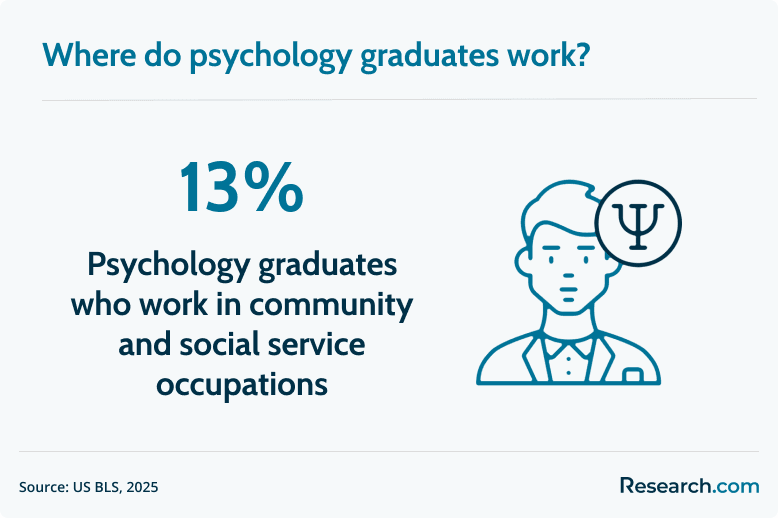
A psychology degree can be useful on its own for entry-level roles in human services, case management, human resources, research assistance, education support, and business settings. However, students who want to become licensed psychologists, therapists, counselors, or school psychologists should expect to pursue graduate education and meet state-specific licensure requirements.
What are cognitive science degree programs?
Cognitive science degree programs study the mind as an information-processing system. Instead of looking at behavior through one discipline, cognitive science combines psychology, computer science, linguistics, neuroscience, philosophy, and related fields to examine perception, memory, language, learning, reasoning, attention, decision-making, and intelligence.
Most undergraduate cognitive science programs take four years to complete. The curriculum is usually interdisciplinary from the start: students may take courses in cognitive psychology, neuroscience, programming, artificial intelligence, linguistics, logic, philosophy of mind, statistics, and computational modeling. Many programs then ask students to choose a concentration or cluster of advanced courses, such as Cognitive Neuroscience or Decision Science.
The degree is often more technical than a traditional psychology major. Students may work with data sets, build models, write code, study neural systems, analyze language structure, or explore how machines simulate aspects of human cognition. This makes cognitive science attractive to students who are interested in both human thought and technology.
Admission standards usually follow general university requirements, including academic records and test scores where required by the institution. A background in math, science, or computing can be helpful because many cognitive science programs include quantitative and technical coursework. Students who have not coded before can still succeed, but they should be prepared to learn programming and formal reasoning alongside behavioral science.
Cognitive science can lead to graduate study or to roles that value interdisciplinary problem-solving, especially in user experience, artificial intelligence, data analysis, research, product design, neuroscience labs, and human-computer interaction. The strongest outcomes often come from combining the major with projects, internships, research experience, or a technical portfolio.
What are the similarities between psychology degree programs and cognitive science degree programs?
Psychology and cognitive science degree programs both examine how the mind works, how people behave, and how evidence can be used to explain mental processes. Both majors teach students to ask researchable questions, evaluate data, and avoid relying on assumptions about human behavior.
The overlap is strongest in areas such as cognition, perception, learning, memory, research methods, statistics, neuroscience, and experimental design. For students comparing the two majors, this shared foundation is important: either degree can support further study in behavior, cognition, research, education, health-related fields, or technology-adjacent work.
Key similarities
- Shared interest in the mind: Both fields study mental processes such as attention, memory, learning, perception, decision-making, and problem-solving.
- Research-based training: Students in both majors learn how to read scientific studies, design research questions, collect data, analyze evidence, and explain results clearly.
- Course overlap: Many programs include introductory psychology, cognitive psychology, statistics, research methods, and neuroscience-related coursework.
- Laboratory and project work: Both degrees may include labs, experiments, collaborative research, literature reviews, and applied projects.
- Graduate school preparation: Either major can prepare students for advanced study, especially if they complete research experience, strong quantitative coursework, and faculty-led projects.
- Transferable skills: Students build writing, critical thinking, problem-solving, data interpretation, and communication skills that apply across many fields.
A bachelor's degree in either field typically spans four years in the U.S. Admission requirements generally include a high school diploma and competitive standardized test scores, depending on the institution. Cognitive science programs may more strongly encourage prior biology, math, or computing preparation, but requirements vary by school.
Students choosing between these majors should not focus only on which one sounds more interesting. They should compare required courses, available concentrations, internship options, research labs, and career support. For broader context on academic value and career alignment, students may also review Research.com's guide to the most valuable college majors.
What are the differences between psychology degree programs and cognitive science degree programs?
The main difference is the lens each degree uses. Psychology studies behavior and mental processes as a scientific and applied social science. Cognitive science studies cognition through an interdisciplinary model that often includes computation, language, neuroscience, and artificial intelligence.
In practical terms, psychology is usually more focused on people in social, developmental, emotional, educational, clinical, or organizational contexts. Cognitive science is usually more focused on how cognition works across brains, minds, languages, machines, and models.
Major differences to compare
- Academic focus: Psychology centers on behavior, emotion, personality, development, mental health, social interaction, and psychological assessment. Cognitive science centers on cognition, representation, perception, language, learning, neural systems, and computational models.
- Curriculum: Psychology curricula commonly include clinical, developmental, social, abnormal, personality, and counseling-related courses. Cognitive science curricula often include programming, artificial intelligence, linguistics, neuroscience, philosophy of mind, logic, and computational modeling.
- Technical demands: Cognitive science usually requires more comfort with math, coding, logic, and quantitative modeling. Psychology still requires statistics and research methods, but it is often less programming-heavy.
- Applied direction: Psychology more often points toward mental health, education, human services, organizational behavior, and applied behavioral research. Cognitive science more often points toward user experience, AI, data, human-computer interaction, neuroscience research, and technology-centered roles.
- Graduate study expectations: Many psychology careers in therapy, counseling, school psychology, or clinical practice require graduate education and licensure. Cognitive science graduates may also pursue graduate school, but some technology and research-adjacent roles may be accessible with strong technical skills, internships, and a portfolio.
- Salary framing: Psychologists have a median US salary of $82,180 (2024), but that figure generally reflects roles requiring advanced education and, in many cases, licensure. Cognitive science outcomes vary widely because graduates enter many different fields, including research, technology, design, and data-related roles.
Neither degree is automatically better. Psychology is a stronger fit for students who want a deeper foundation in human behavior, mental health, development, or social systems. Cognitive science is a stronger fit for students who want to combine the study of the mind with computing, neuroscience, language, or AI-related problems.
What skills do you gain from psychology degree programs vs cognitive science degree programs?
Psychology and cognitive science both build analytical skills, but they emphasize different types of problem-solving. Psychology develops strong behavioral research, interpretation, communication, and people-centered analysis. Cognitive science adds more technical, computational, and interdisciplinary training.
Skills gained in psychology degree programs
- Research methods: Students learn to design studies, evaluate variables, collect data, and interpret behavioral evidence.
- Statistical analysis: Psychology majors use statistics to understand patterns in human behavior and assess whether findings are meaningful.
- Critical thinking: Students learn to evaluate theories, identify weak evidence, and separate scientific conclusions from unsupported claims.
- Human behavior analysis: Coursework helps students understand motivation, emotion, development, personality, group behavior, and social influence.
- Communication: Psychology students practice writing research papers, explaining findings, conducting interviews or observations, and communicating with different audiences.
- Ethical reasoning: Students learn to consider consent, confidentiality, cultural context, bias, and responsible interpretation of human-subject research.
These skills are useful in counseling-related support roles, social services, education, human resources, research assistance, healthcare administration, marketing research, and organizational settings. For licensed clinical or counseling practice, however, a bachelor's degree is not enough; graduate education and state licensure are typically required.
Skills gained in cognitive science degree programs
- Programming: Students often learn coding for experiments, data analysis, simulations, computational modeling, or AI-related applications.
- Data analysis: Cognitive science programs train students to work with behavioral, linguistic, computational, or neuroscience-related data.
- Computational thinking: Students learn to model mental processes, reason formally, and break complex cognitive problems into testable structures.
- Interdisciplinary integration: Graduates learn to connect ideas from psychology, neuroscience, linguistics, computer science, and philosophy.
- Experimental design: Like psychology students, cognitive science majors learn how to test hypotheses about perception, memory, decision-making, language, or learning.
- Human-centered technology insight: Students can apply knowledge of cognition to interfaces, digital products, AI systems, accessibility, and user experience.
Cognitive science skills are especially useful when paired with hands-on evidence: coding projects, UX case studies, lab research, data portfolios, internships, or independent projects. Students who want technology-oriented roles should not rely on the degree title alone; they should build demonstrable technical experience while enrolled.
Which is more difficult, psychology degree programs or cognitive science degree programs?
Cognitive science is often more technically demanding, while psychology can be more reading-, writing-, and theory-intensive. The harder major depends on the student's strengths. A student who enjoys coding, logic, neuroscience, and quantitative work may find cognitive science manageable. A student who prefers writing, behavioral theory, social science research, and applied human problems may find psychology more natural.
Psychology programs usually require substantial reading, research papers, statistics, experimental methods, and theory application. Students may analyze case studies, critique journal articles, conduct behavioral research, and learn complex frameworks for understanding development, social behavior, personality, cognition, or abnormal psychology. The challenge is not usually advanced math or coding, but careful interpretation of evidence and strong written communication.
Cognitive science programs are often harder for students who are uncomfortable with programming, formal logic, computational modeling, neuroscience, or quantitative analysis. Because the field combines multiple disciplines, students must move between different ways of thinking: psychological experiments, computer models, language structure, neural systems, and philosophical arguments.
The difficulty of cognitive science degree compared to psychology is reflected in studies showing STEM majors like cognitive science are generally rated more challenging than social sciences. STEM professors are often perceived as more demanding, reinforcing the technical rigor of cognitive science.
How to judge difficulty before choosing
- Review the required courses: Look beyond the major name and compare statistics, lab, programming, neuroscience, and capstone requirements.
- Check prerequisite chains: Cognitive science may require courses that build on math, computing, or science foundations.
- Consider assessment style: Psychology may involve more papers, exams, and research critiques; cognitive science may include coding assignments, models, problem sets, and lab reports.
- Match the major to your strengths: Difficulty is lower when the work fits your interests and learning style.
- Think about graduate school: If your target career requires advanced study, choose the major that will best prepare you for that next step.
Students comparing rigor, career payoff, and degree challenge may also want to review Research.com's guide to top money making majors.
What are the career outcomes for psychology degree programs vs cognitive science degree programs?
Psychology and cognitive science can both lead to meaningful careers, but the strongest outcomes usually depend on specialization, graduate education, internships, research experience, and technical skills. Students should be cautious about assuming that either bachelor's degree leads directly to a high-paying specialized role without additional preparation.
Career outcomes for psychology degree programs
Psychology graduates commonly work in mental health support, education, social services, human resources, research, nonprofit organizations, and business settings. Clinical and counseling roles usually require advanced degrees, supervised experience, and licensure. For example, school psychologists earn a median salary around $84,940 but face limited job growth through 2032.
- Counselor: Provides mental health support and therapy to individuals and groups. Requirements vary, and independent counseling practice typically requires graduate education and licensure.
- Human Resources Specialist: Supports recruitment, employee relations, training, workplace culture, and organizational development.
- School Psychologist: Assesses and supports students' emotional, behavioral, and educational needs in school settings, typically with graduate-level preparation.
Psychology is a practical choice for students who want to work directly with people, understand behavior in real-world settings, or prepare for graduate programs in counseling, clinical psychology, school psychology, social work, or related fields.
Career outcomes for cognitive science degree programs
Cognitive science graduates often pursue technology, research, design, data, AI, neuroscience, and human-computer interaction pathways. Early-career median salaries start near $28,000, rising to $55,000 at mid-career, though some specialized roles in UX or AI can exceed these figures.
- User Experience (UX) Designer: Studies users and improves digital products so interfaces are clearer, more accessible, and easier to use.
- Data Analyst: Interprets data to support business, product, research, or scientific decisions.
- Neuroscience Researcher: Studies brain function and cognitive processes, often in academic, medical, or biotech research settings.
Cognitive science can be especially valuable when students graduate with evidence of applied skill, such as programming experience, research projects, UX portfolios, statistical analysis, or internships. Without that practical experience, the degree may feel broad, so students should plan early for a concentration and career direction.
Both degrees can also be pursued through schools that participate in financial aid programs. Students comparing affordability and flexible options can review Research.com's guide to affordable online schools that accept financial aid.
How much does it cost to pursue psychology degree programs vs cognitive science degree programs?
The cost of a psychology or cognitive science degree depends more on the institution than the major alone. Public versus private status, in-state versus out-of-state tuition, online versus campus delivery, transfer credits, housing, fees, and financial aid can all change the final cost substantially.
Psychology degrees tend to have more low-cost options because the major is widely available at public universities, community college transfer pathways, and online programs. Undergraduate psychology tuition averages about $10,262 for in-state students and around $30,752 for those studying out-of-state. Online undergraduate psychology programs are typically more budget-friendly, with average costs near $11,998. Graduate-level psychology degrees offered online can be even more affordable, with some master's programs charging less than $10,000 annually.
Cognitive science programs may cost more because they are less widely available and are often housed at institutions with interdisciplinary research resources. Cognitive science undergraduate programs often average roughly $51,800. The curriculum can involve coursework across psychology, neuroscience, computer science, linguistics, and philosophy, which may affect availability and flexibility. Graduate cognitive science tuition varies significantly by institution and tends to have fewer online pathways.
Cost factors to compare before enrolling
- Program availability: Psychology is offered at more institutions, which can make it easier to find lower-cost public or online options.
- Residency status: In-state tuition can be much lower than out-of-state tuition at public institutions.
- Delivery format: Online psychology options are more common; cognitive science may require more campus-based labs or technical coursework.
- Transfer pathways: Students can often reduce cost by completing general education courses before transferring, but they should confirm that prerequisites will count toward the major.
- Financial aid: Scholarships, grants, work-study, and federal aid can reduce net cost for either degree.
- Graduate school needs: Psychology students planning for licensed careers should budget for graduate education. Cognitive science students planning for research or specialized AI/neuroscience roles may also need graduate study.
The best financial decision is not always the cheapest listed tuition. Students should compare total cost, graduation rates, course availability, internship access, research opportunities, advising quality, and how well the program supports the career path they want.
How to Choose Between Psychology Degree Programs and Cognitive Science Degree Programs
Choose psychology if you are most interested in people: behavior, emotion, development, mental health, relationships, learning, motivation, and social systems. Choose cognitive science if you are most interested in cognition as a system that can be studied through psychology, neuroscience, language, computing, philosophy, and AI.
Use these questions to decide
- Do you want direct human-service work? Psychology is usually the better starting point for counseling-related, social service, education, behavioral health, or assessment-oriented paths.
- Do you want technology or AI-adjacent work? Cognitive science is often a better fit for students interested in user experience, data, computational modeling, artificial intelligence, human-computer interaction, or cognitive neuroscience.
- How comfortable are you with technical coursework? Cognitive science often requires stronger quantitative, programming, logic, and computational skills. Psychology requires statistics and research methods but is generally less coding-heavy.
- Are you planning on graduate school? Psychology graduates often continue into clinical roles via graduate school, with 30% pursuing advanced degrees according to the American Psychological Association. Cognitive science students may also pursue graduate programs, especially for research-intensive or neuroscience-focused roles.
- What kind of assignments do you prefer? Psychology may involve more reading, writing, case analysis, and behavioral research. Cognitive science may involve more programming, modeling, lab work, and formal analysis.
- Which department has stronger opportunities at your school? Compare research labs, faculty interests, internships, capstones, alumni outcomes, and advising before choosing.
Best-fit summary
- Psychology may be the better choice if: you want to study mental health, development, behavior, counseling, education, social services, organizational behavior, or applied human problems.
- Cognitive science may be the better choice if: you want to connect the study of the mind with computation, language, neuroscience, AI, user experience, decision science, or human-computer interaction.
- Consider a double major, minor, or concentration if: you are drawn to both fields. For example, a psychology major can add computer science, data science, neuroscience, or linguistics coursework; a cognitive science major can focus more deeply on psychology or human behavior.
The right choice is the program that fits your strengths and gives you access to the experiences your target career requires. A psychology degree without research, fieldwork, or graduate planning may feel too general. A cognitive science degree without coding, data, labs, or projects may also feel too broad. Plan the degree around outcomes, not just course titles.
Students comparing different education-to-career pathways may also review fields associated with a highest trade school salary to understand how degree and non-degree options can lead to different types of employment.
What Graduates Say About Their Degrees in Psychology Degree Programs and Cognitive Science Degree Programs
- Alfredo: "The psychology degree program challenged me intellectually like never before, pushing me to develop critical thinking and research skills that are highly valued in clinical settings. The rigorous coursework prepared me well for graduate studies and greatly enhanced my understanding of human behavior. I'm now confident in pursuing a career as a licensed therapist."
- Erik: "What stood out to me in the cognitive science program were the interdisciplinary opportunities that combined psychology, neuroscience, and computer science. Participating in hands-on labs and research projects gave me invaluable experience that opened doors in the tech industry. This program truly bridges theory and practical application in an innovative way."
- Landon: "Completing a psychology degree has notably improved my career prospects, especially in human resources and organizational development fields, where understanding cognitive processes is a huge asset. The comprehensive training in psychological assessment techniques helped me secure a well-paying role with leadership responsibilities. Reflecting back, diving deep into both theory and real-world case studies was an excellent decision."
Other Things You Should Know About Psychology Degree Programs & Cognitive Science Degree Programs
In 2027, psychology degrees typically include courses like abnormal psychology, developmental psychology, and clinical psychology. Cognitive science degrees often feature classes in computational modeling, artificial intelligence, and neurobiology, focusing more on the interdisciplinary application of understanding the mind and brain functions.
In 2027, career prospects for psychology graduates include roles in therapy, counseling, and human resources. Cognitive science graduates may find opportunities in tech, AI development, and user experience research. Both fields offer robust paths, but cognitive science might lean more toward tech-centric roles.
Yes. In the United States, a psychology degree alone does not qualify you for licensure; most states require a doctoral degree plus supervised practicum or internship hours and a postdoctoral experience period. Licensing rules are set by each state board, not by a single national agency.
References
- 2025 Psychology Tuition https://www.collegetuitioncompare.com/majors/42.0101/psychology
- What is the Study of Psychology? | North Central College https://www.northcentralcollege.edu/news/2023/08/02/what-study-psychology
- Name change of CogSci - what about Psychology? - Psychology & Neuroscience Meta Stack Exchange https://psychology.meta.stackexchange.com/questions/2214/name-change-of-cogsci-what-about-psychology
- Cognitive Psychology Degree Program Guide | Psychology.org https://www.psychology.org/degrees/cognitive-psychology/
- What Can You Do with a Psychology Degree? Explore Career Paths | USAHS https://www.usa.edu/blog/what-can-you-do-with-a-psychology-major
- How Much Does It Cost to Get a Bachelors Degree in Psychology? | Academic Influence https://academicinfluence.com/resources/degrees/cost-bachelors-psychology
- Psychology | Cognitive Neuroscience - Come study at Maastricht University! - Maastricht University https://www.maastrichtuniversity.nl/education/master/programmes/psychology-cognitive-neuroscience/tuition-fees
- B.A. and B.S. Programs – Psychology https://psychology.ucsc.edu/academics/ba-bs-programs
- Career options with a Psychology/Cognitive Science dual major--my dream career https://www.linkedin.com/pulse/career-options-psychologycognitive-science-dual-dream-niebling
- Career Exploration | Cognitive Science https://cogsci.berkeley.edu/undergraduate-program/career-research-graduate-study/career-exploration