Research.com is an editorially independent organization with a carefully engineered commission system that’s both transparent and fair. Our primary source of income stems from collaborating with affiliates who compensate us for advertising their services on our site, and we earn a referral fee when prospective clients decided to use those services. We ensure that no affiliates can influence our content or school rankings with their compensations. We also work together with Google AdSense which provides us with a base of revenue that runs independently from our affiliate partnerships. It’s important to us that you understand which content is sponsored and which isn’t, so we’ve implemented clear advertising disclosures throughout our site. Our intention is to make sure you never feel misled, and always know exactly what you’re viewing on our platform. We also maintain a steadfast editorial independence despite operating as a for-profit website. Our core objective is to provide accurate, unbiased, and comprehensive guides and resources to assist our readers in making informed decisions.

2026 How to Become a Speech Language Pathologist in Arizona

Imed Bouchrika, PhD

by Imed Bouchrika, PhD

Co-Founder and Chief Data Scientist

Becoming a speech-language pathologist in Arizona is a serious education and licensing decision, not just a career preference. The state offers strong earning potential, a large projected need for services, and work options in schools, hospitals, rehabilitation centers, private practice, and telepractice. It also requires graduate education, supervised clinical experience, exams, licensure, and ongoing continuing education. This guide explains how to become a speech-language pathologist (SLP) in Arizona, what the work involves, how much SLPs earn, what the job market looks like, and how to choose the right path before investing time and money in the profession.

Quick Answer: How Do You Become a Speech-Language Pathologist in Arizona?

To become a speech-language pathologist in Arizona, you typically need a bachelor’s degree with the required communication sciences prerequisites, a master’s degree in speech-language pathology from an accredited program, supervised clinical experience, a passing score on the Praxis examination, and licensure through the Arizona Department of Health Services. If you want to work in public schools, you may also need education-related certification through the Arizona Department of Education or State Board of Education requirements.

Key Things You Should Know About Becoming a Speech-Language Pathologist in Arizona

  • Arizona has reported a substantial need for speech-language pathologists, with over 1,000 additional professionals needed by 2025. For new graduates, that shortage can translate into more openings across school, healthcare, and community settings.
  • Speech-language pathologists in Arizona earned an average annual salary of $97,510 in 2023. Entry-level roles commonly begin around $60,000, although pay depends on employer type, location, specialization, and experience.
  • The projected job growth rate for SLPs in Arizona is 35.8% from 2022 to 2032. With around 3,340 SLPs currently employed, the state is expected to see about 340 job openings each year.
  • Arizona’s cost of living depends heavily on location. Phoenix, Tucson, and Scottsdale may be more expensive than smaller communities, but the state is often viewed as more affordable than many coastal markets.
  • Compared with $63,040 for all occupations, Arizona’s reported speech-language pathology salary figures of $97,510 and $92,220 per year point to a field with above-average earning potential, though individual outcomes are never guaranteed.
Table of Contents
  1. How do you become a speech-language pathologist in Arizona?
  2. What education do Arizona SLPs need?
  3. What does a speech-language pathologist do?
  4. How does Arizona SLP licensing and certification work?
  5. What legal and ethical rules apply to Arizona SLPs?
  6. How much do speech-language pathologists earn in Arizona?
  7. How can advanced education and research shape an SLP career?
  8. What is the Arizona job market like for SLPs?
  9. Which SLP certifications may strengthen your career?
  10. Can school psychology knowledge improve school-based SLP practice?
  11. What advancement paths are available to Arizona SLPs?
  12. Why does interdisciplinary collaboration matter for SLPs?
  13. What challenges should Arizona SLPs expect?
  14. Can SLP skills lead to alternative careers?
  15. How can mentorship and networking support career growth?
  16. How is technology changing speech-language pathology?
  17. How can psychological knowledge improve clinical practice?
  18. Can mental health counseling strategies support patient outcomes?
  19. Can marriage and family therapy collaboration help clients?
  20. What are the most important takeaways?

How Do You Become a Speech-Language Pathologist in Arizona?

The Arizona SLP pathway is structured but manageable if you plan early. The biggest decisions are choosing the right graduate program, completing clinical requirements, preparing for licensing, and deciding whether you want to work in schools, healthcare, private practice, or another setting.

StepWhat You Need to DoWhy It Matters
Build the academic foundationComplete a bachelor’s degree in communicative sciences and disorders or finish prerequisite courses if your degree is in another field.Graduate programs expect preparation in areas such as phonetics, speech mechanisms, language development, and communication disorders.
Earn a graduate degreeComplete a master’s degree in speech-language pathology from an accredited program recognized by the field.A master’s degree is the standard clinical education requirement for SLP practice.
Complete supervised clinical trainingGain hands-on experience through practicum and postgraduate clinical work under qualified supervision.Clinical training helps you move from classroom knowledge to assessment, treatment planning, documentation, and client care.
Pass the required examTake and pass the national Praxis examination in speech-language pathology.The exam demonstrates that you understand core principles and professional practice expectations.
Apply for Arizona licensureSubmit the required documentation to the Arizona Department of Health Services.Licensure is required before independent professional practice in Arizona.
Add school-based credentials if neededPursue the appropriate PreK-12 or education-related certification if you plan to work in public schools.School employment may require additional education-sector authorization beyond health licensure.
  • Start with the right undergraduate preparation. A communication sciences and disorders major is the most direct route, but students from other majors can still enter the field if they complete the required prerequisites.
  • Choose an accredited master’s program carefully. Arizona students often consider institutions such as the University of Arizona and Arizona State University, but online options may also fit working adults or students who cannot relocate. If cost and flexibility are priorities, compare affordable online master’s programs in speech pathology before applying.
  • Use clinical placements strategically. Your practicum and fellowship experiences can help you test settings such as schools, acute care, rehabilitation, early intervention, and private clinics before committing to a long-term specialty.
  • Prepare early for the Praxis. Do not wait until graduation to review. Strong programs integrate exam preparation throughout coursework, but you should still build a study schedule.
  • Confirm school requirements separately. If your goal is public school employment, verify the current Arizona Department of Education or State Board of Education requirements before enrolling or accepting a placement.

The most efficient path is to align every choice—undergraduate prerequisites, graduate program, practicum, fellowship, exam preparation, and certification—with the practice setting you want after graduation.

What Is the Minimum Educational Requirement to Become a Speech-Language Pathologist in Arizona?

The minimum professional education for clinical speech-language pathology practice in Arizona is a master’s degree in speech-language pathology, supported by the required undergraduate or prerequisite coursework. A doctoral degree may be useful for research, university teaching, or advanced leadership, but it is not required for standard clinical practice.

Education StageTypical RequirementDecision Point for Students
Bachelor’s degreeUsually four years, often in communicative sciences and disorders or a related field.If your major is unrelated, ask graduate programs exactly which prerequisite courses you must complete.
Prerequisite courseworkMay include anatomy and physiology of speech and hearing, phonetics, language development, and communication disorders.Compare post-baccalaureate or leveling options before applying to graduate school.
Master’s degreeUsually about two additional years in speech-language pathology.Prioritize accreditation, clinical placement quality, Praxis preparation, and school or medical specialization options.
Clinical fellowship or postgraduate experienceSupervised professional experience after graduate training.Choose a setting that matches your career goal, because it can influence your first job and specialty development.
Optional doctoral studyPhD or other advanced study for research, academia, or specialized leadership.Consider this only if your career goals require research training or university-level teaching preparation.
  • Degree level: Arizona SLP candidates should plan for graduate school. A bachelor’s degree alone does not prepare you for independent practice as a speech-language pathologist.
  • Course content: Graduate coursework generally covers speech and hearing anatomy, language acquisition, speech sound disorders, voice, fluency, swallowing, assessment, treatment methods, and professional ethics.
  • Time commitment: Many students spend about four years earning a bachelor’s degree and about two more years completing a master’s program.
  • Program cost: The cost of a master’s degree in speech-language pathology can range from $20,000 to $60,000, depending on the school, residency status, fees, and program format.
  • Accreditation: Look for a program accredited by the Council on Academic Accreditation in Audiology and Speech-Language Pathology (CAA). Accreditation protects your eligibility for licensure and signals that the curriculum meets national professional standards.
  • Career preparation: If you are still comparing the profession with related healthcare careers, review this broader guide to speech pathology training and certification.

Before applying, ask each program whether it meets Arizona licensure expectations, how clinical placements are assigned, whether online students receive placement support, and what recent graduates typically do after completing the program.

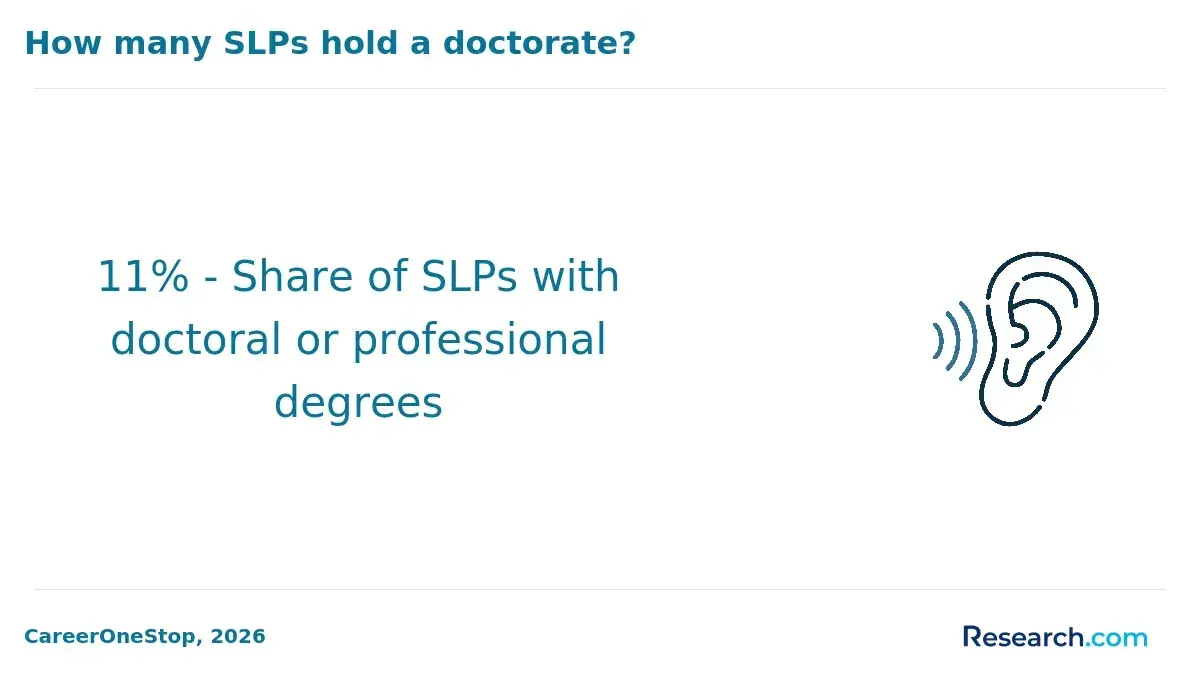
What is the common undergraduate major held by SLPs in 2022?

What Does a Speech-Language Pathologist Do?

Speech-language pathologists evaluate, diagnose, and treat communication and swallowing disorders. Their clients may include toddlers with delayed language, school-age children with articulation or fluency disorders, adults recovering from stroke or traumatic brain injury, patients with voice disorders, and individuals who need swallowing support.

Common SLP Responsibilities

  • Assess speech, language, fluency, voice, cognitive-communication, and swallowing concerns.
  • Create individualized treatment plans based on evaluation results, client goals, medical history, and educational needs.
  • Provide direct therapy using evidence-based activities, exercises, strategies, and communication supports.
  • Document progress, write reports, participate in meetings, and communicate with families or care teams.
  • Collaborate with teachers, physicians, nurses, audiologists, occupational therapists, psychologists, counselors, and caregivers.
  • Educate clients and families so therapy strategies can be practiced outside formal sessions.

Skills That Matter Most

  • Clear communication: SLPs must explain complex clinical information in language that families, educators, and patients can use.
  • Patience and empathy: Progress can be slow, and clients may feel frustrated, embarrassed, or anxious.
  • Clinical reasoning: Strong SLPs interpret test results, behavior, medical information, and client response to treatment.
  • Creativity: Therapy must often be adapted to a child’s interests, an adult’s daily routine, or a patient’s cultural and linguistic background.
  • Flexibility: Arizona SLPs may work with multilingual families, rural communities, high-volume school caseloads, or medically complex patients.
  • : "

    One Arizona SLP described the work this way: graduating from the University of Arizona was only the beginning; the real reward came during early clinical practice, when a child who had struggled with speech sounds finally produced a word clearly and gained confidence in the process.

    "

What Is the Certification and Licensing Process for a Speech-Language Pathologist in Arizona?

Arizona’s licensing process verifies that SLPs have the education, clinical preparation, examination results, and professional background needed to serve clients safely. Requirements can differ depending on whether you work in healthcare, private practice, or schools, so always confirm current rules with the Arizona Department of Health Services and the relevant education authority before applying.

RequirementWhat It InvolvesWho Should Pay Special Attention
Graduate educationSubmit proof of a qualifying master’s degree in speech-language pathology.Applicants from out-of-state or online programs should verify Arizona eligibility before enrolling.
Clinical experienceComplete supervised practicum and postgraduate professional experience approved for licensure.Students should keep detailed documentation of supervisors, hours, and settings.
Praxis examinationPass the required speech-language pathology examination.Graduates should schedule exam preparation around final coursework and clinical obligations.
ADHS applicationApply through the Arizona Department of Health Services with transcripts, clinical documentation, and required forms.Applicants should check current fees and processing timelines before setting a job start date.
Background checkComplete fingerprinting and background review as required.Anyone planning to work with children, patients, or vulnerable populations should expect this step.
Temporary licenseArizona offers a temporary license for applicants with a valid out-of-state license while full licensure is under review; it is valid for 30 days.Relocating professionals should not assume they can practice indefinitely while waiting for review.
School-based authorizationSchool roles may require a temporary or standard certificate in speech-language therapy and other education-related requirements.SLPs who want public school jobs should confirm both health and education credential rules.

For school practice, Arizona requirements include a minimum of 50 hours of supervised observation and 150 hours of clinical experience under a Master's level Speech-Language Pathologist. Candidates may also need to pass the Speech and Language Impaired Special Education section of the Arizona Educator Proficiency Assessment (AEPA). A limited license from the ADHS is valid for two years, and renewal requires 20 hours of continuing education related to communication disorders during each renewal period. Speech-language technicians must complete 180 clock hours of graduate-level coursework every six years to maintain licensure.

Continuing education should be directly related to communication disorders. Training in unrelated administrative topics, such as special education paperwork, may not satisfy clinical continuing education expectations. If you are considering an expanded graduate pathway, compare audiology and speech pathology master’s programs to understand how related specialties differ.

What Ethical and Legal Guidelines Should You Observe as a Speech-Language Pathologist in Arizona?

Speech-language pathologists work with sensitive health, education, developmental, and family information. In Arizona, ethical practice means more than being compassionate; it means practicing within your license, documenting accurately, protecting confidentiality, and knowing when to refer or collaborate.

Legal Responsibilities

  • Licensure: Arizona SLPs must hold the appropriate authorization through the Arizona Department of Health Services before practicing independently.
  • Scope of practice: SLPs should provide only the services they are qualified and legally permitted to deliver, including assessment, diagnosis, and treatment of speech, language, voice, fluency, communication, and swallowing concerns.
  • School compliance: School-based SLPs must follow applicable education laws, evaluation timelines, documentation rules, and service delivery requirements.

Confidentiality and Client Records

SLPs must protect client information under HIPAA and applicable state rules. In schools, they may also need to follow education privacy expectations when handling student records, evaluations, and individualized education program information. A privacy breach can damage client trust and may lead to disciplinary consequences.

Common Ethical Pressure Points

  • High need and limited resources: School and community settings may have more clients than available service time, requiring careful prioritization and clear documentation.
  • Cultural and linguistic responsiveness: Arizona’s diverse communities require assessments and therapy plans that do not confuse language difference with disorder.
  • Conflicts of interest: SLPs in private practice should avoid recommending unnecessary services or products for financial gain.
  • Competence: Professionals should seek training or refer when a client’s needs fall outside their preparation, such as highly specialized swallowing disorders or complex augmentative communication needs.

Ethical practice protects clients and professionals. Joining local professional networks, reviewing state rules regularly, and completing meaningful continuing education can help SLPs stay current as laws, service models, and technologies change.

How Much Can You Earn as a Speech-Language Pathologist in Arizona?

Speech-language pathologists in Arizona earned an average annual salary of $97,510 in 2023. Entry-level positions typically start around $60,000, while experienced clinicians, specialists, supervisors, and private practitioners may earn more depending on setting, demand, caseload, and business model. Salary should be evaluated together with benefits, workload, schedule, student debt, and cost of living.

FactorHow It Can Affect PayWhat to Ask Before Accepting a Job
Work settingHospitals, rehabilitation centers, schools, private practice, and telepractice may use different pay structures.Is compensation salary-based, hourly, per visit, contract-based, or productivity-based?
LocationPhoenix, Tucson, Scottsdale, rural districts, and underserved areas may offer different salary and benefit packages.Does the salary match the local cost of housing, commuting, and licensure-related expenses?
ExperienceNew graduates usually earn less than clinicians with specialty skills or leadership responsibilities.Is there a clear salary ladder after the fellowship or first year?
BenefitsHealth insurance, retirement plans, paid time off, continuing education support, and loan-related benefits can change total compensation.What is the full value of the benefits package, not just the annual salary?
Caseload and productivityHigher pay may come with larger caseloads, travel, documentation pressure, or productivity targets.How many clients or students will I serve, and how much time is protected for documentation?

Arizona Settings That Commonly Employ SLPs

  • Healthcare: Hospitals, outpatient clinics, skilled nursing facilities, and rehabilitation centers may offer strong clinical exposure and competitive pay.
  • Education: School districts provide steady demand, benefits, and the chance to work with children over time.
  • Private practice: Independent or group practice can increase autonomy and income potential, but it also brings billing, marketing, compliance, and business responsibilities.

Arizona Locations to Compare

  • Phoenix: The largest employment market in the state, with healthcare systems, schools, clinics, and private practices.
  • Tucson: A major education and healthcare center with opportunities in schools and clinical settings.
  • Scottsdale: A market where private practice and specialized outpatient services may be more visible.

Do not evaluate a job offer by salary alone. A lower-paying role with reasonable caseloads, strong supervision, and continuing education support may be better for a new SLP than a higher-paying role with limited support and unsustainable expectations.

How Can Advanced Education and Research Shape Your SLP Career in Arizona?

Advanced education can help Arizona SLPs move beyond generalist practice into specialized clinical care, research, program leadership, or university teaching. Research experience also strengthens evidence-based decision-making, which matters in schools, hospitals, and private practice settings where treatment time and resources may be limited.

  • Specialization: Focused graduate training, continuing education, and supervised experience can support work in areas such as swallowing, autism services, bilingual assessment, fluency, voice, or augmentative and alternative communication.
  • Research literacy: SLPs who can interpret research are better prepared to choose interventions, measure outcomes, and explain recommendations to families and teams.
  • Leadership preparation: Advanced study can support roles in program development, clinical supervision, higher education, or policy-related work.

If you are comparing programs with long-term advancement in mind, review speech-language pathology master’s programs for curriculum depth, clinical opportunities, faculty expertise, and graduate outcomes.

What Is the Job Market Like for a Speech-Language Pathologist in Arizona?

The Arizona job market for speech-language pathologists is strong by the figures provided. Employment is projected to grow by 35.8% from 2022 to 2032, with around 3,340 SLPs currently employed and an estimated 340 openings each year. Demand is tied to population growth, school service needs, healthcare access, aging-related conditions, and broader recognition of communication and swallowing disorders.

  • Urban demand: Phoenix and Tucson offer large school systems, medical providers, outpatient clinics, and private practices.
  • Rural and underserved communities: Smaller communities may have fewer providers, making telepractice and outreach services important.
  • School hiring: Public schools often need SLPs for evaluations, therapy, IEP support, and collaboration with special education teams.
  • Healthcare hiring: Hospitals and rehabilitation settings need clinicians who can work with medically complex patients, including stroke, brain injury, voice, swallowing, and cognitive-communication cases.
  • Competition: Desirable locations and specialized medical positions may be more competitive, especially for new graduates without focused clinical experience.
  • : "

    An Arizona clinician who studied at the University of Arizona described weighing strong job prospects against the realities of competition in preferred cities, ultimately finding a role in Tucson that supported both professional growth and personal quality of life.

    "

Which SLP Certifications Can Boost Your Career in Arizona?

Specialized certifications can help an SLP demonstrate deeper preparation in a focused area, but they should be chosen strategically. A credential is most valuable when it matches your caseload, employer needs, and long-term career plan. For example, school-based SLPs may prioritize autism, literacy, bilingual service delivery, or assistive technology training, while medical SLPs may focus on swallowing, neurologic communication disorders, or voice.

Career GoalCertification or Training Focus to ConsiderBest Fit
School-based practiceAutism, literacy, AAC, bilingual assessment, behavior-informed interventionSLPs working with children, IEP teams, and diverse classrooms
Medical practiceDysphagia, neurologic disorders, cognitive-communication, voice, rehabilitationSLPs in hospitals, rehab centers, skilled nursing, or outpatient clinics
Private practiceBusiness operations, billing, specialty treatment methods, telepractice complianceSLPs planning to build or expand independent services
LeadershipClinical supervision, program evaluation, compliance, mentoring, administrationExperienced SLPs moving into director or supervisor roles

Before investing in any credential, review whether employers in your target setting recognize it, whether it requires supervised hours or renewal, and whether it improves your ability to serve your current clients. This guide to SLP certifications can help you compare options for specialization and advancement.

Could Integrating Elements of School Psychology Enhance Your SLP Practice in Arizona?

School-based SLPs often work with students whose communication needs intersect with attention, behavior, learning, social interaction, and emotional regulation. Understanding school psychology concepts can help an SLP interpret classroom behavior, collaborate more effectively during evaluations, and design interventions that fit the student’s learning environment.

This does not mean an SLP becomes a school psychologist. It means the SLP gains enough cross-disciplinary awareness to know when to collaborate, when to refer, and how to align therapy goals with broader student support plans. If you want to understand this related profession, see the guide on becoming a school psychologist in Arizona.

What Career and Advancement Opportunities Are Available for a Speech-Language Pathologist in Arizona?

Arizona SLPs can build careers in direct service, specialization, supervision, administration, private practice, academia, research, or consulting. The best path depends on whether you prefer client care, leadership, teaching, business ownership, or systems-level work.

Career StageTypical RolesHow to Advance
Early careerSchool SLP, clinical fellow, outpatient clinician, rehabilitation SLP, pediatric clinic clinicianSeek strong supervision, document outcomes, build core assessment and treatment skills.
Mid-careerSpecialist clinician, lead therapist, program coordinator, mentor, interdisciplinary team memberPursue focused continuing education, specialty training, and leadership opportunities.
Advanced careerClinical supervisor, director of speech therapy services, private practice owner, consultant, faculty memberDevelop management, budgeting, compliance, teaching, research, or business skills.
Alternative pathTelepractice provider, education consultant, healthcare consultant, community program manager, academic researcherUse SLP expertise in communication, assessment, documentation, training, and advocacy.

Entry-level SLPs often begin in schools, clinics, rehabilitation centers, or hospitals. As they gain experience, they may supervise junior clinicians, manage programs, coordinate therapy services, or specialize in a specific population. Senior professionals may lead departments, design service models, train staff, or move into research and academia.

Arizona’s projected demand can create room for advancement, but advancement is not automatic. SLPs who track outcomes, communicate well with teams, pursue relevant certifications, and understand compliance requirements are better positioned for leadership. Cost-conscious students may also want to compare the most affordable online speech pathology programs before committing to graduate study.

How Does Interdisciplinary Collaboration Benefit Speech-Language Pathologists in Arizona?

Speech-language pathology is rarely isolated work. Arizona SLPs often collaborate with special education teachers, occupational therapists, physical therapists, audiologists, psychologists, physicians, nurses, counselors, social workers, and family members. Collaboration improves care because communication challenges often overlap with medical, educational, behavioral, sensory, and family factors.

  • In schools: SLPs coordinate with teachers and special education teams to align communication goals with classroom participation. If you want to better understand a closely related school role, review how to become a special education teacher in Arizona.
  • In healthcare: SLPs work with physicians, nurses, dietitians, and therapists to support patients recovering from stroke, traumatic brain injury, surgery, or illness.
  • In private practice: SLPs may collaborate with families, pediatricians, psychologists, occupational therapists, and schools to ensure therapy strategies carry over into daily life.
  • In diverse communities: Collaboration can help distinguish communication disorder from cultural or linguistic difference and improve family-centered care.

Strong interdisciplinary work requires clarity. Each professional should understand the referral question, client goals, documentation responsibilities, and boundaries of practice.

What Challenges Should You Consider as a Speech-Language Pathologist in Arizona?

The Arizona SLP field offers meaningful work, but it is not an easy profession. Students should understand the pressures before entering graduate school, especially if they are drawn to the career only by salary or job growth figures.

ChallengeWhy It MattersHow to Respond
Large caseloadsSome SLPs report managing upwards of 60 cases, which can reduce time for individualized planning.Ask employers about caseload size, workload model, documentation time, and support staff.
Administrative workloadReports, evaluations, meetings, billing, compliance, and progress notes can consume significant time.Build efficient documentation habits and clarify productivity expectations before accepting a role.
Limited resourcesSchools and clinics may not always have current materials, technology, or assessment tools.Advocate for evidence-based resources and learn low-cost ways to adapt therapy activities.
Unqualified providersClients may receive inconsistent information when services are offered by people without proper credentials.Educate families about licensure, certification, and the value of qualified care.
Diverse client needsArizona clinicians may serve clients across languages, cultures, ages, and disability profiles.Pursue continuing education in culturally responsive assessment and specialized intervention.
Burnout riskHigh demand, emotional labor, and documentation pressure can wear down clinicians.Seek mentorship, reasonable workloads, peer consultation, and work settings that match your strengths.

Common mistakes include choosing a graduate program without confirming accreditation, focusing only on tuition while ignoring fees and clinical placement support, assuming every online program meets Arizona requirements, accepting a job without asking about caseload expectations, and believing salary averages guarantee a specific offer.

Which region offers the highest per-visit wage for SLPs?

Can Your Expertise Lead to Alternative Career Paths in Arizona?

SLP training builds skills that can transfer into adjacent roles: communication analysis, documentation, client advocacy, assessment, education, coaching, and program coordination. Some professionals remain licensed SLPs while shifting into consulting, training, management, telepractice, higher education, or community program leadership. Others explore broader fields where communication, information organization, and public service matter. For a cross-disciplinary comparison, you might examine how to become a librarian in Arizona and consider how information access, education, and service design differ from clinical practice.

How Can Mentorship and Networking Opportunities Elevate Your SLP Career in Arizona?

Mentorship can shorten the learning curve for new SLPs and help experienced clinicians move into specialization or leadership. Arizona SLPs can benefit from supervisors, peer consultation groups, professional associations, school district networks, healthcare teams, and interdisciplinary partnerships.

  • For students: Mentors can help you choose practicum sites, prepare for graduate school expectations, and understand real caseload demands.
  • For clinical fellows: Strong supervision can shape your documentation habits, treatment planning, confidence, and professional judgment.
  • For experienced SLPs: Networking can lead to referrals, leadership roles, private practice opportunities, and collaborative service models.
  • For school-based SLPs: Connections with counselors, psychologists, and teachers can improve student support. Understanding school counselor preparation in Arizona can also clarify how counseling and communication services intersect.

How Is Technology Transforming Speech-Language Pathology Practice in Arizona?

Technology is changing how SLPs deliver services, collect data, communicate with families, and reach clients who may not live near a specialist. Telehealth can be especially relevant in a state with rural and underserved areas, while digital tools can support home practice, progress monitoring, scheduling, and interdisciplinary communication.

  • Telepractice: Remote service delivery can expand access, but clinicians must still follow licensure, privacy, documentation, and quality-of-care requirements.
  • Digital assessment and therapy tools: Apps and platforms can support practice, but they should not replace clinical judgment or individualized treatment planning.
  • AI-supported workflows: Emerging tools may assist with note drafting, data organization, or screening support, but SLPs remain responsible for accuracy, ethics, and client decisions.
  • Virtual training: Online continuing education can help clinicians keep skills current, particularly in specialized or rural practice areas.

SLPs interested in education-focused communication work may also compare the profession with teaching roles, such as becoming an English teacher in Arizona, to understand how language instruction and clinical language intervention differ.

How Can Integrating Psychological Insights Enhance Your Clinical Practice in Arizona?

Communication challenges often interact with motivation, confidence, anxiety, attention, behavior, and social participation. SLPs who understand basic psychological principles may be better prepared to engage clients, set realistic goals, and collaborate with mental health professionals when communication problems are part of a broader clinical picture.

This approach is especially useful when clients avoid speaking, struggle socially, experience frustration during therapy, or need family support to generalize skills. SLPs do not replace psychologists, but they can use psychological awareness to make therapy more responsive and humane. If you want to explore formal psychology education options, review the best psychology schools in Arizona.

Can Integrating Mental Health Counseling Strategies Optimize Patient Outcomes in Arizona?

Some SLP clients experience anxiety, stress, grief, mood changes, or social withdrawal related to communication difficulties. Basic counseling-informed strategies—such as active listening, goal setting, motivation support, and referral awareness—can strengthen SLP practice when used within professional boundaries.

The key is collaboration. SLPs should not diagnose or treat mental health disorders unless they hold the proper credentials, but they should recognize when emotional concerns may affect communication progress. Understanding mental health counselor requirements in Arizona can help SLPs make better referrals and collaborate more effectively.

Can Collaborating With Marriage and Family Therapists Enhance Patient Outcomes in Arizona?

Family dynamics can influence communication therapy, especially when clients need support practicing strategies at home, navigating disability-related stress, or rebuilding communication after illness or injury. Marriage and family therapists bring expertise in relational patterns, family systems, and emotional adjustment, while SLPs bring expertise in communication assessment and intervention.

This collaboration can be useful for children whose therapy depends on caregiver carryover, adults recovering from neurologic injury, or clients whose communication disorder affects relationships. To better understand the related profession, see this guide on how to become a marriage and family therapist in Arizona.

What Do Speech-Language Pathologists Say About Their Careers in Arizona?

  • Practicing speech-language pathology in Arizona has given me the chance to work with many different communities and communication needs. Helping children and adults communicate more confidently is the part of the job that keeps me committed to the field. Kaye
  • The professional community here has been one of the best parts of my career. Collaboration with other SLPs and related professionals helps me keep learning, and Arizona’s climate and outdoor spaces make it easier to maintain balance outside work. Olive
  • I was drawn to Arizona because the population is diverse and the need for services is real. Every client teaches me to adapt my approach, and the continued demand for SLPs makes the career feel both meaningful and stable. Jason

References:

  • Arizona Department of Education. (2023, April). Speech-language services in Arizona’s schools: Guidelines for best practice. Arizona Department of Education.
  • Arizona Speech-Language-Hearing Association. (n.d.). Navigating the maze of speech therapy licensure. Arizona Speech-Language-Hearing Association.
  • Bureau of Labor Statistics. (2024). Occupational employment and wages, May 2023 - 29-1127 speech-language pathologists. BLS.
  • Bureau of Labor Statistics. (2024). Speech-language pathologists. BLS.
  • Cione-Kroeschel, J. (2024, May 23). Your guide to the 9 additional SLP certifications that can help you specialize and advance your career. Speech Pathology Graduate Programs.
  • Speech Pathology Masters Programs. (2022, March 11). Arizona speech pathology state license guide. Speech Pathology Masters Programs.

Key Insights

  • Arizona SLPs need a graduate-level pathway: prerequisite coursework, a master’s degree in speech-language pathology, supervised clinical experience, examination, and state licensure.
  • The field offers strong reported opportunity in Arizona, with an average annual salary of $97,510 in 2023 and projected job growth of 35.8% from 2022 to 2032.
  • School-based SLPs should verify education-specific certification requirements in addition to health licensure requirements.
  • Accreditation matters. Choosing a program without confirming CAA accreditation and Arizona eligibility can create licensing problems later.
  • Salary is only one part of career fit. Caseload size, supervision, documentation time, benefits, continuing education support, and work setting can affect long-term satisfaction.
  • Technology, telepractice, interdisciplinary care, and specialized certifications are shaping the profession, but they do not replace clinical judgment, ethics, or licensure compliance.
  • The best SLP career plan starts before graduate school: compare costs, clinical placements, accreditation, state requirements, and the type of clients you want to serve.

Other Things You Should Know About Becoming a Speech Language Pathologist in Arizona

What educational qualifications are required to become a Speech Language Pathologist in Arizona in 2026?

To become a Speech Language Pathologist in Arizona in 2026, you'll need a Master's degree in Speech-Language Pathology from an accredited program. After completing the degree, obtaining a state license by passing the Praxis exam and fulfilling supervised clinical hours is essential.

What are the steps to become a Speech Language Pathologist in Arizona in 2026?

To become a Speech Language Pathologist in Arizona by 2026, you must earn a Master's degree in Speech-Language Pathology, complete a clinical fellowship, and pass the Praxis exam. Finally, apply for licensure through the Arizona Department of Health Services to practice legally.

Is a Master's degree required to become a Speech Language Pathologist in Arizona?

Yes, in Arizona, a Master's degree in Speech-Language Pathology is a requirement. Prospective speech-language pathologists must complete an accredited graduate program to qualify for licensure. This educational background equips individuals with the necessary skills and knowledge for professional practice in the state.

Related Articles
2026 How to Become a Speech Language Pathologist in Tennessee: Requirements & Certification thumbnail
2026 Employment Settings for SLPs: Career Paths thumbnail
Careers APR 23, 2026

2026 Employment Settings for SLPs: Career Paths

by Imed Bouchrika, PhD
2026 How to Become a Speech Language Pathologist in Idaho: Requirements & Certification thumbnail
2026 How to Make a Career Change from Teacher to SLP Speech Pathologist thumbnail
2026 How to Become a Speech Language Pathologist in Montana thumbnail
Careers JUN 17, 2026

2026 How to Become a Speech Language Pathologist in Montana

by Imed Bouchrika, PhD
2026 How to Become a Speech Language Pathologist in Rhode Island: Requirements & Certification thumbnail

Recently Published Articles

Newsletter & Conference Alerts

Research.com uses the information to contact you about our relevant content.
For more information, check out our privacy policy.

Newsletter confirmation

Thank you for subscribing!

Confirmation email sent. Please click the link in the email to confirm your subscription.