Research.com is an editorially independent organization with a carefully engineered commission system that’s both transparent and fair. Our primary source of income stems from collaborating with affiliates who compensate us for advertising their services on our site, and we earn a referral fee when prospective clients decided to use those services. We ensure that no affiliates can influence our content or school rankings with their compensations. We also work together with Google AdSense which provides us with a base of revenue that runs independently from our affiliate partnerships. It’s important to us that you understand which content is sponsored and which isn’t, so we’ve implemented clear advertising disclosures throughout our site. Our intention is to make sure you never feel misled, and always know exactly what you’re viewing on our platform. We also maintain a steadfast editorial independence despite operating as a for-profit website. Our core objective is to provide accurate, unbiased, and comprehensive guides and resources to assist our readers in making informed decisions.

2026 How to Become a Speech Language Pathologist in Minnesota: Requirements & Certification

Imed Bouchrika, PhD

by Imed Bouchrika, PhD

Co-Founder and Chief Data Scientist

Table of Contents
  1. How can you become a speech-language pathologist in Minnesota?
  2. What is the minimum educational requirement to become a speech-language pathologist in Minnesota?
  3. What does a speech-language pathologist do?
  4. What is the certification and licensing process for a speech-language pathologist in Minnesota?
  5. What ethical and legal guidelines should you observe as a speech-language pathologist in Minnesota?
  6. How much can you earn as a speech-language pathologist in Minnesota?
  7. What is the job market like for a speech-language pathologist in Minnesota?
  8. What career and advancement opportunities are available for a speech-language pathologist in Minnesota?
  9. How does collaboration with other education professionals impact SLPs in Minnesota?
  10. Are there alternative non-clinical roles for communication specialists in Minnesota?
  11. Can online education accelerate your SLP career growth in Minnesota?
  12. Can speech-language pathologists transition to school psychology in Minnesota?
  13. What future trends should influence your SLP career planning in Minnesota?
  14. How can interdisciplinary research collaborations elevate your SLP career in Minnesota?
  15. Can integrating mental health expertise enhance your SLP practice in Minnesota?
  16. What financial support options can help launch your SLP career in Minnesota?
  17. What challenges should you consider as a speech-language pathologist in Minnesota?
  18. What opportunities are available for SLPs to transition into related fields or obtain teaching credentials?
  19. What continuing education and professional development options are available for SLPs in Minnesota?
  20. Are accelerated programs a viable option for launching your SLP career in Minnesota?
  21. How can collaboration with school counselors enhance your SLP practice in Minnesota?

How can you become a speech-language pathologist in Minnesota?

The route to becoming an SLP in Minnesota is sequential: complete the right education, gain supervised clinical experience, pass the required exam, apply for licensure, and then pursue the setting or specialization that fits your goals. Skipping the accreditation or licensure details can delay your career, so it is important to verify requirements before enrolling in a program.

  1. Complete an appropriate undergraduate foundation. Many future SLPs major in communication disorders, speech and hearing sciences, linguistics, psychology, education, or a related field. If your bachelor’s degree is outside the field, you may need prerequisite coursework before graduate admission.
  2. Earn a CAA-accredited graduate degree. Minnesota candidates should choose a master’s or doctoral program accredited by the Council on Academic Accreditation in Audiology and Speech-Language Pathology. Some students prefer campus programs, while working adults may compare flexible online speech-language pathology degrees.
  3. Build supervised clinical experience. Graduate programs include clinical practica, and candidates must also complete supervised professional experience before independent practice.
  4. Pass the national examination. Candidates must pass the national speech-language pathology exam administered through ETS.
  5. Apply for Minnesota licensure. You will submit proof of education, clinical experience, examination results, and other required materials to the state.
  6. Prepare for the job search early. A strong SLP resume should show clinical placements, populations served, assessment tools used, therapy approaches, documentation experience, and any school, medical, pediatric, adult, bilingual, or telepractice exposure.
StepDecision to makeCommon mistake to avoid
Choose a degree pathDecide whether you need prerequisites, a traditional master’s, an online option, or an accelerated format.Assuming every communication disorders program automatically meets SLP licensure requirements.
Check accreditationConfirm CAA accreditation before applying or enrolling.Choosing based only on cost, convenience, or school name.
Plan clinical trainingAsk where placements happen and which populations you can serve.Waiting until graduation to think about school, medical, or private practice experience.
Apply for licensureCollect documents early and track application status.Submitting incomplete proof of clinical hours, exam results, or education.
Enter the job marketCompare caseload, supervision, benefits, continuing education support, and location.Accepting a role based only on salary without reviewing workload and support.

The University of Minnesota’s MA in Speech-Language-Hearing Sciences is one example of an ASHA-accredited graduate option designed to prepare students for clinical service delivery. Candidates should still compare multiple programs based on accreditation, clinical placements, cost, format, faculty expertise, and licensure alignment.

What is the minimum educational requirement to become a speech-language pathologist in Minnesota?

The minimum education for independent clinical practice as a speech-language pathologist in Minnesota is typically a graduate degree in speech-language pathology. A bachelor’s degree alone may help you qualify for assistant, research, education support, or prerequisite pathways, but it is not enough for full SLP licensure.

  • Bachelor’s degree: Most candidates begin with a bachelor’s degree in communication disorders or a related field. Students from other majors may need leveling courses before entering graduate school.
  • Master’s degree: A master’s degree in speech-language pathology is the standard academic credential for licensure. The program should be CAA-accredited.
  • Doctoral degree: A PhD is not required for Minnesota SLP licensure, but it may make sense for people pursuing university teaching, research leadership, or specialized academic careers.
  • Core graduate coursework: Students study speech and hearing anatomy, language development, speech sound disorders, fluency, voice, swallowing, cognitive-communication disorders, assessment, intervention, ethics, and clinical methods.
  • Typical timeline: The full education path generally takes about six years: four years for a bachelor’s degree and two more years for the master’s program.
  • Estimated program cost: A master’s degree in speech-language pathology can cost from $20,000 to $50,000, depending on the institution, residency status, and delivery format.
  • Clinical preparation: Graduate study includes supervised clinical practice, and the number and type of clinical hours matter for licensure and certification planning.
Educational optionBest forLimitations
Bachelor’s in communication disordersStudents beginning the SLP pathway or preparing for graduate admission.Does not qualify most candidates for full independent SLP practice.
Post-baccalaureate prerequisitesCareer changers or graduates from unrelated majors.Adds time and cost before the master’s program begins.
CAA-accredited master’s degreeMost future clinical SLPs in Minnesota.Admission can be competitive, and clinical placement logistics vary by program.
Doctoral studyFuture researchers, faculty members, or advanced specialists.Usually not necessary for standard clinical licensure.

When comparing programs, ask whether the curriculum supports Minnesota licensure, whether clinical placements are arranged by the school, how online students complete local clinical experiences, and whether graduates are prepared for national certification and state licensing. The University of Minnesota is one prominent CAA-accredited option, but applicants should compare it with other programs before committing.

Degrees of SPLs in the US

What does a speech-language pathologist do?

A speech-language pathologist evaluates and treats communication and swallowing disorders across the lifespan. SLPs may work with infants who have feeding difficulties, children with language delays, students who need school-based services, adults recovering from stroke or brain injury, professionals with voice disorders, and older adults with swallowing or cognitive-communication challenges.

According to the Bureau of Labor Statistics, SLPs commonly serve people across age groups and address speech delays, language impairments, cognitive-communication difficulties, and swallowing disorders. Their work often includes assessment, therapy, documentation, collaboration, and family education.

  • Evaluate speech, language, voice, fluency, cognitive-communication, and swallowing abilities.
  • Use assessment results to create individualized intervention plans.
  • Deliver therapy that targets measurable communication or swallowing goals.
  • Coordinate with families, teachers, physicians, occupational therapists, physical therapists, school psychologists, and other professionals.
  • Document progress, adjust treatment plans, and explain strategies clients can use outside therapy sessions.

Core skills Minnesota SLPs need

  • Clear communication: SLPs must explain complex clinical findings in language that clients, families, educators, and medical teams can use.
  • Clinical judgment: The role requires interpreting assessment data and choosing treatment approaches that fit the client’s needs.
  • Patience and empathy: Communication challenges can affect confidence, learning, relationships, and independence.
  • Cultural responsiveness: Minnesota’s diverse population makes it important to understand language differences, family context, and culturally appropriate care.
  • Documentation discipline: Progress notes, IEP documentation, medical records, and treatment plans must be accurate and timely.
  • Creativity: Effective therapy often depends on adapting activities to the client’s age, motivation, goals, and environment.
  • : "

    “Graduating from the University of Minnesota changed my career direction. My first client was a child who had difficulty producing certain sounds, and I still remember how powerful it felt when that child finally said a target word clearly. That moment showed me why this field matters: SLPs help people participate more fully in school, work, family, and community life.”

    "

What is the certification and licensing process for a speech-language pathologist in Minnesota?

Minnesota licensure is the legal permission to practice in the state, while national certification is a professional credential that can support mobility, employer recognition, and career development. Many candidates pursue both. For a broader overview of the national route, see this guide to the speech pathologist certification process.

  • Complete supervised clinical experience: ASHA requires at least 400 hours of supervised clinical experience, including 375 hours of direct client interaction.
  • Pass the national examination: Candidates must pass the speech-language pathology exam administered by ETS.
  • Submit the Minnesota application: Applicants provide education records, clinical documentation, exam results, and a fee, typically around $100; confirm current fees before applying.
  • Complete the background check: Minnesota candidates may need a criminal background check, including fingerprinting, because SLPs often work with children and vulnerable populations.
  • Use reciprocity if eligible: Out-of-state SLPs with an active, unrestricted license may qualify if the previous state’s requirements are comparable to Minnesota’s.
  • Consider a temporary license: A temporary license may be processed within 5 to 10 business days and can allow candidates to begin work while full licensure is pending.
  • Track your application: Respond quickly to any state request for missing documentation to avoid delays.
  • Renew on time: Minnesota licenses renew every two years and may require continuing education.
  • Monitor rule changes: Always verify requirements with the Minnesota Department of Health or the relevant licensing authority before making decisions.

Minnesota uses multiple license tiers, including Tier 2, Tier 3, and Tier 4. Candidates may begin at Tier 2 and advance as they meet additional experience and education requirements. If you are still selecting a graduate school, comparing speech-language pathology master’s rankings can help you identify programs to research further, but rankings should not replace accreditation and licensure checks.

Licensure taskWhy it mattersQuestion to ask
Verify CAA accreditationAccreditation helps ensure the program meets national preparation standards.Is the program currently CAA-accredited for speech-language pathology?
Confirm clinical hour trackingMissing or poorly documented hours can delay certification or licensure.How does the program document direct and supervised clinical experience?
Review state requirementsState rules determine whether you can practice legally in Minnesota.Does this pathway meet Minnesota licensure standards?
Plan renewal requirementsLicensure is not a one-time step.What continuing education must I complete every renewal period?

What ethical and legal guidelines should you observe as a speech-language pathologist in Minnesota?

Ethical SLP practice in Minnesota means more than providing therapy. Practitioners must work within their legal scope, protect client information, document accurately, use evidence-based methods, and advocate for appropriate services without overstating outcomes or practicing beyond their competence.

  • Licensure compliance: SLPs must hold the appropriate Minnesota license and meet education, examination, supervised practice, and renewal requirements.
  • Scope of practice: Clinicians should provide assessment, diagnosis, and treatment only in areas where they are trained and authorized to practice.
  • Confidentiality: SLPs must protect client and student information under HIPAA, the Minnesota Data Practices Act, and relevant workplace policies.
  • IDEA and ADA responsibilities: School and healthcare SLPs must understand how federal laws such as the Individuals with Disabilities Education Act and the Americans with Disabilities Act affect access, accommodations, and service delivery.
  • Honest communication: Families and clients need clear explanations of findings, treatment goals, expected progress, limitations, and alternatives.
  • Advocacy under constraints: SLPs often work in settings with limited staffing, time, or resources. Ethical practice includes advocating for needed services while documenting decisions carefully.
  • Continuing competence: Maintaining licensure and professional quality requires ongoing learning in clinical methods, law, ethics, technology, and culturally responsive care.

Professional organizations such as the Minnesota Speech-Language-Hearing Association can help practitioners stay current, interpret practice expectations, and connect with peers facing similar clinical and ethical challenges.

How much can you earn as a speech-language pathologist in Minnesota?

Speech-language pathology can provide solid earning potential in Minnesota, but salary depends on work setting, city, experience, specialization, contract structure, and whether the role is school-based, medical, private practice, public administration, or telepractice-based.

  • Average salary: The average salary for an SLP in Minnesota is around $95,000 per year. As of 2024, the average annual salary is approximately $95,090.
  • Entry-level pay: Entry-level SLP positions start at around $78,000 per year.
  • Top earners: Some top earners make over $100,000.
  • National comparison: Minnesota’s average is higher than the national median of approximately $89,300.
  • Highest-paying industry listed: SLPs in public administration earn around $110,573 annually, making it the top-paying industry reported for Minnesota.
  • Highest-paying cities listed: Reported top-paying Minnesota cities include Adams at $92,290 per year, Clear Lake at $91,590 per year, and Adolph at $89,790 per year.
Salary factorHow it can affect earnings
Work settingHospitals, schools, public administration, private practices, and rehabilitation facilities may structure pay differently.
LocationUrban markets may offer more openings but can be competitive; rural regions may have stronger demand in some areas.
ExperienceNew clinicians usually start lower, while experienced SLPs may qualify for lead, supervisory, or specialist roles.
SpecializationExpertise in pediatrics, swallowing, voice, bilingual services, teletherapy, or medical rehabilitation can influence opportunities.
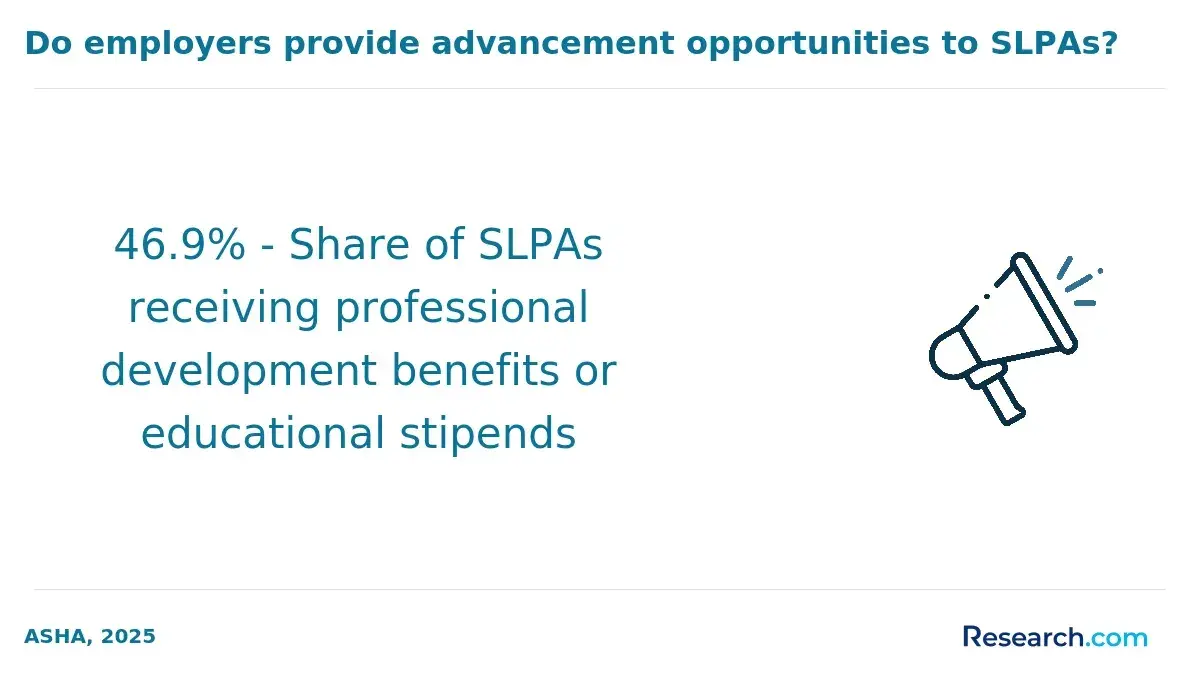
BenefitsHealth insurance, retirement contributions, paid time off, and continuing education support can meaningfully change total compensation.

Do not evaluate a job offer by salary alone. A lower salary with manageable caseloads, strong supervision, paid continuing education, and predictable hours may be better than a higher-paying role with limited support and heavy documentation demands.

What is the job market like for a speech-language pathologist in Minnesota?

Minnesota’s SLP job market is favorable, but it is not uniform across the state. Projections Central estimates 18.6% growth from 2022 to 2032, creating approximately 260 job openings annually. Demand is supported by school service needs, developmental and learning concerns among children, and communication and swallowing needs among aging adults.

  • Urban competition: Minneapolis and St. Paul may offer many openings, but they can also attract more applicants.
  • Rural opportunity: Smaller communities may have stronger need for SLPs and fewer candidates willing to relocate.
  • School-based demand: Schools need SLPs who can manage IEPs, collaborate with educators, document services, and support students with communication needs.
  • Healthcare demand: Hospitals, rehabilitation centers, and long-term care settings need clinicians trained in adult communication and swallowing disorders.
  • Teletherapy growth: Remote service delivery can expand access, but clinicians must understand licensing, privacy, technology, and supervision rules.
  • Bilingual and culturally responsive care: SLPs who can serve multilingual communities may find additional opportunities.
  • : "

    “The Minnesota market gave me options, but I had to be strategic. The Twin Cities had many roles, yet the applicant pool was strong. Smaller communities offered a different kind of opportunity: more visible impact, closer collaboration, and strong community need.”

    "

What career and advancement opportunities are available for a speech-language pathologist in Minnesota?

SLPs in Minnesota can build careers in education, healthcare, private practice, public administration, research, consulting, and academic settings. The best path depends on the population you want to serve, how much autonomy you want, your tolerance for documentation, and whether you prefer a school-year schedule, clinical schedule, or business ownership model.

Career stageTypical rolesHow to advance
Entry levelSchool-based SLP, hospital clinician, rehabilitation SLP, private practice clinician.Build strong documentation habits, seek mentorship, and gain experience with varied disorders and age groups.
Mid-careerLead clinician, clinical supervisor, program coordinator, specialist in pediatrics, voice, swallowing, or teletherapy.Pursue specialized training, supervise interns, lead quality improvement projects, and deepen interdisciplinary collaboration.
Senior levelDepartment director, clinic owner, university instructor, researcher, consultant, administrator.Develop leadership, budgeting, policy, research, supervision, and program development expertise.

Common SLP work settings in Minnesota

  • Schools: SLPs support students with communication disorders, participate in IEP teams, and coordinate with teachers and families.
  • Hospitals and rehabilitation centers: Clinicians may treat adults with stroke, traumatic brain injury, neurological disease, swallowing disorders, or post-surgical communication needs.
  • Private practices: SLPs may provide individualized therapy for children, adults, or specialty populations.
  • Universities: Advanced SLPs may teach, supervise graduate clinicians, or conduct research.
  • Consulting and administration: Experienced professionals may advise schools, healthcare systems, agencies, or organizations on communication disorders and service delivery.

Students who need to manage graduate school cost can compare low-cost speech therapy programs online, but affordability should be weighed against accreditation, clinical placement quality, licensure alignment, and completion support.

Self-employed SLPs

How does collaboration with other education professionals impact SLPs in Minnesota?

In Minnesota schools, SLPs rarely work alone. They are part of teams that may include special education teachers, classroom teachers, occupational therapists, physical therapists, school psychologists, school counselors, administrators, and families. Strong collaboration improves consistency between therapy goals and classroom expectations.

SLPs and special education teachers often work together on individualized education programs, classroom accommodations, language goals, social communication supports, and progress monitoring. Understanding related roles, such as how to become a special education teacher in Minnesota, can help SLPs communicate more effectively with colleagues and understand how responsibilities overlap.

Collaboration also protects students from fragmented services. When educators, therapists, and families agree on priorities, students are more likely to practice communication skills in natural settings instead of only during isolated therapy sessions.

Are there alternative non-clinical roles for communication specialists in Minnesota?

Not every person with SLP training stays in direct clinical practice. Some communication specialists move into administration, training, curriculum design, healthcare operations, assistive technology, research coordination, corporate communication, public health education, or academic support roles. These paths can appeal to professionals who enjoy language, documentation, systems thinking, and program development but want less direct caseload responsibility.

Some SLPs also explore adjacent information-focused careers. For example, communication, research, and information organization skills may be useful for people interested in learning how to become a librarian in Minnesota. The transition is not automatic, but it can be a logical option for professionals who prefer information services, education, or community programming over clinical treatment.

Can online education accelerate your SLP career growth in Minnesota?

Online education can help Minnesota students and working professionals access graduate coursework, continuing education, and specialized training without relocating. It can be especially useful for career changers, rural students, school employees, and clinicians who need flexibility.

However, online does not mean easier. SLP preparation still requires supervised clinical experiences, and students must confirm how placements are arranged, whether local sites are available, and whether the program meets licensure requirements. Before enrolling, compare the best online masters in communication disorders programs based on accreditation, clinical support, faculty access, graduation requirements, and state authorization.

Online SLP education may work well if...Be cautious if...
You need schedule flexibility while completing coursework.The program does not clearly explain clinical placement responsibilities.
You live far from a campus-based program.You assume online programs automatically meet Minnesota licensure rules.
You are comfortable with independent learning and digital communication.You need extensive in-person support or structured campus routines.
You have access to approved clinical sites near you.You have not confirmed accreditation and state authorization.

Can speech-language pathologists transition to school psychology in Minnesota?

Speech-language pathologists who enjoy assessment, student support, and interdisciplinary school teams may consider school psychology. The fields overlap in areas such as learning, development, behavior, disability services, and family collaboration, but they are separate professions with different training and credentialing requirements.

An SLP who wants to become a school psychologist should expect additional coursework, supervised experience, and credential review. Start by reviewing how to become a school psychologist in Minnesota, then compare those requirements with your existing graduate training to identify gaps.

What future trends should influence your SLP career planning in Minnesota?

SLP career planning in Minnesota should account for changes in technology, service delivery, education policy, healthcare expectations, and employer demand. Telehealth has become more visible, data-driven treatment planning is gaining attention, and artificial intelligence may increasingly support documentation, screening, and clinical decision support. These tools can improve efficiency, but they do not replace clinical judgment, ethical responsibility, or individualized care.

SLPs who work in schools should also watch how literacy, language intervention, mental health, multilingual education, and special education needs intersect. Some professionals broaden their educational impact by exploring related teaching pathways, including how to become an English teacher in Minnesota. This may be most relevant for SLPs interested in literacy, language development, curriculum, or secondary education.

How can interdisciplinary research collaborations elevate your SLP career in Minnesota?

Research collaboration can help SLPs move beyond routine service delivery into innovation, evidence-based practice, program evaluation, and academic leadership. Partnerships with psychology, education, neuroscience, public health, linguistics, and rehabilitation professionals can strengthen both clinical insight and career mobility.

For SLPs interested in behavioral science, cognition, assessment, or developmental research, exploring the best psychology schools in Minnesota can help identify possible academic environments, research partners, or complementary study options. This path is most useful for clinicians who want to teach, publish, supervise, design interventions, or participate in funded research.

Can integrating mental health expertise enhance your SLP practice in Minnesota?

Communication disorders often affect confidence, relationships, classroom participation, behavior, and emotional well-being. While SLPs are not mental health clinicians unless separately trained and licensed, understanding mental health concepts can improve referral decisions, family conversations, behavior-sensitive therapy planning, and collaboration with counselors or therapists.

SLPs interested in deeper counseling expertise should review the boundaries between speech-language pathology and mental health practice. Some may explore additional credentials, such as learning how to become a MFT in Minnesota. The benefit is not that SLPs should replace counselors, but that interdisciplinary knowledge can support more coordinated care.

What financial support options can help launch your SLP career in Minnesota?

The cost of becoming an SLP can include prerequisite coursework, graduate tuition, books, clinical fees, exam fees, background checks, licensure fees, relocation for placements, and lost wages if you reduce work hours. Since a master’s degree can cost from $20,000 to $50,000, candidates should plan funding before enrolling.

  • Compare total program cost: Look beyond tuition and include fees, travel, technology, clinical placement costs, and expected time out of the workforce.
  • Ask about scholarships and assistantships: Some programs offer institutional aid, research assistant roles, or graduate assistant positions.
  • Review employer support: School districts, healthcare systems, and clinics may offer tuition benefits or continuing education funds.
  • Consider location strategy: Living costs and commuting demands can change the real price of a program.
  • Evaluate long-term flexibility: Related credentials may expand career options, but they also add cost. For comparison, candidates interested in counseling can review mental health counselor requirements in Minnesota.

What challenges should you consider as a speech-language pathologist in Minnesota?

Speech-language pathology is meaningful work, but candidates should understand the pressures before committing to the field. Many challenges are manageable with the right employer, mentorship, systems, and boundaries. Others may influence whether you prefer school practice, medical practice, private practice, teletherapy, or administration.

ChallengeWhy it mattersBetter approach
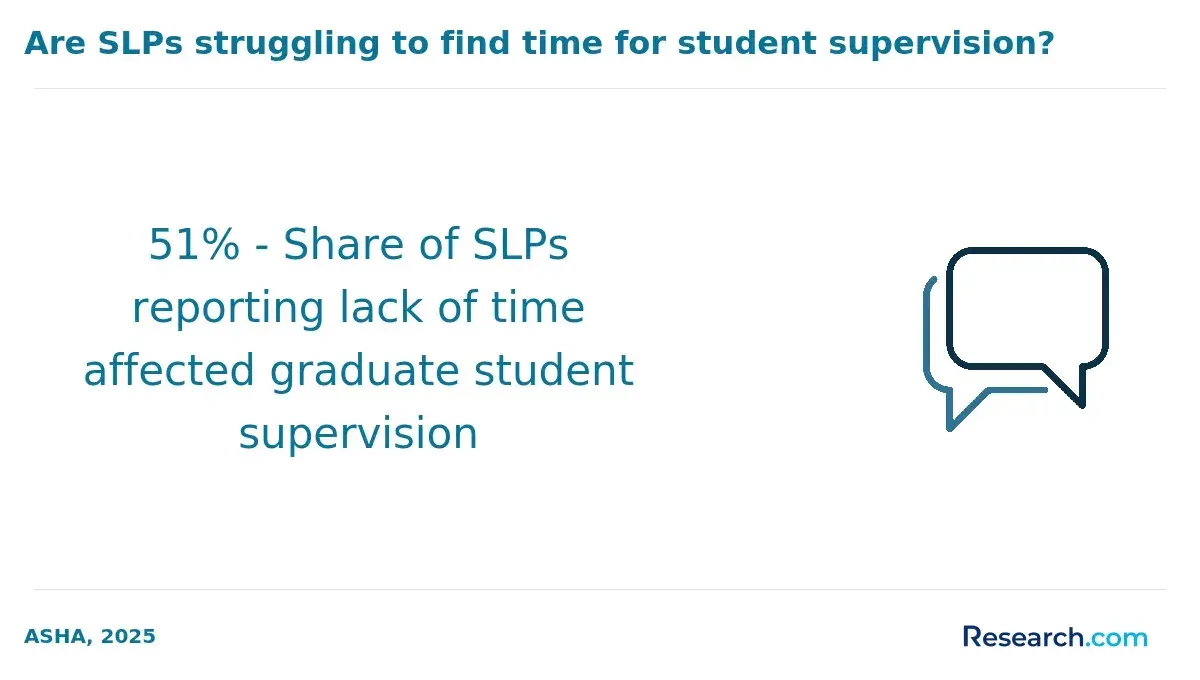
High caseloadsSome SLPs may manage more than 50 clients, making individualized service difficult.Ask employers about caseload size, workload model, documentation time, and support staff before accepting an offer.
Administrative burdenIEPs, treatment plans, progress notes, billing, and compliance tasks reduce direct therapy time.Use structured documentation routines and clarify productivity expectations.
Resource limitationsSchools and clinics may lack materials, technology, or staffing.Build reusable therapy tools, collaborate with colleagues, and seek grants or community resources when appropriate.
Diverse client needsClinicians must serve clients across languages, cultures, ages, and disabilities.Pursue continuing education in cultural responsiveness, bilingual assessment considerations, and family-centered practice.
Unqualified providersImproperly trained service providers can confuse families and weaken trust in the profession.Educate clients and communities about licensure, qualifications, and evidence-based care.
Burnout riskEmotional demands, heavy documentation, and workload pressure can build over time.Prioritize mentorship, manageable caseloads, peer consultation, and realistic role expectations.

Many candidates reduce risk by choosing an accredited graduate path, comparing supervisors and clinical placement support, and asking direct questions about workload before accepting their first role.

What opportunities are available for SLPs to transition into related fields or obtain teaching credentials?

SLPs who enjoy classroom collaboration, literacy, language development, and student support may consider teaching credentials or related education roles. This can be a practical move for professionals who want broader classroom influence, curriculum involvement, or leadership in school-based services.

Credential requirements differ by role, so SLPs should not assume their clinical license automatically qualifies them to teach. A useful starting point is reviewing the types of teaching certificates in Minnesota. From there, compare additional coursework, student teaching, testing, and licensure requirements with your current education and career goals.

What continuing education and professional development options are available for SLPs in Minnesota?

Continuing education helps Minnesota SLPs maintain licensure, improve care quality, and adapt to changing research and service models. Strong professional development should be intentional: choose training that matches your setting, client population, and advancement goals rather than collecting random credits.

  • Clinical specialization: Swallowing, voice, fluency, autism, AAC, literacy, pediatric feeding, and neurological communication disorders can deepen practice.
  • School-based practice: IEP compliance, language and literacy intervention, culturally responsive assessment, and collaboration with educators are especially useful.
  • Medical practice: Dysphagia, cognitive-communication, neurological rehabilitation, and interprofessional care are important for healthcare settings.
  • Leadership training: Supervision, program evaluation, budgeting, and quality improvement can support advancement.
  • Career transition: SLPs interested in classroom teaching may explore paths such as how to become an elementary school teacher in Minnesota.

Are accelerated programs a viable option for launching your SLP career in Minnesota?

Accelerated programs can be useful for motivated students who want a faster route through coursework, but they are not right for everyone. Speech-language pathology requires both academic mastery and supervised clinical competence, so speed should not come at the expense of licensure alignment or placement quality.

Before choosing an accelerated option, verify accreditation, clinical site arrangements, faculty access, exam preparation, graduation requirements, and whether the schedule is realistic for your life. Compare options using this guide to accelerated speech pathology programs, then contact programs directly to confirm Minnesota-specific details.

Accelerated programs may be a good fit if...They may be a poor fit if...
You can handle intensive coursework and clinical expectations.You need a slower pace because of work, caregiving, or financial constraints.
You already completed prerequisites.You still need multiple leveling courses before graduate work.
The program has clear clinical placement support.You are responsible for finding placements without adequate guidance.
You have confirmed CAA accreditation and licensure alignment.You are relying on marketing language instead of official accreditation verification.

How can collaboration with school counselors enhance your SLP practice in Minnesota?

School counselors can help SLPs understand student needs beyond speech and language goals. Communication difficulties may affect peer relationships, classroom confidence, behavior, attendance, and emotional well-being. When SLPs and counselors coordinate, students receive more coherent support.

Useful collaboration can include shared intervention planning, referral discussions, social communication support, family communication, transition planning, and coordinated follow-up. SLPs who want to better understand the counselor’s role can review how to become a school counselor in Minnesota.

Common mistakes to avoid when pursuing an SLP career in Minnesota

  • Choosing a program before checking accreditation. CAA accreditation should be one of your first filters, not an afterthought.
  • Looking only at tuition. Total cost includes fees, placement travel, exam costs, licensure costs, and time away from work.
  • Assuming online means fully remote. Even online SLP programs require clinical experiences, and those may be in person.
  • Ignoring state licensure details. A program may be reputable but still require careful verification for Minnesota licensure.
  • Accepting the first job offer without workload questions. Ask about caseload, documentation time, supervision, benefits, and continuing education support.
  • Overlooking rural opportunities. Smaller communities may offer strong demand and meaningful professional experience.
  • Expecting guaranteed salary outcomes. Published averages are useful benchmarks, but actual pay depends on role, employer, location, and experience.

Questions to ask before choosing an SLP program or job in Minnesota

Ask this questionWhy it matters
Is the program CAA-accredited?Accreditation is central to professional preparation and licensure planning.
How are clinical placements assigned?Placement quality affects your readiness for schools, hospitals, and private practice.
Does the program support Minnesota licensure?State requirements determine whether you can practice legally after graduation.
What is the full cost of attendance?Tuition alone may not show the real financial commitment.
What populations will I serve during training?Experience with children, adults, swallowing, voice, schools, or medical settings can shape your career options.
What is the employer’s caseload or productivity expectation?Workload can affect care quality, stress, and long-term retention.
Is supervision or mentorship available?Early-career support can make the transition from graduate school to practice smoother.
Does the employer fund continuing education?Professional development is important for license renewal and advancement.

What do speech-language pathologists say about their careers in Minnesota?

  • Being an SLP in Minnesota has given me the chance to work in a community-focused environment. I regularly coordinate with healthcare professionals, educators, and families, which makes the work feel connected rather than isolated. Access to educational and therapy resources has also helped me serve clients more effectively. Lauren
  • The best part of practicing in Minnesota is the range of people I serve. Every client brings a different story, and the diversity keeps the work challenging in a good way. Local schools and organizations have been supportive, which makes it easier to try therapy approaches that fit each person’s needs. Kai
  • Minnesota has allowed me to shape my SLP career around my life. I have worked in different settings, including schools and private practice, and the flexibility has mattered. The professional development options also help me keep learning instead of feeling stuck in one routine. Robin

References:

Key Insights

  • Minnesota is a strong SLP market, but preparation is demanding. The state employs over 3,300 SLPs, and demand is projected to grow by 18.6% from 2022 to 2032.
  • A graduate degree is the central requirement. Most candidates need a CAA-accredited master’s degree in speech-language pathology, supervised clinical experience, a passing national exam score, and Minnesota licensure.
  • Salary potential is attractive but not guaranteed. Minnesota SLPs earn an average annual salary of approximately $95,090 as of 2024, while entry-level roles start around $78,000 per year. Actual pay varies by setting, location, and experience.
  • Program choice affects licensure and debt. Before enrolling, confirm accreditation, clinical placement support, Minnesota licensure alignment, total cost, and whether the schedule fits your life.
  • Schools and healthcare settings offer different trade-offs. School roles often involve IEPs and educational teams, while medical roles may involve swallowing, rehabilitation, and adult communication disorders.
  • Collaboration is part of the job. Minnesota SLPs frequently work with teachers, counselors, psychologists, therapists, physicians, families, and administrators.
  • The smartest path is evidence-based and practical. Choose accredited education, ask hard questions about clinical training and workload, plan your finances early, and build skills in documentation, cultural responsiveness, and interdisciplinary care.

Other Things You Should Know About Speech-language Pathologists in Minnesota

What education is required to obtain a speech-language pathologist license in Minnesota in 2026?

To obtain a speech-language pathologist license in Minnesota in 2026, candidates must hold a master's degree in speech-language pathology from an accredited program. They also need to complete the required clinical fellowship to gain practical experience.

What are the certification requirements for speech-language pathologists in Minnesota for 2026?

To become certified as a speech-language pathologist in Minnesota in 2026, you must complete a master's degree in Speech-Language Pathology from an accredited program. Additionally, you'll need to pass the Praxis examination in speech-language pathology and complete a supervised clinical fellowship, followed by state licensure through the Minnesota Department of Health.

Do you need a license to become a speech-language pathologist?

To become a speech-language pathologist in Minnesota, you must obtain a license. Practicing without this license is illegal and can lead to significant legal ramifications, including fines and potential criminal charges. The Minnesota Board of Speech-Language Pathology oversees licensure, ensuring that practitioners meet the necessary educational and ethical standards.

Here are key steps to navigate the licensure process:

  • Complete a Master's Degree: Enroll in an accredited program that meets the American Speech-Language-Hearing Association (ASHA) standards. This typically involves coursework in communication sciences and clinical practice.
  • Gain Clinical Experience: Accumulate supervised clinical hours as part of your graduate program. This hands-on experience is crucial for developing practical skills.
  • Pass the Praxis Exam: After completing your degree, you must pass the Praxis Examination in Speech-Language Pathology. This test assesses your knowledge and readiness to practice.
  • Apply for Licensure: Submit your application to the Minnesota Board of Speech-Language Pathology, including proof of your education, clinical hours, and exam results.
  • Maintain Continuing Education: Once licensed, you must complete continuing education requirements to keep your license active.

By following these steps, you can ensure a successful and legally compliant career as a speech-language pathologist in Minnesota.

What are the main steps to become a speech-language pathologist in Minnesota in 2026?

To become a speech-language pathologist in Minnesota in 2026, earn a master's in speech-language pathology, complete required supervised clinical experience, pass the Praxis exam, and obtain Minnesota licensing. Continuing education is mandatory for license renewals.

Related Articles
2026 How to Become a Speech Language Pathologist in Massachusetts thumbnail
Careers JUN 17, 2026

2026 How to Become a Speech Language Pathologist in Massachusetts

by Imed Bouchrika, PhD
2026 How To Become an Audiologist thumbnail
Careers JUN 18, 2026

2026 How To Become an Audiologist

by Imed Bouchrika, PhD
2026 How to Become a Speech Language Pathologist in Idaho: Requirements & Certification thumbnail
2026 How to Become a Speech Language Pathologist in New York: Requirements & Certification thumbnail
2026 How to Become a Speech Language Pathologist in Nebraska: Requirements & Certification thumbnail
2026 How to Become a Speech Language Pathologist in West Virginia: Requirements & Certification thumbnail

Recently Published Articles

Newsletter & Conference Alerts

Research.com uses the information to contact you about our relevant content.
For more information, check out our privacy policy.

Newsletter confirmation

Thank you for subscribing!

Confirmation email sent. Please click the link in the email to confirm your subscription.