2027 Most Affordable Online Master's in Legal Studies Degree Programs

Co-Founder and Chief Data Scientist
An online Master of Legal Studies degree is built for professionals who need advanced legal knowledge but do not plan to become attorneys. It can be useful if your work involves contracts, compliance, policy, employment rules, health care regulations, data privacy, risk management, or government oversight. The key question is not simply whether an MLS is “good,” but whether the degree fits your career goal, budget, schedule, and employer expectations.
This guide explains what online masters in legal studies degrees cover, how they compare with campus-based programs, what they may cost, how long they usually take, and which career paths they can support. It also highlights affordable program options, salary data, financial aid considerations, accreditation issues, specialization choices, and common mistakes to avoid before enrolling.
Quick answer: Is an online Master’s in Legal Studies worth considering?
An online Master’s in Legal Studies can be worth considering if you already work in a field where law affects business decisions but you do not need a Juris Doctor or bar admission. It is especially relevant for professionals in compliance, human resources, health care administration, finance, public policy, contracts, real estate, cybersecurity, and legal operations.
| Question | Practical answer |
| Who is an online MLS for? | Working professionals who need legal fluency for non-attorney roles. |
| Does it make you a lawyer? | No. An MLS is not a JD and does not qualify graduates to practice law. |
| How long does it take? | Online masters in legal studies degrees typically take 12 to 24 months to complete. |
| What salary range is common? | According to the U.S. Bureau of Labor Statistics (BLS), those with a law and legal studies degree, including an online MLS degree, can expect a median salary of around $67,000 annually, though pay varies by role, employer, location, and experience. |
| What jobs can it support? | Common options include compliance officer, contract manager, legal analyst, policy analyst, HR specialist, regulatory analyst, and legal consultant. |
| What should you verify first? | Accreditation, total cost, career outcomes, specialization fit, faculty experience, and whether the program’s curriculum matches your target role. |
What can I expect from an online Master's in Legal Studies degree?
An online Master’s in Legal Studies gives non-lawyers structured training in how legal systems, regulations, contracts, and institutional policies affect professional decisions. Instead of preparing students to represent clients in court, MLS programs focus on legal reasoning, compliance awareness, policy interpretation, legal research, writing, ethics, and risk analysis.
Most programs are designed for adults who are already employed or who want to move into legal-adjacent work. Coursework often addresses contracts, regulatory law, dispute resolution, ethics, legal research, and specialized topics such as health law, business law, privacy, employment law, or public policy. Some schools also build in internships, clinical education, simulations, or practical projects in courts, state and federal attorney’s offices, administrative agencies, private law firms, public interest groups, and other legal environments.
| What you learn | Why it matters at work |
| Legal research and writing | Helps you interpret rules, summarize legal issues, and communicate clearly with attorneys and executives. |
| Contracts and negotiation | Useful for vendor agreements, procurement, employment agreements, and risk review. |
| Regulatory compliance | Supports roles in health care, finance, cybersecurity, human resources, government, and corporate compliance. |
| Ethics and professional responsibility | Prepares you to identify conflicts, confidentiality concerns, and decision-making risks. |
| Specialized law electives | Lets you align the degree with a field such as health law, corporate law, tax, employment law, or intellectual property. |
Where can I work with an online Master's in Legal Studies degree?
MLS graduates can work in industries where legal knowledge improves decision-making but attorney licensure is not required. The degree is commonly used in regulated sectors such as finance, health care, insurance, technology, higher education, real estate, manufacturing, government, and nonprofit administration.
In corporate environments, MLS graduates may help organizations monitor compliance, manage contracts, review internal policies, communicate with legal counsel, or reduce operational risk. In government and nonprofit settings, they may support policy analysis, advocacy, regulatory interpretation, public administration, or program compliance. In human resources, legal studies training can help professionals understand employment law, workplace investigations, discrimination rules, and labor policies. In health care, it can support work involving privacy, patient rights, reimbursement, licensing, and regulatory reporting.
How much can I make with an online Master's in Legal Studies degree?
Pay after an MLS depends heavily on the job title, industry, location, prior experience, and whether the graduate moves into management. The degree itself does not guarantee a salary increase. It is most valuable when it strengthens a career path that already rewards legal, compliance, policy, or regulatory expertise.
Individuals who complete online masters in legal studies degrees can expect to earn competitive salaries, with median earnings ranging from about $65,000 to $90,000 per year, depending on the industry and location. Entry-level positions such as paralegal, legal analyst, or compliance specialist may fall in the $60,000 to $75,000 range. More experienced professionals in corporate compliance, health care regulation, contract management, or leadership roles can earn upwards of $100,000 annually.
According to data from BLS, these are the annual mean wages of several occupations that graduates of online masters in legal studies degrees may pursue. The figures are based on salary data as of May 2023.
| Occupation | Annual mean wage |
| Conciliator | $95,370 |
| Paralegal | $66,460 |
| Compliance Officer | $80,190 |
| Medical and Health Services Manager | $134,440 |
| Human Resources Manager | $154,740 |
| Criminal Justice and Law Enforcement Postsecondary Teachers | $83,470 |
| Tax Examiner or Collector | $65,370 |
- Affordable online Master’s in Legal Studies programs for 2027
- How long does it take to complete an online Master's in Legal Studies program?
- How does an online Master's in Legal Studies degree compare to an on-campus program?
- What is the return on investment for an online MLS degree?
- What are the financial planning considerations for pursuing an online Master's in Legal Studies degree?
- What is the average cost of an online Master's in Legal Studies program?
- What are the financial aid options for students enrolling in an online Master's in Legal Studies program?
- What are the prerequisites for enrolling in an online Master's in Legal Studies program?
- What courses are typically in an online Master's in Legal Studies program?
- What types of specializations are available in online Master's in Legal Studies programs?
- How to choose the best online Master's in Legal Studies program?
- What career paths are available for graduates of online Master's in Legal Studies programs?
- How can an online Master's in Legal Studies facilitate transitions into specialized legal support roles?
- What is the job market for graduates with an online Master's in Legal Studies degree?
- What career support services do online Master's in Legal Studies programs offer?
- How does an online Master's in Legal Studies prepare you for legal certifications?
- What challenges do students face in online Master’s in Legal Studies programs?
- How do online MLS programs foster professional networking opportunities?
- What misconceptions exist about online MLS programs?
- Are accreditation standards critical for evaluating online MLS programs?
- How do online MLS programs integrate practical legal experiences?
- How do online MLS programs address emerging legal technologies and ethical challenges?
- How do online MLS programs enhance comprehensive student support services?
- How do online MLS programs measure long-term career success?
- How do online MLS programs foster interdisciplinary collaboration?
List of Affordable Online Master's in Legal Studies Programs for 2027
How do we rank schools?
An online Master’s in Legal Studies can require a meaningful financial commitment, so affordability should be evaluated alongside program length, credit requirements, curriculum fit, institutional reputation, and student support. For this guide, our team reviewed MLS programs that may appeal to cost-conscious students, including programs with lower tuition and programs that may cost more per credit but require fewer credits, which can shorten the time to completion.
Our research process draws from credible sources such as the College Scorecard database, the IPEDS database, the National Center for Education Statistics (NCES), and Peterson’s database, including the Distance Learning Licensed Data Set. You can review the full Research.com ranking methodology for more detail.
| School | Format | Credits | Program length | Cost information stated by school |
| University of Illinois Springfield | Fully online or on campus | 36 credits | 24 months | $365.75 per credit hour |
| Arizona State University | Online | 30 credits | As little as one year | $31,200 for residents and $39,200 for nonresidents for tuition and fees |
| Texas A&M University College of Law | Online or hybrid | 30 credits | Approximately one to two years | $35,008 for tuition |
| University of Southern California Gould School of Law | Fully online part-time; on-campus full-time option | 21 credit units | Approximately 16 months | $65,121 estimated total cost |
| Washington University in St. Louis | Online with in-person learning experiences | 24 credits | Approximately a year and a half | $2,917 per credit |
1. University of Illinois Springfield
The University of Illinois Springfield (UIS) offers a master’s in legal studies that students can complete fully online or on campus. Online and campus learners follow the same curriculum and study with the same faculty. Courses use both synchronous and asynchronous delivery, making the program suitable for part-time students and full-time working professionals. UIS also advertises small classes, usually up to 20 students only, and allows students to customize the degree through an area of focus and one of eight graduate certificates pursued alongside the master’s.
- Program Length: 24 months
- Tracks/concentrations:
- Law and Public Policy
- Human Rights/Social Justice and Public Policy
- Criminal Justice
- Regulatory Compliance
- Cost per Credit: $365.75 per credit hour
- Required Credits to Graduate: 36 credits
- Accreditation: Higher Learning Commission (HLC)
2. Arizona State University
The Sandra Day O’Connor College of Law at Arizona State University (ASU) offers an online Master of Legal Studies for professionals who want a foundation in legal concepts, analysis, and writing without pursuing attorney licensure. ASU states that the program helps students build an interdisciplinary understanding of legal principles and work more effectively with attorneys. Students may choose among 12 emphases without having the emphasis listed on the diploma or transcript, and the program includes 10 classes delivered in 7.5 weeks per class.
- Program Length: As little as one year
- Tracks/concentrations:
- Business Law
- Conflict Resolution
- Contract Management
- Construction Law
- Corporate and Health Care Compliance
- Criminal Law
- Healthcare Law and Administration
- Indian Gaming
- Intellectual Property Law
- Law and Sustainability
- Legal Paraprofessional
- Sports Law and Business
- Tribal Self-governance
- Cost per Credit: ASU provides a quote of $31,200 for residents and $39,200 for nonresidents for tuition and fees
- Required Credits to Graduate: 30 credits
- Accreditation: ASU states that “Many of the Master of Legal Studies emphases are accredited by or in alignment with affiliated professional organizations, including the Society of Corporate Compliance and Ethics (SCCE), the Health Care Compliance Association (HCCA), the Society for Human Resource Management (SHRM) and the Compliance Certification Board (CCB)”.
3. Texas A&M University College of Law
The Master of Legal Studies at Texas A&M University (TAMU) College of Law is available online or in a hybrid format. The program is designed for flexibility: applicants do not need an entrance exam, start dates are offered in fall, spring, or summer, and students can study part-time. Online students can choose from 12 tracks, while hybrid learners can select one of three tracks. Asynchronous online courses and short-term campus options allow students to tailor the experience to their schedules.
- Program Length: Approximately one to two years
- Tracks/concentrations:
- General Legal Studies
- Business Law and Compliance
- Cybersecurity Law and Policy
- Energy, Oil, and Gas Law
- Energy and Environmental Law
- Health Law, Policy and Management
- HR and Employment Law, Policy, and Management
- Intellectual Property, Technology, and Innovation
- International Tax Law and Policy
- Real Estate and Construction Law, Policy, and Management
- Risk Management and Compliance
- Wealth Management
- Cost per Credit: TAMU provides an estimate of $35,008 for tuition
- Required Credits to Graduate: 30 credits
- Accreditation: The Southern Association of Colleges and Schools Commission on Colleges (SACSCOC), the MLS program at TAMU has obtained acquiescence from the American Bar Association (ABA)
4. University of Southern California Gould School of Law
The University of Southern California Gould School of Law offers a fully online Master of Studies in Law for working professionals who prefer part-time study. Students who want a faster full-time option may choose the on-campus program at the University Park campus in downtown Los Angeles. Online students complete a mix of synchronous and asynchronous work, join weekly live discussions led by professors, and usually take two to three classes each semester. USC does not list formal MSL concentrations, but students can earn graduate certificates concurrently with the degree at no additional cost.
- Program Length: Approximately 16 months
- Tracks/concentrations:
- MSL Degree and Business Law Certificate
- MSL Degree and Compliance Certificate
- MSL Degree and Entertainment Law and Industry Certificate
- MSL Degree and Financial Compliance Certificate
- MSL Degree and Health Care Compliance Certificate
- MSL Degree and Human Resources Law and Compliance Certificate
- MSL Degree and Law and Government Certificate
- MSL Degree and Privacy Law and Cybersecurity Certificate
- MSL Degree and Real Estate Law Certificate
- MSL Degree and Social Work Administration Certificate
- MSL Degree and Technology and Entrepreneurship Law Certificate
- Cost per Credit: USC provides an estimated total cost of $65,121
- Required Credits to Graduate: 21 credit units (accepts a maximum of five transfer credits)
- Accreditation: USC’s Gould School of Law is accredited by the Compliance Certificate Board (CCB) and the American Bar Association (ABA), and USC is accredited by the Western Association of Schools and Colleges, the Senior College and University Commission (WSCUC)
5. Washington University in St. Louis
The Washington University School of Law (WashU Law) at Washington University in St. Louis offers an online MSL with five concentrations. Students study with faculty who also teach on campus and complete coursework that includes face-to-face online classes with peers and in-person learning experiences at the St. Louis campus in Missouri. WashU Law also offers an online MLS in Taxation for students seeking specialized knowledge of tax law across industries.
- Program Length: Approximately a year and a half
- Tracks/concentrations:
- Business Law
- Conflict Resolution
- Litigation
- Regulatory Compliance
- Employment Law
- MLS in Taxation
- Cost per Credit: $2,917 per credit
- Required Credits to Graduate: 24 credits
- Accreditation: Higher Learning Commission (HLC), WashULaw’s online MLS in Taxation program has obtained acquiescence from the American Bar Association (ABA)
What should students take away from online MLS graduate experiences?
Student experiences with online MLS programs often center on flexibility, career relevance, and the ability to continue working while studying. However, prospective students should treat testimonials as only one input. A stronger decision comes from comparing tuition, curriculum, faculty, accreditation, career services, alumni outcomes, and whether the program’s schedule is realistic for your life.
Key findings
- Online masters in legal studies degrees typically take 12 to 24 months to complete.
- Many colleges and universities offer scholarships to students accepted into their MSL degree programs.
- Online MSL degree programs offer numerous specializations, including corporate law, dispute resolution, public policy and administration, and cybersecurity and information privacy compliance.
- Based on 2024 data from O*NET OnLine, graduates of online masters in legal studies degrees can look forward to a bright outlook in employment growth for most occupations related to their field, such as medical and health services managers and human resources managers.
- According to 2024 data on online learning, 33% of graduate students say lower tuition is the most attractive feature of a school, making it the top factor when choosing an online program.
How long does it take to complete an online Master's in Legal Studies program?
Most online masters in legal studies degrees take 12 to 24 months, with the exact timeline depending on enrollment status, course length, required credits, transfer policies, and whether the school offers accelerated terms. Full-time students may finish in as little as one year, while part-time students commonly take up to two years.
Some programs allow students to extend their studies over three or four years, which can help working adults manage demanding jobs, family responsibilities, or periods of high workload. Others use compressed courses or year-round enrollment to help students graduate faster. The best timeline is the one that lets you complete the program without sacrificing learning quality, health, or employment stability.
| Enrollment pace | Typical fit | Trade-off |
| Accelerated | Students who can handle intensive workloads and want to finish quickly | Less scheduling flexibility and more pressure each term |
| Full-time | Students with predictable schedules or employer support | Faster completion but heavier weekly academic demands |
| Part-time | Working professionals balancing job and family obligations | More manageable workload but longer time to degree |
| Extended plan | Students who need breaks or lighter course loads | May delay career benefits and could increase fees depending on school policy |
How does an online Master's in Legal Studies degree compare to an on-campus program?
An online Master’s in Legal Studies often uses the same academic standards, curriculum, and faculty as a campus program, but the learning experience differs. Online programs are usually better for working professionals who need schedule flexibility, while campus programs may offer more in-person networking, classroom interaction, and local internship access.
Many online programs now include live class sessions, recorded lectures, virtual case discussions, collaborative projects, digital research tools, and remote career services. As higher education institutions continue investing in online learning technology, the perceived gap between online and in-person graduate education has narrowed.
Employers’ opinions of online degrees are improving, with a majority saying that in-person and online degrees are comparable. A 2023 survey from Champlain College also reports that 90% of adults agree that online education can effectively equip students with the knowledge and skills necessary to succeed in their careers.
The same data shows that 80% of adults would consider an online program if enrolling in online degrees in public administration, legal studies, and other graduate or undergraduate programs.
Prospective students should also note that schools may use different names for similar programs, including Master of Legal Studies, Master of Studies in Law, Master of Science in Law, and MSL. Always review the curriculum and outcomes rather than relying only on the title.
| Factor | Online MLS | On-campus MLS |
| Best for | Working adults, remote learners, students needing schedule flexibility | Students who prefer face-to-face learning and campus-based networking |
| Course access | Often synchronous, asynchronous, or blended | Usually scheduled on campus |
| Networking | Virtual events, online cohorts, alumni platforms, remote career services | In-person faculty access, campus events, local employer connections |
| Cost considerations | May reduce relocation and commuting costs | May include commuting, housing, or opportunity costs |
| Academic rigor | Can match campus rigor when offered by the same institution and faculty | Traditional classroom format with direct in-person engagement |

What is the average cost of an online Master's in Legal Studies program?
The online master’s in legal studies programs reviewed in this guide typically range from $20,000 to $70,000, depending on the institution, tuition model, fees, and required credits. Many of the more affordable MLS programs we found averaged between $500 and $1,000 per credit hour, with most requiring 30 to 36 credits to complete. That brings total tuition to about $15,000 to $36,000 before technology fees, textbooks, course materials, travel for residencies, or other expenses. Students focused on cost can compare options through guides to the cheapest online legal studies degree programs.
Public universities may offer lower rates, especially when online students qualify for in-state tuition or a flat online tuition rate. The University of Illinois Springfield, for example, offers the same electronic tuition price to state residents and nonresidents as long as students are enrolled in an online program and take only online courses for the MLS degree.
Price alone should not determine your choice. A lower-cost program that lacks your intended specialization, career support, or employer recognition may deliver weaker value than a more expensive program with strong alignment to your goals. Conversely, a high-cost program is not automatically a better investment. Compare total cost against curriculum relevance, time to completion, financial aid, employer reimbursement, and career outcomes.
What are the financial aid options for students enrolling in an online Master's in Legal Studies program?
Students in online master’s in legal studies programs may have several ways to reduce out-of-pocket costs. Availability depends on the school, accreditation status, enrollment level, and the student’s individual financial profile.
- Federal Financial Aid: Students who complete the Free Application for Federal Student Aid (FAFSA) may qualify for federal options such as Direct Unsubsidized Loans and Grad PLUS Loans. Unsubsidized loans are not based on financial need, while Grad PLUS Loans can help cover additional approved costs.
- Institutional Scholarships: Many universities offer scholarships for MLS students based on academic merit, financial need, or professional background. USC’s Gould School of Law automatically considers MLS applicants for merit-based scholarships, and WashU Law offers scholarships to admitted MLS students.
- Employer Tuition Reimbursement: Some employers help pay for graduate study when the degree supports the employee’s current or future role. This can be especially relevant in health care, finance, compliance, government, and corporate operations.
- Discount Programs: Schools may provide reduced tuition for alumni, military-affiliated students, government employees, or workers at partner organizations.
- Graduate Assistantships: Assistantships are less common in fully online programs, but some institutions may offer tuition support or stipends in exchange for teaching, research, or administrative assistance.
- Professional Associations: Legal and compliance-related organizations, including the American Bar Association and other legal associations, may offer scholarships tied to public service, diversity, or specific legal interests.
- State Financial Aid Programs: Some states provide graduate-level grants, scholarships, or loan programs for eligible students. Check your state higher education agency before assuming federal aid is your only option.
Avoiding student loan debt with financial aid
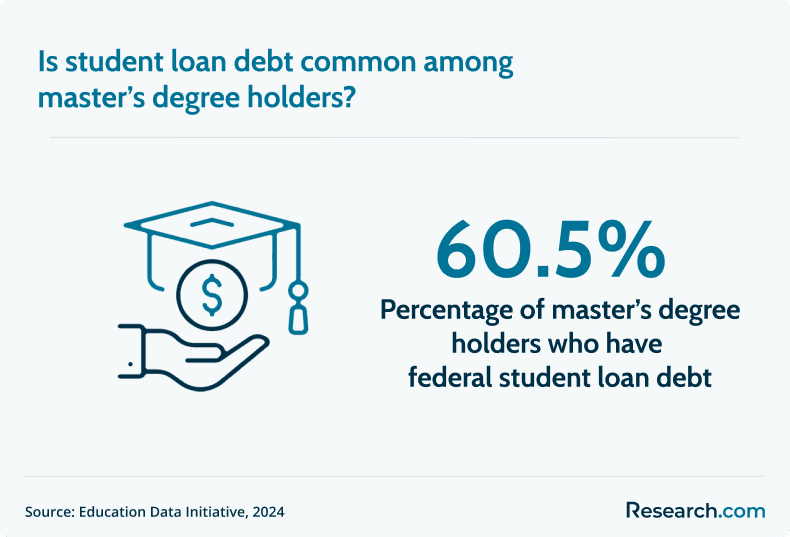
Graduate education can increase borrowing. An Education Data Initiative report showing 2024 data on student loan debt reveals that 60% of master’s degree holders have federal student loan debt and 52.6% of them owe for graduate school. This matters for students considering master’s in legal studies degrees, ABA approved online paralegal programs, or other credentials intended to improve career mobility.
Before borrowing, ask each school for a full cost of attendance estimate, scholarship deadlines, typical award amounts, employer partnership discounts, and whether payment plans are available. The goal is to reduce reliance on loans whenever possible and borrow only with a realistic repayment plan.
What are the prerequisites for enrolling in an online Master's in Legal Studies program?
Admission requirements vary by school, but most online MLS programs expect applicants to show that they can succeed in graduate-level legal study. A legal background is often helpful but not always required.
- Bachelor's Degree: Applicants usually need a completed bachelor’s degree from an accredited institution. Some schools may prefer related preparation in social sciences, business, public administration, or a political science degree online or on-campus program.
- Minimum GPA: Many programs prefer a cumulative GPA of around 3.0 in the last 60 hours of undergraduate coursework, although applicants with lower GPAs may still be considered if the rest of the file is strong.
- Application Materials: Common requirements include a resume, personal statement, recommendation letters, and sometimes a writing sample.
- Relevant Experience: Experience in law, compliance, business operations, HR, health care, government, or policy can strengthen an application. Applicants seeking more focused legal support preparation may also consider online paralegal certificate programs ABA approved before or alongside graduate study.
Because requirements differ by institution, review each program’s application page before preparing materials. Whether you are applying to an affordable MLS program or comparing options such as the easiest online criminal justice degree, strong preparation matters.
The Council of Graduate Schools (CGS) released a report in 2023 on graduate enrollment and degree trends. The statistics show that 49.8% of applicants to programs classified as master’s or other were accepted in Fall 2022. The chart below presents additional details on the acceptance rate for master’s degree applicants by Carnegie classification.
What courses are typically in an online Master's in Legal Studies program?
Online MLS coursework usually begins with foundations in the U.S. legal system and then moves into applied legal topics. The strongest programs connect doctrine with workplace problems, such as compliance reviews, employment disputes, contract risk, privacy obligations, or policy implementation.
- Introduction to U.S. Law and the Legal System: Covers legal institutions, court structures, sources of law, and the role of statutes, regulations, and case law.
- Contracts: Examines contract formation, interpretation, performance, breach, remedies, and risk allocation.
- Torts: Introduces civil wrongs, liability, negligence, damages, and legal remedies.
- Criminal Law: Reviews criminal offenses, defenses, procedure, and the broader justice system.
- Constitutional Law: Explores constitutional rights, government powers, and limits on state action.
- Legal Research and Writing: Builds the ability to locate legal authority, analyze issues, and produce clear legal and policy documents.
Many programs also offer electives in business law, health care law, compliance, intellectual property, cybersecurity, and employment law. Students who plan to combine legal knowledge with people operations may also compare an MLS with an affordable HR degree online.
Capstone projects, thesis options, simulations, and applied research assignments are common ways for students to demonstrate that they can use legal knowledge in real professional contexts.
What types of specializations are available in online Master's in Legal Studies programs?
Specializations help students connect legal studies to a specific industry or function. Choose a concentration based on the work you want to do after graduation, not just the title that sounds most interesting.
| Specialization | Best fit |
| Corporate Law | Business professionals working with contracts, governance, compliance, risk, mergers and acquisitions, or internal legal teams. |
| Health Law | Health care administrators, compliance staff, privacy officers, and professionals working with patient rights or health regulations. |
| Environmental Law | Professionals interested in environmental regulation, sustainability, land use, or public advocacy. Students may also explore accredited online forestry degrees if they want stronger environmental science preparation. |
| Intellectual Property Law | Professionals in technology, entertainment, research, startups, product development, or innovation management. |
| Criminal Law | Students interested in criminal justice policy, law enforcement administration, corrections, advocacy, or legal support work. |
| Cybersecurity and Information Privacy Compliance | Professionals working with data protection, privacy regulation, breach response, cybersecurity governance, or technology risk. |
| Dispute Resolution | HR professionals, mediators, managers, consultants, and others who handle negotiation, conflict, or workplace disputes. |
| Human Resources and Employment Law | HR staff and managers who need legal knowledge related to labor relations, discrimination, accommodations, investigations, and workplace policy. |
| International Law | Professionals interested in global business, trade, human rights, international organizations, or cross-border policy issues. |
| Public Policy and Administration | Government, nonprofit, advocacy, and policy professionals who interpret laws and regulations in public decision-making. |
| Real Estate Law | Professionals in property management, development, leasing, zoning, land use, and real estate transactions. |
How to choose the best online Master's in Legal Studies program?
The best online MLS program is the one that matches your career objective, schedule, learning style, budget, and credential needs. Rankings can help you build a shortlist, but they should not replace program-level research.
- Confirm accreditation: Choose an institution recognized by a reputable accrediting body. Accreditation can affect federal financial aid eligibility, transferability of credits, and employer confidence.
- Review the curriculum: Look beyond course titles. Read descriptions and check whether assignments reflect real-world legal and regulatory problems.
- Match the specialization to your target role: A compliance-focused student needs different coursework than someone pursuing HR law, policy analysis, tax, or intellectual property.
- Check faculty experience: Faculty with legal practice, compliance, policy, judicial, or industry experience can add practical perspective.
- Compare delivery formats: Decide whether you need asynchronous flexibility, live evening classes, cohort interaction, or occasional campus residencies.
- Calculate total cost: Include tuition, fees, textbooks, technology costs, travel, transfer credit limits, and lost work time.
- Evaluate career services: Ask about job boards, employer partnerships, alumni mentoring, resume reviews, interview coaching, and internship support.
- Assess alumni outcomes: Request examples of recent graduate roles, industries, and career transitions.
- Read student feedback carefully: Reviews can reveal workload, responsiveness, technology quality, and advising strengths or weaknesses.
- Consider location even for online study: Some online programs have stronger employer relationships in specific regions.
A survey from McKinsey & Company published in 2023 identified three major online learning features students value: easy access to online study materials, flexibility that enables students to work and study, and recorded classes that can be watched later.
For online graduate students, the 2024 EducationDynamics Online College Students Report reveals that lower tuition (33%) was the most attractive school feature. The chart below shows other top considerations for graduate students making online enrollment decisions.
| Common mistake | Better approach |
| Choosing the cheapest program without checking fit | Compare cost with specialization, faculty, support services, and outcomes. |
| Assuming all MLS programs are the same | Review course requirements, electives, practicum options, and program goals. |
| Ignoring accreditation | Verify institutional accreditation before applying or borrowing. |
| Relying only on rankings | Use rankings as one input, then evaluate curriculum, cost, and career alignment. |
| Assuming the MLS leads to law practice | Remember that an MLS does not replace a JD or bar admission. |
| Forgetting transfer credit policies | Ask whether prior graduate credits or certificates can shorten the program. |
| Overlooking employer tuition assistance | Check with HR before enrollment and document reimbursement rules. |
What career paths are available for graduates of online Master's in Legal Studies programs?
An online Master’s in Legal Studies can support many legal-adjacent careers. It is especially useful when a role requires legal literacy, policy interpretation, regulatory awareness, or communication with attorneys, but not courtroom representation.
- Compliance Officer: Monitors whether an organization follows laws, regulations, and internal policies in industries such as finance, health care, manufacturing, and government.
- Legal Analyst: Researches legal issues, prepares reports, supports case or policy analysis, and helps legal teams or executives understand regulatory questions.
- Contract Manager: Reviews, tracks, and manages agreements with vendors, clients, partners, or internal stakeholders.
- Human Resources Specialist: Applies employment law knowledge to workplace policies, employee relations, investigations, and compliance.
- Paralegal: Supports attorneys through research, drafting, document review, and case preparation. Some roles may also require a paralegal certificate.
- Law Librarian: Helps faculty, students, attorneys, and the public conduct legal research, manage collections, and access legal information. Some law librarians also complete an affordable library science degree online.
- Policy Analyst: Studies laws, regulations, and public programs to recommend policy improvements.
- Real Estate Manager: Oversees property-related transactions, leases, zoning issues, and compliance requirements.
- Legal Consultant: Advises organizations on legal-adjacent matters such as compliance, contracts, privacy, environmental regulation, or intellectual property without practicing law.
- Government Affairs Specialist: Works on legislation, advocacy, agency relations, or public policy strategy.
- Risk Manager: Identifies legal, regulatory, operational, and contractual risks and helps organizations reduce exposure.
- Nonprofit Manager: Handles compliance, advocacy, governance, and program administration in mission-driven organizations.
- Corporate Trainer: Develops training on ethics, compliance, workplace rules, and regulatory obligations.
How can an online Master's in Legal Studies facilitate transitions into specialized legal support roles?
An MLS can help professionals move into focused legal support roles by strengthening their understanding of legal systems, documentation, compliance procedures, and regulatory analysis. This can be valuable for people transitioning from administration, business operations, HR, health care, government, or finance into positions such as paralegal, contract administrator, compliance analyst, or regulatory specialist.
Students interested in legal support work should compare MLS coursework with paralegal training requirements in their target market. For a closer look at one common pathway, review Research.com’s guide to what does a paralegal do.
What is the job market for graduates with an online Master's in Legal Studies degree?
The job market for MLS graduates is shaped by the need for regulatory knowledge across industries. Organizations increasingly face complex requirements in areas such as employment, privacy, finance, health care, environmental oversight, contracts, and governance. That creates demand for professionals who can understand legal issues and coordinate with attorneys, auditors, executives, regulators, and operational teams.
- Diverse opportunities: Like graduates of masters in forensic psychology online programs, MLS graduates can pursue roles across multiple industries when they connect their degree to specialized skills.
- Compliance pressure: Regulated industries continue to need workers who can interpret legal obligations and maintain internal controls.
- Legal knowledge outside law firms: Employers may value legal literacy in business units, HR departments, risk teams, health care systems, and policy offices.
- Remote work possibilities: Some compliance, legal operations, contract, and research roles can be performed remotely, expanding the geographic job search.
- Technology impact: Legal technology, data privacy, cybersecurity, and AI-assisted research are changing how legal-adjacent work is performed.
The legal labor market is also changing inside organizations. Thomson Reuters has reported on a growing and shifting need for legal expertise across legal departments and related staffing models.
Using the most current data from O*NET OnLine, the chart below presents employment growth projections for certain occupations that MLS degree graduates can pursue. The predictions are from 2023 to 2033.
What career support services do online Master's in Legal Studies programs offer?
Career support can make a major difference in the value of an online MLS, especially for students using the degree to change roles. Strong programs provide more than a generic job board. They help students translate legal coursework into employer-ready skills.
- Individual career advising and goal planning
- Resume and LinkedIn profile reviews for legal-adjacent roles
- Interview preparation for compliance, policy, contract, HR, and legal operations jobs
- Virtual employer events and alumni panels
- Internship, externship, or project-based learning guidance
- Access to law school or university career platforms
- Support for students pursuing complementary credentials, including paralegal online programs
How does an online Master's in Legal Studies prepare you for legal certifications?
An online MLS can provide a foundation for certain legal, compliance, privacy, regulatory, and legal support certifications. It does not replace the requirements of any certification body, so students should verify eligibility rules, work experience requirements, exam requirements, and continuing education obligations before assuming the degree is sufficient.
- Specialized legal knowledge: Electives in corporate law, intellectual property, privacy, compliance, or human rights can support preparation for certifications in related fields. For privacy-focused students, this may include credentials such as Certified Information Privacy Professional (CIPP).
- Paralegal and legal assistant preparation: MLS coursework in legal research, writing, procedure, and legal systems can help students prepare for certifications from organizations such as the National Association of Legal Assistants (NALA) or the National Federation of Paralegal Associations (NFPA).
- Regulatory and compliance pathways: Students interested in banking, health care, finance, or audit-oriented compliance may find MLS coursework relevant to certifications such as Certified Regulatory Compliance Manager (CRCM) or Certified Information Systems Auditor (CISA).
- Legal research and writing skills: Strong research training can support certification pathways that test legal analysis, documentation, and issue spotting.
- Career positioning: A degree plus a targeted certification may be stronger than either credential alone when the job requires both legal knowledge and industry-specific competence.
Students comparing affordable pathways can review an affordable online legal studies degree guide and then confirm which programs offer coursework aligned with their preferred certification.
What is the return on investment for an online MLS degree?
The ROI of an online MLS depends on whether the degree helps you obtain a better role, earn a promotion, move into a regulated field, or qualify for responsibilities that require legal knowledge. ROI is strongest when the program is affordable, the specialization matches a clear career path, and the student can keep working while enrolled.
To evaluate ROI, compare total cost with realistic career benefits. Include tuition, fees, books, technology, travel for required residencies, time away from work, and interest if you borrow. Then compare those costs with likely salary changes, promotion opportunities, employer reimbursement, and the value of completing faster through options such as one year masters programs.
| ROI factor | Question to ask |
| Total program cost | What will I pay after scholarships, employer aid, transfer credits, and fees? |
| Career alignment | Does the curriculum match the roles I am targeting? |
| Time to completion | Can I finish without pausing my income or overloading my schedule? |
| Employer value | Do employers in my field recognize or request this type of legal training? |
| Alternative credentials | Would a certificate, paralegal program, compliance credential, or HR degree meet my goal at lower cost? |
What are the financial planning considerations for pursuing an online Master's in Legal Studies degree?
Financial planning should happen before enrollment, not after the first tuition bill arrives. A careful plan can help you avoid unnecessary borrowing and choose a program with a realistic payoff.
- Tuition and Fees: Calculate the full cost of attendance, including technology fees, books, course materials, graduation fees, and any required campus visits.
- Financial Aid and Scholarships: Accredited programs at FAFSA approved online colleges may allow eligible students to apply for federal aid. Also ask each school about merit scholarships, need-based awards, and department-specific funding.
- Employer Tuition Assistance: Ask your employer whether tuition reimbursement is available, what grade requirements apply, whether you must stay employed for a certain period, and whether the MLS must relate directly to your current job.
- Opportunity Cost: Online study can help you keep earning, but it still requires time. Consider whether your work hours, family obligations, and study time are compatible.
- Loan Management: If you borrow, compare federal and private loan options, repayment terms, interest rates, and long-term monthly payments.
- Flexible Payment Plans: Some schools allow installment payments, which can reduce the need for large upfront payments.
What challenges do students face in online Master’s in Legal Studies programs?
Online MLS programs are flexible, but they are not effortless. Students who succeed usually plan their schedules carefully, use support services early, and stay actively connected with classmates and faculty.
- Time management: Graduate legal coursework often involves dense reading, writing, and analysis. Students need a weekly study plan.
- Limited face-to-face interaction: Online learners may need to be intentional about joining discussions, office hours, student groups, and networking events.
- Technology issues: Reliable internet access, familiarity with the learning platform, and access to legal research tools are essential.
- Practical experience gaps: Not every online program includes internships or clinics. Students may need to seek volunteer, externship, or project opportunities independently.
- Home distractions: Remote study requires boundaries, a dedicated workspace, and communication with family or roommates.
Students aiming for legal support roles may also consider a paralegal certificate online ABA-approved pathway if they need focused paralegal preparation in addition to or instead of an MLS.
How do online MLS programs foster professional networking opportunities?
Online MLS programs build networking through virtual discussion groups, cohort projects, alumni events, mentorship programs, faculty office hours, employer panels, and career fairs. The quality varies widely, so applicants should ask how often events occur, whether they are recorded, whether alumni participate, and whether students can connect with employers in their target region or industry.
Working adults who want a flexible and cost-conscious academic route can also compare related options through Research.com’s guide to cheap online degrees fast programs.
What misconceptions exist about online MLS programs?
One common misconception is that online MLS programs are automatically less rigorous than campus programs. In reality, rigor depends on the institution, faculty, curriculum, assessment standards, and student engagement. Some online MLS programs are taught by the same faculty and use the same learning outcomes as campus programs.
Another misconception is that an MLS qualifies graduates to practice law. It does not. Students who want to become licensed attorneys need to follow the JD and bar admission pathway. A third misconception is that online students cannot network. Networking is possible online, but students must participate actively rather than waiting for connections to happen automatically. For broader context on degree selection at another academic level, see Which bachelor degree is easy to study?.
Are accreditation standards critical for evaluating online MLS programs?
Yes. Accreditation is one of the first checks students should complete. Institutional accreditation can affect federal financial aid eligibility, transfer credit acceptance, employer trust, and the general credibility of the degree. Program-level recognition, law school status, professional alignment, and ABA acquiescence may also be relevant depending on the institution and credential type.
Cost-conscious students should compare affordability and accreditation together by reviewing options such as the cheapest master of legal studies online programs, then verifying each school’s accreditation through official accreditor or institutional sources.
How do online MLS programs integrate practical legal experiences?
Strong online MLS programs connect theory to practice through case studies, drafting assignments, legal simulations, compliance projects, negotiation exercises, capstones, externships, and applied research. Some programs also invite practicing attorneys, compliance officers, judges, policy leaders, or industry experts to lead workshops or discussions.
Students who want more hands-on legal support training may compare MLS programs with online paralegal schools, especially if their target role involves litigation support, document management, legal drafting, or direct attorney assistance.
How do online MLS programs address emerging legal technologies and ethical challenges?
Legal work increasingly involves digital tools, data systems, privacy obligations, and AI-assisted research. Online MLS programs may address these developments through courses or modules on legal technology, digital evidence, cybersecurity, privacy regulation, legal analytics, and the ethical use of emerging tools.
Students should ask whether the curriculum includes current issues such as confidentiality, algorithmic bias, data governance, electronic discovery, cybersecurity risk, and responsible AI use. Programs that use simulations, virtual practice environments, or applied technology assignments may help students connect these issues to real workplace decisions. Students comparing faster academic options can also review fastest online degree programs.
How do online MLS programs enhance comprehensive student support services?
Student support is especially important in online graduate programs because students may be balancing full-time work, family obligations, and remote learning. Useful services include academic advising, writing support, digital library access, legal research database training, technical support, orientation, tutoring, wellness resources, and financial aid counseling.
Students who need low-cost options should ask schools how financial aid advising works and may also compare cheap online schools that accept financial aid when building a broader list of affordable programs.
How do online MLS programs measure long-term career success?
Reputable programs should be able to explain how graduates use the degree. Useful outcome measures include job placement information, promotion patterns, employer types, alumni survey results, salary progression data, internship participation, and career services usage. Not every school publishes the same level of detail, so applicants should ask direct questions.
Students comparing graduate pathways should also consider completion speed and career timing. Research.com’s guide to What is the fastest masters degree program? can help frame time-to-degree as part of ROI.
How do online MLS programs foster interdisciplinary collaboration?
Law affects many professional fields, so strong MLS programs often connect legal studies with business, health care, technology, public administration, human resources, cybersecurity, finance, and public policy. Interdisciplinary projects can help students practice solving problems that do not fit neatly inside one department.
Examples include compliance case studies involving business operations, health law projects involving patient privacy, employment law scenarios for HR teams, technology policy assignments, and capstones that require legal and industry-specific analysis. Students exploring multidisciplinary education at advanced levels may also compare other flexible pathways, including the shortest PhD psychology programs.
Questions to ask before enrolling in an online MLS program
| Question | Why it matters |
| Is the institution properly accredited? | Accreditation can affect financial aid, credit transfer, and employer confidence. |
| Does the program make clear that it does not lead to attorney licensure? | You need to understand the difference between an MLS and a JD. |
| What jobs do recent graduates hold? | Career outcomes show whether the degree aligns with your target path. |
| Are courses asynchronous, synchronous, or mixed? | The format must fit your work schedule and learning style. |
| What is the total cost after fees? | Per-credit tuition does not always show the full price. |
| Are scholarships or employer partnerships available? | Funding can significantly change ROI. |
| Can I transfer credits or earn a certificate at the same time? | Transfer and certificate options can reduce cost or strengthen career value. |
| Does the specialization match my industry? | A strong concentration can make the degree more relevant to employers. |
Key Insights
- An online Master’s in Legal Studies is best for non-lawyers who need legal knowledge for compliance, policy, contracts, HR, health care, business, government, cybersecurity, or risk-related work.
- The degree does not qualify graduates to practice law. Students who want to become attorneys need a JD and must meet bar admission requirements.
- Online masters in legal studies degrees typically take 12 to 24 months, but accelerated, part-time, and extended formats can change the timeline.
- Costs vary widely. The programs reviewed in this guide typically range from $20,000 to $70,000, so students should compare total cost, not just tuition per credit.
- Salary outcomes depend on role, experience, industry, and location. BLS May 2023 annual mean wage data shows wide variation across MLS-relevant occupations, from $65,370 for Tax Examiner or Collector to $154,740 for Human Resources Manager.
- Accreditation, curriculum fit, specialization options, faculty experience, career services, and alumni outcomes are more important than choosing based on rankings alone.
- ROI is strongest when the MLS directly supports a defined career move, such as compliance advancement, contract management, HR law responsibilities, health care regulation, privacy work, or policy analysis.
- Before enrolling, ask schools for full cost estimates, scholarship details, employment outcomes, course format, transfer credit rules, and examples of how graduates use the degree professionally.
References:
- Aslanian, C.B., et al. (2024). Online College Students 2024. EducationDynamics. https://insights.educationdynamics.com/rs/183-YME-928/images/EDDY-Online-College-Students-2024.pdf
- Champlain College (November 2023). Data Reveals New Insights on Online Higher Education Post-Pandemic. https://online.champlain.edu/blog/data-reveals-new-insights-online-higher-education-post-pandemic
- Child, F., et al. (June 2023). What do higher education students want from online learning? McKinsey & Company. https://www.mckinsey.com/industries/public-sector/our-insights/what-do-higher-education-students-want-from-online-learning
- Hanson, M. (July 2024). Student Loan Debt Statistics. Education Data Initiative. https://educationdata.org/student-loan-debt-statistics
- McKenzie, B. et al. (2023). Graduate Enrollment and Degrees: 2012 to 2022. Council of Graduate Schools. https://cgsnet.org/wp-content/uploads/2023/10/2022-Graduate-Enrollment-and-Degrees-Final-Report.pdf
- O*NET OnLine (n.d.). O*NET OnLine Help. https://www.onetonline.org/help/online/find_occ Data retrieved on October 14, 2024
- U.S. Bureau of Labor Statistics (April 2024). May 2023 National Occupational Employment and Wage Estimates, United States. https://www.bls.gov/oes/2023/may/oes_nat.htm
Other Things You Need to Know About Online Master's in Legal Studies Degrees
Affordable online Master's in Legal Studies programs in 2027 typically require around 30 to 36 credit hours for completion. These programs often involve courses in legal theory, regulations, and research methods, providing comprehensive legal education that aligns with affordability.
Many programs require a capstone instead of a thesis. The capstone usually comes in the final term and may involve a policy analysis, legal research paper, or practical case study. Programs often set a minimum grade requirement of 3.0 GPA to complete it successfully.