
2027 Best Accounting Schools in Missouri – How to Become a CPA in MO

Co-Founder and Chief Data Scientist
Choosing an accounting school in Missouri is not just a question of which campus has the best reputation. The better question is whether the program will help you meet CPA exam eligibility, build job-ready accounting skills, control education costs, and connect with employers in Missouri’s major industries. That matters because accounting remains a stable career path, but expectations are changing: employers increasingly want graduates who understand compliance, analytics, accounting systems, tax rules, audit procedures, and client communication.
This guide is for students comparing accounting schools in Missouri, working adults considering a return to school, and future CPAs who need a clear path from degree selection to licensure. You will learn how Missouri CPA requirements work, how long accounting programs usually take, what costs to compare, which schools offer strong accounting options, and how to evaluate whether a program is worth your time and money.
Accounting can lead to roles in public accounting, corporate finance, government, healthcare finance, manufacturing, banking, tax, audit, and advisory services. If you are still exploring the profession, it can help to compare Missouri programs with broader accountant career paths and salary options before committing to a specific degree route.
Best Accounting Schools in Missouri Table of Contents
- Quick answer: Are accounting schools in Missouri worth considering?
- How do you become an accountant or CPA in Missouri?
- How long do accounting programs in Missouri take?
- What does an accounting degree cost in Missouri?
- Missouri accounting schools and programs for 2027
- How should you choose an accounting program in Missouri?
- When does a graduate certificate in accounting make sense?
- How is technology changing accounting work in Missouri?
- Can bookkeeping training strengthen a CPA path in Missouri?
- Can forensic science support an accounting career?
- Which soft skills matter most for Missouri CPAs?
- How can accounting lead to healthcare finance roles?
- How should Missouri candidates prepare for the CPA exam?
- How can accountants keep developing professionally?
- Can urban planning knowledge complement accounting?
- Can accountants move into education-related roles?
- How does Missouri’s economy affect accounting careers?
- What should graduates do after finishing an accounting program?
- How do public and private accounting careers compare?
- What other career paths can accounting students consider?
- Can accounting experience support a legal career path?
Quick Answer: Are Accounting Schools in Missouri Worth Considering?
Yes, accounting schools in Missouri can be a practical choice for students who want a clear route into accounting, auditing, tax, financial analysis, or CPA licensure. Missouri accountants earn approximately $71,000 on average, and the state’s lower cost of living can make that salary more competitive than it may appear when compared only with national averages.
The best choice depends on your goal. If you want CPA licensure, prioritize programs that help you reach the 120 semester hours needed for CPA exam eligibility and the 150 total hours required for licensure. If you want an entry-level accounting role without immediately pursuing the CPA, a bachelor’s degree with strong internship access, accounting software exposure, and employer connections may be enough to start.
| Student Goal | Best-Fit Accounting Path | What to Check Before Enrolling |
| Become CPA-eligible | Bachelor’s degree plus added credits, master’s degree, or integrated bachelor’s/master’s program | Whether the curriculum aligns with Missouri CPA exam and licensing education rules |
| Start an accounting career quickly | Bachelor’s degree in accounting or accountancy | Internships, employer recruiting, accounting systems coursework, and job placement support |
| Change careers into accounting | Graduate certificate, master’s degree, or prerequisite-focused accounting coursework | Admission requirements, prerequisite courses, online flexibility, and credit transfer rules |
| Specialize in audit, tax, analytics, or fraud | Master’s program, graduate certificate, or accounting concentration | Electives, faculty expertise, CPA preparation, and connections to specialized employers |
Is Accounting a Good Job in Missouri?
Accounting is a strong career option in Missouri for students who want stable demand, transferable business skills, and a path into licensed professional work. Missouri projects a 6.29% increase in accountants and auditors from 2020 to 2030, with nearly 2,900 annual openings, including CPA-related roles. That does not guarantee employment for every graduate, but it does indicate a consistent need for accounting talent across the state.
Compensation is also reasonable when viewed against local living costs. Accountants in Missouri earn approximately $71,000 on average. For an individual, an average post-tax salary of $3,500 can cover living expenses for more than one month, according to Livingcost [a] (2023). Missouri also ranks 21st for quality of life, according to Livingcost [b] (2023), which may appeal to students evaluating both work opportunities and affordability.
Accounting is not the right fit for everyone. The work often involves deadlines, detailed review, tax or audit pressure seasons, and ongoing changes in regulation and technology. However, students who enjoy structured problem-solving, financial data, compliance, and business decision-making may find the field a dependable career foundation.
How Do You Become an Accountant or CPA in Missouri?
You can work in many accounting roles with an accounting degree, but becoming a CPA in Missouri requires a specific sequence: complete the required education, pass the CPA exam, complete the ethics requirement, and document qualifying work experience. Students should confirm requirements directly through the state board and the Missouri CPA exam requirements before choosing courses.
1. Complete the Required Accounting Education
Missouri CPA candidates need at least 120 semester hours to qualify for the CPA exam. Those hours must include 24 semester hours in accounting and 24 semester hours in general business courses. For CPA licensure, candidates need 150 total hours, including at least 6 additional hours in accounting and 6 additional hours in general business coursework.
This is why program planning matters. A standard bachelor’s degree may get you to 120 credits, but not necessarily to 150. Students who plan to become CPAs should ask each school how its accounting degree supports the additional credit requirement.
2. Apply for and Pass the CPA Exam
Missouri CPA exam candidates must be at least 18 years old. The application process includes submitting college transcripts from the accounting schools you attended, applying through the National Association of State Boards of Accountancy CPA Examination Services, and receiving a notice to schedule the selected exam sections within six months.
The exam is available year-round, and candidates may take sections in any order. To pass, candidates must earn a score of 75 or higher on all sections within 18 months.
3. Complete Missouri’s Ethics Requirement
Missouri also requires an ethics exam for CPA licensure. Candidates must complete the Missouri accounting ethics course with a minimum score of 90 percent. The exam is an open-book, multiple-choice course developed and evaluated by the American Institute of CPAs.
The ethics materials can be obtained through the Missouri Society of Certified Public Accountants. Unlike the CPA exam sections, the ethics exam does not have to be completed within the 18-month rolling exam window. Many candidates complete it when preparing their Missouri CPA license application.
4. Document Qualifying Work Experience
CPA licensure in Missouri requires 2,000 hours of accounting-specific professional experience. This work experience must be verified by a licensed CPA as part of the licensure process. Students should begin thinking about this requirement before graduation by pursuing internships, staff accountant roles, tax assistant positions, audit internships, or finance roles that may help build relevant experience.
| # of New Candidates | CPA Exam | # of Candidates Passing |
| 158 | Q-1 | 37 |
| 172 | Q-2 | 69 |
| 130 | Q-3 | 123 |
Accounting Program Length in Missouri
Most bachelor’s degrees in accounting are designed to take four years of full-time study and usually include around 120 credits. That can prepare students for entry-level accounting work and may satisfy the education threshold to sit for the CPA exam, provided the required accounting and business coursework is included.
CPA-focused students usually need a plan for the 150-hour licensure requirement. Some earn a master’s degree in accounting, some complete additional undergraduate or graduate courses, and some choose integrated bachelor’s/master’s programs. For example, Missouri State University offers accelerated options that allow students to complete bachelor’s and master’s study within a five-year timeframe.
| Degree Level | Number of Credits | Average Number of Years to Complete |
| Bachelor’s Degree | 120 | 4 |
| Master's Degree | 30-36 | 2-3 |
| Accounting PhD | 70-120 | 4-7 |
Tuition and Costs of Accounting Programs in Missouri
The price of an accounting degree in Missouri depends on the institution, residency status, program format, transfer credits, degree level, housing, books, fees, and whether the student studies full time or part time. Public universities are often more affordable for in-state students, while private universities may have higher published tuition but may also offer institutional aid.
As examples, the University of Missouri’s accountancy tuition currently costs $19,500, while Avila University can cost up to $47,500 for students enrolled in full-time undergraduate programs. Students should compare net cost rather than sticker price. Net cost includes grants, scholarships, transfer credits, employer tuition support, federal aid, loan costs, and living expenses.
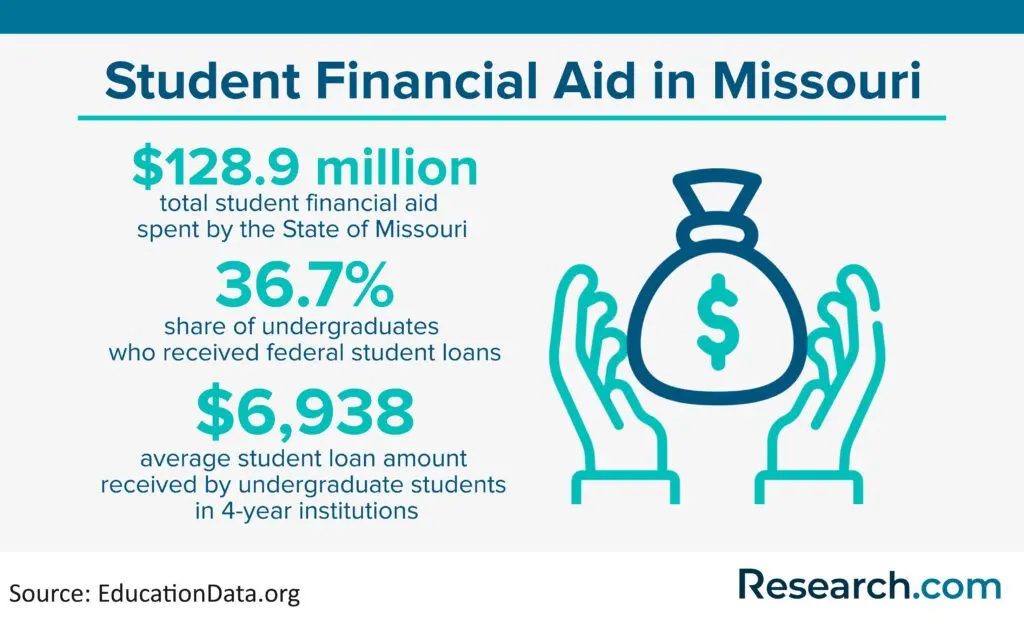
Students comparing online and traditional accounting degree types should also check whether online courses carry extra technology fees and whether online students have equal access to advising, internships, recruiting events, and CPA preparation support. Missouri students may also review state resources for financial aid options for college students.
Missouri Schools Offering Accounting Programs for 2027
Missouri has almost 230 post-secondary institutions, including public universities, private colleges, independent institutions, and career schools. The programs below represent several notable accounting options in the state, including traditional, hybrid, and advanced pathways. Students who need flexibility may also compare these options with affordable online accounting degree programs.
| School | Program | Best For | Notable Features |
| University of Central Missouri | Bachelor of Science in Business Administration in Accountancy | Students who want flexible delivery and professionally credentialed faculty | In-person, hybrid, and online classes; 24:1 student-to-faculty ratio; AACSB accreditation |
| St. Louis University | Bachelor of Science in Accounting | Students comparing 120-credit and 150-credit CPA-oriented routes | Ranked 24th in the 2025 CPA Success Index; prepares students for audit, financial planning, and forensic accounting roles |
| Truman State University | Bachelor of Science in Accounting | Students who value CPA exam performance and a broad accounting curriculum | Top-ranking performance in the 2025 CPA Success Index; AACSB accreditation |
| Washington University in St. Louis | Master of Accounting | Graduate students seeking a fast, customizable accounting pathway | Two- or three-semester format; STEM designation; 33 total credits with 16.5 elective credit hours |
| University of Missouri | Integrated BSAcc/MAcc | Students planning early for the 150-credit CPA licensure requirement | Earns both BS in Accountancy and Master of Accountancy after completing requirements and at least 150 credit hours |
1. University of Central Missouri — Bachelor of Science in Business Administration in Accountancy
The University of Central Missouri offers a BSBA in Accountancy program with in-person, hybrid, and online coursework, making it suitable for both full-time and part-time students. The program reports a 24:1 student-to-faculty ratio, and its faculty hold professional credentials such as CPA, CMA, or attorney licenses.
The program is accredited by the Association to Advance Collegiate Schools of Business (AACSB). Coursework includes financial accounting, tax law, accounting information systems, and managerial accounting. Students who want a program with professional faculty experience and potential connections to Missouri accounting firms may find UCM a practical option.
2. St. Louis University — Bachelor of Science in Accounting
St. Louis University’s Bachelor of Science in Accounting program is designed for students preparing for roles in auditing, financial planning, forensic accounting, and related business fields. The program offers flexibility through both 120-credit and 150-credit pathways.
The program has a history of CPA exam performance and holds a 24th ranking in the 2025 CPA Success Index. Students considering SLU should ask how the 150-credit option is structured, what internship support is available, and how graduates are recruited by regional and national employers.
3. Truman State University — Bachelor of Science in Accounting
Truman State University’s Accounting Major (BS) program stands out for its top-ranking performance in the 2025 CPA Success Index, which reflects a strong first-time CPA exam pass rate. The program is AACSB-accredited and covers career-relevant areas such as public accounting, private accounting, management analysis, banking, finance, and executive-level business preparation.
Students can expect coursework in cost and management accounting, accounting information systems, auditing, forensic accounting and fraud examination, and federal taxation. This breadth may appeal to students who want flexibility before choosing a specialty.
4. Washington University in St. Louis — Master of Accounting
Washington University in St. Louis offers a Master of Accounting program through the Olin Business School. The program can be completed in two or three semesters and is built for students interested in public accounting, corporate accounting, consulting, and financial services.
The program has a STEM designation and emphasizes data-oriented accounting knowledge. Of the 33 total credits, 16.5 are elective credit hours, giving students room to tailor their coursework toward CPA exam eligibility in their intended state of practice.
5. University of Missouri — Integrated BSAcc/MAcc
The University of Missouri offers an Integrated BSAcc/MAcc program for qualified students admitted to the Trulaske College of Business. Students can earn both a BS in Accountancy and a Master of Accountancy after completing degree requirements and at least 150 credit hours.
The final 30 credit hours can include specialization through graduate certificates in areas such as accounting data analytics, assurance, or taxation. For students who already know they want CPA licensure, an integrated structure can reduce uncertainty about how to reach the 150-hour requirement.
How Should You Choose an Accounting Program in Missouri?
The best accounting school is the one that fits your career goal, budget, schedule, and licensure needs. A well-known school may not be the best choice if it does not help you meet CPA requirements efficiently or if it lacks employer connections in your target area. Use the following criteria before applying.
- Accreditation. Confirm that the institution and accounting or business program hold recognized accreditation. Business-focused accreditors may include AACSB or the Accreditation Council for Business Schools and Programs (ACBSP). Accreditation can affect transfer credits, employer confidence, graduate school admission, and professional preparation.
- CPA alignment. If you want CPA licensure, verify how the program covers the 120-hour exam requirement and the 150-hour licensure requirement. Ask whether advisors regularly help students plan CPA-eligible coursework.
- Faculty expertise. Look for instructors with CPA, CMA, tax, audit, analytics, law, or industry experience. Faculty with professional backgrounds can help students understand how accounting concepts are applied in real workplaces.
- CPA exam and employment outcomes. Programs with strong CPA exam pass rates and graduate employment outcomes may offer better preparation. Ask for recent results, not just general claims.
- Internships and experiential learning. Internships, co-ops, tax clinics, audit projects, and employer partnerships help students build experience before graduation.
- Class size and advising access. A lower faculty-student ratio can make it easier to receive mentoring, course planning help, recommendation letters, and career advice.
- Specialization options. Students interested in audit, tax, accounting systems, fraud examination, analytics, or a forensic accounting degree pathway should check whether electives support those goals.
- Technology preparation. Accounting work increasingly depends on accounting software, data tools, cloud platforms, and cybersecurity awareness. A strong program should not treat technology as an afterthought.
- Online and hybrid support. If you study remotely, ask whether online students can access career services, internships, tutoring, CPA advising, and faculty office hours.
- Total cost and return on investment. Compare net price, fees, commute or relocation costs, time to completion, transfer credit acceptance, and likely career outcomes.
| Common Mistake | Why It Can Hurt You | Better Approach |
| Choosing based only on school name | A recognizable name does not guarantee CPA alignment or strong accounting advising | Compare curriculum, outcomes, employer connections, and licensure support |
| Ignoring the 150-hour CPA requirement | You may graduate short of the credits needed for licensure | Ask for a written course plan from admission through CPA eligibility |
| Looking only at tuition | Fees, housing, books, lost work time, and extra semesters can change the real cost | Calculate net cost and time to completion |
| Assuming online programs offer the same support | Some remote students receive less access to recruiting or internships | Ask specifically about online student career services and employer engagement |
| Waiting until senior year to seek experience | CPA work experience and accounting jobs are easier to pursue with internships | Start networking and applying for internships early |
When Does a Graduate Certificate in Accounting Make Sense?
A graduate certificate in accounting can be useful for professionals who want advanced accounting coursework without committing immediately to a full master’s degree. It may also help career changers, current accountants, or CPA candidates who need additional academic credits in specific subject areas.
This option is most valuable when it serves a defined purpose. For example, a certificate may help you deepen knowledge in tax accounting, auditing, forensic accounting, or accounting analytics. It may also support professional development for those pursuing CPA or CMA preparation, although students should confirm whether certificate credits satisfy their specific licensure or certification requirements.
Online graduate certificates can be especially practical for working adults because many are designed for part-time study. Before enrolling, compare credit transfer policies, course delivery, faculty access, tuition, and whether the certificate can later apply toward a master’s degree.
Students considering this route can review options for a graduate certificate in accounting online to see whether the format and curriculum match their career goals.
How Is Technology Changing Accounting Work in Missouri?
Technology is reshaping accounting in Missouri in the same way it is changing the profession nationally. Cloud accounting systems, automated reconciliation, AI-assisted analytics, tax software, and data visualization tools are reducing manual work and increasing demand for accountants who can interpret results, assess risk, and advise decision-makers.
Students should look for accounting programs that teach accounting information systems, spreadsheet modeling, data analysis, internal controls, and cybersecurity basics. Technical fluency does not replace accounting judgment. Instead, it makes that judgment more valuable because employers need professionals who can evaluate automated outputs and explain financial implications clearly.
Professionals comparing technology-driven career shifts in other fields may also find it useful to review how digital expectations affect adjacent licensed professions, such as how to become a nurse practitioner in Missouri.
Can Bookkeeping Training Strengthen a CPA Path in Missouri?
Yes, bookkeeping training can support an accounting or CPA pathway because it builds confidence with transaction recording, reconciliations, ledgers, documentation, and day-to-day financial accuracy. These skills are especially helpful for students seeking internships, small business accounting roles, or tax-season assistant positions.
Bookkeeping is not a substitute for a CPA-focused accounting degree, but it can make early accounting work easier to understand. Students who want a short, skills-focused credential before or during college can compare a bookkeeping course with longer accounting degree options.
Can Forensic Science Support an Accounting Career?
Forensic accounting combines accounting, investigation, documentation, and fraud analysis. Students interested in fraud examination, litigation support, internal controls, or compliance may benefit from learning how investigative methods work. This does not mean every accountant needs forensic science training, but students drawn to financial investigations may find it a useful complement.
Those exploring investigative careers more broadly can compare accounting-focused fraud work with a forensic science degree in Missouri to understand how evidence, analysis, and documentation skills overlap.
Which Soft Skills Matter Most for Missouri CPAs?
Technical accounting knowledge is essential, but it is not enough. CPAs work with clients, managers, auditors, regulators, and teams that may not understand accounting terminology. The strongest candidates can combine accuracy with communication, judgment, and ethical decision-making.
- Communication. Accountants must explain financial information in plain language, especially when advising clients, managers, or non-finance teams.
- Attention to detail. Small errors can affect financial statements, tax filings, compliance reports, and client trust.
- Analytical thinking. Accountants need to identify patterns, evaluate risks, interpret financial statements, and recommend practical solutions.
- Adaptability. Tax rules, accounting standards, software, and employer expectations change over time. Adaptable accountants learn continuously.
- Ethics and integrity. CPAs handle confidential financial information and must follow professional standards. Trust is central to the role.
- Time management. Deadlines are common in tax, audit, month-end close, payroll, and reporting cycles. Strong organization helps prevent avoidable errors.
How Can Accounting Lead to Healthcare Finance Roles?
Healthcare organizations need accounting professionals who understand budgeting, billing, compliance, cost control, reimbursement processes, and financial reporting. Missouri accounting graduates may find opportunities in hospitals, clinics, healthcare systems, insurance-related organizations, and administrative finance teams.
Students interested in healthcare but not necessarily CPA licensure may also compare accounting roles with revenue-cycle or billing-focused pathways. One related route is learning how to be a medical coder in Missouri, especially for those who want healthcare finance exposure without pursuing a full accounting career.
How Should Missouri Candidates Prepare for the CPA Exam?
CPA exam preparation should begin before graduation. Students should first confirm that their coursework aligns with Missouri requirements, then build a study plan around the exam sections they intend to take. Because candidates must pass all sections with a score of 75 or higher within 18 months, timing matters.
- Map your eligibility early. Confirm your accounting, business, and total credit hours before your final year.
- Choose an exam sequence. Decide which sections to take first based on your coursework strengths and available study time.
- Use practice exams. Practice questions help identify weak areas and build familiarity with exam format.
- Protect study time. Treat exam preparation like a part-time job with scheduled weekly sessions.
- Coordinate with work plans. If you are starting a demanding accounting role, plan exam timing realistically.
- Confirm state-specific steps. Review CPA requirements in Missouri so education, testing, ethics, and experience steps are not missed.
How Can Accountants Keep Developing Professionally?
Accounting careers reward ongoing learning. After graduation, professionals can strengthen their prospects through CPA licensure, specialized credentials, continuing education, software training, data analytics coursework, tax updates, audit workshops, and professional association participation.
Development should match your career direction. A tax accountant may prioritize tax law updates, while an internal auditor may focus on risk, controls, and systems. A corporate accountant may benefit from analytics, budgeting, and financial planning skills. Accountants interested in training or instructional work can also explore education-related pathways, including what degree do you need to be a teacher in Missouri.
Can Urban Planning Knowledge Complement Accounting?
Urban planning and accounting may seem unrelated, but there are overlapping areas in municipal budgeting, infrastructure finance, public-sector audits, grant management, real estate development, and cost analysis. Accountants working with public agencies, developers, transportation projects, or community investment initiatives may benefit from understanding planning concepts.
This is a niche combination, not a requirement for most accounting students. However, professionals interested in public finance or infrastructure-related accounting can review how to become an urban planner in Missouri to understand where planning, budgeting, and project analysis intersect.
Can Accountants Move Into Education-Related Roles?
Accounting professionals may use their expertise in education as adjunct instructors, corporate trainers, curriculum developers, tutoring specialists, or financial literacy educators. These roles may require additional teaching credentials, graduate education, or subject-specific qualifications depending on the employer and level of instruction.
Those interested in K-12 teaching should not assume an accounting degree alone is enough. Certification rules matter. For comparison, prospective educators can review how to become a high school math teacher in Missouri to better understand teacher preparation, certification, and classroom expectations.
How Does Missouri’s Economy Affect Accounting Careers?
Missouri’s economy creates accounting demand across several sectors, including manufacturing, healthcare, agriculture, financial services, logistics, small business, startups, and government. Students can improve their employment prospects by choosing electives, internships, and certifications that align with the industries where they want to work.
Industries That Commonly Need Accountants
- Manufacturing. Employers may need cost accountants, financial analysts, and accounting staff who understand inventory, production costs, and supply chain expenses.
- Healthcare. Hospitals, clinics, and health systems need accounting support for budgeting, billing, financial reporting, and regulatory compliance.
- Agriculture. Agricultural businesses may require accounting support for tax planning, subsidy management, commodity pricing, and farm operations.
- Financial services. Banks and financial institutions use accountants in auditing, risk management, compliance, reporting, and investment accounting.
- Public sector. Government accounting roles involve budgets, public funds, infrastructure projects, grants, audits, and transparency in financial reporting.
Why Logistics Matters in Missouri
Missouri’s central location and infrastructure make logistics an important part of the state economy. Accounting professionals in this sector may work with transportation costs, inventory, contracts, regulatory requirements, and supply chain finance.
Small Business and Startup Accounting
Small businesses often need accountants who can do more than prepare statements. They may need cash flow advice, tax planning, payroll support, budgeting, funding documentation, and compliance guidance. Students who want advisory-oriented work should seek internships with small firms, local businesses, or regional accounting practices.
Forensic and Compliance Opportunities
As organizations face compliance pressure and fraud risks, accountants with audit, internal control, and forensic accounting knowledge may find specialized opportunities. Students interested in this area should consider fraud examination, auditing, accounting systems, and data analytics coursework.
Students who need a flexible route into the field can compare Missouri programs with the best accredited online accounting programs to evaluate whether online study fits their career plan.
What Should Graduates Do After Finishing a Missouri Accounting Program?
Graduating with an accounting degree is an important milestone, but career growth depends on what you do next. New graduates should focus on licensure planning, experience, networking, specialization, and continuous learning.
1. Decide Whether the CPA Is Part of Your Plan
If you want public accounting, audit, tax leadership, or long-term advancement in many accounting roles, CPA licensure can be valuable. Confirm your remaining education credits, ethics requirement, exam plan, and work experience pathway.
2. Build Experience Early
Internships, staff accountant jobs, tax preparation roles, accounts payable or receivable roles, and audit assistant positions can help you translate classroom learning into workplace ability. Experience also helps you decide whether you prefer public accounting, corporate accounting, government, nonprofit, or consulting work.
3. Consider Specialized Credentials
Depending on your career goal, credentials such as Certified Management Accountant (CMA), Certified Internal Auditor (CIA), or Certified Fraud Examiner (CFE) may support advancement. Choose credentials based on the work you want, not because they look impressive on a resume.
4. Use Alumni and Career Networks
Many students underuse career centers, alumni groups, faculty contacts, and employer events. Schools connected to the best business schools in Missouri may offer useful recruiting relationships, mentorship, and graduate training opportunities.
5. Keep Learning Technology
Accounting software, analytics tools, automation, and AI-assisted workflows will continue to affect the profession. Graduates who can combine accounting judgment with technical fluency are better positioned for advisory and analytical roles.
How Do Public and Private Accounting Careers Compare?
Public accounting and private accounting offer different work environments. Public accounting firms serve multiple clients and often focus on audit, tax, assurance, advisory, and consulting services. These roles can provide broad exposure but may include seasonal workload spikes and client-facing pressure.
Private accounting roles are housed inside companies, nonprofits, healthcare organizations, universities, or government-related entities. These accountants focus on internal financial reporting, budgeting, controls, payroll, cost accounting, planning, and decision support. Students comparing both routes can review broader accounting career paths to see which environment fits their goals.
| Career Path | Typical Work | Best Fit For |
| Public accounting | Audit, tax, advisory, assurance, consulting, client service | Students who want broad exposure, CPA preparation, and client-facing work |
| Private accounting | Internal reporting, budgeting, cost accounting, payroll, controls, financial planning | Students who prefer working within one organization and supporting business operations |
| Government or nonprofit accounting | Budgets, grants, compliance, public funds, audits, reporting | Students interested in public accountability, mission-driven work, or stable institutional roles |
| Specialized accounting | Forensic accounting, healthcare finance, systems, analytics, compliance | Students who want niche expertise and targeted advancement opportunities |
What Other Career Paths Can Accounting Students Consider?
Accounting students are not limited to CPA firms or corporate accounting departments. Their skills can transfer into finance, consulting, banking, insurance, government, compliance, operations, healthcare administration, education, and entrepreneurship.
Some students eventually move into fields that value organization, quantitative reasoning, documentation, and communication. For example, those considering education can review elementary school teacher requirements in Missouri to compare certification expectations with accounting career requirements.
Can Accounting Experience Support a Legal Career Path?
Accounting experience can be useful in legal support roles that involve financial documentation, compliance, contracts, investigations, fraud review, tax records, or regulatory matters. Accountants who enjoy research, documentation, and evidence-based analysis may find legal-adjacent roles appealing.
This path usually requires additional legal education or training, depending on the role. Professionals exploring this transition can review how to become a paralegal in Missouri to understand common expectations for legal support careers.
How to Make the Final Decision
Before choosing an accounting school in Missouri, narrow your options by career goal. If CPA licensure is your priority, choose a program with clear 150-credit planning, strong accounting coursework, CPA advising, and exam preparation support. If you want employment as quickly as possible, prioritize internships, career services, employer recruiting, and affordable completion.
Students interested in advanced management or executive business roles may later compare accounting degrees with accounting MBA programs and related career options. The best program is not always the most expensive or highest-profile one. It is the program that helps you meet requirements, graduate with manageable debt, gain relevant experience, and move into the accounting role you actually want.
Key Insights
- Missouri can be a practical state for accounting students. Accountants earn approximately $71,000 on average, and the state’s lower cost of living can improve the value of that income.
- CPA planning should start before enrollment. Missouri candidates need 120 semester hours for CPA exam eligibility and 150 total hours for licensure, with specific accounting and business coursework rules.
- Program format matters. Bachelor’s, master’s, certificate, integrated, online, hybrid, and campus programs serve different goals. Choose based on licensure needs, schedule, cost, and career support.
- Accreditation and outcomes are critical. Look for recognized accreditation, CPA exam performance, graduate employment support, internships, and faculty with professional experience.
- Technology skills are now part of accounting readiness. Accounting information systems, analytics, software fluency, and data interpretation can strengthen employability.
- Missouri’s economy creates varied opportunities. Manufacturing, healthcare, agriculture, financial services, logistics, small business, and government all need accounting expertise.
- Avoid choosing on tuition or rankings alone. Compare total cost, credit transfer, time to completion, CPA alignment, internship access, and long-term fit before committing.
Related Articles for Nearby States
- 2027 Best Accounting Schools in Kansas – How to Become a CPA in KS
- 2027 Best Accounting Schools in Iowa – How to Become a CPA in IA
- 2027 Best Accounting Schools in Nebraska – How to Become a CPA in NE
- 2027 Best Accounting Schools in Arkansas – How to Become a CPA in AR
- 2027 Best Accounting Schools in Oklahoma – How to Become a CPA in OK
- 2027 Accounting Schools in Illinois – How to Become a CPA in IL
- 2027 Best Accounting Schools in Kentucky – How to Become a CPA in KY
- 2027 Best Accounting Schools in Tennessee – How to Become a CPA in TN
- 2027 Best Accounting Schools in Indiana – How to Become a CPA in IN
- 2027 Best Accounting Schools in South Dakota – How to Become a CPA in SD
References:
- Avila University. (2023, August 20). Tuition, fees, and housing costs. Avila University | Kansas City. Retrieved August 13, 2023.
- Davis, Lindquist, T., & Ugrin, J. (2021, February 3). Truman state takes top spot among college accounting programs. Accounting Today. Retrieved August 13, 2023.
- Ellis, L. (2022, December 28). Why so many accountants are quitting. Wall Street Journal. Retrieved August 15, 2023.
- Hanson, M. (2021, February 15). Financial Aid Statistics. EducationData.org. Retrieved August 11, 2023.
- Livingcost [a]. (2023, August 8). Cost of living & prices in Wisconsin: 39 cities compared. Livingcost.org. Retrieved August 15, 2023.
- Livingcost [b]. (2023, August 8). The 100 best places in the United States ranked by quality & cost of living. Livingcost.org. Retrieved August 15, 2023.
- Missouri Society of CPAs. (2023). Become a CPA. MOCPA. Retrieved August 10, 2023.
- Payscale. (2023, July 27). Certified public accountant (CPA) salary in 2023. Payscale.com. Retrieved August 11, 2023.
- Trulaske College of Business. (2023). Tuition and financial aid. University of Missouri | Trulaske College of Business. Retrieved August 13, 2023.
Other Things You Should Know About The Best Accounting Schools in Missouri
Candidates must submit official transcripts to the Missouri State Board of Accountancy showing 150 semester hours of education, including a qualifying accounting degree or accounting concentration. The board reviews coursework before CPA licensure is issued, and applicants must also pass the Uniform CPA Examination.
Aspiring CPAs in Missouri need 150 credit hours, including courses in auditing, taxation, and financial accounting. These courses must be completed at a college accredited by one of the regional accrediting bodies, ensuring eligibility for the CPA exam in 2027.
The passing score for each section of the CPA exam in Missouri is 75. Candidates must pass all four sections within an 18-month period: Auditing and Attestation, Business Environment and Concepts, Financial Accounting and Reporting, and Regulation.
Yes, many institutions in Missouri offer online accounting programs. These programs provide flexibility for students who need to balance their studies with other commitments. Online programs maintain the same rigorous standards as traditional in-person programs.
Job prospects for accountants in Missouri are strong, with a projected 6.29% growth in employment from 2020 to 2030. This growth equates to nearly 2,900 annual job openings, including positions for CPAs, ensuring a steady demand for accounting professionals.


