2027 Best Accounting Schools in Louisiana – How to Become a CPA in LA

Co-Founder and Chief Data Scientist
Choosing an accounting school in Louisiana is not just about finding a nearby campus or the lowest tuition. If your goal is to become a CPA in Louisiana, your program needs to help you meet education requirements, prepare for the CPA exam, build practical experience, and connect you with employers in public accounting, corporate finance, government, nonprofit work, and specialized fields such as forensic accounting.
This guide is designed for students comparing Louisiana accounting programs, career changers considering CPA licensure, and working professionals deciding whether an undergraduate degree, graduate degree, certificate, or accelerated pathway makes the most sense. You will learn how the CPA pathway works, how long accounting programs usually take, what costs to expect, which Louisiana schools offer accounting programs for 2027, and how to evaluate programs beyond rankings.
The goal is to help you make a practical decision: which accounting program best fits your budget, timeline, career goals, and licensing plans.
Best Accounting Schools in Louisiana Table of Contents
- Is accounting a strong career choice in Louisiana?
- How do you become a CPA in Louisiana?
- How long do accounting programs in Louisiana take?
- What does an accounting degree cost in Louisiana?
- Which Louisiana schools offer accounting programs for 2027?
- How should you compare accounting programs in Louisiana?
- Why join an accounting student organization?
- When does an accelerated accounting program make sense?
- What other career paths can accounting graduates pursue?
- Can additional professional certifications improve career options?
- How does CPA pay in Louisiana compare with nearby states?
- Can forensic science support an accounting career?
- Which supplementary certifications can strengthen an accounting career?
- How can accounting skills apply to healthcare careers?
- What is required to maintain a Louisiana CPA license?
- Can accounting experience lead to teaching?
- Can accounting knowledge support work in urban planning?
- How can accounting help with a high school math teaching path?
- Can legal training complement accounting expertise?
- What career growth opportunities exist for accounting graduates?
- How do you choose the right accounting school?
Quick Answer: Best Accounting Schools in Louisiana for 2027
The best accounting school for you in Louisiana depends on whether you want a traditional bachelor’s degree, CPA exam preparation, an accelerated route to 150 semester hours, a graduate accounting option, or a lower-cost public university pathway. Students planning to become CPAs should prioritize accredited programs, CPA-aligned coursework, internship access, accounting faculty experience, and career placement support.
Louisiana accounting programs typically lead to careers in public accounting, corporate accounting, government accounting, nonprofit finance, auditing, tax, consulting, and forensic accounting. For students who want CPA licensure, the school should help them plan beyond the 120-credit bachelor’s degree and understand how to reach the 150-hour education requirement.
Is Accounting a good job in Louisiana?
Accounting can be a practical career choice in Louisiana because organizations across energy, healthcare, tourism, government, education, banking, construction, and small business services need professionals who can manage reporting, taxation, compliance, payroll, audits, budgeting, and internal controls.
Louisiana also remains more affordable than many U.S. locations, with the cost of living approximately 11% lower than the national average. That matters when comparing earnings against housing, transportation, and everyday expenses. The average accountant salary in Louisiana is $74,480. Pay can vary by city, employer, specialization, years of experience, and credentials, and advanced business training may also affect outcomes for professionals comparing an MBA in accounting salary.
Accounting is especially worth considering if you are detail-oriented, comfortable with deadlines, interested in business operations, and willing to keep learning as tax rules, reporting standards, software tools, and compliance expectations change.
What are the steps to becoming a CPA in Louisiana?
Becoming a CPA in Louisiana requires more than finishing an accounting major. Students should plan early because the licensing pathway includes education, examination, experience, and state board approval.
- Earn a bachelor’s degree in accounting from an accredited institution. The degree must include at least 150 semester hours of accounting and business courses. Since many bachelor’s degrees require 120 credits, CPA-focused students often use graduate study, additional undergraduate coursework, or combined programs to reach the required total.
- Pass the Uniform CPA Examination. The Louisiana CPA exam is divided into four sections: Auditing and Attestation, Financial Accounting and Reporting, Regulation, and Business Environment and Concepts. There is a first-time application fee of $160, and each section costs $254.80 (NASBA, n.d.). Applicants should confirm current exam rules directly with the Louisiana State Board of Accountancy or NASBA before scheduling.
- Complete one year of qualifying supervised experience. Louisiana CPA candidates need one year of practical experience under the supervision of a CPA. This experience may be earned in public accounting, private industry, government, or a nonprofit organization.
- Apply for CPA licensure through the Louisiana State Board of Accountancy. The licensing process includes an application fee, a background check, and documentation proving that you meet the education and experience requirements.
| Type of Fee | Cost |
| First-time application | $160.00 |
| Re-exam application | $80.00 |
| Examination fee per section | $254.80 |
Accounting Program Length in Louisiana
Accounting students in Louisiana commonly spend about five years completing the education needed for CPA eligibility: four years for a bachelor’s degree and an additional year of graduate or upper-level coursework. This structure is common because many bachelor’s programs require 120 credits, while CPA candidates must plan for 150 semester hours.
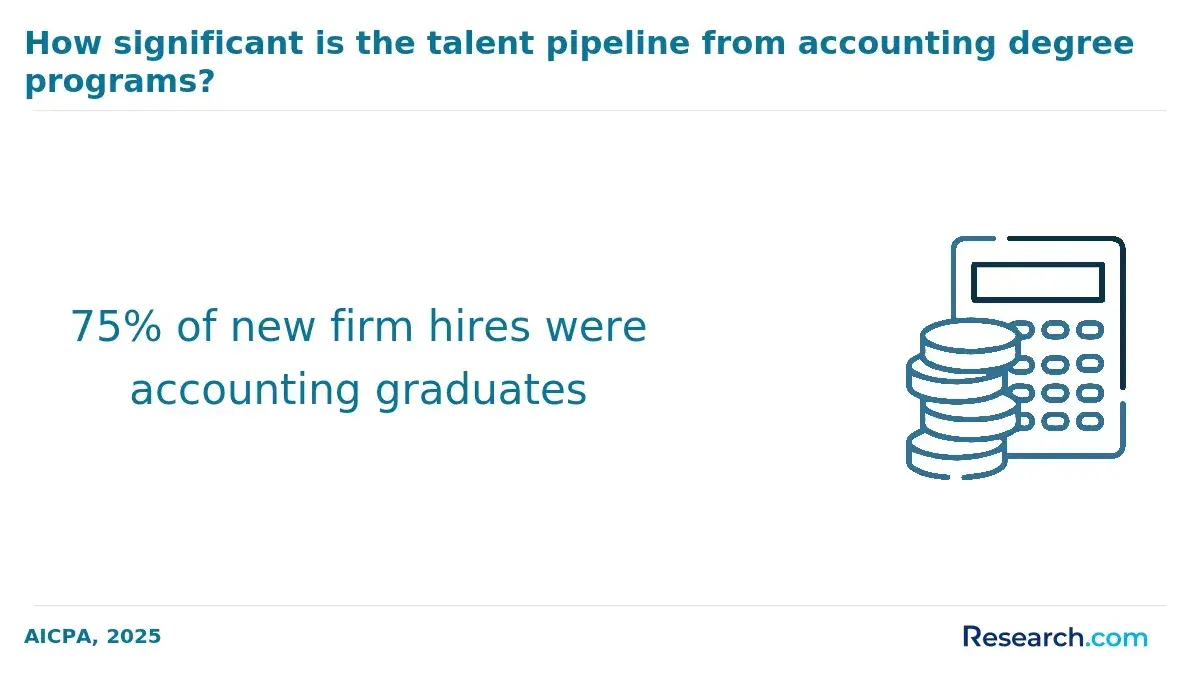
Some schools offer accelerated options that allow students to finish more quickly, provided the curriculum still meets the Louisiana CPA requirements. Students interested in specialized areas, including fraud investigation and litigation support, may also compare programs at schools for forensic accounting. More than half of CPAs major in accounting, while 24% major in business.
| Pathway | Typical Use | Best For |
| Bachelor’s degree in accounting | Builds the core accounting foundation and may provide 120 credits | First-time college students and transfer students |
| Bachelor’s plus graduate coursework | Helps students move toward 150 semester hours | CPA candidates who want advanced accounting preparation |
| Accelerated bachelor’s/master’s track | Combines undergraduate and graduate study in a shorter sequence | Motivated students with a clear CPA goal |
| Certificate or additional coursework | May fill accounting or business course gaps | Career changers and graduates who already hold a degree |
Tuition and Costs of Accounting Programs in Louisiana
Accounting program costs in Louisiana depend on residency status, school type, delivery format, credit load, program level, fees, books, software, commuting, housing, and whether the student continues into graduate coursework. Based on our research, in-state tuition for undergraduate accounting programs typically ranges from $2,000 to $5,000 per year. Out-of-state tuition can be significantly higher, ranging from $6,000 to $10,000 per year.
Graduate accounting programs, including online masters accounting options, usually cost more than undergraduate programs. Tuition fees for graduate accounting study range from $4,000 to $12,000 per year. Students should compare total program price rather than tuition alone because fees, required course materials, technology charges, and CPA exam preparation can meaningfully change the final cost.
| Program Level | In-State Tuition | Out-of-State Tuition |
| Undergraduate | $2,000 - $5,000 | $6,000 - $10,000 |
| Graduate | $4,000 - $12,000 | $8,000 - $16,000 |
Cost questions to ask before enrolling
- Does the listed tuition include mandatory university and program fees?
- Will you need extra credits after graduation to reach CPA eligibility?
- Are CPA review materials included, discounted, or fully separate?
- Can transfer credits reduce your time and cost?
- Are internships paid, for credit, or both?
- Does the program offer scholarships specifically for business or accounting majors?
Louisiana Schools Offering Accounting Programs for 2027
Research.com reviewed publicly available information to identify Louisiana accounting programs for 2027. The evaluation considered factors relevant to prospective accounting students and CPA candidates, including academic reputation, affordability, enrollment information, accreditation, program structure, and career preparation features.
Use the list below as a starting point, not as the only factor in your decision. The best program is the one that fits your licensing plan, budget, learning format, academic background, and career goals.
1. Grambling State University
Grambling State University offers a Bachelor of Science in Accounting built around accounting principles, policies, theory, communication, problem-solving, and technology use. The program is designed to prepare students for accounting roles in public, private, and government settings. Students may also participate in field trips, workshops, and advising activities that introduce them to career options in the profession.
- Program Length: Four years
- Tracks/concentrations: Federal Income Tax Accounting, Cost Accounting, Auditing
- Cost per credit: $1,556 (off-campus, resident)
- Required credits to graduate: 120 credits
- Accreditation: Southern Association of Colleges and Schools Commission on Colleges (SACSCOC)
2. Louisiana State University
The Bachelor of Science in Accounting at Louisiana State University’s E. J. Ourso College of Business focuses on helping students understand, analyze, and communicate financial information for many types of organizations. The 120-hour curriculum develops skills in accounting technology, research, communication, and problem-solving. Coursework includes areas such as auditing, corporate accounting, government accounting, information systems, tax planning/compliance, and assurance.
- Program Length: Four years
- Tracks/concentrations: Corporate Accounting, Government Accounting, Information Systems
- Cost per semester: $4,009.30 to $4,023.30
- Required credits to graduate: 120 hours
- Accreditation: SACSCOC
3. Louisiana Tech University
Louisiana Tech University provides a Bachelor of Science in Accounting that covers Generally Accepted Accounting Principles (GAAP), managerial and cost accounting, external auditing, and federal income taxation for individual taxpayers. Advanced coursework includes intermediate accounting, income tax, auditing, information systems, finance, and related business subjects. The curriculum is intended to support accounting career preparation, including eligibility planning for the Certified Public Accountant (CPA) license.
- Program Length: Four years
- Tracks/concentrations: Income Tax, Managerial Cost Accounting, Principles of Information Systems
- Cost per credit: $662
- Required credits to graduate: 120 credits
- Accreditation: AASCB International
4. McNeese State University
McNeese State University offers a Bachelor of Science (B.S.) in Accounting with an accelerated pathway for students who want a faster route to degree completion. The program emphasizes how accountants help organizations improve operations, manage costs, strengthen revenues, and support financial decision-making. The curriculum includes general education, business, finance, and accounting coursework in managerial, financial, tax, and audit accounting. Students may also find opportunities for internships, practical learning, and concentrations such as Professional Accountancy and Exam Preparation, Taxation, and Managerial Accounting.
- Program Length: Four years
- Tracks/concentrations: Legal Environment of Business, Analytical Tools for Business Decisions, Auditing
- Cost per year: $9,000
- Required credits to graduate: 120 credit hours
- Accreditation: SACSCOC
5. Nicholls State University
The J.B. Falgoust Department of Accounting & Finance at Nicholls State University offers accounting degree options focused on academic quality, student engagement, and career readiness. The department is AACSB-accredited and emphasizes faculty interaction, industry exposure, and preparation for professional accounting work. Students receive training in areas such as tax, audit, and managerial accounting, and the curriculum is structured to support preparation for the Uniform Certified Public Accountant Examination.
- Program Length: Four years
- Tracks/concentrations: Commercial Law, Quantitative Analysis, Legal Environment
- Cost per year: $26,522 (on-campus)
- Required credits to graduate: 120 credit hours
- Accreditation: AACSB International
What to Look For in an Accounting Program in Louisiana
Start with accreditation. A Louisiana accounting program should be offered by an institution accredited by a recognized accrediting body, and business-specific accreditation can add another layer of quality assurance. The Association to Advance Collegiate Schools of Business (AACSB) is one widely recognized business accreditor. As of 2025, there are 1,036 institutions in over 60 countries and territories that hold AACSB business accreditation.
Next, review faculty qualifications and professional relevance. Strong accounting programs often include instructors with advanced degrees, CPA experience, industry relationships, research activity, or specialized knowledge in tax, audit, information systems, data analytics, public finance, or tools such as the best public financial management systems. Faculty with practical experience can help students connect classroom concepts to real accounting work.
Also compare experiential learning. Internships, co-ops, accounting labs, case competitions, tax preparation clinics, and employer partnerships can make a major difference when applying for entry-level roles. Modern accounting work also depends heavily on technology, so students should check whether the curriculum includes accounting systems, spreadsheets, data analysis, audit tools, and software workflows. Reviewing a guide to accounting software features and benefits can help students understand which tools and capabilities matter in the workplace.
Accounting program comparison checklist
| Factor | Why It Matters | Question to Ask |
| Accreditation | Supports academic credibility and may affect transfer, graduate admission, and employer confidence | Is the institution accredited, and does the business or accounting program hold specialized accreditation? |
| CPA alignment | CPA candidates need a clear path to 150 semester hours and required coursework | Will this degree alone meet licensing education requirements, or will I need extra credits? |
| Internship access | Practical experience can help students compete for entry-level jobs | Which local firms, companies, agencies, or nonprofits recruit from this program? |
| Faculty experience | Faculty with professional accounting backgrounds can add applied insight | Do instructors have CPA, audit, tax, corporate accounting, or analytics experience? |
| Technology training | Employers increasingly expect software and data skills | Which accounting systems, spreadsheet tools, and analytics methods are included? |
| Total cost | Fees, housing, exam prep, and extra credits can change affordability | What is the full estimated cost through CPA eligibility? |
What are the benefits of joining accounting student organizations in Louisiana?
Accounting student organizations can help Louisiana students move from classroom learning to professional readiness. These groups are especially useful for students who need internships, CPA exam support, employer contacts, leadership experience, or exposure to different accounting specialties.
- Professional development: Workshops, speaker events, and training sessions can introduce students to tax updates, audit practices, financial analysis, ethics, and accounting software.
- Networking: Meetings with local firms, alumni, recruiters, and Louisiana CPAs can lead to mentorship, internship referrals, and job leads.
- CPA exam support: Study groups, practice resources, and peer accountability can help students understand exam expectations and build a realistic preparation schedule.
- Community service: Volunteer projects, including tax assistance initiatives, allow students to apply accounting skills while serving local communities.
- Leadership experience: Roles such as treasurer, president, committee chair, or event coordinator build communication, organization, budgeting, and management skills.
- Scholarships and career resources: Some organizations connect members with scholarships, resume reviews, mock interviews, internships, and employer-hosted events.
How do accelerated accounting programs benefit your CPA journey in Louisiana?
Accelerated accounting programs can be helpful for students who already know they want to pursue CPA licensure and are ready for a heavier academic pace. These programs compress coursework or combine undergraduate and graduate study so students can complete requirements sooner while still working toward CPA readiness.
Benefits of Accelerated Accounting Programs
- Shorter time to completion: Condensed formats may allow students to finish bachelor’s degrees in 3 years or complete combined bachelor’s and master’s tracks in 4-5 years while working toward the 150-credit-hour CPA requirement.
- Potential cost savings: Finishing sooner can reduce tuition exposure, housing costs, and time away from full-time employment.
- Earlier workforce entry: Graduates may begin building accounting experience sooner while preparing for the CPA exam.
When an accelerated program is a good fit
An accelerated program may be a strong choice if you have a clear CPA plan, strong time-management skills, reliable academic support, and the ability to manage a demanding course sequence. It may be less appropriate if you need to work extensive hours, are still exploring majors, or require a slower pace to master technical accounting concepts.
Students comparing Louisiana options can also review fast track accounting degree programs to see how accelerated formats differ across schools and delivery models.
Preparing for the CPA Exam
Many accelerated accounting programs build CPA-relevant topics into the curriculum, including auditing, financial reporting, tax planning, and regulatory content. Before enrolling, ask whether CPA review resources, exam advising, or partnerships with professional organizations are included or available at an additional cost.
Networking and Career Opportunities
Accelerated students should be intentional about internships and recruiting because shorter timelines can leave less room for career exploration. Look for programs that connect students early with accounting firms, corporate employers, government agencies, and alumni networks in Louisiana.
What Other Career Paths Are Available to Accounting Graduates in Louisiana?
CPA licensure is a common goal, but it is not the only route for accounting graduates in Louisiana. Accounting training can support careers in financial analysis, budgeting, internal auditing, tax preparation, payroll, compliance, nonprofit finance, banking, insurance, consulting, and business operations.
Some graduates eventually move into education, administration, or training roles. If teaching becomes a serious long-term goal, it is important to review certification expectations separately; for example, Research.com provides information on elementary school teacher requirements in Louisiana. Accounting skills can be useful in education-related roles that involve budgeting, data analysis, school finance, or business instruction, but teaching credentials are typically a separate requirement.
How can exploring alternative professional certifications enhance career opportunities in Louisiana?
Alternative certifications can help accounting professionals specialize, shift industries, or demonstrate skills beyond a degree. The right credential depends on the target role. For example, accounting professionals working with healthcare organizations may benefit from understanding medical finance, billing processes, compliance, and reimbursement systems.
Not every certification is directly connected to accounting, so students should avoid collecting credentials without a strategy. A healthcare pathway such as how to become a nurse practitioner in Louisiana is a distinct professional route, not a simple add-on to accounting. However, comparing requirements across regulated professions can help students understand how licensure, compliance, and specialized education shape career mobility.
Is the CPA accountant salary in Louisiana competitive compared to neighboring states?
CPA compensation in Louisiana depends on location, firm size, industry, specialization, experience, and whether the role involves tax, audit, advisory, controller-level work, forensic accounting, or leadership responsibilities. Local economic factors and employer demand can also influence pay.
Students comparing compensation should look beyond a single salary figure. Compare cost of living, career advancement, remote work options, bonus potential, and demand in nearby states. For a broader state-by-state view, review Research.com’s guide to CPA accountant salary.
Can a forensic science degree complement an accounting career in Louisiana?
Forensic science and accounting can overlap in fraud examination, financial investigations, litigation support, compliance reviews, and risk management. Accounting students interested in investigative work may benefit from coursework in evidence, documentation, analytics, interviewing, ethics, cybersecurity, and fraud detection.
A forensic science degree in Louisiana is not required for every forensic accounting role, but it may complement accounting training for students who want to work in investigative or compliance-heavy environments. Students should compare job descriptions carefully to determine whether employers prefer accounting credentials, forensic training, CPA licensure, fraud-related certifications, or a combination.
How Can Supplementary Certifications Enhance Your Accounting Career in Louisiana?
Supplementary certifications can strengthen an accounting resume when they align with a specific role. For example, a bookkeeping certification can be useful for students or career changers who want to build practical skills in recording transactions, reconciling accounts, supporting payroll, and preparing basic financial reports.
The best certification choice depends on your target job. Bookkeeping credentials may help with small business accounting roles, while CPA licensure is more relevant for public accounting and higher-level assurance or tax work. Students should also consider whether a credential is recognized by employers, whether it teaches current software skills, and whether it fits into a broader career plan.
How Can Accounting Skills Open Doors to Healthcare Careers?
Healthcare organizations need accounting and finance professionals to manage budgets, revenue cycles, compliance reporting, billing operations, purchasing, grants, payroll, and financial controls. Accounting graduates who understand healthcare regulations and reimbursement systems may find opportunities in hospitals, clinics, insurance organizations, medical practices, and healthcare administration.
Students considering healthcare finance may also explore adjacent roles in medical billing and coding. Research.com’s guide on how to be a medical coder in Louisiana can help readers understand one related pathway. Accounting and coding are different disciplines, but both require accuracy, compliance awareness, documentation skills, and attention to detail.
How Do I Maintain My CPA License in Louisiana?
After earning a CPA license, Louisiana professionals must keep up with renewal and continuing professional education expectations. Requirements can change, so CPAs should monitor the Louisiana State Board of Accountancy for current rules, reporting cycles, ethics requirements, and acceptable CPE activities.
Maintaining a license is not just an administrative task. Ongoing education helps CPAs stay current on tax law, audit standards, financial reporting, ethics, technology, and risk management. For a broader overview of the licensing pathway and qualification benchmarks, review Research.com’s guide to CPA requirements in Louisiana.
Can Accounting Expertise Lead to a Teaching Career in Louisiana?
Accounting experience can support a teaching career, especially for professionals interested in business education, financial literacy, accounting instruction, or career and technical education. However, teaching in Louisiana usually involves separate certification requirements, depending on grade level, subject area, and school setting.
Professionals considering this move should compare educator preparation requirements before leaving the accounting field. Research.com explains what degree do you need to be a teacher in Louisiana, which can help accounting professionals understand the additional steps involved.
Can Accounting Expertise Expand Career Horizons into Urban Planning?
Accounting skills can be valuable in urban planning and public development work because large projects require budgeting, cost tracking, grant management, procurement oversight, financial reporting, and compliance controls. Accountants may support infrastructure initiatives, redevelopment projects, housing programs, and public-sector financial planning.
Urban planning itself is a distinct profession with its own education and experience expectations. Students interested in combining financial analysis with public development can review how to become an urban planner in Louisiana to understand how the planning pathway differs from accounting.
How can accounting skills support a high school math teaching career in Louisiana?
Accounting develops quantitative reasoning, applied problem-solving, spreadsheet fluency, and data interpretation. These skills can support high school math instruction, especially when teachers want to connect algebra, statistics, and financial literacy to real-life examples.
Accounting knowledge alone does not automatically qualify someone to teach high school math. Prospective educators should review Louisiana’s subject-specific certification expectations and preparation routes. Research.com’s guide on how to become a high school math teacher in Louisiana provides additional direction for this career transition.
Could a Legal Career Enhance Your Accounting Expertise in Louisiana?
Legal knowledge can complement accounting in areas such as tax disputes, contracts, litigation support, bankruptcy, fraud investigations, compliance, corporate governance, and regulatory reporting. Accountants who understand legal documentation and dispute processes may be better prepared for roles involving risk review or financial evidence.
A legal career is a separate path, but paralegal training can help some professionals understand legal research, case preparation, and documentation workflows. Readers interested in this crossover can review how to become a paralegal in Louisiana.
Become a CPA in Louisiana
To become a CPA in Louisiana, students need to plan their education, exam preparation, experience, and licensing application as one connected process. The strongest accounting school choice is usually the one that helps you understand each requirement early, avoid missing credits, prepare for the CPA exam, and gain supervised experience that meets state expectations.
Accounting also changes continuously. CPAs must keep up with new regulations, tax changes, technology, reporting expectations, and ethical standards. Many Louisiana accounting schools support this transition through internships, alumni networks, student organizations, career advising, and continuing professional development opportunities.
What are the career growth opportunities for accounting graduates in Louisiana?
Accounting graduates in Louisiana can build careers across public accounting firms, corporations, government agencies, nonprofits, healthcare systems, tourism-related businesses, energy companies, banks, and consulting firms. Growth often depends on specialization, credentials, communication skills, software proficiency, and experience with increasingly complex financial systems.
Common career pathways include:
- CPA and specialized accounting roles: CPA licensure can support advancement in audit, tax advisory, assurance, consulting, forensic accounting, and management roles.
- Government and nonprofit finance: Graduates may work in budgeting, grants management, compliance, financial reporting, and internal controls.
- Corporate accounting and leadership: Accountants can move into financial planning and analysis, controllership, treasury, risk management, and eventually senior finance roles.
- Independent consulting and small business services: Professionals who understand Louisiana tax and business requirements may support entrepreneurs, local companies, and nonprofit clients.
Students deciding whether to continue beyond a bachelor’s degree should compare job goals with education requirements. If you are asking, “is a master’s in accounting worth it?”, focus on whether the degree helps you reach 150 semester hours, qualify for CPA licensure, access recruiting opportunities, or move into a specialized role with stronger long-term potential.
Choosing the Right Accounting School for Your Goals
The right accounting school in Louisiana should match your career plan. A student who wants to become a CPA should evaluate programs differently from a student seeking bookkeeping work, corporate finance entry-level roles, nonprofit accounting, or a later move into graduate school. Accreditation is a critical starting point, and students comparing broader business education options may also review the best business schools in Louisiana.
Look closely at career services, internship access, employer relationships, faculty backgrounds, CPA advising, transfer policies, class format, and total cost. Louisiana’s economy includes sectors such as oil and gas, healthcare, tourism, government, and small business services, so programs with strong local employer connections can give students a clearer route into the regional job market.
Finally, ask how the program helps students after graduation. Strong accounting departments should be able to explain CPA eligibility planning, graduate study options, alumni outcomes, internship pipelines, student organization benefits, and support for entry-level job searches.
Common Mistakes to Avoid When Choosing an Accounting Program
| Mistake | Why It Can Hurt You | Better Approach |
| Choosing based only on tuition | The cheapest option may require extra credits, commuting costs, or separate CPA prep expenses | Compare total cost through graduation and CPA eligibility |
| Ignoring accreditation | Accreditation can affect transfer options, graduate admission, and employer perception | Verify institutional and business or accounting accreditation before applying |
| Assuming a 120-credit degree is enough for CPA licensure | CPA candidates must plan for 150 semester hours | Ask advisors for a written CPA education plan |
| Waiting too long to seek internships | Accounting recruiting can begin early, especially for public accounting roles | Use career services and student organizations in your first or second year |
| Overlooking technology skills | Employers often expect spreadsheet, accounting software, and data skills | Choose courses and projects that build practical systems experience |
| Relying only on rankings | A highly ranked school may not fit your budget, schedule, or licensing needs | Use rankings as one input alongside cost, CPA alignment, and career support |
Key Insights
- CPA planning should begin before enrollment. Students who want to become CPAs in Louisiana should confirm how each program helps them reach 150 semester hours, prepare for the CPA exam, and complete supervised experience.
- Accounting can be a practical Louisiana career path. The state’s lower cost of living, approximately 11% below the national average, can make accounting earnings go further, and the average accountant salary in Louisiana is $74,480.
- Program cost varies by level and residency. Undergraduate tuition ranges from $2,000 - $5,000 for in-state students and $6,000 - $10,000 for out-of-state students, while graduate tuition ranges from $4,000 - $12,000 in-state and $8,000 - $16,000 out-of-state.
- Accreditation matters. Students should verify institutional accreditation and consider business or accounting accreditation such as AACSB when comparing academic quality and employer recognition.
- Internships and technology training can affect employability. Strong programs offer practical experience, employer connections, accounting software exposure, and career advising—not only classroom theory.
- Accelerated programs are useful but demanding. A fast track can reduce time to completion, but it works best for students who already have a clear CPA goal and can manage an intensive schedule.
- Accounting degrees support more than CPA careers. Graduates may work in tax, audit, corporate finance, government, nonprofit finance, healthcare finance, forensic accounting, consulting, education-related roles, and compliance.
Related Articles for Nearby States
- 2027 Best Accounting Schools in Mississippi – How to Become a CPA in MS
- 2027 Best Accounting Schools in Arkansas – How to Become a CPA in AR
- 2027 Accounting Schools in Texas: How to Become a CPA in TX
- 2027 Best Accounting Schools in Alabama – How to Become a CPA in AL
- 2027 Best Accounting Schools in Tennessee – How to Become a CPA in TN
- 2027 Best Accounting Schools in Missouri – How to Become a CPA in MO
- 2027 Best Accounting Schools in Oklahoma – How to Become a CPA in OK
- 2027 Accounting Schools in Florida – How to Become a CPA in FL
- 2027 Best Accounting Schools in Kentucky – How to Become a CPA in KY
- 2027 Accounting Schools in Georgia – How to Become a CPA in GA
Sources
- AACSB. (2025). 2025 State of Accreditation Report. https://www.aacsb.edu/insights/reports/2025/2025-state-of-accreditation-report
- NASBA. (n.d.). Louisiana | NASBA. Copyright 2011. All Rights Reserved. https://nasba.org/exams/cpaexam/louisiana
- Salary.com. (n.d.). Cost of Living Calculator | Cost of Living in Louisiana. https://www.salary.com/research/cost-of-living/la
- US BLS. (2025, August 28). Accountants and auditors. https://www.bls.gov/ooh/business-and-financial/accountants-and-auditors.htm#tab-1
- Zippia. (2025, January 8). Certified public accountant education requirements https://www.zippia.com/certified-public-accountant-jobs/education
Other Things You Should Know About The Best Accounting Schools in Louisiana
Look for programs accredited by AACSB or ACBSP, offering up-to-date curriculum, faculty expertise, and CPA exam preparation. Strong internship opportunities and networking connections in Louisiana’s economic sectors are crucial to maximize your educational and career outcomes.
To become a CPA in Louisiana, you must complete a bachelor's degree in accounting with at least 150 semester hours of accounting and business courses, pass the Uniform CPA Examination, and gain one year of qualifying experience under the supervision of a CPA.
Internships are crucial in Louisiana's accounting education, providing hands-on experience, exposure to industry practices, and networking opportunities. They help bridge the gap between theoretical knowledge and real-world application, enhancing career readiness and employment prospects post-graduation.
Accounting programs in Louisiana offer specializations in areas such as federal income tax accounting, cost accounting, auditing, corporate accounting, government accounting, information systems, and managerial accounting.
The steps to becoming a CPA in Louisiana include completing a bachelor’s degree in accounting, passing the Uniform CPA Examination, gaining one year of supervised experience, and obtaining a CPA license from the Louisiana State Board of Accountancy.
Yes, there are accelerated accounting programs in Louisiana that allow students to complete their degrees in a shorter time frame, provided they meet all the necessary requirements.
Yes, some universities in Louisiana offer accelerated accounting programs that allow students to earn their degree faster, typically in a condensed timeframe. These programs are designed for motivated students who aim to enter the workforce sooner, often incorporating intensive coursework and possibly summer sessions.