
2027 Graduate Certificate in Accounting Programs

Co-Founder and Chief Data Scientist
A graduate certificate in accounting is a short, focused credential for people who want advanced accounting coursework without committing immediately to a full master's degree. It can help working professionals refresh technical skills, meet prerequisite gaps, explore a specialization such as taxation or forensic accounting, or prepare for certification pathways such as CPA licensure. It can also be a practical next step after a bachelor's degree or one of the available online associate degree programs, depending on your long-term education plan.
The decision matters because accounting remains a large, competitive profession. There are 1,440,090 accountants and auditors in the field (BLS, 2024), so additional graduate-level coursework can help candidates demonstrate stronger preparation for specialized or supervisory work. However, a certificate is not the same as a master's degree, a CPA license, or guaranteed career advancement. Its value depends on accreditation, curriculum, cost, employer recognition, and whether the courses align with your state licensing or career goals.
This guide explains what a graduate certificate in accounting covers, how long it takes, what it costs, which specializations are available, what admissions requirements to expect, and which jobs may fit after completion. It also compares certificates with degrees and professional certifications so you can decide whether this credential is the right investment.
Graduate Certificate in Accounting Table of Contents
- What is a graduate certificate in accounting?
- What are the benefits of enrolling in an accredited graduate certificate program in accounting?
- Cost of Graduate Certificate Programs in Accounting
- Types of Graduate Certificate Programs in Accounting
- Graduate Certificate in Accounting Requirements
- Graduate Certificate in Accounting Jobs
- What to Look for in a Graduate Certificate in Accounting
- Which accounting specialization aligns best with your career goals?
- Is the Investment in a Graduate Certificate in Accounting Worthwhile?
- How can you find scholarships and aid for graduate certificate programs in accounting?
- What are the salary prospects after earning a graduate certificate in accounting?
- How can a graduate certificate in accounting enhance career advancement?
- How does a graduate certificate in accounting compare to other professional certifications?
- How are emerging industry trends elevating the role of a graduate certificate in accounting?
- How can a graduate certificate in accounting lead to specialized roles?
- What additional certifications can complement your graduate certificate in accounting?
- Should You Transition to an online accounting degree After a Graduate Certificate?
- What challenges might you face with a graduate certificate in accounting?
Quick Answer: Is a Graduate Certificate in Accounting Worth Considering?
A graduate certificate in accounting can be worth considering if you already have a bachelor's degree and need targeted graduate coursework in accounting, tax, auditing, forensic accounting, or another specialized area. It is usually shorter and less expensive than a master's degree, and many programs are designed for working adults. It is most useful when the credits support a clear goal: meeting CPA-related coursework requirements, qualifying for a more specialized role, strengthening your resume for promotion, or testing graduate study before pursuing a degree.
It may not be the best choice if your target job explicitly requires a master's degree, if the program is not accredited, if the credits do not transfer, or if your state board of accountancy will not count the coursework toward CPA eligibility. Before enrolling, confirm accreditation, total cost, course sequence, credit transfer rules, employer recognition, and licensing relevance.
| Best fit | Use caution if |
| You need graduate-level accounting coursework without a full degree commitment. | Your employer or target role specifically requires a master's degree or CPA license. |
| You want a focused specialization such as taxation, auditing, or forensic accounting. | The program lacks regional or recognized institutional accreditation. |
| You are working full time and need online, evening, or part-time study options. | The courses do not align with your state CPA requirements or career plan. |
| You want to strengthen your academic record before applying to a graduate degree. | The certificate cost is close to a degree program but offers limited transfer credit. |
What is a graduate certificate in accounting?
A graduate certificate in accounting is a post-baccalaureate academic program made up of a small set of graduate-level accounting courses. It is narrower than a master's degree and is usually built around practical, advanced topics rather than broad general education. Students commonly use it to deepen accounting knowledge, prepare for certification exams, or add a specialization to an existing business, finance, or accounting background.
Coursework often includes financial accounting, managerial accounting, auditing, taxation, accounting information systems, regulatory compliance, corporate governance, and business ethics. If you are still comparing credentials, Research.com's guide to the different types of accounting degrees can help clarify how certificates, associate degrees, bachelor's degrees, master's degrees, and doctoral programs differ.
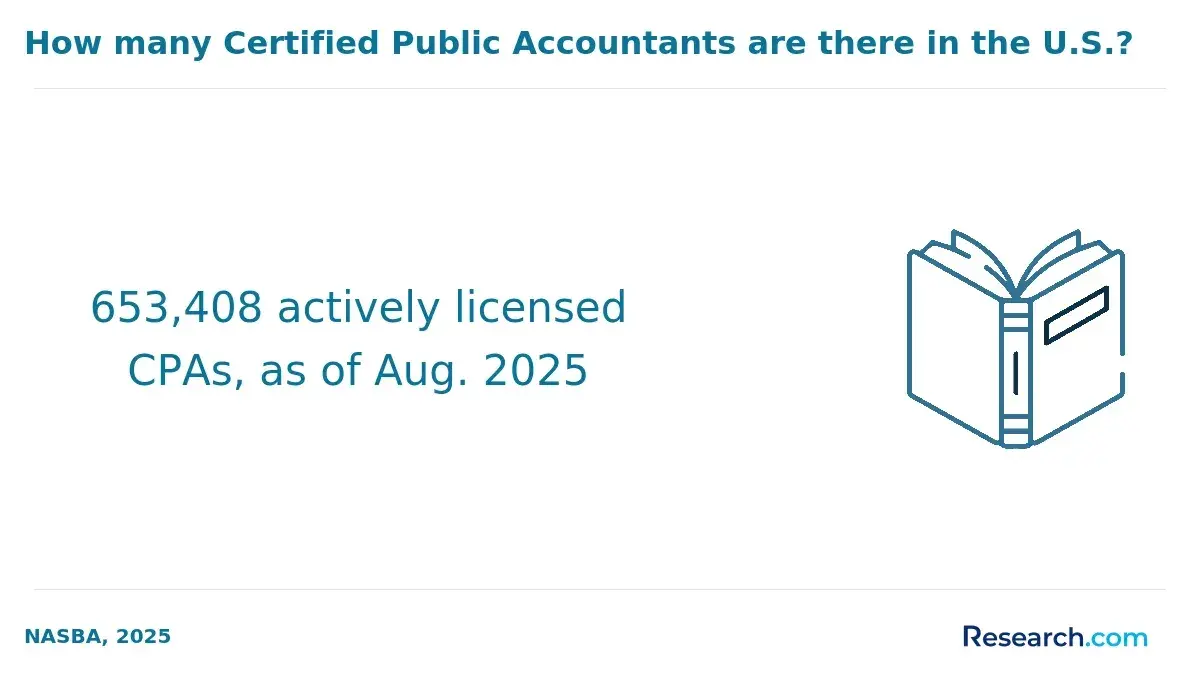
Some students use certificate coursework as part of their path toward professional licensure. CPA rules vary by state, so you must verify whether a certificate's credits satisfy your jurisdiction's education requirements. For a state-specific example, see Research.com's guide on how to become a CPA in Ohio.
Common courses in a graduate accounting certificate
- Financial Accounting. Students examine how organizations record transactions, prepare financial statements, apply the accounting cycle, and report assets, liabilities, and equity.
- Managerial Accounting. This course focuses on internal decision-making, including cost behavior, budgeting, variance analysis, and performance measurement.
- Auditing. Learners study audit planning, evidence gathering, internal controls, audit risk, reporting standards, and professional responsibilities.
- Taxation. Students review federal tax rules, compliance obligations, tax planning methods, and the documentation needed for individuals or organizations.
- Strategic Cost Management. This course connects cost analysis with business strategy, covering cost control, cost optimization, cost-benefit analysis, and profitability decisions.
What can you do with a graduate certificate in accounting?
A graduate certificate can help you build skills for accounting, audit, tax, advisory, compliance, and finance-related roles. It is not a replacement for every credential. A master's degree, MBA, or CPA license may still be necessary for certain employers or leadership tracks. But for professionals who need targeted upskilling, a certificate can be a faster and less expensive way to add graduate-level accounting preparation, similar to how an accelerated bachelor degree online compresses the timeline for undergraduate study.
The credential is especially useful when it strengthens skills employers already screen for. Common accountant resume skills include reconciliations (13.6%), general ledger accounts (5.7%), account reconciliations (5.6%), GAAP (5%), payroll tax returns (4.6%), customer service (4.5%), and CPA (4.1%) (Zippia, 2025). A well-designed certificate can reinforce several of these areas through advanced accounting, reporting, tax, and audit courses. For another state-focused licensure resource, review Research.com's guide to Michigan CPA requirements.
The strongest programs do more than teach procedures. They help students develop three core areas: technical accounting knowledge, professional judgment and communication, and ethical decision-making. These areas matter because accountants often interpret complex rules, explain financial information to non-accountants, and make recommendations that affect compliance and financial strategy.
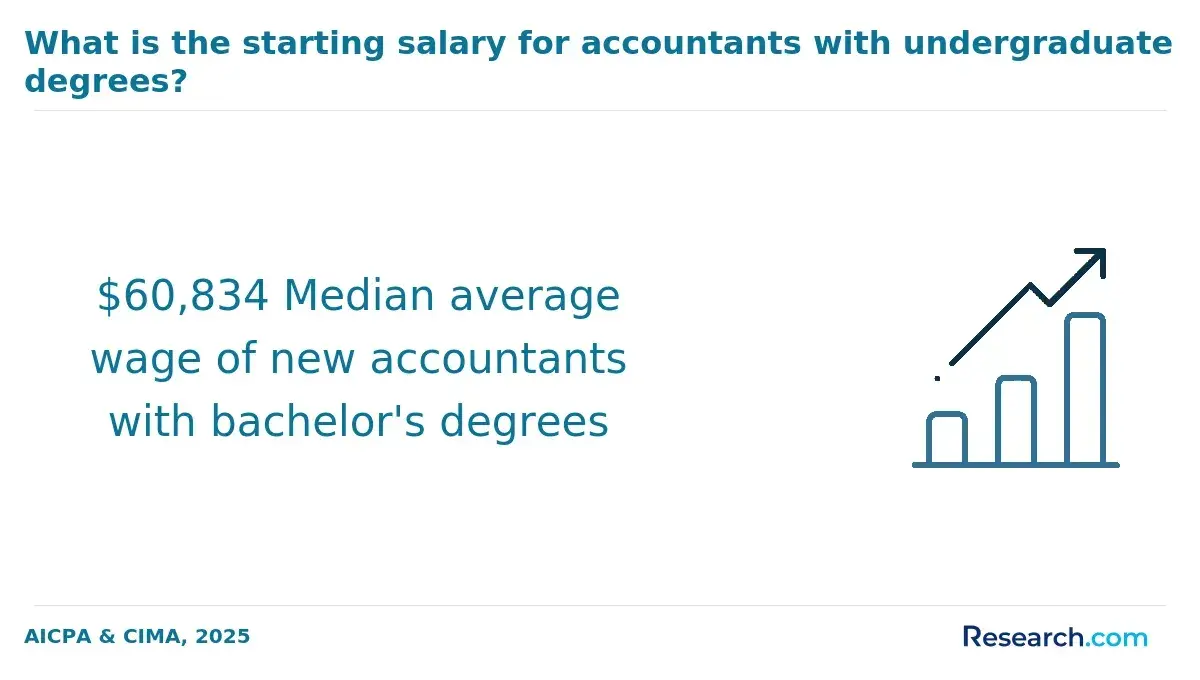
The U.S. Bureau of Labor Statistics (2024) reports that workers with a master's degree have an average annual salary around $12,500 higher than workers with a bachelor's degree. A graduate certificate is not equivalent to a master's degree, so students should not assume the same salary effect. A more realistic way to evaluate the certificate is to ask whether its courses qualify you for specific roles, certifications, promotions, or graduate credits that would otherwise be unavailable.
In practical terms, a graduate certificate in accounting is a focused credential for people who want a shorter route to advanced coursework, not a universal substitute for experience, licensure, or a full graduate degree.
How long does it take to finish a graduate certificate in accounting?
Completion time depends on the school's calendar, credit requirements, course availability, and whether you study full time or part time. Because certificate programs contain fewer courses than master's programs, they can usually be completed more quickly than a full graduate degree.
Many graduate certificate programs in accounting require 12-18 credits across 4-6 courses, completable in 6-12 months of full-time study (McGill University, 2024). Part-time and online formats may take longer, especially for students balancing coursework with a full-time job, family responsibilities, or exam preparation.
| Enrollment format | Typical student profile | Planning considerations |
| Full-time | Students who can prioritize school for a short period | Faster completion, but less flexibility for work obligations |
| Part-time | Working professionals and career changers | More manageable workload, but longer time to completion |
| Online | Students who need location flexibility | Check whether courses are synchronous, asynchronous, or hybrid |
| Evening or weekend | Professionals who want scheduled interaction | Useful for networking, but course availability may be limited |
What are the benefits of enrolling in an accredited graduate certificate program in accounting?
Accreditation is one of the first items to verify before choosing a graduate certificate. An accredited institution has been reviewed under recognized educational standards, which can affect employer confidence, transfer credit decisions, eligibility for some forms of financial aid, and acceptance into later graduate study. For accounting students, it can also matter when evaluating whether credits may support CPA-related education requirements.
An accredited program is more likely to follow a structured curriculum, use qualified faculty, and maintain academic policies that students can verify before enrolling. Accreditation does not guarantee a job or salary increase, but it reduces the risk of paying for coursework that employers, licensing boards, or graduate schools may not recognize.
Accredited programs may also offer formats suited to adult learners, including online classes, evening schedules, and accelerated terms. If speed is a priority, compare certificate options with Research.com's overview of fast degree programs, but remember that a faster program is only valuable if it is legitimate, rigorous, and aligned with your goals.
| Why accreditation matters | What to verify before applying |
| Employer recognition | Whether employers in your target industry recognize the school and credential |
| Credit transfer | Whether certificate credits can apply to a later master's degree |
| CPA preparation | Whether your state board will count the credits toward education requirements |
| Financial aid access | Whether the specific certificate program is eligible for federal, state, institutional, or employer funding |
| Academic quality | Faculty credentials, curriculum depth, assessment methods, and student support |
Cost of a Graduate Certificate in Accounting
The price of a graduate certificate in accounting varies by school type, location, delivery format, credit load, and student residency status. Tuition is only one part of the budget. Students should also ask about fees, books, accounting software access, exam preparation materials, technology requirements, transportation, parking, and possible lost income if coursework reduces work hours.
The average cost of a graduate certificate in accounting is around $12,000, with per-credit costs typically ranging from $400 to $1,000 (Accounting.com, 2026). According to recent data, the median tuition for one year at a public graduate institution aligns closely at approximately $12,596, making certificates a more affordable, shorter-term option compared to master's programs that often exceed two years and $24,000 in tuition.
A graduate program at a private school costs an average of $26,621 for a year of education, which is more than double the public graduate figure and the reported average for graduate certificates. Students considering private institutions should compare total cost carefully and look for grants, scholarships, employer tuition benefits, and payment plans.
Many accounting certificate programs are built for working professionals, which can reduce opportunity cost. Online, evening, and part-time formats may allow students to keep earning income while completing courses. However, flexibility should not be the only factor. A lower-cost program that does not meet your licensing or career needs can become expensive in the long run.
| Cost factor | Questions to ask |
| Tuition per credit | How many credits are required, and is tuition charged differently for online or out-of-state students? |
| Mandatory fees | Are technology, graduate, lab, proctoring, or student service fees added each term? |
| Books and software | Will you need paid accounting platforms, tax software, or CPA review materials? |
| Transferability | Can completed credits apply toward a master's degree at the same school or another institution? |
| Financial aid | Is the certificate eligible for federal aid, institutional scholarships, veterans benefits, or employer reimbursement? |
| Time away from work | Will class schedules affect your income, overtime, or promotion timing? |
Types of Graduate Certificates in Accounting
Graduate accounting certificates are often designed around specific career outcomes. Choosing the right type matters because a taxation certificate, forensic accounting certificate, and general accounting certificate can lead to different skill sets and employer signals. The best option is the one that closes a specific gap in your education or career path.
| Certificate type | Primary focus | May fit students interested in |
| General Graduate Certificate in Accounting | Broad graduate-level accounting concepts, including financial accounting, managerial accounting, and taxation | CPA preparation, career switching, graduate school preparation, or strengthening foundational accounting knowledge |
| Financial Accounting Graduate Certificate | Financial reporting, asset valuation, financial statement analysis, and reporting requirements | Corporate accounting, reporting, audit support, and accounting leadership pathways |
| Taxation Graduate Certificate in Accounting | Tax law, planning, compliance, preparation, computation, filing, and reconciliation | Public accounting, corporate tax, tax advisory, and seasonal or year-round tax work |
| Forensic Accounting Graduate Certificate | Fraud examination, financial investigation, statement analysis, and legal issues tied to accounting | Fraud investigation, litigation support, compliance, internal audit, and risk roles |
| Governmental and Nonprofit Accounting Graduate Certificate | Fund accounting, grant accounting, public-sector reporting, and nonprofit financial practices | Government agencies, nonprofit organizations, grant-funded programs, and public accountability roles |
| International Accounting Graduate Certificate | Global accounting practices, foreign currency transactions, and international financial reporting standards | Multinational companies, global reporting teams, international finance, and cross-border compliance |
Graduate Certificate in Accounting Requirements
Admissions requirements differ by school, but most graduate accounting certificates expect applicants to show prior college-level preparation and the ability to succeed in quantitative, detail-oriented coursework. Some programs are designed for accounting majors, while others admit business or non-accounting majors who complete prerequisite courses first. During the program, students may need to maintain a GPA of at least 2.5.
Common admission requirements
- Bachelor's Degree. Many programs require a bachelor's degree in accounting or a related field. Applicants without enough accounting coursework may need prerequisite classes before beginning graduate-level study.
- Application Form and Fee. Students typically submit an online application and pay an application fee. Fees may range from $20 to over $100.
- Official Transcripts. Schools review transcripts to confirm prior degrees, evaluate relevant coursework, and assess academic readiness.
- Resume. A resume can strengthen an application by showing accounting, finance, business, administrative, or analytical work experience.
- Essay or Statement of Purpose. Some programs ask applicants to explain their goals, relevant background, and reasons for choosing the certificate. This also gives the school a sample of written communication ability.
Skills that help students succeed
- Analytical Skills. Accounting students must interpret financial data, identify irregularities, evaluate documentation, and draw defensible conclusions.
- Attention to Detail. Small errors can affect financial statements, reconciliations, tax filings, and audit work, so precision is essential.
- Quantitative Skills. Accountants regularly work with figures, ratios, forecasts, budgets, and financial models.
- Organization. Strong document management and process discipline help professionals track transactions, reports, deadlines, and compliance requirements.
- Communication. Accountants must explain financial findings to managers, clients, auditors, regulators, and non-financial stakeholders through both written and oral reports.
Graduate Certificate in Accounting Jobs
Accounting supports nearly every industry because organizations must track money, prepare reports, pay taxes, control risk, and comply with financial rules. A graduate certificate can help candidates pursue accounting-related roles, but job eligibility still depends on prior experience, undergraduate background, certifications, state rules, and employer requirements.
Job outlook for accountants
The outlook for accounting careers and job opportunities remains steady because accounting work is needed across businesses, government agencies, nonprofits, and professional services firms. According to the United States Bureau of Labor Statistics, employment of accountants and auditors is projected to grow 5% from 2024 to 2034, about as fast as the average for all U.S. occupations. Related roles for accounting graduate certificate holders also show strong demand, including financial managers (15% growth), personal financial advisors (17%), and financial analysts (9%).
Demand is shaped by several factors: financial reporting requirements, tax complexity, business expansion, international operations, internal controls, and regulatory compliance. Accountants who understand cross-border rules, risk management, and industry-specific reporting may be especially useful to employers with complex operations.
Technology is also changing the profession. Automation and cloud accounting tools can reduce repetitive data entry, while analytics tools increase the need for professionals who can interpret data, evaluate controls, and explain results. Students interested in the data side of accounting may also compare accounting coursework with a data science online degree to understand how analytics-heavy pathways differ.
What jobs can you get with a graduate certificate in accounting?
Certificate holders may pursue accounting, tax, finance, advisory, and management roles. The credential is typically strongest when paired with relevant work history, technical skills, and, where needed, professional certification. The roles below are common directions for people with advanced accounting preparation.
| Role | What the work involves | Reported salary figure |
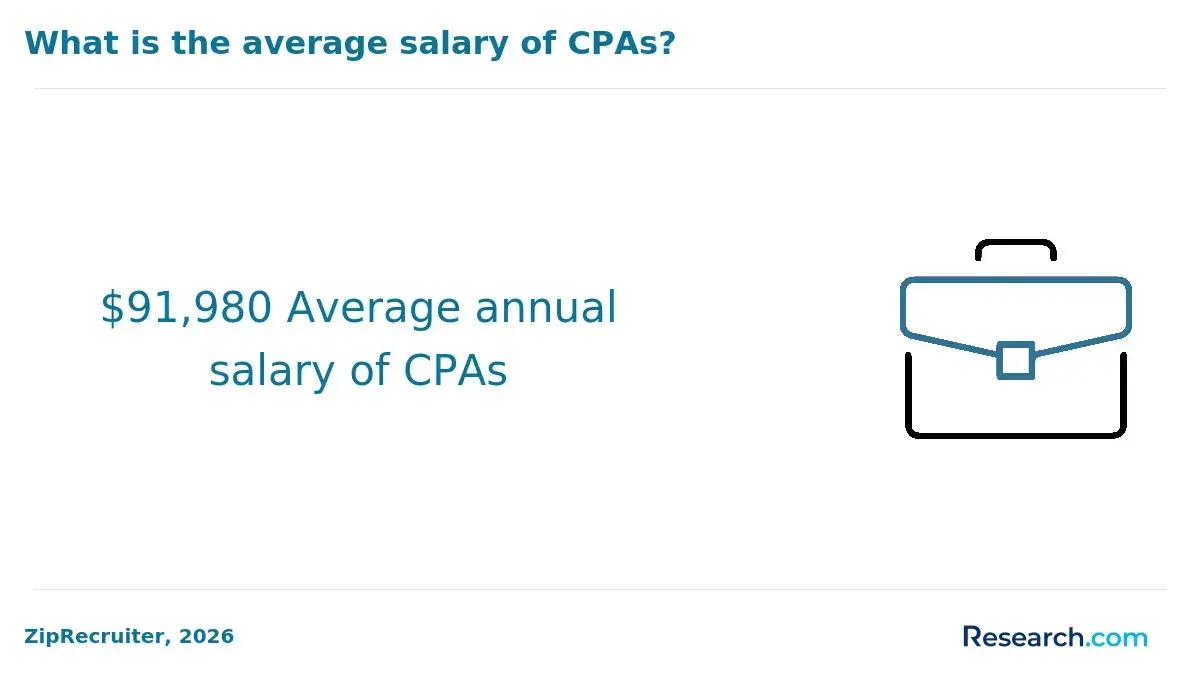
| Accountant | Accountants record, classify, analyze, and report financial information. They prepare statements such as balance sheets, income statements, and cash flow statements, while also supporting tax, audit, and compliance requirements. | Median Annual Salary: $77,250 |
| Financial Analyst | Financial analysts review data, build models, prepare reports, study market trends, assess risks, and help organizations or individuals make investment and planning decisions. | Median Annual Salary: $95,570 |
| Financial Advisor | Financial advisors help individuals and organizations plan for goals such as retirement, investing, debt management, tax planning, insurance, and estate considerations. | Median Annual Salary: $94,170 |
| Accounting Manager | Accounting managers supervise accounting staff, establish procedures, review financial documents, coordinate reporting, and work with other departments to ensure accurate and timely financial information. | Average Annual Salary: $95,486 |
| Controller | Controllers, sometimes called chief accountants, oversee accounting operations, financial reporting, internal controls, compliance, planning, and coordination between accounting and finance teams. | Average Annual Salary: $244,400 |
What to Look for in a Graduate Certificate in Accounting
Choosing a graduate certificate should be a career decision, not just an admissions decision. The program should offer courses that match your target role, provide credible academic quality, and fit your budget and schedule. It can also help to understand the difference between major and degree so you do not confuse a certificate concentration with a full academic major or degree credential.
Use the checklist below when comparing programs.
| Selection factor | Why it matters | What to ask |
| Accreditation | Affects recognition, transferability, and potential aid eligibility | Is the institution accredited, and is the certificate recognized by relevant academic or licensing bodies? |
| Specialization options | Determines whether the curriculum supports your target career | Does the program offer taxation, forensic accounting, audit, financial analysis, accounting information systems, or another needed focus? |
| CPA alignment | Important for students pursuing licensure | Will these credits count toward CPA education requirements in your state? |
| Faculty background | Faculty experience can shape practical relevance | Do instructors have accounting practice, research, CPA, audit, tax, or industry experience? |
| Student support | Working students may need advising, tutoring, and career services | Are academic advising, career coaching, library access, and technical support available to certificate students? |
| Student-to-teacher ratio | Smaller classes may allow more feedback and interaction | How large are typical graduate accounting classes? |
| Online availability | Location flexibility can reduce commuting and relocation costs | Are courses fully online, hybrid, synchronous, or self-paced? Students comparing low-cost online options can also review the most affordable online schools. |
| Financial aid options | Not every certificate qualifies for the same funding | Can students use federal aid, scholarships, loans, grants, employer reimbursement, or payment plans? |
Which accounting specialization aligns best with your career goals?
The right specialization depends on the work you want to do after the certificate. Taxation fits students who like rules, compliance, planning, and client advisory work. Forensic accounting fits people who enjoy investigation, documentation, fraud detection, and legal contexts. Auditing works well for students interested in controls, evidence, reporting accuracy, and risk. Financial accounting is a stronger fit for corporate reporting, controllership, and financial statement work.
Start with your target job postings. Look at the required skills, preferred credentials, software tools, and experience levels. Then compare those requirements with the certificate curriculum. Research.com's guide to accounting specializations can help you map interests and strengths to different accounting paths.
| If your goal is... | Consider this specialization | Why it fits |
| Preparing tax returns, advising clients, or working in corporate tax | Taxation | Focuses on tax law, planning, compliance, and documentation |
| Investigating fraud or supporting litigation | Forensic accounting | Builds skills in fraud examination, financial evidence, and investigative analysis |
| Reviewing controls and financial reporting accuracy | Auditing | Emphasizes evidence, risk, internal controls, and compliance |
| Moving toward accounting manager or controller roles | Financial accounting or managerial accounting | Strengthens reporting, analysis, budgeting, and decision-support skills |
| Working in government or nonprofit finance | Governmental and nonprofit accounting | Covers fund accounting, grants, and public accountability requirements |
Is the Investment in a Graduate Certificate in Accounting Worthwhile?
A graduate certificate is worthwhile when it creates a clear return: more relevant qualifications, eligibility for better roles, progress toward CPA education requirements, stronger technical skills, or transferable credits toward a later degree. It is less worthwhile when the program is expensive, poorly aligned, not accredited, or too narrow for your goals.
Compared with a full degree, a certificate usually requires less time and tuition. That makes it attractive for professionals who need focused coursework rather than a broad academic reset. It can also serve as a bridge to further education, including a bachelors degree in accounting online accredited for learners who still need an undergraduate accounting foundation. However, students should not assume that a certificate alone will produce a salary increase. Employers typically weigh experience, job performance, certifications, industry knowledge, and leadership ability alongside education.
| A certificate may be worth it if... | It may not be worth it if... |
| The curriculum directly matches your next target role. | You are unsure which accounting career path you want. |
| Your employer values or reimburses graduate accounting coursework. | The certificate costs nearly as much as a degree but offers few transferable credits. |
| The credits help satisfy CPA-related education requirements in your state. | Your state board or target school will not recognize the credits. |
| You need a shorter credential while working full time. | You need the broader curriculum and career services of a master's program. |
How can you find scholarships and aid for graduate certificate programs in accounting?
Funding a certificate can be challenging because some aid programs prioritize degree-seeking students. Still, students should not assume they must pay the full cost out of pocket. Schools, employers, professional associations, and private scholarship providers may offer support, and some accredited certificate programs may qualify for federal aid.
- Start before applying. Scholarship and aid deadlines may occur months before the first term, so research funding while you are still comparing programs.
- Ask the financial aid office specific questions. Confirm whether the certificate itself is aid-eligible, not just whether the university participates in financial aid programs.
- Check employer tuition benefits. Accounting, finance, government, and corporate employers may reimburse coursework that improves job-related skills.
- Apply broadly. Submit applications for all relevant scholarships, grants, professional association awards, and institutional funding options.
- Compare net cost, not just tuition. Include fees, materials, software, commuting, and the value of any transferred credits.
If affordability is your top priority, compare accredited options and review Research.com's list of the cheapest online graduate certificate programs to identify programs that may fit your budget.
What are the salary prospects after earning a graduate certificate in accounting?
Salary outcomes after a graduate certificate depend on role, location, industry, experience, certification status, and whether the credential leads to new responsibilities. A certificate can strengthen a candidate's profile, but it does not guarantee a specific pay raise or job title. The most realistic salary benefit comes when the coursework helps you qualify for higher-skill work such as tax advisory, audit, financial analysis, internal controls, or accounting management.
For role-by-role compensation context, Research.com's guide to how much do accountants make a year provides additional salary information across accounting careers. Use salary data as a benchmark, then compare it with local job postings and your current experience level.
How can a graduate certificate in accounting enhance career advancement?
A graduate accounting certificate can support advancement when it fills a skill gap that is limiting your next move. For example, a staff accountant may use audit or managerial accounting courses to prepare for senior accountant responsibilities. A finance professional may use taxation or financial accounting coursework to move closer to accounting-focused work. A business graduate may use the certificate to build the academic background needed for CPA planning.
- It adds targeted graduate-level coursework. Specialized classes in tax, audit, forensic accounting, or financial reporting can help candidates stand out for roles requiring deeper technical knowledge.
- It can support promotion conversations. Completing a certificate shows initiative and may help demonstrate readiness for supervisory or specialized responsibilities.
- It may improve competitiveness for adjacent roles. Accounting coursework can strengthen applications for financial analyst, controller-track, compliance, audit, or advisory positions.
- It can help with certification preparation. Some programs are designed around knowledge areas tested in exams such as CPA, CMA, or CIA, though students must verify exam and licensing requirements separately.
- It may expand your professional network. Faculty, classmates, alumni, and employer connections can create mentorship and referral opportunities, especially in cohort-based or career-supported programs.
How does a graduate certificate in accounting compare to other professional certifications?
A graduate certificate and a professional certification serve different purposes. A graduate certificate is an academic credential earned through college coursework. A professional certification typically validates a defined set of competencies through exams, experience requirements, ethics standards, or continuing education. Many accounting professionals use both: the certificate builds knowledge, while the certification signals tested professional competence.
| Credential type | Main purpose | Best for |
| Graduate certificate in accounting | Provides structured graduate coursework in accounting topics | Students needing academic credits, specialization, or preparation for further study |
| CPA license | Authorizes qualified professionals to perform certain public accounting services under state rules | Accountants pursuing public accounting, audit, tax, or higher-level accounting roles |
| Bookkeeping certification | Validates practical bookkeeping and accounting support skills | Bookkeepers, accounting clerks, small business finance staff, and entry-level accounting professionals |
| Other accounting or finance certifications | Demonstrate specialized expertise in management accounting, internal audit, fraud examination, or finance | Professionals targeting specific technical or leadership tracks |
If your goal is hands-on bookkeeping credibility rather than graduate academic credit, Research.com's resource on what is the best bookkeeping certification may be a more relevant starting point.
How are emerging industry trends elevating the role of a graduate certificate in accounting?
Accounting work is becoming more technology-enabled, data-heavy, and compliance-driven. Cloud accounting systems, automation, analytics dashboards, and integrated enterprise platforms are changing how financial information is processed and reviewed. As routine work becomes more automated, employers increasingly need accountants who can interpret results, test controls, detect anomalies, communicate findings, and apply professional judgment.
Regulatory complexity also keeps accounting expertise relevant. Organizations must manage tax rules, reporting standards, audit expectations, internal controls, cybersecurity-related financial risks, and global operations. Graduate certificates that include analytics, information systems, audit, risk management, and compliance coursework may be especially useful for students preparing for modern accounting roles. For compensation context in the licensed accounting field, review Research.com's guide to US CPA salary.
How can a graduate certificate in accounting lead to specialized roles?
Specialization is one of the main reasons students choose a certificate instead of a broader degree. A focused curriculum can help you build role-specific knowledge faster, especially if you already have accounting or business experience. The key is to choose a specialization that employers actually request and that fits the work you want to perform.
1. Forensic Accounting
Forensic accounting applies accounting, auditing, and investigative methods to suspected fraud, disputes, financial irregularities, and legal matters. Coursework may cover fraud schemes, evidence documentation, litigation support, internal controls, and financial statement analysis.
This path may fit students who enjoy investigative work, detailed documentation, and the intersection of finance and law. Forensic accountants may work with corporations, government agencies, law enforcement partners, insurers, or consulting firms. Students who want a deeper undergraduate pathway in the field can explore Research.com's guide to the best online forensic accounting degree.
2. Taxation
Tax-focused certificates help students build knowledge in tax law, compliance, planning, documentation, and advisory services. This specialization can support work in public accounting firms, corporate tax departments, government agencies, or private advisory practices.
Tax professionals are visible during filing season, but tax work extends throughout the year. Businesses need support with planning, transactions, mergers, acquisitions, payroll considerations, entity structure, and compliance changes. A graduate taxation certificate may be especially valuable for accountants who already understand financial reporting and want to deepen tax expertise.
3. Auditing
An auditing specialization prepares students to evaluate financial records, review internal controls, gather evidence, and assess whether organizations follow reporting standards and compliance expectations. Roles may include internal auditor, external auditor, audit associate, compliance analyst, or control specialist.
Auditing can be a strong fit for students who like structured procedures, documentation, risk assessment, and independent verification. It may also support careers in regulated industries where transparency and controls are central to operations.
4. Internal Controls and Risk Management
Internal controls and risk management coursework focuses on identifying weaknesses in business processes, reducing fraud exposure, improving documentation, and helping organizations protect assets. This area is increasingly important as companies rely on complex systems, distributed teams, and digital financial workflows.
Students who choose this path may pursue work in compliance, internal audit, risk advisory, corporate governance, or operations control. The specialization is useful for professionals who want to move beyond transaction processing into systems, process improvement, and organizational risk.
5. Financial Analysis and Advisory
Financial analysis blends accounting information with forecasting, modeling, budgeting, valuation, and decision support. A certificate with analysis-focused coursework can help students interpret financial statements, evaluate performance, and support planning decisions.
This direction may fit students interested in corporate finance, banking, investment analysis, budgeting, or advisory work. It can also complement accounting experience for professionals who want to communicate financial insights to executives or clients.
What additional certifications can complement your graduate certificate in accounting?
A graduate certificate can strengthen academic preparation, but professional certifications can further validate specialized skills. The best combination depends on your target role. CPA licensure may matter for public accounting and some senior roles. Bookkeeping credentials may help professionals in small business accounting or accounting support work. Fraud, audit, management accounting, or finance credentials may fit more specialized tracks.
For students who want a practical credential in transaction recording, reconciliations, and accounting support, Research.com's guide to bookkeeping certification can help compare options. Before adding any credential, check whether it is recognized by employers in your target market, whether it requires exams or experience, and whether continuing education is required.
Should You Transition to an online accounting degree After a Graduate Certificate?
Moving from a graduate certificate into an online accounting degree can make sense if your long-term goals require broader academic preparation, additional accounting credits, a formal degree credential, or access to career services and alumni networks. It may also be useful if your certificate confirmed that you want a deeper accounting career path.
Before transitioning, ask whether your certificate credits transfer into the degree, how many additional credits you need, whether the degree supports CPA planning in your state, and whether the total cost is reasonable compared with your expected career benefit. If you already have a bachelor's degree and need advanced study, a master's program may be a better comparison than another undergraduate degree.
What challenges might you face with a graduate certificate in accounting?
A graduate certificate has limits. It may not carry the same weight as a master's degree. It may not satisfy CPA education requirements in every state. Some employers may prioritize experience, CPA licensure, or a full graduate degree over a certificate. Networking and career services may also be more limited than in degree programs.
The biggest risk is choosing a certificate without confirming how it supports your next step. Some programs are too general for specialized roles, while others are so narrow that they do not help if your goals change. Students who still need a stronger accounting foundation may want to compare certificate study with a low cost online associate's degree in accounting, especially if they are early in their education path.
| Common mistake | Better approach |
| Choosing a program based only on tuition | Compare total cost, accreditation, course relevance, transfer credit, and student support |
| Assuming all credits count toward CPA eligibility | Verify requirements with your state board of accountancy before enrolling |
| Ignoring employer expectations | Review job postings and ask employers which credentials they value |
| Picking a specialization too early | Match specializations to actual roles, required skills, and your work preferences |
| Assuming online means self-paced | Confirm deadlines, meeting times, exam proctoring, and workload expectations |
| Overlooking transfer policies | Ask whether certificate credits can apply to a master's or another degree later |
How to Choose the Right Graduate Certificate in Accounting
Use a structured process instead of relying only on rankings, brand recognition, or speed. The right program should connect clearly to your career objective and reduce friction toward your next credential or job move.
- Define your goal first. Decide whether you want CPA preparation, promotion, a career shift, specialization, or a bridge into graduate study.
- Check accreditation. Confirm institutional accreditation and whether the program is recognized by employers, licensing boards, and graduate schools relevant to you.
- Map courses to job postings. Compare the curriculum with required skills in roles you want, such as tax accountant, auditor, financial analyst, or accounting manager.
- Verify CPA relevance. If licensure is part of your plan, ask your state board whether the credits and course topics qualify.
- Calculate net cost. Include tuition, fees, materials, software, commuting, lost work time, and available aid.
- Ask about transfer credit. If you may pursue a master's degree later, confirm how many certificate credits can apply.
- Evaluate support services. Look for advising, tutoring, career coaching, faculty access, networking, and technology support.
- Compare delivery formats. Decide whether you need asynchronous online coursework, live online classes, evening courses, or campus interaction.
Ideal Pathway to Being Certified
A graduate certificate in accounting can be a practical step toward certification, but it should be viewed as one part of a larger plan. It may offer more focused graduate coursework than a bachelor's degree alone, but it does not automatically replace a master's in accounting or meet every certification requirement. If you are comparing broader graduate options, Research.com's guide to master's finance vs accounting degree can help you understand how accounting and finance pathways differ.
For students pursuing CPA licensure, the main advantage of a certificate is that it may provide additional accounting credits in areas such as financial accounting, audit, taxation, and reporting. However, CPA requirements vary by jurisdiction, and students must confirm credit eligibility before enrolling. For another state-specific example, see Research.com's guide on how to become a CPA in GA.
Key Insights
- A graduate certificate is best for targeted advancement. It is most useful when you need specific graduate accounting coursework for CPA planning, specialization, promotion, or a future degree pathway.
- Accreditation is non-negotiable. An unaccredited or poorly recognized program can limit credit transfer, employer confidence, financial aid access, and licensing usefulness.
- Cost should be evaluated beyond tuition. The average cost of a graduate certificate in accounting is around $12,000, but fees, software, books, time away from work, and credit transfer policies affect the real value.
- Specialization should match a job target. Taxation, auditing, forensic accounting, financial accounting, and nonprofit accounting prepare students for different roles, so choose based on job postings and long-term goals.
- Career outcomes depend on more than the certificate. Experience, CPA status, technical skills, industry knowledge, and communication ability all influence hiring and salary prospects.
- The labor market remains stable but competitive. Accountants and auditors are projected to grow 5% from 2024 to 2034, while related roles such as financial managers, personal financial advisors, and financial analysts show stronger projected growth.
- Technology is changing accounting work. Automation and analytics increase the value of accountants who can interpret data, assess controls, manage risk, and explain financial results.
- Do not assume CPA eligibility. Before enrolling, verify whether the program's credits count under your state board's rules.
References:
- Accounting.com. (2026). Best graduate certificates in accounting. https://www.accounting.com/degrees/accounting/graduate-certificate/best-programs/
- AICPA. (2025). AICPA 2025 Trends Report. https://www.aicpa-cima.com/professional-insights/download/2023-trends-report
- McGill University. (2024). Graduate certificate (Gr. Cert.) accounting. https://www.mcgill.ca/study/2024-2025/faculties/continuing/graduate/programs/graduate-certificate-gr-cert-accounting
- National Student Clearinghouse Research Center. (2025). Clearinghouse Enrollment Insights Series: Final Fall Enrollment Trends. https://nscresearchcenter.org/final-fall-enrollment-trends/
- U.S. Bureau of Labor Statistics. (2024, April 17). Earnings and unemployment rates by educational attainment. https://www.bls.gov/emp/chart-tables/higher-education-earnings-unemployment.htm
- U.S. Bureau of Labor Statistics. (2024, May). Occupational Employment Statistics (OEWS) query system: Accountants and auditors (13-2011). https://www.bls.gov/oes/tables.htm
- Zippia. (2025). Accountant skills for your resume and career. https://www.zippia.com/accountant-jobs/skills/
Other Things You Should Know About Graduate Certificate in Accounting Programs
In 2027, most graduate certificate programs in accounting are designed to be completed within 6 to 12 months of part-time study. This allows students to gain essential accounting skills and knowledge efficiently, complementing their existing qualifications or expertise in other fields.
A Graduate Certificate in Accounting is a post-bachelor's credential designed to provide foundational and advanced knowledge in accounting. It typically includes courses on financial reporting, managerial accounting, and taxation, and can prepare students for roles in finance and accounting or further studies. Programs can vary in length and format, offering flexible options for prospective students.
Common admission requirements include a bachelor's degree in accounting or a related field, official transcripts, a completed application form and fee, a resume, and an essay. Some programs may also require prerequisite courses if the applicant's undergraduate degree did not include sufficient accounting coursework.
A 2027 graduate certificate in accounting is typically a shorter, more focused program designed for career advancement or specialization, often completed in a year. In contrast, a master's degree is more comprehensive, longer, and provides an in-depth understanding of accounting principles, suitable for those seeking extensive knowledge or academic scholarships.
Yes, completing a graduate certificate in accounting can help prepare students for professional certification exams, such as the Certified Public Accountant (CPA) exam. This can enhance their qualifications and career prospects.
Many institutions offer online graduate certificate programs in accounting, providing flexibility for students to complete their studies while managing work and other responsibilities. Online programs can be as rigorous and comprehensive as on-campus programs.


