
2027 Easiest Direct-Entry MSN Programs to Get Into

Co-Founder and Chief Data Scientist
According to recent data, the average yearly salary for MSN-educated nurses in 2024 ranges from $102,316 for nurse educators to $138,509 for clinical nurse specialists. This demonstrates the strong earning potential for advanced nursing roles. However, many aspiring professionals face challenges finding direct-entry MSN programs that are accessible and flexible.
Drawing from my experience as a career planning expert, this article aims to help students identify the easiest direct-entry MSN programs to get into and make informed decisions about their education and career path.
What are the benefits of enrolling in the easiest direct-entry MSN programs to get into?
- Graduating with a direct-entry MSN degree qualifies you for advanced roles such as clinical nurse specialist, nurse practitioner, or nurse educator.
- The average salary for MSN-educated nurses in 2024 ranges from $102,316 to $138,509, depending on the specialization.
- Online direct-entry MSN programs offer flexibility, allowing students to balance coursework with personal and professional commitments.
What can I expect from the easiest direct-entry MSN programs to get into?
Students enrolling in the easiest direct-entry MSN programs can expect a streamlined path to advanced nursing roles, designed to accommodate individuals with non-nursing bachelor's degrees.
These programs often provide an accelerated curriculum, enabling students to complete foundational nursing courses and advanced practice content within a shorter timeframe compared to traditional routes. This structure allows for quicker entry into specialized nursing careers while still meeting licensure and certification requirements.
Many programs include both theoretical coursework and clinical training, ensuring that students gain a comprehensive understanding of nursing practices. Core subjects typically cover advanced pharmacology, health assessment, and evidence-based practice, while clinical rotations provide hands-on experience in various healthcare settings.
Some programs also offer flexibility through online or hybrid formats, allowing students to manage their studies alongside personal and professional responsibilities.
Where can I work after graduating from the easiest direct-entry MSN programs to get into?
Graduates of direct-entry MSN programs can work in diverse healthcare settings, leveraging their advanced skills and specialized knowledge. Common workplaces include hospitals, outpatient clinics, and community health centers, where roles such as clinical nurse specialist or nurse practitioner are highly sought after.
Additionally, nurse educators are in demand at academic institutions and healthcare training facilities, contributing to the preparation of future nurses.
A unique advantage of these programs is that they build on the knowledge from students' first degrees, offering differentiation in the workplace. For example, a background in psychology, business, or biology can enhance problem-solving abilities, leadership, or scientific understanding, making graduates valuable in specialized roles.
These additional skills provide an edge in areas like healthcare administration, research, or patient advocacy. By combining nursing expertise with their previous academic foundation, graduates are well-positioned to bring innovative perspectives to their roles.
How much can I make with a degree from the easiest direct-entry MSN programs to get into?
Graduates of direct-entry MSN programs can expect competitive salaries that reflect their advanced training and expertise. On average, clinical nurse specialists earn $138,509 annually, while nurse practitioners make approximately $128,758.
Nurse educators, who play a crucial role in training the next generation of nurses, have an average salary of $102,316. These figures highlight the strong earning potential for MSN-educated professionals across various specializations.
The exact salary depends on factors such as location, experience, and chosen specialization. Graduates working in high-demand areas like acute care or family practice may command higher wages due to the specialized skills required.
Additionally, individuals with unique knowledge from their prior degrees may find opportunities to negotiate higher pay, particularly in roles that blend interdisciplinary expertise with nursing practice. This makes the degree a worthwhile investment for those seeking both financial stability and professional growth.
- 15 Easiest Direct-Entry MSN Programs to Get Into for 2027 Easiest Programs
- How long does it take to complete the easiest direct-entry MSN programs to get into? Completion Time
- How does an online direct-entry MSN program compare to an on-campus program? How does an online direct-entry MSN program compare to an on-campus program?
- What is the average cost of the easiest direct-entry MSN programs to get into? Program Cost
- What are the financial aid options for students enrolling in a the easiest direct-entry MSN programs to get into? Financial Aid
- What are the prerequisites for enrolling in the easiest direct-entry MSN programs to get into? Requirements
- What courses are typically in the easiest direct-entry MSN programs to get into? Program Courses
- What types of specializations are available in the easiest direct-entry MSN programs to get into? What types of specializations are available in the easiest direct-entry MSN programs to get into?
- How do you choose the best easiest direct-entry MSN program to get into? How do you choose the best easiest direct-entry MSN program to get into?
- What career paths are available for graduates of the easiest direct-entry MSN programs to get into? What career paths are available for graduates of the easiest direct-entry MSN programs to get into?
- What is the job market for graduates of the easiest direct-entry MSN programs to get into? Job Outlook
- How Will Emerging Healthcare Innovations Impact Direct-Entry MSN Programs? How Will Emerging Healthcare Innovations Impact Direct-Entry MSN Programs?
- How do direct-entry MSN programs differ from most affordable LPN to RN bridge programs online? How do direct-entry MSN programs differ from most affordable LPN to RN bridge programs online?
- Do Direct-Entry MSN Programs Offer Comprehensive Career Support and Mentorship? Do Direct-Entry MSN Programs Offer Comprehensive Career Support and Mentorship?
- Does the Direct-Entry MSN Curriculum Effectively Address Cultural Competence? Does the Direct-Entry MSN Curriculum Effectively Address Cultural Competence?
15 Easiest Direct-Entry MSN Programs to Get Into for 2027
Choosing a direct-entry MSN program is a high-stakes decision for career changers. These programs are built for people who already hold a bachelor’s degree in a field other than nursing and want a faster route into registered nursing, graduate-level nursing practice, or eventual nurse practitioner preparation. The challenge is that “easy to get into” does not mean easy academically. Direct-entry MSN programs are intensive, clinical-heavy, and often competitive because they combine pre-licensure nursing training with master’s-level coursework.
This guide helps you compare direct-entry MSN programs that may be more accessible based on available program structure, admission pathways, prerequisite options, length, cost, and accreditation. You will also learn how long these programs take, what they cost, what prerequisites are common, how online and campus formats differ, what careers they can lead to, and what questions to ask before applying.
Use this article as a decision tool, not just a list. The best program for you is the one that is accredited, prepares you for RN licensure, offers clinical placement support, fits your budget, and aligns with your long-term nursing goals.
Quick Answer: What Are the Easiest Direct-Entry MSN Programs to Get Into?
The easiest direct-entry MSN programs to get into are generally those with clear prerequisite pathways, multiple start dates or flexible formats, transparent admissions criteria, and strong support for non-nursing bachelor’s degree holders. However, admission is never guaranteed. Applicants still need to meet science prerequisites, GPA expectations, clinical readiness requirements, and program-specific application standards.
For most students, the best strategy is to apply to several accredited programs that match their academic record, timeline, location, and career goals. Prioritize programs accredited by the Commission on Collegiate Nursing Education (CCNE) or the Accreditation Commission for Education in Nursing (ACEN), because accreditation can affect licensure eligibility, financial aid access, credit transfer, and employer recognition.
How We Ranked These Programs
Our program list is informed by institutional research, public education datasets, and Research.com’s ranking process. We reviewed program availability, degree structure, cost information, accreditation, and student-centered factors using our methodology. Data sources include the IPEDS database from the National Center for Education Statistics, Peterson’s database and its Distance Learning Licensed Data Set, the College Scorecard, and the National Center for Education Statistics.
Because admissions selectivity can change by year, applicants should confirm the latest prerequisite requirements, application deadlines, seat availability, NCLEX-RN outcomes, and clinical placement policies directly with each school before applying.
| School | Program | Length | Credits or Units | Accreditation |
| University of Toledo | Graduate-Entry MSN | 2.5 years | 66 credits | CCNE |
| Azusa Pacific University | Entry-Level MSN | ~2.5 years | 48-69 units depend on specialization | CCNE |
| University of Arizona | MS – Entry to the Profession of Nursing | 15 months | 56 credits | CCNE |
| University of New Hampshire | Direct-Entry MSN | ~2.5 years | 63 credits | CCNE |
| Regis College | Accelerated Direct-Entry MSN | 3 years | 94 credits | ACEN |
| San Francisco State University | Entry-Level MSN | 2 years | 97 credits | CCNE |
| Augusta University | MSN-CNL, second degree | ~18 months | 97 credits | CCNE |
| Simmons University | MSN-FNP, second degree | 3 years | 96 credits | CCNE |
| Marquette University | Direct-Entry MSN | 3 years | 96 credits | CCNE |
| University of Alabama at Birmingham | Accelerated Master’s in Nursing Pathway | 3 semesters | 58 credits | CCNE |
| Xavier University | Direct-Entry MSN Program, MIDAS | 20 months | 79 credits | CCNE |
| California Baptist University | Entry-Level MSN | 10 semesters | 102-108 units | CCNE |
| Saint Catherine University | MSN: Entry Level | 23 months | 51 credits | CCNE |
| University of Cincinnati | Direct-Entry MSN | 5 semesters | 64 credits | CCNE |
| University of Illinois Chicago | MSN for Non-RNs, hybrid | 2.5 years | 77 units | CCNE |
1. University of Toledo — Graduate-Entry MSN
The University of Toledo’s Graduate-Entry Master of Science in Nursing is designed for students who already earned a non-nursing bachelor’s degree and want to become registered nurses. The program blends nursing theory, clinical preparation, and hands-on training through resources such as UToledo Medical Center and the Interprofessional Immersive Simulation Center. Graduates are prepared to sit for the NCLEX-RN exam and pursue nursing positions in hospitals, clinics, community health settings, and advanced graduate pathways.
- Program length: 2.5 years
- Specializations: MSN-ELM with School Nurse Services Credential (SNSC); School Nurse Services Credential (SNSC) and Family Nurse Practitioner (FNP); School Nurse Services Credential (SNSC) and Pediatric Nurse Practitioner–Primary Care (PNP-PC); Adult-Gerontology Primary Care Nurse Practitioner (AGPCNP); Adult-Gerontology or Pediatric Clinical Nurse Specialist (CNS); Family Nurse Practitioner (FNP); Pediatric Nurse Practitioner–Primary Care (PNP-PC); Psychiatric Mental Health Nurse Practitioner (PMHNP) Specialty; Healthcare Administration and Leadership; Nursing Education
- Credits required to graduate: 66
- Cost per credit: $652.55 (in-state); $1,145.10 (out-of-state)
- Accreditation: Commission on Collegiate Nursing Education (CCNE)
2. Azusa Pacific University — Entry-Level MSN
Azusa Pacific University offers an Entry-Level MSN for applicants who hold a baccalaureate or higher degree outside nursing. The program includes prelicensure nursing coursework, clinical residency experiences, and graduate-level study that prepares students for the NCLEX-RN exam. Depending on the selected pathway, students may also build toward clinical nurse specialist, nurse practitioner, and public health nursing preparation.
- Program length: ~2.5 years
- Credits required to graduate: 48-69 units depend on specialization
- Cost per credit: $860
- Accreditation: Commission on Collegiate Nursing Education (CCNE)
3. University of Arizona — MS – Entry to the Profession of Nursing
The University of Arizona’s MS – Entry to the Profession of Nursing program, also known as MEPN, is intended for students entering nursing from another field. Offered with opportunities in Gilbert and Tucson, the program combines classroom learning with clinical training in patient-centered care, evidence-based practice, communication, leadership, and interprofessional collaboration. Graduates are prepared to take the NCLEX-RN licensure exam.
- Program length: 15 months
- Credits required to graduate: 56
- Tuition total: $48,414 (in-state); $68,406 (out-of-state)
- Accreditation: Commission on Collegiate Nursing Education (CCNE)
4. University of New Hampshire — Direct-Entry MSN
The University of New Hampshire’s Direct-Entry MSN prepares non-nurses for registered nursing practice and Clinical Nurse Leader preparation. Students complete core nursing courses, clinical immersion experiences, a capstone, and 600 clinical hours. Graduates are eligible for the NCLEX-RN exam and the AACN Clinical Nurse Leader certification exam.
- Program length: ~2.5 years
- Credits required to graduate: 63
- Cost per credit: $800 (in-state); $910 (New England Regional Student Program (NERSP); $1,400 (out-of-state)
- Accreditation: Commission on Collegiate Nursing Education (CCNE)
5. Regis College — Accelerated Direct-Entry MSN
Regis College offers an Accelerated Direct-Entry MSN for students with a non-nursing bachelor’s degree who want to enter nursing through a combined BSN and MSN pathway. Students may become eligible to sit for the NCLEX exam after 16 months, and the program reported a 100% pass rate in 2024. Clinical placements are coordinated by the program, and students can choose full-time or part-time options in the final year.
- Program length: 3 years
- Specializations: Adult/Geriatric Primary Care Nurse Practitioner (AGPCNP); Family Nurse Practitioner (FNP); Pediatric Nurse Practitioner (PNP); Psychiatric/Mental Health Nurse Practitioner (PMHNP); Women's Health Nurse Practitioner (WHNP)
- Credits required to graduate: 94
- Cost per credit: $1,595
- Accreditation: Accreditation Commission for Education in Nursing (ACEN)
6. San Francisco State University — Entry-Level MSN
San Francisco State University’s Entry-Level MSN is a six-semester program for students who hold a non-nursing bachelor’s degree. After completing four semesters, students may become eligible for the NCLEX-RN exam. The program includes theory, clinical courses, and either an applied research course or a master’s thesis. Students who complete the program earn both a Bachelor of Science in Nursing and a Master of Science in Nursing.
- Program length: 2 years
- Specializations: Clinical Nurse Specialist (CNS); Nursing Administration; Women's Health; Public/Community Health
- Credits required to graduate: 97
- Cost per credit: $700
- Accreditation: Commission on Collegiate Nursing Education (CCNE)
7. Augusta University — MSN-CNL, Second Degree
Augusta University’s second-degree MSN-CNL program is built around the Clinical Nurse Leader concentration. It serves students with a non-nursing bachelor’s degree and prepares graduates for RN licensure through the NCLEX-RN exam and for the Clinical Nurse Leader certification exam. The curriculum emphasizes leadership, evidence-based practice, critical reasoning, wellness promotion, and patient-care coordination.
- Program length: ~18 months
- Specializations: Clinical Nurse Leader (CNL)
- Credits required to graduate: 97
- Cost per credit: $513 (in-state); $1,286 (out-of-state); $1,311 (out-of-country)
- Accreditation: Commission on Collegiate Nursing Education (CCNE)
8. Simmons University — MSN-FNP, Second Degree
Simmons University offers a second-degree MSN-FNP pathway for students with bachelor’s degrees outside nursing who want to become family nurse practitioners. The first four semesters focus on pre-licensure nursing preparation, followed by post-licensure coursework in primary care, nursing research, and advanced practice foundations. Graduates are prepared to sit for the FNP national board certification exam.
- Program length: 3 years
- Credits required to graduate: 96
- Cost per credit: $1,559
- Accreditation: Commission on Collegiate Nursing Education (CCNE)
9. Marquette University — Direct-Entry MSN
Marquette University’s direct-entry MSN is for students who already completed a bachelor’s degree in a non-nursing field. The curriculum combines graduate nursing coursework, laboratory learning, clinical practice, and preparation for the NCLEX-RN licensure exam. Students may complete the program in as few as five semesters or choose an eight-semester track. The format includes online and on-site components and reflects the university’s Catholic, Jesuit emphasis on critical thinking, holistic care, and social justice.
- Program length: 3 years
- Credits required to graduate: 96
- Cost per credit: $1,559
- Accreditation: Commission on Collegiate Nursing Education (CCNE)
10. University of Alabama at Birmingham — Accelerated Master’s in Nursing Pathway
The University of Alabama at Birmingham offers the Accelerated Master’s in Nursing Pathway for applicants who hold a bachelor’s degree or higher in a non-nursing field. Students complete pre-licensure coursework and earn an MSN degree in three semesters. The program admits every spring and includes campus-based coursework and clinical learning experiences. Graduates are eligible to sit for the National Certification Licensure Exam for registered nurses, or NCLEX-RN.
- Program length: 3 semesters
- Credits required to graduate: 58
- Cost per credit: $610 (in-state); $1,505 (out-of-state)
- Accreditation: Commission on Collegiate Nursing Education (CCNE)
11. Xavier University — Direct-Entry MSN Program, MIDAS
Xavier University’s direct-entry MSN program, known as MIDAS, is an accelerated option for non-nursing bachelor’s degree holders who want to become registered nurses and build graduate-level leadership and research skills. Students complete foundational nursing coursework and master’s-level study over 20 months. Graduates earn the MSN, become eligible for the NCLEX-RN exam, and are prepared for Holistic Nurse Certification and Clinical Nurse Leader certification exams.
- Program length: 20 months
- Specialization: Clinical Nurse Leader (CNL)
- Credits required to graduate: 79
- Cost per credit: $704
- Accreditation: Commission on Collegiate Nursing Education (CCNE)
12. California Baptist University — Entry-Level MSN
California Baptist University’s Entry-Level MSN serves students with a non-nursing bachelor’s degree who want to transition into nursing. Applicants who already completed the required prerequisite courses may apply directly to the EL MSN program. Students who still need prerequisite preparation can use the university’s Graduate Pre-Nursing program as a bridge into MSN eligibility.
- Program length: 10 semesters
- Units required to graduate: 102-108 units
- Cost per credit: $815
- Accreditation: Commission on Collegiate Nursing Education (CCNE)
13. Saint Catherine University — MSN: Entry Level
Saint Catherine University offers an entry-level MSN for non-nursing bachelor’s degree holders seeking a graduate route into nursing. The curriculum emphasizes clinical leadership, evidence-based care, healthcare informatics, healthcare economics, and culturally responsive practice. Students complete classroom, lab, and clinical components, with hybrid and online elements available in the program structure.
- Program length: 23 months
- Specialization: Clinical Nurse Leader (CNL)
- Credits required to graduate: 51
- Cost per credit: $995 ($50,745 total)
- Accreditation: Commission on Collegiate Nursing Education (CCNE)
14. University of Cincinnati — Direct-Entry MSN
The University of Cincinnati’s five-semester Direct-Entry MSN is intended for students with a non-nursing bachelor’s degree who want to become licensed registered nurses. As part of the region’s only Academic Health Center, the program connects nursing education with allied health, medicine, pharmacy, and research environments. The curriculum prepares students for the NCLEX-RN and can support continued study toward advanced practice roles such as nurse practitioner.
- Program length: 5 semesters
- Credits required to graduate: 64
- Cost per credit: $836 (in-state); $861 (Metro Resident KY or IN); $1,423 (out-of-state)
- Accreditation: Commission on Collegiate Nursing Education (CCNE)
15. University of Illinois Chicago — Master of Science in Nursing for Non-RNs, Hybrid
The University of Illinois Chicago offers a hybrid graduate-entry MSN for students who are not RNs and who hold a bachelor’s degree in another field. The program prepares graduates for RN licensure and for generalist nursing roles that involve care coordination, patient management, and leadership in complex healthcare settings. Because the format is hybrid, students must attend some campus-based activities and live within commuting distance of the UIC Nursing campus for clinical placement requirements.
- Program length: 2.5 years
- Units required to graduate: 77
- Tuition total: $69,147
- Accreditation: Commission on Collegiate Nursing Education (CCNE)
How Long Does It Take to Complete a Direct-Entry MSN Program?
Most direct-entry MSN programs take about two to three years, although accelerated options may be shorter and some part-time or specialization-heavy pathways may take longer. The exact timeline depends on whether the program awards only an MSN or both a BSN and MSN, whether students complete nurse practitioner coursework, and whether the format is full-time, part-time, campus-based, hybrid, or online-supported.
Direct-entry MSN programs are different from the best BSN to NP degree pathways because they are designed for students who do not already hold a nursing degree. Instead of spending four years earning a BSN first, qualified non-nursing graduates complete pre-licensure nursing coursework and graduate study in one integrated program.
Students typically complete RN-focused coursework and clinical requirements first, then sit for the NCLEX-RN exam when eligible. After RN licensure, many programs continue into graduate-level content such as leadership, research, population health, advanced assessment, or specialty preparation. Students comparing lower-cost flexible options may also want to review cheapest online MSN programs, although not every online MSN is designed for non-nurses.
MSN-educated nurses, especially nurse practitioners, remain a major part of healthcare workforce planning. For nurse practitioner job growth percentage, Arizona (71.3%) and New Mexico (64.8%) lead the pack. For annual average openings from 2022 to 2032, California (2,500) and Texas (2,240) are the big leaders.
Online vs. On-Campus Direct-Entry MSN Programs: Which Format Is Better?
Online and hybrid direct-entry MSN programs can be attractive for students who need more scheduling flexibility, but nursing cannot be completed fully online because students must complete in-person labs, simulations, and clinical placements. A program advertised as online usually delivers didactic courses online while requiring local or campus-based clinical work.
Campus programs offer more face-to-face structure, easier access to faculty, simulation labs, peer study groups, and local clinical partners. The trade-off is less flexibility, especially for students who need to relocate, commute, or reduce work hours.
| Factor | Online or Hybrid Direct-Entry MSN | On-Campus Direct-Entry MSN |
| Best for | Students who need some schedule flexibility but can still complete in-person clinical requirements | Students who want daily structure, direct faculty access, and campus-based learning support |
| Clinical requirements | Still completed in person; students may need to live near approved sites or commute to campus | Often coordinated near the school’s clinical network |
| Learning style | Requires strong time management and comfort with independent study | Better for students who benefit from live discussion, labs, and frequent in-person support |
| Flexibility | Usually more flexible for lectures and assignments | Less flexible because classes, labs, and clinicals follow fixed schedules |
| Risk to check | Do not assume online coursework means local clinical placement is guaranteed | Do not ignore commuting, parking, relocation, and work-schedule conflicts |
The better option depends on your learning style, location, clinical placement needs, and financial situation. Before enrolling, ask whether the school assigns clinical sites, whether you must find your own preceptors, and whether the program meets licensure requirements in the state where you plan to practice.
What Is the Average Cost of the Easiest Direct-Entry MSN Programs?
Among the listed programs, the average cost per credit is approximately $910 for in-state students and about $1,150 for out-of-state students. Total tuition commonly ranges from around $30,780 for in-state students to $50,745 for out-of-state students, with the highest tuition reaching up to $149,930 for out-of-state students. These figures are based on the direct-entry MSN programs listed above and may not include university fees, health insurance, books, equipment, background checks, immunizations, travel, relocation, or lost income during full-time study.
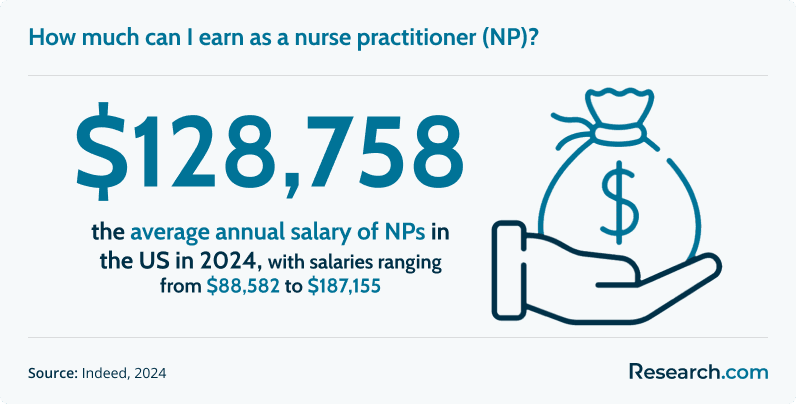
Return on investment depends on the role you pursue after graduation, your state, your debt level, and whether the MSN leads to RN-only roles, advanced practice certification, leadership positions, or further doctoral study. Nurse practitioners earned an average salary of $128,758 in 2024, with salaries ranging from $88,582 to $187,155. Psychiatric, acute care, family practice, and specialty roles may differ significantly by market.
If your long-term goal is advanced practice rather than generalist RN work, compare direct-entry MSN options with direct entry NP programs for non nurses. Students focused mainly on affordability should evaluate total program cost, not just tuition per credit.
| Cost Item | Why It Matters | Question to Ask |
| Tuition per credit | Programs with similar lengths can have very different credit prices | Is tuition charged by credit, semester, or flat program rate? |
| Clinical fees | Clinical placement, simulation, and compliance costs can add up | Are clinical, lab, and testing fees included in the published tuition? |
| Relocation or commuting | Hybrid and campus programs may require regular travel | How often must I be on campus or at assigned clinical sites? |
| Lost wages | Accelerated programs often limit students’ ability to work | Can students realistically work part-time during the program? |
| Licensure and certification costs | NCLEX-RN and specialty exams may require extra fees | Which exam, review, and licensing costs should I budget for? |
Financial Aid Options for Direct-Entry MSN Students
Financial aid can make a direct-entry MSN more realistic, but students should understand what aid is available before committing. Because these are graduate programs, aid packages may differ from undergraduate nursing pathways. Some programs also include undergraduate-equivalent prelicensure coursework, so students should ask how the school classifies enrollment for aid purposes.
- Federal financial aid: Many direct-entry MSN programs are offered by colleges that accept FAFSA. Completing the FAFSA may help students access federal loans and other aid options for eligible programs.
- Scholarships and grants: Nursing schools, hospitals, state agencies, foundations, and professional associations may offer awards based on merit, financial need, service goals, or commitment to underserved communities.
- Employer tuition assistance: Students already working in healthcare should ask employers about tuition reimbursement, loan repayment support, or work-study arrangements tied to nursing education.
- State and local aid: Some states fund nursing scholarships, service-based loan repayment, or workforce programs for students entering high-need specialties or regions.
- Private loans: Private borrowing may fill funding gaps, but students should compare interest rates, repayment terms, deferment options, and whether a co-signer is required.
Even when exploring the most affordable online FNP programs, students should compare the total cost of attendance and the likelihood that the program matches their licensure and career objectives. Lower tuition is valuable only if the program is accredited, clinically viable, and aligned with your intended role.
Common Prerequisites for Direct-Entry MSN Programs
Direct-entry MSN programs are for students with a non-nursing bachelor’s degree. Applicants may come from biology, psychology, education, public health, social sciences, humanities, or even business backgrounds. A student who completed one of the easiest business majors, for example, may still be eligible if they complete the required science and statistics prerequisites.
Requirements vary by school, but many programs ask for the following:
- Bachelor’s degree: Applicants usually need a bachelor’s degree from an accredited institution in a field other than nursing.
- Science prerequisites: Common prerequisites include anatomy and physiology, microbiology, chemistry, nutrition, and related laboratory coursework.
- Statistics or research preparation: Graduate nursing study often requires comfort with statistics, evidence appraisal, and research interpretation.
- Minimum GPA: Many programs look for a GPA around 3.0 or higher, although each school sets its own standard.
- Healthcare exposure: Volunteer work, patient care experience, shadowing, or employment in healthcare may strengthen an application even when not required.
- Application documents: Schools commonly request transcripts, recommendations, a personal statement, a resume or CV, and sometimes an interview.
- Compliance requirements: Before clinicals, students may need immunizations, CPR certification, background checks, drug screening, and proof of health insurance.
Applicants who already know they want advanced practice should compare whether the program allows early specialization or requires post-licensure progression. Some accelerated nurse practitioner programs may be better suited for students who already hold an RN or BSN, so confirm eligibility before applying.
Typical Courses in a Direct-Entry MSN Curriculum
Direct-entry MSN programs begin by moving non-nurses into safe beginner nursing practice. After that foundation, students progress into graduate-level nursing, leadership, research, population health, and in some cases specialty or advanced practice coursework.
Pre-Licensure and Foundational Nursing Courses
- Anatomy and physiology: Students study body systems, normal function, and the biological basis for clinical assessment and disease recognition.
- Microbiology: Coursework covers microorganisms, infection control, and the clinical implications of bacteria, viruses, fungi, and parasites.
- Health assessment: Students learn how to collect patient histories, perform physical assessments, document findings, and identify changes that require intervention.
- Pathophysiology: This course explains how disease alters normal body function and helps students connect symptoms, assessment findings, and treatment plans.
- Pharmacology: Students learn medication actions, therapeutic uses, adverse effects, interactions, and safe administration practices.
- Fundamentals of nursing practice: Students build bedside skills such as communication, safety, documentation, infection prevention, and basic patient care.
- Medical-surgical nursing: Coursework and clinicals introduce care for adults with acute and chronic conditions across hospital and outpatient settings.
Graduate-Level Nursing Courses
- Advanced nursing practice: Students connect clinical reasoning, patient-centered care, and professional decision-making at the master’s level.
- Nursing research: Students evaluate evidence, interpret research, and apply findings to improve patient outcomes.
- Clinical leadership: Coursework focuses on coordinating care, leading teams, improving systems, and supporting safe practice.
- Healthcare policy and ethics: Students examine legal, ethical, regulatory, and policy issues affecting nursing and patient care.
- Population and community health: Coursework addresses prevention, health disparities, public health systems, and care for diverse communities.
- Healthcare informatics: Students learn how electronic health records, data, and digital tools affect care quality and clinical decisions.
Specializations Available in Direct-Entry MSN Programs
Not every direct-entry MSN includes a specialization. Some prepare students as generalist RNs or Clinical Nurse Leaders, while others allow progression into nurse practitioner, clinical nurse specialist, education, administration, or population health tracks. If you want a specific advanced practice role, verify whether the program includes that preparation or only creates a foundation for later study.
- Family Nurse Practitioner: FNPs provide primary care across the lifespan, often in clinics, physician offices, community settings, and outpatient care.
- Adult-Gerontology Nurse Practitioner: AGNPs focus on adult and older adult patients, including chronic disease management and age-related care needs.
- Pediatric Nurse Practitioner: PNPs work with infants, children, and adolescents in primary care, specialty clinics, hospitals, or community settings.
- Psychiatric-Mental Health Nurse Practitioner: PMHNPs assess, diagnose, and treat mental health conditions. The average psychiatric nurse practitioner salary is $154,475.
- Acute Care Nurse Practitioner: ACNPs care for patients with complex, acute, or critical illnesses, often in hospitals, emergency departments, or intensive care units.
- Women’s Health Nurse Practitioner: WHNPs focus on reproductive health, prenatal and postpartum care, gynecologic care, and women’s wellness.
- Clinical Nurse Leader: CNLs coordinate care, improve quality, support evidence-based practice, and help manage patient outcomes across settings.
- Nursing education: Nurse educators teach in academic programs, clinical training environments, hospitals, and professional development departments.
Specialization affects job duties, certification requirements, clinical hours, salary potential, and state licensure rules. For a broader salary comparison, review how MSN nursing salary can vary by role and specialization.
How to Verify Accreditation and Program Quality
Before applying, confirm that the nursing program is accredited by CCNE or ACEN and that the institution itself holds recognized institutional accreditation. Programmatic nursing accreditation is especially important because it can influence RN licensure eligibility, graduate study, employer acceptance, certification options, and financial aid access.
Do not stop at accreditation. Also review NCLEX-RN pass rates, student retention, graduation outcomes, faculty credentials, clinical partnerships, simulation facilities, and whether the school helps students secure clinical placements. If you are comparing online nursing pathways more broadly, resources on RN to MSN online programs can help you understand how program structure and student support differ across graduate nursing options.
| Quality Factor | Why It Matters | Red Flag |
| CCNE or ACEN accreditation | Supports licensure, certification, and employer recognition | The school cannot clearly identify nursing program accreditation |
| NCLEX-RN outcomes | Shows how well the program prepares students for RN licensure | Pass rates are missing, outdated, or difficult to obtain |
| Clinical placement support | Clinical delays can delay graduation and licensure | Students must find all clinical sites without meaningful school support |
| State authorization | Online and hybrid programs may not meet every state’s rules | The program will not confirm eligibility in your intended state |
| Faculty and advising | Career changers need strong academic and clinical guidance | Advising is limited before admission or after enrollment |
How to Choose the Best Direct-Entry MSN Program for You
The right direct-entry MSN is not simply the one with the shortest timeline or the lowest tuition. You need a program that matches your academic background, state licensure plans, clinical access, finances, and long-term role. Start by comparing accredited options, such as accredited online MSN nursing programs and campus programs, then narrow your list based on your goals.
- Confirm accreditation first: Prioritize CCNE- or ACEN-accredited programs and confirm state licensure alignment.
- Compare admissions flexibility: Look at required prerequisites, minimum GPA, healthcare experience expectations, interview requirements, and whether prerequisite completion can be in progress at application.
- Evaluate clinical placement: Ask whether the school assigns placements, helps secure sites, or expects students to find their own clinical opportunities.
- Check specialization timing: Some programs prepare generalist RNs first; others include nurse practitioner, Clinical Nurse Leader, or other graduate pathways.
- Calculate total cost: Include tuition, fees, supplies, commuting, relocation, exam costs, and reduced work hours.
- Review program intensity: Accelerated formats may be shorter but can make employment difficult during enrollment.
- Ask about outcomes: Request NCLEX-RN pass rates, graduation rates, employment support, and certification exam preparation.
In 2022, 8,862 nursing practice degrees were awarded, reflecting a 10.9% growth in the field. Although this does not represent all MSN graduates or direct-entry students, it helps illustrate continued interest in advanced nursing education.
Questions to Ask Before Applying
- Is the nursing program accredited by CCNE or ACEN?
- Will the program make me eligible for the NCLEX-RN in the state where I want to practice?
- Does the school provide clinical placements, or must students locate their own sites?
- What percentage of students complete the program on time?
- What are the most recent NCLEX-RN pass rates?
- Can I work while enrolled, or is the program too intensive?
- Does the program lead to RN licensure only, or does it also include advanced practice preparation?
- What additional costs are not included in tuition?
- Are online, hybrid, or campus requirements compatible with my location?
- What academic support, tutoring, simulation resources, and career services are available?
Common Mistakes to Avoid
- Choosing based only on speed: A shorter program is not better if it lacks clinical support or overwhelms your schedule.
- Ignoring accreditation: Accreditation should be verified before you apply, not after you enroll.
- Assuming online means fully remote: Nursing programs require in-person clinical training, labs, and sometimes campus visits.
- Looking only at tuition: Fees, travel, housing, supplies, exam costs, and lost wages can change affordability.
- Assuming all MSN programs lead to NP certification: Some direct-entry MSN programs prepare generalist RNs or Clinical Nurse Leaders, not nurse practitioners.
- Not checking state licensure rules: A program may be accredited but still not meet your state’s specific requirements.
- Applying without prerequisite planning: Missing science courses can delay admission by a semester or more.
Direct-Entry MSN vs. Other Nursing Pathways
A direct-entry MSN can be the right choice for a non-nurse with a bachelor’s degree who wants an accelerated graduate route into nursing. It is not the best route for everyone. Your current credential determines which pathway makes the most sense.
| Pathway | Designed For | Best When | Consider Another Option If |
| Direct-entry MSN | Non-nursing bachelor’s degree holders | You want an integrated route to RN licensure and graduate nursing preparation | You are not ready for an intensive full-time clinical program |
| BSN-to-MSN or BSN-to-NP | Students who already hold a BSN | You are already an RN and want advanced practice or leadership preparation | You do not yet have RN licensure |
| RN-to-BSN | Practicing RNs with an associate degree or diploma | You need a bachelor’s credential for advancement or graduate admission | You already have a non-nursing bachelor’s degree and no RN license |
| LPN-to-RN bridge | Licensed practical nurses | You are an LPN seeking RN licensure through a bridge route | You have no nursing license and want a graduate pathway |
| DNP after MSN | MSN-prepared nurses pursuing doctoral practice leadership | You want advanced clinical leadership, systems improvement, or doctoral-level practice | You have not yet completed RN or MSN preparation |
Students comparing direct-entry routes with direct entry MSN programs for non-nursing majors should focus on licensure eligibility, clinical placements, cost, and whether the degree includes advanced practice preparation. If cost is the main concern and you are already an RN, the cheapest BSN options may be a more practical step. Licensed practical nurses should compare direct-entry MSN programs with most affordable LPN to RN bridge programs online, because the entry requirements and career sequence are different.
Direct-entry MSN graduates who later want doctoral practice preparation can evaluate DNP programs online. If your interest is older adult care, explore career paths and compensation trends in gerontology salary resources before choosing a specialization.
Career Paths for Direct-Entry MSN Graduates
Direct-entry MSN graduates can work in several nursing roles depending on licensure, certification, specialization, state rules, and program design. Some graduates begin as registered nurses after passing the NCLEX-RN, while others move into Clinical Nurse Leader, nurse practitioner, education, leadership, or specialty roles after meeting additional requirements.
- Registered nurse: Graduates who pass the NCLEX-RN may work in hospitals, outpatient clinics, long-term care, community health, and specialty settings.
- Primary care provider: Graduates with nurse practitioner preparation may provide preventive care, chronic disease management, patient education, and ongoing primary care.
- Specialty clinical nurse: Depending on certification and experience, MSN graduates may work in pediatrics, mental health, acute care, women’s health, gerontology, or other focused areas.
- Clinical Nurse Leader: CNL-prepared graduates coordinate patient care, improve quality, support evidence-based practice, and help manage care delivery.
- Nurse educator: MSN-prepared nurses may teach students, train staff, or support professional development in academic or healthcare environments.
- Healthcare leadership: Graduates may move into nurse manager, care coordinator, quality improvement, or administrative roles after gaining experience.
- Public health and community nursing: MSN-prepared nurses may address prevention, health education, community outreach, and health disparities.
The broader nursing workforce continues to face pressure from demand, retirements, and care access needs. The nursing shortage is one reason many healthcare systems continue to rely on well-prepared nurses across hospitals, physician offices, clinics, long-term care, and community settings.
Job Market Outlook for Direct-Entry MSN Graduates
Direct-entry MSN graduates enter a job market shaped by demand for registered nurses, nurse practitioners, nurse educators, and clinical leaders. Outcomes vary by role, state, specialization, and certification, so students should not assume a specific salary or job offer is guaranteed.
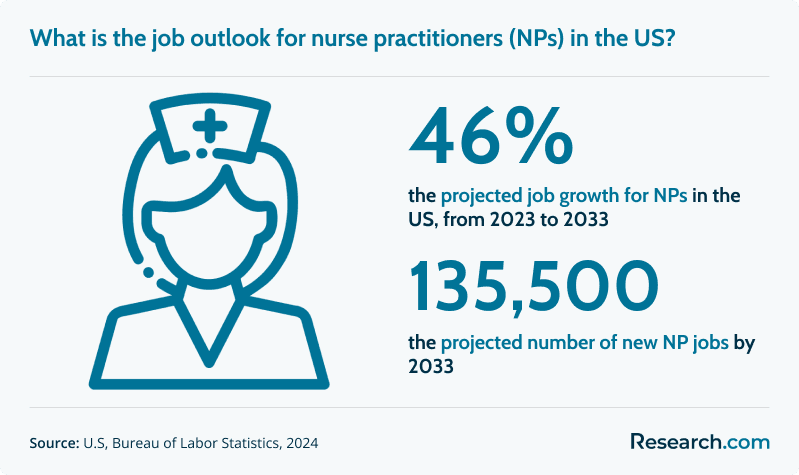
For registered nurses, employment is projected to grow 6% from 2023 to 2033. Nurse practitioners, a common goal for MSN students, are projected to see 46% employment growth over the same period. Nurse educators are expected to grow by 9% or higher from 2023 to 2033.
These projections suggest strong long-term demand, especially for students who complete an accredited program, pass licensure and certification exams, and gain relevant clinical experience. Still, local hiring conditions matter. Before enrolling, review job postings in your target state and speak with program advisors about where recent graduates work.
Student Perspectives on Direct-Entry MSN Programs
- : "The strongest part of my program was its structure for students who had never studied nursing before. The courses connected classroom concepts to clinical practice, and that helped me build confidence with patients. The leadership focus also made the transition into professional nursing feel more realistic. — Stanley"
- : "I entered as a career changer, and the faculty understood that students like me needed support while adjusting to clinical expectations. The workload was heavy, but the guidance helped me develop the skills I needed for hospital practice and later specialty work. — Brianna"
- : "Coming from psychology, I needed a program that could help me connect my previous education to nursing. The accelerated schedule was demanding, but strong advising and clinical preparation made the transition manageable. — Lane"
Challenges to Expect in a Direct-Entry MSN Program
Direct-entry MSN programs are academically and emotionally demanding. Students move quickly from prerequisite science into clinical reasoning, patient care, documentation, pharmacology, and graduate-level expectations. For applicants without healthcare experience, the first clinical rotation can feel especially steep.
- Compressed timelines: Accelerated schedules leave little room for falling behind.
- Clinical intensity: Students must adapt quickly to patient care, safety standards, and professional communication.
- Financial pressure: Tuition, fees, living expenses, and reduced work hours can create strain.
- Licensure stress: NCLEX-RN preparation is a major milestone, and advanced certification may follow.
- Placement logistics: Clinical schedules may include early mornings, weekends, commuting, and site changes.
- Role uncertainty: Some students enter wanting to be nurse practitioners but later discover their program is primarily generalist or CNL-focused.
If you are weighing the personal and financial commitment, review whether is nursing school worth it aligns with your goals, debt tolerance, and intended career outcome.
Is a Direct-Entry MSN a Financially Sound Alternative to an Online NP Program?
A direct-entry MSN and an online NP program often serve different students. Direct-entry MSN programs are built for non-nurses who need RN preparation first. Online NP programs usually require the applicant to already be an RN and often a BSN-prepared nurse. That means the cheaper option on paper may not be available to you unless you already hold the right nursing credentials.
To compare ROI, calculate total tuition, required fees, clinical travel, time out of the workforce, licensure costs, and expected salary by role. If you already hold an RN and meet admission requirements, the cheapest NP program online options may be worth comparing. If you are not yet a nurse, a direct-entry MSN may be the more direct route despite higher upfront costs.
Can Direct-Entry MSN Graduates Work Beyond Traditional Clinical Roles?
Yes. Many direct-entry MSN graduates begin in bedside or direct patient care roles, but the degree can also support movement into care coordination, quality improvement, informatics, education, leadership, public health, and policy-related work. Career flexibility depends on licensure, certification, experience, and the focus of the MSN curriculum.
Students interested in nontraditional nursing roles should look for coursework in informatics, leadership, community health, evidence-based practice, systems improvement, and culturally competent care. Practicing RNs who want an academic credential with fewer clinical requirements may also compare pathways such as RN to BSN without clinicals, although that route is not designed for non-nurses seeking initial RN licensure.
Current Trends Affecting Direct-Entry MSN Programs
Direct-entry MSN programs are changing as healthcare becomes more technology-driven, team-based, and focused on access. Students should look for programs that teach telehealth, electronic health records, clinical informatics, quality improvement, interprofessional collaboration, and culturally responsive care. Simulation labs are also increasingly important because they allow students to practice clinical decision-making before working with patients.
Innovation matters, but it should not replace the basics. A strong direct-entry MSN still needs rigorous clinical preparation, qualified faculty, licensure alignment, and strong student support. Applicants comparing accelerated routes can also review the best accelerated BSN nursing programs online to understand how other fast-track nursing pathways are structured.
Career Support, Mentorship, and Student Services
Because direct-entry MSN students are often changing careers, support services can strongly affect success. Look for programs that offer academic advising, NCLEX-RN preparation, clinical placement coordination, tutoring, faculty mentoring, career coaching, resume assistance, mock interviews, and alumni networking.
Students interested in women’s health or other advanced specialties should also examine how specialty programs structure mentorship and clinical support. For example, comparing the fastest online MSN women's health nurse practitioner programs can help students see how advanced practice programs balance speed, clinical expectations, and career preparation.
Does the Direct-Entry MSN Curriculum Address Cultural Competence?
A strong direct-entry MSN should prepare students to care for patients across cultures, languages, identities, ages, communities, and socioeconomic backgrounds. Cultural competence should not be limited to one lecture. It should appear in health assessment, community health, ethics, communication, clinical rotations, simulation, and leadership training.
Applicants should ask how programs teach health disparities, implicit bias, language access, patient advocacy, and care for underserved populations. Students comparing accessible nursing education options can also review easy nursing school resources, but accessibility should always be balanced against accreditation and clinical quality.
Key Insights
- “Easy to get into” is relative: Direct-entry MSN programs may be accessible to non-nursing graduates, but they still require science prerequisites, clinical readiness, and strong academic commitment.
- Accreditation is non-negotiable: Choose programs accredited by CCNE or ACEN and confirm they meet RN licensure requirements in your intended state.
- Most programs take two to three years: Some accelerated options are shorter, but faster programs often require full-time focus and limited outside work.
- Total cost matters more than tuition per credit: Include fees, supplies, travel, clinical expenses, exam costs, and lost wages when comparing ROI.
- Online does not mean fully remote: Direct-entry nursing programs require in-person clinical training, and many hybrid programs require students to live near approved clinical sites.
- Not every direct-entry MSN leads directly to NP certification: Some programs prepare generalist RNs or Clinical Nurse Leaders, while others include advanced practice tracks.
- Clinical placement support can make or break the experience: Ask whether the school secures placements or expects students to arrange them independently.
- Compare pathways before applying: Direct-entry MSN programs are best for non-nurses with bachelor’s degrees; RNs, LPNs, and BSN-prepared nurses may have more efficient alternatives.
References
- Indeed Editorial Team. (2024, November 2). How much does an MSN make on average? (with MSN degree FAQs). Indeed. Retrieved December 17, 2024, from Indeed.
- Indeed. (2024). Clinical nurse specialist salary in United States. Indeed. Retrieved December 17, 2024, from Indeed.
- Indeed. (2024). Nurse educator salary in United States. Indeed. Retrieved December 17, 2024, from Indeed.
- Indeed. (2024). Nurse practitioner salary in United States. Indeed. Retrieved December 17, 2024, from Indeed.
- O*NET OnLine. (2024). Nursing instructors and teachers, postsecondary. O*NET OnLine. Retrieved December 17, 2024, from O*NET OnLine.
- U.S. Bureau of Labor Statistics. (2024). Occupational employment and wages, May 2023 - 29-1171 Nurse practitioners. BLS. Retrieved December 17, 2024, from BLS.
- U.S. Bureau of Labor Statistics. (2024). Nurse anesthetists, nurse midwives, and nurse practitioners. BLS. Retrieved December 17, 2024, from BLS.
- U.S. Bureau of Labor Statistics. (2024). Occupational employment and wages, May 2023 - 25-1072 Nursing instructors and teachers, postsecondary. BLS. Retrieved December 17, 2024, from BLS.
- U.S. Bureau of Labor Statistics. (2024). Registered nurses. BLS. Retrieved December 17, 2024, from BLS.
Other Things You Should Know About Direct-Entry MSN Programs
In 2027, programs like Gwynedd Mercy University and Simmons University are known for having fewer prerequisites, such as requiring a non-nursing bachelor's degree and limiting specific prerequisite courses. This can streamline the application process for those seeking a career change without an extensive background in healthcare.
Most direct-entry MSN programs require at least a 3.0 undergraduate GPA for admission, and some accept applicants with a 2.75 GPA if other credentials are strong. Programs may also require prerequisite science courses, a personal statement, letters of recommendation, and a valid RN license at the graduate phase.


