2027 Most Affordable Online MSN in Patient Safety and Healthcare Quality

Co-Founder and Chief Data Scientist
Choosing an online MSN in Patient Safety and Healthcare Quality is usually a decision about three things at once: career mobility, program affordability, and whether the degree will actually prepare you to improve care systems. In 2023, the US Bureau of Labor Statistics (BLS) reported 562,700 employed medical and health services managers, and healthcare organizations continue to need leaders who can reduce preventable harm, interpret quality data, manage risk, and guide teams through regulatory and operational change. This guide is for registered nurses and healthcare professionals comparing affordable online MSN options, estimating return on investment, and deciding whether this specialization fits their next career move.
Quick answer: Is an online MSN in patient safety and healthcare quality worth considering?
An online MSN in Patient Safety and Healthcare Quality can be a practical graduate degree for licensed nurses who want to move from bedside or unit-level practice into quality improvement, risk management, patient safety leadership, infection prevention, clinical operations, or healthcare compliance. It is most useful when the program is properly accredited, fits your work schedule, offers relevant practicum or capstone experiences, and has a total cost you can justify based on your target role.
- Career direction: The degree can support advancement into leadership roles in hospitals, clinics, long-term care facilities, insurance organizations, public agencies, and consulting environments.
- Earning context: BLS salary figures cited in this guide include median annual wages of $135,320 for advanced practice nurses and $117,960 for health services managers as of May 2024.
- Best fit: Online programs are especially useful for working nurses who need asynchronous coursework, part-time pacing, and the ability to apply quality improvement concepts in their current workplace.
What can I expect from an online MSN in patient safety and healthcare quality?
An online MSN in Patient Safety and Healthcare Quality prepares nurses to identify care risks, analyze system failures, lead quality improvement projects, and use evidence-based methods to improve patient outcomes. Instead of focusing only on advanced bedside care, this specialization looks at how healthcare organizations prevent errors, monitor performance, comply with regulations, and build safer clinical processes.
Students usually study quality improvement models, healthcare law and ethics, risk management, patient safety science, informatics, leadership, population health, and data-informed decision-making. Many programs also require a practicum, applied project, or capstone in which students evaluate a real quality or safety problem and recommend measurable improvements.
| Program element | What it usually means for students | Why it matters |
| Online coursework | Lectures, readings, discussions, assignments, and exams completed through a learning platform | Allows working nurses to continue employment while earning the degree |
| Quality and safety curriculum | Courses in risk reduction, process improvement, compliance, and patient safety methods | Builds the foundation for leadership roles tied to measurable care improvement |
| Practicum or capstone | Applied work connected to a clinical, administrative, or organizational problem | Helps students demonstrate practical impact, not just academic knowledge |
| Leadership training | Team management, communication, change management, and systems thinking | Prepares graduates to influence policy, workflow, and frontline practice |
Where can I work after completing an MSN in patient safety and healthcare quality?
Graduates often work in healthcare settings where safety, compliance, and performance improvement are operational priorities. Hospitals and health systems are common employers, but this degree can also apply in outpatient networks, long-term care organizations, government health agencies, insurers, accreditation-related roles, nonprofit organizations, and private consulting firms.
The work usually involves reviewing performance data, investigating safety events, supporting accreditation readiness, writing or updating policies, training clinical teams, and helping leaders reduce preventable harm. Some graduates remain close to clinical operations, while others move into administrative, regulatory, or analytics-focused positions.
| Work setting | Common responsibilities | Good fit for professionals who want to... |
| Hospitals and health systems | Lead safety initiatives, monitor quality metrics, support compliance, coordinate improvement projects | Influence patient outcomes across units, departments, or service lines |
| Long-term care facilities | Improve care processes, manage infection prevention efforts, review adverse events | Work with vulnerable populations and strengthen safety systems |
| Government agencies | Support public health quality initiatives, regulatory programs, or policy implementation | Contribute to population-level healthcare improvement |
| Insurance companies | Review care quality, support utilization and outcomes programs, analyze risk patterns | Use nursing expertise in payer-side healthcare operations |
| Consulting firms | Advise organizations on quality, safety, compliance, and accreditation preparation | Work across multiple organizations and solve varied operational problems |
How much can I make after completing an MSN in patient safety and healthcare quality?
Compensation depends on job title, employer type, location, nursing experience, leadership scope, and whether the role is clinical, administrative, or consulting-based. According to BLS figures used in this guide, registered nurses can earn up to $135,320, especially in advanced practice and leadership roles. For management positions such as quality assurance director, patient safety officer, or related healthcare leadership roles, the median annual wage is $117,960.
Students should treat salary figures as benchmarks, not promises. A degree may improve eligibility for leadership roles, but actual earnings depend on the local labor market, the size of the organization, prior experience, and whether the role includes staff supervision, compliance accountability, budget oversight, or enterprise-level quality improvement responsibility.
- Most affordable online MSN in Patient Safety and Healthcare Quality programs for 2027
- How long does an online MSN in patient safety and healthcare quality take?
- Online vs. on-campus MSN in patient safety and healthcare quality
- Average cost of an online MSN in patient safety and healthcare quality
- Financial aid options for online MSN students
- Admission requirements for an online MSN in patient safety and healthcare quality
- Common courses in an online MSN in patient safety and healthcare quality
- Specialization options within patient safety and healthcare quality MSN programs
- Can you complete this MSN without traditional clinical experiences?
- How technology is changing patient safety education and practice
- How this MSN can support advanced clinical practice goals
- Common challenges in online MSN programs
- How to choose the most affordable online MSN program
- Career paths after an online MSN in patient safety and healthcare quality
- Job market outlook for graduates
List of the Most Affordable Online MSN in Patient Safety and Healthcare Quality for 2027
How do we rank schools?
Affordability matters, but a low tuition rate is not enough on its own. Research.com evaluates programs using available institutional and federal data so students can compare cost, access, and academic quality more clearly. Data sources used in this ranking include the IPEDS database, Peterson’s Distance Learning Licensed Data Set, the College Scorecard, and the National Center for Education Statistics.
The ranking considers factors such as tuition, required credits, program length, accreditation, online delivery, and accessibility for working students. The goal is not to identify the cheapest program at any cost, but to highlight options that combine reasonable pricing with recognized nursing accreditation and a format that can work for employed professionals. You can review the full Research.com methodology for more detail.
| Rank | School | Track or concentration | Program length | Cost per credit | Credits required | Accreditation |
| 1 | Fayetteville State University | Patient Safety and Quality | Two years (part-time) | $250 (in-state), $500 (out-of-state) | 36 | Commission on Collegiate Nursing Education (CCNE) |
| 2 | Southern New Hampshire University | Patient Safety and Quality | 18 to 24 months | $627 | 39 | CCNE |
| 3 | University of Illinois Chicago | Patient Safety Leadership | Two years | $800 | 34 | CCNE |
| 4 | Georgetown University | Health Systems Leadership | Two to three years | $2,278 | 40 | CCNE |
| 5 | George Washington University | Leadership and Management | Two years | $1,395 | 36 | CCNE |
| 6 | Drexel University | Quality, Safety, and Risk Management | Two years | $1,055 | 45 | CCNE |
| 7 | Benedictine University | Nurse Executive Leadership | Two to two and a half years | $575 | 36 | CCNE |
| 8 | Western Governors University | Leadership and Management (with Quality focus) | One to two years (self-paced) | Flat rate: $4,795 per 6-month term | Approx. 36 | CCNE |
| 9 | Grand Canyon University | Health Care Quality and Patient Safety | Two years | $665 | 36 | CCNE |
| 10 | Purdue Global University | Executive Leader (includes patient safety focus) | 18 to 24 months | $420 | 60 quarter credits (~40 semester credits) | CCNE |
1. Fayetteville State University
Fayetteville State University offers an online MSN option for registered nurses who want graduate preparation in patient safety and healthcare quality. The program is structured for part-time study and emphasizes quality improvement, evidence-based practice, health equity, and leadership in varied healthcare environments.
- Program Length: Two years (part-time)
- Tracks/concentrations: Patient Safety and Quality
- Cost per Credit: $250 (in-state), $500 (out-of-state)
- Required Credits to Graduate: 36
- Accreditation: Commission on Collegiate Nursing Education (CCNE)
2. Southern New Hampshire University
Southern New Hampshire University provides an online MSN in Patient Safety and Quality designed for nurses who need a flexible schedule. Coursework is delivered asynchronously, and the curriculum includes leadership, informatics, risk management, and quality-focused topics relevant to healthcare improvement roles.
- Program Length: 18 to 24 months
- Tracks/concentrations: Patient Safety and Quality
- Cost per Credit: $627
- Required Credits to Graduate: 39
- Accreditation: CCNE
3. University of Illinois Chicago
The University of Illinois Chicago offers a fully online MSN concentration in Patient Safety Leadership. The program is built for experienced nurses and health professionals who want to apply evidence-based safety methods, complete applied projects, and develop leadership skills for complex care systems.
- Program Length: Two years
- Tracks/concentrations: Patient Safety Leadership
- Cost per Credit: $800
- Required Credits to Graduate: 34
- Accreditation: CCNE
4. Georgetown University
Georgetown University offers an online MSN pathway with a Health Systems Leadership focus. The program combines leadership, ethics, health policy, systems-based practice, and quality improvement content for professionals who want to influence healthcare outcomes at the organizational level.
- Program Length: Two to three years
- Tracks/concentrations: Health Systems Leadership
- Cost per Credit: $2,278
- Required Credits to Graduate: 40
- Accreditation: CCNE
5. George Washington University
George Washington University offers an online MSN concentration in Nursing Leadership and Management that includes healthcare quality and patient safety preparation. The curriculum emphasizes systems thinking, policy-informed leadership, and management skills for nurses pursuing administrative or improvement-focused roles.
- Program Length: Two years
- Tracks/concentrations: Leadership and Management
- Cost per Credit: $1,395
- Required Credits to Graduate: 36
- Accreditation: CCNE
6. Drexel University
Drexel University offers an online MSN in Quality, Safety, and Risk Management in Healthcare. The program is suited to healthcare professionals who want advanced preparation in improvement science, risk reduction, informatics, legal issues, ethics, and organizational quality management.
- Program Length: Two years
- Tracks/concentrations: Quality, Safety, and Risk Management
- Cost per Credit: $1,055
- Required Credits to Graduate: 45
- Accreditation: CCNE
7. Benedictine University
Benedictine University offers an online MSN with a Nurse Executive Leadership track that includes patient safety and healthcare quality concepts. The program is designed for nurses preparing for leadership responsibilities and offers asynchronous study options for professionals managing demanding schedules.
- Program Length: Two to two and a half years
- Tracks/concentrations: Nurse Executive Leadership
- Cost per Credit: $575
- Required Credits to Graduate: 36
- Accreditation: CCNE
8. Western Governors University
Western Governors University offers a competency-based online MSN in Leadership and Management with coursework tied to quality improvement and safety practices. Its flat-rate tuition model can be attractive for motivated students who can move quickly through self-paced requirements.
- Program Length: One to two years (self-paced)
- Tracks/concentrations: Leadership and Management (with Quality focus)
- Cost per Credit: Flat rate: $4,795 per 6-month term
- Required Credits to Graduate: Approx. 36
- Accreditation: CCNE
9. Grand Canyon University
Grand Canyon University offers an MSN in Health Care Quality and Patient Safety in an online format. The program focuses on regulatory compliance, care metrics, accreditation standards, leadership, and quality tools used to improve healthcare delivery.
- Program Length: Two years
- Tracks/concentrations: Health Care Quality and Patient Safety
- Cost per Credit: $665
- Required Credits to Graduate: 36
- Accreditation: CCNE
10. Purdue Global University
Purdue Global offers an online MSN Executive Leader concentration with coursework in patient safety, healthcare quality, and systems leadership. The program is intended for registered nurses who want to manage clinical programs, lead organizational initiatives, or build executive leadership competencies.
- Program Length: 18 to 24 months
- Tracks/concentrations: Executive Leader (includes patient safety focus)
- Cost per Credit: $420
- Required Credits to Graduate: 60 quarter credits (~40 semester credits)
- Accreditation: CCNE
How long does it take to complete an online MSN in patient safety and healthcare quality?
Most online MSN programs in patient safety and healthcare quality take 18 months to three years to complete. The timeline depends on whether you enroll full time or part time, how many credits the school requires, whether you already hold a BSN, and whether you need bridge or prerequisite coursework before starting graduate-level classes.
Many programs require about 36 to 45 credits, commonly organized across four to six semesters for part-time students. Nurses entering from an associate degree pathway may need additional coursework before they can move into the MSN curriculum. If you are comparing entry routes, understanding ADN vs AAD vs AAS nursing degrees can help you identify whether a bridge option may be necessary.
| Student profile | Typical timeline consideration | What to verify before applying |
| BSN-prepared RN | Often able to enter the MSN curriculum directly | Required credits, practicum expectations, and course sequence |
| RN with associate degree | May need bridge courses before graduate coursework | Whether the school offers an RN-to-MSN route |
| Full-time student | May finish faster but must manage a heavier course load | Whether work hours and clinical obligations are realistic |
| Part-time student | May take longer but can better fit work and family obligations | Maximum completion time and course availability |
| Competency-based learner | May progress faster if prior experience aligns with course outcomes | Tuition model, pacing rules, and faculty support |
How does an online MSN in patient safety and healthcare quality compare to an on-campus program?
Online and on-campus MSN programs can lead to similar academic outcomes, but the student experience is different. The right format depends on your schedule, learning style, location, need for in-person networking, and ability to complete applied requirements. If you plan to continue into doctoral study, affordable MSN to PhD programs online may also be worth comparing early so you understand how MSN credits and research preparation can support future goals.
| Factor | Online MSN | On-campus MSN | Best choice when... |
| Schedule | Often asynchronous or partially asynchronous | Usually tied to scheduled class meetings | Choose online if you need maximum flexibility; choose campus if you prefer fixed structure |
| Access | Can serve students who do not live near a graduate nursing school | Requires commuting or relocation | Online is stronger for rural, out-of-state, or shift-working students |
| Interaction | Uses discussion boards, video meetings, email, and virtual collaboration | Offers face-to-face access to classmates, faculty, and campus events | Campus may be better if in-person networking is a priority |
| Practicum or capstone | May be completed locally with school approval | May use university-affiliated healthcare sites | Ask both formats how placements are arranged and approved |
| Learning style | Requires self-direction and comfort with online platforms | Provides more immediate classroom structure | Online works best for disciplined learners; campus helps students who need routine |
Students comparing healthcare pathways should also think carefully about professional identity and long-term scope of practice. For example, understanding the difference between respiratory therapy and nursing degree programs can be useful for those evaluating broader roles in care delivery, safety, and clinical operations.
What is the average cost of an online MSN in patient safety and healthcare quality?
The cost of an online MSN in patient safety and healthcare quality varies by institution type, residency status, credit requirement, and fee structure. According to Data USA, the median in-state tuition for public nursing programs is approximately $9,489, while the median out-of-state tuition at private institutions is about $38,312.
Using those figures as context, estimated tuition ranges include:
- Median Out-of-State Public Tuition: ~$19,000–$22,000
- Median In-State Private Tuition: ~$30,000–$35,000
Do not compare programs by cost per credit alone. A program with a lower per-credit price may still cost more if it requires more credits, charges higher online fees, or extends your time in school. Students comparing advanced nursing options for affordability may also find the cheapest online PMHNP programs useful as a pricing benchmark across graduate nursing pathways.
| Cost item | Why it changes your total price | Question to ask the school |
| Tuition per credit | The posted rate is only one part of the total program price | What is the full tuition for all required credits? |
| Required credits | More credits can offset a lower per-credit rate | How many credits are required for my exact track? |
| Online or technology fees | These can add recurring costs each term | Are online fees included in the tuition estimate? |
| Practicum or placement costs | Students may need background checks, immunizations, travel, or site documentation | What extra costs are tied to practicum approval? |
| Time to completion | Longer enrollment can mean additional fees and delayed career advancement | Can working students complete the program on the advertised timeline? |
What are the financial aid options for students enrolling in an online MSN in patient safety and healthcare quality?
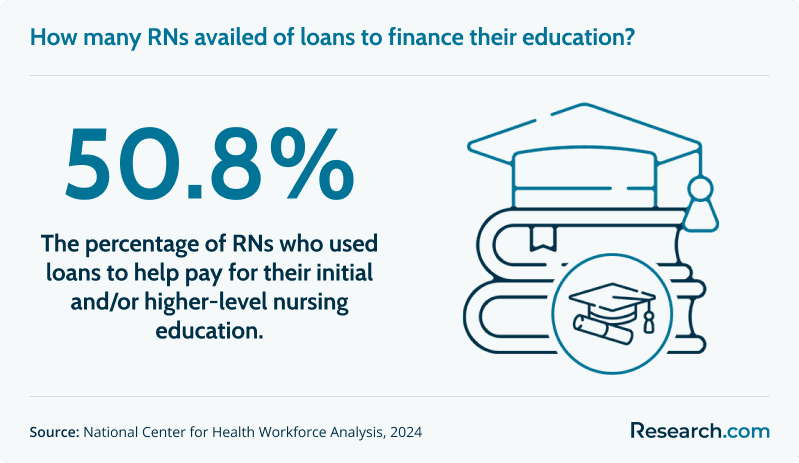
Graduate nursing students often combine several funding sources. According to the National Center for Health Workforce Analysis, over 2.2 million registered nurses—more than half of the workforce (50.8%)—reported taking out loans to help pay for their nursing education. That borrowing may have supported an initial nursing degree, a later credential such as an MSN, or both.
Common options include:
- Federal and private student loans, including Graduate PLUS loans
- Institutional scholarships and grants offered through nursing schools or universities
- Scholarships from nursing associations, professional groups, hospitals, or community organizations
- Employer tuition reimbursement for nurses working in eligible healthcare systems
- Loan repayment programs through HRSA or state health departments
- Military education benefits for eligible veterans, active-duty service members, or family members
Before borrowing, estimate your monthly payments, compare them with realistic salary scenarios, and ask whether your employer offers tuition support. Nurses exploring career changes or advanced practice-adjacent roles, including those researching what education is needed for a triage nurse, should evaluate whether an MSN is necessary for the role they want or whether a less expensive credential would be enough.
What are the prerequisites for enrolling in an online MSN in patient safety and healthcare quality?
Admission requirements vary by school, but online MSN programs in this field generally expect applicants to have a nursing background, an active license, and enough clinical or professional experience to succeed in graduate-level leadership coursework.
- A BSN from an accredited nursing program
- An active and unencumbered RN license
- Professional nursing experience, usually one to two years
- Letters of recommendation, a personal statement, and sometimes a resume or CV
- Completion of specific undergraduate courses, such as statistics or health assessment
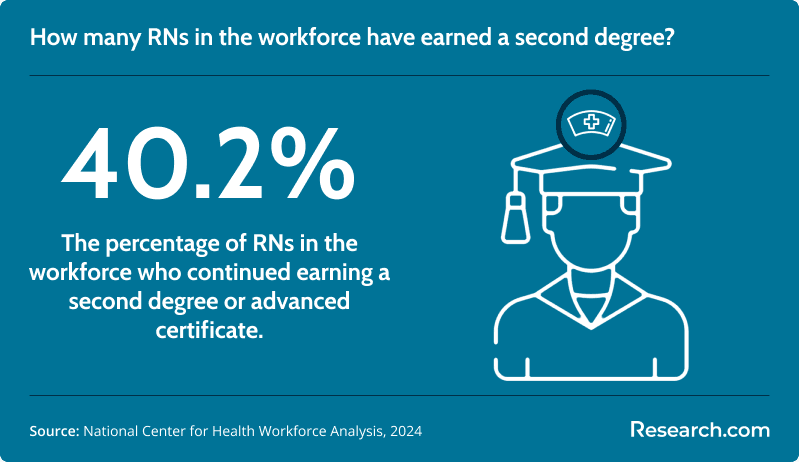
Graduate education is common among nurses seeking expanded roles. According to the National Center for Health Workforce Analysis, more than 1.75 million RNs—or 40.2% of the workforce—have earned a second degree or advanced certificate since joining the profession. For roles tied to patient safety, quality improvement, and leadership, that additional training can help nurses move into positions with broader organizational responsibility.
If your long-term interests include specialized clinical environments, such as learning how to become a flight nurse, review each program’s curriculum carefully. A patient safety MSN can strengthen leadership and systems knowledge, but specialized clinical roles may have separate experience, certification, or employer requirements.
What courses are typically in an online MSN in patient safety and healthcare quality?
The curriculum usually blends nursing leadership, safety science, informatics, ethics, law, and applied improvement methods. The strongest programs teach students how to diagnose system-level problems, measure outcomes, communicate risk, and implement changes that can be sustained in real clinical settings. Students comparing related affordability options may also review cheapest MSN public health nursing programs online, since some public health nursing curricula include quality and population safety content.
| Course area | What students learn | How it applies at work |
| Healthcare Quality and Safety | Quality frameworks, safety culture, performance improvement, and outcome measurement | Designing and evaluating initiatives that reduce harm and improve care |
| Healthcare Informatics | Use of data systems, electronic records, dashboards, and reporting tools | Tracking trends, identifying gaps, and supporting evidence-based decisions |
| Risk Management and Patient Safety | Risk identification, event review, root cause analysis, and mitigation planning | Responding to safety events and preventing recurrence |
| Ethics and Legal Aspects of Healthcare | Compliance, legal duties, ethical decision-making, and patient rights | Supporting safe policies and responsible organizational practice |
| Leadership in Healthcare Systems | Team leadership, strategic planning, communication, and change management | Guiding staff and stakeholders through improvement initiatives |
Most programs also include a capstone, practicum, or final project that requires students to apply classroom learning to an authentic healthcare quality or safety challenge.
What types of specializations are available in online MSN in patient safety and healthcare quality?
Some schools offer a direct Patient Safety and Healthcare Quality track, while others place safety and quality content inside a broader leadership, executive nursing, informatics, risk management, or public health concentration. If you work with children or plan to specialize by population, reviewing cheapest online MSN pediatric nurse practitioner programs may help you compare how safety and quality concepts appear in pediatric-focused graduate nursing education.
| Specialization area | Primary focus | Best fit for students who want... |
| Healthcare Leadership and Administration | Management, operations, strategy, and organizational performance | Director, manager, or executive-track responsibilities |
| Clinical Risk Management | Safety events, legal exposure, prevention strategies, and process controls | Roles in risk, compliance, safety review, or incident prevention |
| Informatics and Data Analytics | Healthcare data systems, dashboards, analytics, and digital tools | Technology-supported quality improvement work |
| Public Health Nursing | Community health, prevention, population outcomes, and systems-level care | Quality work in public, community, or population health settings |
Can I earn an MSN in patient safety and healthcare quality without traditional clinical experiences?
Some programs use non-traditional applied learning models, but students should not assume that “online” means “no practicum” or “no experiential requirement.” Depending on the school, applied learning may include virtual simulations, remote case analysis, structured projects, site-based quality improvement work, or a capstone completed in a healthcare organization. Programs similar in flexibility to RN to BSN no clinicals options may exist, but MSN requirements are usually more advanced and should be confirmed directly with the nursing department.
Before enrolling, ask whether the program requires clinical hours, practicum hours, a preceptor, employer site approval, background checks, or state authorization. Also confirm whether your current workplace can be used for applied projects, because that can make the degree easier to complete while employed.
Is Patient Safety Impacted by Technological Innovations in Healthcare?
Technology is changing how healthcare organizations monitor risk, document care, detect patterns, train staff, and evaluate outcomes. Electronic health records, real-time analytics, telehealth platforms, simulation tools, and AI-supported decision aids can all influence patient safety workflows. For MSN students, this means quality improvement is increasingly tied to data literacy, informatics, workflow design, privacy awareness, and the ability to evaluate technology critically rather than assume every digital tool improves care automatically.
Strong programs help students ask practical questions: Does the technology reduce errors or create new ones? Are alerts useful or ignored? Are data dashboards measuring the right outcomes? Are telehealth workflows safe for the population served? Students looking for cost-conscious nursing pathways that include modern delivery methods can also compare cheap nursing programs as part of a broader search.
How can an MSN in Patient Safety and Healthcare Quality Complement Advanced Clinical Practice Roles?
An MSN in Patient Safety and Healthcare Quality can strengthen the systems, leadership, and improvement skills of nurses who also plan to pursue advanced clinical responsibilities. The degree can be especially useful for clinicians who want to lead practice changes, evaluate care outcomes, improve protocols, or bridge communication between frontline teams and administrators.
However, this specialization is not the same as a nurse practitioner program. If your goal is diagnosis, prescribing, and advanced direct patient care, you should compare clinical MSN or NP pathways separately. For some students, a direct entry nurse practitioner program may be more aligned with clinical practice goals, while a patient safety and quality MSN may be better for leadership, risk, compliance, and performance improvement roles.
What are the common challenges of completing an online MSN in patient safety and healthcare quality?
Online MSN programs offer flexibility, but they also require planning and discipline. Many students are working nurses with rotating schedules, family responsibilities, and limited downtime. The biggest risks are falling behind in asynchronous courses, underestimating project requirements, choosing a program without enough support, or waiting too long to arrange practicum or capstone details.
| Challenge | Why it happens | Better strategy |
| Time management problems | Work shifts, family obligations, and graduate deadlines overlap | Block weekly study time before the term starts and reduce overtime during intensive courses |
| Limited peer connection | Online students may not meet classmates in person | Use discussion boards, group projects, virtual office hours, and professional associations intentionally |
| Technology barriers | Learning platforms, simulation tools, and remote meetings require reliable access | Test systems early and confirm technical support availability |
| Practicum uncertainty | Students may assume the school handles every placement detail | Ask about placement responsibilities before accepting admission |
| Program mismatch | The curriculum may be more administrative or more clinical than expected | Compare course descriptions, outcomes, and capstone examples before enrolling |
Students who are still deciding between leadership and advanced clinical paths may also compare alternatives such as direct entry NP programs for non-nursing majors, especially if they do not yet hold a nursing degree or want a different route into advanced practice.
How do you choose the most affordable online MSN in patient safety and healthcare quality?
The most affordable program is not always the one with the lowest tuition line. A better approach is to calculate total cost, confirm accreditation, evaluate fit, and compare the degree against your target job requirements. Affordability should include tuition, fees, time, support services, transfer policies, financial aid, and the likelihood that the program will help you reach your intended role.
- Compare total program tuition. Multiply cost per credit by required credits, then add mandatory fees.
- Review accreditation first. Choose programs accredited by recognized bodies such as CCNE or ACEN to support quality, financial aid eligibility, and employer recognition.
- Ask about applied requirements. Confirm whether you need practicum hours, a preceptor, site approval, or a capstone partner.
- Check schedule flexibility. Make sure the course format works with your shifts, family commitments, and expected weekly study time.
- Look beyond tuition discounts. Employer reimbursement, scholarships, military benefits, and loan repayment programs may change the true out-of-pocket cost.
- Match the curriculum to your target role. A leadership-heavy program may be ideal for management, while an informatics-focused option may better fit analytics or data-driven quality roles.
| Common mistake | Why it can be costly | What to do instead |
| Choosing only by lowest cost per credit | More required credits or added fees can raise the total price | Compare full program cost from start to graduation |
| Ignoring accreditation | Employers, financial aid rules, or future programs may not recognize the credential as expected | Verify nursing accreditation before applying |
| Assuming online means easier | Graduate online courses can be demanding and self-directed | Ask about weekly workload and student support |
| Waiting to plan practicum or capstone work | Delays can extend your graduation timeline | Clarify placement and project expectations early |
| Relying only on rankings | A ranked program may not fit your state, schedule, employer, or goals | Use rankings as a shortlist, then verify fit personally |
What career paths are available for graduates of online MSN in patient safety and healthcare quality?
Graduates often move into roles that connect nursing expertise with organizational improvement. These jobs may involve leading teams, analyzing safety events, coordinating accreditation efforts, improving workflows, managing infection prevention initiatives, or advising executives on quality strategy.
Common job titles include:
- Patient Safety Officer
- Clinical Quality Manager
- Infection Prevention Specialist
- Healthcare Risk Manager
- Quality Improvement Director
According to BLS, median annual wages in May 2024 for medical and health services managers were:
- Government: $132,620
- Hospitals: $130,690
- Outpatient care centers: $106,990
- Physician offices: $100,780
- Nursing and residential care facilities: $99,250
Some nurses use patient safety and quality training to strengthen specialized care coordination roles. For example, nurses interested in end-of-life care leadership can review hospice nurse salary information to compare how advanced nursing education may align with hospice operations, care quality, and patient-centered safety goals.
What is the job market for graduates who completed an online MSN in patient safety and healthcare quality?
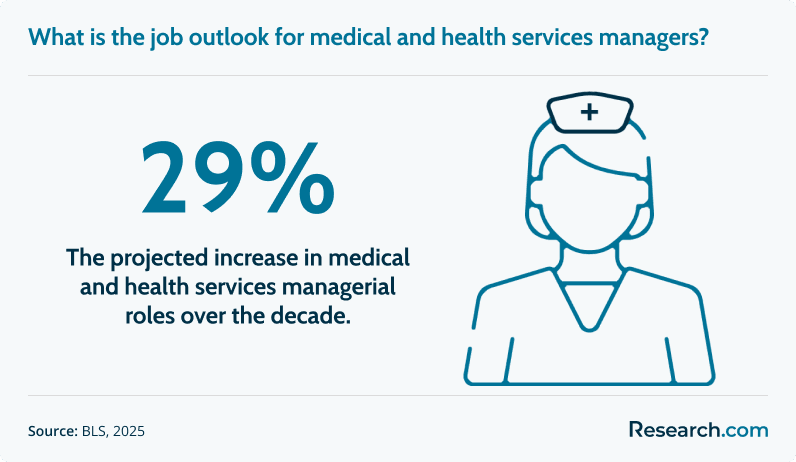
The job market is supported by healthcare organizations’ ongoing need to manage safety, compliance, staffing complexity, quality reporting, and operational performance. According to BLS, employment of medical and health services managers is projected to grow 29% from 2023 to 2033, which is much faster than the average for all occupations. BLS also reports an estimated 61,400 job openings each year in this field.
This does not mean every graduate will immediately step into a high-level management job. Employers often look for a combination of graduate education, RN experience, leadership ability, data literacy, communication skills, and a record of successful improvement work. Nurses who want to move into senior leadership, academic, or executive education roles after the MSN can also explore affordable online MSN to EdD programs as a longer-term pathway.
| Employer expectation | Why it matters in this field | How to prepare during the MSN |
| Quality improvement experience | Employers want evidence that you can improve processes, not just discuss theory | Choose capstone projects tied to measurable workplace outcomes |
| Data literacy | Safety and quality roles rely on metrics, dashboards, audits, and reporting | Take informatics and analytics assignments seriously |
| Communication skills | Leaders must explain risk and change processes to clinicians, executives, and patients | Practice writing executive summaries and presenting recommendations |
| Regulatory awareness | Quality roles often involve compliance and accreditation readiness | Build familiarity with legal, ethical, and policy frameworks |
| Leadership credibility | Improvement initiatives require buy-in from interdisciplinary teams | Seek committee work, unit projects, or informal leadership roles while enrolled |
Questions to ask before applying to an online MSN in patient safety and healthcare quality
Before you choose a program, use admissions calls and advising appointments to confirm whether the degree matches your goals, budget, and schedule. A good program should be able to answer practical questions clearly.
- Is the nursing program accredited by CCNE or ACEN?
- What is the total cost, including tuition, fees, books, technology fees, and practicum-related expenses?
- Are courses asynchronous, synchronous, or a mix of both?
- How many credits are required, and can any previous graduate credits transfer?
- Does the program require a practicum, capstone, clinical site, or preceptor?
- Will the school help locate applied learning sites, or is the student responsible?
- Can students use their current employer for quality improvement projects?
- What support is available for online students, including advising, writing help, library access, and technical support?
- What roles do graduates typically pursue after completing the program?
- Does the curriculum align more with leadership, informatics, risk management, public health, or direct patient safety operations?
References:
- BLS. (2025, April 18). Medical and health services managers. BLS.
- BLS. (2025, April 18). Registered nurses. BLS.
- Data USA. (n.d.). Nursing School. Data USA.
- National Center for Health Workforce Analysis (2024). Nursing Education and Training: Data from the 2022 NSSRN. HRSA.
Key Insights
- An online MSN in Patient Safety and Healthcare Quality is best for nurses who want to lead quality improvement, risk reduction, compliance, safety, or clinical operations initiatives rather than focus only on direct advanced clinical practice.
- Program cost should be judged by total tuition, required credits, fees, time to completion, accreditation, and practicum requirements—not by cost per credit alone.
- BLS projects 29% employment growth for medical and health services managers from 2023 to 2033, with an estimated 61,400 openings each year, but individual outcomes still depend on experience, location, employer type, and leadership readiness.
- As of May 2024, BLS wage figures cited for medical and health services managers by setting range from $99,250 to $132,620, while advanced practice nurses are cited at $135,320.
- Financial planning is essential: over 2.2 million RNs, or 50.8% of the workforce, reported borrowing for nursing education, so students should compare scholarships, employer reimbursement, federal loans, and loan repayment options before enrolling.
- Accreditation is non-negotiable. Prioritize CCNE or ACEN-accredited programs and confirm that online delivery, practicum expectations, and state authorization fit your situation.
- The strongest applicants and graduates build practical evidence of impact through capstone projects, workplace improvement initiatives, data analysis, committee involvement, and leadership experience.
Other Things You Should Know About the Most Affordable Online MSN in Patient Safety and Healthcare Quality
Admission typically requires a minimum of one year of clinical experience in a healthcare setting. This experience ensures candidates have practical knowledge of patient safety and healthcare processes, preparing them for advanced roles in quality management and leadership within the field.
An affordable online MSN should hold institutional accreditation from a U.S. Department of Education-recognized agency and nursing program accreditation from CCNE or ACEN in 2027. These accreditations help confirm quality, eligibility for federal aid, and smoother progression toward advanced nursing roles.