2027 Best Online MSN in Clinical Nurse Leadership Programs

Co-Founder and Chief Data Scientist
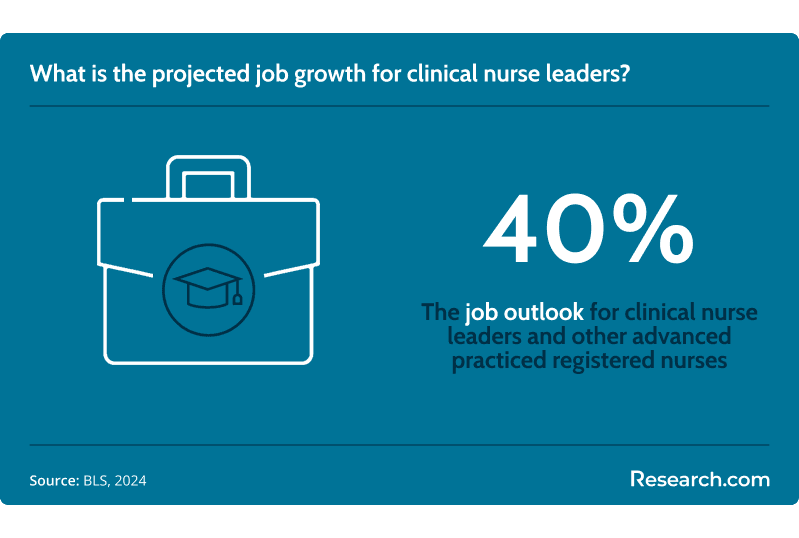
An online Master of Science in Nursing (MSN) with a Clinical Nurse Leader (CNL) focus prepares registered nurses to serve as advanced clinical experts who enhance patient outcomes and coordinate care across healthcare settings. As healthcare systems evolve, the demand for leaders capable of bridging bedside practice with administrative insight continues to climb—particularly with a projected 40% employment growth for nurse practitioners until 2033.
This article provides a comprehensive guide to today’s top online MSN–CNL programs, covering critical aspects such as curriculum structure, admission criteria, program length, accreditation, and career pathways. Key differentiators among programs include faculty expertise, the quality of practicum experiences, and CNL certification success rates, equipping nurses for impactful leadership roles in patient care delivery.
What are the benefits of getting an online MSN in clinical nurse leadership program?
- A degree in clinical nurse leadership qualifies you for advanced roles such as Clinical Nurse Leader, Clinical Nurse Manager, and Clinical Liaison.
- The median salary for someone with a clinical nurse leadership degree ranges from about $89,949 to $128,283 per year.
- Pursuing a clinical nurse leadership degree online offers significant flexibility, allowing you to complete coursework asynchronously without the need to attend on-campus residencies.
What can I expect from an online MSN in clinical nurse leadership program?
With an online Master of Science in Nursing (MSN) in Clinical Nurse Leadership (CNL), you can expect an in-depth, well-rounded education that merges advanced clinical expertise with leadership, communication, and systems management training.
These programs are designed for registered nurses who want to expand their influence beyond direct patient care, preparing you to act as a bridge between bedside practice and administrative decision-making. You’ll gain the skills needed to coordinate care for specific patient populations, mentor staff, and implement strategies that improve patient safety, quality outcomes, and operational efficiency.
The curriculum often includes courses in patient safety and risk reduction, evidence-based practice, nursing informatics, healthcare policy, and organizational leadership. Many programs also emphasize health systems analysis, population health management, and interprofessional collaboration.
In addition to didactic coursework, you’ll complete supervised clinical practicum hours in diverse healthcare environments, giving you hands-on experience applying leadership strategies in real-world scenarios.
By the end of the program, you’ll be equipped to take the Clinical Nurse Leader certification exam and pursue leadership roles in hospitals, community health organizations, and other clinical settings.
Where can I work with an online MSN in clinical nurse leadership program?
Clinical nurse leaders can work in a wide range of healthcare environments where both advanced clinical expertise and leadership skills are essential. They are frequently employed in hospitals, outpatient clinics, and home health agencies, where they oversee patient care coordination, lead interdisciplinary teams, and implement quality improvement initiatives.
Clinical nurse leaders are also in demand in private medical practices, rehabilitation centers, and long-term care facilities, ensuring continuity of care and enhancing patient outcomes in specialized or extended-care settings.
Beyond direct patient care environments, CNLs can play vital roles in public health departments, community health organizations, and nonprofit health agencies, where they design and manage programs aimed at improving population health. Many also serve as nurse educators or clinical faculty in academic institutions, training the next generation of nurses in leadership, evidence-based practice, and systems thinking.
This versatility allows CNLs to influence nearly every aspect of healthcare delivery—from bedside care to administrative strategy—making a measurable impact on patient safety, organizational performance, and overall healthcare quality.
How much can I make with a clinical nurse leadership degree?
With a CNL degree, you can expect a competitive salary that reflects your advanced clinical expertise and leadership responsibilities. As of 2025, the average annual salary for CNLs in the United States is about $89,949, which breaks down to roughly $43.24 per hour.
Most professionals in this role earn between $71,000 and $104,500 per year, depending on factors such as years of experience, geographic location, the type of healthcare facility, and the scope of leadership responsibilities.
Those who work in high-demand regions, large hospital systems, or specialized care environments may earn even more. In fact, top earners in the field can make upwards of $133,500 annually.
This strong earning potential, combined with the versatility of the role, makes the CNL credential a valuable investment for registered nurses looking to advance into leadership positions that directly influence patient care quality and organizational performance.
- List of the Best Online MSN in Clinical Nurse Leadership Programs for 2027 List of Programs
- How long does it take to complete an online MSN in clinical nurse leadership program? Completion Time
- How does an online MSN in clinical nurse leadership program compare to an on-campus program? How does an online MSN in clinical nurse leadership program compare to an on-campus program?
- What is the average cost of an online MSN in clinical nurse leadership program? Average Cost
- What are the financial aid options for students enrolling in an online MSN in clinical nurse leadership program? Financial Aid
- What are the prerequisites for enrolling in an online MSN in clinical nurse leadership program? Requirements
- What courses are typically in an online MSN in clinical nurse leadership program? What courses are typically in an online MSN in clinical nurse leadership program?
- What types of specializations are available in an online MSN in clinical nurse leadership program? What types of specializations are available in an online MSN in clinical nurse leadership program?
- How to choose the best online MSN in clinical nurse leadership program? How to choose the best online MSN in clinical nurse leadership program?
- What career paths are available for graduates of an online MSN in clinical nurse leadership program? Career Paths
- What is the job market for graduates with an online MSN in clinical nurse leadership program? Job Market
- How can nurses seamlessly transition from an accelerated BSN to an online MSN in clinical nurse leadership program? How can nurses seamlessly transition from an accelerated BSN to an online MSN in clinical nurse leadership program?
- Is an online MSN in clinical nurse leadership program a sound long-term investment? Is an online MSN in clinical nurse leadership program a sound long-term investment?
Best Online MSN in Clinical Nurse Leadership Programs for 2027
Choosing an online MSN in Clinical Nurse Leadership is a major decision for registered nurses who want to move beyond bedside task management and into care coordination, quality improvement, patient safety, and team leadership. The right program can help you build graduate-level nursing judgment while keeping your current job; the wrong program can leave you with high debt, limited clinical support, or a credential that does not match your career goals.
This guide is designed for licensed nurses comparing online and hybrid CNL-focused MSN programs. You will find a ranked program list, a practical comparison of online and campus formats, expected timelines, cost factors, admissions requirements, common coursework, career paths, job-market considerations, and questions to ask before enrolling.
Quick Answer: Is an Online MSN in Clinical Nurse Leadership Worth Considering?
An online MSN in Clinical Nurse Leadership can be a strong option for registered nurses who want to lead care delivery at the unit, department, or point-of-care level without becoming a nurse practitioner. Most programs in this list take about 2 years, require roughly 32 to 42 credits, and include coursework in advanced nursing practice, quality improvement, healthcare policy, informatics, leadership, and clinical coordination.
The best fit is usually a CCNE- or otherwise appropriately accredited program that offers flexible scheduling, clear practicum expectations, transparent tuition, and preparation aligned with Clinical Nurse Leader competencies. Nurses who want independent diagnosis and treatment authority may be better served by an NP pathway instead of a CNL-focused MSN.
How Research.com Evaluates Online MSN in Clinical Nurse Leadership Programs
Program quality matters in graduate nursing because employers, certification bodies, financial aid offices, and state boards may all look at accreditation and institutional credibility. Research.com uses current, validated education datasets to help readers compare schools more confidently rather than relying on marketing claims alone.
Our ranking process draws on institutional and program-related information from recognized sources. You can review the full process on our methodology page.
- Integrated Postsecondary Education Data System, including the IPEDS database
- Peterson’s database, including its Distance Learning Licensed Data Set
- College Scorecard database
- National Center for Education Statistics and related NCES resources
Online MSN in Clinical Nurse Leadership Programs Compared
| Rank | School | Program Length | Credits | Cost per Credit | Accreditation Listed |
| 1 | University of Detroit Mercy | 2 years | 38 credits | $992 | Commission on Collegiate Nursing Education (CCNE) |
| 2 | Saint Louis University | 2 years | 32 credits | $1,400 | Commission on Collegiate Nursing Education (CCNE) |
| 3 | Morningside University | 2 years | 40 credits | $665 | The Higher Learning Commission |
| 4 | University of Rochester | 2 years | 37 credits | $1,740 | Commission on Collegiate Nursing Education (CCNE) |
| 5 | University of Pittsburgh | 2 years | 42 credits | $1,231 | Commission on Collegiate Nursing Education (CCNE) |
| 6 | Mississippi College | 2 years | 35 credits | $600 | Commission on Collegiate Nursing Education (CCNE) |
| 7 | Lander University | 2 years | 36 credits | $487 | Commission on Collegiate Nursing Education (CCNE) |
| 8 | Wilmington University | 2 years | 36 credits | $551 | Commission on Collegiate Nursing Education (CCNE) |
| 9 | Florida Atlantic University | 2 years | 33 credits | $371 | Commission on Collegiate Nursing Education (CCNE) |
| 10 | Sacred Heart University | 2 years | 39 credits | $695 | Commission on Collegiate Nursing Education (CCNE) |
1. University of Detroit Mercy MSN in Clinical Nurse Leadership
The online MSN with a Clinical Nurse Leader specialization at the University of Detroit Mercy is built for nurses who want to combine advanced clinical reasoning with leadership, outcomes assessment, and quality improvement. The curriculum emphasizes evidence-based care, informatics, technology-supported measurement, and management of clinical microsystems across different care settings.
- Program length: 2 years
- Cost per credit: $992
- Required credits to graduate: 38 credits
- Accreditation: Commission on Collegiate Nursing Education (CCNE)
2. Saint Louis University MSN in Clinical Nurse Leadership
Saint Louis University (SLU) offers an online MSN in Clinical Nurse Leadership that blends graduate nursing theory with applied clinical learning. Students focus on care coordination, risk assessment, quality improvement, and leadership practices that support better outcomes in complex healthcare environments.
- Program length: 2 years
- Cost per credit: $1,400
- Required credits to graduate: 32 credits
- Accreditation: Commission on Collegiate Nursing Education (CCNE)
3. Morningside University MSN in Clinical Nurse Leadership
The online MSN in Clinical Nurse Leadership at Morningside University’s Nylen School of Nursing prepares registered nurses to serve as advanced clinical generalists in varied healthcare settings. The program develops communication, leadership, care integration, and coordination skills across the healthcare continuum.
- Program length: 2 years
- Cost per credit: $665
- Required credits to graduate: 40 credits
- Accreditation: The Higher Learning Commission
4. University of Rochester MSN in Clinical Nurse Leadership
The University of Rochester School of Nursing offers a part-time, hybrid MSN in Clinical Nurse Leadership for experienced RNs who want to strengthen their clinical leadership at the point of care. The program focuses on safety, care quality, lifespan health needs, and measurable patient outcomes across multiple care settings.
- Program length: 2 years
- Cost per credit: $1,740
- Required credits to graduate: 37 credits
- Accreditation: Commission on Collegiate Nursing Education (CCNE)
5. University of Pittsburgh MSN in Clinical Nurse Leadership
The online MSN in Clinical Nurse Leadership at the University of Pittsburgh combines advanced physiology/pathophysiology, health assessment, pharmacology, leadership development, healthcare finance, organizational theory, management, and quality improvement. It is a strong match for nurses who want both clinical depth and systems-level leadership preparation.
- Program length: 2 years
- Cost per credit: $1,231
- Required credits to graduate: 42 credits
- Accreditation: Commission on Collegiate Nursing Education (CCNE)
6. Mississippi College MSN in Clinical Nurse Leadership
The online MSN in Clinical Nurse Leadership at Mississippi College prepares RNs for advanced responsibilities in patient care management, leadership, and quality improvement. Its nursing education model includes a Christian perspective that emphasizes ethical leadership and holistic care.
- Program length: 2 years
- Track/concentration: Clinical Nurse Leader
- Cost per credit: $600
- Required credits to graduate: 35 credits
- Accreditation: Commission on Collegiate Nursing Education (CCNE)
7. Lander University MSN in Clinical Nurse Leadership
The online Clinical Nurse Leadership MSN at Lander University uses an asynchronous format and concludes with a Clinical Nurse Leader immersion practicum. Students interested in adjacent graduate nursing roles can also review concentrations such as Nurse Educator and Nursing Leadership and Administration.
- Program length: 2 years
- Tracks/concentrations: Nurse Educator, Nursing Leadership and Administration
- Cost per credit: $487
- Required credits to graduate: 36 credits
- Accreditation: Commission on Collegiate Nursing Education (CCNE)
8. Wilmington University MSN in Clinical Nurse Leadership
The MSN in Clinical Nurse Leadership at Wilmington University is intended for professional nurses preparing for expanded leadership responsibilities in healthcare organizations. Coursework integrates advanced nursing practice, leadership theory, scholarly inquiry, clinical judgment, healthcare policy, evidence-based practice, and interprofessional collaboration.
- Program length: 2 years
- Track/concentration: Clinical Nurse Leader
- Cost per credit: $551
- Required credits to graduate: 36 credits
- Accreditation: Commission on Collegiate Nursing Education (CCNE)
9. Florida Atlantic University MSN in Clinical Nurse Leadership
The online MSN in Clinical Nurse Leadership at Florida Atlantic University (FAU) focuses on managing care for individuals, families, and communities while improving healthcare systems. Students study advanced nursing grounded in caring, theoretical foundations, evidence-based practice, and supervised practicum experiences.
- Program length: 2 years
- Track/concentration: Clinical Nurse Leader
- Cost per credit: $371
- Required credits to graduate: 33 credits
- Accreditation: Commission on Collegiate Nursing Education (CCNE)
10. Sacred Heart University MSN in Clinical Nurse Leadership
The online MSN in Clinical Nurse Leadership at Sacred Heart University prepares RNs for leadership roles centered on patient safety and care quality. The curriculum includes comprehensive health assessment, pharmacology for nurse leaders, disease management, care management across the continuum, healthcare policy, ethics, and evidence-based practice.
- Program length: 2 years
- Track/concentration: Clinical Nurse Leader
- Cost per credit: $695
- Required credits to graduate: 39 credits
- Accreditation: Commission on Collegiate Nursing Education (CCNE)
What Is an MSN in Clinical Nurse Leadership?
An MSN in Clinical Nurse Leadership is a graduate nursing degree for registered nurses who want to improve care delivery, coordinate teams, analyze outcomes, and lead quality initiatives at the point of care. The Clinical Nurse Leader is generally a clinical generalist role, not an advanced practice provider role like a nurse practitioner or certified registered nurse anesthetist.
CNL-focused programs usually prepare nurses to work across interdisciplinary teams, identify system problems, support evidence-based practice, use informatics, evaluate risk, and improve patient transitions. The role is especially relevant in healthcare organizations dealing with complex patients, staffing pressure, safety goals, and the need for measurable quality outcomes.
How Long Does It Take to Complete an Online MSN in Clinical Nurse Leadership Program?
Most online MSN in Clinical Nurse Leadership programs take about 2 to 3 years for part-time students. Some programs allow students to finish in as few as 2 years, while others let students extend enrollment for up to 6 years depending on course load, work responsibilities, and institutional policies.
Sacred Heart University, for example, allows students to complete the program in as little as 2 years when studying full time or up to 6 years on a part-time schedule. This type of flexibility is important for nurses who need to balance graduate school with shifts, family obligations, and clinical responsibilities.
Some online programs use accelerated 8-week course sessions, which can help students focus on fewer classes at one time while still moving steadily toward graduation. Nurses comparing advanced options, including an online DNP with an adult-gerontology primary care NP specialization, should review pacing, practicum expectations, and workload before choosing a program.
The timeline is not directly comparable to shorter healthcare training routes, such as how long it takes to be a medical coder, because an MSN is a graduate nursing degree requiring RN preparation, advanced coursework, and clinical leadership practice.
Online vs. On-Campus MSN in Clinical Nurse Leadership Programs
Online and campus-based MSN in Clinical Nurse Leadership programs can lead to similar academic outcomes when they are properly accredited and include comparable clinical expectations. Both formats typically cover advanced clinical practice, leadership, evidence-based practice, quality improvement, healthcare policy, informatics, and care coordination.
The main difference is delivery. Online programs are usually better for working nurses who need schedule flexibility, while on-campus programs may appeal to students who prefer face-to-face discussion, campus services, and more structured weekly routines. Many online programs still require local practicums, residencies, or immersion experiences, so “online” does not always mean fully remote.
| Factor | Online MSN in CNL | On-Campus MSN in CNL |
| Best for | Working nurses who need flexibility | Students who want in-person instruction and campus access |
| Clinical experiences | Often completed locally or through approved practicum sites | May be arranged through campus-affiliated partners |
| Interaction style | Discussion boards, video meetings, online collaboration, virtual advising | Classroom discussion, in-person meetings, campus activities |
| Cost considerations | May reduce commuting and housing costs, but fees still vary | May involve commuting, parking, relocation, or campus fees |
| Learning fit | Requires self-direction and strong time management | Provides more scheduled structure and immediate in-person support |
Nurses also comparing other graduate nursing credentials, such as FNP graduate certificate online programs, should pay close attention to clinical placement rules and whether the program supports licensure or certification goals in their state.
What Is the Average Cost of an Online MSN in Clinical Nurse Leadership Program?
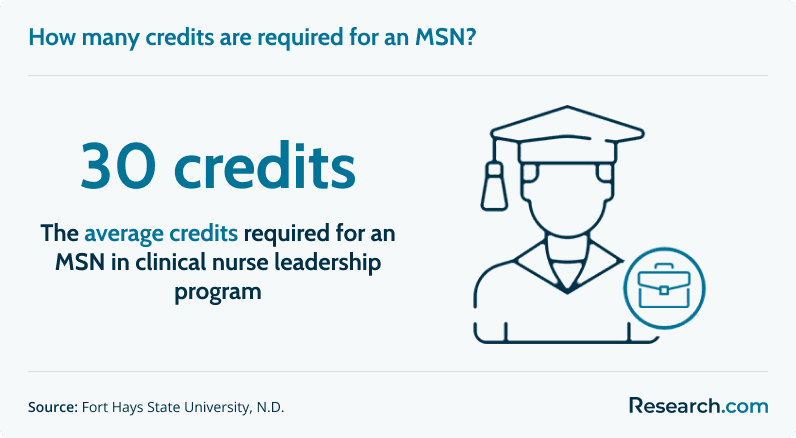
The total cost of an online MSN in Clinical Nurse Leadership varies widely by school, but the original program data places many programs between $10,000 and $40,000 overall, with a common range of about $20,000 to $35,000 in total tuition. Per-credit tuition often falls around $500 to $1,000, and many programs require 30 to 40 credits.
Cost depends on more than tuition. Students should also review technology fees, clinical placement fees, books, background checks, travel for campus intensives, graduation fees, and whether online students pay in-state or out-of-state rates. Some more affordable programs, such as those at Georgia College & State University or Fort Hays State University, can cost under $13,000, while private or highly selective institutions may cost more.
The same budgeting discipline applies across many online education decisions. For example, students comparing healthcare degrees may also look at how much it costs to become a medical assistant, while learners in non-nursing fields may use similar cost-comparison habits when evaluating online jewelry repair courses or online engineering management masters programs.
| Cost Item | Why It Matters | Question to Ask |
| Per-credit tuition | This is the largest visible cost for most students. | Is the rate different for online, in-state, or out-of-state students? |
| Required credits | A lower per-credit rate may still be expensive if the program requires more credits. | How many credits are required for graduation? |
| Fees | Technology, clinical, course, and graduation fees can raise the final bill. | Can the school provide a full cost-of-attendance estimate? |
| Clinical or immersion travel | Hybrid or immersion requirements may add transportation and lodging expenses. | Are any campus visits, residencies, or immersion sessions required? |
| Employer support | Tuition reimbursement can change the return-on-investment calculation. | Does my employer pay upfront or reimburse after grades are posted? |
Financial Aid Options for Online MSN in Clinical Nurse Leadership Students
Graduate nursing students may be able to combine federal aid, school-based awards, employer benefits, and nursing-specific funding. Start by reviewing federal aid options through Federal Student Aid and then ask each nursing school for program-specific opportunities.
- Federal Direct Unsubsidized Loans: Eligible graduate students may use these loans regardless of financial need, but interest begins accruing when funds are disbursed.
- Graduate PLUS Loans: These federal loans can help cover the cost of attendance after other aid is applied, but they require a credit check.
- Nursing Student Loans (NSL): This low-interest federal loan program is designed for nursing students and is typically need-based. Eligibility is determined by the school’s financial aid office after FAFSA review.
- Institutional scholarships: Universities may offer graduate nursing scholarships based on merit, financial need, leadership potential, service background, or other criteria.
- Employer tuition assistance or reimbursement: Hospitals and health systems may help pay for an MSN if the degree supports workforce development. Ask whether reimbursement requires a minimum grade, continued employment, or a service commitment.
Admissions Requirements for an Online MSN in Clinical Nurse Leadership Program
Admission standards vary, but most online MSN in Clinical Nurse Leadership programs expect applicants to show academic readiness, active RN licensure, professional maturity, and the ability to complete graduate-level clinical work.
| Requirement | What It Usually Means | Why It Matters |
| Active, unencumbered RN license | Applicants generally need a current U.S. RN license, often in the state where clinical work will occur. | Clinical placements and graduate nursing practice require valid licensure. |
| BSN or eligible bridge background | A BSN is standard, though some schools consider ADN-prepared RNs or nurses with a non-nursing bachelor’s degree through bridge options. | Your prior degree affects admission status, prerequisites, and time to completion. |
| Minimum GPA | Many programs expect a 3.0 GPA on a 4.0 scale, though some review applicants holistically. | Graduate nursing coursework is academically demanding. |
| Statistics or research prerequisite | Schools commonly require undergraduate statistics, often with a minimum grade of C or better. | CNL work involves evidence review, outcomes analysis, and quality improvement. |
| Letters of recommendation | Programs often request two to three letters from supervisors, faculty, or graduate-prepared nurses. | References help schools assess clinical skill and leadership potential. |
| Resume or CV | Applicants submit nursing experience, certifications, education, and professional achievements. | Experience can strengthen an application and clarify career goals. |
Common Courses in an Online MSN in Clinical Nurse Leadership Program
An MSN in Clinical Nurse Leadership usually combines graduate nursing core courses, advanced clinical content, leadership preparation, and role-specific practicum experiences. Course names differ by school, but the academic goals are similar: help nurses use evidence, data, collaboration, and systems thinking to improve care.
Graduate Nursing Core
- Advanced nursing theory: Introduces conceptual frameworks that guide nursing research, clinical judgment, and professional practice.
- Research for evidence-based practice: Teaches students to evaluate literature, apply findings, and support quality improvement initiatives.
- Healthcare policy and ethics: Examines legal, ethical, political, and regulatory issues that shape healthcare delivery.
- Healthcare informatics: Focuses on data, electronic health records, technology tools, and information systems used to improve safety and efficiency.
Advanced Clinical and Leadership Courses
- Advanced health assessment: Builds stronger patient assessment skills for complex care environments.
- Advanced physiology/pathophysiology: Strengthens understanding of disease processes and clinical decision-making.
- Pharmacology for nurse leaders: Connects medication knowledge with safety, risk management, and care coordination.
- Quality improvement and patient safety: Prepares nurses to identify system gaps, measure outcomes, and lead improvement projects.
- Care coordination across the continuum: Develops skills in managing transitions, interdisciplinary communication, and patient-centered planning.
A CNL role is different from a clinical support position. Readers comparing healthcare careers may find it useful to review what a clinical medical assistant does to understand how graduate nursing leadership differs from entry-level or allied health responsibilities.
Specializations and Related Tracks in Online MSN Clinical Nurse Leadership Programs
The Clinical Nurse Leadership pathway is already a specialized MSN track. It prepares nurses for generalist leadership at the microsystem or point-of-care level rather than for population-specific diagnosis and treatment authority. Still, some schools offer related concentrations that overlap with CNL responsibilities.
| Related Track | Best For | How It Connects to CNL Work |
| Nursing Leadership and Administration | Nurses interested in department, operations, or organizational management | Adds broader management, finance, and administrative preparation. |
| Nurse Educator | Nurses who want to teach in academic or clinical settings | Supports mentoring, staff development, precepting, and education design. |
| Health Informatics | Nurses interested in data, systems, and technology-supported care improvement | Strengthens use of electronic records, outcome dashboards, and quality metrics. |
| Health Policy | Nurses who want to understand regulation, advocacy, and healthcare systems | Builds policy awareness for safer, more equitable care delivery. |
How to Choose the Best Online MSN in Clinical Nurse Leadership Program
The best program is not always the cheapest, fastest, or highest-ranked. It is the one that fits your licensure status, schedule, budget, learning style, clinical placement needs, and long-term career direction.
- Verify accreditation first. Look for appropriate nursing program accreditation, commonly through the Commission on Collegiate Nursing Education (CCNE) or the Accreditation Commission for Education in Nursing (ACEN). Institutional accreditation also matters, but it is not the same thing as nursing program accreditation.
- Confirm CNL alignment. Ask whether the curriculum maps to Clinical Nurse Leader competencies and whether graduates are prepared for relevant certification expectations.
- Review practicum requirements before applying. Find out who secures clinical sites, whether your state is approved for placement, and whether your employer can serve as a practicum setting.
- Compare total cost, not only tuition. Include fees, books, travel, clinical requirements, lost work time, and interest if you borrow.
- Check schedule design. Asynchronous courses may work better for shift nurses, while synchronous sessions may help students who need structure.
- Ask about faculty access. Graduate nursing students need timely feedback, practicum guidance, and mentorship, especially in leadership projects.
- Evaluate career services. Look for support with leadership resumes, internal promotion strategies, certification preparation, and professional networking.
Common Mistakes to Avoid When Choosing a CNL MSN Program
| Mistake | Why It Can Hurt You | Better Approach |
| Choosing based only on tuition | The lowest tuition may not include fees, practicum support, or strong student services. | Compare full cost of attendance and support quality. |
| Assuming every online program works in every state | State authorization and clinical placement rules may limit where you can enroll or complete practicum hours. | Ask the school to confirm eligibility for your state in writing. |
| Ignoring nursing accreditation | Accreditation can affect employer recognition, aid eligibility, and certification preparation. | Confirm both institutional and nursing program accreditation. |
| Confusing CNL with NP preparation | A CNL program generally does not prepare you for independent advanced practice diagnosis and prescribing. | Choose CNL for care leadership and NP programs for provider preparation. |
| Overlooking workload | Accelerated sessions can be intense for nurses working full time. | Ask current students or advisors about weekly time expectations. |
| Relying only on rankings | A ranked program may still be a poor fit for your schedule, budget, or location. | Use rankings as a starting point, then compare fit factors. |
Career Paths for Graduates of Online MSN in Clinical Nurse Leadership Programs
Graduates of CNL-focused MSN programs can pursue roles that combine clinical expertise, leadership, care coordination, education, research support, and systems improvement. The most direct role is Clinical Nurse Leader, but graduates may also move into related positions depending on experience, employer structure, and additional credentials.
| Career Path | Typical Focus | Good Fit For |
| Clinical Nurse Leader | Coordinating care, evaluating outcomes, improving quality, and supporting interdisciplinary teams | RNs who want point-of-care leadership without becoming an NP |
| Nurse Educator | Teaching nurses, supporting clinical learning, developing training materials, and mentoring staff | Nurses who enjoy instruction, onboarding, and professional development |
| Clinical Research Manager | Supporting clinical studies, coordinating protocols, and managing research-related workflows | Nurses interested in evidence generation and research operations |
| Nurse Consultant | Advising organizations on care quality, compliance, workflow, or patient safety | Experienced nurses with strong analytical and communication skills |
| Public Health Nurse | Improving population health, community programs, education, and prevention efforts | Nurses drawn to community health and systems-level impact |
Some nurses compare CNL preparation with broader healthcare management degrees, including fastest online MBA in healthcare administration programs. The MSN route is more clinically grounded, while an MBA-style pathway is typically more business and administration focused.
Job Market for Online MSN in Clinical Nurse Leadership Graduates
The job market for Clinical Nurse Leadership graduates is shaped by healthcare organizations’ need for care coordination, safety improvement, evidence-based practice, and better outcomes across complex care environments. Clinical nurse leaders may work in hospitals, outpatient clinics, home health agencies, academic institutions, and other healthcare settings.
The original labor-market summary for this field states that job opportunities for CNLs are expected to grow by about 40% over the next decade, faster than the average growth rate for all occupations. It also reports average salaries around $81,000 to over $127,000 annually. These figures should be treated as broad planning estimates rather than guaranteed outcomes because pay depends on employer, region, experience, setting, and role scope.
For comparison, nurses moving up from administrative or allied health roles can review a medical office assistant career path or explore high-paying medical assistant jobs to understand how graduate nursing leadership differs from non-RN healthcare advancement routes.
Current nursing workforce and education discussions continue to emphasize adaptation to changing healthcare delivery, workforce needs, technology use, and patient safety. The U.S. Bureau of Labor Statistics registered nurses profile, the National Sample Survey of Registered Nurses, and the 2024 Clinical Nurse Leader Job Analysis Final Report are useful sources for understanding the broader context of nursing employment and CNL role expectations.
What Graduates Say About Earning a Clinical Nurse Leadership Degree Online
- Keira: "Earning my MSN in Clinical Nurse Leadership online changed how I approached my nursing career. I was able to keep working full time while learning how to use evidence, lead teams, and improve care processes in my unit. The program was demanding, but it gave me the confidence to step into leadership conversations and contribute in a more meaningful way."
- Jessica: "The online format made graduate school possible while I was balancing work and parenting. I expected to feel isolated, but group projects, virtual discussions, and faculty feedback helped me stay connected. The coursework felt practical because I could apply leadership, communication, and patient advocacy concepts almost immediately in my clinical setting."
- Cory: "I wanted career growth without pausing the rest of my life, and the asynchronous structure helped me manage that. The classes pushed me to think beyond individual patient tasks and look at systems, outcomes, and leadership decisions. I have already noticed that I am more effective when working with colleagues and advocating for change."
How Nurses Can Move From an Accelerated BSN to an Online MSN in Clinical Nurse Leadership
Nurses graduating from accelerated BSN schools can make the transition to a CNL-focused MSN smoother by checking prerequisites early, confirming RN licensure timing, and asking whether the graduate program offers orientation, bridge support, or mentoring for newer nurses. Accelerated BSN graduates should also be realistic about workload because MSN-level leadership courses require strong writing, research analysis, and clinical reflection.
A practical transition plan includes completing statistics if required, building relationships with supervisors who can write recommendations, documenting leadership examples from clinical practice, and choosing a program that supports students who are still building post-BSN experience.
Is an Online MSN in Clinical Nurse Leadership a Good Long-Term Investment?
An online MSN in Clinical Nurse Leadership can be a worthwhile long-term investment when it leads to roles that match your goals, offers manageable debt, and builds skills your employer values. The strongest return usually comes when nurses use the degree for internal promotion, quality improvement leadership, care coordination, education, or broader clinical leadership responsibilities.
Before enrolling, compare tuition against likely salary growth, employer reimbursement, loan interest, time to completion, and whether the program’s practicum can be completed without reducing your work hours. Nurses still building undergraduate credentials may also compare earlier-step pathways such as the easiest online RN to BSN programs before committing to an MSN.
Questions to Ask Before Enrolling
- Is the nursing program accredited by CCNE, ACEN, or another appropriate accreditor?
- Does the program prepare students for Clinical Nurse Leader certification expectations?
- Who is responsible for finding practicum sites?
- Can I complete clinical requirements in my state?
- Are there required campus visits, immersions, or synchronous sessions?
- What is the full cost of attendance, including fees and travel?
- What percentage of students complete the program within the expected timeline?
- What support is available for working nurses?
- Can employer tuition benefits be applied to this program?
- How do graduates typically use the degree after completion?
References
- American Association of Colleges of Nursing (AACN) & Commission on Nurse Certification (CNC). (2024). 2024 Clinical Nurse Leader (CNL) Job Analysis Final Report.
- Beauchesne, M. J., Clark, M. J. G., Johnson, J. M., Bickford, C. J., Mancino, D. J., Roe, E. A., Robichaux, C. A., Stout, P. B., & Rosseter, R. J. (2025). The future of nursing education: Responding to a changing healthcare landscape. Journal of Nursing Regulation, 25(1), 31–41.
- U.S. Bureau of Labor Statistics. (2024). Registered nurses. Occupational Outlook Handbook.
- U.S. Census Bureau. (n.d.). National Sample Survey of Registered Nurses (NSSRN) Data.
Key Insights
- An online MSN in Clinical Nurse Leadership is best for RNs who want to lead care coordination, quality improvement, and patient safety at the point of care.
- Most listed programs take about 2 years and require 32 to 42 credits, but part-time pacing and maximum completion windows vary by school.
- Accreditation should be checked before cost, convenience, or ranking because it can affect employer recognition, financial aid, and certification preparation.
- Online programs can be as academically rigorous as campus programs, but students must confirm practicum rules, state authorization, and any required campus visits.
- The CNL pathway is not the same as an NP pathway. Choose CNL for clinical leadership and systems improvement; choose NP preparation if your goal is advanced provider practice.
- Total cost includes more than tuition. Fees, books, clinical expenses, travel, and loan interest can change the real price of the degree.
- The strongest program choice is the one that fits your schedule, budget, licensure location, clinical placement needs, and intended career path.
Other Things You Should Know About the Best Online MSN in Clinical Nurse Leadership Programs
Graduates can pursue the AACN Clinical Nurse Leader certification exam, offered by the Commission on Nurse Certification. Eligibility typically requires an accredited MSN with CNL content, a completed graduate practicum, and an official transcript before testing.
In 2027, the best online MSN in Clinical Nurse Leadership programs should be accredited by the Commission on Collegiate Nursing Education (CCNE) or the Accreditation Commission for Education in Nursing (ACEN). Accreditation ensures the program meets high educational standards and is recognized by employers and licensing boards.