2027 Online Behavioral Health Management Degrees With Care Coordination Focus

Co-Founder and Chief Data Scientist
Choosing an online behavioral health management degree is a decision about where you want to fit in a strained care system. SAMHSA's national survey released in 2024 found that 58.7 million U.S. adults experienced any mental illness in the prior year, making coordination across providers, payers, and community services a practical workforce need.
This guide is for students, career changers, and healthcare workers comparing online programs. You will learn what these degrees cover, which careers they support, how costs and accreditation work, and how to avoid choosing a program that does not match your goals.
Key Things You Should Know
- These programs are usually best for students who want administrative, case coordination, program management, or health services roles rather than independent clinical practice.
- BLS May 2024 wage data shows a wide range of related outcomes, from $48,200 for community health workers to $117,960 for medical and health services managers.
- Accreditation, state authorization, transfer credit, practicum rules, and licensure alignment matter more than whether the program is simply labeled "online."
What is an online behavioral health management degree with a care coordination focus?
An online behavioral health management degree with a care coordination focus prepares students to help organizations deliver mental health and substance use services more effectively. Instead of training students primarily as therapists, these programs emphasize how care is organized, documented, paid for, improved, and connected across settings.
The "behavioral health" part usually covers mental health conditions, substance use disorders, crisis response, trauma-informed practice, ethics, and community-based support. The "management" part focuses on supervision, budgeting, compliance, quality improvement, data use, and health system operations. The "care coordination" focus adds skills in referral management, client navigation, interdisciplinary teamwork, discharge planning, social needs screening, and follow-up.
Programs may appear under several names, including behavioral health management, healthcare administration with behavioral health electives, human services leadership, community health, case management, or integrated health services. Students who want a broader helping-profession foundation may also compare a degree in human services, especially if their goal is casework, nonprofit services, or community programs rather than healthcare operations.
The degree can make sense for different students depending on the level:
| Program level | Typical fit | Common outcome | Important limitation |
| Associate degree | Students seeking entry-level support roles or a lower-cost transfer pathway | Behavioral health technician, intake assistant, peer support-related roles where allowed | Usually not enough for management or licensed clinical roles |
| Bachelor's degree | Career changers and working adults seeking case coordination or program support roles | Care coordinator, case manager, community health worker supervisor, program coordinator | May not qualify for clinical licensure without a specific professional pathway |
| Master's degree | Professionals aiming for leadership, operations, policy, or advanced administration | Behavioral health program manager, service line coordinator, operations manager | Licensure still depends on the exact discipline, practicum, and state rules |
| Graduate certificate | Healthcare or human services workers adding behavioral health coordination skills | Specialized responsibilities within an existing role | Usually narrower than a degree and may not change eligibility for many jobs |
Students should avoid this path if their primary goal is to become a licensed counselor, psychologist, social worker, or psychiatric nurse practitioner unless the specific program is built for that license. For those goals, the program title is less important than whether the curriculum, field placement, supervision, and accreditation meet the relevant state board's requirements.
How does behavioral health care coordination work within U.S. health systems?
Behavioral health care coordination is the organized process of helping a person move through services without losing access, information, or follow-up. In real settings, this often means connecting primary care, psychiatry, therapy, substance use treatment, crisis services, housing resources, social services, pharmacies, and insurance requirements.
The role matters because behavioral health needs rarely exist in isolation. A person may need medication management, counseling, transportation help, benefits navigation, safety planning, and primary care follow-up at the same time. Coordinators help reduce fragmentation, but they do not replace licensed clinicians who diagnose, prescribe, or provide psychotherapy.
Most U.S. behavioral health coordination models involve a few repeatable functions. Understanding these functions can help students decide whether the work matches their strengths:
- Identify needs through screenings, referrals, intake notes, risk flags, and social needs assessments.
- Create or support a care plan that clarifies goals, providers, appointments, barriers, and follow-up responsibilities.
- Coordinate communication among authorized team members while following privacy rules such as HIPAA and, when applicable, substance use confidentiality requirements.
- Track progress using electronic health records, registries, payer portals, quality metrics, and case notes.
- Escalate concerns to licensed clinicians, crisis teams, supervisors, or protective services when safety risks or urgent needs appear.
Current practice is also shaped by integrated care and value-based payment. Many health systems now expect behavioral health teams to document measurable progress, reduce avoidable emergency department use, improve medication follow-up, and close referral loops. This makes data literacy and workflow design more valuable than they were in older, paper-based case management roles.
Technology is changing the job as well. Telehealth, patient portals, automated appointment reminders, and AI-supported documentation tools can speed up communication, but they also create privacy, bias, and accuracy risks. A strong program should teach students how to use digital tools responsibly rather than assuming technology automatically improves care.
What careers can a behavioral health management degree with care coordination prepare you for?
This degree most often supports non-licensed or administration-oriented roles in behavioral health, healthcare, public health, insurance, social services, and nonprofit settings. Exact titles vary widely because employers use terms such as care coordinator, case manager, navigator, program specialist, and service coordinator differently.
The table below summarizes common career directions and the type of preparation employers may expect. Use it to match the degree level to the role rather than assuming one degree title fits every opening.
| Career path | Typical responsibilities | Common employers | Degree fit |
| Behavioral health care coordinator | Track referrals, schedule follow-ups, document barriers, communicate with care teams | Clinics, hospitals, community mental health centers, managed care organizations | Bachelor's degree often fits; some roles accept related experience |
| Case manager or service coordinator | Connect clients to benefits, housing, treatment, transportation, and community supports | Human services agencies, nonprofits, behavioral health providers, Medicaid programs | Associate or bachelor's depending on complexity and employer |
| Behavioral health program coordinator | Support program schedules, grants, reporting, staff workflows, outreach, and compliance | Nonprofits, county agencies, residential programs, integrated care clinics | Bachelor's commonly preferred; master's helps for advancement |
| Quality improvement or population health analyst | Monitor measures, identify care gaps, prepare reports, support process improvement | Health systems, accountable care organizations, insurers, public agencies | Bachelor's plus data coursework; master's for more advanced roles |
| Behavioral health operations manager | Oversee teams, budgets, workflows, service access, vendor relationships, and outcomes | Hospitals, outpatient networks, telehealth companies, health plans | Master's or significant experience often preferred |
Students who want senior healthcare leadership may eventually compare behavioral health-focused programs with broader online MHA programs. An MHA can be stronger for hospital administration, finance, and executive operations, while a behavioral health management program can be more targeted for mental health systems, community services, and care navigation.
This degree may be worth it if you enjoy organizing services, solving access problems, working with interdisciplinary teams, and improving systems. It may be a poor fit if you want a mostly one-on-one counseling role, dislike documentation, or prefer work that does not involve insurance rules, compliance, and complex service barriers.
How do online behavioral health management programs compare to campus-based options?
Online and campus-based programs can lead to similar academic outcomes when they are properly accredited, well-supported, and aligned with the student's career goal. The bigger difference is how each format affects scheduling, networking, field experience, and accountability.
The comparison below can help students decide whether convenience is worth the trade-offs. It is especially useful for working adults who need flexibility but still want meaningful interaction with faculty and peers.
| Factor | Online program | Campus-based program | Best choice when |
| Schedule | Often asynchronous or hybrid, with greater flexibility | More fixed class times and in-person expectations | Online works best for working adults, parents, and rural students |
| Peer and faculty interaction | May rely on discussion boards, video meetings, and virtual advising | More spontaneous interaction before and after class | Campus may fit students who need face-to-face structure |
| Field experience | May require students to find approved local sites | May have established nearby partners | Campus can be easier if local placement networks matter |
| Technology use | Requires comfort with learning platforms, EHR simulations, video tools, and digital collaboration | Still uses technology but may provide more in-person support | Online is practical for students already comfortable with digital work |
| Relocation | Usually not required, though state authorization rules still matter | Often requires commuting or moving | Online is better when geographic flexibility is a priority |
Online programs are not automatically easier. Students need time management, reliable internet, self-direction, and the ability to communicate clearly in writing. A program that is flexible but poorly supported can be more frustrating than a campus program with strong advising and predictable placement help.
Before choosing online study, ask admissions staff practical questions. These questions help reveal whether the program is built for working adults or merely delivered through a learning platform:
- Are classes asynchronous, synchronous, or a mix of both?
- Does the program help secure internships, practicums, or project sites in my state?
- How quickly do faculty and advisors respond to online students?
- Are there required campus visits, live intensives, background checks, or clinical onboarding steps?
- What student outcomes are available for online learners specifically?
A common mistake is choosing the most convenient format without checking support services. For behavioral health careers, advising, placement coordination, and state-specific guidance can matter as much as the course delivery mode.
What courses and skills are typically included in care coordination-focused curricula?
Care coordination-focused curricula usually combine behavioral health knowledge, management training, ethics, data use, and practical communication skills. The best programs do not treat coordination as simple scheduling; they teach students how to manage risk, barriers, documentation, and accountability across a care team.
Students should look for coursework that builds both human-centered and systems-level skills. Common courses and skill areas include:
- Behavioral health systems, including mental health services, substance use treatment, crisis pathways, and community-based care.
- Case management and care coordination, including referral tracking, discharge planning, service navigation, and follow-up workflows.
- Healthcare management, including budgeting, staffing, leadership, compliance, and quality improvement.
- Ethics and privacy, including informed consent, HIPAA, mandated reporting, professional boundaries, and documentation standards.
- Population health and social determinants of health, including housing instability, food access, transportation barriers, and health equity.
- Health information systems, including electronic health records, registries, telehealth tools, data dashboards, and secure communication.
- Communication and conflict resolution, including motivational interviewing principles, team meetings, client engagement, and de-escalation basics.
Some students compare behavioral health management with adjacent health-focused degrees. For example, environmental health and safety online degree programs are also management-oriented, but they prepare students for workplace safety, compliance, and risk prevention rather than behavioral health access and care navigation.
Employers increasingly value graduates who can work with data without losing sight of people. That means students should not skip quantitative courses simply because they prefer direct service. Quality metrics, risk stratification, utilization reports, and outcome dashboards are now common parts of behavioral health operations.
One red flag is a curriculum that uses broad helping-profession language but offers little training in documentation, privacy, payer rules, or interdisciplinary care. Those gaps can make the degree feel personally meaningful but less useful in healthcare settings where workflow, compliance, and measurable outcomes matter.
What admission requirements do online behavioral health management programs usually have?
Admission requirements depend on degree level, school selectivity, and whether the program includes fieldwork. Online programs may be flexible, but they still need to verify academic readiness and, in some cases, suitability for work around vulnerable populations.
Applicants commonly encounter the following requirements. Reviewing them early can prevent delays, especially if you need transcripts from multiple schools or plan to transfer credits:
- Completed application and application fee, though some schools waive the fee during specific enrollment periods.
- Official high school, GED, college, or graduate transcripts, depending on the program level.
- Minimum GPA requirement, often with conditional admission options for students below the standard threshold.
- Personal statement or goal essay explaining interest in behavioral health, management, care coordination, or community services.
- Resume for bachelor's-completion, graduate, or professional programs, especially when healthcare or human services experience is preferred.
- Letters of recommendation for more selective bachelor's, master's, or certificate programs.
- Background check, immunization documentation, drug screening, or professional conduct forms if the program includes field placement.
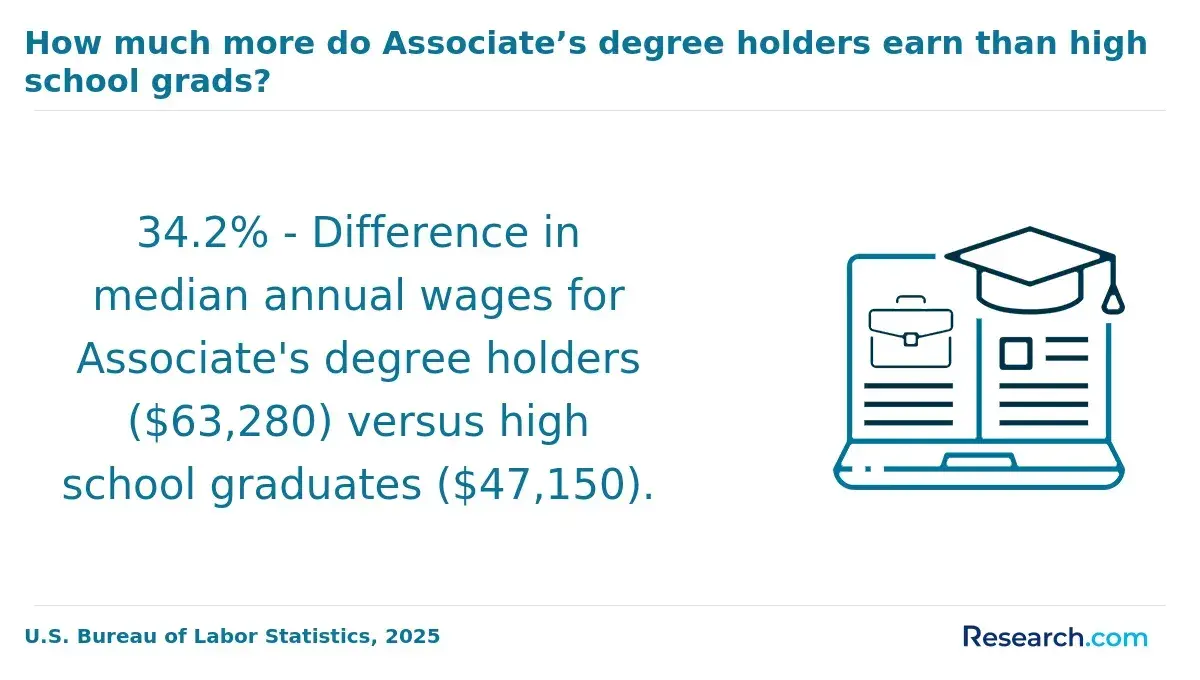
Transfer credit can be one of the most important admission-related cost factors. Students with prior college coursework should ask for a written transfer evaluation before enrolling, not after. A generous transfer policy can shorten the timeline, while a restrictive one can add semesters and increase borrowing.
Applicants should also ask whether prior work experience can count toward elective credit, practicum hours, or portfolio assessment. Some adult-friendly programs offer credit for certified training, military education, or workplace learning, but policies vary and are rarely automatic.
Common admission mistakes include applying to only one school, assuming all online credits transfer easily, ignoring math or statistics prerequisites, and waiting too long to ask about field placement requirements. A better approach is to compare at least three programs using the same criteria: total cost, transfer credit, accreditation, state authorization, curriculum fit, and career services.
How long do these programs take, and what tuition and fees should students expect?
Program length depends on degree level, transfer credit, enrollment intensity, and whether fieldwork is required. An associate degree often takes about two years of full-time study, a bachelor's degree about four years from the start or one to two years as a completion program, and a master's degree about one to three years depending on course load.
Cost varies more than many students expect. College Board's 2024 pricing report listed average published tuition and fees for public four-year in-state students at $11,610 and private nonprofit four-year students at $43,350 for the academic year, before grants and scholarships. For online students, the useful comparison is not sticker price alone but total net cost after transfer credits, aid, fees, books, travel, and lost work time.
Students should request a full cost breakdown, not just per-credit tuition. Typical costs may include:
- $0 to $75 for an application fee, depending on the school and waiver availability.
- $150 to $500 per credit at many lower-cost public or transfer-friendly online programs, though rates vary by institution and residency.
- $500 to $1,200 or more per credit at many private or graduate-level programs, depending on school pricing.
- $100 to $500 per term for technology, online learning, student services, or program fees.
- $50 to $200 or more for background checks, immunizations, drug screens, or placement onboarding when fieldwork is required.
Financial aid can reduce out-of-pocket costs, but it should not be treated as free money without reviewing debt. The maximum federal Pell Grant remained $7,395 for the 2024-25 award year, which can be meaningful for eligible undergraduates but may not cover the full cost of attendance. Graduate students generally rely more on loans, employer tuition assistance, scholarships, or payment plans.
If you are comparing online management degrees across very different fields, reviewing resources such as the cheapest online construction management degree can help you see how per-credit pricing, transfer policies, and program fees shape affordability beyond healthcare. The lesson is the same: the cheapest advertised tuition is not always the lowest total cost.
Students can reduce cost by completing general education credits at a community college, choosing a transfer pathway, applying for employer reimbursement, taking a sustainable full-time load, and avoiding programs that require unnecessary repeated coursework. The main trade-off is speed versus workload: accelerated programs can lower opportunity cost, but they can also be difficult for students balancing work, caregiving, and field requirements.
What accreditation and quality standards should these behavioral health programs meet?
Accreditation is one of the most important quality checks for an online behavioral health management degree. At minimum, students should choose an institution accredited by an accreditor recognized by the U.S. Department of Education or the Council for Higher Education Accreditation. This affects federal financial aid eligibility, transfer credit, graduate admission, and employer trust.
Programmatic accreditation depends on the degree's purpose. A behavioral health management bachelor's degree may not have a single required programmatic accreditor, while clinical pathways do. For example, social work programs often need CSWE accreditation for licensure pathways, counseling programs may need CACREP alignment or accreditation depending on the state, and healthcare administration master's programs may highlight CAHME accreditation.
Because program names can be misleading, students should verify quality through multiple signals. These checks are especially important for online students who may not visit campus:
- Confirm institutional accreditation on official accreditor or federal databases rather than relying only on marketing pages.
- Ask whether the program is authorized to enroll students in your state and whether field placements are available there.
- Review whether the curriculum matches your target role: management, case coordination, counseling, social work, peer support, or healthcare administration.
- Request written information on transfer credit, practicum expectations, background checks, and any required in-person components.
- Ask for student support details, including advising, tutoring, career services, internship coordination, and disability accommodations for online learners.
Red flags include vague accreditation language, pressure to enroll immediately, unclear tuition, no named faculty, no state authorization explanation, and promises that a general behavioral health degree will automatically qualify you for a license. Legitimate schools should be willing to explain limitations in writing.
Quality also includes curriculum currency. Strong programs should address integrated care, telehealth, electronic records, health equity, crisis systems, substance use coordination, and ethical use of data. A program that has not updated its courses for modern behavioral health delivery may not prepare students for current workplace expectations.
What is the salary outlook for behavioral health managers and care coordinators?
Salary outcomes vary by job title, region, employer, degree level, experience, and whether the role is administrative, clinical, or community-based. A behavioral health management degree can support several career paths, but it does not produce one fixed salary outcome.
The table below uses BLS May 2024 wage data for occupations that commonly overlap with behavioral health management and care coordination. These figures are national medians, so local pay may be higher or lower.
| Related occupation | Median annual wage | How it connects to this degree |
| Medical and health services managers | $117,960 | Relevant to behavioral health operations, clinic management, and service line leadership |
| Social and community service managers | $78,240 | Relevant to nonprofit, community mental health, social service, and program management roles |
| Substance abuse, behavioral disorder, and mental health counselors | $59,190 | Relevant only when the student completes a qualifying counseling pathway and license requirements |
| Community health workers | $48,200 | Relevant to outreach, navigation, prevention, and community-based coordination roles |
BLS projections published in 2024 showed much faster-than-average expected growth for medical and health services managers over the 2023-33 period. For readers, the key point is not that every graduate becomes a manager, but that healthcare organizations continue to need people who can organize services, supervise teams, and improve access.
Entry-level care coordination roles may pay closer to community health or social service wages, while management roles usually require experience, stronger data skills, budget responsibility, and sometimes a graduate degree. Students should review job postings in their own state before enrolling and note which qualifications appear repeatedly.
To evaluate return on investment, compare likely first roles with total program cost. A lower-cost bachelor's completion program may be a reasonable investment for someone already working in healthcare who wants advancement. A high-cost graduate program may make more sense only if it clearly supports a move into leadership, payer operations, quality improvement, or a specialized management role.
How can students ensure their degree supports relevant licenses or certifications?
The safest approach is to separate career preparation from licensure preparation. A behavioral health management degree may prepare students for coordination, administration, or program roles, but licensure is controlled by state boards and specific professional disciplines.
Students should use a step-by-step verification process before enrolling. This is especially important for anyone who may later want to become a licensed counselor, social worker, addiction counselor, nurse, or case manager.
- Identify the exact role you want, such as licensed professional counselor, social worker, addiction counselor, certified case manager, peer support specialist, or non-licensed care coordinator.
- Find the state board or credentialing body that governs that role in the state where you plan to work.
- Compare the board's requirements with the program's curriculum, field hours, supervision rules, and accreditation status.
- Ask the school for written confirmation of whether the program is designed to meet requirements in your state.
- Save documentation, including course descriptions, syllabi, practicum records, supervisor credentials, and accreditation details.
Common credentials related to this field include state peer support certifications, addiction counseling credentials, case management certifications, community health worker certifications, and clinical licenses in counseling, social work, marriage and family therapy, psychology, or nursing. Eligibility rules vary, and many require supervised experience after graduation.
Students should be careful with programs that market "behavioral health" broadly without explaining the difference between administrative and clinical preparation. If a program does not include the required practicum, supervised clinical hours, or approved accreditation for a license, additional education may be needed later.
For non-licensed roles, certifications can still improve employability when they match the job. Examples include case management, motivational interviewing training, mental health first aid, project management, health informatics, or quality improvement credentials. The best choice depends on whether you want to work in direct navigation, operations, compliance, analytics, or supervision.
Other Things You Should Know About Behavioral Health Management
Many students do, especially in asynchronous programs. The challenge is fieldwork, group projects, and live meetings, so ask for a sample weekly schedule before enrolling.
Previous healthcare experience is not a strict requirement for enrolling in a 2027 online behavioral health management degree with a care coordination focus. However, having some background can be beneficial, as it can help you better understand concepts and facilitate networking opportunities in the field.
Some roles are remote or hybrid, especially with insurers, telehealth providers, and centralized care teams. Entry-level roles may still require local travel, client meetings, or on-site collaboration.
Strong coordinators are organized, calm under pressure, ethical with sensitive information, comfortable with documentation, and able to communicate respectfully with clients and professionals from different disciplines.
References
- Behavioral Health Accreditation | ACHC.ORG https://achc.org/behavioral-health/
- Licensing & Accreditation | Circa Behavioral Healthcare Solutions https://circabehavioral.com/services/licensing-and-accreditation/
- Six Types of Credentials Non-Traditional Students Want https://laurelridgeworkforce.com/six-types-of-credentials-non-traditional-students-want/
- How to Make Sure Your Degree Leads to Licensure in Your State — Higher Education Licensure Pros https://www.higheredlicensurepros.com/blog/updated-top-5-things-to-know-about-licensure-before-you-choose
- Care Coordinator Training: Building Skills for Better Patient Care https://www.nottstraininghub.nhs.uk/news/care-coordinator-training-building-skills-for-better-patient-care/
- Today's Credentials https://www.luminafoundation.org/topics/todays-credentials/
- How to Become a Case Manager and Care Coordinator in 2026 | BestBSWPrograms https://bestbswprograms.com/careers/case-manager-care-coordinator/
- Introduction to Behavioral Health | Behave Health https://behavehealth.com/blog/introduction-to-accreditation-in-behavioral-healthcare
- Non-degree Admissions - Cummings Graduate Institute for Behavioral Health Studies https://cgi.edu/admissions/non-degree/
- Online vs On-Campus HIM Programs: How to Choose | Health Information Management Programs https://healthinformationmanagementprograms.com/guides/online-vs-campus-him-programs/