2027 Best Online Bachelor's in Behavioral Health Management With Rolling Start Options

Co-Founder and Chief Data Scientist
Choosing an online behavioral health management bachelor's program is really a timing, cost, and career-fit decision. Demand is strong: the U. S. Bureau of Labor Statistics reports 23% projected growth for medical and health services managers from 2024 to 2034, much faster than average.
This guide is for working adults, transfer students, and healthcare support workers who want a flexible path into behavioral health operations. You will learn how rolling starts work, what accreditation to verify, what programs typically cost, and how to compare options before enrolling.
Key Things You Should Know
- Rolling start online programs are best for students who cannot wait for a traditional fall or spring term, but you should confirm whether each start date offers the same courses, financial aid timing, and transfer-credit review speed.
- The strongest programs are offered by institutionally accredited colleges and align management coursework with behavioral health systems, ethics, documentation, crisis response, community services, and healthcare operations.
- Career outcomes vary by role: BLS May 2024 wage data shows median pay of $117,960 for medical and health services managers, $78,240 for social and community service managers, and $59,190 for substance abuse, behavioral disorder, and mental health counselors.
What is an online bachelor's in behavioral health management and who is it best for?
An online bachelor's in behavioral health management is an undergraduate degree focused on the business, operational, and service-delivery side of mental health, substance use, community health, and human services organizations. It is not the same as a counseling license program. Instead, it prepares students to coordinate services, supervise teams, manage records, improve access to care, support compliance, and work with clinical and nonclinical staff.
This degree is usually a good fit for people who want to work in behavioral health but do not necessarily want to become licensed therapists. It can also fit students who already work as case aides, medical office staff, peer support workers, behavioral health technicians, or human services assistants and want to move into coordinator, supervisor, or program-management roles.
The degree may be less appropriate if your main goal is to become a licensed clinical social worker, licensed professional counselor, psychologist, or psychiatric nurse practitioner. Those paths typically require specific graduate degrees, supervised clinical hours, state licensure, and sometimes discipline-specific accreditation.
The table below summarizes common student goals and whether this degree is likely to support them. Use it as a first-pass fit check before comparing schools.
| Student goal | How well this degree fits | What to verify before enrolling |
| Move from direct support into behavioral health administration | Strong fit | Look for coursework in program management, compliance, budgeting, and behavioral health systems. |
| Work in a community mental health agency or substance use treatment organization | Strong fit | Ask whether fieldwork, practicum, or applied projects can be completed locally. |
| Become a licensed counselor or therapist | Limited fit by itself | Confirm the graduate degree and licensure requirements in your state. |
| Prepare for graduate study in healthcare administration, public health, or human services | Good fit | Check whether the curriculum includes statistics, research methods, leadership, and healthcare finance. |
| Enter a highly clinical role such as nursing or psychology | Usually not the most direct path | Compare prerequisites for clinical programs before committing. |
Behavioral health management sits between healthcare administration and human services leadership. That middle ground is useful because behavioral health organizations increasingly need staff who understand access barriers, payer rules, privacy requirements, outcome tracking, and workforce shortages-not just general office management.
How do rolling start dates work for online behavioral health management programs?
Rolling start dates let students begin at multiple points during the year rather than waiting for one or two traditional semester starts. In online behavioral health management programs, this often means new cohorts or course sessions begin every few weeks or several times per term. The exact model depends on the school's academic calendar.
Rolling starts are valuable for adult learners because they reduce idle time. If you are transferring credits, changing jobs, or returning to school after a break, a rolling calendar may help you begin sooner and finish required courses in shorter blocks. However, faster access does not automatically mean faster graduation.
Before choosing a rolling-start program, ask how the schedule affects the following enrollment details. These questions help you separate flexible programs from programs that simply advertise frequent start dates.
- Course availability: Confirm whether core behavioral health management courses are offered at every start date or only during certain sessions.
- Financial aid timing: Ask when federal aid, scholarships, employer reimbursement, or military benefits are disbursed for shorter terms.
- Transfer-credit review: Find out whether transfer evaluation is completed before your first registration deadline.
- Drop and refund windows: Shorter sessions may have earlier deadlines, which matters if your work or family schedule changes.
- Academic pacing: Ask whether students can take one course at a time, multiple courses per session, or a mix of full-time and part-time loads.
A common mistake is enrolling in the earliest available start without confirming whether the first course actually counts toward the major. A better approach is to request a degree plan that shows which transferred credits apply, which major courses remain, and how many start dates are realistic for your schedule.
What accreditation should online behavioral health management degrees have in the United States?
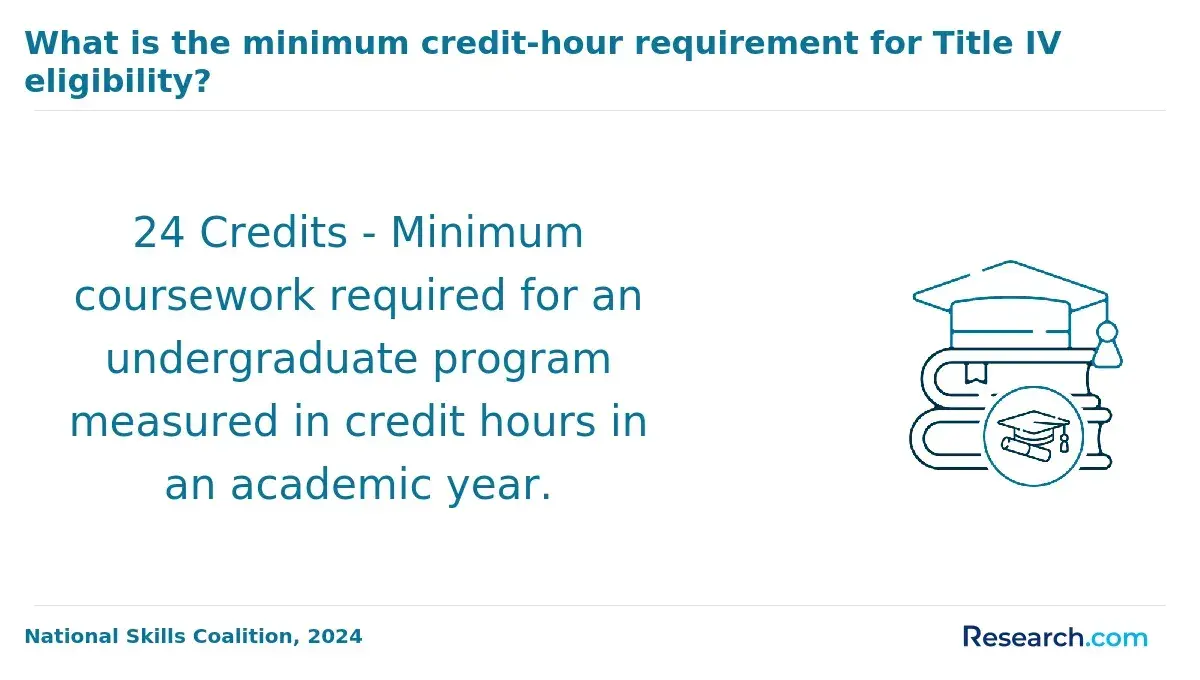
In the United States, the most important accreditation requirement is institutional accreditation from an agency recognized by the U.S. Department of Education or the Council for Higher Education Accreditation. This matters because institutional accreditation affects federal financial aid eligibility, credit transfer, graduate school recognition, and employer confidence.
Behavioral health management bachelor's programs usually do not have one universal programmatic accreditor in the same way nursing, social work, counseling, or public health programs often do. That makes institutional accreditation even more important. If a program claims to prepare students for a licensed clinical role, verify that claim directly with the state licensing board because licensure rules vary.
The table below explains the main accreditation and approval signals you may see while researching online programs. It can help you identify which signals matter most for your goals.
| Quality signal | Why it matters | How to use it |
| Institutional accreditation | Supports financial aid access, credit transfer, and degree recognition. | Treat this as nonnegotiable for most students. |
| State authorization for online education | Confirms the school can legally offer online education to students in your state. | Ask admissions if your state is approved before applying. |
| Program alignment with human services or healthcare administration standards | May indicate a more career-focused curriculum. | Compare course outcomes, internship expectations, and employer partnerships. |
| Licensure disclosures | Clarifies whether the program meets any state-specific professional requirements. | Read disclosures carefully if you plan to pursue counseling, social work, or substance use credentials. |
| Transparent outcomes and student support information | Helps you evaluate completion support and career relevance. | Ask for graduation, retention, placement, and internship-support details when available. |
Red flags include vague accreditation language, pressure to enroll before you can verify accreditation, unclear state authorization, and promises that a bachelor's degree alone will qualify you for licensed counseling practice. A reputable school should be able to explain what the degree does and does not qualify you to do.
What admission requirements and prior experience do online behavioral health management programs expect?
Admission requirements for online behavioral health management bachelor's programs vary, but most schools look for proof that you can complete college-level work. First-year applicants usually submit a high school transcript or GED documentation. Transfer applicants typically submit official transcripts from every college previously attended.
Prior healthcare or human services experience is often helpful but not always required. Some programs are designed for working adults and may award transfer credit for previous college coursework, military learning, professional training, or exams. Others follow a traditional bachelor's structure and expect students to complete general education, major courses, electives, and possibly fieldwork.
Most applicants should be ready to provide the following materials. Requirements differ by institution, so confirm the current checklist before paying an application fee.
- Official high school, GED, or college transcripts.
- A minimum GPA if required by the school or major.
- Application form and fee, unless the school offers a waiver.
- Personal statement or short essay for programs that evaluate career goals.
- Resume if the program is designed for working professionals.
- Background check or immunization documentation if the program includes field placement in a healthcare or human services setting.
Transfer students should pay special attention to how credits apply. A school may accept a high number of credits into the institution but apply fewer credits toward the behavioral health management major. The most useful document is not a general transfer estimate; it is a degree audit showing remaining courses, total credits to graduation, and expected completion time.
How do online behavioral health management programs compare with on-campus options for flexibility and support?
Online behavioral health management programs are usually strongest for students who need schedule flexibility, live far from campus, or already work in healthcare, social services, corrections, education, or nonprofit settings. On-campus programs may be better for students who want frequent face-to-face interaction, campus-based internships, or a more traditional college experience.
Online learning has become a mainstream option in U.S. higher education. The National Center for Education Statistics reported that in fall 2022, more than half of undergraduate students took at least one distance education course, a pattern that continued to influence program design and student expectations in more recent online offerings. For behavioral health management students, this means online programs are no longer unusual, but quality still varies widely.
The comparison below highlights practical differences that matter when choosing a format. Focus on the support model, not just whether classes are online or in person.
| Factor | Online program | On-campus program | Best choice when |
| Schedule | Often asynchronous or offered in shorter sessions. | Usually tied to fixed weekly class times. | Online is better if work shifts or caregiving duties change often. |
| Peer and faculty interaction | Discussion boards, video meetings, advising calls, and virtual office hours. | In-person classes, campus events, and direct faculty access. | Campus may be better if you learn best through face-to-face conversation. |
| Fieldwork or applied experience | May be completed near where the student lives if approved. | Often connected to local campus partners. | Online works well if the school has strong remote placement support. |
| Student services | Virtual tutoring, writing support, library access, and career coaching. | Campus-based support plus in-person offices. | Choose the format with documented advising and career services availability. |
| Cost structure | May reduce relocation and commuting costs. | May offer campus employment, local networking, or residential support. | Compare total cost, not just tuition. |
If your interests lean more broadly toward hospital systems, clinics, or payer operations, you may also compare this degree with a healthcare administration degree online. Behavioral health management is more specialized, while healthcare administration may offer broader mobility across healthcare settings.
What courses and concentration options are typical in a behavioral health management bachelor's curriculum?
A behavioral health management bachelor's curriculum typically combines general education, healthcare or human services foundations, behavioral health topics, leadership courses, and applied learning. The best programs connect management training to real behavioral health settings, such as community mental health centers, substance use treatment programs, crisis services, integrated care clinics, and nonprofit agencies.
Common courses often cover the following areas. Look for a curriculum that balances people-centered service knowledge with operational decision-making.
- Introduction to behavioral health systems, including mental health, substance use, prevention, and recovery-oriented care.
- Case management and service coordination, including referrals, documentation, and continuity of care.
- Healthcare ethics, confidentiality, and legal issues, including privacy and mandated reporting concepts.
- Program planning and evaluation, including outcomes measurement and quality improvement.
- Healthcare finance or budgeting for nonprofit, public, or clinical service settings.
- Leadership and supervision, including workforce management, conflict resolution, and team communication.
- Cultural competence and community health, including access barriers and social determinants of health.
- Health information systems, including records, reporting, and basic data use in behavioral health organizations.
Concentration options vary by school. Some programs offer formal tracks, while others allow students to choose electives around a theme. The most relevant concentration depends on your intended role.
| Possible concentration or elective area | Best for students interested in | Career relevance |
| Substance use and addiction services | Treatment programs, recovery support, prevention, and community outreach. | May support nonclinical coordinator roles or preparation for state-specific credential pathways. |
| Healthcare management | Clinics, integrated care, managed care, and operations. | Useful for students who want administrative mobility across healthcare settings. |
| Human services leadership | Nonprofits, community programs, family services, and social support agencies. | Supports program coordination and supervisory roles. |
| Health information or quality improvement | Documentation, reporting, compliance, and outcomes tracking. | Useful as behavioral health organizations rely more on data-informed care and payer reporting. |
| Criminal justice or crisis services | Diversion programs, reentry services, crisis teams, and public-sector agencies. | Relevant for students drawn to cross-system behavioral health work. |
Students who later want broader operations leadership may consider graduate pathways such as a degree in healthcare management. A bachelor's can build the foundation, while graduate study may be useful for director-level roles that require deeper finance, strategy, analytics, or policy preparation.
How long does it take to finish an online behavioral health management degree and what does it cost?
A standard bachelor's degree requires about 120 credits. First-time college students commonly need around four years of full-time study, while transfer students may finish sooner depending on accepted credits, course load, and start-date frequency. Rolling starts can reduce waiting time, but they do not eliminate prerequisite sequencing or major-course availability.
Cost depends on tuition rate, number of transfer credits, fees, books, technology requirements, fieldwork expenses, and whether tuition is charged per credit or per term. NCES data published in 2024 showed that average tuition and fees for first-time full-time undergraduates at public four-year institutions were lower for in-state students than for private nonprofit institutions, which is why residency and institution type can materially affect cost.
Still, total value depends on fit, completion support, transfer policy, and career alignment-not institution type alone.
The table below outlines the major cost and time variables to compare. Use these categories to calculate your own estimated total cost rather than relying only on advertised tuition.
| Factor | Why it changes cost or timeline | What to ask the school |
| Transfer credits | Accepted credits can reduce both tuition and completion time. | How many credits apply directly to the degree plan? |
| Per-credit tuition | Programs with the same degree length can vary significantly in price. | What is the tuition rate for online undergraduate students? |
| Fees | Technology, graduation, course, and placement fees can add to the bill. | What mandatory fees are charged each term or course? |
| Course load | Taking more courses can shorten time but increase weekly workload. | What course load is realistic for working adults? |
| Session length | Short sessions may accelerate progress but require faster assignment turnaround. | How many hours per week should students expect per course? |
| Fieldwork requirements | Background checks, travel, or unpaid hours may affect affordability. | Can fieldwork be completed near my home or workplace? |
To reduce cost, start with a transfer evaluation, compare institutional scholarships, ask about employer tuition assistance, and confirm whether community college credits can satisfy general education requirements. If you later plan to move into health IT leadership, reviewing master in health information management salary information can also help you decide whether a future graduate program aligns with your return-on-investment expectations.
What jobs can you get with a bachelor's in behavioral health management?
A bachelor's in behavioral health management can support administrative, coordination, supervisory, and program-focused roles in organizations that serve people with mental health, substance use, developmental, family, housing, or community support needs. Job titles vary widely because employers use different labels for similar responsibilities.
This degree is generally strongest for roles that require understanding behavioral health systems plus the ability to manage people, processes, records, referrals, and services. It is not a substitute for state licensure when a job legally requires a licensed clinician.
The table below shows common career directions and what those roles often involve. Use it to match your degree plan with the type of work you actually want to do.
| Role or career direction | Typical responsibilities | Important note |
| Behavioral health program coordinator | Organizes services, tracks participation, supports staff schedules, and monitors program goals. | Often available in nonprofits, clinics, public agencies, and community providers. |
| Case management supervisor | Supports case managers, reviews documentation, coordinates referrals, and helps improve service workflows. | Some employers require prior direct-service experience. |
| Substance use program specialist | Supports prevention, treatment access, recovery support, outreach, or compliance activities. | State-specific addiction credentials may strengthen eligibility for certain roles. |
| Community services manager | Oversees programs that address housing, family support, crisis needs, disability services, or public health concerns. | Leadership roles may require several years of experience. |
| Behavioral health operations assistant or manager | Coordinates staffing, scheduling, intake processes, records, and administrative workflows. | Strong fit for students with healthcare office or clinic experience. |
| Quality improvement or compliance assistant | Reviews documentation, supports audits, tracks outcomes, and helps maintain policy compliance. | Data and health information coursework can be helpful. |
Technology is changing these roles. Behavioral health organizations increasingly use electronic health records, telehealth platforms, reporting dashboards, and AI-assisted administrative tools. Graduates who can combine service knowledge with data literacy, privacy awareness, and workflow improvement may be better positioned than those who focus only on general management.
For students who want to move beyond behavioral health into broader organizational strategy, an operations management MBA online may be a later step after gaining experience. That path is usually more appropriate for people pursuing senior operations, process improvement, or multi-site leadership roles.
What is the salary outlook for graduates in behavioral health management and related roles?
Salary outcomes depend on job title, employer type, region, experience, credentials, and whether a role is clinical, administrative, or supervisory. A bachelor's degree can help qualify candidates for coordinator and management-track roles, but it does not create a guaranteed salary. Use wage data as a planning benchmark, not a promise.
BLS May 2024 data provides the clearest national salary context for several related occupational groups. The table below lists median annual wages for roles commonly connected to behavioral health management or adjacent pathways.
| Occupational group | Median annual wage, May 2024 | How it relates to behavioral health management |
| Medical and health services managers | $117,960 | Relevant for graduates who move into clinic, healthcare operations, compliance, or department management. |
| Social and community service managers | $78,240 | Relevant for nonprofit, public agency, community program, and human services leadership roles. |
| Substance abuse, behavioral disorder, and mental health counselors | $59,190 | Relevant for students considering counseling-adjacent work, though many counseling roles require additional credentials or graduate education. |
| Community health workers | $49,900 | Relevant for outreach, navigation, education, and community-based support roles. |
| Social and human service assistants | $44,240 | Relevant for entry-level support roles that may lead to coordinator positions with experience and education. |
The strongest salary upside usually comes from combining the degree with experience in operations, supervision, compliance, finance, health information, or program evaluation. Students should also consider local labor markets. A role in a large health system, managed care organization, or government agency may pay differently from a small nonprofit, even when job titles sound similar.
Growth projections also matter. BLS projects medical and health services managers to grow 23% from 2024 to 2034, reflecting demand for leaders who can manage complex care delivery systems. Behavioral health management graduates should interpret that as a broad healthcare-management signal, not a guarantee that every behavioral health employer will hire at the same pace.
How can you choose a reputable online behavioral health management program with rolling admissions?
Choosing a reputable online behavioral health management program with rolling admissions requires more than finding the fastest start date. The best program is the one that is accredited, affordable enough to finish, aligned with your intended role, transparent about requirements, and supportive of online learners.
Use this step-by-step process before enrolling. It is designed to help you compare programs consistently and avoid common mistakes.
- Verify institutional accreditation through an official accreditation database or the school's accreditor listing.
- Confirm state authorization for your state, especially if you will complete fieldwork or applied experience locally.
- Request a written transfer-credit evaluation before committing to a start date.
- Ask for a full cost estimate that includes tuition, mandatory fees, books, technology costs, and any fieldwork expenses.
- Review the curriculum for behavioral health-specific courses rather than only general business or healthcare administration content.
- Ask how rolling starts affect course sequencing, financial aid disbursement, withdrawal deadlines, and graduation timing.
- Confirm whether any practicum, internship, capstone, or background check is required.
- Evaluate online support, including advising, tutoring, library access, writing help, disability services, and career coaching.
- Ask what types of employers, field sites, or alumni outcomes are associated with the program, while understanding that outcomes are not guaranteed.
- Compare at least three programs using the same criteria before applying.
Watch for red flags such as unclear accreditation, no published tuition information, unrealistic salary claims, high-pressure enrollment tactics, vague transfer policies, and program pages that do not explain what graduates are prepared to do. A credible program should help you understand both opportunities and limitations.
The final decision should come down to fit. Choose an accelerated or frequent-start program if you can handle compressed coursework and need to move quickly. Choose a slower part-time plan if finishing without stopping out is more important than speed. Choose a broader healthcare or human services degree if you are not sure you want to specialize in behavioral health.
Other Things You Should Know About Behavioral Health Management
Yes, many online programs are designed for working adults. The key is course load. One course at a time may be manageable for full-time workers, while two or more accelerated courses can become difficult during busy work or family periods.
While pursuing an online bachelor's in behavioral health management in 2027, focus on developing skills in communication, problem-solving, and organizational techniques. Additionally, gaining proficiency in data analysis and understanding healthcare regulations will be beneficial for your future career in the field.
They can be, especially when the degree comes from an institutionally accredited school and the curriculum matches the job. Employers usually care about accreditation, relevant experience, communication skills, documentation ability, and whether you understand behavioral health service settings.
Focus on communication, documentation, data literacy, cultural competence, conflict resolution, privacy awareness, budgeting basics, and team leadership. If possible, gain experience with electronic health records, case management software, or quality improvement projects.
References
- Why trust GlobalHealth Education? https://globalhealtheducation.com/au/resources/online-vs-on-campus-courses
- 10 Fulfilling Mental Health Careers You Can Train for Now | Palo Alto University https://paloaltou.edu/resources/blog/mental-health-careers-you-can-start-now
- Course Sequence Page | Sonoran University of Health Sciences https://online.sonoran.edu/clinical-mental-health-counseling/course-sequence-page/
- Community Mental Health, BA Online https://www.nec.edu/programs/community-mental-health-b-a
- Job Outlook and Salaries for Population Health Management | CUNE https://www.cune.edu/news/population-health-jobs
- BHCM Certification Steps https://oklahoma.gov/odmhsas/trainings/workforce-certification/behavioral-health-case-management/bhcm-certification-steps.html
- Who Accredits MHA Programs? https://www.mhaonline.com/faq/who-accredits-online-mha-programs
- Bachelors in Health Administration | HealthAdministrationDegrees.com https://www.healthadministrationdegrees.com/programs/bachelors-in-health-administration/
- A Complete Guide to Careers in Behavioral Health Fields https://behavioralhealth.careers/blog/careers-in-behavioral-health-guide/
- 2025 Most Affordable Healthcare Administration Degrees Online https://www.onlineu.com/most-affordable-colleges/healthcare-administration-degrees