2027 How to Become a Substance Abuse Counselor in Florida

Co-Founder and Chief Data Scientist
Florida needs addiction counseling professionals who can help people move from crisis to recovery while working within strict certification, ethics, documentation, and supervision requirements. If you are trying to become a substance abuse counselor in Florida, the main decision is not simply “What degree do I need?” You also need to understand which credential fits your goals, how supervised experience works, what employers expect, and whether this career is financially and emotionally sustainable for you.
This guide explains the Florida pathway in practical terms: education options, certification steps, daily responsibilities, salary expectations, job market conditions, advancement routes, continuing education, common mistakes, and related counseling specializations. It is designed for students, career changers, behavioral health workers, and helping professionals who want a realistic roadmap before committing time and money to training.
Quick Answer: How Do You Become a Substance Abuse Counselor in Florida?
To become a substance abuse counselor in Florida, you typically start with at least a high school diploma or equivalent, complete addiction-focused training, gain supervised work experience, and apply for a credential through the Florida Certification Board. Many employers prefer candidates with an associate, bachelor’s, or graduate degree in counseling, psychology, social work, human services, or a related field. The Certified Addiction Counselor pathway requires documented training, supervised experience, professional recommendations, a background check, and successful completion of the IC&RC Alcohol and Drug Counselor exam.
Key Things You Should Know About Becoming a Substance Abuse Counselor in Florida
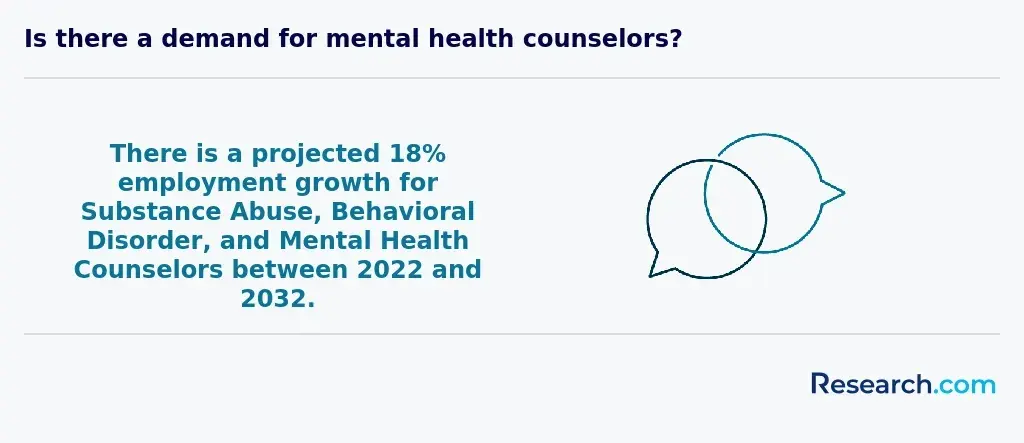
- Florida’s demand for addiction and behavioral health professionals remains strong. The U.S. Bureau of Labor Statistics projects a 29% increase in demand for substance abuse, behavioral disorder, and mental health counselors from 2022 to 2032, while the field has also been described as having projected job growth of 22% by 2030.
- Salary estimates vary depending on how the occupation is categorized, the data source, location, employer, credentials, and experience. Figures cited for Florida include approximately $56,980 per year, around $55,440, and an average salary of approximately $47,000 with a median near $45,000.
- Education matters, but it is not the only requirement. Employers and certifying bodies also look closely at addiction-specific training, supervised practice, ethics, documentation skills, and ability to work with clients who have complex needs.
- Telehealth, integrated behavioral healthcare, and culturally responsive treatment are increasingly important in Florida. Counselors who can serve diverse communities, work with co-occurring disorders, or provide bilingual services may have broader opportunities.
- The cost of living can affect your career decision. Florida’s cost of living index was about 5% higher than the national average as of 2023, with urban areas such as Miami and Orlando often more expensive than rural communities.
- Steps to become a substance abuse counselor in Florida
- Minimum education requirements in Florida
- What substance abuse counselors do
- Florida certification and licensing process
- Legal and ethical responsibilities
- Salary expectations in Florida
- Florida job market outlook
- Substance abuse counseling compared with social work
- Dual certification with marriage counseling
- Specialized counseling areas to consider
- Forensic science and addiction counseling
- Supervision and mentorship
- Career paths and advancement options
- Fastest path into the field
- Continuing education and professional development
- School-based mental health partnerships
- Challenges to expect
- Burnout prevention and counselor well-being
- Expanding into mental health counseling
- Regulatory changes in Florida practiceMental health counseling expansionCareer challenges
How can you become a substance abuse counselor in Florida?
The Florida pathway usually combines four elements: education, addiction-specific training, supervised experience, and certification. The exact route depends on the type of role you want. A support position in a treatment facility may require less formal education than a clinical counseling role, while supervisory, diagnostic, or private-practice pathways generally require advanced credentials.
| Step | What you need to do | Why it matters |
| Confirm your target role | Decide whether you want an entry-level treatment support role, certified addiction counselor role, clinical counselor role, or leadership position. | Different positions require different education levels, supervision hours, credentials, and legal scopes of practice. |
| Complete the right education | Start with a high school diploma or equivalent, then consider an associate, bachelor’s, or graduate degree in psychology, counseling, social work, human services, or a related field. | Higher education can improve competitiveness and may reduce required supervised experience for some credential pathways. |
| Build addiction-specific knowledge | Take coursework or training in addiction theory, treatment planning, counseling methods, crisis response, ethics, and co-occurring disorders. | Substance abuse counseling requires specialized knowledge beyond general helping skills. |
| Gain supervised experience | Work in approved settings under qualified supervision and document hours carefully. | Certification boards and employers need proof that you can apply skills safely with real clients. |
| Apply for certification | Submit documentation, complete background requirements, provide recommendations, and prepare for the required exam. | Certification signals that you meet recognized professional standards for addiction counseling practice. |
| Continue learning | Maintain continuing education, follow regulatory changes, and seek supervision or mentorship as your responsibilities grow. | Addiction treatment evolves, and ongoing learning helps protect clients and your career. |
A strong Florida plan starts with a realistic look at your current education, your timeline, and your long-term goal. If you want a broad view of related counseling and psychology careers, Research.com’s counseling, therapy, and psychology career guide can help you compare adjacent paths before choosing a credential.
What is the minimum educational requirement to become a substance abuse counselor in Florida?
The minimum starting point is generally a high school diploma or general equivalency degree. However, that minimum does not mean it is the best choice for every applicant. In practice, many employers prefer candidates with college-level preparation, and more advanced roles usually require more formal education.
| Education level | Best fit | Typical advantage | Important limitation |
| High school diploma or equivalent | People seeking entry-level support roles or a first step into behavioral health. | Fastest way to begin exploring the field. | May limit access to counseling roles, advancement, and competitive employers. |
| Associate degree | Students who want a shorter college pathway and a stronger foundation than high school alone. | May reduce supervised experience requirements for certain credential routes. | Some employers still prefer a bachelor’s degree. |
| Bachelor’s degree | Most applicants who want better job prospects in counseling, case management, or treatment settings. | Provides broader preparation in human behavior, ethics, assessment, and helping skills. | A bachelor’s degree may not qualify you for independent clinical practice. |
| Master’s degree or PhD | Professionals aiming for advanced clinical, supervisory, teaching, administrative, or specialized roles. | Can support higher-level licensure, leadership, and broader clinical responsibilities. | Requires more time, tuition, and supervised clinical preparation. |
Common coursework includes addiction theory, counseling skills, substance abuse treatment methods, human development, mental health conditions, crisis intervention, ethics, group counseling, case documentation, and treatment planning. A bachelor’s degree typically takes four years, a master’s program can add two more years, and doctoral study may extend beyond that timeline.
Costs vary widely by school type and enrollment pattern. The average cost for a bachelor’s degree in Florida can range from $10,000 to $30,000 annually, depending in part on whether the institution is public or private. When comparing programs, look beyond tuition and ask about fees, textbooks, background checks, clinical placement costs, transportation, and whether credits can transfer.
Accreditation is one of the most important filters. An accredited institution is more likely to meet recognized educational standards and be accepted by employers, graduate schools, financial aid systems, and licensing or certification bodies. The University of Central Florida is one Florida institution offering relevant preparation for students interested in substance abuse counseling and related behavioral health fields.
Although salary data from other states should not be used as a Florida guarantee, comparing counseling paths can help you understand how credentials influence earnings. For broader context on licensed counseling careers, you can review Research.com’s guide to licensed counselor salary information in Montana.
What does a substance abuse counselor do?
Substance abuse counselors help people address alcohol, drug, and behavioral health problems through assessment, treatment planning, counseling, education, relapse prevention, and coordinated care. Their work is both clinical and practical: they listen deeply, document carefully, collaborate with other professionals, and help clients build recovery plans that can survive real-world stressors.
- Assess client needs, substance use history, risks, strengths, and readiness for treatment.
- Create treatment plans that identify goals, interventions, referrals, and measurable progress markers.
- Provide individual counseling, group counseling, family education, and recovery support.
- Help clients understand triggers, coping skills, relapse prevention strategies, and community resources.
- Coordinate care with physicians, mental health counselors, social workers, probation officers, treatment teams, or peer support specialists when appropriate.
- Maintain accurate case notes, treatment records, consent forms, and progress documentation.
- Respond to crisis situations while following agency policy, state law, and ethical standards.
Skills that matter most
- Empathy with boundaries: Clients need respect and trust, but counselors must also maintain professional limits.
- Active listening: Effective counseling depends on hearing what clients say, what they avoid, and what they may not yet be ready to name.
- Clear communication: Counselors explain treatment options, safety concerns, confidentiality rules, and recovery plans in language clients can use.
- Cultural competence: Florida’s diverse communities require counselors to understand how culture, language, family systems, stigma, and access to care shape recovery.
- Documentation discipline: Good records protect clients, support continuity of care, and help agencies meet compliance requirements.
- Resilience: Counselors work with relapse, trauma, grief, crisis, and resistance, so self-care and supervision are professional necessities.
Technology is also changing the job. Telehealth has made counseling more accessible for some clients, especially those with transportation barriers or rural access issues. At the same time, counselors must understand privacy, emergency planning, documentation, and state-specific practice requirements when using virtual care.
-
: "
“I graduated from a local program at the University of Central Florida, and the training changed how I understood recovery. The most meaningful part of the work is watching someone rebuild trust in themselves, one decision at a time.”
"
What is the certification and licensing process for a substance abuse counselor in Florida?
Florida’s addiction counseling credentials are administered through the Florida Certification Board. The process is document-heavy, so successful applicants usually treat certification like a project: verify requirements early, track training hours, document supervision, and keep copies of every form.
For the Certified Addiction Counselor credential, candidates must meet specific requirements, including 150 hours of training across addiction treatment domains and 6,000 hours of supervised experience. The supervised experience requirement can be reduced to 4,000 hours for applicants with an associate degree. Candidates must also pass the IC&RC Alcohol and Drug Counselor exam.
| Requirement | What to prepare | Common problem to avoid |
| Florida Certification Board account | Create an online account and review the current credential requirements before submitting materials. | Starting the application before confirming the correct credential pathway. |
| Background screening | Complete the required criminal background check and understand that applicants must have a clean record for at least three years before applying. | Assuming an old issue will not matter without checking board guidance. |
| Training documentation | Collect proof of required education and addiction-specific training, including the 150 hours required for the Certified Addiction Counselor route. | Submitting certificates that do not clearly show topic, provider, date, or hours. |
| Supervised experience | Track job duties, supervision, dates, and hours carefully as you work toward 6,000 hours or the reduced 4,000 hours for those with an associate degree. | Waiting until the end of employment to reconstruct hours from memory. |
| Professional recommendations | Request recommendations from supervisors or qualified professionals who can speak to your work. | Using references who cannot verify counseling-related competency. |
| Exam | Prepare for the IC&RC Alcohol and Drug Counselor exam with domain-specific study materials and practice questions. | Studying only general psychology instead of addiction counseling competencies. |
| Application review | Submit fees and materials, then watch for feedback from an FCB Certification Specialist within 30 days. | Missing follow-up requests, which can delay approval. |
Budget for more than tuition. Application fees, exam preparation, background checks, training certificates, supervision costs, and continuing education can add up. If you are comparing counseling licensure across states or considering relocation later, Research.com’s guide to licensed professional counselor requirements in Rhode Island offers a useful comparison point.
What legal and ethical considerations must a substance abuse counselor consider in Florida?
Substance abuse counselors handle sensitive information, high-risk situations, and clients whose treatment may intersect with courts, employers, families, hospitals, or child welfare systems. Legal and ethical competence is therefore central to safe practice in Florida.
- Confidentiality: Counselors must protect client information under applicable privacy rules, including HIPAA and Florida requirements. They must also explain confidentiality limits clearly at the beginning of services.
- Mandatory reporting: Florida counselors are mandated reporters for suspected child abuse or neglect. This obligation can override ordinary confidentiality.
- Risk of harm: Confidentiality may also have limits when there is a serious risk of harm to the client or others.
- Informed consent: Clients should understand what services involve, what records are kept, what alternatives exist, and what consequences may follow from treatment decisions.
- Boundaries and dual relationships: Counselors must avoid relationships that could exploit clients, impair judgment, or blur professional roles.
- Florida Mental Health Act awareness: Counselors need to understand how involuntary treatment standards may affect clients in crisis.
- SAMHSA and federal guidance: Substance abuse treatment often involves additional privacy and treatment standards, so counselors should stay current on federal and state updates.
Telehealth adds another layer of responsibility. Counselors need procedures for verifying client location, handling emergencies, protecting electronic records, and providing services only within the scope allowed by credentialing, employer policy, and state rules.
How much can you earn as a substance abuse counselor in Florida?
Reported earnings for substance abuse counselors in Florida differ by source, role definition, credential, employer, and region. Figures cited for the state include an average salary of approximately $47,000 per year, a median salary around $45,000, an average of around $55,440, and approximately $56,980 per year according to the U.S. Bureau of Labor Statistics. National comparison figures cited include about $50,000 for average salaries and $48,000 for median salaries.
The practical takeaway is that salary should be evaluated by role and setting, not by one headline number. A residential treatment facility, hospital system, outpatient clinic, nonprofit agency, correctional program, or private behavioral health company may offer different pay, benefits, supervision support, and advancement opportunities.
Top-earning career directions in Florida for substance abuse counselors
- Clinical Director: Professionals who oversee treatment programs can earn upwards of $75,000 annually.
- Program Manager: Counselors who move into program operations and staff coordination can make around $65,000.
- Licensed Mental Health Counselor: With additional credentials, these professionals can earn between $60,000 and $70,000.
Top-earning locations in Florida
- Miami: Counselors in this large and diverse market may exceed $55,000, especially in higher-demand roles.
- Orlando: Salaries can reach around $52,000 as demand for mental health and addiction services grows.
- Tampa: Many counselors earn close to $50,000 in this competitive behavioral health market.
| Factor | How it can affect pay |
| Credential level | Advanced certification, clinical licensure, or supervisory qualifications can support higher-paying roles. |
| Employer type | Hospitals, larger treatment networks, and specialized programs may pay differently than smaller nonprofits. |
| Location | Urban areas may offer higher pay but also higher housing, transportation, and living costs. |
| Specialization | Experience with trauma-informed care, co-occurring disorders, telehealth, adolescents, or justice-involved clients may increase competitiveness. |
| Leadership responsibility | Program management, supervision, compliance, and director-level duties often come with higher compensation. |
What is the job market like for a substance abuse counselor in Florida?
The job market for substance abuse counselors in Florida is favorable, but not uniform. The U.S. Bureau of Labor Statistics projects employment for substance abuse, behavioral disorder, and mental health counselors to grow by 29% from 2022 to 2032, which is much faster than the average for all occupations. Florida’s population growth, opioid-related treatment needs, mental health awareness, and expansion of telehealth all contribute to demand.
- Urban demand is strong but competitive: Miami, Orlando, Tampa, and similar markets may have more openings, but they also attract more applicants from local colleges and training programs.
- Rural areas may need counselors but offer fewer employers: Some communities have significant treatment needs but fewer agencies, which can limit job choice.
- Integrated care is becoming more important: Employers increasingly value counselors who can collaborate with medical, psychiatric, social service, and community partners.
- Benefits matter: Health insurance, retirement plans, paid supervision, continuing education support, and manageable caseloads can be as important as base salary.
- Cultural competence is a real career advantage: Florida’s diverse communities need counselors who can work respectfully across language, cultural, immigration, family, and socioeconomic differences.
-
: "
“I chose to work in Orlando because the need was clear. The market is competitive, and the cost of living can be difficult, but the chance to grow professionally and serve people in recovery makes the work meaningful.”
"
How does substance abuse counseling differ from social work?
Substance abuse counseling focuses more narrowly on addiction assessment, treatment planning, recovery support, relapse prevention, and substance-related behavioral change. Social work is broader and may include case management, community advocacy, public benefits, child welfare, healthcare navigation, family systems, policy, and clinical mental health services, depending on the role and license.
Choose substance abuse counseling if your primary interest is addiction recovery and treatment services. Consider social work if you want a wider human services scope that may include therapy, advocacy, systems navigation, and community-level intervention. To compare the two fields more directly, review Research.com’s guide to social work versus counseling career and salary differences.
Should I consider dual certification in marriage counseling alongside substance abuse counseling?
Dual preparation can be valuable if you want to work with couples and families affected by substance use. Addiction rarely affects only one person; it often changes trust, communication, parenting, finances, safety, and family roles. Training in marriage and family counseling can help you understand those relational patterns and coordinate more complete treatment plans.
This path makes the most sense if your target employers serve families, couples, adolescents, or clients whose recovery depends heavily on household support. Before investing in another credential, compare local demand, supervision requirements, tuition, and long-term scope of practice. For Florida-specific preparation details, see Research.com’s guide to marriage and family therapist licensing, certifications, careers, and requirements in Florida.
Could expanding into specialized counseling areas benefit your practice?
Specialization can strengthen your career if it matches client needs in your community. Substance abuse counselors may build deeper expertise in adolescent treatment, family recovery, trauma, criminal justice populations, medication-assisted treatment coordination, prevention education, or co-occurring disorders. The right specialty can improve your clinical effectiveness and make you more competitive for targeted roles.
A specialty is most useful when it adds a clear service capability rather than simply another credential. For example, counselors who want to work with younger clients may benefit from understanding child development, school systems, family involvement, and mandated reporting issues. Research.com’s guide on how to become a child counselor can help you explore that direction.
What role can forensic science insights play in enhancing counseling practices?
Forensic knowledge can be useful when addiction counseling intersects with courts, probation, correctional facilities, impaired driving programs, workplace testing, custody disputes, or substance-related investigations. Counselors do not replace forensic scientists, but they may need to understand evidence, documentation, chain-of-information issues, and legal collaboration when clients are involved in justice systems.
This interdisciplinary knowledge is especially relevant for counselors who want to work in correctional institutions, diversion programs, treatment courts, or forensic behavioral health settings. If you are interested in the legal and investigative side of the field, Research.com’s guide on how to become a forensic scientist in Florida provides a complementary perspective.
What role do supervision and mentorship play in advancing your substance abuse counseling career in Florida?
Supervision is not just a certification requirement. It is where counselors learn to translate theory into safe, ethical practice. Good supervision helps you handle relapse, crisis calls, difficult documentation, treatment resistance, boundary questions, cultural considerations, and conflicts with other systems involved in a client’s life.
Mentorship is broader. A mentor can help you choose credentials, prepare for leadership, build a professional network, avoid burnout, and identify specializations. Counselors interested in behavioral intervention and structured skill-building may also explore adjacent credentials, such as Research.com’s guide on how to become a behavior analyst in Florida.
What career and advancement opportunities are available for a substance abuse counselor in Florida?
Substance abuse counseling can lead to several career levels, from direct support roles to clinical leadership and program administration. With projected growth of nearly 30% for substance use and behavioral disorder counselors from 2022 to 2032, Florida offers opportunities for professionals who continue building credentials and experience.
| Career stage | Possible roles | What helps you advance |
| Entry level | Substance Abuse Counselor Aide, Behavioral Health Technician, Case Manager for Addiction Services. | Basic addiction training, reliability, documentation skills, crisis awareness, and willingness to work under supervision. |
| Experienced counselor | Certified Addiction Counselor, outpatient counselor, residential treatment counselor, group facilitator, recovery program counselor. | Certification, strong clinical skills, supervised experience, ethical practice, and measurable client support outcomes. |
| Mid-level leadership | Clinical Supervisor, Program Coordinator, Lead Counselor. | Experience supervising staff, improving treatment workflows, maintaining compliance, and mentoring newer counselors. |
| Senior leadership | Director of Substance Abuse Programs, Executive Director of a Treatment Center, Regional Manager for Behavioral Health Services. | Advanced education, management experience, budgeting knowledge, accreditation familiarity, and strong compliance skills. |
| Related career pivot | Mental Health Counselor, School Counselor, Health Educator. | Additional education, licensure, or specialized certification depending on the role. |
Some counselors also pursue graduate study to deepen their clinical training or align their practice with a faith-based counseling setting. If that interests you, Research.com’s ranking of the best master’s in Christian counseling degree programs may be relevant.
What is the fastest way to become a substance abuse counselor in Florida?
The fastest route is usually to pursue an entry-level behavioral health or addiction services role while completing required training and documenting supervised experience. This lets you learn the field, build hours, and confirm whether the work fits you before committing to a longer degree path.
Fast does not mean skipping requirements. A better strategy is to choose a program or employer that offers addiction-focused coursework, structured supervision, exam preparation, and clear documentation support. If speed is your main concern, compare accelerated options carefully using Research.com’s guide to the fastest way to become a counselor in Florida.
What professional development and continuing education opportunities are available for substance abuse counselors in Florida?
Continuing education keeps Florida substance abuse counselors current on ethics, treatment methods, cultural competence, telehealth, trauma-informed care, documentation standards, and regulatory changes. It also helps counselors stay employable as treatment models evolve.
- Substance abuse counselors in Florida must complete 30 hours of continuing education every two years to maintain licensure.
- The Florida Certification Board offers approved continuing education options in areas such as ethics, cultural competency, and emerging treatment approaches.
- Organizations such as the Florida Alcohol and Drug Abuse Association offer workshops and seminars that can support networking and skill development.
- NAADAC provides webinars and virtual conferences for counselors who want national-level training without travel.
- SAMHSA offers free resources and training materials that can help counselors stay informed about best practices and research findings.
- Telehealth, mobile tools, and digital documentation are becoming more relevant to addiction treatment, making technology training increasingly useful.
- Interdisciplinary training can improve collaboration with healthcare providers, social workers, schools, courts, and community organizations.
- Future professional development may become more personalized through artificial intelligence and adaptive learning technologies.
Can school-based mental health partnerships elevate substance abuse counseling effectiveness?
Yes, especially for counselors working with adolescents, young adults, and families. Schools may notice early warning signs such as attendance changes, disciplinary issues, anxiety, depression, social withdrawal, or family stress before a young person enters treatment. Partnerships with school mental health professionals can support earlier identification, better referrals, and more coordinated care.
Substance abuse counselors do not need to become school psychologists to benefit from school-based collaboration, but understanding assessment, prevention, and student support systems can improve practice. For related career context, see Research.com’s guide to school psychologist certification requirements in Florida.
What challenges should you consider as a substance abuse counselor in Florida?
Substance abuse counseling can be deeply meaningful, but it is also demanding. Before entering the field, consider the realities of client complexity, relapse, administrative pressure, limited resources, and emotional strain.
- Client resistance: Some clients enter treatment because of court, family, employment, or medical pressure rather than personal readiness. Counselors must use engagement strategies without forcing change.
- Co-occurring disorders: About 25% of adults with substance use disorders also experience co-occurring mental health issues, which can complicate assessment, treatment planning, and relapse prevention.
- High relapse risk: Research commonly notes that 40% to 60% of individuals relapse within a year following treatment, so counselors must understand recovery as an ongoing process rather than a single event.
- Fragmented services: Treatment may involve multiple agencies, funding sources, policies, and referral systems, which can make continuity of care difficult.
- Stigma: Clients may delay care because they fear judgment. Counselors often become educators and advocates as well as treatment providers.
- Documentation burden: Accurate records are essential, but paperwork can take time away from direct client contact if systems are inefficient.
- Emotional intensity: Counselors may regularly encounter trauma, relapse, overdose risk, family conflict, grief, and crisis situations.
Common mistakes to avoid
| Mistake | Why it creates problems | Better approach |
| Choosing a program without checking accreditation | Your education may not be accepted by employers, certification boards, or future graduate programs. | Verify institutional accreditation and ask how the program supports Florida credential requirements. |
| Focusing only on tuition | Fees, clinical placement costs, transportation, books, and exam costs can change the real price. | Compare total cost of attendance and ask about financial aid, transfer credits, and payment options. |
| Assuming online programs automatically meet Florida requirements | Some online programs may not align with Florida certification, supervision, or licensure rules. | Ask the school to identify exactly which Florida requirements the program supports. |
| Failing to track supervised hours | Incomplete documentation can delay certification. | Use a consistent tracking system from the first day of supervised work. |
| Relying only on rankings | A highly visible school may still be a poor fit for your schedule, budget, credential goal, or placement needs. | Compare curriculum, outcomes, supervision access, employer connections, and student support. |
| Assuming salary outcomes are guaranteed | Pay varies by setting, location, credential, employer, and experience. | Research local job postings and compare benefits, supervision, workload, and advancement potential. |
If you are deciding between graduate counseling degree types, Research.com’s comparison of MS and MA counseling pathways can help you think through academic fit and career direction.
How can I manage burnout and maintain personal well-being as a substance abuse counselor in Florida?
Burnout prevention should be part of your career plan from the beginning. Substance abuse counselors often work with relapse, crisis, trauma, grief, and high caseloads, so personal well-being is not optional. It directly affects judgment, empathy, boundaries, and client safety.
- Use supervision regularly, not only when something goes wrong.
- Build peer consultation into your routine to reduce isolation.
- Set realistic boundaries around availability, documentation time, and emotional labor.
- Take breaks and use leave before exhaustion becomes chronic.
- Practice stress reduction methods such as mindfulness, exercise, reflective writing, or cognitive-behavioral coping strategies.
- Seek additional training when client needs exceed your current competence.
- Consider whether a related credential could broaden your tools and reduce career stagnation.
Professionals who want deeper family-systems training may find value in Research.com’s guide on how to become a marriage and family therapist in Florida.
Should I expand my practice to include mental health counseling?
Expanding into mental health counseling can be a strong move if you want to work with co-occurring disorders, broaden your scope, qualify for more clinical roles, or move toward independent practice where allowed by credential and law. Many clients with substance use concerns also face depression, anxiety, trauma, grief, or relationship conflict, so integrated training can make your services more complete.
This step requires careful planning because mental health counseling has its own education, supervised experience, examination, and licensure requirements. If you are considering that route, review Research.com’s Florida-specific guide on how to become a mental health counselor in Florida.
How do evolving regulatory policies shape substance abuse counseling practices in Florida?
Regulatory changes affect how substance abuse counselors document care, protect privacy, bill for services, use telehealth, coordinate with other providers, and maintain certification or licensure. Florida counselors should monitor updates from credentialing boards, employers, professional associations, and federal agencies because compliance failures can affect both client care and professional standing.
Policy knowledge becomes especially important in settings connected to courts, corrections, child welfare, healthcare billing, or telehealth. Counselors who want a deeper understanding of behavioral health and legal systems may also explore Research.com’s guide on how to become a criminal psychologist in Florida.
What do substance abuse counselors say about their careers in Florida?
-
: "
“What keeps me in this work is seeing people regain stability, reconnect with family, and believe recovery is possible. Florida’s communities are diverse, so every client brings a different story and a different set of barriers.” Chad
"
-
: "
“Addiction treatment in Florida has taught me that recovery is rarely simple. The climate and community support can help, but the real change comes from steady counseling, trust, accountability, and family involvement when it is safe and appropriate.” Millie
"
-
: "
“Demand is growing, and telehealth has changed how we reach clients. I value the collaboration with treatment centers, community groups, and healthcare providers because clients need more than one professional to support long-term recovery.” Brent
"
Related Articles for Nearby States
- 2027 How to Become a Substance Abuse Counselor in Georgia
- 2027 How to Become a Substance Abuse Counselor in Alabama
- 2027 How to Become a Substance Abuse Counselor in South Carolina
- 2027 How to Become a Substance Abuse Counselor in Mississippi
- 2027 How to Become a Substance Abuse Counselor in Tennessee
- 2027 How to Become a Substance Abuse Counselor in North Carolina
- 2027 How to Become a Substance Abuse Counselor in Louisiana
- 2027 How to Become a Substance Abuse Counselor in Kentucky
- 2027 How to Become a Substance Abuse Counselor in Arkansas
- 2027 How to Become a Substance Abuse Counselor in Virginia
References:
- FL Certification Board. (2024, February 13). Certified addiction professional (CAP). Florida Certification Board. Retrieved November 23, 2024.
- Human Services. (n.d.). Florida substance abuse counselor certification to become a CAS, CAP or CAC in FL. Human Services Edu. Retrieved November 23, 2024.
- NIDA. (2023, September 25). Drugs, brains, and behavior: The science of addiction—Treatment and recovery. National Institute on Drug Abuse. Retrieved November 23, 2024.
- SAMHSA. (2022). 2022 national survey on drug use and health. Substance Abuse and Mental Health Services Administration. Retrieved November 23, 2024.
- U.S. BLS. (2024, April 3). Occupational employment and wages, May 2023: 21-1018 substance abuse, behavioral disorder, and mental health counselors. U.S. Bureau of Labor Statistics. Retrieved November 23, 2024.
- U.S. BLS. (2024, August 29). What substance abuse, behavioral disorder, and mental health counselors do. U.S. Bureau of Labor Statistics. Retrieved November 23, 2024.
- U.S. BLS. (2024, August 29). Occupational outlook handbook: Substance abuse, behavioral disorder, and mental health counselors. U.S. Bureau of Labor Statistics. Retrieved November 23, 2024.
Key Insights
- The Florida pathway is not one-size-fits-all. Entry-level roles may start with a high school diploma or equivalent, but competitive counseling and advancement roles often require college education, supervised experience, and certification.
- For the Certified Addiction Counselor route, plan around 150 hours of required training, 6,000 hours of supervised experience, or 4,000 hours if you qualify with an associate degree, plus the IC&RC Alcohol and Drug Counselor exam.
- Salary varies by data source and job type. Florida figures cited include approximately $47,000, around $55,440, and approximately $56,980 per year, while leadership and licensed roles may offer higher earnings.
- Job demand is strong, with BLS projecting 29% growth for substance abuse, behavioral disorder, and mental health counselors from 2022 to 2032, but competition can still be intense in major metro areas.
- Choose programs based on accreditation, Florida credential alignment, supervised practice support, total cost, transfer policies, and exam preparation—not just speed or tuition.
- Telehealth, integrated care, cultural competence, and co-occurring disorder treatment are increasingly important skills for Florida counselors.
- Burnout prevention is a professional responsibility. Strong supervision, peer support, boundaries, continuing education, and realistic workload expectations can help sustain a long-term counseling career.
Other Things You Should Know About Becoming a Substance Abuse Counselor in Florida
To apply for substance abuse counseling licensure in Florida in 2027, candidates need a master's degree in a behavioral science field, completion of required supervised experience hours, and passing the Certified Addiction Counselor (CAC) exam.
Florida’s substance abuse counselor credentialing is governed by Chapter 397, Florida Statutes, and by Florida Administrative Code rules under the Department of Children and Families. The Office of Substance Abuse and Mental Health oversees registration, certification, and licensing requirements for counselors in the state.