2027 Best Online Bachelor's in Behavioral Health Management for Working Adults

Co-Founder and Chief Data Scientist
Choosing an online bachelor's in behavioral health management is often a career-mobility decision, not just an academic one. SAMHSA data released in 2024 estimated that 58.7 million U.S. adults experienced a mental illness, increasing demand for organized, ethical, tech-enabled behavioral health services.
This guide is for working adults comparing flexible degree options, career outcomes, costs, accreditation, and licensure limits. You will learn how these programs work, when they are worth it, and what questions to ask before enrolling.
Key Things You Should Know
- An online behavioral health management bachelor's is best for adults seeking supervisory, care coordination, human services, or behavioral health administration roles rather than independent clinical licensure.
- BLS data show strong demand in adjacent management roles: medical and health services managers had a May 2024 median salary of $117,960 and a projected 29% growth rate from 2023 to 2033.
- College Board data for 2024-2025 list average published tuition and fees of $11,610 for in-state public four-year colleges and $43,350 for private nonprofit four-year colleges.
What is an online bachelor's in behavioral health management and who is it best for?
An online bachelor's in behavioral health management is an undergraduate degree that combines behavioral health, psychology, human services, healthcare operations, ethics, and organizational leadership. Unlike a psychology major that may focus more heavily on theory and research, this degree usually emphasizes how behavioral health programs are planned, staffed, documented, funded, and evaluated.
For working adults, the degree is often useful when they already have experience in direct support, case management, peer support, residential care, community programs, addiction services, or healthcare administration and want to move into coordination or management. It can also help career changers enter behavioral health settings without committing immediately to a clinical graduate degree.
This comparison can help you decide whether behavioral health management is the right academic lane or whether a broader healthcare degree may fit better. If your goal is general operations leadership across hospitals, clinics, and payer organizations, an online healthcare administration degree may offer a wider administrative foundation.
| Best fit | Why it may work | When to consider another option |
| Working behavioral health support staff | Builds management, documentation, ethics, and program coordination skills on top of existing field experience. | If the goal is independent counseling licensure, a counseling, social work, or psychology pathway may be more direct. |
| Career changers entering behavioral health | Provides a structured introduction to behavioral health systems, community resources, and client-centered service delivery. | If you want a short entry credential, a certificate or associate program may be faster. |
| Future program supervisors | Connects behavioral health knowledge with budgeting, compliance, staff supervision, and quality improvement. | If you want executive healthcare leadership, a graduate degree may eventually be needed. |
| Adults balancing school with work | Online formats often allow asynchronous coursework, transfer credits, and part-time pacing. | If you need highly structured face-to-face support, a campus or hybrid program may be better. |
The degree is less ideal for students who assume it automatically leads to therapist, psychologist, or licensed clinical social worker roles. Those careers generally require graduate education, supervised clinical hours, exams, and state approval.
How does an online behavioral health management bachelor's compare to a campus program?
Online and campus programs can lead to the same bachelor's credential when they are offered by an accredited institution. The main differences are usually scheduling, local networking, field experience logistics, and how much structure you need to stay on track.
The table below compares the decision factors that matter most for working adults. Use it to identify which format better matches your schedule, learning style, and career goals.
| Factor | Online program | Campus program |
| Schedule flexibility | Often asynchronous or evening-friendly, making it easier to continue working. | More likely to require fixed class times and commuting. |
| Interaction | Uses discussion boards, video meetings, online group projects, and virtual advising. | Offers in-person class discussion, campus services, and face-to-face faculty access. |
| Field experience | May allow students to complete internships or practicums near where they live. | May have stronger local agency relationships near campus. |
| Accountability | Works best for self-directed students who can manage deadlines independently. | Provides more built-in routine for students who prefer live structure. |
| Career networking | Can be strong if the program has active virtual career services and local placement support. | May be stronger for students seeking jobs in the school's immediate region. |
Online education is no longer a niche option. NCES distance education data released in 2024 show that more than half of U.S. undergraduates took at least one distance education course, which means many employers and universities are already accustomed to online learning. Still, quality varies, so format should never be your only deciding factor.
Before choosing an online program, take these practical steps to avoid common fit problems:
- Ask whether courses are asynchronous, synchronous, or mixed, because "online" does not always mean self-paced.
- Confirm how internships, capstones, or field placements work for students outside the school's home state.
- Check whether advising, tutoring, library access, and career services are available in the evenings or online.
- Review technology requirements before enrolling, especially if you will use employer equipment or limited home internet.
- Ask how many credits you can transfer and whether your prior healthcare, military, or human services training may count.
What careers can you pursue with a behavioral health management bachelor's degree?
A behavioral health management bachelor's can prepare graduates for non-licensed administrative, supervisory, outreach, coordination, and program support roles. Job titles vary by state, employer, and funding model, so readers should focus on responsibilities as much as titles.
The table below summarizes common career directions and what graduates may do in each role. It is meant as a practical career map, not a guarantee that every employer will accept the same degree for every posting.
| Career path | Typical responsibilities | Where roles are found |
| Behavioral health program coordinator | Schedules services, tracks referrals, supports reporting, coordinates staff communication, and monitors program goals. | Community mental health centers, nonprofit agencies, residential programs, outpatient clinics. |
| Case management supervisor | Oversees case documentation, supports care planning, trains direct service staff, and reviews compliance with agency procedures. | Human services agencies, managed care organizations, substance use programs, housing support agencies. |
| Intake or access services manager | Coordinates client screening, eligibility workflows, waitlists, referral pathways, and customer service standards. | Behavioral health clinics, crisis service providers, integrated care organizations. |
| Community outreach specialist | Builds referral partnerships, supports prevention programs, educates communities, and connects clients to resources. | Public health departments, nonprofits, advocacy organizations, school-linked programs. |
| Behavioral health operations assistant | Supports scheduling, records workflows, billing coordination, quality metrics, and staff communication. | Clinics, telehealth providers, hospital behavioral health departments. |
Technology is changing these roles. Behavioral health organizations increasingly use telehealth platforms, electronic health records, referral management tools, data dashboards, and AI-assisted documentation review. A strong program should help students understand confidentiality, ethical documentation, workflow improvement, and data-informed decision-making rather than treating technology as a separate add-on.
Students interested in data-heavy roles may also want to understand health records and information systems. This health information management job description and salary resource can help compare behavioral health operations with health information career paths.
What courses and concentrations are typically offered in behavioral health management programs?
Coursework usually blends behavioral science with applied management. The best programs do not only teach what behavioral health conditions are; they also teach how services are coordinated, documented, funded, supervised, and improved.
Typical course areas include the following, though exact names vary by institution:
- Introduction to behavioral health systems, including mental health, substance use, crisis services, prevention, and community-based care.
- Psychology, human development, and trauma-informed practice, with attention to lifespan, family, and social factors.
- Case management and care coordination, including referral systems, resource navigation, and interdisciplinary teamwork.
- Healthcare or human services management, including supervision, budgeting basics, program planning, and quality improvement.
- Ethics, legal issues, and confidentiality, including documentation standards and privacy principles relevant to behavioral health settings.
- Diversity, equity, and culturally responsive service delivery, especially for populations facing barriers to care.
- Research methods, data literacy, and program evaluation for tracking outcomes and improving services.
- Capstone, internship, practicum, or applied project connecting coursework to a real workplace problem.
Some schools offer concentrations that let students tailor the degree. Common options include addiction studies, community health, healthcare administration, human services, child and family services, crisis response, and organizational leadership.
If your interests are broader than behavioral health and include social services, family support, aging services, or community programs, a human services online program may be worth comparing before you commit. Human services programs often overlap with behavioral health but may be less management-focused and more broadly oriented toward social support systems.
What admission requirements and prior experience do online behavioral health management programs expect?
Most online bachelor's programs are designed for either first-time undergraduates or transfer students. Working-adult programs often expect applicants to bring prior college credits, but not all require professional experience in behavioral health.
Admissions requirements commonly include these items. Review them early because missing transcripts or unclear transfer evaluations can delay your start date:
- High school diploma, GED, or equivalent completion credential.
- Official transcripts from all previously attended colleges, even if credits were earned years ago.
- Minimum GPA requirement, often with conditional admission options for students below the standard threshold.
- Online application and possible personal statement explaining career goals or relevant work experience.
- Transfer credit review for general education, prior associate degrees, military training, professional certificates, or workforce learning.
- Background check or immunization documentation if the program includes field placement in a healthcare or human services setting.
Prior experience can help, especially for students who already understand client interaction, documentation pressure, shift work, or community resource gaps. However, experience should not replace academic due diligence. A common mistake is assuming that years of direct-service work will automatically count for many credits; schools vary widely in how they evaluate prior learning.
Applicants should ask admissions advisors specific questions rather than relying on broad promises. Useful questions include whether transfer credits apply to major requirements or only electives, whether credits expire, whether fieldwork can be completed at a current employer, and whether the degree meets any state-specific credential requirements the student is targeting.
How long do online behavioral health management bachelor's programs take and how are they structured?
A traditional bachelor's degree usually requires about 120 credits. Full-time students entering with no transfer credits often take around four years, while working adults with an associate degree or substantial transfer credit may finish much faster depending on school policy and course availability.
The structure below shows common pacing options. Use it to compare time-to-completion claims against your actual weekly availability.
| Program structure | Typical student profile | Decision trade-off |
| Full-time online | Students who can handle multiple courses per term while working limited hours or with strong schedule control. | Faster completion, but higher weekly workload and less flexibility during busy work periods. |
| Part-time online | Working adults, caregivers, and students with variable shifts. | More manageable pace, but longer time before graduation and possible changes in tuition or program requirements. |
| Degree-completion format | Students with an associate degree or many transferable credits. | Can be efficient, but only if prior credits apply cleanly to the major and general education requirements. |
| Accelerated terms | Students comfortable with condensed five-, six-, seven-, or eight-week courses. | Allows frequent starts and momentum, but assignments move quickly and breaks may be short. |
| Competency-based format | Self-directed students with relevant work experience and strong writing skills. | May reduce time for motivated learners, but requires discipline and may not suit students who need weekly instruction. |
To estimate your realistic timeline, ask for a written degree plan after your transfer evaluation. It should show remaining courses, prerequisites, term availability, fieldwork requirements, and expected graduation date. Be cautious of programs that advertise a very fast timeline before reviewing your transcripts.
What does accreditation mean for behavioral health management degrees and why does it matter?
Accreditation is a quality review process that evaluates whether a college or university meets recognized standards. For bachelor's degrees, institutional accreditation is the first thing to verify because it affects federal financial aid eligibility, credit transfer, graduate school admission, and employer acceptance.
Behavioral health management programs may not always have a specialized programmatic accreditor, especially when housed in healthcare administration, psychology, human services, or public health departments. That does not automatically make a program weak. The key is to confirm institutional accreditation and then evaluate whether the curriculum fits your career goal.
Use this checklist before applying:
- Search the school in the U.S. Department of Education's accreditation database or the accreditor's own directory.
- Confirm that the institution, not just a subunit or training provider, is accredited by a recognized accreditor.
- Ask whether the program has any specialized accreditation, approval, or alignment relevant to healthcare administration, human services, addiction studies, or state credentials.
- Check whether credits are likely to transfer to graduate programs in counseling, social work, public health, or healthcare management.
- Ask employers or licensing boards in your state whether they recognize the degree for your intended role or credential.
Red flags include vague accreditation language, pressure to enroll immediately, refusal to provide outcomes or licensure disclosures, and claims that a bachelor's alone will qualify you for clinical licensure. Accreditation helps reduce risk, but it does not guarantee employment, salary, transfer acceptance, or licensure approval.
How much do online behavioral health management bachelor's programs cost and what aid is available?
Program cost depends on tuition, fees, transfer credits, residency status, course load, books, technology, and whether fieldwork creates travel or background-check expenses. College Board's 2024-2025 data show how much sticker prices can differ by institution type, which is why working adults should compare total completion cost rather than per-credit tuition alone.
- Public four-year in-state institutions: $11,610 for 2024-2025.
- Public four-year out-of-state institutions: $30,780 for 2024-2025.
- Private nonprofit four-year institutions: $43,350 for 2024-2025.
These figures are not behavioral-health-specific, but they give a useful benchmark for judging whether a quoted online price is low, moderate, or high. Many online programs charge per credit, and a generous transfer policy can reduce the final bill more than a small tuition discount.
The table below summarizes cost factors that can change the real price of a degree. It is especially useful for adults comparing affordable, accelerated, and private online options.
| Cost factor | Why it matters | What to ask |
| Transfer credit acceptance | Accepted credits can reduce both tuition and time in school. | How many credits apply to major requirements, not just electives? |
| Online fees | Technology, course, proctoring, and student service fees can raise total cost. | What is the full program cost after all mandatory fees? |
| Residency pricing | Some public universities charge different rates for in-state and out-of-state online students. | Is the online rate flat or based on residency? |
| Field placement expenses | Background checks, drug screening, travel, or unpaid hours may affect working adults. | Are placements required, and can they be completed locally or at my workplace? |
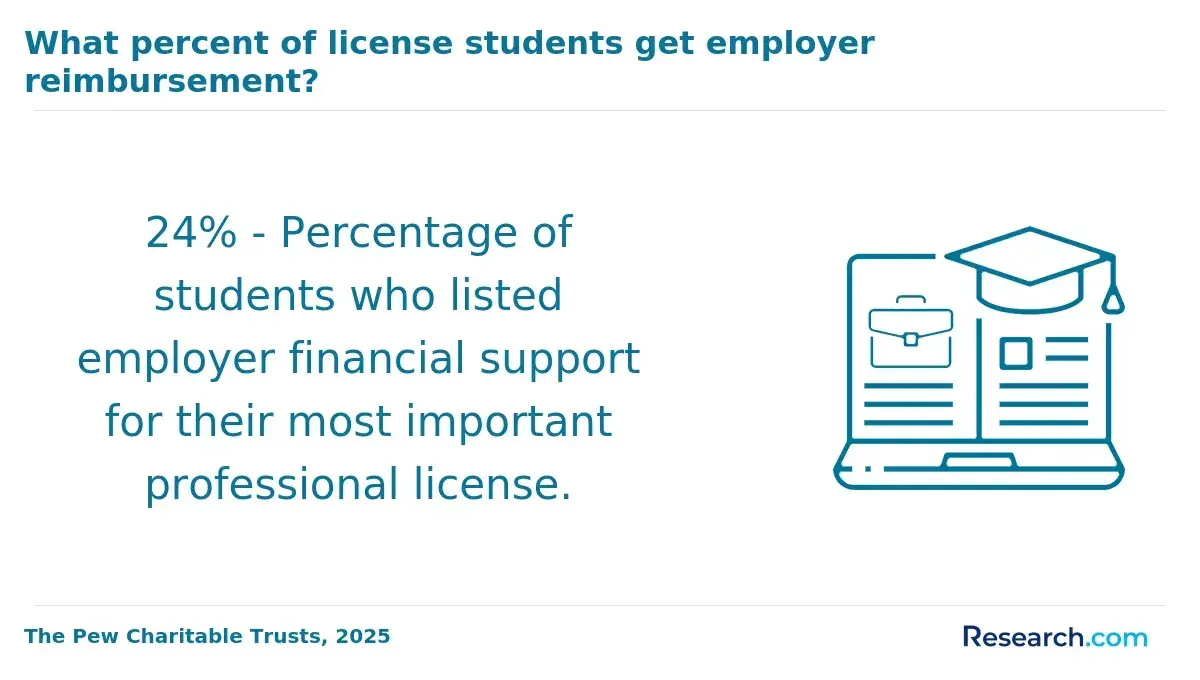
| Employer tuition benefits | Healthcare and human services employers may offer reimbursement for job-related education. | Does the school defer billing until employer reimbursement is paid? |
Financial aid options may include federal Pell Grants, federal student loans, state grants, institutional scholarships, employer tuition assistance, military education benefits, and payment plans. The maximum federal Pell Grant for the 2024-2025 award year is $7,395, but eligibility depends on financial need, enrollment intensity, and other federal rules.
A smart affordability strategy is to complete the FAFSA, request a full transfer evaluation, compare net price rather than advertised tuition, and avoid borrowing based on hoped-for promotions. The best-value program is the one that meets your career goal, fits your schedule, and lets you graduate with manageable debt.
What salary ranges and job outlook can behavioral health management graduates expect?
Salary outcomes vary because behavioral health management graduates enter several different job families. Location, employer type, union status, experience, supervisory responsibility, and graduate education can all affect pay. The most useful way to evaluate outcomes is to compare related occupations rather than assume one degree produces one salary.
The table below uses recent BLS wage and outlook categories that commonly overlap with behavioral health management career paths. These figures describe occupations, not guaranteed outcomes for graduates.
| Related occupation | May 2024 median salary | Projected growth, 2023-2033 | How it relates to this degree |
| Medical and health services managers | $117,960 | 29% | Relevant for graduates who move into healthcare operations, clinic management, compliance, or administrative leadership. |
| Social and community service managers | $78,240 | 8% | Relevant for nonprofit, community program, outreach, and human services management roles. |
| Substance abuse, behavioral disorder, and mental health counselors | $59,190 | 19% | Relevant as a labor-market comparison, though counseling roles may require specific licensure beyond a bachelor's degree. |
| Health information technologists and medical registrars | $67,310 | 16% | Relevant for students who combine behavioral health operations with records, data, and quality reporting skills. |
The strongest outlook is in healthcare management, but bachelor's graduates may need experience before qualifying for management roles. Entry-level positions in intake, coordination, outreach, or operations can be stepping stones, especially when students build skills in electronic health records, compliance, data reporting, team leadership, and grant-funded program operations.
To evaluate return on investment, compare the total remaining cost of the degree with realistic local job postings. Look for required qualifications, preferred degrees, salary bands, remote or hybrid options, and whether roles require licensure. Avoid assuming that national median salary data will match your city, employer, or first job after graduation.
How does a behavioral health management bachelor's fit into licensure and certification pathways?
A behavioral health management bachelor's can support some credential pathways, but it should not be confused with a clinical license. Licensure is controlled by states, and requirements can vary by profession, degree level, supervised hours, exams, and approved coursework.
For many working adults, this degree fits one of three pathways. Understanding the difference can prevent costly enrollment mistakes:
- Non-licensed management pathway: Graduates pursue coordinator, supervisor, operations, outreach, or program roles that do not require independent clinical practice authority.
- Addiction or behavioral health technician credential pathway: The degree may support state or employer credentials, but applicants must verify approved coursework, supervised experience, and exam rules in their state.
- Graduate clinical pathway: The bachelor's can prepare students for master's programs in counseling, social work, psychology, public health, or healthcare management, but graduate admission and licensure requirements vary.
If your long-term goal is director-level healthcare leadership, graduate study may become important after you gain experience. Comparing an online masters healthcare management pathway can help you see how bachelor's-level behavioral health knowledge may later connect to broader healthcare administration roles.
Before enrolling, contact the relevant state licensing board or certification body and ask whether the program's coursework meets any educational requirements you care about. Do this in writing if possible. A common mistake is relying on an admissions representative's general statement instead of checking the exact credential rules for your state and target role.
Other Things You Should Know About Behavioral Health Management
Yes, many students do, especially in asynchronous or part-time programs. The key is to confirm weekly workload, assignment deadlines, field placement expectations, and whether courses are offered every term.
While pursuing a Bachelor's in Behavioral Health Management online, it's beneficial to build skills in communication, critical thinking, and data analysis. Developing leadership abilities and an understanding of healthcare systems will also enhance your career prospects in the behavioral health management field.
Employers are more likely to respect an online degree from an accredited institution with relevant coursework and practical experience. The transcript usually does not matter as much as accreditation, skills, experience, and whether the degree fits the role.
References
- What is the Timeline for Obtaining a Degree in Healthcare Management? - Healthcare Management Degree Guide https://www.healthcare-management-degree.net/faq/what-is-the-timeline-for-obtaining-a-degree-in-healthcare-management/
- Online Bachelor's Degree in Health Services Administration https://www.monroeu.edu/student-life/online-experience/online-bachelors-degree-health-services-administration
- Behavioral Health Specialist Salary and Job Description https://www.warnerpacific.edu/blog/behavioral-health-specialist/
- Online Healthcare Administration Bachelors Degree | CHCP https://www.chcp.edu/degrees-certificates/healthcare-administration-bachelors-degree/online/
- Achieving Excellence: Behavioral Health Accreditation - Haven Health Management https://havenhealthmgmt.org/achieving-excellence-behavioral-health-accreditation/
- Introduction to Behavioral Health | Behave Health https://behavehealth.com/blog/introduction-to-accreditation-in-behavioral-healthcare
- Behavioral Health Career Descriptions | SAMHSA https://www.samhsa.gov/about/careers/behavioral-health-workforce/careers-by-state/descriptions
- Online DBH Programs – Online Doctor of Behavioral Health https://www.onlineeducation.com/healthcare/doctor-of-behavioral-health-programs
- Health Policy and Administration Salary and Job Outlook | CUNE https://www.cune.edu/news/health-policy-administration-jobs-salary