2027 Best Online Bachelor's in Behavioral Health Management With Career Services

Co-Founder and Chief Data Scientist
Choosing an online behavioral health management degree means weighing cost, flexibility, accreditation, career support, and whether the program fits your long-term licensing goals. Demand is timely: the U.S. Bureau of Labor Statistics reported a median wage of $110,680 for medical and health services managers in May 2023, with much faster-than-average projected growth.
This guide is for students, transfer learners, and working adults who want leadership or coordination roles in behavioral health settings. You will learn how programs work, what they cost, which careers they support, and how to choose wisely.
Key Things You Should Know
- Most online bachelor's programs in behavioral health management require about 120 credits, but transfer-friendly students may finish faster through prior college credit, associate degrees, or competency-based options.
- BLS May 2023 data reported median pay of $110,680 for medical and health services managers, $77,030 for social and community service managers, and $53,710 for substance abuse, behavioral disorder, and mental health counselors.
- A bachelor's degree can support case management, program coordination, and entry-level behavioral health roles, but clinical counseling licensure usually requires graduate education, supervised experience, and state-specific approval.
What is an online bachelor's in behavioral health management and who is it best for?
An online bachelor's in behavioral health management is an undergraduate degree focused on the administrative, operational, and human-service side of mental health, substance use, community health, and social support programs. It usually blends psychology, health services management, case management, ethics, healthcare law, data reporting, and organizational leadership.
This degree is best for students who want to work in behavioral health systems but do not necessarily want to become licensed therapists immediately after graduation. It can fit people who are interested in coordinating services, supervising frontline teams, improving access to care, managing compliance, or helping agencies run more effectively.
The degree may be a strong fit if you want roles in settings such as community mental health centers, substance use treatment programs, residential facilities, nonprofit agencies, correctional health programs, crisis services, or integrated healthcare organizations. Students who are more interested in hospital operations, revenue cycle management, or executive healthcare administration may want to compare this path with a broader degree in healthcare administration.
It may not be the best standalone degree if your primary goal is to become a licensed professional counselor, clinical social worker, psychologist, or marriage and family therapist. Those careers generally require a master's or doctoral degree, supervised clinical hours, and licensure through a state board.
The table below clarifies which students tend to benefit most from this degree and which students may need a different academic route.
| Student goal | How this degree fits | Better alternative when needed |
| Manage behavioral health programs | Strong fit because coursework often includes operations, ethics, policy, and team leadership | Graduate healthcare management or public administration degree for senior leadership |
| Become a licensed therapist | Useful foundation but usually not sufficient for licensure | Master's in counseling, social work, psychology, or marriage and family therapy |
| Work in case management or care coordination | Strong fit, especially with internship experience and local agency connections | Human services, social work, or public health degree depending on employer requirements |
| Enter addiction services | Potential fit if coursework aligns with state certification requirements | State-approved addiction counseling track if certification is the goal |
How do online behavioral health management programs work compared with campus-based options?
Online behavioral health management programs usually deliver lectures, readings, discussions, assignments, and exams through a learning management system. Many are asynchronous, meaning students can complete weekly work around job and family responsibilities. Some programs add live virtual meetings, group projects, online simulations, or scheduled advising sessions.
The biggest difference is not always academic quality; it is access. Online students need programs that can arrange local fieldwork, provide remote career coaching, and offer faculty support without requiring frequent campus visits. Campus-based students may have easier access to in-person networking, faculty office hours, and nearby internship partners.
The comparison below can help you decide which format better supports your schedule, learning style, and career goals.
| Factor | Online bachelor's program | Campus-based program |
| Schedule flexibility | Best for working adults, caregivers, military students, and transfer learners | Best for students who can attend classes at fixed times |
| Field experience | Often completed near the student's home, but placement support varies by school | May rely on established local agency partnerships near campus |
| Peer interaction | Usually through discussion boards, video meetings, and group projects | More informal interaction before and after class |
| Technology expectations | Requires reliable internet, webcam access, digital research skills, and comfort with online systems | Still uses digital tools but may provide more in-person troubleshooting |
| Best for | Students who need flexibility and can stay organized independently | Students who want structured routines and face-to-face support |
Technology is also changing what students should expect. Behavioral health agencies increasingly use electronic health records, telehealth platforms, referral systems, outcomes dashboards, and privacy-compliant communication tools. A strong online program should not treat technology as an add-on; it should teach students how digital systems affect access, quality, documentation, and compliance.
What accreditation should behavioral health management bachelor's programs have in the U.S.?
Accreditation is one of the most important quality checks for an online bachelor's in behavioral health management. At minimum, the college or university should hold institutional accreditation from an accreditor recognized by the U.S. Department of Education or the Council for Higher Education Accreditation. This affects federal financial aid eligibility, transfer credit, graduate school admission, and employer confidence.
Programmatic accreditation is more complicated. Behavioral health management bachelor's programs do not have one universal accreditor in the way nursing or social work programs may. If a program is housed in social work, psychology, counseling, public health, or healthcare administration, you should check whether that specific discipline has relevant accreditation or state approval.
Use this table to understand what accreditation can and cannot tell you.
| Accreditation or approval type | Why it matters | What to verify |
| Institutional accreditation | Confirms the college meets broad academic and administrative standards | Recognition by the U.S. Department of Education or CHEA |
| Social work accreditation | Important if the degree is a BSW and the student may pursue social work licensure later | Whether the program is accredited by the Council on Social Work Education |
| Counseling-related accreditation | Usually applies at the graduate level rather than bachelor's level | Whether future master's programs require specific undergraduate prerequisites |
| State addiction counseling approval | May affect eligibility for substance use counseling credentials | Whether coursework and field hours meet the rules in your state |
A common mistake is assuming that any behavioral health degree automatically meets counseling, addiction, or case management credential requirements. Licensure and certification rules vary by state, and some require specific courses, supervised hours, exams, background checks, or graduate degrees. Before enrolling, compare the curriculum against the rules of the state where you plan to work.
What courses and skills are taught in an online behavioral health management curriculum?
The curriculum in an online behavioral health management bachelor's program is designed to connect human behavior with service delivery. Students learn how behavioral health organizations serve clients, manage risk, document care, follow laws, measure outcomes, and coordinate with healthcare and social service systems.
Common courses often include the following topics because they prepare students for both direct-service and administrative responsibilities.
- Introduction to behavioral health, including mental health, substance use, trauma-informed care, and recovery-oriented service models
- Psychology and human development, including lifespan development, abnormal psychology, and social determinants of health
- Case management and care coordination, including assessment, referral, documentation, advocacy, and interagency collaboration
- Behavioral health law and ethics, including confidentiality, informed consent, mandated reporting, HIPAA, and professional boundaries
- Healthcare and nonprofit management, including budgeting, staffing, quality improvement, compliance, and program evaluation
- Data and technology in behavioral health, including electronic health records, telehealth workflows, outcomes tracking, and privacy-aware communication
Students who want a broader community-service pathway may also compare the degree with a human services degree, which often emphasizes client advocacy, social programs, and community resources more broadly.
The strongest programs help students build practical skills rather than only memorizing theories. Look for assignments that resemble workplace tasks, such as creating referral plans, analyzing service gaps, writing program proposals, reviewing mock documentation, or building quality-improvement recommendations.
Graduates should aim to leave with a usable skill set in these areas.
- Client-centered communication and culturally responsive service coordination
- Ethical decision-making in high-risk or confidential situations
- Basic budgeting, staffing, scheduling, and resource management
- Program evaluation using outcomes data rather than assumptions
- Team leadership, conflict management, and interdisciplinary collaboration
- Professional documentation that is accurate, timely, and compliant
What are typical admissions requirements for online behavioral health management bachelor's programs?
Admissions requirements vary by school, but most online bachelor's programs are designed for either first-time college students or transfer students. Programs in behavioral health management may be housed in departments of health sciences, psychology, human services, public health, or business, so requirements can differ even when the degree title sounds similar.
Most applicants should expect to provide these materials because schools use them to evaluate academic readiness and transfer standing.
- High school diploma, GED, or equivalent credential for first-year admission
- Official transcripts from high school and all previously attended colleges
- Minimum GPA requirement, often with more flexibility for adult or transfer applicants
- Online application and possible application fee
- Personal statement or short essay explaining career goals, especially for human services or behavioral health tracks
- Transfer credit evaluation for students with prior college coursework, military training, or an associate degree
Some programs may also require background checks, immunization records, drug screening, or liability insurance before internships or field placements. These requirements usually come later in the program, but you should ask about them before enrolling if you have concerns about placement eligibility.
Test scores are less central than they once were. Many online bachelor's programs are test-optional or do not require SAT or ACT scores for adult learners. Instead, schools often focus on transcripts, completed credits, prerequisite courses, and whether the applicant can succeed in an online format.
How long do online behavioral health management degrees take and what do they cost?
Most online bachelor's degrees require about 120 semester credits. A first-time student studying full time commonly needs about four years, while a transfer student with an associate degree may need two years or less depending on credit acceptance and course availability. Part-time students should expect a longer timeline but may reduce work-life strain.
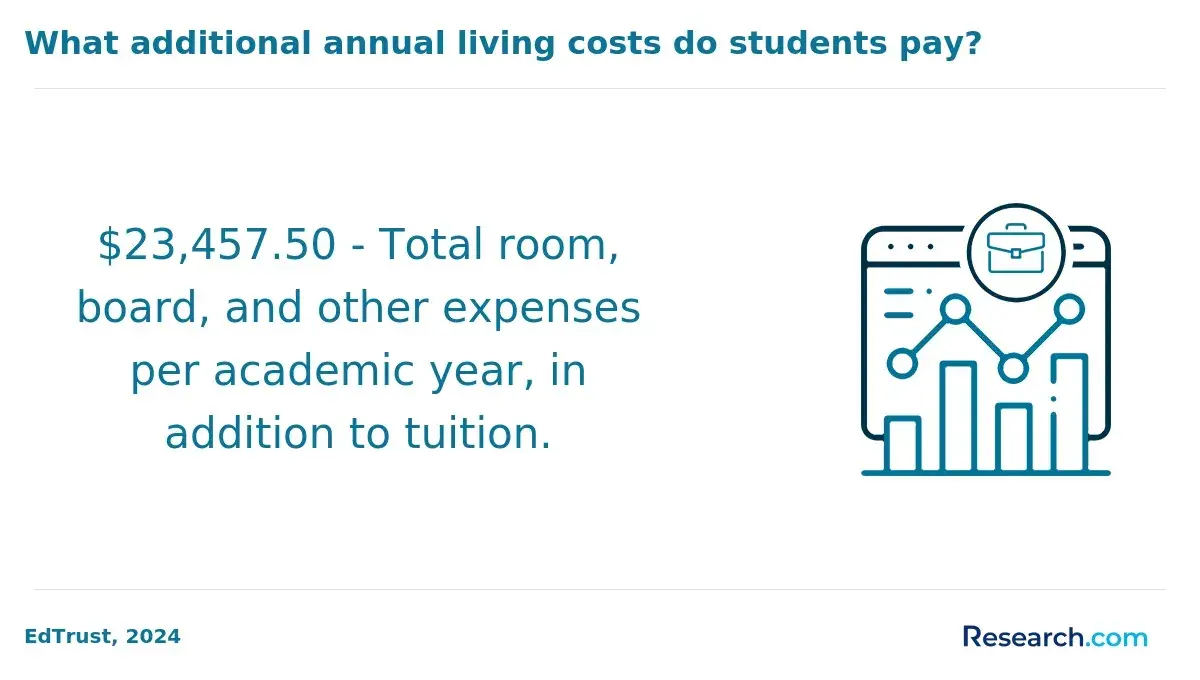
Cost depends on institution type, residency rules, transfer credits, fees, books, technology, and whether fieldwork creates travel or scheduling expenses. College Board's 2024 Trends in College Pricing and Student Aid reported the following average published tuition and fees for 2024-25, which gives students a useful benchmark before comparing specific online programs.
- Public four-year, in-state: $11,610
- Public four-year, out-of-state: $30,780
- Private nonprofit four-year: $43,350
Published tuition is not the same as the amount every student pays. Grants, scholarships, employer tuition assistance, military benefits, transfer credits, and need-based aid can reduce net cost. On the other hand, online course fees, practicum costs, repeated courses, and delayed graduation can increase total cost.
The table below shows the major cost and timeline trade-offs students should compare before choosing a program.
| Decision factor | Lower-cost or faster option | Trade-off to consider |
| Transfer credits | Programs that accept more prior credits can shorten time to degree | Some major courses may still need to be completed at the school |
| Public vs. private institution | Public in-state tuition may be lower | Private schools may offer scholarships or flexible online calendars |
| Full-time enrollment | Can shorten completion time | May be difficult for students working in demanding care roles |
| Part-time enrollment | Can make tuition and workload easier to manage each term | May increase time before career advancement |
| Accelerated terms | Can help motivated students progress quickly | Requires strong time management and steady weekly availability |
To estimate return on investment, compare total net price against the roles you realistically plan to pursue, not only the highest-paying management job listed in national labor data. A student already working in behavioral health may see value through promotion eligibility, while a career changer may need entry-level experience before moving into management.
What behavioral health careers can you pursue with this bachelor's degree?
A bachelor's in behavioral health management can lead to roles that combine service coordination, operations, documentation, compliance, and team support. It is especially useful in organizations that need employees who understand both client needs and administrative requirements.
The table below summarizes common career directions. Exact job titles and requirements vary by employer, state regulations, and whether the role involves direct clinical services.
| Career path | Typical responsibilities | Notes for graduates |
| Behavioral health case manager | Coordinate services, referrals, care plans, documentation, and follow-up support | Some employers require certification or supervised experience |
| Program coordinator | Support scheduling, reporting, outreach, quality tracking, and staff communication | Good pathway toward program management roles |
| Community health worker supervisor | Help teams connect clients with resources and remove barriers to care | May require knowledge of local social service systems |
| Residential services manager | Oversee daily operations, safety procedures, staff coverage, and client support systems | Background checks and crisis-response training may be required |
| Substance use program staff | Assist with intake, recovery support, documentation, referrals, and compliance | State addiction credential rules should be checked early |
| Behavioral health operations assistant | Support administrative workflows, EHR documentation, reporting, and compliance tasks | Can be a bridge into health services management |
Advancement often depends on combining education with experience. A graduate may start in case management or coordination, then move into supervision, program management, quality improvement, compliance, or graduate study. Students who eventually want executive roles in hospitals, health systems, or payer organizations may later consider an MBA in healthcare or a related graduate management degree.
Students should be careful with job postings that use similar titles differently. For example, one employer may use "behavioral health specialist" for a bachelor's-level support role, while another may use it for a licensed clinical position. Always read the education, licensure, and supervision requirements instead of relying on the title alone.
What salary ranges and job outlook can graduates in behavioral health management expect?
Salary outcomes for behavioral health management graduates vary widely because the degree can lead to direct-service, coordination, administrative, or management roles. National salary data is useful as a benchmark, but it should not be treated as a promise. Location, employer type, experience, licensure, union coverage, and supervisory responsibility can all change compensation.
The BLS wage data below was reported for May 2023 and published in 2024 occupational resources. It is useful because it shows the range of related occupations rather than presenting one salary as the expected outcome for every graduate.
| Related occupation | Median annual wage | Projected employment growth | How to interpret it |
| Medical and health services managers | $110,680 | 28% | Most relevant to graduates who move into operations or management roles after gaining experience |
| Social and community service managers | $77,030 | 9% | Relevant to nonprofit, community agency, and human service program leadership |
| Substance abuse, behavioral disorder, and mental health counselors | $53,710 | 18% | Relevant only when the graduate meets state rules for counseling or support credentials |
The job outlook is shaped by several U.S. trends: rising demand for mental health and substance use services, integration of behavioral health into primary care, telehealth expansion, and a stronger emphasis on measurable outcomes. At the same time, many clinical roles face workforce shortages and state licensure constraints, which means bachelor's graduates may find opportunities in coordination and operations while still needing graduate education for independent clinical practice.
A practical way to evaluate salary potential is to search job postings in your target state before enrolling. Compare bachelor's-level postings, required credentials, years of experience, and whether the employer offers tuition assistance for graduate study.
How do career services and internships support online behavioral health management students?
Career services matter more in behavioral health management than many students realize. The field depends heavily on supervised experience, local agency relationships, documentation skills, and employer trust. A flexible online program is valuable, but it should also help students turn coursework into career-ready evidence.
Strong career services for online students usually include several forms of support because career preparation is not limited to writing a resume near graduation.
- Career coaching that helps students identify realistic roles based on state rules, prior experience, and long-term goals
- Resume and cover letter reviews tailored to behavioral health, human services, healthcare, or nonprofit employers
- Mock interviews that prepare students to discuss ethics, boundaries, crisis situations, teamwork, and documentation
- Internship or practicum coordination with agencies near the student's location when the program requires field experience
- Job boards, alumni networks, and employer events that include remote students, not only campus students
- Graduate school advising for students who plan to pursue counseling, social work, public health, or healthcare management later
Internships are especially important because they can clarify whether you prefer direct service, program operations, compliance, outreach, or leadership. They also help students test the emotional and practical demands of behavioral health work before committing to a narrow career path.
Students interested in managing grants, implementation timelines, teams, or quality-improvement projects may also benefit from comparing this degree with a bachelor degree in project management, especially if their goal is operations leadership rather than client-facing behavioral health work.
Before enrolling, ask the school how online students secure internships. A program that says "students find their own placement" is not automatically bad, but it should still provide templates, affiliation agreements, supervisor requirements, and staff support when problems arise.
How can you choose a reputable behavioral health management program that meets licensing goals?
Choosing a reputable online behavioral health management program starts with matching the degree to your actual career goal. The best program for a future case manager may not be the best program for a future addiction counselor, healthcare administrator, or graduate counseling student.
Use the following steps to compare programs in a practical order. This process helps you avoid choosing based only on tuition, advertising, or convenience.
- Verify institutional accreditation through the U.S. Department of Education or CHEA-recognized accreditor lists.
- Identify your target role and state, then check whether that role has licensure, certification, background check, or supervised-hour requirements.
- Compare the curriculum against those requirements, especially for addiction counseling, case management, social work pathways, or graduate school prerequisites.
- Ask how internships work for online students, including who approves sites, what happens if a placement falls through, and whether evening or weekend placements are possible.
- Request a transfer credit review before committing if you have prior college credits or an associate degree.
- Calculate total net cost, including tuition, fees, books, technology, travel, placement expenses, and time to completion.
- Review career services for online students, not just campus students, and ask for examples of employer partnerships or common job titles pursued by graduates.
Several red flags should prompt more questions before you enroll. Avoid assuming a program is reputable simply because it is online, accelerated, or advertised as career-focused.
- The school is unclear about institutional accreditation or uses vague language that does not name a recognized accreditor.
- The program implies that a bachelor's degree alone leads to independent counseling licensure without explaining state requirements.
- Admissions staff cannot explain internship expectations, site approval, or support for students outside the school's local area.
- The advertised tuition excludes major fees, course materials, or field placement costs.
- The curriculum does not include ethics, documentation, behavioral health systems, privacy, or management coursework.
- The program relies on broad employment claims without explaining which roles are bachelor's-level and which require graduate education or licensure.
The strongest choice is usually the program that aligns accreditation, curriculum, field experience, cost, and career support with your specific state and career goal. Rankings can be a starting point, but your final decision should be based on fit, transparency, and verified requirements.
Other Things You Should Know About Behavioral Health Management
No. Psychology focuses more on behavior, cognition, research, and mental processes. Behavioral health management applies behavioral health knowledge to service coordination, program operations, compliance, leadership, and organizational support.
Yes, pursuing an online Bachelor's in Behavioral Health Management often provides the flexibility needed for full-time work, as many programs offer asynchronous courses. It's crucial, however, to verify specific scheduling options with the intended institution to ensure they align with professional commitments.
Choose behavioral health management if you want administrative, coordination, or program roles first. Choose a more counseling-focused undergraduate path if your priority is meeting prerequisites for a specific graduate clinical program.
References
- 2025 Most Affordable Healthcare Administration Degrees Online https://www.onlineu.com/most-affordable-colleges/healthcare-administration-degrees
- Why trust GlobalHealth Education? https://globalhealtheducation.com/au/resources/online-vs-on-campus-courses
- Which behavioral health professional is right for you? https://tuftshealthplan.com/member/tufts-health-direct-plans/getting-care/mental-health-substance-use-disorder/which-behavioral-health-professional-is-right-for
- 10 Fulfilling Mental Health Careers You Can Train for Now | Palo Alto University https://paloaltou.edu/resources/blog/mental-health-careers-you-can-start-now
- What Can You Do With a Bachelor's in Psychology? Top Careers & Skills to Build Your Future https://www.umassglobal.edu/blog-news/can-you-do-a-bachelors-psychology-top-careers-skills-build-your-future
- Online Bachelor's Degrees in Human Services: Top Schools https://www.edumed.org/online-schools/human-services-degrees/bachelors/
- Types of Mental Health Professionals | NAMI https://www.nami.org/treatments-and-approaches/types-of-mental-health-professionals/
- Bachelor’s in Psychology Careers https://onlinecounselingprograms.com/mental-health-careers/bachelors-in-psychology-jobs/
- 9 Mental Health Careers You Can Pursue with a BA https://www.nec.edu/news/9-mental-health-careers-you-can-pursue-with-a-ba
- Behavioral Health Jobs & Career Guide - PsychologyJobs.com https://psychologyjobs.com/behavioral-health-jobs/