2027 Online Behavioral Health Management Degrees That Help Build Program Evaluation Skills

Co-Founder and Chief Data Scientist
Choosing an online behavioral health management degree is partly a career decision and partly a systems decision: can the program teach you to improve care, measure outcomes, and manage services responsibly? SAMHSA's National Survey on Drug Use and Health, released in 2024, estimated that 59.2 million U.S. adults had any mental illness.
That demand makes evaluation skills valuable for clinics, nonprofits, hospitals, and public agencies. This guide explains degree levels, online quality, admissions, costs, accreditation, courses, and career outcomes so you can decide whether this path fits your goals.
Key Things You Should Know
- Behavioral health management degrees are strongest for students who want leadership, operations, grant, quality improvement, or evaluation roles rather than direct clinical licensure alone.
- Program evaluation training usually covers needs assessment, logic models, outcomes measurement, data dashboards, quality improvement, ethics, and evidence-based behavioral health services.
- BLS data published for May 2024 lists a median annual wage of $117,960 for medical and health services managers, but salaries vary by role, degree level, setting, state, and prior experience.
What is an online behavioral health management degree and who is it best suited for?
An online behavioral health management degree prepares students to coordinate, improve, and evaluate services related to mental health, substance use, community behavioral health, crisis response, integrated care, and social services. Unlike a counseling degree that primarily trains students for therapeutic practice, this pathway focuses on how programs are designed, funded, staffed, measured, and improved.
The word "management" matters. Students usually study healthcare operations, behavioral health policy, finance, supervision, ethics, data-informed decision-making, and program evaluation. The best programs help students connect service quality with measurable outcomes, such as access to care, treatment retention, client satisfaction, reduced readmissions, equity in service delivery, and compliance with payer or grant requirements.
This degree is usually a good fit for people who want to lead or improve programs rather than spend their entire career in one-on-one counseling. It can also fit current behavioral health workers who understand the field from the front line and now want to move into coordinator, manager, analyst, or director roles. Students comparing this route with a broader healthcare administration degree should look closely at whether they want a general healthcare leadership curriculum or one with stronger mental health, substance use, and community services content.
The table below summarizes who is usually well matched to this degree and who may be better served by another credential.
| Student goal | Good fit? | Why it matters |
| Manage a behavioral health clinic, nonprofit program, or community service team | Often yes | The curriculum usually connects operations, funding, compliance, and outcomes measurement. |
| Become a licensed therapist, psychologist, or clinical social worker | Not by itself | Licensure usually requires a specific clinical degree, supervised hours, exams, and state approval. |
| Move from direct service into program coordination or quality improvement | Often yes | Evaluation and management courses can help translate field experience into leadership skills. |
| Work primarily in healthcare finance, hospital administration, or insurance operations | Maybe | A broader health administration, public health, or health informatics program may fit better. |
| Conduct advanced research or teach at the university level | Maybe later | A master's may help, but research-intensive roles may require a doctorate. |
A common mistake is assuming that "behavioral health" automatically means clinical licensure. Before enrolling, identify the exact job titles you want, then check whether those roles require a license, a graduate degree, supervised clinical hours, management experience, or data skills. The right program should match those requirements instead of only sounding relevant.
How can an online behavioral health management program help build program evaluation skills?
Program evaluation is the process of determining whether a service is needed, implemented well, achieving its goals, and worth continued investment. In behavioral health, evaluation can help leaders answer practical questions: Are clients getting appointments quickly enough? Are services reaching the intended population? Are outcomes improving? Are grant funds being used as promised? Are there gaps by race, income, location, age, disability, or insurance status?
Online programs can build these skills through coursework, case studies, applied projects, internships, and capstones. The strongest programs do not treat evaluation as a single statistics class. They integrate it across management, ethics, finance, population health, and quality improvement so students learn how to use evidence in real organizational decisions.
Students should look for programs that teach the full evaluation cycle, not just data collection. A practical evaluation sequence usually includes these steps:
- Define the problem, target population, stakeholders, and service goals before choosing metrics.
- Create a logic model that connects resources, activities, outputs, short-term outcomes, and long-term impact.
- Select measures that are valid, ethical, feasible, and meaningful to clients, funders, clinicians, and administrators.
- Collect and analyze data while protecting privacy and complying with HIPAA, 42 CFR Part 2 when applicable, and institutional policies.
- Interpret findings in context, including limitations, unintended consequences, and equity concerns.
- Translate findings into improvement plans, budget decisions, staff training, grant reports, or policy recommendations.
AI and automation are also changing evaluation work. Behavioral health organizations increasingly use electronic health records, dashboards, claims data, predictive analytics, and automated reporting tools. A good online program should help students understand what technology can and cannot do. For example, a dashboard can identify missed follow-up appointments, but a manager still needs evaluation judgment to determine whether the cause is staffing, transportation, scheduling, insurance authorization, cultural fit, or data quality.
The most valuable programs also train students to communicate results clearly. Program evaluation is not useful if findings stay in a spreadsheet. Graduates need to explain evidence to clinical teams, executives, boards, community partners, and funders without overstating what the data proves.
What types of online behavioral health management degrees are available and which level should I pursue?
Behavioral health management is often offered as a concentration within health administration, human services, public health, social work administration, psychology, organizational leadership, or healthcare management programs. Some schools use titles such as behavioral health leadership, mental health administration, addiction services management, human services administration, or community health management.
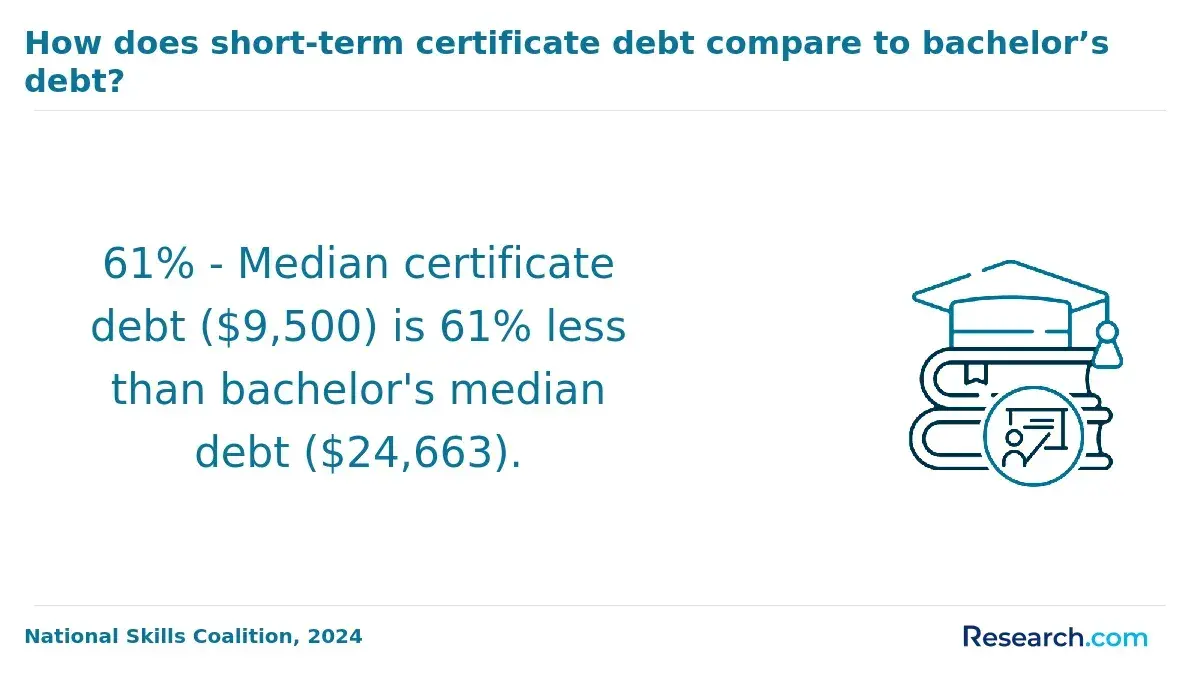
The best degree level depends on where you are starting and what authority you want in the workplace. Students who want a fast entry route may begin with a certificate or bachelor's degree, while those targeting director-level, grant leadership, policy, or advanced evaluation roles often need a master's degree. If your interest is broader community service leadership, an online masters in human services can also be relevant, especially when it includes evaluation, nonprofit management, and behavioral health electives.
The table below compares common credential levels and the decision each one supports.
| Credential level | Typical student profile | Evaluation skill depth | Best use case |
| Undergraduate certificate | Students testing the field or adding behavioral health context to another major | Introductory | Building baseline knowledge without committing to a full degree |
| Associate degree | Students seeking entry-level support roles or transfer preparation | Limited to foundational courses | Starting affordably, especially through a community college pathway |
| Bachelor's degree | New or working adults preparing for coordinator, case management, or supervisor-track roles | Moderate if the curriculum includes research methods and quality improvement | Entering management-adjacent roles and preparing for graduate study |
| Graduate certificate | Professionals who already hold a degree and need targeted management or evaluation training | Moderate to strong depending on course selection | Upskilling without completing a second full degree |
| Master's degree | Professionals seeking leadership, director, analyst, or advanced program roles | Usually strongest among non-doctoral options | Managing programs, leading evaluation projects, and competing for advancement |
| Doctorate | Experienced professionals pursuing executive leadership, research, teaching, or high-level policy roles | Advanced | Leading complex systems, research agendas, or senior organizational change |
Use a simple decision rule: choose the lowest-cost credential that credibly qualifies you for the next role you want. A certificate may be enough if you already have a strong clinical, human services, or healthcare background. A bachelor's can be a practical entry point if you do not yet have a degree. A master's usually makes more sense if you are aiming for program manager, quality improvement, grants, or director-level responsibilities.
Be cautious with programs that promise broad career mobility but do not show where graduates work or how the curriculum maps to specific skills. Also avoid choosing a degree only because it is accelerated. Faster programs can be useful, but they leave less room for internships, applied evaluation projects, mentoring, and portfolio development.
What core courses and competencies in behavioral health management focus on program evaluation?
The strongest behavioral health management programs make evaluation a recurring competency. You should see courses that combine behavioral health context with quantitative reasoning, qualitative feedback, ethics, and leadership. A single research course is helpful, but it is not enough if the rest of the curriculum ignores outcomes, quality, and implementation.
Course titles vary by school, but students interested in program evaluation should look for the following types of coursework and deliverables:
- Program planning and evaluation, including needs assessments, logic models, evaluation questions, data collection plans, and reporting formats.
- Behavioral health policy and financing, including Medicaid, managed care, grants, value-based payment, parity issues, and public funding constraints.
- Quality improvement and performance management, including process mapping, root-cause analysis, Plan-Do-Study-Act cycles, and service access metrics.
- Research methods and applied statistics, including survey design, basic analysis, sampling limits, and interpretation of findings.
- Health informatics or data systems, including electronic health records, dashboards, data governance, privacy, and documentation quality.
- Ethics and legal issues, including confidentiality, informed consent, equity, client rights, mandated reporting, and substance use record protections.
- Leadership and supervision, including workforce development, burnout prevention, team communication, and change management.
- Grant writing and nonprofit management, including funder expectations, performance indicators, budgets, and sustainability planning.
A useful way to judge curriculum quality is to ask what you will produce by graduation. A program that builds evaluation skills should leave you with artifacts you can discuss in interviews, such as a logic model, dashboard mockup, evaluation plan, grant evaluation section, quality improvement proposal, policy memo, or capstone report.
The table below shows how common competencies translate into workplace tasks.
| Competency | What it looks like in a job | Why employers value it |
| Needs assessment | Identifying service gaps for youth, adults, veterans, rural communities, or people with co-occurring disorders | Helps organizations prioritize limited funding and staff time |
| Outcome measurement | Tracking retention, referrals completed, symptom screening changes, crisis follow-up, or housing stability | Shows whether services are producing meaningful results |
| Implementation analysis | Checking whether a program was delivered as designed | Prevents leaders from judging a model unfairly when the issue is poor rollout |
| Equity analysis | Reviewing whether outcomes differ across demographic or geographic groups | Supports fair access and better compliance with public and grant expectations |
| Data communication | Turning findings into dashboards, board reports, staff presentations, or funder updates | Makes evidence usable for decisions |
Do not overvalue programs that list trendy analytics tools but underemphasize ethics and service context. Behavioral health data is sensitive, and evaluation can affect funding, staffing, and client access. Graduates need both technical competence and judgment.
How do online behavioral health management programs compare with campus-based options for quality and outcomes?
Online programs can be high quality when they are properly accredited, taught by qualified faculty, supported by strong student services, and designed around applied learning. The delivery format alone does not determine quality. What matters is whether the program provides rigorous coursework, meaningful feedback, access to faculty, career support, and opportunities to apply management and evaluation skills.
Online study is especially practical for working adults in behavioral health because many students are already employed in clinics, hospitals, schools, correctional settings, crisis services, social service agencies, or nonprofits. Federal data published through NCES shows that distance education is now a mainstream part of U.S. higher education, particularly at the graduate level. For readers, the takeaway is that employers are generally more focused on accreditation, school reputation, skills, and experience than on whether every class met in person.
The table below compares online and campus-based formats across the factors that matter most for decision-making.
| Factor | Online program | Campus-based program | Decision tip |
| Flexibility | Usually stronger for working adults, caregivers, and students far from campus | Usually less flexible but may offer a predictable weekly routine | Choose online if keeping your current job is central to affordability and career growth. |
| Networking | Can be strong when programs use live sessions, cohort models, faculty mentoring, and local fieldwork | Often easier for spontaneous faculty and peer interaction | Ask how online students meet alumni, employers, and practicum supervisors. |
| Applied evaluation projects | Can be completed with a local employer or community partner | May be easier to connect with campus research centers or local agencies | Look for a required capstone or applied project in either format. |
| Cost control | May reduce commuting, relocation, and lost wages | May offer assistantships or campus-based resources | Compare total cost, not tuition alone. |
| Accountability | Requires strong self-management and comfort with digital tools | Provides more in-person structure | Be honest about your learning style before choosing. |
Before enrolling online, ask the school how it supports students who need help with statistics, data analysis, writing, or field placements. These supports are especially important for evaluation-focused programs because students must learn to interpret evidence, not just memorize terminology.
Common red flags include asynchronous courses with little instructor interaction, no applied project, no career services for online students, unclear practicum expectations, and vague claims that the program prepares students for "leadership" without showing specific competencies.
What accreditation should behavioral health management programs have, and how do I verify it?
Accreditation is one of the most important checks before enrolling. At minimum, the institution should be accredited by an agency recognized by the U.S. Department of Education or the Council for Higher Education Accreditation. Institutional accreditation affects federal financial aid eligibility, transfer credit, graduate school recognition, and employer confidence.
Programmatic accreditation depends on the degree type. A behavioral health management concentration inside a health administration, public health, social work, counseling, or human services program may fall under different standards. Not every legitimate management program has specialized accreditation, but if the program claims to prepare students for licensure or a regulated profession, the accreditation and state approval details become much more important.
Use this verification process before you apply or pay a deposit:
- Search the institution in the U.S. Department of Education's Database of Accredited Postsecondary Institutions and Programs.
- Confirm that the accrediting agency name on the school website matches the federal database.
- Check whether the specific degree, campus, online modality, or program location has any limitations, warnings, teach-out status, or recent changes.
- If the degree is connected to counseling, social work, nursing, or psychology licensure, verify requirements with your state licensing board before enrolling.
- Ask admissions for written confirmation about transfer credit, practicum requirements, licensure alignment, and whether online students receive the same diploma designation as campus students.
The table below explains which accreditation questions are most relevant by program type.
| Program type | Accreditation question to ask | Why it matters |
| Health administration or healthcare management | Is the institution accredited, and does the program follow recognized healthcare leadership competencies? | Supports employer recognition and graduate school transferability. |
| Public health | Is the public health unit or program accredited when specialized accreditation is expected? | May matter for public health employers, fellowships, and advanced study. |
| Human services or nonprofit leadership | Does the curriculum include applied fieldwork, ethics, and program evaluation? | Specialized accreditation may be less common, so curriculum evidence becomes important. |
| Counseling, social work, nursing, or psychology pathway | Does the program meet state licensure education requirements? | Licensure rules are specific and cannot be assumed from the degree title. |
A major mistake is relying only on a school's marketing page. Accreditation can change, and state licensure rules can be narrow. Save screenshots or written emails from the school and verify independently before taking loans or committing years of study.
What are typical admission requirements for online behavioral health management degrees in the U.S.?
Admission requirements vary by degree level, school selectivity, and whether the program is clinical, administrative, or interdisciplinary. Online programs for working adults may offer multiple start dates, rolling admissions, and part-time options, but reputable programs still require evidence that students can handle college-level or graduate-level work.
The table below summarizes common requirements by degree level so you can estimate how much preparation you may need before applying.
| Degree level | Typical requirements | What can strengthen an application |
| Associate degree | High school diploma or GED, placement information, transcripts | Work or volunteer experience in health, human services, peer support, or community programs |
| Bachelor's degree | High school diploma or transfer credits, transcripts, possible minimum GPA | Prior college credits, relevant employment, strong writing sample if requested |
| Graduate certificate | Bachelor's degree, transcripts, possible resume and statement of purpose | Clear professional goal and experience in healthcare, behavioral health, education, nonprofit, or public service |
| Master's degree | Bachelor's degree, transcripts, resume, statement of purpose, recommendations, possible minimum GPA | Supervisory experience, data or statistics coursework, direct service background, leadership examples |
| Doctorate | Graduate degree or strong professional background, writing sample, interview, research or leadership goals | Evidence of advanced leadership, evaluation experience, publications, or major organizational projects |
If you are applying to a graduate program after time away from school, do not assume you are less competitive. Many behavioral health management programs value professional experience because students can connect coursework to real service settings. A strong statement of purpose should explain what population or system you want to improve and why evaluation skills are necessary for that goal.
Before applying, prepare the materials that admissions committees use to judge fit and readiness:
- A resume that highlights supervision, case coordination, quality improvement, compliance, reporting, grant, or data-related responsibilities.
- A statement of purpose that names your career target and explains why management and evaluation training are needed.
- Transcripts from every prior college, even if credits are old or unrelated.
- Recommendation letters from supervisors, faculty, or program leaders who can discuss reliability, communication, ethics, and leadership potential.
- A plan for time management, especially if you will work full time while studying.
Watch for admissions shortcuts that seem convenient but reduce transparency. Open admission can be appropriate at some levels, but you still deserve clear information about graduation rates, student support, fieldwork expectations, and career outcomes.
How long do online behavioral health management programs take, and what do they cost?
Program length depends on degree level, transfer credits, enrollment intensity, and whether the program includes fieldwork or a capstone. Cost depends on tuition, fees, books, technology requirements, travel for any residencies, background checks, practicum expenses, and lost work time. The lowest tuition is not always the lowest total cost if a program takes longer, accepts fewer transfer credits, or requires unpaid field hours during work hours.
Federal student aid rules also matter. For the 2024-25 award year, the annual Direct Unsubsidized Loan limit for most graduate and professional students is $20,500. That number is useful because it reminds applicants that borrowing capacity does not equal affordability; interest, living expenses, and employer tuition benefits should be part of the ROI calculation.
The table below gives a practical timeline and cost framework. Use it as a comparison tool, then verify exact tuition and fees directly with each school.
| Credential | Common completion time | Main cost drivers | Best affordability strategy |
| Certificate | Several months to 1 year | Per-credit tuition, fees, course materials | Use it to fill a specific skill gap rather than as a substitute for a required degree. |
| Associate degree | 2 years full time, longer part time | Tuition, general education courses, transfer planning | Start at a community college and confirm transfer agreements early. |
| Bachelor's degree | 4 years full time, shorter with transfer credit | Upper-division tuition, technology fees, internship requirements | Maximize accepted transfer credits and compare in-state online rates. |
| Master's degree | 1 to 3 years depending on pace | Graduate tuition, practicum or capstone costs, reduced work hours | Ask about employer tuition assistance, scholarships, and part-time pacing. |
| Doctorate | 3 or more years in many cases | Dissertation or applied project fees, residencies, extended enrollment | Enroll only if the credential is necessary for executive, academic, or research goals. |
To estimate total cost realistically, compare programs using the same categories. This prevents a school with low tuition but high fees from looking cheaper than it is.
- Tuition per credit and total credits required for graduation.
- Mandatory online, technology, graduation, clinical, background check, or practicum fees.
- Books, software, assessment tools, statistics platforms, or data visualization tools.
- Travel costs for residencies, intensives, internships, or required campus visits.
- Transfer credit acceptance, prior learning assessment, and course waiver policies.
- Scholarships, assistantships, employer reimbursement, military benefits, and payment plans.
- Opportunity cost if fieldwork, synchronous classes, or heavy workloads reduce paid employment.
A common affordability mistake is comparing only per-credit tuition. A 36-credit program at a higher per-credit rate may cost less than a 48-credit program with lower per-credit tuition. Always calculate the total program price and ask whether tuition can increase while you are enrolled.
What careers, job settings, and advancement paths can follow a behavioral health management degree with evaluation training?
A behavioral health management degree with evaluation training can support careers in program coordination, quality improvement, nonprofit leadership, behavioral health operations, grant management, community health planning, and service evaluation. It is especially useful in organizations that must prove outcomes to payers, boards, accrediting bodies, state agencies, or funders.
Graduates may work in community mental health centers, substance use treatment programs, hospitals, integrated primary care practices, crisis response systems, social service nonprofits, managed care organizations, county health departments, schools, correctional reentry programs, housing agencies, veteran-serving organizations, or research and evaluation firms.
The table below connects common roles with typical responsibilities. Requirements vary, and some roles may require a clinical license, graduate degree, or specialized experience.
| Role or path | Typical responsibilities | Evaluation connection |
| Behavioral health program coordinator | Schedules services, coordinates staff, monitors referrals, supports reporting | Tracks access, participation, and service completion |
| Quality improvement specialist | Reviews processes, analyzes performance data, supports improvement projects | Uses metrics to identify bottlenecks and test solutions |
| Grant manager or evaluation coordinator | Manages deliverables, budgets, reports, and funder communication | Documents outcomes and explains whether grant goals are being met |
| Behavioral health operations manager | Oversees staffing, workflows, compliance, budgets, and service capacity | Uses dashboards and reports to make operational decisions |
| Community health or human services manager | Leads programs addressing mental health, substance use, housing, prevention, or family support | Assesses community needs and program impact |
| Program evaluator or analyst | Designs evaluation plans, analyzes data, writes reports, presents findings | Evaluation is the central function of the role |
Some students discover that they want direct advanced clinical practice rather than management. If your goal is diagnosis, medication management, and advanced psychiatric nursing practice, compare this administrative path with online PMHNP programs, which follow a different clinical and licensure pathway.
Career advancement usually happens through a combination of degree level, field experience, leadership responsibility, and evidence of measurable improvement. Students can strengthen their path by taking these practical steps while enrolled:
- Use class projects to evaluate a real program at your workplace or a local agency.
- Build a portfolio with a needs assessment, logic model, evaluation plan, dashboard example, and final report.
- Learn common tools such as Excel, survey platforms, electronic health record reporting modules, and basic data visualization software.
- Ask supervisors for projects involving compliance, quality improvement, grant reporting, client satisfaction, or outcome tracking.
- Join professional associations or local coalitions related to behavioral health, public health, addiction services, nonprofit leadership, or healthcare quality.
The biggest career mistake is waiting until after graduation to build experience. Evaluation roles often require proof that you can work with imperfect real-world data, communicate with stakeholders, and make practical recommendations. Coursework helps, but applied examples make you more credible.
What salary ranges and job outlook can graduates expect in behavioral health management and program evaluation roles?
Salary outcomes vary widely because behavioral health management sits across several occupational categories. Pay can differ by state, employer type, degree level, union status, funding source, supervisory scope, and whether the role is clinical, administrative, analytical, or executive. No degree can guarantee a salary, so the most reliable approach is to compare your target roles against national labor data and local job postings.
BLS May 2024 wage data provides a useful benchmark. Medical and health services managers had a median annual wage of $117,960, while social and community service managers had a median annual wage of $78,240. These categories do not perfectly equal "behavioral health management," but they help readers understand the difference between healthcare operations leadership and broader community service management. For comparison with data-heavy administrative healthcare roles, reviewing healthcare information management salary patterns can also show how informatics and compliance skills influence earning potential.
The table below summarizes relevant occupational categories and how closely they may align with behavioral health management careers.
| BLS occupational category | May 2024 median annual wage | How it relates to this degree |
| Medical and health services managers | $117,960 | Relevant for clinic operations, behavioral health service lines, hospital programs, and health system management. |
| Social and community service managers | $78,240 | Relevant for nonprofit, community mental health, prevention, housing, reentry, and human services leadership. |
| Substance abuse, behavioral disorder, and mental health counselors | $59,190 | Relevant when graduates hold or pursue clinical counseling roles, though licensure requirements differ by state. |
| Management analysts | $101,190 | Relevant for evaluation, process improvement, consulting, and organizational performance roles. |
Job outlook is also favorable for several adjacent roles. BLS projections for 2023 to 2033 list much faster-than-average growth for medical and health services managers. That does not mean every graduate will move into a high-paying management job immediately, but it does suggest that organizations will continue needing leaders who can manage services, comply with regulations, analyze performance, and improve care delivery.
To make salary data useful, compare it with your likely starting point. A bachelor's graduate moving into a coordinator role may start below manager medians. A master's graduate with years of behavioral health experience, supervision responsibility, and evaluation project examples may be more competitive for higher-level roles. Location also matters because behavioral health funding, Medicaid policy, nonprofit budgets, and hospital systems vary substantially across states.
Before deciding whether the degree is worth it, use a practical ROI checklist:
- Identify three target job titles in your region and save current job postings.
- Note required degree level, preferred experience, license requirements, software skills, and salary range if posted.
- Compare total program cost with the realistic salary range for your next role, not an ideal executive role years away.
- Ask the school for graduate employment examples, internship partners, and capstone project topics.
- Consider whether a certificate, employer training, or a different degree could achieve the same career move at lower cost.
The smartest salary strategy is to pair the degree with visible evaluation experience. Employers are more likely to value candidates who can show how they measured a problem, interpreted data responsibly, and helped improve a program.
Other Things You Should Know About Behavioral Health Management
Many online programs are designed for working adults, but workload still matters. Ask how many hours students typically spend each week per course, whether classes are asynchronous or live, and whether any practicum or capstone work must be completed during business hours.
You usually do not need to be a statistician, but you should be willing to work with data. Evaluation-focused programs often include applied statistics, research methods, dashboards, and reporting. If math has been a challenge, look for tutoring, faculty support, and courses that use real behavioral health examples.
Possible add-ons include project management, quality improvement, nonprofit management, grant writing, data analytics, or healthcare compliance credentials. The best choice depends on your target role. For example, a quality improvement role may benefit from process improvement training, while a grant role may benefit more from evaluation and reporting experience.
An online behavioral health management degree in 2027 is designed to enhance program evaluation skills by offering courses in data analysis, research methodologies, and healthcare outcomes. This education enables students to assess behavioral health programs' effectiveness, improve service delivery, and innovate strategies for addressing mental health issues.
References
- Careers in Behavioral Health: Roles and Responsibilities https://sunriseservicesinc.com/careers-behavioral-health-roles-responsibilities/
- Mental Health Psychological and Well Being Courses https://upskilldevelopment.com/training/Mental-Health-Psychological-and-Well-Being-Courses
- 9 Mental Health Careers You Can Pursue with a BA https://www.nec.edu/news/9-mental-health-careers-you-can-pursue-with-a-ba
- Health and Human Services: Campus & Online Degrees and Careers https://www.publichealthonline.org/human-services/online-degree-programs/
- What's Behavioral Health Management? | Horizon Health https://horizonhealth.com/blog/behavioral-health-management/
- Behavioral Health Care Manager Competencies for the Collaborative Care Model https://westhealthmosaic.com/articles/behavioral-health-care-manager-competencies-for-the-collaborative-care-model
- Evaluating Program Outcomes - Center for Mental Health Implementation Support (CMHIS) https://www.cmhisupport.org/about/core-topics/evaluating-program-outcomes/
- Achieving Excellence: Behavioral Health Accreditation - Haven Health Management https://havenhealthmgmt.org/achieving-excellence-behavioral-health-accreditation/
- Doctor of Behavioral Health - Cummings Graduate Institute for Behavioral Health Studies https://cgi.edu/dbh/
- Online DBH Programs – Online Doctor of Behavioral Health https://www.onlineeducation.com/healthcare/doctor-of-behavioral-health-programs