2027 BS in Business Administration: Internship Placement Support for Working Adults
Audited and Verified:
Our Editorial and Data Verification Process
Research.com uses government datasets, official education statistics and primary institutional information to support its career and degree guides. Our review process checks factual accuracy, occupational definitions, source dates and the requirements associated with the credentials discussed.
How This Article Was Fact-Checked
Our editorial team verifies salary estimates, employment projections, education requirements and program information against original data providers and official organizations. Salary figures are checked against the relevant occupational definitions and reporting periods. Information about licensure, accreditation and required in-person training is reviewed separately.
Fact-checked and verified on:

Co-Founder and Chief Data Scientist
An internship can make a business administration degree more useful, but a placement that conflicts with your job may delay graduation rather than help it. If you work full time, the important question is not whether a BSBA advertises internships. It is whether the school can help you secure an approved, worthwhile placement that fits your schedule.
This guide explains what placement support should include, how to compare online and campus programs, and what to confirm about credit, cost, and supervision before you enroll.
Key Things You Should Know
- "Internship placement support" may mean advising and job leads, not a guaranteed position. Ask for the school's written process and recent outcomes for working adults.
- Your current job may qualify only if the program approves new learning objectives, appropriate supervision, and assessed work; employment alone does not award internship credit.
- Compare the internship's required hours and schedule alongside tuition and remaining degree requirements. An online BSBA does not necessarily offer a remote or after-hours internship.
What is a BS in Business Administration with internship placement support?
A Bachelor of Science in Business Administration (BSBA) combines general undergraduate study with business subjects such as accounting, management, marketing, finance, and operations.
Some programs offer an internship for academic credit; others make it optional or use a capstone instead. Placement support refers to services that help students find and complete an eligible internship, but the term has no uniform promise across schools.
Support might range from access to a job board to active employer outreach, application coaching, faculty approval, and help resolving a placement problem. Even an active career office cannot necessarily guarantee an opening, a paid position, or hours outside the standard workday.
A national guide to ranked online business colleges can help you identify programs to investigate; the decisive evidence is each program's current internship policy and record of helping employed students.
Before treating an internship as a reason to choose a BSBA, establish whether it is required, whether it earns credits toward graduation, and who is responsible for finding the site. A classroom simulation, prior-learning credit award, and employer-based capstone may provide practical experience, but they are not interchangeable with an approved internship.
How does internship placement support help working adults earn a BSBA?
Useful support removes specific obstacles between a working student and an approved placement.
An internship coordinator might identify employers open to part-time or remote arrangements, review whether a current workplace is eligible, explain required documentation, and connect the student with a faculty supervisor. That help matters most when the internship is required to graduate and the student cannot leave paid employment to complete it.
Ask the coordinator and your workplace supervisor about the following before relying on your job as an internship site:
- Eligible work: Can you undertake new, business-focused responsibilities with measurable learning objectives, rather than receive credit for duties you already perform?
- Supervision: Who can observe your work, provide feedback, and complete the school's evaluations?
- Scheduling: How many hours are required, when must they occur, and can the placement span more than one term?
- Approval and data: What agreements must the school and employer sign, and what information may you use in academic submissions?
Get approval before counting hours. If your employer cannot offer suitable work, request a realistic external-placement plan that accounts for your shifts, commute, caregiving, and income.
Also check how an internship fits the course sequence: faster-paced business degree study options are not necessarily faster for someone who must wait for an available placement or secure time away from work.
What should you look for in an accredited online BSBA program?
Start by confirming the institution's recognized institutional accreditation and the exact degree it awards. If a school cites AACSB, ACBSP, or IACBE, check which business unit or programs the accreditation covers; institutional and business-program accreditation answer different questions. Neither establishes that internship placements are readily available.
Request the current catalog, internship handbook, sample agreement, and an explanation of how the school supports students who already work full time. The strongest evidence is specific: who contacts employers, how sites are approved, when students must apply, whether remote or current-employer placements are allowed, and what happens if a site withdraws.
Ask for outcomes relevant to employed online students, including how the school defines a successful placement and whether its figures exclude students who found internships themselves.
Check the rest of the delivery model, too: live sessions, group meetings, proctored assessments, campus visits, course availability, advising, and leave policies. If you plan to apply to several schools, you can compare accredited schools with no application charge, but an application-fee saving should not outweigh inadequate internship support or a poor course schedule.
Delivery format affects coursework more directly than it affects the availability of internships. This comparison highlights where each format may help and what still requires confirmation.
| Decision factor | Online BSBA | Campus-based BSBA |
| Class schedule | May reduce travel, but can include live meetings and fixed deadlines | May offer predictable meeting times, but requires travel and scheduled attendance |
| Internship search | May support placements near home or work; local employer connections vary | May offer nearby employer networks; openings may still require daytime availability |
| Workplace-based placement | Possible only under program approval and supervision rules | Possible only under program approval and supervision rules |
| Best fit | Students needing location flexibility and able to manage online collaboration | Students who benefit from in-person instruction and can attend regularly |
Neither format automatically solves the problem of completing supervised work alongside a job. Compare actual course calendars and internship requirements, not just advertised program length. Accelerated business bachelor's school comparisons can help narrow your options, but verify whether required internship terms and courses run often enough to support the advertised pace.
Requirements vary, but a BSBA commonly combines general education with introductory accounting, economics, finance, marketing, management, operations, business law, and quantitative coursework.
Students may also take electives or an official concentration. For an internship decision, look beyond course titles: check which skills you will have learned before applying and whether the placement has a related faculty-supervised course.
For example, spreadsheet analysis and operations coursework may help a student take on a supervised process-improvement assignment. Marketing coursework may support campaign reporting, while accounting fundamentals may make budget-related tasks more meaningful. Introductory classes do not by themselves qualify someone to manage a department or perform regulated professional work.
If your aim is specifically HR, examine the depth of employment-practice courses and applied opportunities rather than assuming a general BSBA covers them extensively. You can also compare human resources degree pathways before choosing between broad business study and a more focused route.
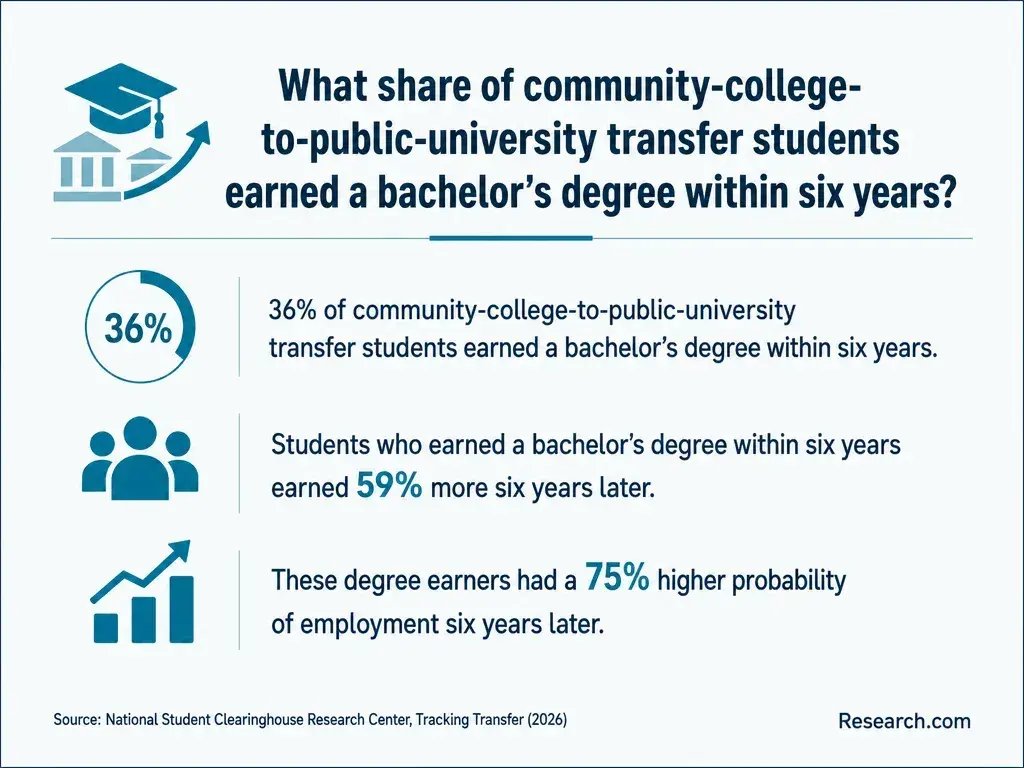
Schools commonly ask for proof of secondary-school completion or an accepted equivalent and transcripts from prior colleges. Transfer applicants may face separate GPA, prerequisite, or business-major admission rules. An internship may have its own eligibility conditions, such as completed core courses or academic standing, even after you have been admitted to the degree.
Returning students should request an official evaluation showing not just which credits transfer, but which satisfy general education, business core, electives, and residency requirements. A course accepted as elective credit might not replace a required accounting or statistics course.
If you are considering online undergraduate project management credit acceptance as an alternative pathway, apply the same distinction: accepted credit is not a confirmed graduation plan.
Send transcripts early, then ask an adviser for a term-by-term degree audit that shows the earliest internship-eligible term. That sequence can reveal a prerequisite or course-availability delay before you commit to a placement.
Completion time depends on applicable transfer credit, enrollment pace, course sequencing, and the internship calendar. A student with extensive prior coursework may still need several terms if required business courses have prerequisites or the internship can begin only after those courses. Ask for a plan based on your approved degree audit, not a general "finish faster" estimate.
For cost, compare the total remaining bill rather than tuition alone. Include mandatory fees, books and software, possible travel or proctoring, and any reduction in earnings needed to make internship hours possible. Financial aid and employer tuition benefits may help, but eligibility, reimbursement timing, and covered courses differ.
A comparison of low-tuition business administration schools accepting FAFSA is a starting point; your actual cost depends on aid eligibility and the credits each institution applies to your degree.
Request a written estimate using your remaining courses and intended enrollment pace. If the internship is unpaid or requires a schedule change, include that cash-flow effect when deciding whether the program is affordable.
A BSBA can support applications for roles such as operations coordinator, project coordinator, HR assistant or specialist, marketing coordinator, and procurement staff. The stronger pathway depends on your existing experience and the tasks you can document.
A working adult who has scheduled staff, tracked purchases, or reported on customer issues may be able to use an internship to gain supervised experience in a related function rather than start over in an unrelated role.
Choose internship tasks that create evidence for the job you want: a documented workflow review for operations, approved campaign analysis for marketing, or carefully supervised recruiting support for HR. Describe your contribution accurately; do not disclose employer data or claim responsibility for decisions made by a manager.
If supply chain is your clear target, compare the breadth of a BSBA with accelerated supply chain management bachelor's schools. The U.S. Bureau of Labor Statistics (BLS) projects 18% employment growth for logisticians from 2025 to 2035. That occupation-specific outlook may justify investigating focused coursework and internships, but it does not predict a placement or job offer for an individual graduate.
There is no single salary for a BSBA: earnings depend on the occupation, location, industry, responsibilities, and prior experience. As one occupation-specific reference, BLS reports a May 2025 median annual wage of $75,940 for human resources specialists. That is the midpoint across workers in the occupation, not the starting pay for a BSBA graduate or the expected return from an internship.
Use salary data only after identifying a realistic target role. Compare job postings' required skills and experience with what your current work and proposed internship will demonstrate. If you want logistics work, investigate specialized options, including shorter online supply chain degree pathways, rather than assuming any business degree leads to the wages reported for logisticians.
Do BSBA graduates need certifications or licenses for business careers?
Many general business support roles do not require an occupational license, but requirements vary by position and employer. A BSBA also does not automatically meet the rules for CPA licensure, financial-services licensing, or a professional certification. Check the responsible state regulator or credentialing organization before selecting courses or paying for an exam.
For a working adult, the better investment may be a degree, a role-specific credential, or targeted training paired with documented experience. If your goal is project coordination rather than broad business advancement, compare the remaining cost of your BSBA with economical project management education online and employer training.
An internship can strengthen a relevant application, but neither an internship nor a project management course automatically confers certification eligibility.
Other Things You Should Know About Business Administration Programs
Often, yes. Pay status and academic eligibility are separate questions. Confirm the program's rules on duties, supervision, required hours, and approval before accepting the position.
Contact the internship coordinator immediately. Ask about replacement sites, registration deadlines, and whether a later term would affect graduation or financial aid; do not assume another job will qualify automatically.
Possibly. The school must allow remote supervision and the site must meet its approval rules. Check any location-based enrollment or placement restrictions with the program before making plans.
It may if the internship is an eligible, registered part of your degree, but enrollment intensity and aid rules matter. Have the financial-aid office review your specific term and course registration.
- Fact Sheet #71: Internship Programs Under The Fair Labor Standards Act | U.S. Department of Labor https://www.dol.gov/agencies/whd/fact-sheets/71-flsa-internships
- Student internships and work placements: approaches to risk management in higher education - PMC https://pmc.ncbi.nlm.nih.gov/articles/PMC8369439/
- General Schedule Qualification Policies | U.S. Office of Personnel Management https://www.opm.gov/policy-data-oversight/classification-qualifications/general-schedule-qualification-policies/
- Academic Internship Policy | byu.edu https://policy.byu.edu/view/academic-internship-policy
- Internships | Herbert Wertheim College of Business https://wertheim.fsu.edu/bcs/internships
- Internship Policies and Procedures | The University of Texas at Dallas https://jindal.utdallas.edu/career-management-center/student-resources-cmc/internship-policies-procedures/
- Effects of Business Internships on Job Marketability | wcupa.edu https://digitalcommons.wcupa.edu/cgi/viewcontent.cgi
- Types of Flexible Work Arrangements - People & Culture https://hr.berkeley.edu/return-campus/flexible-work-arrangements/types-flexible-work-arrangements
- Internships for Academic Credit | Undergraduate Students https://cla.umn.edu/undergraduate-students/academics/internships-academic-credit