2027 Choosing an Online BS in Business Administration Around Opening a New Franchise Location
Audited and Verified:
Our Editorial and Data Verification Process
Research.com uses government datasets, official education statistics and primary institutional information to support its career and degree guides. Our review process checks factual accuracy, occupational definitions, source dates and the requirements associated with the credentials discussed.
How This Article Was Fact-Checked
Our editorial team verifies salary estimates, employment projections, education requirements and program information against original data providers and official organizations. Salary figures are checked against the relevant occupational definitions and reporting periods. Information about licensure, accreditation and required in-person training is reviewed separately.
Fact-checked and verified on:

Co-Founder and Chief Data Scientist
Opening a new franchise location means evaluating a contract, financing a launch, hiring staff, and meeting a franchisor's operating standards - often while keeping another job or location running. An online BS in Business Administration can strengthen the financial and operational skills behind those decisions, but it cannot replace franchise due diligence or required permits.
This guide helps prospective and existing franchisees judge whether a degree fits their opening timeline, which program features matter most, and when shorter, targeted training is the better investment.
Key Things You Should Know
- Choose a program for accounting, cash-flow analysis, operations, and applied projects, not for an "entrepreneurship" label alone.
- Under the federal franchise rule, you generally must receive the Franchise Disclosure Document at least 14 calendar days before signing a binding agreement or paying the franchisor or its affiliate; a degree does not replace its review.
- Compare the credits and costs remaining after an official transfer evaluation with your opening schedule. An online degree may require fixed deadlines, group work, or live attendance.
What Is an Online BS in Business Administration for Franchise Ownership?
An online BS in Business Administration is an undergraduate degree covering business functions such as accounting, finance, marketing, management, and operations. It is not a franchise-owner license or a degree awarded for completing franchisor training. A BBA may cover similar ground, but degree titles and required courses vary by school.
For a prospective franchisee, the degree is most useful when it improves decisions that remain the owner's responsibility: assessing an investment, planning working capital, interpreting performance reports, managing people, and responding to local demand.
The franchisor typically provides brand-specific systems and training; neither that training nor a business degree guarantees that a location will be profitable.
If you already manage a location and primarily need help supervising a larger team, compare the business core with undergraduate leadership programs with shorter timelines. Leadership study may fit a staffing problem, but it may offer less preparation for evaluating the economics of a new unit.
How Can a Business Administration Degree Prepare You to Open a Franchise?
The strongest connection between coursework and an opening decision is testing assumptions before committing capital. Accounting helps you distinguish sales from profit; finance helps you plan for cash needed before a location stabilizes; and operations study helps you examine staffing, purchasing, and service capacity.
Marketing coursework can inform local customer research without assuming that national brand recognition will produce local sales.
A useful class project might build a hypothetical location budget using clearly labeled assumptions, public market information, and figures you are authorized to use from the franchisor.
It should separate one-time opening costs from recurring expenses and show what happens if sales ramp up more slowly than expected. It is a planning exercise, not a validated forecast or permission to disclose confidential franchise materials.
Before relying on any model, review the Franchise Disclosure Document (FDD), including its initial-investment, fee, outlet-history, and financial-statement disclosures. Financial performance representations, if made, must be presented in Item 19; do not treat another franchisee's results as a promise about your site.
Have qualified franchise and financial advisers assess issues beyond your training. If distribution and inventory are the dominant challenges, fast undergraduate routes into supply chain management offer a more specialized academic comparison, though a full second degree may be unnecessary.
What Accreditation Should You Look for in an Online Business Administration Program?
Start with recognized institutional accreditation for the school offering the degree. Confirm the institution's status with the accreditor and verify that the online program is an authorized offering of that institution. Institutional accreditation matters for considerations such as federal student-aid eligibility, but it does not establish that courses match your franchise goals.
AACSB, ACBSP, and IACBE are business-focused accreditors. Their accreditation scopes differ, so check whether a school's claim covers the business unit or specific program you would enter; do not assume every program at the institution is covered.
Compare the curriculum and student support as well as the credential. You can use online business degree school rankings in America to find candidates, then verify each school's accreditation and current catalog directly.
Programs usually combine general education with a business core and electives or a formal concentration. For a franchise opening, look beyond course titles to required assignments: does accounting include reading statements, does finance address cash-flow planning, and does operations work examine capacity or inventory?
The prerequisites for a business administration degree also matter if quantitative or accounting courses must be completed before advanced classes. The following course areas have distinct uses in franchise planning. An elective in a subject is not necessarily an official concentration:
- Accounting and finance: Interpret costs, margins, financing obligations, and the difference between reported earnings and available cash.
- Operations and supply chain: Examine staffing levels, purchasing cycles, inventory, service consistency, and franchisor-approved vendors.
- Marketing and analytics: Assess a proposed trade area and measure local campaign results without confusing a forecast with observed demand.
- Management, HR, and business law: Practice supervision and contract analysis while recognizing that employment and franchise-law advice requires appropriate professional expertise.
An entrepreneurship concentration may add a business-plan or feasibility project. Check whether it adds relevant depth, extra credits, or a delay - and whether faculty will permit a franchise-focused project that respects your agreement's confidentiality terms.
Online delivery can make study possible while you work on a lease, training, or an existing location. It does not necessarily let you pause classes during an opening week.
The comparison below highlights scheduling features that affect franchise planning; individual course policies control:
| Feature | Online program | Campus program |
| Attendance | May use recorded lessons, live sessions, or both | Usually requires travel for scheduled classes |
| Collaboration | Group work may require remote meetings across schedules | Groups may meet around campus class times |
| Applied work | Local projects may be possible if faculty approve them | Local partnerships may be easier to access near campus |
| Assessments | May have timed exams or remote proctoring | May require in-person exams or presentations |
Ask for sample syllabi covering opening season, not just a general promise of flexibility. Check weekly deadlines, live meetings, proctoring, campus visits, team projects, and leave policies. US rankings for accelerated business bachelor's degrees can identify shorter calendars, but faster terms may intensify the workload precisely when a launch demands your attention.
Requirements depend on whether you apply as a first-year student, transfer student, or returning student. Schools commonly request prior academic transcripts and may set GPA, general-education, mathematics, or business-course requirements.
Some admit students to the university before they can enter the business major. Franchise ownership or work experience may strengthen an application without automatically earning academic credit.
If you have prior college work, request a written evaluation showing not only credits accepted but which satisfy general education, the business core, electives, and any residency requirement. A course counted as a free elective may not shorten the sequence to graduation.
If you are comparing a specialized staffing degree, resources that compare credit acceptance at online HR schools may help frame questions, but only the business program's own transfer office can decide how your credits apply to its degree.
A bachelor's program commonly totals about 120 semester credits, but your remaining workload depends on the school's degree audit, accepted transfer work, course sequence, and enrollment pace. A compressed term can shorten calendar time while leaving the amount of coursework unchanged. Part-time enrollment may be safer during site build-out, franchisor training, and opening weeks.
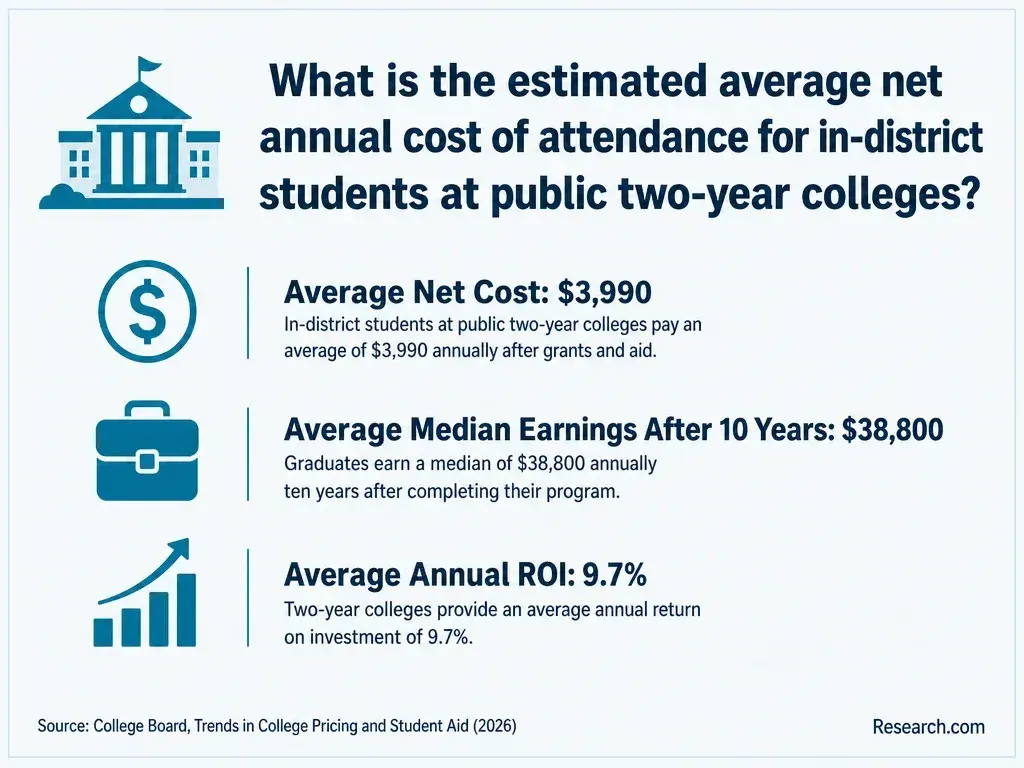
For a meaningful cost comparison, ask each school for tuition based on your remaining requirements, mandatory fees, books and software, proctoring or travel costs, and the likely number of terms. Keep education costs separate from the franchise's initial investment and operating cash reserve.
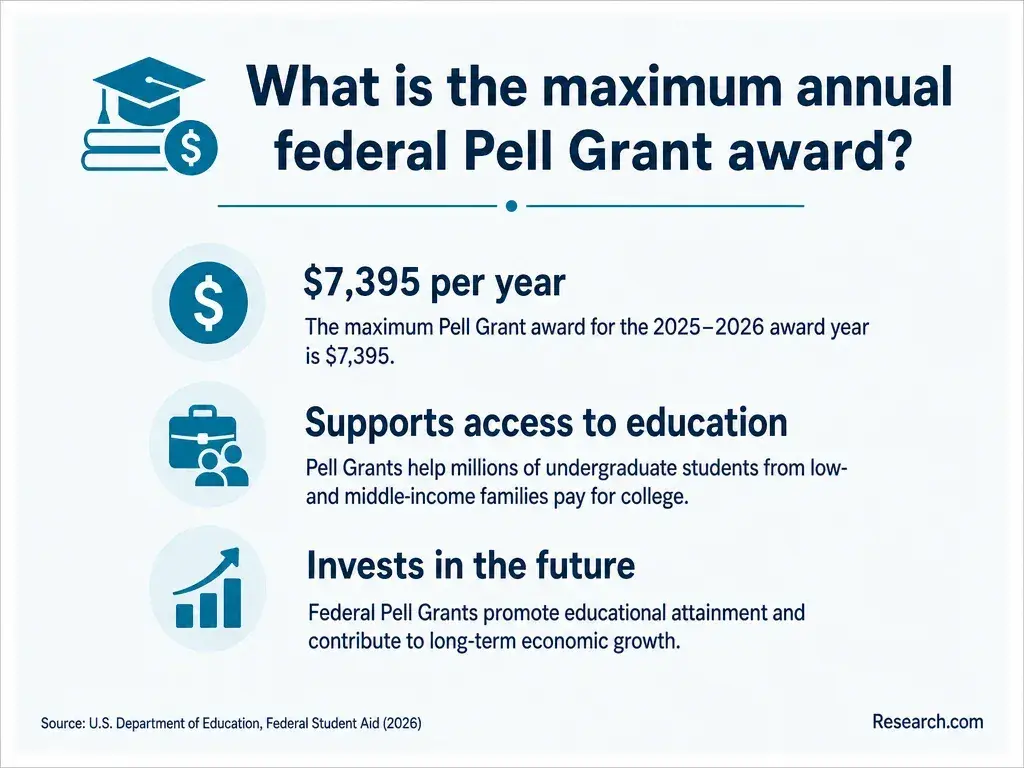
Aid eligibility and borrowing terms can also change your out-of-pocket timing; FAFSA planning for affordable business administration study is a starting point, not a substitute for a school-specific aid offer.
If an opening date is near, compare the total degree expense and time commitment with a targeted accounting, bookkeeping, or operations course. A full degree may be worthwhile for a broader career goal; it is rarely the quickest way to resolve one urgent launch question.
There is no universal US "franchise owner license." Requirements depend on the state, locality, industry, site, and legal structure. A location may need business registration, tax accounts, zoning and occupancy approvals, and sector-specific permits; for example, for food service, alcohol sales, or regulated professional services.
Franchise registration and disclosure rules in some states govern the offer or sale of franchises; they are not interchangeable with a new location's operating permits.
The franchisor may separately require completion of its training and approval of the site, operator, or manager. Check the franchise agreement for those obligations, then confirm operating requirements with the relevant state and local authorities before committing to a site.
Staffing knowledge is useful, see the human resources degree subject guide if that is a longer-term study interest, but no HR or business degree substitutes for applicable employment-law compliance or required occupational credentials.
Franchise ownership is self-employment, so there is no standard graduate salary: an owner's draw depends on the location's finances, debt, and reinvestment needs.
The degree can also support applications for operations coordinator, purchasing, marketing, or project-support roles if opening the location is postponed or you later seek employment. Hiring still depends on relevant experience and demonstrated skills.
For perspective, the US Bureau of Labor Statistics reports a May 2025 median annual wage of $82,320 for logisticians, with employment projected to grow 18% from 2025 to 2035. Those occupation-wide figures are not a starting salary for business graduates or a forecast of franchise-owner income.
If your preferred alternative career is specifically inventory and distribution, compare the functional depth and expense of a specialized program using supply chain program tuition, time, and earnings context.
How Can You Choose the Best Online Business Program for Franchise Goals?
The best fit is the program you can complete without weakening the launch's financing or missing the decisions you need to make beforehand. Shortlist schools only after identifying whether your main gap is investment analysis, daily operations, people management, or a longer-term career credential.
Online business administration program cost-and-time comparisons can help create a shortlist, but use your own credit evaluation and the school's current charges for the final decision.
Before enrolling, put comparable answers from each school beside your franchise opening schedule:
- Request an official degree audit and identify the required courses that remain, including any courses offered only in particular terms.
- Ask for syllabi in accounting, finance, and operations, plus the rules for a franchise-related capstone or approved workplace project.
- Confirm live attendance, exam windows, group meetings, leave options, and expected weekly work during the launch period.
- Compare remaining tuition and fees with available aid and the cash you must preserve for the location; do not assume future franchise earnings will pay the bill.
If the degree addresses a lasting education or career goal and the schedule is workable, it can be a sound investment in your judgment as an owner. If the immediate task is signing a franchise agreement or opening a site, prioritize qualified legal and financial review, franchisor training, and required approvals; pursue the degree on a timeline that does not compete with those obligations.
Other Things You Should Know About Business Administration
Possibly. Obtain faculty approval first, then check franchisor permissions and remove confidential, customer, and employee information from anything you submit or publish.
Do not assume so. Franchisors set training and operator requirements in their agreements; confirm whether they offer any exception.
Yes, if course deadlines and attendance rules allow it. Compare the training calendar with syllabi before enrolling for that term.
Not necessarily. If the opening is imminent, targeted instruction and professional advice may address urgent decisions faster. A degree can serve broader ownership or career goals afterward.
- Accreditation in the U.S. | ed.gov http://www.ed.gov/laws-and-policy/higher-education-laws-and-policy/college-accreditation/accreditation-in-the-us
- Free small business counseling & local mentoring | Small Business Administration https://www.sba.gov/counseling/
- A Consumer's Guide to Buying a Franchise | Federal Trade Commission https://www.ftc.gov/business-guidance/resources/consumers-guide-buying-franchise
- Types of Financial Aid: Grants, Work-Study, and Loans | studentaid.gov https://studentaid.gov/understand-aid/types
- Cost of Attendance (Budget) | 2025-2026 Federal Student Aid Handbook https://fsapartners.ed.gov/knowledge-center/fsa-handbook/2025-2026/vol3/ch2-cost-attendance-budget
- Ready to Become a Franchisee? Here's What You Need to Know | Poole Thought Leadership https://poole.ncsu.edu/thought-leadership/article/ready-to-become-a-franchisee-heres-what-you-need-to-know/
- How Do Transfer Credits Work When You Go Back to School? | Whitworth Online https://online.whitworth.edu/news-articles/how-do-transfer-credits-work-when-you-go-back-to-school/
- What's the Difference Between Asynchronous and Synchronous Learning? | Ohio State Online https://online.osu.edu/content-hub/blogs/whats-the-difference-between-asynchronous-and-synchronous-learning/
- How Long Does It Take to Get a Bachelor's Degree? | American National University https://an.edu/how-long-to-get-bachelors-degree/
- Online Bachelor's Degree in Business Administration | OU Online https://online.ou.edu/program/bs-in-business-administration/