2027 Best Online Bachelor's in Behavioral Health Management With the Best Balance of Flexibility and Career Readiness

Co-Founder and Chief Data Scientist
Choosing an online bachelor's in behavioral health management is really a career-readiness decision: you need flexibility, but you also need a program that leads somewhere useful. The Bureau of Labor Statistics projects 19% growth for substance abuse, behavioral disorder, and mental health counselor roles from 2023 to 2033, signaling strong demand for behavioral health support. This guide is for working adults, transfer students, and first-time undergraduates comparing online options. You'll learn how to judge accreditation, cost, courses, timelines, licensing limits, and job outcomes before enrolling.
Key Things You Should Know
- The best online bachelor's programs balance asynchronous coursework with career-ready experiences such as case management training, behavioral health documentation, ethics, crisis response, and supervised fieldwork or local practicum options.
- CACREP does not accredit bachelor's degrees; it accredits graduate counseling programs, so online bachelor's students should verify institutional accreditation and understand that licensed counseling usually requires a master's degree.
- Cost and ROI depend heavily on school type and transfer credit: College Board data for 2024-25 lists average published tuition and fees at $11,610 for in-state public four-year colleges and $43,350 for private nonprofit four-year colleges.
What is behavioral health management?
Behavioral health management is the study of how mental health, substance use, crisis intervention, case management, and healthcare administration work together. It is not the same thing as becoming a licensed therapist. A bachelor's program usually prepares students for support, coordination, operations, outreach, and entry-level supervisory roles in behavioral health settings.
The "management" part matters because many behavioral health organizations need people who understand both client needs and service delivery. Graduates may help coordinate care plans, manage referrals, document services, support compliance, supervise frontline staff, analyze program outcomes, or connect clients with community resources.
The best-fit program depends on whether you want client-facing work, administrative work, or a bridge to graduate school. The table below shows how different goals line up with this degree so you can avoid choosing a program that does not match your intended outcome.
| Student goal | How this degree can fit | Important limitation |
| Behavioral health coordinator or case management role | Strong fit when the curriculum includes interviewing, documentation, community resources, crisis response, and ethics | Some employers may prefer experience or state-specific credentials |
| Licensed counselor or therapist path | Useful undergraduate foundation for graduate counseling, social work, or psychology study | A bachelor's degree alone usually does not meet independent counseling licensure requirements |
| Healthcare operations or program management | Good fit if the program includes healthcare systems, budgeting, quality improvement, and leadership | Higher-level management roles may require experience or graduate education |
| General business management outside healthcare | May be less direct than a business, public administration, or industry-specific management degree | Students who want non-healthcare operations careers may want to compare alternatives such as construction management degrees online |
Current trends make this field more complex and more valuable. Behavioral health organizations increasingly use telehealth platforms, electronic health records, outcome tracking, and AI-assisted documentation tools. A strong online program should therefore teach privacy, ethical documentation, digital communication, and data-informed decision-making, not just psychology concepts.
Which online programs are CACREP accredited?
No online bachelor's in behavioral health management is CACREP accredited as a bachelor's program because CACREP accreditation applies to graduate-level counseling programs, not undergraduate management degrees. This is a common source of confusion, especially for students who search for "CACREP accredited online behavioral health bachelor's" while planning for future counseling licensure.
Instead of looking for CACREP at the bachelor's level, students should check the right quality indicators for undergraduate study. The table below separates the accreditation signals that matter now from the ones that may matter later.
| Quality signal | What it means | Why it matters |
| Institutional accreditation | The college or university is accredited by a recognized accrediting agency | Often required for federal financial aid, transfer credit, employer recognition, and graduate admission |
| CACREP accreditation | Applies to eligible graduate counseling programs | Important if you later pursue a master's in counseling and want a smoother licensure path in many states |
| Field placement quality | The program helps students complete practicum, internship, or applied projects in relevant settings | Improves career readiness, especially for students without behavioral health experience |
| State licensure alignment | The school explains whether its curriculum supports specific state credential requirements | Critical for substance use counseling, behavioral health technician credentials, or future graduate licensure planning |
Before enrolling, use a simple verification process. This helps you avoid the red flag of assuming that "online" or "behavioral health" automatically means the program supports licensure.
- Confirm that the college has institutional accreditation through an agency recognized by the U.S. Department of Education or the Council for Higher Education Accreditation.
- Ask the admissions office whether the bachelor's curriculum is designed for employment, graduate preparation, state certification, or a combination of these goals.
- If you plan to become a licensed counselor, check whether the school also offers or feeds into CACREP-accredited graduate counseling pathways.
- Contact your state licensing board before you rely on any school's general licensure language.
How do online and campus formats compare?
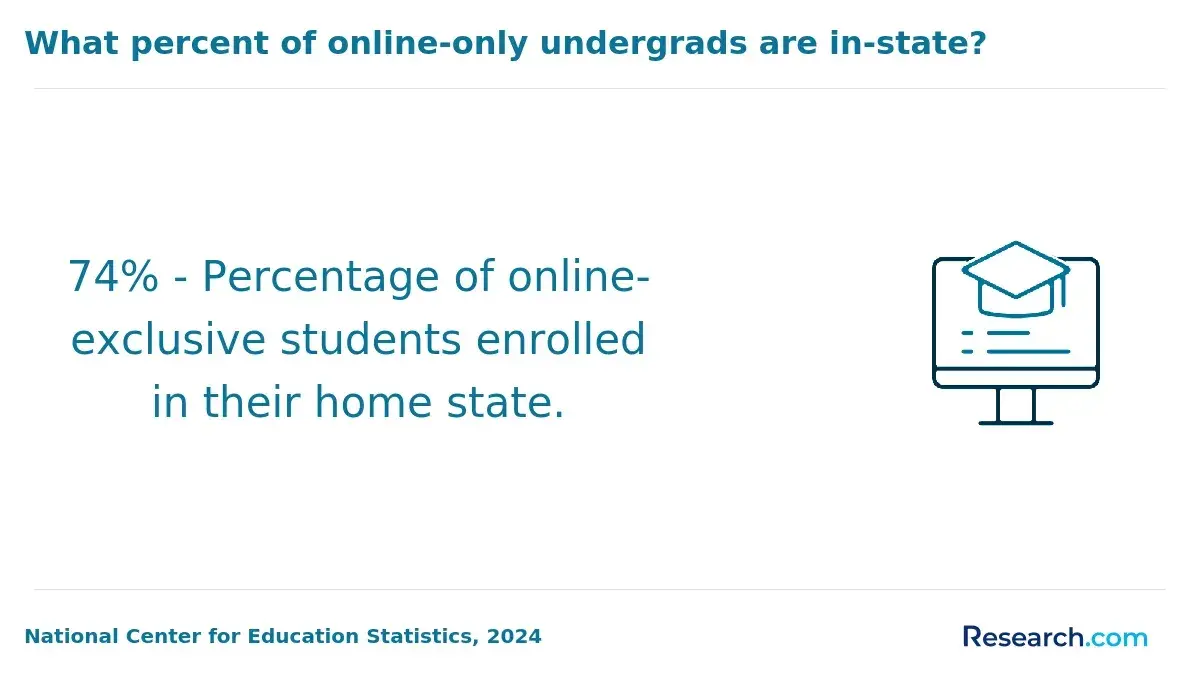
Online and campus programs can both be legitimate, but they create different trade-offs. For behavioral health management, the main question is not whether online learning is "easier"; it is whether the format gives you enough flexibility while still providing applied practice, faculty access, and career support.
The comparison below focuses on the practical differences that affect working adults, caregivers, military learners, and transfer students who need both schedule control and employable skills.
| Feature | Online bachelor's | Campus bachelor's | Best choice when |
| Schedule | Often asynchronous or evening-friendly | Usually tied to set class meeting times | Online fits students balancing work, family, or commuting limits |
| Field experience | May be completed locally if the school allows approved sites | Often tied to local partner agencies near campus | Campus may help if you want built-in local placement networks |
| Peer interaction | Discussion boards, group projects, virtual meetings | In-person classes, campus events, direct networking | Campus may fit students who learn best through frequent face-to-face contact |
| Career support | Varies widely; strong programs offer virtual advising and placement help | May include campus career fairs and local employer pipelines | Online can work well if the school has dedicated remote student services |
| Self-management demand | High; students must manage deadlines independently | Moderate; class meetings add structure | Campus may be better if you need external accountability |
Choose online if you already have work experience, need schedule flexibility, or can complete local fieldwork without relocating. Choose campus if you want a highly structured environment, easy access to faculty offices, or local agency partnerships built around the school's location.
A common mistake is choosing the most flexible format without checking career-readiness features. Before committing, ask whether online students receive the same advising, internship support, library access, disability services, tutoring, and career coaching as campus students.
What courses are in a behavioral health management degree?
An online bachelor's in behavioral health management usually combines psychology, human services, healthcare systems, leadership, ethics, and applied communication. The strongest programs go beyond theory by teaching students how behavioral health services are documented, coordinated, funded, and evaluated.
The table below summarizes common course areas and why each one matters for career readiness. Course titles vary by school, so look for the competencies behind the names rather than relying only on catalog labels.
| Course area | What students usually study | Career value |
| Abnormal psychology or psychopathology | Mental health conditions, symptoms, diagnostic language, and referral concepts | Helps graduates communicate accurately with clinical teams while staying within role boundaries |
| Substance use and addiction studies | Prevention, treatment models, recovery support, relapse risk, and community resources | Useful for roles in recovery programs, residential treatment, outreach, and case coordination |
| Case management | Assessment, service planning, referrals, client advocacy, and follow-up | Directly supports entry-level human services and care coordination work |
| Healthcare administration | Health systems, reimbursement basics, budgeting, compliance, and quality improvement | Prepares students for program support, operations, and supervisory responsibilities |
| Ethics and legal issues | Confidentiality, mandated reporting, boundaries, documentation, and professional conduct | Reduces risk in client-facing and administrative roles |
| Crisis intervention | De-escalation, suicide risk awareness, trauma-informed response, and emergency referral | Important for behavioral health technician, residential, outreach, and community roles |
| Research and program evaluation | Basic statistics, evidence-based practice, outcomes, and service effectiveness | Helps graduates contribute to quality improvement and grant-supported programs |
When comparing programs, look for skill-building assignments rather than only content coverage. A career-ready curriculum often asks students to practice documentation, write case notes, analyze ethical scenarios, build resource maps, review treatment-team communication, and complete a capstone or practicum.
Students planning for leadership should also look for courses in supervision, healthcare finance, population health, and organizational behavior. These courses can make the degree more useful for advancement than a curriculum focused only on introductory psychology.
What admission requirements do these programs usually have?
Admission requirements for online bachelor's programs are usually more accessible than graduate programs, but they still vary by institution. First-time students, transfer students, and adult learners may face different application steps.
The table below shows the most common requirements and how to interpret them. Use it to identify what you need before applying and what questions to ask if your academic history is nontraditional.
| Requirement | Typical expectation | What to check |
| High school diploma or GED | Required for first-time bachelor's applicants | Whether the school has minimum GPA rules or conditional admission |
| College transcripts | Required for transfer students | How many credits transfer and whether prior grades affect admission |
| General education prerequisites | May be built into the degree or required before upper-division courses | Whether you can complete missing courses online |
| Personal statement | Sometimes required for human services or behavioral health majors | Whether the program expects career goals, volunteer experience, or prior service work |
| Background check | May be required before fieldwork rather than admission | Whether past convictions affect internship eligibility or employment in your state |
| Technology access | Reliable computer, internet, webcam, and learning platform access | Whether exams are proctored and whether synchronous meetings are required |
To strengthen your application and avoid delays, take these steps before you apply. They are especially important if you plan to transfer credits or complete fieldwork while employed.
- Request unofficial transcript evaluations from more than one school before choosing a program.
- Ask whether prior learning, military training, professional certifications, or associate degree credits can reduce your remaining requirements.
- Confirm whether fieldwork requires daytime availability, employer approval, immunizations, drug screening, or a background check.
- Review state-specific rules if you hope to use the degree toward substance use counseling or behavioral health technician credentials.
A common mistake is applying based only on advertised tuition or program length. Transfer policy, practicum requirements, and course availability can change the real time and cost of completion.
How long does an online bachelor's take?
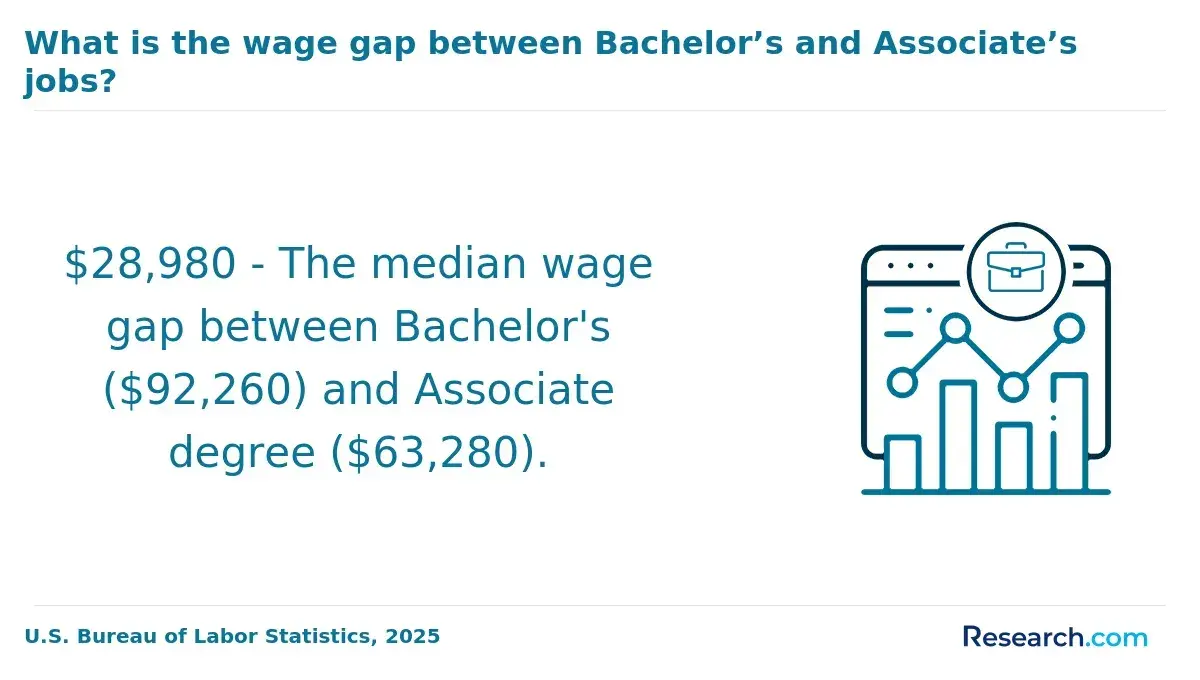
A full bachelor's degree usually requires about 120 semester credits. First-time students commonly finish in about four years of full-time study, while transfer students may finish faster depending on how many credits apply to the major, general education, and electives.
The table below explains common timelines. It is useful because "accelerated" can mean different things: shorter terms, heavier course loads, generous transfer credit, or year-round enrollment.
| Student type | Likely timeline | Main factor that changes completion time |
| First-time full-time student | About four years | Whether the program runs fall, spring, and summer courses |
| Part-time working adult | Often five or more years | Number of courses taken per term and whether required courses rotate frequently |
| Associate degree transfer student | Often about two years if credits apply cleanly | Whether the associate degree satisfies lower-division requirements |
| High-credit transfer student | Potentially less than two years | Maximum transfer credit limits and major residency requirements |
| Accelerated online student | Varies by school and course load | Short sessions can speed progress but may increase weekly workload |
Flexibility is valuable, but speed should not come at the expense of learning or field experience. Behavioral health work requires judgment, communication, documentation, and ethical awareness, so a compressed program should still give you time to practice applied skills.
Use these questions to compare timelines realistically. They will help you identify whether a fast program is truly efficient or just intense.
- How many credits will I have left after an official transfer evaluation?
- Are major courses available every term, or only once per academic year?
- Can I take summer courses without paying a different tuition rate?
- Does the capstone, practicum, or internship require a separate application or minimum GPA?
- What is the recommended course load for students working full time?
How much does an online behavioral health degree cost?
The cost of an online behavioral health management degree depends on tuition, fees, transfer credits, books, technology, travel for any in-person requirements, and lost work time. Published tuition is only one part of the real price.
College Board's 2024-25 pricing data shows why school type matters: average published tuition and fees were $11,610 for in-state students at public four-year institutions, $30,780 for out-of-state students at public four-year institutions, and $43,350 at private nonprofit four-year institutions. Online students may pay different rates, so use these figures as a benchmark rather than a quote.
- Public four-year, in-state average published tuition and fees: $11,610
- Public four-year, out-of-state average published tuition and fees: $30,780
- Private nonprofit four-year average published tuition and fees: $43,350
The table below shows cost factors that can make one online program more affordable than another even when the advertised tuition rate looks similar.
| Cost factor | Why it matters | Question to ask |
| Transfer credit | Accepted credits reduce the number of courses you must pay for | How many of my credits apply to the degree, not just as electives? |
| Online fees | Some schools charge technology, distance learning, or course fees | What is the total cost per credit after required fees? |
| Books and materials | Open educational resources can reduce recurring costs | Does the program use low-cost or included course materials? |
| Fieldwork expenses | Background checks, travel, immunizations, or unpaid hours can add cost | Are there required in-person experiences, and who arranges them? |
| Course availability | Delayed courses can extend enrollment and increase total cost | Can I complete required courses on a predictable schedule? |
| Employer tuition benefits | Healthcare and human services employers may help pay for relevant degrees | Does the school work with employer reimbursement plans? |
To control costs, compare total degree cost instead of per-credit tuition alone. A school with a slightly higher rate may be cheaper if it accepts more transfer credits, offers year-round courses, and avoids extra fees.
Students should also complete the FAFSA and ask about federal grants, state aid, scholarships, military benefits, employer reimbursement, and payment plans. The maximum Federal Pell Grant for the 2024-25 award year was $7,395, which can materially reduce out-of-pocket cost for eligible undergraduates.
What jobs can you get with this degree?
A bachelor's in behavioral health management can lead to roles in mental health agencies, substance use treatment centers, hospitals, residential programs, community nonprofits, correctional programs, care coordination teams, and public health organizations. The degree is usually strongest for coordination, support, program, and entry-level management roles rather than independent clinical practice.
The table below summarizes realistic job paths. Titles vary by employer and state, so focus on responsibilities and required credentials rather than title alone.
| Role | Typical responsibilities | Degree fit |
| Behavioral health case manager | Coordinate services, track care plans, connect clients with resources, document progress | Strong fit when the program includes case management and community resources |
| Behavioral health technician supervisor | Support daily operations, coach frontline staff, monitor safety procedures, assist clinical teams | Good fit with experience in residential, inpatient, or crisis settings |
| Substance use program coordinator | Support recovery programming, intake processes, outreach, reporting, and referral networks | Strong fit if the curriculum includes addiction studies |
| Community outreach coordinator | Build partnerships, organize services, educate communities, support prevention initiatives | Good fit for students with communication and public health interests |
| Human services program assistant or manager | Coordinate staff schedules, reporting, compliance tasks, budgets, and client service workflows | Good fit when the degree includes administration and leadership courses |
| Patient services or care coordination specialist | Help clients navigate appointments, benefits, referrals, and treatment access | Good fit for students interested in integrated healthcare settings |
Career readiness improves when students build both human-service and operations skills. Employers often value documentation accuracy, calm communication, confidentiality, cultural responsiveness, de-escalation, teamwork, and comfort with electronic health record systems.
If your long-term goal is department leadership, director-level work, or broader health system administration, a bachelor's can be a starting point rather than the final credential. Students comparing graduate options later can review online masters in healthcare management programs to understand how leadership-focused graduate study differs from undergraduate behavioral health preparation.
What is the salary potential in behavioral health management?
Salary potential depends on role, location, employer type, experience, licensure, and whether the job is primarily clinical support or management. A bachelor's degree can improve access to coordinator and supervisory roles, but it does not guarantee a specific salary or replace state-required clinical credentials.
The Bureau of Labor Statistics reported the following May 2024 median annual wages for related U.S. occupations. These figures are useful benchmarks, but they include workers with different education levels and job scopes.
| Occupation | May 2024 median annual wage | How to interpret it |
| Substance abuse, behavioral disorder, and mental health counselors | $59,190 | Many counseling roles require state credentials or graduate education, so bachelor's graduates may enter adjacent support roles first |
| Social and community service managers | $78,240 | Relevant for graduates who move into program supervision, nonprofit leadership, or community service management |
| Medical and health services managers | $117,960 | More likely for experienced professionals managing healthcare departments, programs, or facilities |
| Community and social service specialists, all other | $51,790 | Useful benchmark for varied support, outreach, and coordination roles that do not fit a single title |
The strongest salary growth path usually combines the degree with experience, supervision responsibilities, state-recognized credentials, data or quality improvement skills, and sometimes graduate education. Students interested in adjacent healthcare administration careers can also compare behavioral health management with health information management; this health information manager salary guide explains a related nonclinical path with strong data and compliance responsibilities.
To evaluate ROI, compare the total cost of your remaining credits with the roles you can realistically pursue in your region. Also ask schools for graduate employment data, internship employer lists, and examples of job titles held by recent alumni, while remembering that individual outcomes vary.
What licensing or certification rules apply after graduation?
Licensing and certification rules are one of the most important parts of this decision. A bachelor's in behavioral health management can support employment and may help meet education requirements for some state or employer credentials, but independent clinical counseling licensure usually requires a graduate degree, supervised clinical hours, and exams.
The table below explains common credential categories. Always confirm requirements with your state board or credentialing body because titles, scopes of practice, and education rules vary widely.
| Credential or pathway | How a bachelor's may help | What may still be required |
| Substance use counselor credential | May satisfy part of the education requirement in some states | State-approved coursework, supervised hours, exams, background checks, and renewal requirements may apply |
| Behavioral health technician or paraprofessional credential | Can strengthen eligibility and advancement potential | Employer training, state registration, competency exams, or supervised practice may be required |
| Case management certification | Relevant coursework may support preparation | Many certifications require work experience, a qualifying role, or a professional license |
| Licensed professional counselor pathway | Provides undergraduate preparation for graduate counseling study | Master's degree, supervised clinical experience, exams, and state approval are typically required |
| Healthcare administration leadership | Supports entry-level management and program coordination | Experience or graduate education may be preferred for higher-level roles |
Students should avoid three common mistakes: assuming all behavioral health degrees lead to counseling licensure, assuming online programs automatically meet state requirements, and waiting until graduation to check credential rules. The safer approach is to identify your target state and role first, then choose the degree that supports that path.
If you discover that your goal is broader healthcare administration rather than behavioral health credentialing, compare bachelor's-to-master's pathways early. For example, MHA online programs may be more aligned with hospital administration, health system leadership, policy, finance, and operations roles after you complete undergraduate study.
Other Things You Should Know About Behavioral Health Management
Neither is automatically better. A BA may include more social science, communication, or community-focused coursework, while a BS may include more research, health science, statistics, or systems courses. Choose based on curriculum, fieldwork, accreditation, and career fit rather than the degree letters alone.
In 2027, when comparing student support in online bachelor's programs in behavioral health management, consider factors like access to academic advising, career services, mental health resources, and technical support services. These elements are crucial for ensuring both academic success and career readiness during your program.
Useful skills include electronic health record navigation, telehealth etiquette, secure documentation, spreadsheet basics, data reporting, and privacy-aware communication. Behavioral health employers increasingly expect staff to be comfortable with digital workflows.
References
- Can I Work in the Mental Healthcare Field with a Healthcare Management Degree? - Healthcare Management Degree Guide https://www.healthcare-management-degree.net/faq/can-i-work-in-the-mental-healthcare-field-with-a-healthcare-management-degree/
- CACREP-Accredited Online Counseling Programs https://onlinecounselingprograms.com/online-counseling-degrees/cacrep-accredited/
- Mental Health Administration Degree | Psychology Degree Guide https://psychologydegreeguide.org/specialty/mental-health-administration/
- Substance Abuse and Mental Health Services Administration https://www.healthadministrationdegrees.com/specialty/substance-abuse-and-mental-health-services/
- How much does the DBH program cost? - Cummings Graduate Institute for Behavioral Health Studies https://cgi.edu/dbh-tuition/
- How long does it take to get a bachelor's degree? | edX https://www.edx.org/resources/how-long-does-it-take-to-get-a-bachelors-degree
- Top 5 Things to Know About Licensure: Before you choose your degree program! — Higher Education Licensure Pros https://www.higheredlicensurepros.com/blog/top-5-things-to-know-about-licensure-before-you-choose-your-degree-program
- Maintaining Mental Well Being: What Is A Behavioral Health Unit? - Sherman Medical Center https://ahssmc.org/maintaining-mental-well-being-what-is-a-behavioral-health-unit/
- Doctor of Behavioral Health Management | Houston Christian University https://hc.edu/articles/doctor-of-behavioral-health-management-program/
- Difference Between Licensure vs. Certification | University of Bridgeport https://www.bridgeport.edu/news/designing-your-career-path-licensure-vs-certification/