2027 Online Behavioral Health Management Degrees That Prepare Students for Long-Term Professional Growth

Co-Founder and Chief Data Scientist
Choosing an online behavioral health management degree is really a decision about career direction: clinical leadership, program administration, care coordination, or healthcare operations. Demand is significant; SAMHSA's 2024-released national survey reported that 58.7 million U.S. adults had a mental illness in 2023.
That scale makes effective behavioral health systems, staffing, compliance, and service access more important than ever. This guide is for working adults, career changers, and healthcare professionals comparing programs. You will learn how these degrees work, what they cost, which credentials matter, and how to choose a program that supports long-term growth.
Key Things You Should Know
- Online behavioral health management degrees are usually management-focused, not automatic clinical licensure pathways; students seeking counseling, social work, psychology, or addiction licenses must verify state-specific education and supervised-experience rules before enrolling.
- Career outcomes vary by role, but BLS 2024 wage data shows medical and health services managers had a median annual wage of $117,960, while social and community service managers had a median annual wage of $78,240.
- Program quality depends heavily on institutional accreditation, relevant fieldwork or capstone options, transparent total cost, transfer-credit policy, and whether the curriculum covers behavioral health operations, ethics, data, finance, compliance, and team leadership.
What is an online behavioral health management degree and who is it designed for?
An online behavioral health management degree prepares students to help plan, coordinate, supervise, and improve services for people receiving mental health, substance use, developmental disability, crisis response, or community-based support. Unlike a traditional counseling degree, the emphasis is usually on systems: staffing, budgets, quality improvement, compliance, reimbursement, program evaluation, case management workflows, and interprofessional leadership.
These programs are commonly offered at the bachelor's and master's levels. Some schools place the subject inside healthcare administration, human services, psychology, public health, social work administration, or nonprofit management.
Students who want broader health-system leadership may also compare this path with an MBA in healthcare, especially if their long-term goal is executive operations rather than direct behavioral health programming.
The best fit depends on whether the student wants to manage services, deliver clinical care, or combine both over time. The comparison below shows how common academic paths differ:
| Path | Primary focus | Best fit | Important limitation |
| Bachelor's in behavioral health management | Foundations of behavioral health systems, case coordination, ethics, and human services administration | Students seeking entry-level program, case management, or service coordination roles | Usually not enough for independent clinical licensure |
| Master's in behavioral health management | Leadership, finance, compliance, analytics, population health, and program strategy | Working professionals pursuing supervisory or administrative advancement | May not include clinical practicum hours required for therapy licenses |
| Clinical counseling, social work, or psychology degree | Assessment, diagnosis, treatment, therapeutic methods, and supervised clinical practice | Students who want to become licensed clinicians | May offer less training in budgets, operations, and organizational leadership |
| Graduate certificate in behavioral health administration | Focused management skills without a full degree | Professionals who already hold a degree and need targeted upskilling | May have limited impact if employers require a full bachelor's or master's degree |
A behavioral health management degree is a strong option for people who enjoy mission-driven work but prefer coordinating services, improving systems, supervising teams, or leading programs. It may be a poor fit for students whose main goal is to provide therapy independently unless the program is explicitly designed to meet the relevant licensure pathway.
How do online behavioral health management programs compare to campus-based options?
Online and campus-based behavioral health management programs can lead to similar academic outcomes when they are offered by properly accredited institutions and include comparable curriculum, faculty access, and applied learning. The real difference is usually not academic legitimacy; it is how the format affects scheduling, networking, fieldwork, and student support.
The table below compares practical factors that matter most for working adults, career changers, and students who need flexibility without sacrificing professional preparation:
| Factor | Online program | Campus-based program | Decision guidance |
| Schedule | Often asynchronous or evening-based | Usually fixed class times | Online is better for full-time workers or caregivers |
| Networking | May rely on virtual cohorts, discussion boards, and remote faculty meetings | More spontaneous in-person interaction | Campus may help students who want frequent face-to-face relationship building |
| Field experience | Often completed locally with school approval | May use established local partner sites | Online students should ask how placements are found and approved |
| Technology use | Builds comfort with telehealth-adjacent tools, digital records, and remote collaboration | May offer more in-person simulation or live service exposure | Online can be practical for modern hybrid behavioral health workplaces |
| Student support | Depends on virtual advising, tutoring, career services, and faculty responsiveness | May provide easier physical access to offices and events | Format matters less than the quality and availability of support |
Online learning is most effective for students who are organized, comfortable communicating digitally, and able to schedule weekly study time. Campus learning may be better for students who need more structure, want local internship pipelines, or learn best through in-person discussion.
A common mistake is assuming "online" means easier or less rigorous. Reputable online programs still require writing, research, group work, exams, applied projects, and sometimes field hours. The smarter question is whether the school has built an online experience with strong advising, timely faculty feedback, career support, and clear expectations.
Are online behavioral health management degrees accredited and do they meet licensure standards?
Online behavioral health management degrees can be accredited, but students need to distinguish between institutional accreditation, programmatic accreditation, and licensure approval. Institutional accreditation is the baseline quality marker for federal financial aid eligibility, credit transfer, and employer recognition. Programmatic accreditation may matter depending on whether the degree sits in healthcare management, counseling, social work, public health, or another professional area.
Licensure is the most important area where students should be careful. A management-focused behavioral health degree usually does not qualify someone to become a licensed professional counselor, clinical social worker, psychologist, marriage and family therapist, or substance use counselor by itself. Those credentials normally require a specific clinical degree, supervised practice hours, exams, and state board approval.
Before enrolling, students should verify these accreditation and licensure items in writing because requirements can vary by state, employer, and professional goal:
- Confirm that the college or university holds recognized institutional accreditation from an accreditor accepted by the U.S. Department of Education or CHEA.
- Ask whether the specific program has relevant programmatic accreditation, such as CAHME for some healthcare management programs, CSWE for social work, CACREP for counseling, CEPH for public health, or another field-specific accreditor when applicable.
- If licensure is a goal, contact the state licensing board directly and ask whether the curriculum, practicum, internship, and supervised-hour structure meet current requirements.
- Request written information from the program about licensure alignment, placement support, and any states where the program does not meet requirements.
- Check whether online students receive the same diploma wording, faculty access, and academic policies as campus students.
Red flags include vague claims such as "licensure-friendly," no public accreditation information, unclear fieldwork policies, pressure to enroll quickly, or refusal to provide state-by-state licensure disclosures. When in doubt, students should pause the application process until they can verify the credential's value for their intended role.
What courses and competencies are typically included in behavioral health management curricula?
Behavioral health management curricula combine human services knowledge with administrative and leadership training. Students learn how behavioral health organizations operate, how services are funded and regulated, and how managers support ethical, culturally responsive, data-informed care.
The table below summarizes the course areas students are likely to see and why each one matters in long-term professional growth:
| Course or competency area | What students learn | Why it matters professionally |
| Behavioral health systems | How mental health, substance use, crisis, residential, outpatient, and community services are organized | Helps graduates understand the service continuum and coordinate care across providers |
| Healthcare law, ethics, and compliance | Confidentiality, documentation, consent, mandated reporting, risk management, and regulatory expectations | Prepares managers to reduce organizational risk and protect clients |
| Finance and reimbursement | Budgets, grants, Medicaid concepts, payer relationships, and resource allocation | Supports sustainability in agencies where funding is often complex |
| Leadership and workforce management | Supervision, team communication, burnout prevention, conflict resolution, and performance improvement | Builds readiness for coordinator, supervisor, and manager roles |
| Program evaluation and data | Outcome measurement, quality indicators, reporting, and basic analytics | Helps organizations show effectiveness and improve services |
| Cultural responsiveness and community health | Equity, access barriers, trauma-informed care, and population needs | Strengthens service design for diverse communities |
Some programs also include emergency preparedness, integrated care, telebehavioral health, grant writing, informatics, or nonprofit leadership. Students interested in broader administrative roles can compare these courses with a degree in healthcare administration, which may cover similar operations topics but with less behavioral-health-specific depth.
Technology is becoming more important in these curricula. Managers increasingly need to understand electronic health records, data dashboards, telehealth workflows, privacy rules, and responsible use of AI-supported documentation or scheduling tools. The goal is not to replace clinical judgment, but to help organizations use technology without weakening ethics, access, or quality.
What admission requirements and prerequisites do behavioral health management programs expect?
Admission requirements depend on degree level, selectivity, and whether the program is housed in a business, health sciences, public health, or human services department. Most schools look for evidence that applicants can handle college-level writing, applied problem-solving, and professional communication.
The following requirements are common, but students should always check the program's official admissions page because policies change and graduate programs may evaluate work experience differently:
| Program level | Common requirements | What can strengthen an application |
| Associate or bachelor's completion | High school diploma or GED, transcripts, minimum GPA, placement requirements, and sometimes prior college credits | Experience in healthcare, human services, peer support, community organizations, or military service |
| Traditional bachelor's | High school records, transfer transcripts if applicable, general education readiness, and sometimes a personal statement | Volunteer work, strong writing skills, and interest in service systems |
| Master's | Accredited bachelor's degree, transcripts, resume, statement of purpose, letters of recommendation, and minimum GPA | Professional experience in behavioral health, healthcare administration, social services, case management, or nonprofit programs |
| Graduate certificate | Bachelor's degree or current graduate standing, depending on the school | Clear career goal and prior exposure to healthcare or human services work |
Applicants without a behavioral health background can still be competitive if they explain why they are moving into the field and show transferable skills. Experience in customer service, education, public safety, administration, operations, or project coordination can be relevant when connected to service delivery and team leadership.
Students should not assume that a low-barrier admissions process means a weak program. Open-access and adult-serving universities can be legitimate when accredited and transparent. The real warning signs are unclear academic standards, poor student support, hidden fees, and vague answers about career preparation or licensure alignment.
How long do online behavioral health management degrees take and what do they cost?
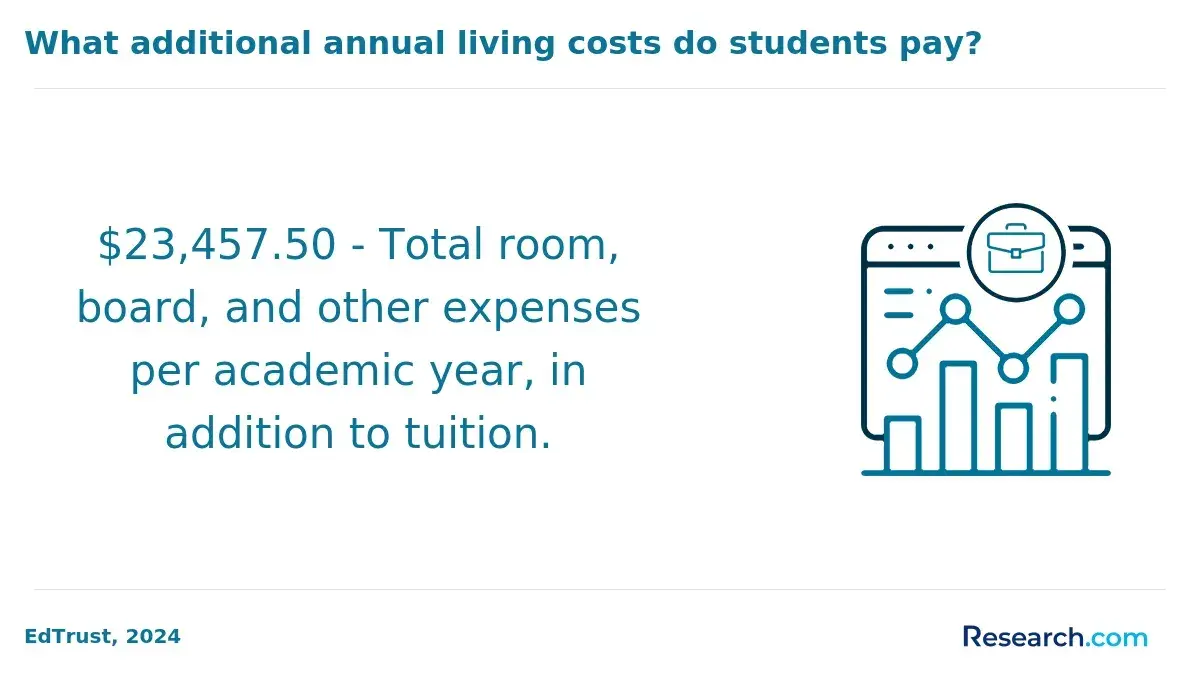
Program length and cost vary widely by degree level, transfer credits, enrollment pace, residency status, and whether the institution is public, private nonprofit, or private for-profit. Online students should compare total program cost, not just per-credit tuition, because fees, books, technology charges, field placement expenses, and lost work time can affect affordability.
NCES data published in 2024 showed that average graduate tuition and required fees were lower at public institutions than at private nonprofit institutions, which is a reminder to compare price by school and program rather than assuming all online degrees are inexpensive.
For behavioral health management students, the best value is usually a program that combines reasonable cost with accreditation, transfer flexibility, and career-relevant applied work.
Typical cost and timeline patterns are summarized below. These are broad planning ranges, so students should request a personalized degree audit before making a final decision:
| Degree option | Typical completion time | Main cost drivers | Best affordability strategy |
| Bachelor's completion program | About 1 to 3 years after transfer credits | Remaining credits, transfer policy, online fees, and course load | Maximize accepted community college or prior college credits |
| Full bachelor's program | About 4 years full time, longer part time | Total credit requirement, residency status, books, and fees | Use in-state public options, scholarships, employer aid, and credit for prior learning where available |
| Master's program | About 1 to 3 years depending on pace | Graduate tuition, practicum or capstone costs, and reduced work hours | Compare employer tuition assistance and part-time enrollment options |
| Graduate certificate | Often less than 1 year to about 18 months | Number of credits and whether credits later stack into a master's degree | Choose a certificate that can transfer into a full graduate program if future study is likely |
Students trying to reduce time to completion should ask schools about transfer credits, accelerated sessions, competency-based options, and year-round enrollment. However, faster is not always better. A highly compressed schedule can be difficult for students who work full time or need field experience in addition to coursework.
To estimate return on investment, compare the full cost of attendance with realistic roles you could pursue after graduation, not with the highest executive salary in the field. Also consider non-salary benefits such as job stability, mission fit, promotion eligibility, and whether the degree positions you for graduate study or professional certification.
What careers can graduates with behavioral health management degrees pursue?
Graduates can pursue roles in community mental health centers, substance use treatment organizations, hospitals, integrated care clinics, nonprofit agencies, residential programs, crisis response organizations, public health departments, managed care organizations, and government-funded service networks. The degree is especially relevant for positions that require coordination across clients, clinicians, funders, and compliance systems.
The table below outlines common career directions and the kind of work graduates may perform. Job titles vary by employer, and some positions require additional licenses, certifications, or prior experience:
| Career path | Typical responsibilities | Degree level often preferred | Licensure note |
| Behavioral health program coordinator | Scheduling services, tracking outcomes, coordinating staff, and supporting program operations | Bachelor's or master's | Usually nonclinical, but employer requirements vary |
| Case management supervisor | Supervising case managers, reviewing documentation, improving workflows, and supporting client service plans | Bachelor's with experience or master's | Some settings may require social work or counseling credentials |
| Community services manager | Managing human services programs, budgets, partnerships, and reporting | Bachelor's or master's | Usually management-focused rather than clinical |
| Substance use program administrator | Overseeing treatment program operations, compliance, staffing, and quality improvement | Bachelor's or master's | State rules may require addiction-specific credentials for certain responsibilities |
| Quality improvement or compliance specialist | Auditing records, monitoring performance indicators, preparing reports, and supporting accreditation readiness | Bachelor's or master's | Often benefits from healthcare compliance training |
| Behavioral health operations manager | Managing clinic flow, staffing, budgets, payer processes, and service expansion | Master's often preferred | Clinical license may help but is not always required |
Students who like the management side of behavioral health may also benefit from project leadership skills because many agencies run grant-funded initiatives, service expansions, EHR transitions, and quality-improvement projects. Those wanting a broader operations credential can compare this pathway with a project management degree online fast, though that route is less specialized for behavioral health systems.
Entry-level graduates often begin in coordinator, assistant manager, case management, intake, outreach, or administrative roles. Advancement usually comes from a mix of experience, strong documentation skills, supervisory ability, knowledge of reimbursement and compliance, and graduate education when leadership roles become more complex.
What salary ranges and advancement opportunities exist in behavioral health management roles?
Salary potential depends on role type, degree level, employer, geographic market, management responsibility, and whether the position requires clinical credentials. Behavioral health management is not one single occupation, so students should compare several related labor-market categories instead of relying on one salary figure.
BLS May 2024 wage data provides useful benchmarks for adjacent U.S. roles. These figures describe occupations, not guaranteed outcomes for graduates:
| Related occupation | Median annual wage from BLS May 2024 data | How it relates to behavioral health management |
| Medical and health services managers | $117,960 | Relevant to clinic, hospital, integrated care, and health system operations roles |
| Social and community service managers | $78,240 | Relevant to nonprofit, community mental health, human services, and public agency leadership |
| Substance abuse, behavioral disorder, and mental health counselors | $59,190 | Relevant for comparison when students are deciding between clinical and management-oriented paths |
| Community and social service specialists | $52,400 | Relevant to entry-level coordination, outreach, and support-service positions |
The salary ceiling is usually higher for roles that include budget authority, multi-site supervision, payer strategy, compliance accountability, or executive leadership. A master's degree may help in those pathways, but experience and demonstrated leadership often matter as much as the credential.
Students should be cautious about programs that advertise only top-end salaries. A better approach is to identify three target job titles in your local market, review current postings, and compare the required degree, preferred experience, licensure language, and salary range. That exercise gives a more realistic view of whether the degree aligns with your next step.
What is the job outlook and demand for behavioral health management professionals?
The job outlook is favorable because behavioral health organizations are under pressure to expand access, coordinate care, document outcomes, manage payer requirements, and retain staff. Demand is not limited to therapists; agencies also need people who can manage programs, supervise teams, analyze performance, and keep services financially and legally sustainable.
BLS projections released in 2024 show especially strong growth for medical and health services managers, with employment projected to grow 29% from 2023 to 2033. For readers, the key takeaway is not that every behavioral health management graduate will enter that exact occupation, but that healthcare organizations are expected to need more skilled managers as service delivery becomes more complex.
Several current trends are shaping employer expectations in this field. Students should look for programs that address these realities rather than offering only general management theory:
- Integrated care: Behavioral health services are increasingly connected with primary care, hospitals, schools, justice systems, and community organizations, so managers need cross-sector coordination skills.
- Telebehavioral health: Remote and hybrid service models require managers who understand privacy, scheduling, access, documentation, and technology adoption.
- Workforce strain: High demand for behavioral health services makes staff retention, supervision quality, burnout prevention, and workflow design central management issues.
- Outcome measurement: Funders and regulators increasingly expect agencies to track access, quality, equity, safety, and client outcomes.
- AI and automation: Tools that support documentation, scheduling, analytics, and triage may improve efficiency, but managers must evaluate accuracy, bias, confidentiality, and staff training needs.
Students who want long-term growth should build both behavioral health knowledge and transferable management skills. That combination can support movement across clinics, nonprofits, hospitals, public agencies, and managed care settings as the field evolves.
How can students evaluate and choose a reputable online behavioral health management program?
Choosing a reputable online behavioral health management program requires more than scanning rankings or picking the lowest tuition. The right program should match your career goal, state requirements, learning style, budget, and timeline.
Use the following steps to compare programs before applying. This process helps prevent common mistakes such as choosing a nonaligned degree, underestimating total cost, or assuming a management program leads to clinical licensure:
- Define your target role first; program coordinator, clinical supervisor, operations manager, community services leader, compliance specialist, or future licensed clinician.
- Verify institutional accreditation and, if relevant, programmatic accreditation connected to healthcare management, counseling, social work, public health, or human services.
- Ask whether the degree meets licensure requirements in your state if you plan to pursue a regulated clinical credential.
- Request a total cost estimate that includes tuition, fees, books, technology charges, field placement expenses, and expected transfer credits.
- Review the curriculum for behavioral health operations, ethics, finance, compliance, analytics, leadership, cultural responsiveness, and applied projects.
- Ask how online students access advising, tutoring, library resources, faculty, career services, and field placement support.
- Compare graduation requirements, course sequencing, part-time options, and whether accelerated terms create a realistic workload.
- Look for evidence of employer relevance, such as advisory boards, internship partners, capstones, alumni outcomes, or faculty with behavioral health leadership experience.
It can also help to compare behavioral health management with other management-oriented degrees if you are still clarifying your professional direction. For example, an accelerated construction management degree serves a very different labor market but illustrates why matching the management specialization to the industry you actually want to enter is essential.
The strongest program is not always the fastest, cheapest, or most heavily advertised. It is the one that gives you recognized credentials, practical skills, credible faculty support, and a realistic path toward the roles you want.
Other Things You Should Know About Behavioral Health Management
Behavioral health management focuses more specifically on mental health and substance use services, while healthcare management encompasses a broader spectrum of healthcare services, including hospitals and clinics. A degree in behavioral health management prepares students specifically for leadership roles in mental health organizations in 2027.
Yes, many online programs are designed for working adults. The best fit is usually a part-time or flexible program if you have full-time employment, caregiving duties, or fieldwork requirements.
Not always. Clinical or human services experience can help, especially for graduate programs, but many schools also value transferable skills in administration, supervision, customer service, nonprofit work, operations, or community outreach.
A certificate may be enough if you already have a related degree and need targeted management training. A full degree is usually better if your target jobs require a bachelor's or master's credential, or if you want broader advancement options.
References
- PA Criteria for Behavioral Health Inpatient Admission https://www.azahcccs.gov/PlansProviders/FeeForServiceHealthPlans/PriorAuthorization/criteria.html
- Ultimate Guide to Mental Health & SUD Treatment Credentialing — Behavehealth.com https://behavehealth.com/blog/mental-health-substance-use-credentialing-guide
- Behavioral Health Workforce - Career Roadmap - Mayor's Office of Community Mental Health https://mentalhealth.cityofnewyork.us/workforce-career-roadmap
- Become a Mental Health Counselor https://socialworklicensemap.com/social-work-resources/become-mental-health-counselor/
- A Guide to Behavioral Health Integration | ThoroughCare https://www.thoroughcare.net/behavioral-health-integration-rules-requirements
- Online DBH Programs – Online Doctor of Behavioral Health https://www.onlineeducation.com/healthcare/doctor-of-behavioral-health-programs
- Behavioral Health Care Manager Training https://cocmtraining.westhealth.org/behavioral-health-care-manager-training
- What Can You Do with a Healthcare Management Degree? - MSU Denver https://www.msudenver.edu/what-can-you-do-with-a-healthcare-management-degree/
- Competency-based curriculum education in mental health nursing https://www.scirp.org/journal/paperinformation
- 9 Mental Health Careers You Can Pursue with a BA https://www.nec.edu/news/9-mental-health-careers-you-can-pursue-with-a-ba