2027 Best Online Behavioral Health Management Degrees for Veterans

Co-Founder and Chief Data Scientist
Veterans comparing online behavioral health management degrees are often balancing career purpose, benefits, transfer credits, and family or work obligations. The need is real: SAMHSA's 2024 national survey release reported that more than 58 million U.S. adults experienced mental illness in 2023, increasing demand for coordinated behavioral health services.
This guide explains degree types, accreditation, military-support features, costs, timelines, admissions, careers, and salary outlook so veterans can identify programs that fit their benefits, experience, and long-term leadership goals.
Key Things You Should Know
- The strongest online behavioral health management degrees for veterans combine institutional accreditation, GI Bill participation, military transfer-credit review, flexible pacing, and coursework in behavioral health systems, healthcare administration, ethics, finance, and quality improvement.
- Veterans should compare total cost after benefits, not tuition alone; for the 2024-2025 academic year, the Post-9/11 GI Bill private-school tuition and fee cap is $28,937.09, while eligible public in-state tuition may be covered differently.
- Career outcomes vary by degree level, but BLS May 2024 data lists $117,960 as the median annual wage for medical and health services managers, while projected 2023-2033 growth for that occupation is much faster than average.
What is an online behavioral health management degree for veterans and how does it work?
An online behavioral health management degree prepares students to help run mental health, substance use, community health, crisis response, and integrated care programs. It is different from a counseling degree: management programs focus less on providing therapy and more on operations, compliance, staffing, budgeting, program evaluation, patient access, ethics, quality improvement, and coordination across clinical and social service teams.
For veterans, the online format can be especially practical because it allows study from any location, often with asynchronous coursework and reduced commuting. Programs may be offered as bachelor's degrees in healthcare administration, human services, psychology, or behavioral health science with a management focus, or as master's degrees in health administration, behavioral health administration, public health, human services leadership, or nonprofit management.
The table below shows how common degree levels differ. Use it to match your current education level with the type of role you want after graduation.
| Degree type | Typical fit for veterans | Common focus | Career direction |
| Associate degree | Veterans starting college or testing the field before committing to a bachelor's program | Introduction to human services, psychology, case management, and health systems | Support roles, transfer pathway, entry-level community service positions |
| Bachelor's degree | Veterans seeking management-track roles without a graduate degree | Behavioral health systems, healthcare administration, finance, ethics, data, and supervision | Program coordinator, case management supervisor, intake manager, operations specialist |
| Master's degree | Veterans with a bachelor's degree who want leadership, policy, or director-level opportunities | Strategic management, population health, compliance, leadership, analytics, and organizational change | Program director, behavioral health administrator, health services manager, nonprofit leader |
| Graduate certificate | Veterans who already have a degree and need targeted management training | Behavioral health leadership, healthcare operations, addiction services, or community health | Skill upgrade, promotion preparation, specialization alongside an existing credential |
These programs work best for veterans who want to improve care systems rather than deliver direct psychotherapy. If your goal is to become a licensed counselor, social worker, psychologist, or marriage and family therapist, you should check your state's licensure rules before enrolling because management degrees usually do not satisfy clinical practice requirements by themselves.
How can veterans choose the best online behavioral health management program for their goals?
The best program is not always the highest-ranked or fastest option. For veterans, the better question is whether the degree fits your benefit eligibility, previous military training, desired role, available study time, and state requirements.
Start by narrowing your goal before comparing schools. A veteran aiming for behavioral health operations may need a different program than someone seeking clinical licensure, nonprofit leadership, or healthcare administration. If you want a therapy-focused route instead, compare management programs with a fast track mental health counseling pathway so you do not accidentally choose a degree that misses licensure requirements.
Use the following steps to compare programs in a practical order. This approach helps you avoid wasting benefits on a degree that looks convenient but does not support your career target.
- Define your end role first, such as program manager, clinic administrator, case management supervisor, nonprofit director, or licensed clinician.
- Check institutional accreditation, then confirm whether any programmatic accreditation is relevant to the degree type.
- Ask for a written transfer-credit evaluation for Joint Services Transcript credit, prior college coursework, exams, and professional training.
- Compare your net cost after GI Bill, Yellow Ribbon funding, scholarships, employer tuition assistance, and fees.
- Review the curriculum for behavioral health-specific content, not only general business or general psychology courses.
- Confirm whether the program includes applied projects, internships, practicums, simulations, or capstone work that can build a management portfolio.
- Ask how online students access veteran services, tutoring, disability accommodations, career coaching, and mental health support.
Common mistakes include choosing a program based only on tuition, assuming "online" means self-paced, ignoring mandatory internship hours, or enrolling before confirming how military credits transfer. Another red flag is a school that cannot clearly explain accreditation, benefit certification, student outcomes, or whether the degree is designed for management rather than clinical licensure.
Which online behavioral health management degrees are most veteran-friendly and military-supportive?
The most veteran-friendly online behavioral health management degrees are not defined by one school type. Public, private nonprofit, and private for-profit institutions can all serve veterans well or poorly depending on accreditation, benefits processing, advising quality, transfer policies, and academic support.
Veterans should look for programs with military-supportive structures that reduce administrative friction. These features matter because benefit delays, unclear transfer policies, or rigid attendance rules can interrupt progress even when the academic program is strong.
- Participation in VA education benefits, with experienced School Certifying Officials who understand Post-9/11 GI Bill, Montgomery GI Bill, VR&E, and Yellow Ribbon questions.
- Transparent military transfer-credit policies that evaluate Joint Services Transcript recommendations, ACE credit, CLEP, DSST, prior college work, and professional credentials.
- Multiple start dates or flexible terms that help veterans begin after separation, relocation, deployment-related disruption, or family transition.
- Online student access to the same academic advising, writing support, library databases, career services, and disability services available to campus students.
- Behavioral health or healthcare partnerships that can support internships, capstones, or employment networking in community agencies, clinics, hospitals, or nonprofits.
The table below compares program types that often serve veterans pursuing behavioral health management. The goal is to help you identify the best fit by career outcome, not by marketing label.
| Program option | Best fit | Trade-off to check |
| Online bachelor's in behavioral health science or behavioral health administration | Veterans who want behavioral health-specific management preparation | May not be available at every school and may not meet clinical licensure requirements |
| Online bachelor's in healthcare administration with behavioral health electives | Veterans who want broader health services management options | Behavioral health content may be limited unless electives or projects are targeted |
| Online human services leadership degree | Veterans interested in community programs, social services, case management, or nonprofit leadership | May be less focused on healthcare finance, insurance, and clinical operations |
| Online master's in health administration or public health with behavioral health focus | Veterans aiming for senior management, policy, population health, or integrated care leadership | May require work experience, quantitative coursework, or a capstone project |
| Graduate certificate in behavioral health leadership | Veterans who already hold a degree and need a shorter credential | Usually narrower than a full degree and may have limited financial aid eligibility |
Veterans who are cost-sensitive but open to a broader administrative pathway may also compare behavioral health options with the cheapest online healthcare administration degree programs, then choose electives, capstones, or internships connected to mental health and substance use services.
What accreditation and quality standards should online behavioral health management programs meet?
Accreditation is the first quality screen. At minimum, the school should hold institutional accreditation recognized by the U.S. Department of Education or the Council for Higher Education Accreditation. This affects transferability, employer recognition, graduate school options, federal student aid, and in many cases VA benefit eligibility.
Programmatic accreditation depends on the degree. Behavioral health management programs may not have a single universal accreditor, but related fields can have specialized standards. For example, healthcare management programs may be connected to CAHME at the graduate level, public health programs may be CEPH-accredited, social work programs may need CSWE accreditation for social work licensure, and counseling programs may need CACREP or another board-recognized pathway depending on the state.
The table below summarizes the quality checks veterans should make before enrolling. These checks are especially important if you plan to use limited education benefits.
| Quality factor | What to verify | Why it matters |
| Institutional accreditation | The college or university is accredited by a recognized accreditor | Supports aid eligibility, transfer credit, graduate admission, and employer confidence |
| Program alignment | The curriculum matches behavioral health management, not only general psychology or business | Ensures coursework supports the roles you actually want |
| Licensure disclosure | The school clearly states whether the program meets or does not meet state licensure requirements | Prevents confusion between management education and clinical practice preparation |
| Faculty background | Instructors have experience in behavioral health, healthcare administration, public health, compliance, or human services leadership | Improves the relevance of assignments, case studies, and career guidance |
| Outcomes transparency | The school can discuss completion, retention, career services, and graduate pathways without vague promises | Helps you evaluate risk before using benefits or loans |
Avoid schools that pressure you to enroll immediately, refuse to provide accreditation details, advertise clinical outcomes without licensure disclosures, or cannot explain how online students complete field-based requirements. If you may later pursue counseling, social work, or psychology licensure, contact the state board directly before assuming a management degree will qualify.
How do online behavioral health management programs compare with on-campus options for veterans?
Online and on-campus behavioral health management degrees can lead to similar academic credentials when the school, accreditation, curriculum, and faculty standards are the same. The biggest differences for veterans are scheduling, networking, field experiences, and how easily support services can be accessed.
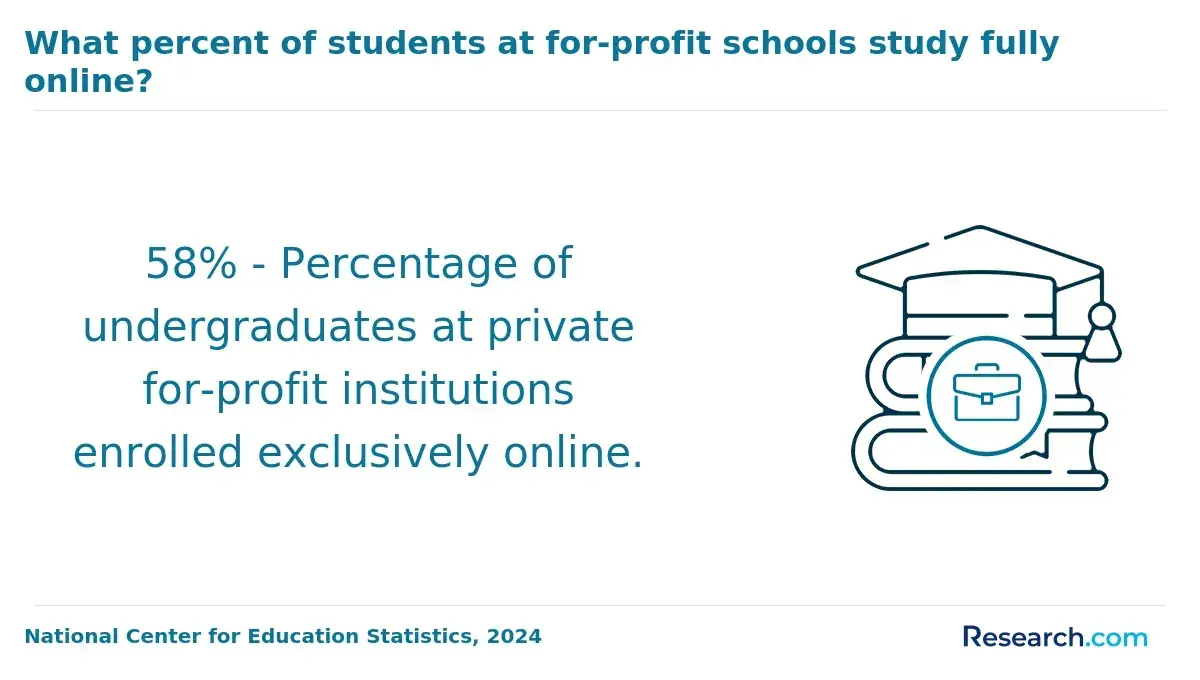
Recent federal reporting continues to show that distance education is a mainstream part of U.S. higher education, not a fringe option. That matters for veterans because more employers have become accustomed to candidates earning legitimate degrees online, especially from accredited institutions with clear academic standards.
The table below compares online and campus formats from a veteran decision-making perspective. Focus on fit, not assumptions about which format is automatically better.
| Factor | Online degree | On-campus degree |
| Schedule fit | Often better for veterans working full time, parenting, relocating, or managing health appointments | Better for students who prefer fixed schedules and face-to-face accountability |
| Networking | May rely on virtual events, discussion boards, alumni platforms, and local placements | May offer easier access to campus events, faculty offices, and local employer visits |
| Field experience | Can sometimes be completed near the student's home, subject to school approval | Often tied to local partner agencies near campus |
| Learning style | Requires self-direction, written communication, and comfort with learning platforms | Provides more in-person structure and immediate classroom interaction |
| Veteran support | Strong if services are built for online students, weak if services are campus-only | Strong if the campus has an active veteran center and accessible offices |
Online programs make the most sense when you need flexibility and can stay organized without daily in-person reminders. Campus programs may be better if you want local networking, structured routines, or direct access to labs, clinics, and student organizations. Hybrid programs can be a strong middle ground, but veterans should check travel requirements before enrolling.
What courses and concentrations are typical in online behavioral health management curricula?
Behavioral health management curricula usually blend healthcare administration, human services, psychology, public health, leadership, and data-informed decision-making. The best programs teach students how services are financed, staffed, measured, regulated, and improved, not just why behavioral health conditions occur.
A veteran comparing programs should look beyond course titles and read descriptions. Courses should build practical management skills that apply to clinics, hospitals, substance use programs, community agencies, crisis services, correctional health, veteran-serving nonprofits, and integrated care settings.
- Behavioral health systems and policy, including how mental health and substance use services are organized and funded.
- Healthcare or human services administration, including staffing, supervision, budgeting, scheduling, and service delivery models.
- Ethics, privacy, and compliance, including HIPAA, mandated reporting, documentation, risk management, and patient rights.
- Program planning and evaluation, including needs assessment, outcome measures, grant reporting, and quality improvement.
- Behavioral health finance, including reimbursement basics, payer mix, cost control, and resource allocation.
- Cultural competence and trauma-informed practice, including veteran populations, rural access, disability, family systems, and community barriers.
- Data analytics for managers, including dashboards, performance indicators, utilization trends, and evidence-based decision support.
Common concentrations include addiction services administration, community mental health, healthcare leadership, public health, nonprofit management, crisis services, and integrated behavioral health. Veterans interested in broader service leadership can also compare behavioral health management with a masters in human services, especially if their goals include nonprofit administration, social service coordination, or community program leadership.
AI and digital health are also changing curricula. Strong programs increasingly discuss telebehavioral health operations, electronic health records, privacy risks, remote patient engagement, analytics dashboards, and responsible use of automation in scheduling or documentation workflows. Veterans should look for programs that teach technology as a management tool while still emphasizing ethics, equity, and human judgment.
What are the admission requirements for online behavioral health management degrees for veterans?
Admission requirements depend on degree level and school selectivity. Online does not mean open admission in every case, but many programs are designed for working adults and transfer students, which can benefit veterans with prior college credit or military training.
The table below summarizes common admission expectations. Always confirm the details with the school because requirements can vary by institution, program level, and state authorization rules.
| Program level | Common requirements | Veteran-specific considerations |
| Associate degree | High school diploma or GED, transcripts, placement information | May be a lower-cost way to complete general education before transfer |
| Bachelor's degree | High school diploma or prior college transcripts, minimum GPA for transfer students, application form | Ask for Joint Services Transcript evaluation before committing |
| Bachelor's completion program | Prior college credits, associate degree or transfer minimums, sometimes professional experience | Often attractive for veterans who already have credits from multiple schools |
| Master's degree | Accredited bachelor's degree, transcripts, resume, statement of purpose, recommendations, minimum GPA | Military leadership experience can strengthen the application when connected to health or service goals |
| Graduate certificate | Bachelor's degree or current graduate standing, depending on the school | Good for focused upskilling, but aid and GI Bill coverage should be checked carefully |
Before applying, veterans should gather documents early because transcript evaluation and benefit certification can take time. The most useful preparation steps are straightforward.
- Request official transcripts from every college previously attended, even if you completed only a few credits.
- Download or request your Joint Services Transcript or Community College of the Air Force transcript if applicable.
- Prepare a resume that translates military leadership, training, logistics, medical, chaplaincy, peer support, or administrative experience into civilian language.
- Ask admissions whether credits expire, whether grades below a certain level transfer, and whether upper-division major credits must be completed at the school.
- Confirm state authorization if you live outside the school's home state, especially if the program includes internship or practicum activity.
If the program requires a personal statement, focus on your career goal and why behavioral health management fits your experience. You do not need to disclose personal health history unless you choose to; a strong essay can discuss leadership, service, systems improvement, access to care, or community impact.
How long do online behavioral health management programs take and what do they cost veterans?
Program length depends on degree level, transfer credit, pacing, term structure, and whether fieldwork or a capstone is required. Veterans with substantial transfer credit may finish faster, but speed should not come at the expense of accreditation, benefits fit, or career alignment.
The table below provides realistic timeline ranges. Use it as a planning tool, then ask each school for a degree audit based on your actual credits.
| Program type | Typical full-time timeline | What can change the timeline |
| Associate degree | About 2 years | Placement requirements, transfer credits, part-time enrollment |
| Bachelor's degree | About 4 years from no prior credit | Military credit, prior college work, accelerated terms, course availability |
| Bachelor's completion program | About 1 to 2 years after transfer | Number of accepted credits and major-course sequencing |
| Master's degree | About 1.5 to 3 years | Full-time versus part-time study, capstone, internship, or practicum requirements |
| Graduate certificate | About 6 to 12 months | Number of courses, start dates, and whether credits can later stack into a degree |
Cost should be evaluated as net cost, not advertised tuition. For the 2024-2025 academic year, the Post-9/11 GI Bill private-school tuition and fee cap is $28,937.09, while eligible students at public institutions may have different coverage rules for in-state tuition and fees. That single number matters because private online programs above the cap may require Yellow Ribbon funding, scholarships, employer support, or out-of-pocket payment.
Veterans should compare the following cost items before enrolling. These are the expenses most likely to change the true price of an online degree.
- Tuition per credit and the total number of credits required after transfer evaluation.
- Mandatory online, technology, graduation, portfolio, background check, proctoring, or clinical placement fees.
- Books, software, assessment platforms, and electronic health record simulation tools.
- Residency, orientation, intensive weekend, internship, or travel requirements.
- Benefit coverage, including GI Bill eligibility tier, months remaining, Yellow Ribbon availability, VR&E approval, scholarships, and employer tuition assistance.
- Opportunity cost, especially if full-time study reduces work hours or delays promotion.
To reduce costs, request a formal transfer review before enrollment, compare public in-state online options, ask about credit for military learning, and avoid taking courses that will not apply to your degree plan. Also confirm whether dropping or withdrawing from a course could create a debt to the school or VA.
What careers can veterans pursue with an online behavioral health management degree?
An online behavioral health management degree can support careers in organizations that deliver, coordinate, fund, or evaluate mental health and substance use services. The degree is most useful for veterans who want leadership, operations, compliance, program development, or service coordination roles.
Career options depend heavily on degree level and prior experience. Veterans with clinical, medical, logistics, human resources, security, chaplaincy, peer support, or administrative backgrounds may be able to connect military experience to behavioral health operations more easily than they expect.
The table below connects common roles with typical responsibilities. It is not a guarantee of eligibility because employers may require specific degrees, licenses, or experience.
| Role | Typical responsibilities | Common degree fit |
| Behavioral health program coordinator | Coordinate schedules, referrals, documentation, outreach, and program reporting | Bachelor's degree or bachelor's completion program |
| Case management supervisor | Supervise case managers, monitor service plans, track outcomes, and support compliance | Bachelor's degree plus experience; master's preferred by some employers |
| Clinic operations manager | Manage front-office workflows, staffing, access, quality metrics, and patient flow | Bachelor's or master's in healthcare or behavioral health administration |
| Substance use program manager | Oversee program operations, reporting, partnerships, staff coordination, and service quality | Bachelor's or master's; state rules may affect clinical supervision roles |
| Community behavioral health administrator | Lead budgets, grants, compliance, partnerships, and strategic planning | Master's degree often preferred for senior roles |
| Veteran services program manager | Coordinate housing, crisis, employment, peer support, or behavioral health referral programs for veterans | Bachelor's or master's in human services, public health, or administration |
Some veterans combine behavioral health management with operations, logistics, or project leadership. If your military background involved planning, teams, budgets, or process improvement, a bachelor of project management can also be a useful comparison point for roles involving grants, implementation, quality improvement, and cross-functional healthcare projects.
This degree may not be the best fit if your primary goal is to provide therapy, diagnose mental health conditions, or independently treat clients. In that case, compare licensed counseling, social work, psychology, psychiatric nursing, or marriage and family therapy pathways instead.
What salaries, job outlook, and advancement opportunities exist in behavioral health management?
Salary and advancement in behavioral health management vary by role, degree level, employer, state, license status, and years of experience. Management roles in hospitals and larger health systems often pay differently from roles in community nonprofits, residential programs, crisis services, or government-funded agencies.
BLS May 2024 wage data provides useful national benchmarks, but it should be treated as context rather than a promise. The table below includes roles related to behavioral health management and adjacent service leadership.
| Occupation | May 2024 median annual wage | 2023-2033 projected growth | How to interpret it |
| Medical and health services managers | $117,960 | 29% | Relevant to clinic, health system, and integrated care management roles, especially with strong administrative experience |
| Social and community service managers | $78,240 | 8% | Relevant to nonprofit, community program, social service, and grant-funded leadership roles |
| Substance abuse, behavioral disorder, and mental health counselors | $59,190 | 19% | Relevant as a comparison for clinical pathways, but counseling roles usually require licensure-focused education |
The strong projected growth for medical and health services managers reflects broader demand for coordinated care, compliance, digital health operations, and aging-population services. For veterans, the opportunity is strongest when management education is combined with transferable leadership experience, data skills, healthcare knowledge, and clear evidence of communication ability.
Advancement often happens in stages. A veteran might move from coordinator to supervisor, then to program manager, operations manager, director, or executive-level administrator. To improve mobility, build a portfolio that includes process-improvement projects, budget exposure, grant reporting, staff training, quality metrics, and examples of cross-agency coordination.
Certifications can help in some settings, although they are not substitutes for required licenses or degrees. Depending on your target role, you might later consider credentials in healthcare quality, project management, case management, addiction services administration, nonprofit management, or health information systems. Before paying for a certification, check whether employers in your region actually request it.
Other Things You Should Know About Behavioral Health Management
Yes, if the school and program are approved for VA education benefits and you meet eligibility requirements. Confirm approval with the school's certifying official before enrolling, and ask how online enrollment affects housing allowance, tuition coverage, fees, and benefit months.
In 2027, an online behavioral health management degree is highly relevant for veterans as it offers flexible learning tailored to their unique experiences and needs. The programs often include modules on trauma-informed care, leadership skills, and veteran-focused mental health issues, which prepare them for impactful roles in the healthcare sector.
Many management roles do not require a clinical license, but some supervisory or director roles may prefer or require licensure depending on the employer, state, and services provided. Always check job postings and state rules if the role involves clinical supervision or direct client care.
It can be worth it if the program is accredited, affordable after benefits, accepts meaningful transfer credit, and aligns with a specific career goal. It may not be worth it if you want clinical licensure and the program is designed only for administration.
References
- How to Access Mental Health Care for Military Members & Veterans https://giveforveterans.com/blog/how-to-access-mental-health-care-for-military-members-and-veterans/
- Military-friendly Online Master’s Programs for Service Members https://www.onlinemastersdegrees.org/features/military-friendly-programs/
- A&M System Best for Veterans Degree Programs https://www.tamus.edu/veterans/tamu-system-best-for-veterans-degree-programs/
- Achieving Excellence: Behavioral Health Accreditation - Haven Health Management https://havenhealthmgmt.org/achieving-excellence-behavioral-health-accreditation/
- Careers for Veterans in the Mental Health Industry https://fherehab.com/learning/veteran-careers-mental-health
- Mental Health Program | Total Veteran Healthcare https://totalveteranhealthcare.com/specialties-and-services/mental-health-program/
- Online Therapy For Veterans: Pros, Cons, & How To Start https://missionconnectionhealthcare.com/mental-health/veterans/telehealth/
- Behavioral Health for Veterans: A Better Path Forward - NeuroFlow https://www.neuroflow.com/veteran-behavioral-health/
- Boosting Veteran Mental Health with Online Therapy | Innerwell https://helloinnerwell.com/reflections/online-therapy-for-veterans