2027 States Where Behavioral Health Management Careers Have the Strongest Growth

Co-Founder and Chief Data Scientist
Behavioral health management sits at the intersection of mental health care, substance use treatment, operations, compliance, staffing, and patient access. Demand is rising because the U.S. needs more leaders who can run clinics, community programs, crisis services, and integrated care teams. The U.S. Bureau of Labor Statistics projects medical and health services managers to grow 23% from 2024 to 2034, much faster than average.
This guide helps prospective students, career changers, and healthcare workers identify strong-growth states, compare degree paths, and choose programs with better career fit.
Key Things You Should Know
- Behavioral health management growth is strongest where population growth, Medicaid-funded services, mental health access initiatives, telehealth adoption, and provider shortages are creating new administrative and supervisory needs.
- The best national proxy occupation is medical and health services manager, which the BLS projects to grow 23% from 2024 to 2034, with a May 2024 median annual wage of $117,960.
- Strong state targets for 2026 career planning include Arizona, Florida, Texas, North Carolina, Georgia, Colorado, Utah, Nevada, Washington, and California, but local demand varies by county, employer type, and funding source.
What states offer the strongest behavioral health management job growth?
Behavioral health management is not tracked as one single occupation in federal labor data. It usually falls under medical and health services management, social and community service management, program administration, behavioral health operations, clinical supervision, utilization management, and nonprofit health leadership. Because of that, the strongest state opportunities are best identified by combining national growth data with state-level signals such as population growth, behavioral health expansion, hospital and outpatient activity, and public funding for mental health and substance use services.
The table below summarizes the states that currently offer the strongest overall growth signals for behavioral health management careers. Use it as a decision shortlist, not as a guarantee of hiring in every city.
| State | Why it is a strong-growth market | Behavioral health management roles to watch | Best fit for |
| Arizona | Fast population growth, large retiree demand, and expanding outpatient and crisis-care needs | Clinic operations manager, behavioral health program manager, care coordination supervisor | Students interested in community mental health, integrated care, and outpatient operations |
| Florida | Large healthcare economy, aging population, and high demand for substance use and mental health services | Residential treatment administrator, utilization management supervisor, behavioral health director | Professionals seeking large provider networks and multi-site management roles |
| Texas | Large population base, major metro expansion, and growing demand for access management and care navigation | Behavioral health operations manager, intake services manager, regional program administrator | Candidates open to hospital systems, outpatient networks, and Medicaid-related programs |
| North Carolina | Healthcare system growth, university medical centers, and expanded attention to rural behavioral health access | Community behavioral health manager, service line coordinator, quality improvement manager | Students who want a mix of urban hospital and community-based opportunities |
| Georgia | Atlanta-area healthcare growth and statewide need for behavioral health access improvements | Program director, crisis services manager, behavioral health compliance coordinator | Career changers interested in public-private behavioral health partnerships |
| Colorado | Strong focus on mental health access, substance use recovery, telebehavioral health, and rural care models | Telehealth program manager, recovery services administrator, clinical operations lead | Professionals interested in innovation, hybrid care, and population health |
| Utah | Rapid population growth and rising demand for youth, family, and community behavioral health programs | Youth services program manager, outpatient clinic supervisor, behavioral health project lead | Students seeking growth markets with smaller but expanding health systems |
| Nevada | High access needs, fast metro growth, and demand for administrative leaders in underserved areas | Access center manager, behavioral health practice manager, community program administrator | Candidates comfortable with high-need systems and operational problem-solving |
| Washington | Strong behavioral health policy activity, telehealth adoption, and integrated care development | Integrated behavioral health manager, population health supervisor, managed care coordinator | Professionals interested in data-informed care and system redesign |
| California | Very large healthcare labor market, extensive behavioral health funding activity, and high demand for managers across provider types | County behavioral health administrator, behavioral health compliance manager, director of outpatient services | Experienced professionals seeking scale, specialization, and advancement options |
For relocation decisions, compare metropolitan areas rather than states alone. A state can be strong overall while specific rural or high-cost regions offer fewer openings or lower real purchasing power.
Why is behavioral health management demand rising in these states?
Demand is rising because behavioral health care is becoming more complex to deliver. Employers need managers who can coordinate clinicians, payer requirements, electronic health records, telehealth workflows, crisis response, quality reporting, and community partnerships without weakening patient access.
Several forces are especially important in the states with stronger growth signals. Understanding these drivers helps you choose a degree concentration, internship site, or employer type more strategically.
- More outpatient and community-based care: Many behavioral health services are shifting away from inpatient-only models, creating demand for clinic managers, care coordination supervisors, and program directors.
- Mental health and substance use access pressure: States with fast-growing populations often need more intake systems, crisis programs, recovery services, and referral networks.
- Telebehavioral health operations: Hybrid care requires scheduling systems, privacy controls, provider credentialing, quality monitoring, and patient engagement workflows.
- Value-based and managed care contracts: Managers increasingly need to track outcomes, utilization, no-show rates, care transitions, and reimbursement rules.
- Workforce shortages: When clinicians are scarce, organizations rely on strong managers to improve retention, supervision, caseload design, and service efficiency.
Technology is also changing the work. AI-enabled documentation support, risk stratification, automated scheduling, and analytics tools can reduce administrative burden, but they also create a need for managers who understand privacy, bias risk, workflow design, and staff training.

Which behavioral health management jobs are growing fastest?
The fastest-growing behavioral health management opportunities often sit near high-demand service lines rather than in job titles that explicitly say "behavioral health manager." The strongest candidates usually understand both care delivery and operations.
The table below shows common roles, their growth relevance, and the type of preparation that tends to fit each path. National BLS projections are shown where the occupation aligns closely with an official category.
| Career path | Typical responsibilities | Growth signal | Common preparation |
| Behavioral health operations manager | Oversees staffing, scheduling, patient flow, budgets, compliance, and service quality in clinics or treatment programs | Closest national proxy: medical and health services managers, projected 23% growth from 2024 to 2034 | Bachelor's or master's in healthcare administration, public health, psychology, social work, or business |
| Community behavioral health program manager | Runs grant-funded, county, nonprofit, or community-based mental health and substance use programs | Related to social and community service managers, a field supported by demand for community services | Bachelor's or master's in social work, public administration, nonprofit management, counseling, or health administration |
| Utilization management or care coordination supervisor | Coordinates authorizations, referrals, discharge planning, care transitions, and payer communication | Supported by managed care growth and integrated behavioral health models | Healthcare administration, nursing, social work, counseling, health information, or case management background |
| Crisis services or access center manager | Manages intake teams, crisis response workflows, call center operations, triage protocols, and quality metrics | Supported by state and local investment in crisis access and behavioral health navigation | Behavioral health experience plus training in operations, supervision, compliance, and data reporting |
| Quality improvement or compliance manager | Monitors documentation, licensing standards, audit readiness, outcomes, privacy rules, and corrective action plans | Supported by payer oversight, accreditation requirements, and growing regulatory complexity | Health administration, compliance, health information, public health, or clinical background |
The highest-growth path for you depends on your starting point. Clinicians often advance through supervision and program leadership, while nonclinical professionals may enter through operations, project coordination, billing, compliance, or health information roles.
What degree is needed for behavioral health management careers?
Most behavioral health management careers require at least a bachelor's degree, while director-level, health system, managed care, and executive roles often prefer or require a master's degree. The best degree depends on whether you want to supervise clinical services, manage operations, lead nonprofit programs, or work in payer and compliance environments.
Students comparing management-heavy pathways may also look at an online MBA in operations management, especially if they want broader leadership training that can transfer across healthcare, nonprofit, and business settings.
The table below compares common degree options and when each makes sense for behavioral health management.
| Degree path | Best for | Strengths | Watch-outs |
| Bachelor's in healthcare administration | Entry-level operations, practice management, and administrative coordinator roles | Strong fit for billing, compliance, quality, staffing, and healthcare systems | May need behavioral health electives, internships, or work experience to stand out |
| Bachelor's in psychology, social work, or human services | Students who want a behavioral health foundation before moving into supervision | Builds understanding of clients, services, ethics, and community needs | Management training may be limited unless paired with business or administration coursework |
| Master of Health Administration | Clinic leadership, hospital service lines, quality management, and healthcare operations | Strong preparation for budgeting, strategy, law, finance, and organizational leadership | May be less clinically focused unless electives or fieldwork target behavioral health |
| Master of Social Work | Clinical supervision, nonprofit leadership, community mental health, and program management | Can support licensure pathways and leadership in direct-service organizations | Licensure rules vary by state, and administrative leadership may require additional finance or operations training |
| Master of Public Health | Population health, prevention, policy, grants, and community behavioral health programs | Useful for data, program evaluation, policy, and health equity roles | May not be the best fit for facility operations unless paired with management experience |
| MBA with healthcare or operations focus | Administrative leadership, multi-site operations, payer organizations, and executive tracks | Strong business, analytics, finance, and strategy preparation | Students may need healthcare internships or behavioral health experience to avoid being too generalist |
A degree is most likely to be worth it when it matches the job level you want next. A bachelor's can be enough for coordinator or assistant manager roles, while a master's is often more useful when you are targeting director, administrator, or system-level leadership positions.
How do online and campus programs compare for this field?
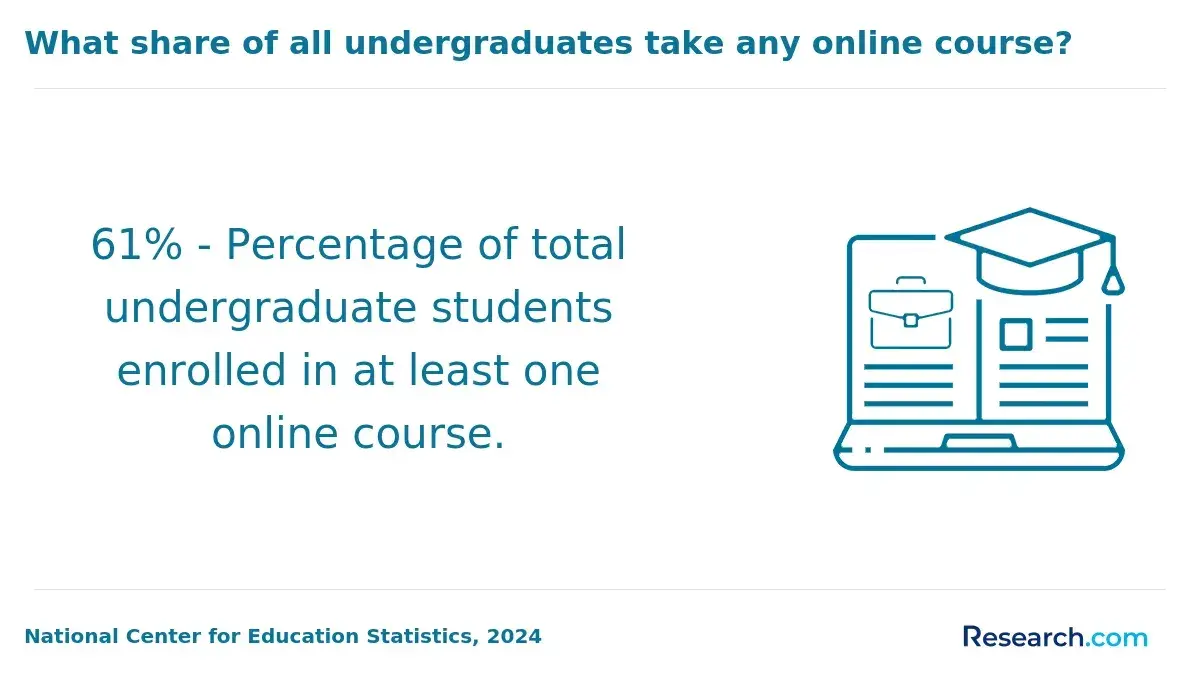
Online and campus programs can both work well for behavioral health management, but they serve different types of students. The better choice depends on your work schedule, need for local networking, internship access, learning style, and whether the program meets any state-specific licensing or field placement requirements.
Students who are drawn to data, records, privacy, and revenue-cycle work may also compare a best online health information management degree CAHIIM accredited pathway, since behavioral health providers increasingly need managers who understand electronic health records and documentation quality.
The table below compares online and campus formats in practical terms, so you can decide which structure fits your career plan.
| Format | Best advantages | Potential drawbacks | Choose it if |
| Online program | Flexible scheduling, easier to continue working, broader school options, often better for adult learners | May require more self-direction, and field placement support can vary by school | You already work in healthcare or human services and need a program that fits around employment |
| Campus program | Face-to-face networking, easier access to local internships, structured schedule, in-person faculty interaction | Less flexible, commuting costs, fewer options if you live far from relevant programs | You want local employer connections, prefer classroom learning, or need structured support |
| Hybrid program | Combines flexibility with occasional campus or field-based learning | Travel requirements may still interfere with work or caregiving | You want online coursework but also value in-person networking and supervision |
Before enrolling online, ask whether the school helps students secure internships or practicums in their own state. This matters because behavioral health employers often prefer candidates who understand local systems, payer rules, and referral networks.
Which accreditation should behavioral health management programs have?
Accreditation is one of the most important checks before choosing a behavioral health management program. At minimum, the institution should hold recognized institutional accreditation from an agency accepted by the U.S. Department of Education or the Council for Higher Education Accreditation. Programmatic accreditation can also matter depending on the degree type.
Students comparing compliance-heavy health fields, including an environmental health and safety degree online, should use the same core habit here: verify accreditation directly with the accreditor and confirm that the credential supports the role you actually want.
Use the following checklist before applying, especially if you plan to pursue clinical supervision, licensure, financial aid, or graduate study later.
- Confirm institutional accreditation through an official accreditor database, not only the school's marketing page.
- For healthcare administration programs, look for relevant professional alignment such as CAHME at the graduate level when available.
- For social work programs, verify CSWE accreditation if you plan to pursue social work licensure or clinical supervision routes.
- For counseling-related degrees, check whether CACREP or state board expectations apply to your intended license.
- Ask whether online students receive the same transcript, faculty access, internship support, and career services as campus students.
- Confirm that the program's fieldwork, practicum, or internship structure is accepted in the state where you plan to work.
A common mistake is assuming that a degree title is enough. In behavioral health, the wrong accreditation choice can limit licensure options, transfer credit, employer recognition, or graduate admissions.
What coursework appears in behavioral health management programs?
Behavioral health management programs usually combine healthcare administration, behavioral science, ethics, data, finance, and leadership. The strongest programs help students understand both the human side of care and the operational systems that keep services accessible, compliant, and financially sustainable.
Project execution is especially important because managers often lead EHR rollouts, quality improvement initiatives, new clinic workflows, grant programs, or crisis-response expansions. Students who want deeper training in timelines, budgets, teams, and deliverables may compare a bachelor's in project management as an adjacent or complementary path.
Typical coursework includes the following areas, each of which supports a different part of behavioral health leadership.
- Healthcare systems and policy: Explains how providers, payers, public agencies, and community organizations interact.
- Behavioral health services: Covers mental health, substance use treatment, recovery models, crisis care, and integrated care concepts.
- Finance and reimbursement: Builds understanding of budgets, billing, Medicaid, grants, payer contracts, and revenue-cycle basics.
- Quality improvement and outcomes: Teaches students to track performance, reduce access barriers, improve documentation, and evaluate programs.
- Law, ethics, and compliance: Covers privacy, consent, mandated reporting, licensing standards, and audit readiness.
- Leadership and human resources: Focuses on supervision, conflict resolution, staff retention, team culture, and workforce planning.
- Health information and analytics: Prepares students to use EHR data, dashboards, utilization reports, and patient access metrics responsibly.
- Field experience or capstone: Applies classroom learning to a clinic, nonprofit, hospital, payer, or public health setting.
When comparing programs, look for assignments tied to real management decisions, such as creating a staffing plan, evaluating a program budget, designing a referral workflow, or analyzing a quality metric.
What admissions requirements do these programs usually require?
Admissions requirements vary by degree level, school selectivity, and whether the program has clinical fieldwork. Most programs look for evidence that you can handle applied coursework and understand the service environment you plan to enter.
These are the requirements you are most likely to see when applying to behavioral health management-related programs.
- Bachelor's programs: High school diploma or equivalent, transcripts, minimum GPA, application form, and sometimes a personal statement.
- Bachelor's completion programs: Prior college credits, minimum transferable GPA, prerequisites, and proof of completed general education coursework.
- Master's programs: Accredited bachelor's degree, transcripts, resume, statement of purpose, recommendation letters, and sometimes healthcare or human services experience.
- Clinical-adjacent programs: Background check, immunization records, field placement eligibility, liability insurance, or state-specific disclosure forms.
- Online programs: Technology requirements, identity verification, and confirmation that the program can serve students in your state.
Before applying, take a practical approach. First, identify the job titles you want within two to five years. Then compare each program's curriculum, field experience, accreditation, and employer partnerships against those target roles. Finally, ask admissions advisors for recent internship examples and career outcomes by concentration, not just overall program outcomes.
Red flags include vague accreditation claims, unclear field placement support, no behavioral health coursework, weak transfer-credit policies, and pressure to enroll before you receive a full cost breakdown.
How long do behavioral health management programs take and cost?
Program length and cost depend on degree level, transfer credits, enrollment status, residency, and institution type. The most useful comparison is total cost to completion, not just tuition per credit.
For context, College Board's 2024 pricing data reported average published tuition and fees of $11,610 for in-state public four-year students and $43,350 for private nonprofit four-year students. Those figures do not include every expense, but they show why public, transfer-friendly, and employer-supported options can change the return-on-investment calculation.
The table below summarizes typical timelines and cost factors for common behavioral health management pathways.
| Program type | Typical time to complete | Main cost drivers | Best cost-control strategy |
| Certificate in healthcare or behavioral health administration | Several months to 1 year | Credit count, graduate vs undergraduate level, employer reimbursement eligibility | Use it to add management skills if you already have a relevant degree or clinical background |
| Associate degree | About 2 years full time | Community college tuition, transferability, books, online fees | Choose a transfer pathway into a bachelor's program before enrolling |
| Bachelor's degree | About 4 years full time, less with transfer credits | Residency status, public vs private tuition, transfer credits, required internships | Maximize accepted credits and compare total cost after grants and scholarships |
| Master's degree | About 1 to 3 years depending on pace | Graduate tuition, practicum requirements, travel, lost work time, fees | Choose a format that lets you keep working if income continuity matters |
When reviewing costs, request a written estimate that includes more than tuition. Common expenses include:
- Tuition and mandatory fees
- Books, software, and technology fees
- Background checks or field placement costs
- Travel for internships, residencies, or campus intensives
- Lost income if the program requires reduced work hours
- Licensure exam, certification, or continuing education expenses if relevant to your path
The most affordable program is not always the best value. A slightly more expensive program may be worth considering if it has stronger accreditation, better internship support, generous transfer credit, employer partnerships, or a curriculum that directly matches your target role.
What salary and job outlook do behavioral health managers have?
Behavioral health managers can earn salaries that vary widely by role, state, employer, degree level, and whether the position is clinical, administrative, nonprofit, public sector, or health system-based. The strongest salary comparisons use official occupational categories as proxies rather than assuming every behavioral health manager earns the same amount.
The BLS reported a May 2024 median annual wage of $117,960 for medical and health services managers. That number is a useful benchmark for higher-level healthcare management roles, but entry-level behavioral health program coordinators, nonprofit managers, and smaller community providers may pay less.
The table below compares relevant occupations and how they relate to behavioral health management career planning.
| Occupation or role family | How it connects to behavioral health management | Most relevant salary or outlook signal | Career interpretation |
| Medical and health services managers | Closest broad proxy for clinic administrators, service line managers, and operations leaders | BLS projects 23% growth from 2024 to 2034; May 2024 median wage was $117,960 | Strong benchmark for experienced managers in healthcare organizations |
| Social and community service managers | Relevant to nonprofit, county, grant-funded, and community behavioral health programs | Useful proxy for public and nonprofit program leadership | Good fit for mission-driven candidates who want program impact and community access work |
| Substance abuse, behavioral disorder, and mental health counselors | Common feeder occupation for supervisors and clinical program leaders | BLS projects 17% growth from 2024 to 2034 | Clinical experience can strengthen advancement into supervision, but licensure rules vary |
| Health information, compliance, and quality roles | Support documentation, audit readiness, privacy, outcomes, and payer reporting | Demand is supported by EHR use, managed care requirements, and regulatory complexity | Good path for detail-oriented professionals who prefer systems and data over direct supervision |
To improve your salary outlook, build a profile that combines behavioral health knowledge with management evidence. Employers often value candidates who can show experience with budgets, staff supervision, EHR workflows, payer documentation, quality improvement, and measurable access improvements.
Career outcomes are not guaranteed by any degree. Your strongest return usually comes from choosing a program that connects to internships, local employers, licensure goals if applicable, and the state or metro area where you plan to work.
Other Things You Should Know About Behavioral Health Management
Yes. Many operations, compliance, intake, quality, billing, and program administration roles are open to nonclinical candidates. Clinical director or therapy supervision roles, however, may require a state license and supervised clinical experience.
Before applying for management roles in behavioral health management, experience in clinical settings, administrative roles, and project management can be beneficial. Hands-on experience with patient care, understanding healthcare regulations, and leadership roles can significantly enhance candidacy for these positions in 2027.
They can help, but they usually supplement rather than replace a degree or experience. Useful areas may include healthcare compliance, project management, case management, quality improvement, or nonprofit leadership, depending on the job you want.
References
- Behavioral Health Accreditation - NCQA https://www.ncqa.org/programs/health-plans/behavioral-health-accreditation/
- Ranking the States | Mental Health America https://mhanational.org/the-state-of-mental-health-in-america/data-rankings/ranking-the-states/
- Behavioral Health Career Descriptions | SAMHSA https://www.samhsa.gov/about/careers/behavioral-health-workforce/careers-by-state/descriptions
- Behavioral Health Specialist Salary and Job Description https://www.warnerpacific.edu/blog/behavioral-health-specialist/
- Why is Healthcare Management Growing So Fast? - Healthcare Management Degree Guide https://www.healthcare-management-degree.net/faq/why-is-healthcare-management-growing-so-fast/
- DBH Curriculum Overview - Cummings Graduate Institute for Behavioral Health Studies https://cgi.edu/dbh-curriculum-overview/
- A Workforce Under Pressure: Preparing the Behavioral Health Workforce for Today and Tomorrow https://www.thenationalcouncil.org/behavioral-health-workforce-under-pressure-preparing-today-tomorrow/
- Behavioral Health Care in U.S.: How It Works, Where It Falls Short | Commonwealth Fund https://www.commonwealthfund.org/publications/explainer/2022/sep/behavioral-health-care-us-how-it-works-where-it-falls-short
- Admissions Requirements https://www.aacom.org/become-a-doctor/apply-to-medical-school/admissions-requirements
- 9 Mental Health Careers You Can Pursue with a BA https://www.nec.edu/news/9-mental-health-careers-you-can-pursue-with-a-ba