2027 Online Behavioral Health Management Degrees That Work Well With Employer Sponsorship

Co-Founder and Chief Data Scientist
Choosing an online behavioral health management degree is partly an education decision and partly a workplace funding decision. The need is real: the U. S. Bureau of Labor Statistics projects medical and health services manager employment to grow 23% from 2024 to 2034, much faster than average.
This guide is for working adults in behavioral health, human services, healthcare administration, and related roles who want to use employer sponsorship wisely. You will learn which degree formats fit sponsored learners, what accreditation matters, how costs change after tuition benefits, and how to compare programs before enrolling.
Key Things You Should Know
- Employer tuition assistance can substantially lower out-of-pocket cost, and up to $5,250 in qualifying employer educational assistance may be excluded from taxable income each year under federal rules.
- The strongest online options are usually regionally accredited healthcare administration, human services administration, psychology, public health, social work administration, or MBA programs with behavioral health-relevant management coursework.
- Career outcomes vary by role: BLS May 2024 data lists a $117,960 median annual wage for medical and health services managers, while behavioral health counseling and community service roles often require different licenses or credentials.
Which online behavioral health management degrees accept employer sponsorship?
Most online behavioral health management degrees do not advertise themselves as "employer-sponsored" degrees. Instead, they accept employer funding through third-party billing, tuition vouchers, direct billing agreements, reimbursement letters, deferred payment plans, or workforce partnership portals. The key question is not whether the degree title includes behavioral health management, but whether the school's student accounts office can process your employer's payment method.
Behavioral health management is an interdisciplinary field that prepares students to coordinate mental health, substance use disorder, crisis services, community programs, compliance workflows, budgets, staffing, and quality improvement. Because of that range, sponsored learners often choose related online degrees rather than a narrowly titled program.
The table below compares degree types that commonly fit employer-sponsored learners. Use it to match your current role and career target before contacting schools about billing rules.
| Online degree path | Best fit | How it connects to behavioral health management | Employer sponsorship fit |
| BS or BA in Healthcare Administration | Case managers, clinic coordinators, intake supervisors, healthcare support workers | Covers operations, finance, ethics, healthcare law, and service delivery | Strong fit when the employer funds broad healthcare advancement |
| BS in Human Services Administration | Workers in nonprofits, community agencies, residential services, and social service programs | Focuses on client services, program administration, advocacy, and nonprofit operations | Strong fit for behavioral health agencies and community-based employers |
| BS in Psychology with management electives | Students who want behavioral science foundation without immediate licensure | Builds knowledge of behavior, assessment concepts, research, and organizational skills | Moderate fit; confirm that the employer accepts psychology as job-related |
| MHA or MS in Healthcare Administration | Experienced staff pursuing director, administrator, or operations roles | Emphasizes strategy, leadership, regulation, quality, budgeting, and systems management | Strong fit when the employer has leadership development funding |
| MBA in Healthcare Management | Professionals targeting executive, finance, operations, or multi-site leadership roles | Combines business training with healthcare policy, reimbursement, and organizational leadership | Strong fit for employees whose employers sponsor graduate business education |
| MSW, counseling, or clinical mental health degree | Students seeking clinical licensure | Prepares for supervised practice and licensure-focused behavioral health work | Possible fit, but sponsorship and state licensure alignment must be checked carefully |
If your goal is to move from direct service into administration, start by comparing online healthcare administration programs and then narrow the list to schools that confirm employer direct billing or tuition deferment in writing.
Before applying, ask the school and employer to clarify the funding process. These details can determine whether a sponsored program is actually affordable in practice.
- Does the school accept employer purchase orders, vouchers, direct billing, reimbursement letters, or only student-paid tuition?
- Can payment be deferred until after grades post, or must you pay upfront and wait for reimbursement?
- Does your employer require a minimum grade, job-related major, continued employment period, or manager approval?
- Are books, fees, technology charges, and prior learning assessment costs covered?
- Will graduate tuition above the annual tax-free educational assistance limit create taxable income?
How do accredited online behavioral health management programs compare with campus options?
Accredited online programs can be academically equivalent to campus programs when they are offered by the same institution, use qualified faculty, and carry the same institutional accreditation. The bigger difference is not legitimacy; it is format, pacing, networking, field experience access, and how well the schedule fits a sponsored employee's work obligations.
Online education is especially practical for behavioral health workers because many already work evenings, weekends, crisis shifts, or rotating schedules. However, campus programs can still be better for students who need structured in-person support, local clinical placements, or strong regional employer pipelines.
The table below summarizes the trade-offs that matter most for working adults using employer sponsorship.
| Comparison point | Online program | Campus program | Best choice when |
| Schedule | Often asynchronous or evening-based | Fixed class times and commute required | Online is better if you work full time or have rotating shifts |
| Employer sponsorship logistics | Often designed for working adults and reimbursement timing | May still accept sponsorship but may not offer flexible payment timing | Online is better if your employer reimburses after course completion |
| Networking | Virtual classmates from multiple regions and healthcare settings | Stronger local peer and faculty relationships | Campus is better if you want local agency connections |
| Fieldwork or practicum | May allow approved local sites | May use established campus-area partners | Campus may be better for licensure-heavy clinical tracks |
| Learning style | Requires self-management and digital communication | Provides more face-to-face structure | Choose based on your discipline, support needs, and weekly availability |
Students comparing behavioral health leadership with broader health system careers may also consider an online MBA route. For example, a cheapest online MBA healthcare management pathway can make sense for employees targeting budgets, operations, contracts, or executive roles rather than direct clinical supervision.
A common mistake is assuming "online" means easier or less respected. A better approach is to compare accreditation, faculty qualifications, outcomes, internship requirements, employer billing procedures, and whether the transcript or diploma differs from the campus version.
What accreditation and licensing requirements matter for behavioral health management?
Accreditation is the first filter. For employer sponsorship, federal aid eligibility, graduate school transfer, and long-term credibility, choose a school with recognized institutional accreditation. Programmatic accreditation may also matter depending on the degree type, especially if the program leads to clinical licensure or specialized healthcare management credentials.
Behavioral health management is not always a licensed occupation by itself. A clinic operations manager, program administrator, or quality improvement coordinator may not need a clinical license. A therapist, counselor, social worker, or clinical supervisor usually does. That distinction is critical because a management-focused degree may support advancement without qualifying you for independent clinical practice.
The table below explains which quality markers to check before enrolling.
| Requirement or quality marker | Why it matters | What to verify |
| Institutional accreditation | Supports credibility, federal aid access, transfer options, and employer acceptance | Confirm the institution is accredited by a recognized accrediting agency |
| Programmatic accreditation | May matter for public health, social work, counseling, healthcare management, or HIM pathways | Check whether your target role or graduate program prefers a specific accreditor |
| State licensure alignment | Clinical roles often require state-specific coursework, supervised hours, and exams | Ask whether the program meets educational requirements in your state |
| Field placement support | Licensure-track programs may require practicum or internship experiences | Confirm who finds placements and whether your workplace can qualify |
| Employer approval | Sponsorship may be limited to job-related, accredited, or preapproved programs | Get approval before registration, not after the first bill arrives |
Healthcare data and compliance are increasingly important in behavioral health organizations, especially as providers manage electronic health records, privacy requirements, outcomes reporting, and value-based payment models. If your employer needs staff who can bridge behavioral health operations and health data, an HIM degree online may be a more targeted option than a general management degree.
The safest approach is to work backward from your intended job. If you want to manage programs, look for administration and leadership alignment. If you want to diagnose or treat clients independently, check your state licensing board before relying on any admissions advisor's general statement.
What coursework is included in a behavioral health management degree?
Coursework depends on whether the degree is housed in healthcare administration, human services, psychology, public health, social work, business, or counseling. Still, most programs blend behavioral health context with management skills because graduates need to understand both client needs and organizational systems.
A strong curriculum should help you make decisions about staffing, compliance, quality, ethics, budgets, and service access. The following course areas are especially useful for sponsored employees who want promotion-ready skills.
- Behavioral health systems and service delivery, including mental health, substance use disorder, crisis response, and community-based care models.
- Healthcare law, ethics, confidentiality, and compliance, including privacy expectations and risk management.
- Healthcare finance, reimbursement, budgeting, and resource allocation for clinics, agencies, and nonprofit programs.
- Organizational leadership, supervision, conflict resolution, workforce development, and interprofessional collaboration.
- Program planning, grant management, quality improvement, performance measurement, and outcomes evaluation.
- Health equity, cultural responsiveness, trauma-informed practice, and social determinants of health.
- Data systems, electronic records, reporting, and analytics used to monitor access, utilization, and quality.
- Capstone, practicum, internship, or applied project tied to a workplace problem or community need.
AI and automation are changing the skill mix in behavioral health management. Managers are increasingly expected to understand scheduling platforms, documentation tools, dashboards, telehealth workflows, and AI-assisted administrative systems. The degree does not need to be technology-heavy, but it should teach students how to evaluate tools ethically, protect client information, and use data without replacing professional judgment.
If you are using employer sponsorship, look for assignments that can connect to your current workplace. A capstone on reducing no-show rates, improving intake flow, or tracking quality measures can create immediate value for your employer and make sponsorship easier to justify.
What admissions requirements do online behavioral health management programs ask for?
Admissions requirements vary by degree level. Undergraduate programs usually focus on high school completion, transfer credits, and college readiness. Graduate programs usually require a bachelor's degree and may ask for work experience, a resume, recommendations, or a statement of purpose.
The table below shows what applicants should expect by program level. Requirements differ by institution, so use this as a planning checklist rather than a universal rule.
| Program level | Common admissions requirements | What sponsored employees should prepare early |
| Associate degree or lower-division transfer pathway | High school diploma or GED, placement assessment, transcripts | Employer approval, transfer plan, and confirmation that credits apply to a bachelor's degree |
| Bachelor's degree completion program | Prior college credits, official transcripts, minimum GPA, possible resume | Transfer credit evaluation and documentation for employer reimbursement |
| Full bachelor's degree | High school or college transcripts, application, possible test-optional review | Course sequence, annual tuition benefit timing, and expected completion schedule |
| Master's degree | Bachelor's degree, GPA minimum, resume, statement of purpose, recommendations | Manager support letter, graduate tuition policy, and any required professional experience |
| Licensure-track graduate program | Bachelor's degree, prerequisites, background checks, field placement eligibility | State licensure check and confirmation that your workplace can support practicum needs |
Applicants can improve their chances of a smooth start by gathering documents before the employer's reimbursement deadline. The most common delay is not academic admission; it is missing paperwork between the student, HR office, manager, and school billing department.
- Request official transcripts from every college you attended, even if credits seem unrelated.
- Ask the school for a written transfer credit estimate before committing to a start date.
- Submit employer education benefit forms before registration, not after classes begin.
- Confirm whether your employer reimburses only completed courses or can pay the school directly.
- Save syllabi, invoices, grade reports, and receipts because employers often require documentation for each term.
How long does an online behavioral health management degree take to finish?
Completion time depends on degree level, transfer credits, course load, term length, and whether the employer limits annual reimbursement. A sponsored learner may intentionally move slower to keep tuition within the employer benefit cap, while another may accelerate by transferring credits or taking year-round courses.
The table below gives realistic planning ranges. Your actual timeline may be shorter or longer depending on transfer evaluation, practicum requirements, and course availability.
| Program type | Typical full-time pace | Typical part-time working-adult pace | Important trade-off |
| Certificate in behavioral health administration or healthcare leadership | Several months to 1 year | 1 year or more | Fast and targeted, but may not replace a degree for promotion |
| Associate degree | About 2 years | 2.5 to 4 years | Useful stepping stone, but many management roles prefer a bachelor's degree |
| Bachelor's degree completion program | 1 to 2 years with significant transfer credit | 2 to 4 years | Best value when many prior credits transfer |
| Full bachelor's degree | About 4 years | 4 to 6 years or more | Broad foundation, but sponsorship caps may stretch the timeline |
| Master's degree | 1 to 2 years | 2 to 3 years | Strong for leadership, but graduate tuition may exceed annual employer benefits |
Accelerated formats can help, but speed should not be the only goal. Behavioral health organizations need managers who understand regulation, staffing, ethics, trauma-informed services, and quality improvement; rushing through without retaining those skills can weaken the return on investment.
If your employer values project execution, process improvement, and cross-functional leadership, a quickest online project management degree may also complement behavioral health experience, especially for roles focused on program launches, grants, operations, or workflow redesign.
To choose the right pace, estimate your weekly study time honestly. Many working adults do best with one or two courses per term, especially if they manage crisis coverage, caregiving, or unpredictable shifts.
What does an online behavioral health management degree cost after sponsorship?
The cost after sponsorship depends on tuition, fees, transfer credits, employer benefit limits, tax treatment, books, and whether you must pay upfront. Employer funding can make a degree affordable, but it does not automatically make it free.
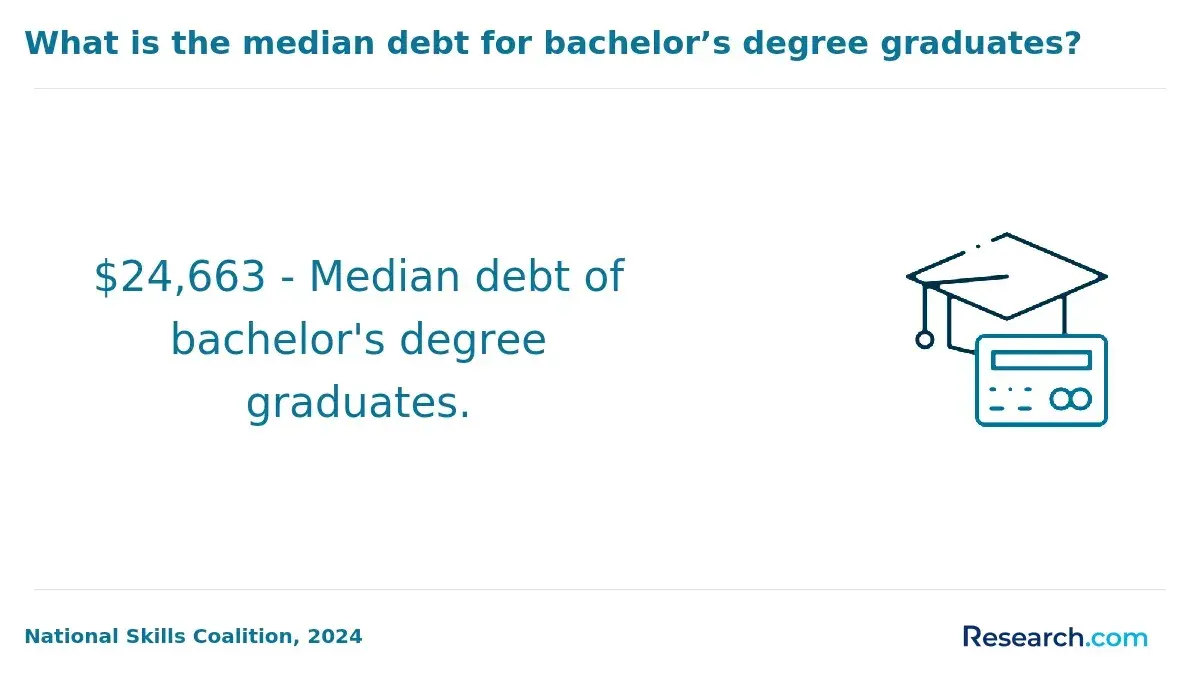
College Board's 2024-25 national pricing data reported average published tuition and fees of $11,610 for in-state students at public four-year institutions and $43,350 at private nonprofit four-year institutions. Those figures are not online-specific program quotes, but they show why sponsored students should compare total cost rather than focusing only on monthly payment estimates.
When comparing schools, list every cost that could fall outside your employer benefit. These are the most common cost categories sponsored students should ask about.
- Per-credit tuition for online undergraduate or graduate courses
- Mandatory online, technology, student services, graduation, or assessment fees
- Books, digital course materials, simulation tools, and background check costs
- Prior learning assessment, portfolio review, or transfer evaluation fees
- Travel costs for any required residency, orientation, practicum, or campus intensive
- Taxable amounts if employer educational assistance exceeds the applicable annual exclusion
- Repayment obligations if you leave the employer before a required service period ends
A practical way to evaluate affordability is to calculate the net cost per year, not just the total degree price. This matters because a lower tuition program may be less affordable if it requires upfront payment and your employer only reimburses after grades post.
Use this simple decision process before enrolling.
- Ask the school for a written total program cost estimate, including tuition and required fees.
- Ask your employer how much it will pay per calendar year or fiscal year and whether graduate tuition is treated differently.
- Confirm whether payment is direct billing, deferred billing, or reimbursement after course completion.
- Subtract confirmed employer coverage from the annual school cost, not from a best-case estimate.
- Decide whether the remaining balance can be paid without excessive private debt.
Be cautious with programs that advertise low tuition but add large fees, require more credits than expected, or provide only vague answers about employer billing. A reputable school should be able to explain costs clearly before you commit.
What jobs can you get with a behavioral health management degree?
A behavioral health management degree can support roles in mental health clinics, substance use treatment centers, hospitals, community agencies, integrated care organizations, correctional health programs, crisis service providers, nonprofits, and government-funded programs. The degree is usually strongest for administrative, supervisory, compliance, quality, and program roles rather than independent clinical practice.
The table below connects common job paths to typical responsibilities. Exact titles vary widely by employer and state regulations.
| Role | Typical responsibilities | Degree level often preferred | Licensure considerations |
| Behavioral health program coordinator | Schedules services, tracks referrals, supports program reporting, coordinates staff communication | Associate or bachelor's degree | Usually not licensed unless clinical duties are included |
| Case management supervisor | Supervises case managers, reviews documentation, supports client access and care coordination | Bachelor's degree; master's sometimes preferred | May require human services experience or credentialing |
| Clinic operations manager | Manages workflows, staffing, patient access, compliance processes, and service quality | Bachelor's or master's degree | Administrative role usually separate from clinical licensure |
| Quality improvement specialist | Monitors outcomes, audits records, supports accreditation readiness, improves processes | Bachelor's degree or higher | Clinical background may help but is not always required |
| Behavioral health administrator | Oversees budgets, contracts, staffing, compliance, service expansion, and leadership reporting | Master's degree often preferred | Requirements vary by facility type and state |
| Clinical supervisor | Supervises clinicians, reviews treatment work, supports ethical and compliant care | Master's degree | Typically requires an active clinical license and supervised experience |
This degree is worth considering if you already work in behavioral health and want to move into supervision, operations, quality, compliance, or administration. It may be less suitable if your main goal is to become a licensed therapist, psychologist, or clinical social worker; those paths require specific licensure-aligned degrees and supervised practice.
Current workplace trends favor managers who can work across clinical, operational, and data teams. Telehealth, integrated primary care, workforce shortages, payer documentation rules, and outcomes reporting have made behavioral health management more complex than traditional office supervision.
What salary can behavioral health management graduates expect?
Salary depends on the role, degree level, license status, employer type, location, and years of experience. A behavioral health management degree does not guarantee a specific income, but it can help qualify workers for roles with more responsibility than entry-level direct service positions.
BLS May 2024 wage data provides the clearest national salary context for related occupations. Use these figures as benchmarks, not promises, because behavioral health employers may pay differently based on funding model and region.
| Related occupation | Median annual wage, May 2024 | How it relates to behavioral health management |
| Medical and health services managers | $117,960 | Relevant to clinic administration, operations leadership, compliance, and healthcare management roles |
| Social and community service managers | $78,240 | Relevant to nonprofit, community behavioral health, residential, and social service program leadership |
| Substance abuse, behavioral disorder, and mental health counselors | $59,190 | Relevant for clinical service roles, though licensure and graduate education may be required |
The salary takeaway is straightforward: management-track roles generally pay more when they include responsibility for budgets, staff, compliance, multiple programs, or healthcare operations. However, some behavioral health organizations operate under tight public funding or grant budgets, so title alone does not determine pay.
To judge return on investment, compare the net cost of the degree after employer sponsorship with the roles you can realistically access in your region. Also consider non-salary benefits such as schedule stability, promotion eligibility, employer-paid credentials, and reduced need for student loans.
How do you choose a reputable behavioral health management program?
The best program is the one that matches your career target, employer sponsorship rules, state requirements, schedule, and budget. Reputation matters, but rankings alone are not enough. A reputable program should be transparent about accreditation, costs, transfer credits, outcomes, faculty, and employer billing.
Use the following checklist before applying. It is designed to catch the most expensive mistakes early.
- Verify institutional accreditation through recognized accreditation sources and confirm your employer accepts the school.
- Ask whether the program is management-focused, licensure-focused, or a hybrid, and compare that answer with your career goal.
- Get a written transfer credit evaluation if you have prior college coursework, military training, or professional certifications.
- Request a total cost estimate that includes tuition, fees, books, technology charges, and any required in-person experiences.
- Confirm the school's employer sponsorship process, including direct billing, reimbursement documentation, and payment deadlines.
- Ask whether coursework can be applied to your current workplace through projects, capstones, internships, or quality improvement assignments.
- Check whether faculty have relevant experience in behavioral health, healthcare administration, human services, compliance, or public health.
- Review student support services for online learners, including advising, tutoring, career services, library access, and technical help.
- For clinical ambitions, contact the relevant state licensing board before assuming the program meets licensure requirements.
Red flags include pressure to enroll before cost details are clear, unclear accreditation language, no written policy for employer billing, poor transfer transparency, vague career claims, or promises of licensure without state-specific confirmation.
A strong final question to ask admissions is: "Based on my employer's tuition policy, my transfer credits, and my target role, what is the lowest-risk path to finishing this degree?" A school that answers with specifics is more useful than one that only promotes convenience.
Other Things You Should Know About Behavioral Health Management
Usually, diplomas from accredited institutions list the degree and institution, not the delivery format. Policies vary, so ask the registrar whether the transcript or diploma distinguishes online study from campus study.
Yes, if you already have a degree and need targeted skills in behavioral health leadership, compliance, project management, or healthcare operations. A certificate is less suitable when your target job specifically requires a bachelor's or master's degree.
Explain how the program connects to your current role or a realistic internal career path. Bring the program name, accreditation status, cost estimate, course schedule, and the school's billing options so HR can evaluate the request quickly.
Enrolling in an online behavioral health management degree can enhance vital skills in mental health support, program development, and leadership, directly benefiting your employer by improving workplace wellness programs and fostering a healthier work environment, crucial for effective team management and increased organizational productivity.
References
- 9 Mental Health Careers You Can Pursue with a BA https://www.nec.edu/news/9-mental-health-careers-you-can-pursue-with-a-ba
- Mental Health Professional Average Salary Information - Psych Resources https://www.cmfgroup.com/knowledge-center/psychologist-mental-health-professional-malpractice/salary-information/
- Behavioral Health Programs https://www.cigna.com/employers/behavioral-health
- Online MHA Programs Ranked by Affordability (2025) https://www.mhaonline.com/blog/affordable-online-mha-programs-ranked
- Online DBH Programs – Online Doctor of Behavioral Health https://www.onlineeducation.com/healthcare/doctor-of-behavioral-health-programs
- 2025 Best Health Care Management Degrees Online https://www.onlineu.com/degrees/healthcare-management
- What Exactly Is A Healthcare Management Degree? - Healthcare Management Degree Guide https://www.healthcare-management-degree.net/faq/what-exactly-is-a-healthcare-management-degree/
- How long does it take to complete the DBH program? - Cummings Graduate Institute for Behavioral Health Studies https://cgi.edu/dbh-time/
- Mental health providers: Tips on finding one https://www.mayoclinic.org/diseases-conditions/mental-illness/in-depth/mental-health-providers/art-20045530
- Behavioral Health Consultant Salary (July 2026) | APOS https://careers.apos-society.org/salary/behavioral-health-consultant