2027 Choosing an Online Ed.D. in Leadership and Learning in Organizations for Leadership in High-Growth Social Enterprises
Audited and Verified:
Our Editorial and Data Verification Process
Research.com uses government datasets, official education statistics and primary institutional information to support its career and degree guides. Our review process checks factual accuracy, occupational definitions, source dates and the requirements associated with the credentials discussed.
How This Article Was Fact-Checked
Our editorial team verifies salary estimates, employment projections, education requirements and program information against original data providers and official organizations. Salary figures are checked against the relevant occupational definitions and reporting periods. Information about licensure, accreditation and required in-person training is reviewed separately.
Fact-checked and verified on:

Co-Founder and Chief Data Scientist
Scaling a social enterprise means growing staff, services, and revenue without losing the trust or outcomes that justify the mission. If you lead that work, an online Ed.D. in Leadership and Learning in Organizations may help you build stronger learning systems and evaluate change - but it is a substantial commitment, not a shortcut to an executive role. This guide explains what to look for in a program, when doctoral study adds value, and when experience or a narrower credential may serve your organization better.
Key Things You Should Know
- An Ed.D. is most useful when your leadership challenge involves developing people, changing organizational systems, and evaluating results - not simply acquiring a senior credential.
- Compare the required applied project, access to organizational data, live-class obligations, and full cost before choosing an online program; these features vary by school.
- As a career benchmark, the U.S. Bureau of Labor Statistics reports a $133,000 median annual wage for training and development managers in May 2025, not a predicted salary for Ed.D. graduates or nonprofit executives.
What is an online Ed.D. in Leadership and Learning in Organizations?
It is a practice-oriented Doctor of Education focused on how people learn, lead, and improve organizations. Depending on the university, study may combine adult learning, organizational change, leadership, and applied research. "Leadership and Learning in Organizations" is not a standardized degree title: confirm the exact award and curriculum rather than assuming similarly named programs are equivalent.
For a social enterprise, the distinction matters. A program centered on workplace learning and organizational improvement may fit a leader building regional teams or improving service delivery.
A doctorate designed primarily for school administration may not. Likewise, an Ed.D. generally emphasizes using evidence to improve practice, while a research-oriented PhD may better fit someone whose principal goal is producing academic scholarship.
How can an Ed.D. prepare leaders for high-growth social enterprises?
A high-growth social enterprise must often train new employees, transfer knowledge across sites, and show funders or customers what its work achieves. Doctoral study can help a leader diagnose those challenges, test an improvement strategy, and communicate its limits. It cannot substitute for authority to change operations, a workable budget, or relationships with the communities served.
The useful question is which capability your next stage of growth demands. These pathways address different bottlenecks:
| Primary need | Potentially better-fitting path | Decision test |
| Build leadership development and evaluate organizational change | Practice-oriented leadership and learning Ed.D. | Can you sustain doctoral study and pursue an approved, feasible organizational inquiry? |
| Strengthen finance, operations, or public-service administration | MBA, MPA, relevant experience, or focused executive education | Is the immediate gap managerial rather than learning- or research-related? |
| Fix a defined training or reporting process | Targeted training, mentorship, or specialist support | Would a narrower intervention solve the problem sooner? |
For example, a university-affiliated venture may need to coordinate learning across campus and community partners. Leaders in that setting can examine Ed.D. options for organizational improvement in colleges, while checking that a program's project rules accommodate work with an external social enterprise.
What accreditation should an online Ed.D. program have?
Start by verifying that the degree-granting university holds recognized institutional accreditation and that the accreditation covers the institution awarding the doctorate. Check the institution's status through its accreditor and the U.S. Department of Education's accreditation records. Online delivery does not create a separate, universal Ed.D. accreditation requirement.
Accreditation alone does not establish that a program teaches social enterprise management, qualifies graduates for school-administrator licensure, or meets a particular employer's hiring rules. Ask the university for the exact degree designation, curriculum, required project, and any relevant licensure disclosures. If a program advertises specialized recognition, verify what that recognition actually covers.
The most relevant curriculum connects adult learning and leadership to decisions a growing enterprise must make. Adult-learning and instructional-design study can inform how staff and volunteers gain usable skills; organizational-development courses can address coordination, culture, and change; research and evaluation courses can help leaders distinguish encouraging feedback from credible evidence of improvement.
Look beyond course titles. Ask whether students practice needs assessment, implementation planning, qualitative or quantitative analysis, and communicating findings to decision-makers.
A useful applied project might examine why training fails to transfer across locations - but the diagnosis must follow evidence, not the assumption that more training is the answer. Confirm whether faculty supervise individual or team projects and whether the program permits the organizational setting you have in mind.
If employee, customer, or beneficiary information could be involved, ask early about employer permission, data security, consent, and institutional review. Access to records for your job does not automatically authorize their use in doctoral work.
Requirements differ by university. Programs may request prior graduate study, transcripts, recommendations, a statement of purpose, and evidence of relevant professional experience; some also assess an applicant's proposed problem of practice. A nonprofit title or years of service alone may not demonstrate the decision-making and organizational access needed for applied doctoral work.
In an application, describe a real leadership responsibility, the people affected, the decision you need to improve, and what evidence you could reasonably obtain. Do not claim project approval or results you do not have.
Ask admissions staff whether your degree and experience meet formal eligibility rules, then ask program faculty whether your intended work setting is suitable for its project requirements.
If you hold an Education Specialist degree, investigate Ed.S. progression into an online Ed.D. separately from admission eligibility: prior credits do not necessarily transfer into doctoral requirements or shorten completion time.
Both depend on the required credits, course sequence, enrollment pace, and time needed to finish the doctoral project. Do not rely on an advertised minimum completion time without checking whether courses run when you need them and what happens if a project partner or your employer changes.
Request a written, program-specific cost estimate covering tuition, mandatory fees, technology, books, and any required travel or lodging. Then account for work time, caregiving, and project-related expenses that the university's tuition figure excludes. Compare that total with confirmed aid and the terms of any employer reimbursement; a promised promotion should not be entered as guaranteed income.
Leaders working in a college-based venture can investigate resources on paying for a doctorate in higher education leadership, but should verify whether their own employer and chosen program offer the assistance described. Professional doctorates should not be assumed to carry PhD-style funding.
Online study may let a social enterprise leader remain near staff and community partners. It does not necessarily mean self-paced work: live sessions, cohort meetings, group assignments, campus convenings, and project deadlines can still constrain a scaling organization's schedule. A campus-based program may make in-person faculty and peer interaction easier but require commuting, relocation, or time away from the enterprise.
Compare actual calendars, attendance rules, faculty access, and project supervision - not the delivery labels alone. Use affordable doctoral education program comparisons as a starting point for identifying options, then obtain each school's current charges and residency requirements. The lowest published tuition may not be the lowest total cost if travel or delayed completion is substantial.
Relevant paths include social enterprise executive leadership, nonprofit program or learning leadership, workforce-development management, and organizational consulting. The tasks differ: a program leader oversees implementation and stakeholders; a learning leader develops staff capability; a consultant diagnoses problems and advises clients.
An Ed.D. can strengthen evidence-informed practice, but hiring and advancement still depend on sector knowledge, budgets managed, teams led, and demonstrated results.
If you are already leading expansion, use doctoral work to build a credible record of decisions, implementation, and evaluation. If you are entering the sector, first seek direct responsibility for programs, partnerships, or teams; the degree alone is unlikely to bridge a substantial experience gap.
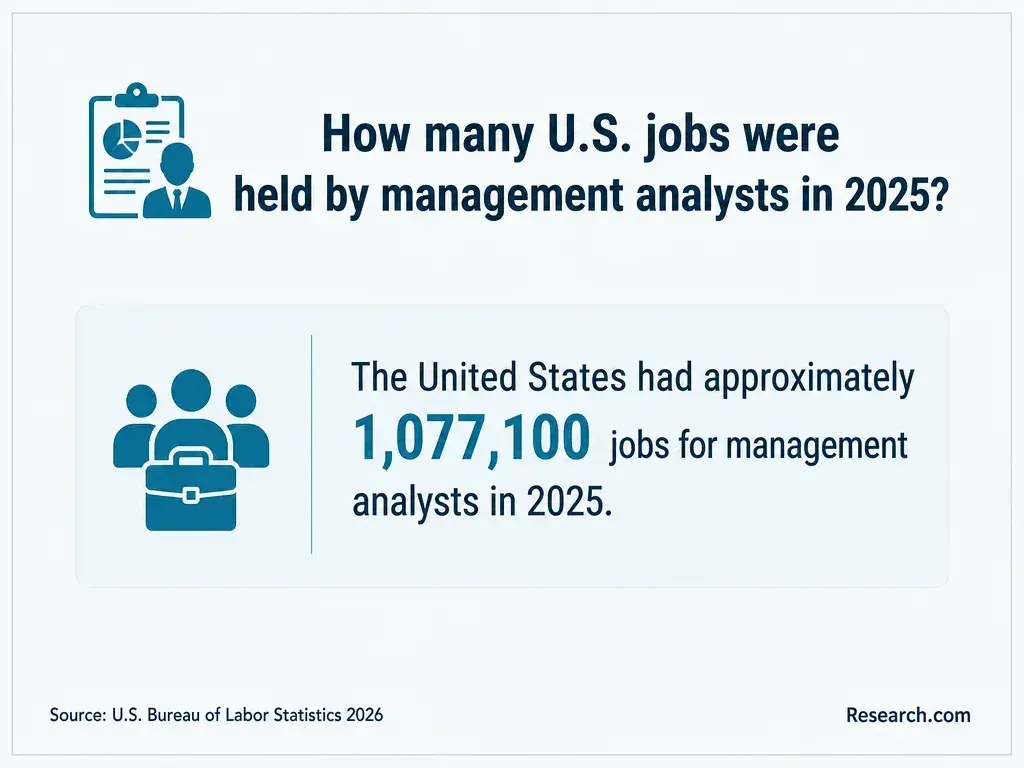
The BLS projects 10.1% employment growth for management analysts from 2025 to 2035, but that occupation-wide outlook is not a forecast for social enterprise consultants or Ed.D. holders.
If a succession opportunity has a fixed deadline, explore accelerated education doctorate completion planning while confirming whether the program's actual course and project schedule fits. Experience-building may be the more direct path to readiness.
Do social enterprise leaders need professional licenses or certifications?
General social enterprise leadership does not have a single required professional license, and an organizational leadership Ed.D. does not itself confer one. Requirements can arise from the work the enterprise performs - for example, regulated healthcare or education services - or from a specific job. Verify those rules with the relevant state authority and employer before treating a degree as a qualification.
Optional credentials in project management, coaching, or related specialties may support a defined skill goal, but they are not interchangeable with a doctorate or proof of executive competence. Choose one only if its assessed skills match responsibilities you actually expect to hold.
Other Things You Should Know About EdD Leadership
Possibly. The program must accept the arrangement, and the organization with authority over the work and data must agree to it. Clarify responsibilities before proposing the project.
Possibly, but the dual role can create conflicts of interest or pressure on participants. Disclose it to faculty and the organization, and follow required ethics and approval procedures.
Only within the permissions, confidentiality terms, and academic rules governing the project. Agree in advance on what may be reported and avoid presenting limited findings as proof of broad impact.
Identify the decision you need to improve now. If the organization first needs a finance system, experienced operations hire, or focused evaluation support, address that need before committing to a doctorate.
- Qualified Ed expenses | Internal Revenue Service https://www.irs.gov/credits-deductions/individuals/qualified-ed-expenses
- Cost of Attendance (Budget) | 2025-2026 Federal Student Aid Handbook https://fsapartners.ed.gov/knowledge-center/fsa-handbook/2025-2026/vol3/ch2-cost-attendance-budget
- Accreditation in the U.S. | ed.gov http://www.ed.gov/laws-and-policy/higher-education-laws-and-policy/college-accreditation/accreditation-in-the-us
- 2026 UNC Online EdD in Organizational Learning & Leadership https://online.unc.edu/online-doctoral-programs/online-edd-organizational-learning-and-leadership/
- Admissions, UC LEAD, Winter, Cohort | ucsd.edu https://eds.ucsd.edu/graduate/doctoral/ucleadedd/uclead-admissions.html
- Online vs. In-Person College: What Employers Really Think About Each - CityU of Seattle https://cityu.edu/online-vs-in-person-college/
- Career Outcomes - School of Education and Social Policy | Northwestern University https://sesp.northwestern.edu/graduate-professional/learning-and-organizational-change/ms-organizational-dynamics/career-outcomes.html
- Leadership for Organizations Ed.D. | University of Dayton https://udayton.edu/academics/programs/leadership-for-orgs-edd/index.php
- The Doctoral Student Experience (DSE) - Doctoral Center | LibGuides at National University https://resources.nu.edu/c.php
- Ed.D. in Executive Leadership - Degrees & Requirements | Columbia University https://www.tc.columbia.edu/organization-and-leadership/edd-in-executive-leadership/degrees--requirements/executive-leadership-edd/