2027 Online Ed.D. in Leadership and Learning in Organizations After a Master's in Health Education: Admission and Credit Questions
Audited and Verified:
Our Editorial and Data Verification Process
Research.com uses government datasets, official education statistics and primary institutional information to support its career and degree guides. Our review process checks factual accuracy, occupational definitions, source dates and the requirements associated with the credentials discussed.
How This Article Was Fact-Checked
Our editorial team verifies salary estimates, employment projections, education requirements and program information against original data providers and official organizations. Salary figures are checked against the relevant occupational definitions and reporting periods. Information about licensure, accreditation and required in-person training is reviewed separately.
Fact-checked and verified on:

Co-Founder and Chief Data Scientist
A master's in health education can provide relevant preparation for an online Ed.D. in leadership and learning in organizations, but it does not establish how many doctoral credits you can transfer. That distinction matters if you hope to build on graduate work rather than repeat it.
This guide explains how programs may evaluate your degree, coursework, research preparation, and professional experience; what to request before enrolling; and when a different qualification may better serve your goals in health education or organizational learning.
Key Things You Should Know
- A completed master's in health education may satisfy an Ed.D. admission requirement even when none of its courses transfer into the doctorate.
- There is no universal transfer-credit allowance: the program must evaluate course level, grades, equivalence, recency, and its doctoral residency rules in writing.
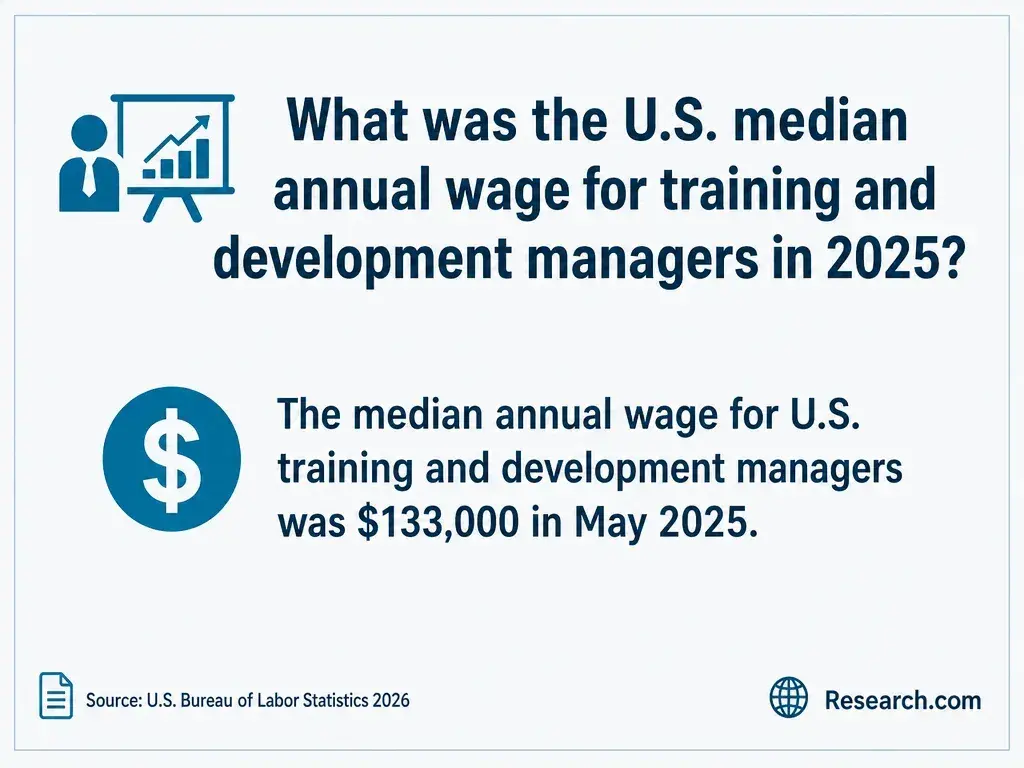
- The U.S. Bureau of Labor Statistics reports a $133,000 median annual salary for training and development managers in May 2025; that occupational figure is not an expected salary for Ed.D. graduates.
What Is an Online Ed.D. in Leadership and Learning in Organizations?
An Ed.D. in leadership and learning in organizations is a practice-oriented doctorate concerned with how people learn, lead change, and improve performance in workplaces and other organizations. "Online" describes where much of the instruction takes place; it does not necessarily mean self-paced study or eliminate live meetings and campus visits.
For a health education professional, the distinction from a school-administration doctorate is important. A broadly focused program might support work in healthcare training, community health organizations, workforce development, or organizational improvement, while another program with similar wording may concentrate on education institutions. Compare the awarded degree, required courses, and applied project - not just the title. A guide to Ed.D. specialization choices for professional goals can help you frame that comparison.
Can You Earn This Ed.D. After a Master's in Health Education?
Often, yes - but eligibility depends on the specific program. A health education master's may meet a requirement for a completed graduate degree even if the school does not require an education major. Courses in behavior change, program planning, evaluation, or community engagement can also help demonstrate readiness for organizational learning. Neither the degree title nor the transcript alone guarantees admission.
Show how your work connects health education to leadership and learning. For example, describe your actual responsibility for training staff, evaluating an outreach program, coordinating partners, or changing how an organization delivers education. Separate work you directed from work you supported, and identify a problem you could investigate without claiming access to data or approvals you do not have.
If you also have unfinished doctoral study, ask for a separate evaluation of those credits. Options discussed in an online Ed.D. options for all-but-dissertation applicants guide address a different situation from holding a completed health education master's; neither status automatically carries credits into a new doctorate.
How Many Credits Can You Transfer From a Health Education Master's?
There is no reliable universal number. A school may accept your completed master's for admission yet apply few - or no - master's credits toward its Ed.D. Required doctoral courses, limits on previously earned credits, and minimum credits that must be completed at the awarding institution can all affect the result. A prerequisite waiver or course substitution may also change what you take without reducing the total credits required.
These decisions are easy to confuse. The following table distinguishes what each decision actually establishes.
| Decision | What it means | What it does not establish |
| Admission eligibility | The degree or prior coursework meets an entry condition. | That credits count toward Ed.D. completion. |
| Transfer credit | Approved prior credits count toward the doctoral credit total. | That they replace a particular required course. |
| Course substitution or waiver | Prior preparation satisfies a specified course or prerequisite decision. | That tuition, required credits, or completion time decrease. |
For a useful ruling, send official transcripts and, where requested, syllabi for potentially relevant graduate courses - especially research methods, statistics, adult learning, leadership, and program evaluation. Ask the registrar or designated transfer-credit evaluator which credits can count, and ask the Ed.D. program which requirements they satisfy. Request a written degree audit or equivalent decision for your intended entry term. If your work includes quarter credits, pass-fail grades, older courses, or study at multiple institutions, ask how each is treated before assuming an equivalency.
Requirements vary by institution and entry term. Programs may review a completed master's degree and academic record, professional experience, recommendations, a statement of purpose, and evidence that you can undertake applied doctoral work. Some specify a GPA, interview, entrance test, or amount of leadership experience; others do not. Treat a published minimum as an eligibility rule, not a prediction of admission.
Your application should make the transition from health education explicit. Connect experience designing learning, assessing needs, working across departments, or evaluating programs to the doctoral program's aims. If a program requires prior methods coursework or an organizational project site, ask whether your health education preparation qualifies and what documentation or bridging study it expects.
Before paying an application fee, ask admissions whether your master's field is accepted, whether any experience requirement applies to your responsibilities, and who makes final decisions about academic exceptions. Get answers for the term in which you plan to enroll; a faculty conversation is useful guidance but is not a formal admission or credit decision.
Confirm that the institution awarding the Ed.D. holds recognized institutional accreditation, and verify the school's exact degree name in its current catalog. Then ask whether any programmatic recognition is claimed and what, specifically, it covers. Institutional accreditation does not by itself make a general leadership doctorate a state-approved educator-licensure program.
Use the institution's accreditation and licensure disclosures and the relevant accreditor or state regulator to resolve claims that affect your goal. If you intend to remain in healthcare or community health, also check whether your employer or professional organization values this particular doctorate. Academic recognition, an employer's hiring preference, and eligibility for a regulated position are separate questions.
Coursework often combines leadership and organizational change with adult learning, research methods, and applied inquiry, but the sequence and depth vary. A health education graduate may already know program planning and evaluation in a public health context. The useful question is whether the Ed.D. adds capabilities you need, such as diagnosing a workforce learning problem across departments, leading implementation, or evaluating whether a change is working.
Review required courses rather than relying on an elective list. Check how much qualitative and quantitative methods preparation the program provides, whether relevant electives actually run during your enrollment, and what the final dissertation, dissertation in practice, or capstone requires. A course mentioning organizational leadership does not establish a formal concentration, and a health education evaluation course does not automatically satisfy doctoral research requirements.
Time and cost depend on the published credit requirement, enrollment pace, tuition structure, fees, and final-project rules. Do not calculate a shorter timeline from hoped-for transfer credits. Even approved credits may not remove a course offered only in sequence or shorten the period needed to complete applied research.
Ask each school for a term-by-term plan and an individualized cost estimate showing tuition, mandatory fees, required travel, and the consequences of extending enrollment during the final project. Compare that estimate with your employer's written reimbursement rules, including any grade, continued-employment, or repayment conditions. An Ed.D. program costs for prospective doctoral students guide can help identify cost categories, but the school's estimate and your credit evaluation should govern your budget.
Online study can make enrollment possible without relocating, but location flexibility is not the same as schedule flexibility. Compare required live sessions, group meetings, campus convenings, and access to faculty and research support with the commitments of a campus-based program. For someone delivering health education during fixed work hours or coordinating community partners, attendance rules may matter more than the label "online."
Compare total costs as well as tuition: online study may add convening travel, while campus study may add commuting or time away from work. An online organizational leadership doctoral affordability guide can help you identify programs to investigate; confirm each program's delivery requirements and actual charges directly before deciding it is the less expensive option.
A health education professional might use this Ed.D. to strengthen qualifications for responsibilities in workforce learning, training management, organizational development, program evaluation, or healthcare and nonprofit leadership. The degree is most persuasive when paired with evidence of leading projects, managing stakeholders, and improving learning or organizational processes. It does not, by itself, qualify someone for a director or executive appointment.
The U.S. Bureau of Labor Statistics reports a May 2025 median annual salary of $133,000 for training and development managers. That is a median for an occupation - not a starting salary, an Ed.D. graduate outcome, or a measure of what health education employers will pay. Compare postings in your target sector with your existing experience before treating the doctorate as a financial investment.
If your goal is specifically leadership in a college or university, investigate programs built for that setting rather than assuming a broad organizational doctorate is the closest fit. A guide to low-cost higher education leadership doctoral funding options may be useful for that distinct career path. If your aim is a narrower promotion in health education, a supervised leadership assignment or targeted development program may be a more direct step.
Does This Ed.D. Require a License or Professional Certification?
A general organizational leadership and learning Ed.D. typically is not itself a professional license. It also should not be assumed to prepare graduates for teacher, principal, superintendent, counseling, or other regulated roles. If a particular job requires licensure, check the program's official preparation disclosure and the state licensing authority's rules before applying.
For health education roles, distinguish credentials you already hold or may pursue from the doctorate. Ask the relevant certifying organization whether doctoral coursework has any bearing on its requirements; do not assume the degree awards a certification or replaces renewal obligations. The decisive credential is the one required for your target position, not the one with the broadest leadership title.
Other Things You Should Know About EdD Leadership
Not necessarily. Check the program's stated research requirements. A strong course project or documented evaluation work may help show readiness even if it was never published.
Not unless the program requires it. Employer support may become important later if your studies involve work time, organizational data, or a workplace-based project.
You can discuss a potential problem, but access and use require the organization's permission and any applicable privacy, data-use, and institutional review procedures. Do not promise data access in an application.
Policies vary. Explain what you have learned through subsequent practice, and ask whether the program has recency rules for prerequisite courses or credits you hope to transfer.
- Health Promotion EdD | Degrees & Requirements | Columbia University https://www.tc.columbia.edu/health-studies-applied-educational-psychology/health-education/degrees--requirements/health-promotion-edd/
- Online Ed.D. in Higher Education Leadership | MBU | Missouri Baptist University (Mobap) https://www.mobap.edu/majors-programs/ed-d-in-higher-education-leadership-online/
- Transfer Credit | Office of Graduate Studies | Goodwin College of Professional Studies https://drexel.edu/graduatecollege/forms-policies/policies-procedures-guidelines/transfer-credit/
- Online (Ed.D.) in Leadership for Organizations | UD-EDU https://educationonline.udayton.edu/edd/
- Transfer Course Policy - Academic Catalogs https://catalog.southernct.edu/graduate/transfer-credit-policies/transfer-course-policy.html
- 2026 UNC Online EdD in Organizational Learning & Leadership https://online.unc.edu/online-doctoral-programs/online-edd-organizational-learning-and-leadership/
- Graduate Transfer Credit Policies | Bryan University https://catalog.bryanuniversity.edu/graduate-transfer-credit-policies
- Graduate Transfer Credit Request Form | brooklyn.edu https://welcome.brooklyn.edu/register/gradtransfercredit