2027 Online Ed.D. in Leadership and Learning in Organizations: Comparing a Doctorate with an Internal Executive Development Program
Audited and Verified:
Our Editorial and Data Verification Process
Research.com uses government datasets, official education statistics and primary institutional information to support its career and degree guides. Our review process checks factual accuracy, occupational definitions, source dates and the requirements associated with the credentials discussed.
How This Article Was Fact-Checked
Our editorial team verifies salary estimates, employment projections, education requirements and program information against original data providers and official organizations. Salary figures are checked against the relevant occupational definitions and reporting periods. Information about licensure, accreditation and required in-person training is reviewed separately.
Fact-checked and verified on:

Co-Founder and Chief Data Scientist
An internal executive development program may help you lead at your current organization, while an online Ed.D. may help you study leadership and organizational learning more deeply. They are not interchangeable investments. For experienced managers and learning professionals weighing both options, the choice depends on the responsibilities you want, the evidence you need to produce, and whether a portable doctorate matters.
This guide compares their practical value, academic demands, costs, and career implications so you can choose a route - or a sequence - that fits your goals.
Key Things You Should Know
- Choose internal development when your priority is near-term advancement within one employer; favor an Ed.D. when you need sustained, doctoral-level preparation in organizational learning and applied inquiry.
- An Ed.D. is an academic credential, not a promotion guarantee. Internal programs can provide stronger access to sponsors and assignments but usually do not award a degree.
- Compare the full commitment, not tuition alone: doctoral study can bring fees, project work, and scheduling demands, while employer programs may require continued employment or a competitive nomination.
What Is an Online Ed.D. in Leadership and Learning in Organizations?
An online Doctor of Education in leadership and learning in organizations is a practice-oriented doctorate focused on how people learn, lead, and change within institutions. Depending on the university, students may study adult learning, organizational development, leadership, and applied research, then complete a dissertation in practice, capstone, or another approved doctoral project. The exact degree title and requirements vary.
Its potential advantage over employer training is portability: the university awards the credential, and the learning need not be limited to one company's leadership model. That matters if you expect to move between organizations or want to evaluate organizational problems using research methods. It matters less if your immediate objective is to master your employer's strategy and earn an internal promotion. When comparing programs, comparing academic focuses within Ed.D. programs can help you distinguish organizational learning from school administration or other Ed.D. emphases.
How Does an Ed.D. Compare With an Internal Executive Development Program?
Choose by the outcome you need: an Ed.D. offers a degree and extended study of leadership and evidence-based improvement; an internal program is usually designed to prepare selected employees for responsibilities at a particular employer. Neither substitutes for a record of leading people, budgets, or change.
The comparison below separates academic value from access to actual leadership opportunities - the distinction most likely to change your decision.
| Decision factor | Online leadership and learning Ed.D. | Internal executive development program |
| Primary purpose | Build doctoral-level knowledge and applied inquiry skills | Develop leaders for the employer's roles and priorities |
| Credential | University-awarded doctorate upon completion | Employer recognition; typically not an academic degree |
| Application | Academic project under university requirements, potentially involving an organization | Assignments, mentoring, or projects defined by the employer |
| Professional network | Faculty and peers who may work across sectors | Internal sponsors and decision-makers |
| Main constraint | Tuition, sustained study, and research or project requirements | Eligibility, available places, and relevance outside the employer |
For an experienced leader seeking the next role inside the organization, sponsorship and a consequential assignment may be more valuable than another credential. For a learning and development professional who wants to diagnose learning problems, evaluate initiatives, and work across organizations, the Ed.D. may offer greater depth. If cost is decisive, compare an employer-funded option with tuition-focused choices for a leadership doctorate rather than assuming the doctorate will pay for itself through promotion.
Is an Online Ed.D. in Leadership and Learning Accredited?
Accreditation must be checked for the university offering the specific degree; "online Ed.D." is not an accreditation category. Confirm the institution's recognized accreditation and that the degree is awarded by that institution. Do not infer that institutional accreditation makes a general leadership doctorate a state-approved school-administrator preparation program.
Accreditation is also relevant to education financing, although it does not by itself establish an individual student's federal aid eligibility. If that distinction affects your comparison, review evaluating aid eligibility for higher education leadership doctorates and ask the university's financial aid office about the specific program and your circumstances. An internal executive program, by contrast, need not have academic accreditation to be useful to its employer; ask what recognition, if any, it carries outside the organization.
Relevant Ed.D. study may connect adult learning and leadership theory with organizational diagnosis, change implementation, and program evaluation. A leader might, for example, learn to distinguish a training gap from a problem caused by incentives or workflow, then examine evidence before recommending an intervention. Research-methods courses can support that work, but course exposure alone does not establish expertise in every analytical method.
Internal executive programs may teach some of the same concepts while concentrating on the employer's operating model, succession needs, and current initiatives. Compare actual syllabi and assignments: Does the Ed.D. require a substantial, faculty-guided investigation? Does the employer program let participants lead a real cross-functional change? The more useful learning experience is the one that closes your specific skill gap and gives you a credible way to apply it.
Requirements vary by university. Programs may ask for a completed graduate degree, transcripts, recommendations, a statement of purpose, and evidence of relevant professional experience; some also use interviews or other assessments. A senior title is not universally required, and prior leadership responsibility is more informative than title alone. Graduate credits that support admission do not necessarily transfer into doctoral degree requirements.
Before applying, describe a real leadership or learning challenge you have worked on, the decisions you were responsible for, and what you still need to learn. Ask admissions staff how the program evaluates your background and whether its doctoral project requires access to an employer or another organization. Internal executive programs have different gates - often nomination or selection - so confirm eligibility and selection criteria rather than assuming strong job performance secures a place.
An Ed.D. generally requires a multiyear commitment, while an internal program may fit within a shorter employer-defined cycle. Neither duration nor price can be reliably inferred from its label: doctoral credit requirements, enrollment pace, project completion, and any campus visits vary; internal programs may be employer-paid but still consume work and personal time.
Request a written estimate covering tuition, mandatory fees, technology, travel, and any additional terms needed to finish the doctoral project. Check whether employer assistance is paid in advance or reimbursed later, and whether repayment is required if you leave. Budget-friendly online education doctorates can provide a starting point, but compare each school's full estimated cost and required attendance before deciding. If the internal program is free to you, weigh its opportunity cost against the Ed.D.'s value outside your employer as well as inside it.
Online delivery reduces routine travel but does not necessarily mean self-paced study. An Ed.D. may require live classes, scheduled team meetings, faculty consultations, and campus convenings; a campus-based program may offer more in-person contact but require regular commuting or relocation. Internal executive development can be convenient during the workday, although off-site sessions and project assignments can create their own scheduling conflicts.
Ask each university for its live-session schedule, attendance policy, residency requirements, group-work expectations, and likely project-stage workload. Then compare those obligations with the employer program's release time and your actual work calendar. The best format is the one you can continue through a demanding term - not simply the one advertised as online.
Depending on prior experience, the degree can support work in learning and development leadership, organizational development, workforce development, consulting, or education administration. Those roles differ: a training manager oversees programs and people; an organizational consultant diagnoses and advises on operational problems; a postsecondary administrator works within an institution's governance and service structures. Employers will evaluate relevant results and sector knowledge alongside a doctorate.
If your target is college administration, comparing organizational leadership Ed.D. pathways for college administration can help you test program fit. For advancement with your current employer, ask whether its executive program provides mentorship and assignments that lead to the role you want. An Ed.D. can broaden your preparation, but it does not replace that experience or guarantee appointment to an executive position.
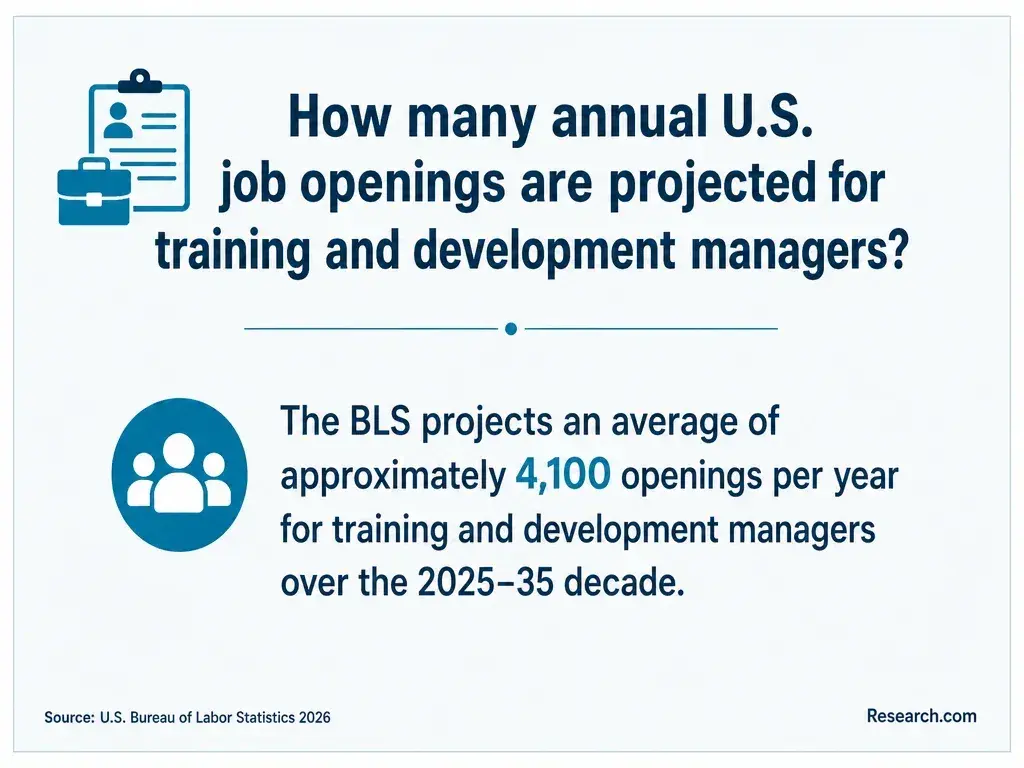
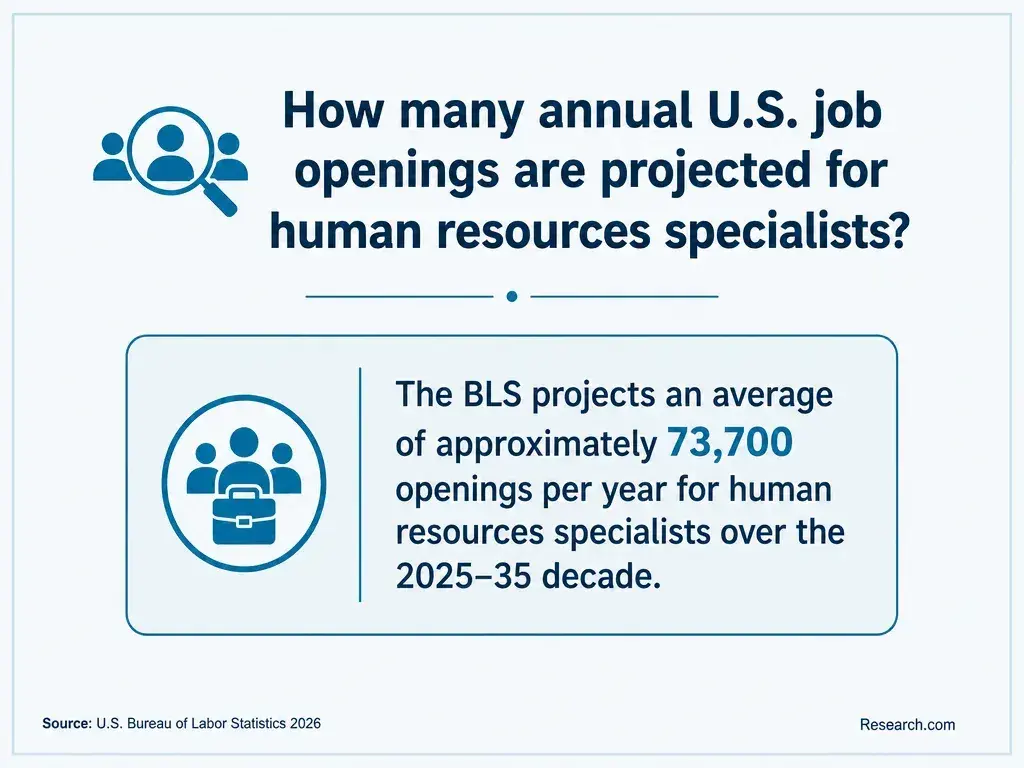
There is no single "Ed.D. salary." The US Bureau of Labor Statistics reports a May 2025 median annual salary of $133,000 for training and development managers and projects 6.4% employment growth for that occupation from 2025 to 2035. These figures describe an occupation, not the pay or prospects of doctorate holders; management experience and employer needs still matter.
Use the occupation that matches your intended work when evaluating a degree's financial value. For an internal promotion, request the employer's role requirements and compensation range. For a move elsewhere, examine postings for your target position and note whether they request a doctorate, value applied evaluation experience, or primarily seek a record of managing programs and teams.
Does This Ed.D. Require a License or Professional Certification?
General organizational leadership and learning roles typically do not require a license simply because someone holds an Ed.D. The degree also does not itself award a professional certification. Regulated positions are different: principal, superintendent, or other school roles may have state-specific preparation and licensing requirements that a broadly focused organizational doctorate does not satisfy.
If you are choosing between the doctorate and internal development for a particular job, first check that job's legal and employer requirements. Then ask the university whether its specific program is designed to meet any applicable licensure rules. If neither the job nor your goals require a doctorate, targeted development and demonstrated leadership work may be the more direct route.
Other Things You Should Know About EdD Leadership
Possibly, if their schedules and employer policies permit it. Check both programs' attendance and project deadlines before committing, and do not assume work completed for one will automatically satisfy the other.
Usually, employer training should be treated as professional experience unless the university formally awards credit for it. Request a written credit evaluation before planning on fewer doctoral courses.
Ask the university whether your project can move to another approved setting and what new permissions would be needed. Also review any employer tuition-repayment agreement before resigning.
Ownership and sharing depend on university rules, employment agreements, and any project or data-use agreement. Clarify publication, confidentiality, and permission to use organizational information before starting the work.
- Making strides in doctoral-level career outcomes reporting | nih.gov https://pmc.ncbi.nlm.nih.gov/articles/PMC12671987/
- Post-Secondary Employment Outcomes (PSEO) Help and Documentation | U.S. Census Bureau https://lehd.ces.census.gov/data/pseo_documentation.html
- Admissions Requirements | Berkeley Graduate Division https://grad.berkeley.edu/admissions/application-process/requirements/
- Doctor of Education in Organizational Leadership, Culture and Change | Thomas Edison State University https://www.tesu.edu/degrees-programs/doctoral/edd.php
- 2026 UNC Online EdD in Organizational Learning & Leadership https://online.unc.edu/online-doctoral-programs/online-edd-organizational-learning-and-leadership/
- EdD vs. PhD in Education: What's the Difference? | Campus Insider https://insider.augusta.edu/edd-vs-phd-education/
- What Topics Do EdD Students Research in the EdD Program? | Fairfield University https://www.fairfield.edu/news/insights/education-human-development/what-topics-do-edd-students-research.html
- EdD vs. PhD in Education: Choosing the Right Program | Goodwin College of Professional Studies https://drexel.edu/soe/resources/career-path/edd-vs-phd/
- EdD Tuition and Schedule | Wilkes University https://www.wilkes.edu/academics/graduate-programs/doctorate-of-education-edd/tuition-and-schedule.aspx
- Graduate outcomes: What the latest data reveals about employment, pay and job quality | universitiesuk.ac.uk https://www.universitiesuk.ac.uk/latest/insights-and-analysis/graduate-outcomes-what-latest-data