2027 Choosing an Online Ed.D. in Leadership and Learning in Organizations Around a Military Permanent Change of Station
Audited and Verified:
Our Editorial and Data Verification Process
Research.com uses government datasets, official education statistics and primary institutional information to support its career and degree guides. Our review process checks factual accuracy, occupational definitions, source dates and the requirements associated with the credentials discussed.
How This Article Was Fact-Checked
Our editorial team verifies salary estimates, employment projections, education requirements and program information against original data providers and official organizations. Salary figures are checked against the relevant occupational definitions and reporting periods. Information about licensure, accreditation and required in-person training is reviewed separately.
Fact-checked and verified on:

Co-Founder and Chief Data Scientist
A permanent change of station (PCS) can move a military household across states or time zones while a doctoral cohort keeps meeting on schedule. For service members and military spouses considering an online Ed.D. in Leadership and Learning in Organizations, the deciding issue is not simply whether classes are online. It is whether attendance, campus visits, applied research, and household costs remain manageable through a move.
This guide shows what to verify before enrolling, how to plan for a PCS during the degree, and when a different educational path may be the safer choice.
Key Things You Should Know
- Choose for continuity through relocation: confirm live-session times, attendance rules, campus visits, leave options, and whether students may study from every likely duty location.
- Ask who can approve a change of applied-project site if a PCS ends access to your employer or community partner; an online course format does not make doctoral research location-independent. Budget for travel and interruptions as well as tuition.
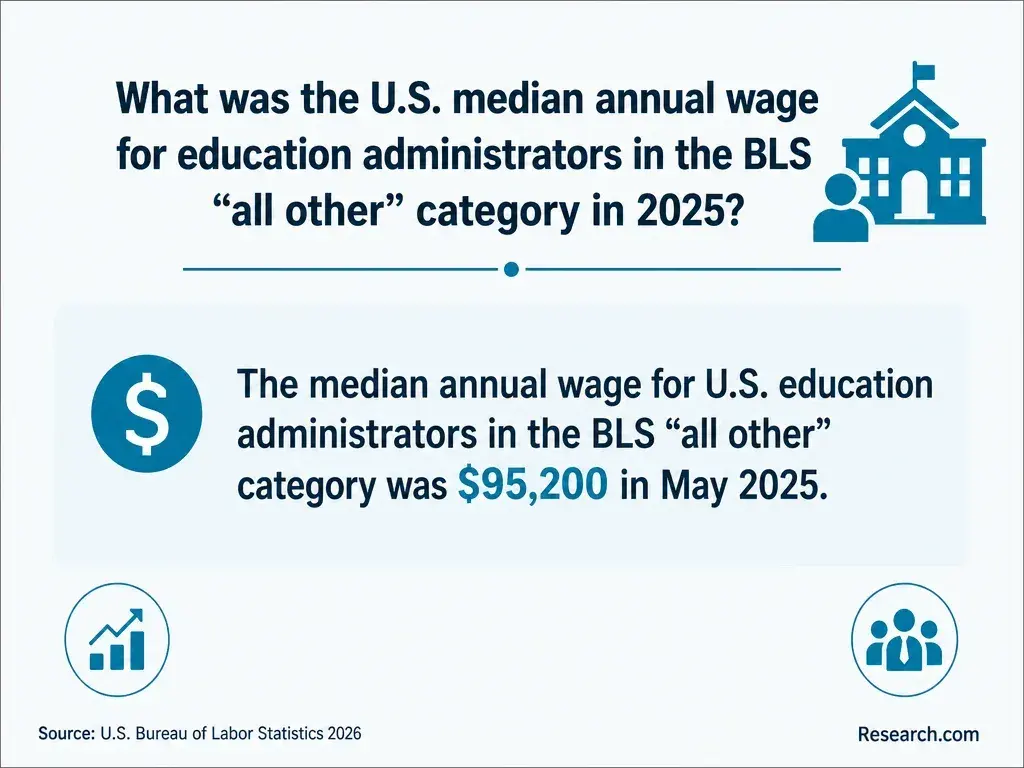
- The Bureau of Labor Statistics reports a $133,000 median annual salary for training and development managers in 2025, but that occupational figure is not an Ed.D. graduate outcome.
What is an online Ed.D. in Leadership and Learning in Organizations?
An Ed.D. in Leadership and Learning in Organizations is a practice-oriented doctorate concerned with how people learn, lead, and improve organizations. Programs may examine adult learning, leadership development, organizational change, and the use of evidence to address workplace problems.
The exact degree title and curriculum vary by institution; a similarly named program may emphasize school administration rather than cross-sector organizational work.
"Online" describes where much of the instruction occurs, not necessarily when it occurs. A program may require scheduled video classes, cohort projects, campus convenings, and a dissertation in practice or another approved doctoral project. For a household facing repeated moves, those requirements matter more than the online label.
How can an online Ed.D. support military families during a permanent change of station?
Online study can let a student remain at one university instead of transferring after a PCS. That continuity is valuable, but relocation can still disrupt class attendance, childcare, internet access, and an applied project tied to a local organization.
The following comparison identifies the program features most likely to determine whether study can continue through a move:
| Program feature | PCS-related risk | What to verify |
| Live classes and group meetings | A new time zone, duty schedule, or caregiving arrangement conflicts with meetings. | Meeting times, attendance rules, recording access, and group-work expectations. |
| Campus convenings | Travel from a new duty station becomes difficult or expensive. | Required dates, locations, costs, and policies for a missed convening. |
| Applied doctoral project | A move ends access to a project sponsor, participants, or data. | Rules for an external site, remote collaboration, site changes, and faculty approval. |
| Enrollment continuity | Moving tasks interrupt coursework or academic progress. | Leave, course-sequencing, reentry, and financial-aid consequences. |
Before accepting an offer, map a plausible PCS against the program calendar. Ask the program director which requirements are fixed, which decisions need written approval, and whether enrollment is permitted from every likely location, including an overseas duty station.
Discuss work schedules and caregiving with your household rather than assuming recorded lectures will resolve a cohort conflict.
If the move could interrupt employment or education benefits, request a funding plan that distinguishes confirmed support from applications still pending. Students considering a higher-education leadership path can also investigate grants for doctoral study in higher education leadership, while checking each award's eligibility and continuation rules.
How do you choose an accredited online Ed.D. program?
Start by verifying the university's institutional accreditation through the accreditor and the U.S. Department of Education's accreditation records. Then check the university's own materials for the exact degree awarded, delivery format, doctoral project, and any licensure disclosures.
Institutional accreditation does not establish that a leadership doctorate qualifies graduates for school-administrator licensure.
For a PCS-prone household, request written answers from each finalist rather than relying on "military-friendly" advertising. These questions test whether the program remains workable after a move:
- Can students attend from another state or overseas, and are there location-specific restrictions?
- Which live sessions and campus events are mandatory, and what happens when PCS travel conflicts with them?
- Can an approved project continue remotely or move to a new organization, and who authorizes that change?
- What leave, reentry, advising, and course-availability policies apply if a student pauses?
Compare the written responses alongside the full cost, not just the advertised tuition rate. A search for lower-cost distance learning in doctoral leadership study can identify programs to investigate, but affordability depends on required travel, fees, and the likelihood that your household can finish on schedule.
Relevant coursework may cover adult learning, organizational culture, leadership and change, research methods, and program evaluation.
A strong fit connects those subjects to work the student can realistically pursue across duty stations; for example, evaluating a workforce-training initiative or improving how an organization develops supervisors. Course titles alone do not establish the depth of methods training or guarantee a particular specialization.
Examine the doctoral project sequence closely. Some programs require a dissertation in practice; others use different applied or collaborative models.
If your proposed work involves service members, employees, students, or restricted organizational records, confirm the university's review process and obtain any required organizational permission. A PCS does not automatically transfer data-access rights or project approvals to a new site.
Requirements differ by school. Applicants may need a completed master's degree, transcripts, professional-experience evidence, recommendations, a statement of purpose, and an interview. Some programs specify grades, graduate credits, or research preparation; others assess readiness differently.
Military leadership, training, operations, and evaluation experience can be relevant when described through actual responsibilities and decisions, not rank alone.
An applicant with an education specialist degree should ask separately whether prior study meets admission requirements and whether any credits can apply to the doctorate. These are different decisions. Exploring online doctoral program choices after an Ed.S. can help frame that comparison, but only the admitting university can issue an authoritative credit evaluation.
If you expect to move during the application cycle, ask whether the proposed entry term includes mandatory orientation or travel and whether a later start would avoid a foreseeable PCS conflict.
Completion time depends on course sequencing, enrollment pace, project approval, and the school's maximum time limit. A PCS-related pause can extend the calendar even when the curriculum does not change. Request a term-by-term plan showing when required courses, convenings, and project milestones occur; ask which courses are offered if you return from leave.
Calculate the likely household expense from the university's published tuition and fees, required credits, travel and lodging, technology needs, and possible continued enrollment while finishing the project. Budget-friendly online education doctorates are useful starting points for comparison, not substitutes for an individualized cost estimate.
Ask the relevant benefits administrator to confirm whether your specific enrollment and degree qualify for any military or VA education benefit you plan to use. Verify employer reimbursement, aid requirements, and the financial effect of a leave before treating any source as committed funding. A less expensive program that requires travel you cannot reliably make may be the costlier choice in practice.
An online Ed.D. usually offers greater geographic continuity for a moving household; a campus-based program may offer easier access to local faculty, research resources, and project partners. Neither format guarantees flexible attendance or faster completion.
Compare actual schedules, supervision, and project requirements rather than assuming the delivery mode determines academic quality.
A campus-based doctorate may make sense if the household expects to remain near the university and the student needs sustained on-site access. If moves are likely, an online program is generally the more practical option only if its live meetings, travel obligations, and project rules survive those moves.
For a goal focused on developing one skill rather than conducting sustained doctoral inquiry, a shorter certificate or employer leadership program may impose less risk.
Depending on prior experience, graduates may pursue learning and development management, organizational development, workforce training, consulting, or education administration.
The Ed.D. can strengthen a practitioner's ability to diagnose learning problems and evaluate change, but employers also look for sector knowledge, management experience, and evidence of completed work.
A military spouse changing employers after a PCS should assess whether the target role is available locally, remotely, or within an existing professional network.
For readers already working in colleges or universities, doctoral leadership study for higher education organizations offers a more targeted comparison than general organizational leadership programs.
The Bureau of Labor Statistics projects 10.8% growth for training and development specialists from 2025 to 2035; that is an occupation-wide projection, not evidence that an Ed.D. is required for specialist positions.
Experienced professionals should compare the doctorate with a role-specific credential, mentorship, or a substantial workplace project before enrolling.
There is no dependable single salary for this degree. As one benchmark, the Bureau of Labor Statistics reports a 2025 median annual salary of $133,000 for training and development managers.
That median describes workers in the occupation across education levels; it does not predict an Ed.D. graduate's pay or establish that the doctorate is required.
For a realistic financial decision, compare pay ranges for roles you could qualify for with your existing experience against roles you could plausibly pursue after completing the degree.
Factor in sector, location, remote-work options, and whether a PCS might require another job change. Do not count an unconfirmed promotion or salary increase as a way to repay doctoral costs.
Do Ed.D. graduates need licensure or professional certification?
General organizational learning and leadership roles typically do not carry one universal Ed.D.-specific license. Employers may value particular professional certifications, but those are separate from the doctorate.
School principal, superintendent, teaching, and other regulated roles can have state-specific credential requirements that a general leadership Ed.D. may not satisfy.
If a PCS could change the state in which you want to work in a licensed education role, ask the program for its state-specific licensure disclosures and confirm eligibility with the relevant state authority before enrolling. An online degree's portability does not make a professional license portable.
Other Things You Should Know About EdD Leadership
Possibly. Ask the university whether it permits enrollment from the specific country and whether class times, campus visits, technology access, and project supervision will work there. Do not assume domestic online enrollment rules apply overseas.
Potentially, if the service member has transferred benefits under applicable rules and the student and program meet VA requirements. Confirm transfer status and school certification with the appropriate authorities before committing to tuition.
It depends on the institution's tuition policy and applicable military-family protections. Request a written determination for your circumstances, particularly if the published rate differs for residents and nonresidents.
Not without the required permissions. Ask the university and the unit's authorized officials about project approval, data access, confidentiality, security restrictions, and what findings may be submitted or published. A project using an unrelated, accessible organization may be more feasible.
- Military Training Evaluation Program (MTEP) | dantes.mil https://www.dantes.mil/credit4training/
- UNC EdD Online: Organizational Learning and Leadership https://online.unc.edu/online-doctoral-programs/online-edd-organizational-learning-and-leadership/
- State Authorization/Student Location Determination - Main View https://my.zanestate.edu/ICS/Resources/State_Authorization_Reciprocity_Agreement_(SARA).jnz
- Military Leave of Absence Policy | Regis University https://www.regis.edu/policies/military-leave-of-absence
- Students Taking Time Away for Military Service | princeton.edu https://odoc.princeton.edu/students-taking-time-away-military-service
- Online (Ed.D.) in Leadership for Organizations | UD-EDU https://educationonline.udayton.edu/edd/
- Military Leave of Absence | Cal Poly, San Luis Obispo https://militaryconnected.calpoly.edu/military-leave-absence
- Leave of Absence Policies | Military & Veterans Resource Center (MAVRC) | Georgetown University https://veterans.georgetown.edu/mloa/