2027 Online Ed.D. in Leadership and Learning in Organizations After a Master's in Theology: Admission and Credit Questions
Audited and Verified:
Our Editorial and Data Verification Process
Research.com uses government datasets, official education statistics and primary institutional information to support its career and degree guides. Our review process checks factual accuracy, occupational definitions, source dates and the requirements associated with the credentials discussed.
How This Article Was Fact-Checked
Our editorial team verifies salary estimates, employment projections, education requirements and program information against original data providers and official organizations. Salary figures are checked against the relevant occupational definitions and reporting periods. Information about licensure, accreditation and required in-person training is reviewed separately.
Fact-checked and verified on:

Co-Founder and Chief Data Scientist
A master's in theology may provide a strong foundation for studying leadership and learning, especially if your work includes teaching, staff development, or organizational change. But eligibility for an online Ed.D. and credit toward its requirements are separate decisions. This guide is for theology graduates considering a move into organizational leadership or learning. It explains what admissions offices evaluate, why previous graduate courses may not shorten a doctorate, and which program details to confirm before you invest in an application.
Key Things You Should Know
- A completed theology master's may satisfy an Ed.D. program's degree requirement; the school decides whether its field, institution, and coursework meet its specific rules.
- Graduate credits can establish admission eligibility without transferring into the doctorate. Request a written evaluation showing which courses, if any, fulfill Ed.D. requirements.
- Career value depends on relevant leadership experience, not the degree alone. The U.S. Bureau of Labor Statistics reports a $133,000 median annual salary for training and development managers in May 2025, not an expected salary for Ed.D. graduates.
What is an online Ed.D. in Leadership and Learning in Organizations?
An Ed.D. in leadership and learning is a practice-oriented education doctorate focused on how organizations develop people, make decisions, and improve performance. Depending on the program, students may study adult learning, organizational change, leadership, and applied research. An online format changes where coursework happens; it does not necessarily eliminate live classes, group projects, or campus visits.
For a theology graduate, the relevant setting need not be a school. Experience designing volunteer training, leading a nonprofit team, or evaluating a community program may connect directly to organizational learning. Compare the actual curriculum rather than assuming that programs with similar names serve the same goals; this guide to comparing academic focuses within Ed.D. programs can help frame that review.
A leadership and learning Ed.D. is distinct from a research-focused PhD. It is also not automatically a school-administrator preparation program. The exact degree title, required project, and intended professional audience depend on the institution.
Can you enter an Ed.D. in Leadership and Learning with a theology master's?
Possibly. A master's in theology, theological studies, or divinity does not by itself rule out admission to a cross-sector leadership Ed.D. Nor does its graduate-level status guarantee eligibility. The program must decide whether the completed credential comes from an acceptable institution, meets its academic requirements, and provides adequate preparation for doctoral work.
The strongest application connects theology study to documented practice without claiming that ministry and organizational leadership are identical. For example, explain your responsibility for designing a training program, coordinating staff or volunteers, assessing a community need, or implementing a change. Specify your decisions and evidence; do not rely on a pastoral title alone. If your degree involved little research-methods work, ask whether the program expects preparation in statistics, qualitative inquiry, or academic writing and whether bridging coursework is available.
Ask graduate admissions to confirm degree eligibility and the Ed.D. program to assess your preparation. If your theological credential was awarded by an institution whose recognition is unfamiliar to the university, submit its accreditor information and official transcript rather than assuming it will be accepted or rejected. An unfinished master's should be evaluated under the program's rules for applicants who have not yet completed the required degree.
How do transferred credits work in an online Ed.D. program?
Three decisions are often confused: whether prior study qualifies you to apply, whether a course can be transferred, and whether that transferred course satisfies a particular doctoral requirement. A master's with extensive coursework, including a Master of Divinity, does not automatically reduce the credits needed for an Ed.D.
This comparison shows why a favorable admissions decision is not a transfer-credit decision.
| Decision | What the school evaluates | Possible result |
| Admission eligibility | Completed credential, institution, academic record, and any required graduate study | Theology study meets an entry requirement but reduces no Ed.D. coursework |
| Credit transfer | Course level, grade, recency, subject, documentation, and transfer limits | An eligible prior course is accepted for doctoral credit |
| Requirement substitution | Equivalence to a specific Ed.D. course or requirement | A course fulfills a requirement, subject to program approval |
To get an answer you can use for planning, request an individual evaluation rather than a general statement that the school "accepts transfer credits."
- Collect official transcripts from every graduate institution, plus syllabi and course descriptions for potentially relevant leadership, learning, evaluation, and research courses.
- Ask whether master's-level, nondegree, unfinished-program, pass/fail, or quarter-system credits qualify under the proposed entry term's rules.
- Request written confirmation of accepted credits, the requirements they fulfill, any residency rule, and the resulting degree plan from the offices authorized to make those decisions.
If you also hold an education specialist degree, its rules may differ from those applied to theology coursework. Examine online education doctorate routes for Ed.S. graduates separately rather than assuming one prior credential determines the treatment of another. Even approved transfer or substitution may not shorten a fixed cohort schedule or reduce tuition billed by term.
Requirements vary by institution and entry term. Common application materials include graduate transcripts, a statement of purpose, recommendations, and a résumé documenting professional responsibilities. A program may also require a writing sample, interview, minimum grades, specified experience, or particular research preparation; another may not. Verify whether test scores or prerequisites apply instead of treating either as universal.
For a theology applicant, the statement should identify a credible organizational problem and explain why doctoral study would help address it. A question about improving volunteer onboarding, for example, is more informative than a broad claim of being passionate about leadership. Describe the organization, your authority, what you can currently observe, and what you still need to learn. If a program expects workplace-based inquiry, ask whether your present role or an external partner could provide an appropriate setting; employer support does not replace academic approval.
Before paying an application fee, send the program your degree title, institution, graduation status, relevant course descriptions, and a concise account of your leadership work. Ask admissions which criteria are mandatory and which are recommendations, then request clarification about any exception or prerequisite in writing.
Programs commonly combine leadership and organizational learning with research or evaluation methods. Relevant work might involve diagnosing a performance problem, designing adult learning, assessing whether training transfers into practice, or managing change across stakeholders. A theology graduate may bring ethical reasoning, interpretation, teaching, and community engagement; methods courses may demand newer preparation in data collection, measurement, or analysis.
Check the actual course sequence and final requirement. One program may require an individual dissertation in practice; another may use a team project or a different culminating assessment. A workplace assignment is not automatically an approved doctoral project. If the format of the final project is important to you, compare online education doctorates with alternative final projects against each institution's published requirements.
For work involving congregants, employees, students, or clients, project feasibility also depends on permission to access information, confidentiality protections, and any required institutional review. Ask whether the program permits projects at religious organizations and who approves the site and research design.
Duration and total cost depend on required credits, whether tuition is charged by credit or term, enrollment pace, project completion, and any campus convenings. No reliable total follows from the degree name or from having a theology master's. Transfer credit matters financially only if the school applies it in a way that actually reduces charges or time enrolled.
Build a comparison using each school's published degree plan and a written cost estimate. Include tuition and fees, travel and lodging if required, books or technology, and any change in earnings or employer reimbursement. Ask what happens to the estimate if the applied project takes longer than planned. When comparing Ed.D. completion timelines, check whether advertised schedules assume an uninterrupted cohort sequence rather than transferable credit or flexible pacing.
If your goal is a specific training or management skill rather than a doctoral-level applied project, an employer development program or targeted graduate coursework may offer a more direct, lower-commitment route.
Online study can reduce routine travel, but it may still require scheduled video classes, collaborative work, and in-person convenings. Campus-based study generally requires regular travel or relocation but may make in-person collaboration easier. Neither format is inherently more flexible: the decisive issue is whether its attendance and project expectations fit your work and obligations.
Ask for the proposed cohort's class schedule, attendance policy, campus dates, group-work expectations, and leave rules. If your ministry or nonprofit role has evening and weekend commitments, compare those dates with your busiest periods. Also check whether an employer change would affect access to an approved project site.
Accreditation attaches to an institution or, where applicable, a specific program - not to the words "online Ed.D." Verify the university's institutional accreditation and confirm the exact degree it awards. Then check whether any specialized approval matters for your intended role. Institutional accreditation alone does not establish eligibility for principal, superintendent, teacher, or other regulated licensure.
For organizational leadership roles, employers may value the doctorate's applied research and leadership training, but recognition depends on the position and your experience. If you seek a regulated education role, obtain the program's licensure disclosure and confirm requirements with the relevant state authority before enrolling.
A theology graduate with substantial program or people-leadership experience might pursue learning and development, nonprofit leadership, organizational consulting, or higher-education administration. The transition is most credible when prior work demonstrates responsibilities comparable to the target role - such as managing training, evaluating programs, supervising staff, or leading change. An Ed.D. does not substitute for that experience or guarantee promotion.
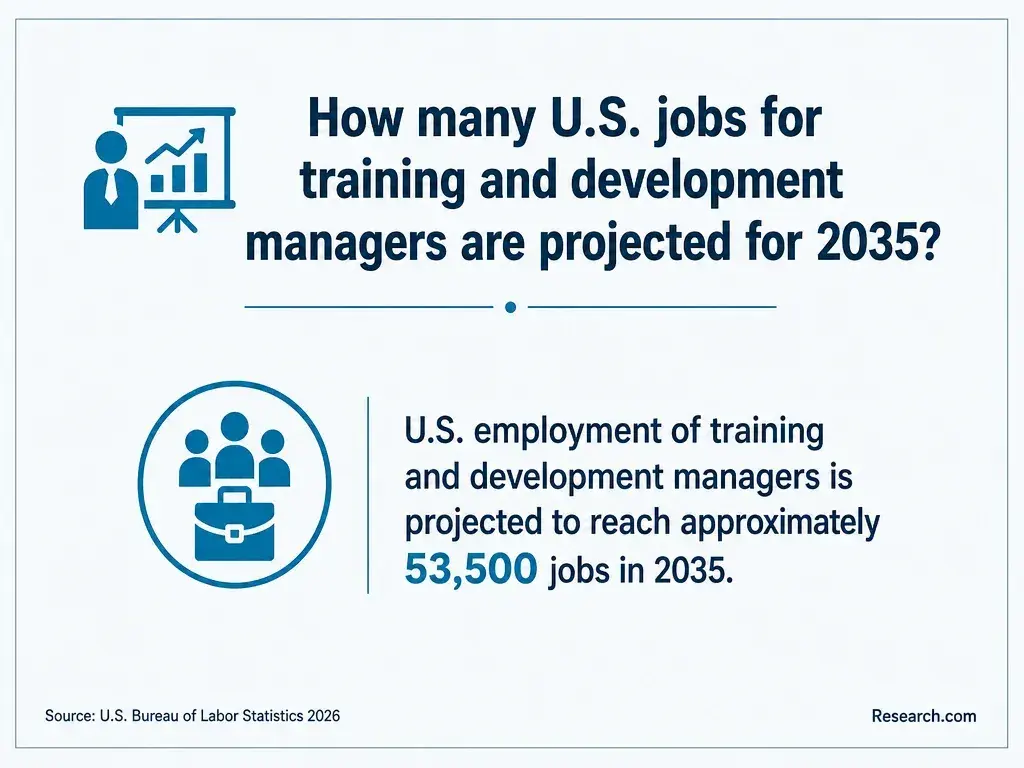
The Bureau of Labor Statistics reports a May 2025 median annual salary of $133,000 for training and development managers. That is an occupational median across workers, not an Ed.D. graduate salary or an entry-level expectation. Compare job descriptions in your target sector with your existing experience before using broad salary data to justify the degree. If college administration is the goal, assess organizational leadership Ed.D. pathways for college administration against the specific positions you want.
What job outlook and credentials apply to Ed.D. leadership graduates?
Outlook depends on the occupation, not the doctorate. The Bureau of Labor Statistics projects 10.8% employment growth for training and development specialists from 2025 to 2035. That figure may indicate demand for learning-related work, but specialist positions have different responsibilities from management roles and do not generally require an Ed.D.
Review vacancies for the actual credentials and experience employers request. For someone moving from theology into a substantially different function, a supervised training project, relevant portfolio, mentorship, or shorter credential may close an immediate skills gap more efficiently. Consider the Ed.D. when its leadership and applied-inquiry requirements match work you intend to do - not simply because it is the highest degree available.
Other Things You Should Know About EdD Leadership
Only if the program accepts that format. An academic paper or evidence-based organizational analysis may demonstrate doctoral writing more directly. Ask what the sample is meant to show before selecting one.
It may, particularly if the work included program direction, staff development, or organizational decisions. Describe those duties and ask how the program defines qualifying experience.
Not automatically. Clergy credentials and standing are governed by the relevant religious body; confirm its rules separately from university degree requirements.
Not without appropriate authorization. Check organizational policies, participant privacy, and program rules; use an approved, safely redacted account when sharing is permitted.
- Accreditation in the U.S. | ed.gov http://www.ed.gov/laws-and-policy/higher-education-laws-and-policy/college-accreditation/accreditation-in-the-us
- The Application Process | Humanities Academic Services Center https://hasc.washington.edu/application-process
- Admission Requirements | Memphis Theological Seminary https://memphisseminary.edu/requirements/
- Application Checklists - Master of Theology (Th.M.) | SCU https://www.scu.edu/jst/admissions/application-checklists/master-of-theology-thm/
- How to Apply | Duke Divinity School https://divinity.duke.edu/admissions/how-apply
- Admissions Requirements | Grace School of Theology https://gsot.edu/admissions-requirements/
- Admissions and Application Requirements - UNC Online https://online.unc.edu/online-doctoral-programs/online-edd-organizational-learning-and-leadership/admissions/
- Leadership and Learning in Organizations Online Ed.D. | Peabody College of Education and Human Development https://peabody.vanderbilt.edu/academics/edd-programs/online-leadership-learning-organizations/
- 5 Organizational Leadership Careers | Claremont Lincoln https://claremontlincoln.edu/news-blog/organizational-leadership-careers/
- Guidelines to Waive Standardized Test Requirements | UTD https://graduate.utdallas.edu/staff-advisors/test-waiver/