2027 Is an Online Ed.D. in Leadership and Learning in Organizations a Good Fit for Customer Education Directors?
Audited and Verified:
Our Editorial and Data Verification Process
Research.com uses government datasets, official education statistics and primary institutional information to support its career and degree guides. Our review process checks factual accuracy, occupational definitions, source dates and the requirements associated with the credentials discussed.
How This Article Was Fact-Checked
Our editorial team verifies salary estimates, employment projections, education requirements and program information against original data providers and official organizations. Salary figures are checked against the relevant occupational definitions and reporting periods. Information about licensure, accreditation and required in-person training is reviewed separately.
Fact-checked and verified on:

Co-Founder and Chief Data Scientist
Customer education directors often oversee more than courses: they help customers adopt products, coordinate with support and product teams, and show whether learning improves outcomes. An online Ed.D. in Leadership and Learning in Organizations could strengthen that work, but its time and cost are substantial. This guide helps experienced directors decide whether doctoral study matches their next responsibility, what capabilities to look for, and when a shorter route would serve them better.
Key Things You Should Know
- An Ed.D. is most useful when a customer education director needs to lead organization-wide learning change and evaluate its results - not simply improve course production.
- The U.S. Bureau of Labor Statistics reports a $133,000 median annual salary for training and development managers in May 2025; that occupational figure is not a projected salary for Ed.D. graduates or customer education directors.
- Before applying, verify the program's live attendance, total cost, applied-project rules, and whether your employer will permit appropriate access to customer data.
Is an online Ed.D. in Leadership and Learning in Organizations a good fit for customer education directors?
Yes, conditionally. A practice-oriented Ed.D. can fit a director who already leads customer learning and wants to address larger problems: inconsistent product adoption, fragmented education across teams, or weak evidence that training changes customer behavior. It is less compelling if the immediate goal is to learn a new authoring tool, improve a course catalog, or qualify for a promotion based mainly on product or commercial experience.
Customer education teaches customers to use a product or service effectively. Its director may manage educators, learning platforms, content operations, customer communications, and partnerships with customer success, support, and product teams. Doctoral study adds the most value when the director can influence those interconnected systems - not just the training function.
The right pathway depends on the responsibility the director wants next. This comparison separates a doctorate's potential value from skills that may be developed more directly elsewhere.
| Next objective | Likely better starting point | Why |
| Lead cross-functional learning strategy and investigate persistent adoption problems | Practice-oriented leadership and learning Ed.D. | Combines organizational change, adult learning, and applied inquiry over a sustained period. |
| Improve instructional design, platform analytics, or a specific measurement process | Targeted coursework, mentoring, and a workplace project | Builds a defined skill without the commitment of a doctorate. |
| Move primarily into revenue ownership or general business leadership | Business-focused development or an MBA, depending on the role | May align more closely with finance, operations, and commercial decision-making. |
The deciding question is whether the director has a consequential learning-and-leadership problem, authority to act on it, and room to apply what they learn. A doctorate does not substitute for experience managing teams, budgets, customer relationships, or product change.
What does an Ed.D. in Leadership and Learning in Organizations prepare graduates to do?
A relevant Ed.D. can help experienced practitioners diagnose organizational learning problems, design and assess improvements, and lead change across teams. For a customer education director, that might mean distinguishing a training gap from a confusing product workflow, then working with product and support leaders on the appropriate response.
Applied research is particularly relevant when a director must make a credible case for investment. Course satisfaction alone does not establish that education improved adoption or retention: customers who take training may already be more engaged. A stronger evaluation defines the decision, selects appropriate measures, considers alternative explanations, and reports limitations.
Programs differ in how students demonstrate these capabilities. Some require a dissertation in practice; others use a different applied research structure. Directors who need flexibility in project format can examine education doctorates using alternative research projects, then confirm each program's actual requirements. A workplace assignment is not automatically an approved doctoral project, and access to identifiable customer information requires employer authorization and applicable academic oversight.
What career benefits can customer education directors gain from an online Ed.D.?
The strongest potential benefit is greater credibility in decisions the director already helps make: setting learning strategy, evaluating programs, influencing executives, and connecting customer education to broader organizational goals. A well-documented project can also provide evidence of how the director framed a problem, collaborated across functions, and interpreted results without overstating impact.
Possible next roles include broader learning and development leadership, organizational development, customer enablement leadership, or consulting. Each requires relevant experience beyond the degree. A customer education director moving into employee talent development, for example, may need firsthand experience with employee performance systems, managers, and HR practices.
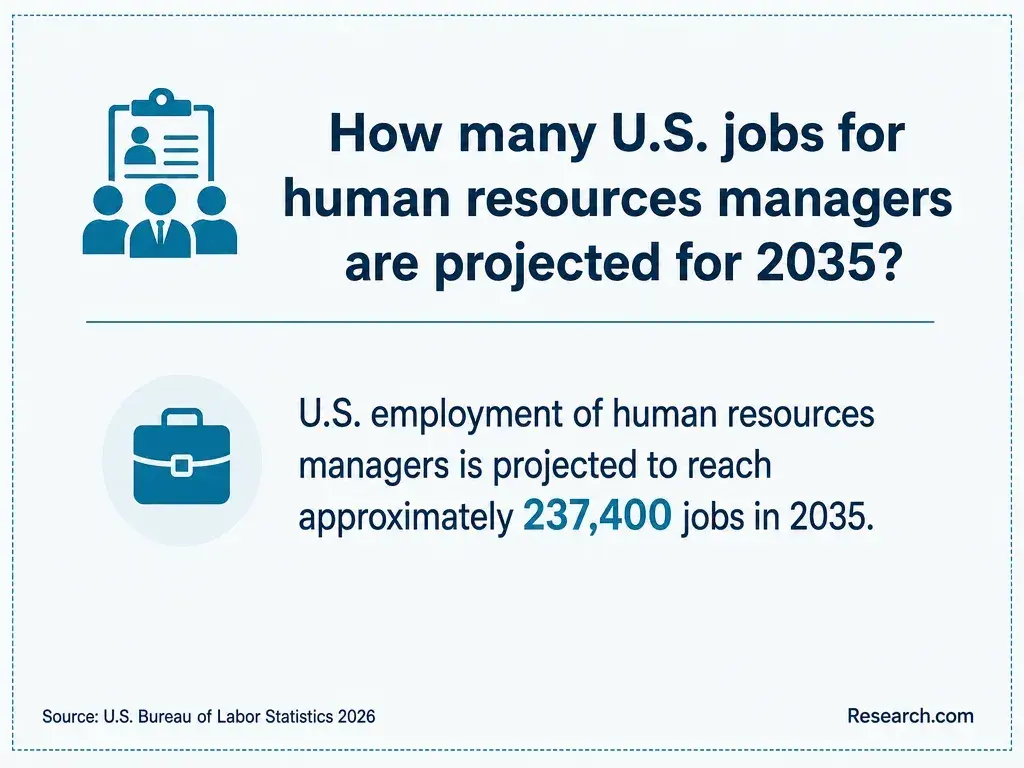
The Bureau of Labor Statistics projects 6.4% employment growth for training and development managers from 2025 to 2035. That indicates demand within a related occupation, not a forecast for customer education director openings or a return on an Ed.D. Investment is easier to justify when an employer values applied research and broader leadership responsibility - and harder to justify when advancement depends chiefly on commercial results or product expertise.
Curricula vary, but a useful program for customer education leadership should connect adult learning and learning transfer with organizational change, leadership, research methods, and evaluation. The director should be able to apply those ideas to questions such as why customers complete onboarding yet struggle with a core workflow.
Look beyond course titles. An adult-learning course may explain how people acquire skills, while an evaluation course should help a director choose measures and interpret evidence. Neither necessarily teaches advanced product analytics, instructional production, or customer success operations. Review required courses, available electives, faculty expertise, and the applied-project sequence to see whether the program addresses the director's actual gaps.
Requirements are program-specific. Schools may assess prior degrees and transcripts, professional experience, recommendations, a statement of purpose, and evidence of readiness for doctoral writing and inquiry. Some specify graduate-degree or credit requirements; a master's in education should not be assumed to be universally necessary.
A customer education director can make a stronger application by describing decisions they actually own: team leadership, cross-functional changes, evaluation work, and an unresolved learning problem. They should distinguish a proposed inquiry from a completed study or proven business result. Before applying, ask whether the program requires an organizational project site and whether an employer's permission must be secured at admission or later.
Completion time depends on required coursework, enrollment pace, course sequencing, and the final project. Online delivery removes some commuting, but it does not necessarily make classes self-paced or shorten doctoral research. A director should ask for the program's published completion plan and what happens if an employer change interrupts project access.
Compare advertised timelines against your capacity to attend live sessions, collaborate with a cohort, and complete substantial work during product launches or peak customer periods. If time is the controlling constraint, shorter pathways through Ed.D. coursework provide comparisons to investigate; verify the actual schedule and project requirements before treating any program as a fast route.
There is no reliable single price for this degree. Schools may charge by credit, term, or program, and the total can change with fees, required travel, enrollment pace, and additional project terms. A director should request a written cost estimate covering the full curriculum rather than comparing advertised tuition rates alone.
Employer support can materially change the decision, but reimbursement is not guaranteed funding. Check annual limits, eligible charges, grade requirements, repayment obligations, and what happens if you leave the company. Compare the remaining expense with a smaller development plan that addresses your immediate skill gap. For examples of programs to investigate, see affordable doctoral education in organizational leadership; confirm current charges directly with each institution.
An online program can let a director remain employed and study without relocating. A campus-based program may offer easier in-person contact with faculty and peers, but requires more predictable travel or proximity. Neither format eliminates group work, advisor meetings, research deadlines, or possible campus convenings.
Request the actual live-session schedule, attendance policy, residency dates, and typical group-meeting expectations. Test them against product-release cycles and customer-facing obligations, not merely a normal workweek. Travel and lodging can also affect the choice; budget planning for higher education leadership doctoral study offers a broader framework for expenses to check, even if your career goal is outside higher education.
Generally, a leadership and learning Ed.D. is an academic degree, not a customer education license or an automatic professional certification. Customer education roles usually turn on demonstrated experience, employer requirements, and relevant skills rather than state educator licensure.
If a director is considering a regulated education role, they must check the specific state authority and the institution's licensure disclosures. Institution-level accreditation alone does not establish that a general organizational leadership doctorate meets teacher or school-administrator licensure requirements.
How should customer education directors choose an accredited online Ed.D. program?
Start by confirming the institution's recognized accreditation and the exact degree awarded. Then compare programs against a real customer education challenge you could pursue ethically, rather than choosing by degree title alone. A program designed chiefly for school administration may be less relevant than one with faculty and coursework in adult learning, organizational change, and applied evaluation.
Before committing, ask admissions and program staff for written answers to the questions that determine fit:
- Which required courses address adult learning, organizational change, and evaluation, and which relevant electives will be available?
- What final project is required, who approves its site and scope, and what alternatives exist if employer or customer-data access changes?
- When are live classes and campus convenings, and what is the full estimated cost through completion?
- What career support and published completion information can the school provide, and how are those outcomes defined?
Readers also considering an education-sector transition can use comparing Ed.D. organizational leadership study for higher education to examine that distinct pathway. For a director staying in customer education, the better program is the one whose requirements and faculty support the work they intend to lead - not simply the broadest-sounding credential.
Other Things You Should Know About EdD Leadership
Possibly, but do not assume your job access authorizes academic use. Obtain employer permission, follow applicable privacy and data-use rules, and ask the program what review or approval the proposed project requires.
Contact your advisor promptly. Whether you can change the project site or topic depends on program rules, approvals already granted, and the feasibility of completing the revised work.
Yes, if the program approves the scope and the project asks a meaningful learning or organizational question. Community participation alone is not evidence that customers gained skills or changed behavior.
It may satisfy a doctoral-degree preference for some roles, but institutions set subject-area and teaching-experience requirements. Check postings in the discipline you want to teach.
- Cost of Attendance (Budget) | 2026-2027 Federal Student Aid Handbook https://fsapartners.ed.gov/knowledge-center/fsa-handbook/2026-2027/vol3/ch2-cost-attendance-budget
- How Instructional Design Is Operationalized in Various... - PMC https://pmc.ncbi.nlm.nih.gov/articles/PMC8320718/
- Qualified Ed expenses | Internal Revenue Service https://www.irs.gov/credits-deductions/individuals/qualified-ed-expenses
- the bottom line on roi | CalHR Website https://www.calhr.ca.gov/how-to-calculate-roi-in-government-training-programs
- Client-Based Capstones - Center for Community Solutions https://communitysolutions.ucr.edu/client-based-capstones
- Online Ed.D. in Leadership and Learning in Organizations | VU-EDU https://peabodyonline.vanderbilt.edu/edd-in-organizational-learning/
- What is an instructional designer and what do they do? | Penn State World Campus https://www.worldcampus.psu.edu/about-us/news-and-features/what-is-an-instructional-designer-and-what-do-they-do
- Instructional Designers as Institutional Change Agents | educause.edu https://er.educause.edu/articles/2023/10/instructional-designers-as-institutional-change-agents
- Who Pursues an EdD? Diverse Backgrounds in the Doctor of Education in Educational Leadership | Fairfield University https://www.fairfield.edu/news/insights/education-human-development/who-pursues-an-edd.html
- New Asynchronous Online Course Development | Continuum College https://www.continuum.uw.edu/services/learning-experience-services/new-asynchronous-online-course-development