2027 Choosing an Online Ed.D. in Leadership and Learning in Organizations for Leadership in Advanced Manufacturing Networks
Audited and Verified:
Our Editorial and Data Verification Process
Research.com uses government datasets, official education statistics and primary institutional information to support its career and degree guides. Our review process checks factual accuracy, occupational definitions, source dates and the requirements associated with the credentials discussed.
How This Article Was Fact-Checked
Our editorial team verifies salary estimates, employment projections, education requirements and program information against original data providers and official organizations. Salary figures are checked against the relevant occupational definitions and reporting periods. Information about licensure, accreditation and required in-person training is reviewed separately.
Fact-checked and verified on:

Co-Founder and Chief Data Scientist
Leading workforce learning across manufacturers, suppliers, colleges, and training partners is different from managing training at one plant. Each organization controls its own people, data, and priorities, yet the network needs skills that transfer across sites.
This guide is for manufacturing leaders, learning professionals, and workforce-development partners considering an online Ed.D. in leadership and learning in organizations. It explains what doctoral study could add, where it cannot replace technical or operational expertise, and how to choose a program that supports a feasible cross-organization project.
Key Things You Should Know
- An Ed.D. is most useful when you lead a sustained learning or organizational-change problem across manufacturing partners - not when you primarily need technical production training.
- Compare programs by their applied-project rules, access to research guidance, live attendance requirements, and total cost; "online" does not establish that a doctorate is self-paced.
- The U.S. median annual salary for training and development managers was $133,000 in 2025, but that occupational figure is not an expected salary for Ed.D. graduates or manufacturing-network leaders.
What Is an Online Ed.D. in Leadership and Learning in Organizations?
An Ed.D. in this area is a practice-oriented doctorate concerned with how adults learn, how organizations change, and how leaders use evidence to improve practice. "Online" describes where much of the instruction occurs; it does not establish whether classes are live, campus visits are required, or projects can be completed at a workplace.
Advanced manufacturing networks connect organizations such as plants, suppliers, workforce boards, community colleges, and industry partners around production capabilities and workforce needs. A leadership and learning Ed.D. may help someone coordinate development across those boundaries. It does not confer manufacturing engineering expertise, authority over independent partners, or a standardized "advanced manufacturing" specialization. Check the awarded degree and formal concentration rather than inferring one from a course title.
How Can an Ed.D. Prepare Leaders for Advanced Manufacturing Networks?
The strongest fit is a problem that requires partners to learn and change together: for example, aligning supervisors' coaching practices with a shared technician-development pathway. Doctoral study can help a leader diagnose differing needs, negotiate an implementation plan, and evaluate whether learning transfers to work. It cannot, by itself, fix inadequate equipment, incompatible production systems, or an employer's staffing incentives.
These distinctions help identify whether doctoral-level organizational inquiry addresses the actual constraint.
| Observed network challenge | Question for a prospective Ed.D. student | Likely first response |
| Partners teach the same skill differently | Who defines proficiency, and how is it assessed across sites? | Joint standards-setting and learning evaluation |
| Employees finish training but cannot apply it | Do supervisors, schedules, and equipment permit practice? | Workplace diagnosis before adding courses |
| A process fails technical or safety requirements | Is the cause an engineering or compliance issue? | Qualified technical or safety expertise first |
A cross-partner doctoral project is possible only if the program accepts its setting and each participating organization authorizes its role. Agree early on who can approve access, what evidence may be shared, and who can act on findings. Restricted employee or production data may require separate permissions, a data-use agreement, and institutional review; a proposed improvement project is not automatically approved research.
What Are the Admission Requirements for an Online Organizational Leadership Ed.D.?
Requirements vary by institution. Programs may evaluate a completed graduate degree, academic record, professional experience, recommendations, a statement of purpose, and evidence of readiness for applied research. A manufacturing applicant should describe decisions they have actually led - such as coordinating training across suppliers - and the limits of their authority, rather than relying on a managerial title.
An engineering, business, human resources, or other non-education background need not rule out an organizational leadership Ed.D. Ask the admissions office whether your prior degree meets its formal eligibility rules, whether methods preparation is expected, and how your experience will be assessed. If you hold an education specialist degree, reviewing Ed.S.-to-Ed.D. transition requirements can frame questions, but only the admitting institution can determine eligibility or applicable doctoral credit. Credits considered for admission do not necessarily shorten the degree.
Relevant study may combine adult learning and learning transfer; organizational development and change; stakeholder engagement; and qualitative, quantitative, or mixed-methods inquiry. For a manufacturing network, the value lies in connecting these subjects - for example, using interviews and performance evidence to distinguish a training gap from a workflow constraint, then evaluating a jointly designed response.
Inspect the required sequence, not just elective descriptions. Does the program teach needs assessment and evaluation before students must propose a project? Will faculty guide work involving multiple organizations? Can students examine supervisor development, apprenticeship partnerships, or cross-site knowledge sharing without claiming access to confidential production data? A course in analytics is useful exposure, not proof that graduates can independently validate every workforce measure.
Delivery format matters because network leaders may travel among plants or work around production schedules. Compare actual attendance and collaboration rules rather than assuming that remote study offers unlimited flexibility.
| Format | Potential advantage | Constraint to verify |
| Online with live meetings | Study without routine commuting | Meeting times, attendance, group work, and campus convenings |
| Mostly asynchronous online | More choice over when to complete weekly work | Project deadlines, faculty access, and required synchronous activities |
| Campus-based or hybrid | Scheduled in-person interaction | Travel, time away from work, and access to a suitable project site |
Ask for a sample term schedule and the rules for absences during production emergencies. Also examine whether accelerated scheduling reduces flexibility: resources on shorter pathways through Ed.D. coursework are a starting point, not evidence that a particular program will let you skip required research or project stages.
Completion time depends on the required credits, course rotation, enrollment pace, and time needed to secure and finish an approved doctoral project. Published minimum timelines may not account for a partner withdrawing, delayed data permissions, or a change in employment. Request the program's completion requirements and policies for leave, continued enrollment, and project-site changes.
Compare a written cost estimate that includes tuition, mandatory fees, required travel and lodging, continued-enrollment charges, and any reduction in earnings. Employer reimbursement can reduce personal expense, but eligibility, annual limits, grade conditions, and repayment obligations depend on the employer's written policy. Lists of Doctor of Education programs by affordability can help create a shortlist; use each institution's current charges and required credits to compare your likely total cost.
A manufacturing professional might pursue workforce-development leadership, corporate learning management, supplier-development training, industry-partnership coordination, or organizational consulting. The degree can strengthen applied evaluation and cross-organizational change skills, but employers will still look for evidence of manufacturing context, budget responsibility, stakeholder management, and implemented work.
For an established learning leader, an Ed.D. may support advancement into broader strategy. For an engineer seeking a first learning-and-development role, supervised training-design work or a smaller credential may be a more direct first step. University partnership roles have different hiring criteria; organizational leadership doctorates for university leadership work are worth comparing only if college or university administration is part of your target career.
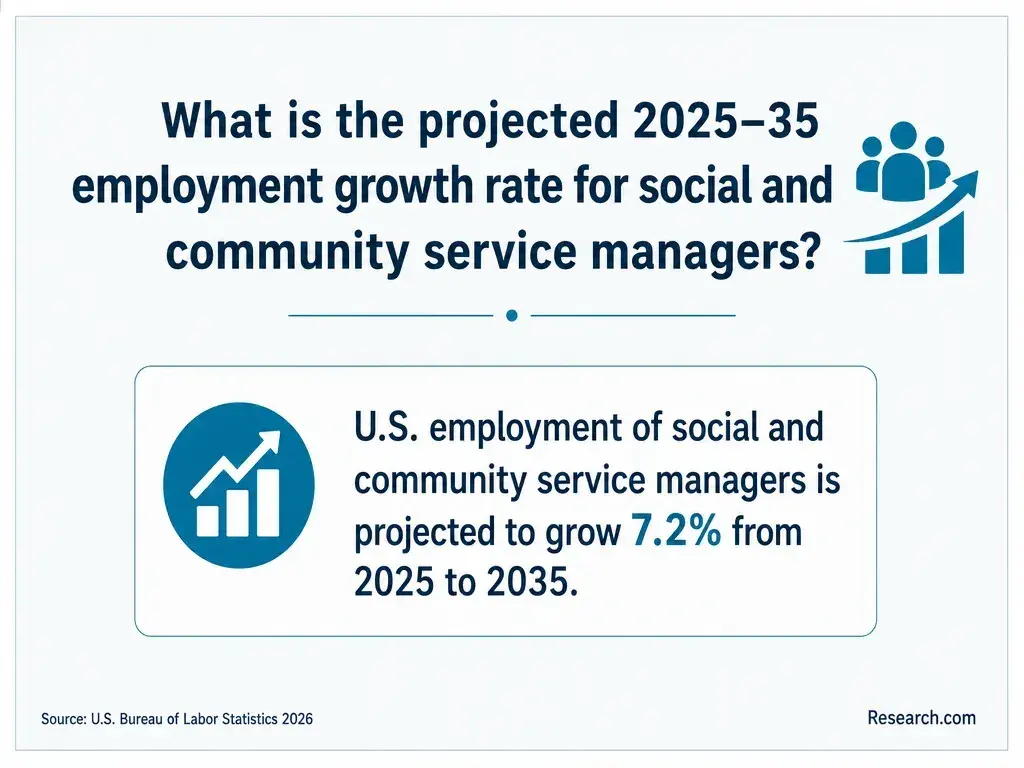
There is no single U.S. salary category for "advanced manufacturing education leader." The Bureau of Labor Statistics reported a 2025 median annual salary of $133,000 for training and development managers, with projected employment growth of 6.4% from 2025 to 2035. That occupation is a useful reference for someone pursuing management of learning programs, not a forecast for a particular network position or Ed.D. graduate.
Compensation also depends on whether the job sits with a manufacturer, college, workforce organization, or consultancy, as well as location, scope, and prior management experience. Before treating the doctorate as a financial investment, compare actual vacancies you could qualify for now with roles you could plausibly pursue after gaining both the degree and relevant leadership experience.
Verify the university's institutional accreditation through the accreditor and institution, and confirm that the advertised Ed.D. is the degree you would receive. Do not assume an institution's accreditation makes a particular concentration a separately accredited credential or makes the degree eligible for educator or school-administrator licensure.
Manufacturing-related credentials serve different purposes. A role may call for technical, safety, instructional-design, or project-management qualifications that an Ed.D. does not replace. Ask prospective employers which qualifications they recognize for the work you want to do, then check the relevant certifying body's requirements independently of the doctoral program's marketing.
How Do You Choose a Reputable Online Ed.D. Program?
Shortlist programs against the problem you expect to lead, not against the prestige of the degree name alone. Request written answers to the following questions before committing:
- Can the required dissertation, dissertation in practice, or capstone involve several independent manufacturing partners, and who approves the site and scope?
- What research-methods support and faculty supervision are available for an applied, cross-organization project?
- Which live sessions, group meetings, campus visits, and project milestones are mandatory?
- What are the full charges, continuation rules, published completion information, and policies if a partner or employer changes?
Evaluate the answers together. A less expensive program is a poor fit if its project rules exclude your setting; a compelling curriculum may be impractical if attendance conflicts with plant operations. If you are comparing college-linked workforce leadership options, information on financial aid for higher education leadership doctoral students can prompt funding questions, but confirm any award and its conditions with the institution.
Other Things You Should Know About EdD Leadership
Possibly, if the program approves the design and each company authorizes its participation and data access. One partner's agreement does not grant permission on behalf of the others.
Employment, sponsorship, and university policies may address intellectual property and publication. Review them before proposing a project that uses proprietary processes or information.
Not automatically. Engineering teaching positions have their own subject-matter and hiring expectations; check the requirements of the specific institution and role.
Do not assume so. A program may value professional certificates as evidence of experience while awarding no doctoral credit for them. Request a written credit evaluation if this affects your decision.
- Partnership Opportunities in NSF ENG Programs https://www.nsf.gov/eng/partnerships
- Partnering with Students to Develop a Capstone for a... - PMC https://pmc.ncbi.nlm.nih.gov/articles/PMC11732519/
- Cost of Attendance (Budget) | 2025-2026 Federal Student Aid Handbook https://fsapartners.ed.gov/knowledge-center/fsa-handbook/2025-2026/vol3/ch2-cost-attendance-budget
- Types of Financial Aid: Grants, Work-Study, and Loans | studentaid.gov https://studentaid.gov/understand-aid/types
- Industry Engagement Opportunities - NYU Tandon https://engineering.nyu.edu/engage/industry-engagement
- Industry partnerships | UW Department of Mechanical Engineering https://www.me.washington.edu/industry
- Walden University's Guide to Doctoral Capstone Projects https://www.waldenu.edu/online-doctoral-programs/resource/guide-to-doctoral-capstone-projects
- EdD vs. PhD in Education: Choosing the Right Program | Goodwin College of Professional Studies https://drexel.edu/soe/resources/career-path/edd-vs-phd/
- Doctorate in Educational Leadership and Administration | GW | The Graduate School of Education and Human Development https://gsehd.gwu.edu/edd-ela
- What Topics Do EdD Students Research in the EdD Program? | Fairfield University https://www.fairfield.edu/news/insights/education-human-development/what-topics-do-edd-students-research.html