2027 Online Ed.D. in Leadership and Learning in Organizations: Comparing Coursework in Technology-Supported Professional Learning
Audited and Verified:
Our Editorial and Data Verification Process
Research.com uses government datasets, official education statistics and primary institutional information to support its career and degree guides. Our review process checks factual accuracy, occupational definitions, source dates and the requirements associated with the credentials discussed.
How This Article Was Fact-Checked
Our editorial team verifies salary estimates, employment projections, education requirements and program information against original data providers and official organizations. Salary figures are checked against the relevant occupational definitions and reporting periods. Information about licensure, accreditation and required in-person training is reviewed separately.
Fact-checked and verified on:

Co-Founder and Chief Data Scientist
An online Ed.D. may promise leadership development and technology-supported learning, but those phrases can describe very different coursework. For learning and development professionals and emerging organizational leaders, the distinction matters: using an online platform to attend class is not the same as learning to design, implement, and evaluate professional learning at work.
This guide compares the coursework that develops those capabilities, explains what to verify in a program's course sequence, and puts admissions, cost, and career claims in context so you can choose a doctorate or a more focused alternative with a clear purpose.
Key Things You Should Know
- Prioritize a sequence that connects adult learning and instructional design to technology selection, organizational implementation, and evaluation, not a program that merely delivers its own classes online.
- Ask for syllabi and an applied-project description: a course title alone cannot establish how deeply you will study learning analytics, accessibility, privacy, or learning transfer.
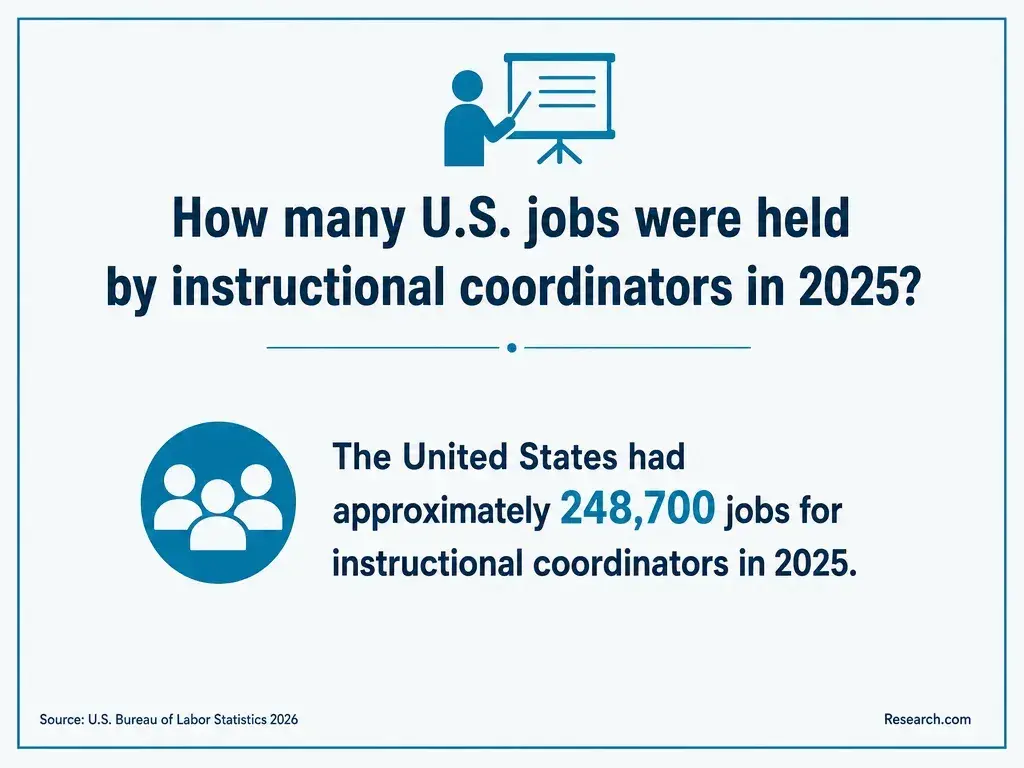
- The U.S. Bureau of Labor Statistics reports a $133,000 median annual salary for training and development managers in 2025; that occupational figure is not an expected salary or promotion outcome for Ed.D. graduates.
What Is an Online Ed.D. in Leadership and Learning in Organizations?
An Ed.D. in leadership and learning in organizations is a practice-oriented doctorate concerned with how people learn, how organizations change, and how leaders use evidence to improve practice.
"Online" describes where much of the instruction takes place; it does not establish that attendance is self-paced or that campus visits are unnecessary. Exact degree titles, course requirements, and doctoral projects vary by institution.
For an established training or talent-development professional, the degree may provide a framework for leading learning initiatives across teams rather than designing one course at a time. A program focused on school administration may serve a different goal.
Likewise, a technology-related elective is not necessarily a formally awarded concentration. Readers weighing choosing an Ed.D. concentration should check the transcript designation and required courses, not just promotional language.
What Coursework Does an Ed.D. in Leadership and Learning Include?
For technology-supported professional learning, the most useful curriculum joins learning design with organizational leadership and credible evaluation. Compare required courses first, then check whether relevant electives are offered often enough to fit your enrollment schedule.
The following framework shows what to look for in course descriptions and assignments; it does not represent a universal Ed.D. curriculum.
| Coursework area | What meaningful study would cover | Evidence to request |
| Adult learning and learning transfer | Motivation, practice, feedback, and conditions that help people apply learning at work | Assignments linking a learning intervention to a workplace performance need |
| Instructional design and learning technology | Choosing accessible formats and tools based on learner needs, rather than platform features alone | Design projects and assessment criteria |
| Leadership and organizational change | Stakeholder engagement, implementation barriers, resources, and accountability | Projects involving an implementation plan, not only a training product |
| Research and evaluation | Qualitative and quantitative methods, measurement quality, and interpretation of results | Methods sequence and requirements for the doctoral project |
Sequence matters. Someone already skilled in course design may benefit most from organizational diagnosis and evaluation.
Someone who leads teams but has little learning-design experience should look for substantial foundational work before advanced analytics or a doctoral project. A course mentioning "AI" or "analytics" does not, by itself, establish technical depth.
How Does Technology Support Professional Learning in These Programs?
Technology plays two distinct roles. A program may use video meetings, discussion spaces, and shared documents to teach its doctoral students. Its coursework may also teach students to select and assess technologies for other adults' professional learning. Only the second role directly addresses a goal such as improving workforce development.
Strong applied coursework asks whether a tool helps people practice, receive feedback, find support while working, and use new skills, not simply whether they completed an online module.
A hypothetical project might compare a self-paced training module with a module followed by supervisor coaching. The student would need a feasible way to examine participation and workplace application while considering differences between the groups; completion rates alone would not prove improved performance.
Look for explicit treatment of accessibility, uneven access to devices, employee privacy, and responsible use of AI-generated materials. If coursework uses learning-platform or employee data, confirm what permissions, security rules, and institutional review procedures apply. Online delivery is evidence of a program's teaching format, not proof that it teaches these professional practices.
Confirm that the degree-granting institution holds recognized institutional accreditation and that the credential being advertised is the Ed.D. you would actually receive.
Check the accreditor's listing and the institution's catalog rather than relying only on a program advertisement. Ask whether any claimed programmatic accreditation applies to this particular degree; institutional and programmatic accreditation are different claims.
Accreditation does not establish that a curriculum covers technology-supported professional learning in depth. Nor does a general organizational leadership Ed.D. automatically qualify a graduate for teacher or school-administrator licensure. If a regulated role is your goal, verify the program's licensure disclosure and requirements with the relevant state authority before enrolling.
Requirements vary, but applicants commonly need to document prior graduate study, professional experience, and a reason for pursuing practice-focused doctoral work.
A learning and development professional can make a stronger case by describing an actual responsibility, such as leading a training rollout or evaluating a development initiative, and an organizational problem they want to investigate. A managerial title alone says less about readiness than the decisions made and evidence used.
Check the specific program's degree, transcript, grade, recommendation, statement, and interview requirements. Ask separately whether previous graduate courses satisfy admission conditions and whether any credits can be applied to the Ed.D.
One decision does not imply the other. If the proposed doctoral project would involve workplace data, establish whether your organization could consider access and sponsorship, without assuming admission or employer support guarantees project approval.
Completion time depends on required credits, course availability, enrollment pace, and the doctoral project. Request a term-by-term plan that shows when technology-related courses and research methods are offered, when project work begins, and what happens if a required course is missed. A published minimum timeline may not capture delays in obtaining organizational permission or usable data.
Online study may still include scheduled live classes, group meetings, and campus convenings. Before committing, compare those obligations with work hours and likely project deadlines. Someone resuming doctoral education through an Ed.D. completion route should obtain a written evaluation of previous work rather than assume an earlier research project will shorten the new degree.
Without a named program and verified tuition schedule, there is no reliable single price for this degree. Compare the published charge per credit or term with the credits and terms you would actually need. Then account for mandatory fees, materials, required travel and lodging, and the possibility that a longer project timeline will add enrollment costs.
Employer reimbursement may reduce personal expense, but eligibility, annual limits, grade conditions, and repayment obligations depend on the employer's written policy. When comparing online education doctoral program prices, use the same assumed enrollment pace for each school and distinguish estimated total cost from advertised tuition alone.
If your main need is to learn one platform or improve instructional design, a focused course or certificate may cost less and get you to that goal sooner.
The degree may support advancement into training and development management, organizational development, talent development, consulting, or education-adjacent leadership.
These jobs are not interchangeable: a training manager oversees people and programs, while an organizational consultant diagnoses problems and advises on change. Employers will assess prior responsibility, sector knowledge, implementation results, and communication skills alongside education.
For a current learning professional, a doctoral project may provide evidence of a larger-scale capability: defining a learning problem, working with stakeholders, selecting an intervention, and interpreting its limitations. It is not a substitute for leading projects or managing teams.
Readers interested in college leadership development through organizational leadership doctoral study should also check the experience and hiring requirements of their target institutions. If the desired move is primarily into platform administration or production-focused instructional design, targeted experience and training may be more direct than an Ed.D.
There is no single salary attributable to this degree. As a U.S. occupational benchmark, the Bureau of Labor Statistics reports a 2025 median annual salary of $133,000 for training and development managers and projects 6.4% employment growth for that occupation from 2025 to 2035. These figures describe the occupation, not Ed.D. graduates, entry-level hires, or a particular employer's pay range.
For a useful financial comparison, identify roles you could realistically pursue given your existing experience, then examine their posted pay and advancement requirements. A doctorate may strengthen your preparation for complex learning initiatives without changing a public employer's pay scale or creating an immediate promotion.
How Can You Choose a Reputable Online Ed.D. Program?
Start with the professional-learning decision you want to be equipped to make: designing a scalable program, leading its adoption, or evaluating whether it improves practice. Then compare programs against that goal. These checks can reveal important differences behind similar degree descriptions:
- Request the current catalog, course sequence, and sample syllabi; mark which technology, learning-design, leadership, and evaluation courses are required versus elective.
- Ask faculty what students actually produce in those courses and how the required doctoral project is supervised and assessed.
- Confirm live attendance, group-work, residency, accessibility, and project-site requirements for your intended entry term.
- Verify accreditation, total estimated cost, available funding conditions, and any claims about completion or career outcomes with the offices responsible for them.
A useful program should let you connect learning technology to a defensible organizational decision, not merely name popular tools.
Review the terms of any grant and scholarship options for higher education leadership research study before including potential aid in your budget; availability and eligibility must be confirmed with the institution.
Other Things You Should Know About EdD Leadership Programs
Not necessarily. Many projects center on design, implementation, and interpretation rather than programming. Check course prerequisites if you want advanced analytics or software development.
No vendor certification should be assumed. If platform administration is your goal, ask whether the curriculum includes hands-on work with that platform and compare it with vendor training.
Only within your organization's confidentiality and publication rules. Seek permission, remove restricted information, and confirm what the institution allows you to share.
Favor projects built around durable questions, such as access, feedback, or learning transfer, rather than one product's features. Ask the program how project changes are approved.
- Evaluating Professional Learning | ed.gov https://ies.ed.gov/rel-northeast-islands/2025/01/tool-10
- Professional Learning - Data | CT.gov https://portal.ct.gov/sde/evaluation-and-support/professional-learning---data
- Full article: Educating teachers to enact the science of learning and development | tandfonline.com https://www.tandfonline.com/doi/full/10.1080/10888691.2022.2130506
- Online Doctor of Education (EdD) Program | University of Miami https://uonline.miami.edu/programs/doctor-of-education-applied-learning-sciences/
- EdD vs. PhD in Education: Choosing the Right Program | Goodwin College of Professional Studies https://drexel.edu/soe/resources/career-path/edd-vs-phd/
- Digital tools for real-time data collection in education | Brookings https://www.brookings.edu/articles/digital-tools-for-real-time-data-collection-in-education/
- Design an international blended professional development model for gifted education: An evaluation study - ScienceDirect https://www.sciencedirect.com/science/article/pii/S0149718921001294
- Online Ed.D. in Leadership and Learning in Organizations | VU-EDU https://peabodyonline.vanderbilt.edu/edd-in-organizational-learning/