2027 Choosing an Online Ed.D. in Leadership and Learning in Organizations for Leadership in College Workforce Partnerships
Audited and Verified:
Our Editorial and Data Verification Process
Research.com uses government datasets, official education statistics and primary institutional information to support its career and degree guides. Our review process checks factual accuracy, occupational definitions, source dates and the requirements associated with the credentials discussed.
How This Article Was Fact-Checked
Our editorial team verifies salary estimates, employment projections, education requirements and program information against original data providers and official organizations. Salary figures are checked against the relevant occupational definitions and reporting periods. Information about licensure, accreditation and required in-person training is reviewed separately.
Fact-checked and verified on:

Co-Founder and Chief Data Scientist
College workforce partnerships need leaders who can bring faculty, employers, students, and public agencies together without treating every skills gap as a training problem. An online Ed.D. in Leadership and Learning in Organizations may help experienced college or workforce professionals lead that work - but only if its curriculum and applied research fit their responsibilities.
This guide explains what to look for in a program, where the degree can add value, and when partnership experience or a shorter credential may be the better investment.
Key Things You Should Know
- Choose for partnership work: look for adult learning, cross-sector leadership, program evaluation, and an applied project you can realistically complete with college or employer approval.
- An Ed.D. can strengthen practice but does not replace experience negotiating employer needs, academic governance, budgets, and student protections.
- The U.S. Bureau of Labor Statistics reports a $104,590 median annual salary for postsecondary education administrators in May 2025; that occupational median is not a projected salary for Ed.D. graduates.
What is an online Ed.D. in Leadership and Learning in Organizations?
It is a practice-oriented education doctorate focused on how people learn and how leaders improve organizations. Depending on the university, students may study leadership, adult learning, organizational change, and applied research while completing a dissertation in practice, capstone, or another required doctoral project. "Online" describes where much of the instruction occurs; it does not establish that attendance is self-paced or that campus visits are optional.
For a college workforce partnership leader, the degree's value lies in connecting learning design with institutional decision-making. A program focused mainly on corporate talent development might offer useful methods yet give little attention to faculty governance, credit-bearing curricula, student services, or public funding. Check the actual courses and project requirements rather than relying on the degree title.
How can this Ed.D. prepare leaders for college workforce partnerships?
A college workforce partnership connects education and employment goals - for example, when a community college and employers jointly develop training or work-based learning. The leader must distinguish an employer's immediate hiring request from a durable educational need, then work within faculty authority, student-support capacity, budgets, and any funding or reporting obligations.
The strongest doctoral preparation helps a leader diagnose the problem before choosing an intervention. A request for more training might instead reflect scheduling barriers, unclear job requirements, weak placement processes, or low wages. Coursework in adult learning can inform instruction; organizational change and evaluation can help the leader test whether a proposed partnership is feasible and useful.
Use a prospective partnership as a test case when comparing programs. Ask whether the curriculum and faculty support would help you:
- Define a shared goal that serves learners as well as employers, such as access to a credential and a credible employment pathway.
- Set decision rights for faculty, college administrators, employers, and workforce agencies before curriculum or hiring commitments are made.
- Choose feasible indicators - such as enrollment, completion, placement, or employer participation - without claiming that a simple before-and-after comparison proves causation.
- Obtain permission for any workplace or student data and determine whether academic research review, a data-use agreement, or FERPA-related safeguards apply.
A program is a weaker fit if its applied project cannot address a real partnership question or if the student cannot obtain necessary organizational access. Employer enthusiasm alone does not constitute college approval, research permission, or a viable doctoral project.
What career opportunities are available after an online organizational leadership Ed.D.?
The most direct opportunities are often advancements from work a candidate already knows: continuing education, workforce development, employer engagement, academic program administration, or institutional effectiveness. An Ed.D. may support broader responsibility for partnership strategy and evaluation, but hiring committees will still look for evidence that the candidate has built agreements, managed stakeholders, and delivered programs.
These paths use overlapping skills but have different day-to-day expectations. Compare them against your current experience before assuming the doctorate will enable a sector change.
| Career path | Partnership responsibilities | Experience that still matters |
| College workforce or continuing education leader | Align programs with employer and learner needs; coordinate budgets and delivery | College operations, faculty collaboration, funding, and employer relationships |
| Employer-engagement or apprenticeship leader | Develop partner commitments and work-based learning opportunities | Negotiation, student protections, and operational follow-through |
| Organizational consultant or program evaluator | Diagnose partnership problems and assess implementation | Client management, appropriate research methods, and clear reporting |
University staff considering a move into broader administration can use organizational leadership Ed.D. program selection for university staff to compare that goal with a more specialized workforce-partnership role. If the immediate gap is employer outreach or contract administration, supervised partnership work may be more direct than a doctorate.
Confirm that the university holds recognized institutional accreditation and that it awards the Ed.D. described in its current catalog. Institutional accreditation is important for academic recognition and federal aid eligibility, but it does not by itself certify the quality of a workforce-partnership concentration - or establish eligibility for a regulated education role.
Ask the university whether any specialized accreditation or approval applies to the specific program, and read its scope rather than assuming every degree at the institution is covered. For this career goal, also request the current curriculum, online attendance and travel requirements, project rules, and any published completion or career outcomes. If outcomes are reported, check which cohorts they cover and whether they describe all entrants or only graduates.
Relevant study typically combines leadership and organizational learning with research methods. For workforce partnerships, useful preparation includes adult learning and instructional design, organizational diagnosis, change implementation, stakeholder engagement, and program evaluation. Budgeting and governance matter too: a promising training design is not implementable if the partners cannot approve, fund, or sustain it.
Look beyond course names for assignments that require students to define a problem, examine evidence, propose a feasible response, and acknowledge limitations. Ask whether evaluation courses cover measurement quality and appropriate interpretation, and whether faculty have experience with higher education or cross-sector workforce work. A leadership survey or learning-analytics course alone is not evidence of advanced evaluation expertise.
Confirm the final project format before enrolling. A dissertation, dissertation in practice, and team capstone can place different demands on partner access, authorship, faculty supervision, and timelines. Students comparing Ed.D. study with dissertation alternatives should still inspect the required applied deliverable; "no dissertation" does not mean "no research-intensive project."
Requirements vary by university. Programs may request prior graduate study, transcripts, professional experience, recommendations, a statement of purpose, and an interview. Some specify a completed master's degree; others define eligibility differently. The admissions office - not a general description of Ed.D. programs - can determine whether your education and experience qualify.
For a workforce-partnership applicant, a strong application explains responsibilities rather than relying on a title. Describe a genuine problem you have helped address, the decisions you owned, the stakeholders involved, and what you still need to learn. You need not claim a successful outcome or promise access to employer or student data that has not been authorized.
Education specialist graduates considering a doctorate should ask separately whether their prior study satisfies admission rules and whether any credits will apply to Ed.D. requirements. Admission eligibility is not a transfer-credit decision.
Completion time depends on required credits, course sequencing, enrollment pace, and the final project. A published program duration may assume that students progress continuously and secure project approvals on schedule. Partnership research can take longer if a college or employer changes priorities, limits data access, or must review an agreement.
Request a term-by-term plan showing live classes, group meetings, campus convenings, and project milestones. Compare it with your busiest enrollment, grant-reporting, or employer-planning periods. Fast-paced online Ed.D. study formats may reduce calendar time, but a compressed schedule is a poor fit if it leaves too little time for partnership approvals and credible evaluation.
There is no dependable single price for this degree type. Obtain the university's current tuition schedule and calculate the charge using its required credits or terms, then add mandatory fees, books or technology, and any required travel and lodging. Ask what continued enrollment costs if the project extends beyond the advertised schedule.
For a public college employee, the relevant comparison is net personal cost, not advertised tuition alone. Check whether your employer covers doctoral study, imposes annual limits, requires a particular grade, or requires repayment after a job change. Also account for leave or reduced work hours. Resources on comparing affordable education doctorate pathways can help identify options, but only a current, itemized estimate and written employer policy can establish your likely cost.
There is no reliable salary figure that applies to all graduates of an organizational leadership Ed.D. Compensation depends on the job, employer, location, and prior experience. U.S. Bureau of Labor Statistics occupational figures provide context for possible paths, not an estimate of the degree's return.
These occupations illustrate why the target role matters more than the credential when interpreting pay and growth.
| U.S. occupation | Median annual salary, May 2025 | Projected employment growth, 2025-2035 |
| Postsecondary education administrators | $104,590 | +1.8% |
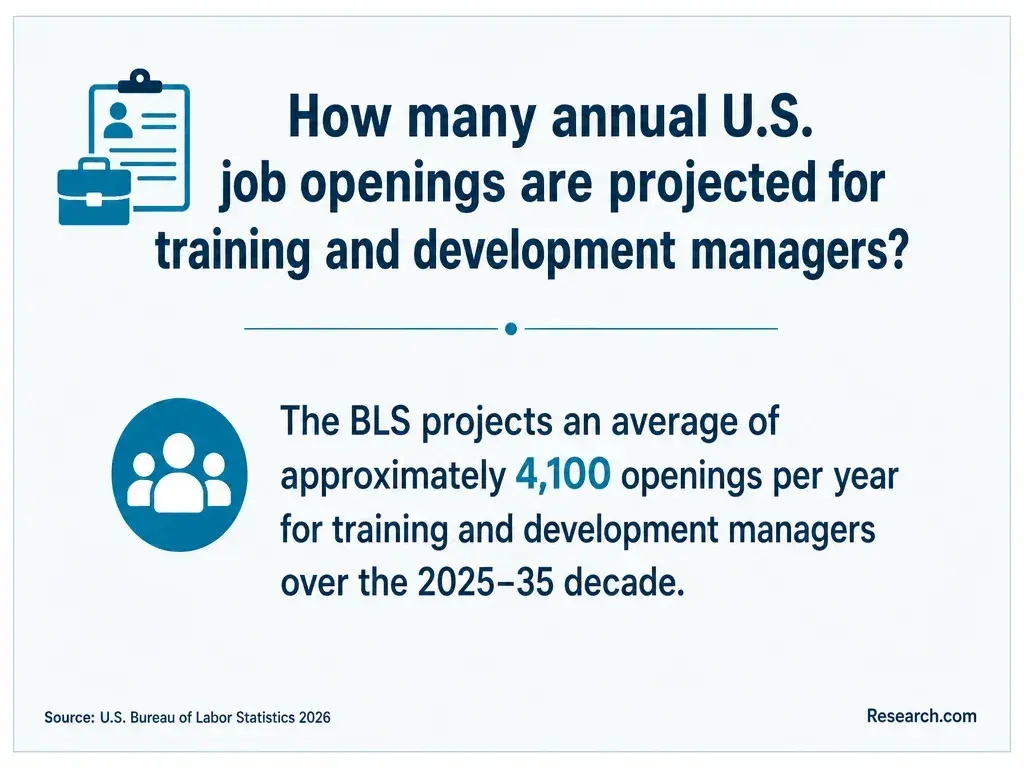
| Training and development managers | $133,000 | +6.4% |
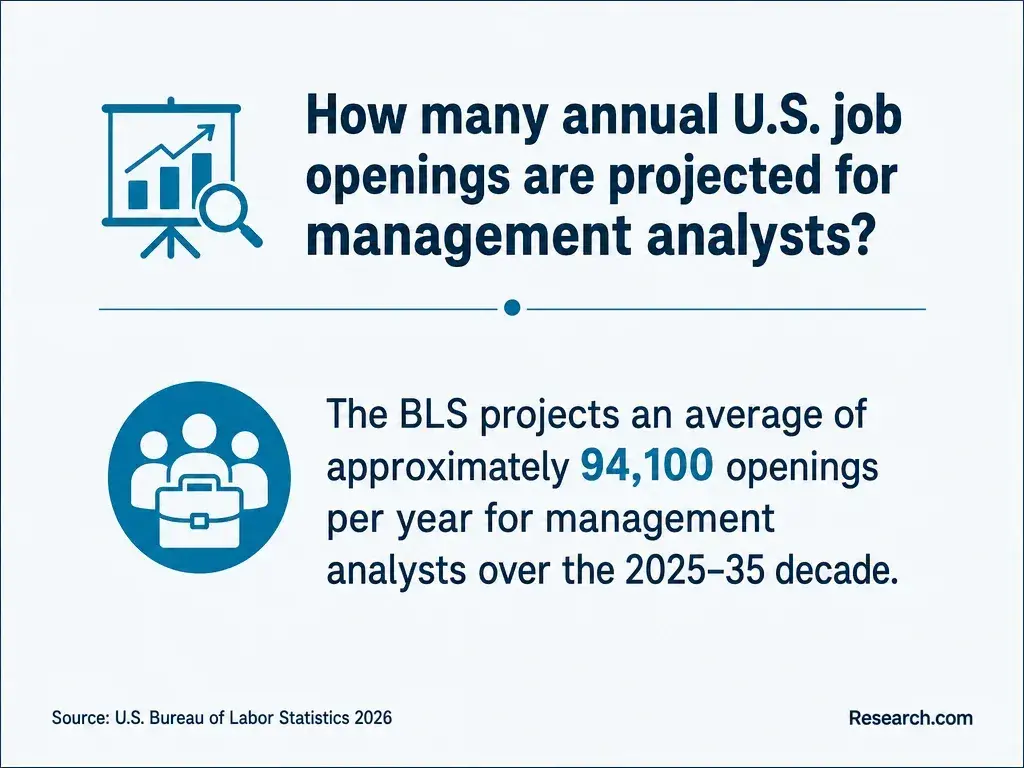
| Management analysts | $101,860 | +10.1% |
A college partnership director may fall within a different job classification, and public institutions may use established pay bands. Use actual job postings and your employer's advancement rules to test whether the doctorate is preferred, required, or neither. A high occupational median does not show that earning an Ed.D. causes a raise.
Does this Ed.D. require a license or professional certification?
Leading college workforce partnerships generally does not require a license conferred by an organizational leadership Ed.D. Employers may instead value experience with higher education, workforce programs, grants, apprenticeships, or particular industries. A voluntary professional certification may support a specific function, but it is not automatically included with the degree.
If your intended position is regulated - such as a school administrator role - check the relevant state authority and the university's licensure disclosures before applying. Do not assume that institutional accreditation, a leadership course, or the Ed.D. title makes a graduate eligible for teacher, principal, or superintendent licensure.
Other Things You Should Know About EdD Leadership
Ownership and permission to reuse materials depend on the college's policies and the partnership agreement. Clarify those terms before sharing proprietary training content or incorporating it into doctoral work.
Invite students to review proposed schedules, supports, and work-based learning conditions through an appropriate college process. Employer demand alone does not establish that a pathway is accessible or beneficial to learners.
Yes, if the question is appropriately scoped and the program approves it. A modest partnership may support a useful implementation study; limited participant numbers may constrain broader claims.
Notify the faculty advisor promptly. Ask what changes to the project site, question, data plan, or timeline the program will permit; do not assume that earlier partner permission extends to a replacement organization.
- Business-Adult Education Partnerships Toolkit: Resources | U.S. Department of Education https://lincs.ed.gov/federal-initiatives/business-adult-education-toolkit/resources
- Distance Learning Instruction Planning Guidance | ca.gov https://www.cde.ca.gov/ls/he/hn/guidanceplanning.asp
- Accreditation in the U.S. | ed.gov http://www.ed.gov/laws-and-policy/higher-education-laws-and-policy/college-accreditation/accreditation-in-the-us
- EdD vs. PhD in Education: Choosing the Right Program | Goodwin College of Professional Studies https://drexel.edu/soe/resources/career-path/edd-vs-phd/
- Friends in Both Places: Best Practices for Community College and Employer Partnerships | Project on Workforce https://pw.hks.harvard.edu/post/friends-in-both-places-best-practices-for-community-college-and-employer-partnerships
- Course Delivery Mode Definitions - University Policies | Search Policies and Handbooks https://policies.uark.edu/academic/162212.php
- How to Build Strong Employer Partnerships to Support Student Success - UPCEA https://upcea.edu/how-to-build-strong-employer-partnerships-student-success/
- What Is a Capstone Project? | National University https://www.nu.edu/blog/what-is-a-capstone-project/
- What's the Difference Between Asynchronous and Synchronous Learning? | Ohio State Online https://online.osu.edu/content-hub/blogs/whats-the-difference-between-asynchronous-and-synchronous-learning/
- Admission Requirements - UCR Graduate Division https://graduate.ucr.edu/admission-requirements