2027 Online Ed.D. in Leadership and Learning in Organizations After a Master's in Leadership Coaching: Admission and Credit Questions
Audited and Verified:
Our Editorial and Data Verification Process
Research.com uses government datasets, official education statistics and primary institutional information to support its career and degree guides. Our review process checks factual accuracy, occupational definitions, source dates and the requirements associated with the credentials discussed.
How This Article Was Fact-Checked
Our editorial team verifies salary estimates, employment projections, education requirements and program information against original data providers and official organizations. Salary figures are checked against the relevant occupational definitions and reporting periods. Information about licensure, accreditation and required in-person training is reviewed separately.
Fact-checked and verified on:

Co-Founder and Chief Data Scientist
A master's in leadership coaching may prepare you well for an online Ed.D. in Leadership and Learning in Organizations, but it does not settle two consequential questions: whether your degree meets a program's admission rules and whether any of its credits reduce doctoral requirements. Those decisions belong to the university and may follow different policies.
This guide helps coaching graduates evaluate their academic preparation, request a meaningful credit review, and judge whether the doctorate adds skills they need beyond their existing credential and experience.
Key Things You Should Know
- A completed leadership coaching master's can meet an Ed.D. degree prerequisite if the program accepts its institution, degree level, and academic record; an education master's is not universally required.
- Credits that establish admission eligibility do not automatically transfer. Ask for a written evaluation identifying which courses, if any, satisfy specific doctoral requirements and whether that changes the study plan.
- The U.S. Bureau of Labor Statistics reports a $133,000 median annual salary for training and development managers in 2025. That occupation-wide figure is not a salary prediction or a financial return attributable to an Ed.D.
What Is an Online Ed.D. in Leadership and Learning in Organizations?
An Ed.D. in leadership and learning in organizations is a professional doctorate focused on how people learn, lead, and implement change at work.
Depending on the university, students may examine adult learning, organizational systems, leadership development, and applied research. "Online" describes where much of the instruction occurs; it does not establish that classes are self-paced or that campus visits are optional.
For a leadership coaching graduate, the distinction is scope. Coaching often centers on development through work with individuals or teams. An organizational learning doctorate may ask how to diagnose a wider performance problem, evaluate a development initiative, and make decisions across an institution.
Programs differ in emphasis, so understanding different Ed.D. degree formats and focuses can help you compare the actual curriculum rather than the degree label alone.
Can a Master's in Leadership Coaching Meet Ed.D. Admission Requirements?
Many leadership Ed.D. programs consider master's degrees outside education. A completed leadership coaching degree can demonstrate graduate-level study relevant to leadership development, even if its diploma does not say "education." Check whether the program requires a completed master's, specifies an acceptable field or institution, and sets graduate GPA or professional-experience conditions.
Eligibility and competitiveness are different. Coaching experience can strengthen an application when you show responsibility for a real organizational learning or leadership challenge, not merely the number of people you have coached.
For example, describe how you identified a development need, collaborated with stakeholders, and assessed what could reasonably be learned from the results. Be candid about your role and evidence; individual coaching outcomes do not automatically establish organization-wide impact.
If your master's was unfinished, assembled from several institutions, or awarded outside the United States, ask admissions whether those studies meet its degree requirement and whether a credential evaluation is needed. Do not assume that an admissions adviser's informal response is a final eligibility decision.
Can Leadership Coaching Credits Transfer Into an Online Ed.D.?
Possibly, but admission acceptance is not transfer approval. Some doctorates admit applicants with a master's yet require every student to complete the full doctoral curriculum. Others may consider eligible graduate courses for transfer, substitution, or a prerequisite waiver. Those outcomes can affect the degree plan differently.
The distinctions below help you ask for the decision that matters, rather than a general assurance that your master's "counts."
| How prior study is considered | What it establishes | What it does not establish |
| Admission eligibility | Your completed degree or graduate record meets an entry condition. | That any Ed.D. course is waived or replaced. |
| Transfer credit | Approved prior credits apply toward doctoral credit requirements. | That every coaching course qualifies or completion time falls. |
| Course substitution or waiver | Prior learning satisfies a specified course or prerequisite under program policy. | That total required doctoral credits necessarily decrease. |
Course level is a common obstacle: a graduate coaching seminar may overlap with doctoral leadership content without matching a doctoral research course. Schools may also restrict grades, course age, credits from other institutions, and how many credits must be earned in residence. Quarter credits need conversion before comparison.
To obtain a useful answer, send official transcripts and, if requested, syllabi showing learning objectives, assessments, credit hours, and grading. Ask the program's designated admissions or academic office for a written course-by-course decision, the remaining degree requirements, and a revised completion plan. Until then, do not budget for reduced tuition or a shorter doctorate.
Confirm that the degree-awarding university has recognized institutional accreditation and that the accreditation covers the institution offering the doctorate. Check the institution's accreditor and standing directly through the accreditor or the U.S. Department of Education's accreditation records. For prior coursework, ask the receiving university what institutional recognition it requires of your master's institution.
Do not infer specialized approval from institutional accreditation. If your goal is principal, superintendent, teacher, or another regulated position, ask whether this exact Ed.D. is an approved preparation route and confirm the answer with the relevant state authority. A broadly focused organizational leadership degree may be valuable without conferring educator licensure or a coaching certification.
Requirements vary by university and entry term. Beyond an acceptable master's and transcripts, a program may request a statement of purpose, recommendations, a résumé, an interview, or evidence of relevant professional experience. Tests, minimum grades, research prerequisites, and exceptions are program-specific, not universal Ed.D. rules.
As a coaching graduate, make your application do more than restate coaching credentials. Connect a documented responsibility to a question that doctoral study could help you investigate: for instance, how managers support the use of new skills after leadership training.
Explain what you know, what evidence is missing, and why you need organizational learning and applied-research preparation. If a program expects a workplace-based project, ask whether access to an appropriate organization is an admission condition or a later academic requirement.
Coursework may include adult learning, leadership theory, organizational change, needs assessment, program evaluation, and qualitative or quantitative inquiry. For someone trained in coaching, the most useful additions may be assessing needs beyond an individual client, selecting credible measures, and distinguishing a promising intervention from evidence that it worked.
Inspect required courses and their sequence rather than assuming every program offers advanced analytics or organizational development at the same depth. Also confirm the final scholarly requirement: a dissertation, dissertation in practice, capstone, or other approved project may involve different supervision and deliverables.
Comparing education doctorates using alternative research projects is useful only if you also verify the specific project's scope, data-access rules, and approval process.
Time and cost depend on required doctoral credits, course sequence, enrollment pace, tuition rules, fees, and the final project. An approved transfer may lower required credits, but a fixed cohort sequence or unchanged fees could limit savings. A waiver that does not reduce total credits might save neither time nor tuition.
Build a budget from the university's published charges for your entry term and your evaluated degree plan. Include technology fees, required travel and lodging, books, time away from paid work, and any conditions attached to employer reimbursement. For readers considering institutional assistance, grant and scholarship options for higher education leadership research study provide a starting point.
Confirm eligibility and availability with each school. If your next role does not require doctoral study, a focused evaluation course or employer-supported development project may be a less expensive way to fill a skill gap.
Online study can remove a routine commute, but it may still require live classes, scheduled group work, and campus convenings. Campus-based study offers in-person interaction but may demand more frequent travel or a different work arrangement. Neither format determines whether your coaching credits will transfer; academic policy does.
Compare schedules at the level of a typical term and the final project, not just the word "online." Ask when attendance is mandatory, whether meetings accommodate your work hours, how students access faculty, and what happens if your employer or project site changes.
Even intensive online education doctoral pathways should be assessed against their actual course sequence and research workload before treating a shorter advertised timeline as feasible.
A coaching graduate with substantial workplace responsibility might use an Ed.D. to strengthen work in leadership development, learning and development management, organizational development, consulting, or institutional improvement.
The relevant question is whether the target job requires broader organizational diagnosis, implementation, and evaluation skills than your master's and experience already provide.
Employers still assess sector knowledge, budgets managed, teams led, and demonstrated results. A doctorate alone does not qualify someone for an executive appointment or a licensed school-administrator role.
University employees exploring internal advancement can compare organizational leadership Ed.D. programs for university professionals, while checking their institution's actual hiring and promotion criteria. If your goal remains primarily one-to-one coaching, supervised practice, a relevant coaching credential, or business-development experience may be more direct.
What Salaries and Job Outlook Can Ed.D. Leadership Graduates Expect?
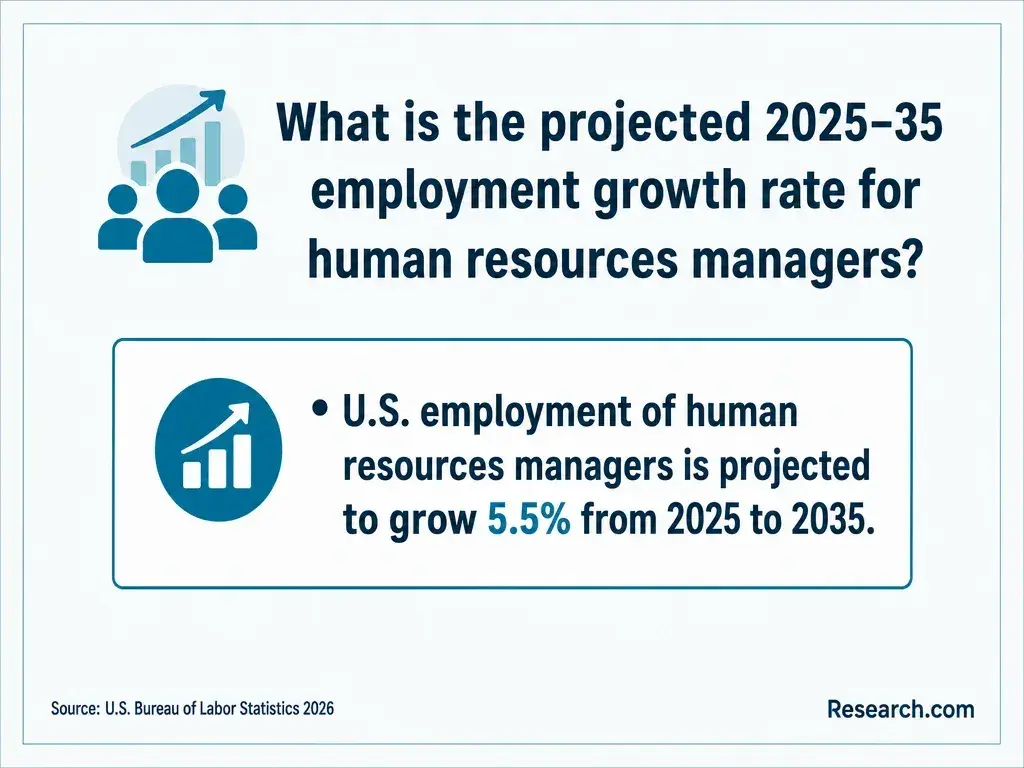
There is no single "Ed.D. leadership graduate" occupation or reliable salary premium to apply across roles. The U.S. Bureau of Labor Statistics reports a $133,000 median annual salary for training and development managers in 2025 and projects 6.4% employment growth for that occupation from 2025 to 2035. Those figures describe the occupation, not new doctorate holders; management jobs typically depend heavily on relevant experience.
Use the occupation that matches your intended responsibilities when evaluating prospects, then compare actual job postings and your employer's pay structure. Before enrolling, identify positions you could realistically pursue, note whether they require or prefer a doctorate, and compare the potential professional value with your full study costs. A salary median cannot establish that the degree will pay for itself.
Other Things You Should Know About EdD Leadership Programs
Not if a program explicitly requires an earned master's. Ask admissions how it considers the certification as supplementary professional evidence.
Yes, if the school offers one. Ask whether the review is preliminary or binding; a final determination may require admission and official transcripts.
Contact your faculty adviser promptly. A new site, sponsor, data-access arrangement, or project scope may require approval before work continues.
Protect confidentiality. Describe your responsibilities and the organizational problem without identifiable client details or restricted results unless you have appropriate authorization.
- Ed.D. Admissions - Peabody | Vanderbilt University Online https://peabodyonline.vanderbilt.edu/edd-in-organizational-learning/admissions/
- Admissions and Application Requirements - UNC Online https://online.unc.edu/online-doctoral-programs/online-edd-organizational-learning-and-leadership/admissions/
- UNC Charlotte Academic Policy: Ed.D. Degree Requirements https://provost.charlotte.edu/policies-procedures/academic-policies-and-procedures/edd-degree-requirements/
- Online Doctor of Education in Leadership and Innovation | Purdue Global https://www.purdueglobal.edu/degree-programs/education/doctor-education-leadership-innovation/
- Online Ed.D. in Higher Education | Rockhurst University https://onlinedegrees.rockhurst.edu/programs/online-edd-education-leadership/higher-ed
- EdD in Organizational Change and Leadership | USC Rossier https://rossier.usc.edu/programs/doctoral/organizational-leadership/
- Online EdD Admission | UD-EDU https://educationonline.udayton.edu/edd/admission/
- Leadership and Learning in Organizations Online Ed.D. | Peabody College of Education and Human Development https://peabody.vanderbilt.edu/academics/edd-programs/online-leadership-learning-organizations/
- Ed.D. Completion Programs: Everything You Need To Know | Franklin University https://www.franklin.edu/blog/edd-completion-programs