2027 Online Ed.D. in Leadership and Learning in Organizations: Degree Fit for Leaders Tackling Limited Evidence for Continuing a Training Initiative
Audited and Verified:
Our Editorial and Data Verification Process
Research.com uses government datasets, official education statistics and primary institutional information to support its career and degree guides. Our review process checks factual accuracy, occupational definitions, source dates and the requirements associated with the credentials discussed.
How This Article Was Fact-Checked
Our editorial team verifies salary estimates, employment projections, education requirements and program information against original data providers and official organizations. Salary figures are checked against the relevant occupational definitions and reporting periods. Information about licensure, accreditation and required in-person training is reviewed separately.
Fact-checked and verified on:

Co-Founder and Chief Data Scientist
Your organization has invested in training, but attendance and positive feedback do not establish whether it improves performance. If you lead learning and development or organizational change, an online Ed.D. in Leadership and Learning in Organizations may help you investigate that gap and guide a defensible decision. It is a substantial commitment, though - not a prerequisite for every training evaluation. This guide explains what evidence a continuation decision needs, what doctoral study could add, and when a smaller investment would serve you better.
Key Things You Should Know
- An Ed.D. is most useful when evaluating training is part of a broader leadership challenge involving organizational learning, implementation, and repeated evidence-based decisions - not a single unresolved course.
- Completion rates and favorable surveys cannot establish workplace impact; compare relevant performance measures, implementation conditions, costs, and plausible alternative explanations before recommending continuation.
- Training and development managers had a US median annual salary of $133,000 in May 2025, but that occupational figure is not an expected Ed.D. outcome or evidence that the degree will pay for itself.
What is an online Ed.D. in Leadership and Learning in Organizations?
An Ed.D. in Leadership and Learning in Organizations is a practice-oriented doctorate concerned with how people learn and how leaders improve organizations. Programs with similar names may emphasize different sectors or methods; the exact curriculum and final project depend on the institution. Online delivery describes where much of the instruction occurs, not whether classes are self-paced or campus visits are unnecessary.
For a training leader, the degree's potential value is connecting learning evaluation to decisions about strategy, culture, resources, and change. A PhD generally places greater emphasis on producing research for scholarly audiences. Neither designation, by itself, proves that a graduate can evaluate a particular initiative or lead its implementation.
Is an online Ed.D. in organizational leadership worth it for evaluating training initiatives?
Possibly - but first define the decision the evidence must support. "Limited evidence" can mean missing baseline measures, unreliable outcomes, too little time for results to appear, or a program delivered differently across teams. Those problems call for different remedies. Before commissioning another course or enrolling in a doctorate, determine who can decide whether to continue, revise, pause, or replace the initiative and when that decision must be made.
The distinctions below show why common training metrics answer different questions. None alone establishes that training caused a change in organizational performance.
| Evidence | What it can establish | What remains uncertain |
| Attendance and completion | Whether people accessed the training | Whether they learned or used anything |
| Assessments and participant feedback | Measured knowledge or reported experience | Whether skills transferred to work |
| Workplace performance measures | Whether relevant outcomes changed | Whether training, rather than staffing, incentives, tools, or other changes, explains the difference |
A feasible evaluation starts with the intended behavior and a measure that matters to the organization. Compare outcomes with a credible baseline and, where practical and ethical, a comparable group or phased rollout. Document who received the training, when, and under what conditions. Even a favorable before-and-after pattern is not automatically a causal effect: participants may have been selected because their performance was already changing.
Then examine the decision alongside the evidence. If employees cannot apply a skill because a workflow, supervisor practice, or incentive blocks it, more training may be the wrong investment. If outcomes are still uncertain, a limited pilot with a predefined review point may be more defensible than either indefinite funding or immediate cancellation. Record the initiative's costs and the consequences of stopping it, including any compliance obligation.
An Ed.D. fits when you expect to lead repeated, complex improvement efforts and need sustained preparation in evaluation, organizational diagnosis, stakeholder engagement, and applied inquiry. For a one-time continuation decision with a near-term deadline, an evaluation course, experienced analyst, or independent evaluator will usually be faster and less costly. If the initiative could become doctoral work, investigate choosing an Ed.D. with an applied capstone option; a workplace question is not automatically an approved capstone topic.
What careers can you pursue with an Ed.D. in Leadership and Learning in Organizations?
For an established learning professional, plausible paths include leading training and development, organizational development, talent initiatives, or workplace-learning evaluation. Management consulting is another possibility for someone who can diagnose problems and communicate findings to clients. These roles differ: designing instruction, managing a training function, and advising an organization on change require different experience and evidence of performance.
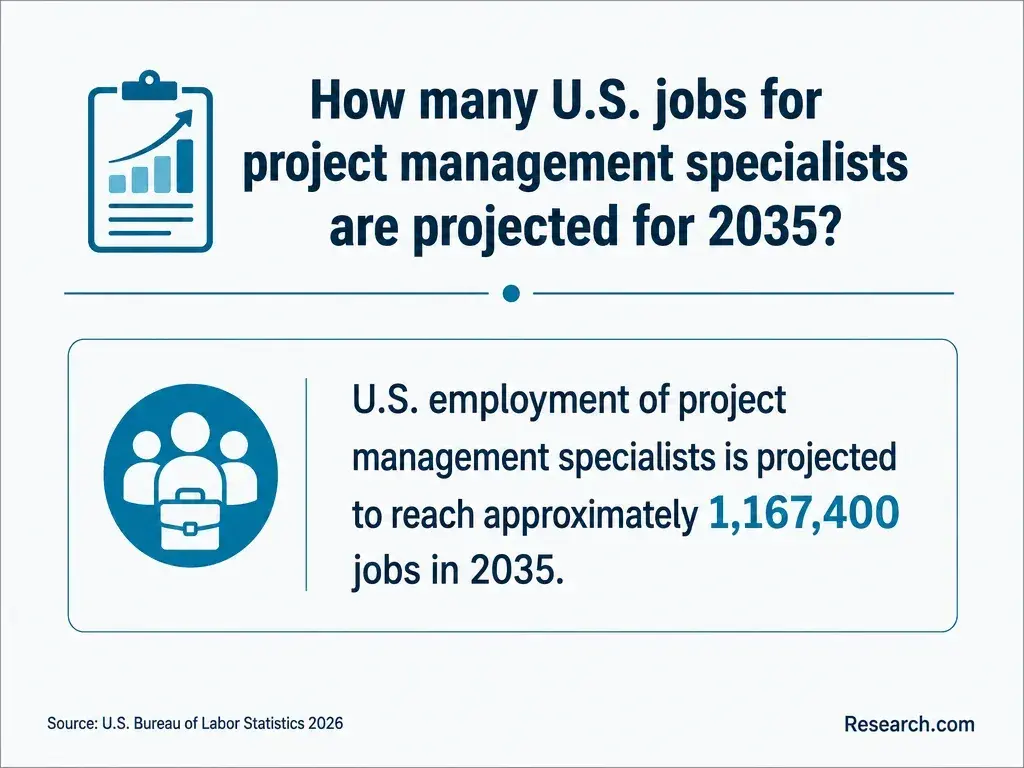
The US Bureau of Labor Statistics reports a May 2025 median annual salary of $133,000 for training and development managers, with projected employment growth of 6.4% from 2025 to 2035. These are occupation-wide figures, not salaries or placement rates for Ed.D. graduates. Advancement still depends on leadership responsibility, sector knowledge, budgets managed, and demonstrated results. A portfolio that explains a well-designed evaluation and its limitations may be more persuasive to an employer than the degree title alone.
Relevant study may cover adult learning and transfer, organizational change, leadership, research methods, and program evaluation. For this particular challenge, look beyond whether a catalog mentions "analytics." Determine whether students learn to select valid measures, interpret imperfect organizational data, assess implementation, consider rival explanations, and explain uncertainty to decision-makers.
Applied assignments or a dissertation in practice may offer opportunities to investigate a workplace problem, but the required deliverable and level of faculty supervision vary. An authorized organizational project also depends on access to usable data. Employee records, learner information, and interviews may require employer permission, privacy safeguards, consent, a data-use agreement, or institutional review; a routine internal evaluation is not automatically exempt from every oversight requirement. Course exposure should not be mistaken for advanced statistical expertise.
Requirements vary by institution. Programs may request prior graduate study, transcripts, recommendations, a statement of purpose, and evidence of professional leadership or a feasible practice problem. Some require a completed master's degree; others set different eligibility rules. Neither an education major nor a senior job title is a universal requirement.
An applicant evaluating training should describe their actual decision-making responsibilities, the evidence gap, and what they are authorized to examine - not claim that the initiative failed or succeeded without findings. Ask admissions staff to distinguish credits considered for eligibility from credits that would count toward the doctorate. If you have unfinished doctoral study, examine Ed.D. programs considering previous doctoral coursework, then obtain a written, program-specific credit evaluation before assuming any reduction in time or cost.

Completion time depends on the published course sequence, enrollment pace, required research or capstone work, and the time needed for approvals and revisions. "Online" does not mean you can accelerate every stage. A cohort schedule, live meetings, or project milestones may limit flexibility even when coursework can be completed from home.
If timing matters, compare the stated course sequence and final-project requirements rather than relying on an advertised minimum. Listings of fast-track online education doctorate programs can help identify options, but confirm the schedule and completion rules directly with each institution. A training initiative that needs a decision this quarter should be evaluated on its own timeline, not postponed until a doctoral project is complete.
There is no reliable single price for this degree category. Compare each program's published tuition basis, required credits or terms, mandatory fees, travel for any convenings, and likely continuation charges if the project takes longer than planned. Include the work time you would give up and any organizational data-collection or project expenses you would personally bear.
Employer reimbursement can change the calculation, but check annual limits, eligible expenses, grade requirements, and repayment obligations if you leave. Aid and borrowing terms also vary. Guidance on financial aid for higher education leadership doctoral students may help frame funding questions; confirm that any option applies to the specific organizational leadership program you are considering. Compare the full expected expense with a targeted evaluation course or contracted evaluation before treating the doctorate as the solution to one initiative.
Check the institution's accreditation status with its recognized accreditor and confirm that the advertised online doctorate is the degree you would actually receive. Accreditation of an institution does not establish that a particular program prepares graduates for a regulated role or carries a specialized endorsement.
Evaluating workplace training generally does not require educator licensure. If your goal is also to become a school principal, superintendent, teacher, or another licensed professional, obtain the program's licensure disclosure and verify eligibility with the relevant state authority. Do not infer licensure preparation from "leadership" in a degree name.
Online study can reduce relocation or routine commuting, while campus-based study may make in-person faculty and peer interaction easier. Neither format determines academic rigor or the quality of evaluation training. The consequential differences are the actual live-session schedule, group-work expectations, access to methods support, campus convenings, and supervision of applied projects.
For a working training leader, the project site may matter more than the classroom location. Ask how faculty supervise data collection at an employer, what happens if you change jobs or lose access to the initiative, and whether meetings and required travel fit your work obligations. Confirm attendance rules rather than assuming recorded classes can replace live participation.
How should you choose a reputable online Ed.D. program?
Choose for the work you need to learn, not just the convenience of the format. Request the current catalog, course sequence, final-project handbook, tuition schedule, and a description of research support for online students. Compare programs on evaluation-method depth, faculty guidance, organizational-project rules, schedule feasibility, and total expected expense.
Before applying, ask a program representative whether an authorized training-evaluation problem could meet its project requirements, what approvals would be needed, and what alternative project setting is possible if employer access ends. Compare those answers in writing. A list of lower-cost online education doctoral programs can broaden the search, but verify each degree's focus and full cost: the least expensive option is not a bargain if it cannot support your learning or project goals.
Other Things You Should Know About EdD Leadership
Separate the obligation to provide training from choices about its design and delivery. Confirm the governing policy or legal requirement before proposing cancellation; evaluation may instead support revising the training while preserving compliance.
That power relationship may discourage candid responses. Consider an independent interviewer or a method that limits identification, and check employer and institutional requirements before collecting responses.
Yes, if the evidence supports a carefully qualified finding. Document the measure, alternative explanations, and affected groups; avoid asserting causation from a weak comparison.
State what was measured, what remains unknown, and which decision is justified despite the uncertainty. Propose a specific point for reviewing new evidence rather than labeling an unproven initiative either successful or ineffective.
- Educational Attainment and Nonwage Labor Market Returns in the United States - PMC https://pmc.ncbi.nlm.nih.gov/articles/PMC10923559/
- CDC Approach to Program Evaluation https://www.cdc.gov/evaluation/php/about/index.html
- The Program Evaluation Context - NCBI - NIH https://www.ncbi.nlm.nih.gov/books/NBK219538/
- How Do Online Classes Work? What to Expect as an Online Student - Online Degrees & Programs | Kent State University https://onlinedegrees.kent.edu/blog/how-do-online-classes-work-what-to-expect-as-an-online-student
- What Is a Capstone Project? - Boston University Questrom https://www.bu.edu/questrom/blog/what-is-a-capstone-project/
- Online Ed.D. in Leadership and Learning in Organizations | VU-EDU https://peabodyonline.vanderbilt.edu/edd-in-organizational-learning/
- Doctoral Degree (EdD) in Educational Leadership - UK Online https://online.uky.edu/doctoral/educational-leadership/edd
- 2026 UNC Online EdD in Organizational Learning & Leadership https://online.unc.edu/online-doctoral-programs/online-edd-organizational-learning-and-leadership/
- Minimum Standards and Expectations for Online Instruction | buffalo.edu https://socialwork.buffalo.edu/information-faculty-staff/part-time-faculty-resources/minimum-standards-and-expectations-for-online-instruction.html
- What is Cohort vs. Self-Paced Learning? - Wharton | Wharton Executive Education https://executiveeducation.wharton.upenn.edu/thought-leadership/wharton-online-insights/cohort-vs-self-paced-learning/