2027 Best Healthcare Administration Degrees for Working Adults

Co-Founder and Chief Data Scientist
Choosing a healthcare administration degree while working full time is a scheduling, cost, and career-return decision. The right program should help you build management, finance, policy, operations, and health systems knowledge without forcing you to pause your income or step away from current responsibilities.
The stakes are practical. The healthcare administration field is projected to grow 32% through 2031, and employers increasingly need professionals who can manage clinics, departments, data systems, compliance demands, budgets, and patient-centered operations. For adults already working in healthcare, business, public service, or administration, a flexible degree can be a pathway to promotion, specialization, or a move into healthcare leadership.
This guide explains how working adults can compare accredited healthcare administration degrees, what admission requirements to expect, which courses matter most, how long completion may take, what costs to budget for, and how financial aid, support services, accreditation, salary outcomes, and job options should factor into the decision.
Key Things to Know About Healthcare Administration Degrees for Working Adults
- Flexible scheduling and online formats are common, allowing working adults to balance jobs while earning degrees in healthcare administration, with over 60% of programs offering part-time or evening classes.
- Many programs provide hybrid models that combine online learning with on-site practicums, enhancing practical skills and employer relevance in healthcare management roles.
- Accelerated degree options and dedicated support services, including career counseling, help working professionals complete programs faster and transition smoothly into healthcare administration careers.
What Are the Best Healthcare Administration Degrees for Working Adults?
The best healthcare administration degree for a working adult is the one that fits three conditions: it supports your schedule, matches your target role, and comes from an accredited institution with credible student support. Flexibility matters, but it should not come at the expense of academic quality, employer recognition, or a curriculum that prepares you for real healthcare management work.
Adult learners often benefit most from online, hybrid, evening, weekend, part-time, or competency-based formats. These options allow students to keep working while building skills they can apply immediately in hospitals, clinics, long-term care facilities, insurance organizations, public health agencies, and healthcare technology settings.
- Online Bachelor's in Healthcare Administration: A strong option for adults who need an undergraduate credential for entry-level or early-management healthcare roles. It usually covers healthcare systems, management, finance, law, ethics, and operations. Students comparing flexible options may also want to review an online healthcare administration degree if affordability and distance learning are priorities.
- Master's in Healthcare Leadership: A practical choice for professionals who already have a bachelor's degree and want to move into supervisory, director-level, or executive-track roles. These programs often emphasize strategy, organizational change, leadership, quality improvement, and decision-making.
- Healthcare Informatics: A good fit for adults interested in the intersection of administration, data, technology, and health information systems. This path can be especially useful for professionals who work with electronic health records, reporting, analytics, workflow improvement, or digital health tools.
- Public Health Administration: Best for students who want to connect healthcare management with population health, policy, prevention, and community-based systems. Evening, weekend, and online options can make this path manageable for working adults.
When comparing programs, look beyond the degree title. Review course delivery, required synchronous sessions, transfer-credit policies, practicum expectations, faculty experience, accreditation status, graduation support, and whether the school has experience serving adult learners. Professionals exploring adjacent healthcare paths can also compare options such as a pharmacy degree online, especially if they are considering a clinical or medication-focused career direction.
What Are the Admission Requirements for Working Adults in Healthcare Administration Degree Programs?
Admission requirements for healthcare administration programs vary by degree level, but working adults are usually evaluated on both academic readiness and professional experience. Schools understand that adult applicants may have been out of school for years, may have credits from multiple institutions, or may bring workplace accomplishments that strengthen their application.
Over 40% of graduate students enroll part-time, which helps explain why many programs offer admissions processes designed for applicants who are employed, raising families, changing careers, or returning to college after a long break. Still, flexible admissions should not be confused with low standards. Strong programs usually require evidence that students can manage graduate- or undergraduate-level work while meeting professional expectations.
- Prior Education: Bachelor's programs typically require a high school diploma or equivalent and may review previous college credits. Master's programs generally require a completed bachelor's degree from an accredited institution.
- Professional Experience: Work experience in healthcare, administration, business, public service, insurance, human resources, operations, or related fields can strengthen an application. Some programs value experience because it helps students connect coursework to real workplace problems.
- GPA Review: Programs may publish minimum GPA expectations, but some consider the full application for experienced adults. A lower past GPA may be offset by recent coursework, professional achievement, certifications, or a clear statement of academic readiness.
- Test Waivers: Many programs waive standardized tests like the GRE for applicants with relevant work experience, prior graduate coursework, or strong academic records. Applicants should confirm waiver rules before applying.
- Recommendations: Professional recommendations from supervisors, managers, or colleagues can be especially useful for adult learners because they show leadership potential, communication skills, reliability, and readiness for advancement.
- Statement of Purpose or Resume: Many programs ask applicants to explain their career goals and submit a resume. Use these materials to show why healthcare administration is the right next step, not just why you want a credential.
- Flexible Learning Options: Part-time, online, hybrid, evening, and weekend formats can make enrollment realistic for adults who cannot attend daytime campus classes. Students seeking shorter healthcare training alternatives may also compare accelerated medical assistant programs, though those programs prepare students for a different type of healthcare role.
Before applying, working adults should ask admissions teams about transfer credits, maximum time to completion, required campus visits, practicum hours, course sequencing, and whether classes are asynchronous or require live attendance. These details often determine whether a program is truly workable.
What Coursework Is Required in Healthcare Administration Degree Programs for Working Adults?
Healthcare administration coursework is designed to prepare students to manage people, budgets, processes, data, regulations, and strategy in healthcare environments. For working adults, the most valuable courses are not simply theoretical; they help students solve problems they may already see in clinics, hospitals, insurance organizations, public health offices, or care coordination settings.
Recent data shows that over 60% of students in healthcare administration programs are adult learners who prioritize programs accommodating full-time jobs and family responsibilities. That makes course structure important. Strong programs typically use applied projects, case studies, simulations, workplace-based assignments, and capstones that connect academic concepts to operational decisions.
- Healthcare Management and Leadership: Covers team supervision, organizational behavior, communication, conflict resolution, and leadership in healthcare settings. This course is important for students aiming to move from individual contributor roles into management.
- Healthcare Policy and Ethics: Examines regulations, healthcare policy, compliance, privacy, equity, and ethical decision-making. Students learn how administrative decisions can affect patients, staff, reimbursement, and institutional risk.
- Financial Management in Healthcare: Focuses on budgeting, reimbursement, financial analysis, resource allocation, and cost control. This coursework is especially relevant for adults pursuing department manager, practice administrator, or director roles.
- Health Information Systems: Introduces electronic health records, data management, reporting, workflow technology, and information governance. Administrators need enough technical fluency to work with clinical, IT, and compliance teams.
- Strategic Planning and Quality Improvement: Teaches students how to evaluate performance, improve processes, support patient safety, and plan for long-term organizational goals. These skills are central to leadership and operational improvement.
Some programs also require courses in human resources, healthcare law, marketing, population health, epidemiology, research methods, analytics, project management, or long-term care administration. Graduate programs may include a capstone, internship, practicum, or final applied project. Working adults should ask whether fieldwork can be completed at their current workplace, since that can make scheduling significantly easier.
Students comparing healthcare career routes may also consider easy nursing programs to get into, but nursing and healthcare administration lead to different responsibilities. Nursing programs prepare students for clinical care, while healthcare administration programs focus on management, systems, finance, and organizational leadership.
Breakdown of All Fully Online Title IV Institutions

How Long Does It Take to Complete a Healthcare Administration Degree While Working?
The time required to finish a healthcare administration degree depends on degree level, transfer credits, course load, program format, and how consistently a student can enroll. Recent data shows that nearly 60% of part-time adult learners take longer than the traditional two to four years, often extending their studies to between three and six years.
For working adults, the fastest route is not always the best route. A heavy course load can shorten the calendar timeline, but it may also increase stress, reduce performance, and create conflicts with work or family obligations. A realistic pace is usually better than repeated stops and restarts.
- Program format: Online and hybrid formats give students more control over when and where they complete coursework. However, live sessions, group projects, and practicum requirements may still affect scheduling.
- Course load: Taking fewer courses per term can make a program more manageable for full-time workers, but it extends the completion timeline. Students should ask whether the program offers year-round enrollment to maintain steady progress.
- Prior credits: Transfer credits, prior college coursework, and relevant certifications can reduce the number of required classes. Policies vary, so adults with previous credits should request an official transfer evaluation early.
- Work schedule: Shift work, overtime, travel, and unpredictable job demands can slow progress. Students in demanding roles may need a lighter load during peak work periods.
- Accelerated options: Summer sessions, condensed courses, or accelerated terms can shorten completion time, but they require strong time management and may not be ideal during busy work seasons.
One professional who completed an online program described the process as a steady balancing act: "It was challenging to stay disciplined after a full workday, especially when unexpected tasks came up." He relied on weekend study blocks, advance planning, and flexible deadlines, but said, "There were times I felt overwhelmed, but the ability to learn from home was a major help." His three-and-a-half-year path to graduation shows why pacing, support, and consistency matter as much as program length.
How Much Does a Healthcare Administration Degree Cost for Working Adults?
The cost of a healthcare administration degree depends on tuition, fees, transfer credits, enrollment pace, delivery format, books, technology requirements, and how long the student remains enrolled. For working adults, the true cost also includes time, childcare, commuting, reduced overtime, and the financial risk of stopping before completion.
Part-time enrollment in healthcare-related fields has grown by nearly 20% over the last ten years, underscoring the need for programs that are both flexible and financially manageable. A lower tuition rate can help, but affordability should be judged by total program cost, not just the price per credit.
- Tuition per Credit: Public and private schools may charge very different rates. Since many programs bill by credit hour, the total number of required credits directly affects the final tuition cost.
- Program Duration: A longer timeline can make each term more affordable but may increase total fees over time. Students should ask whether tuition rates can change while they are enrolled.
- Additional Fees and Materials: Technology fees, online course fees, textbooks, digital platforms, graduation fees, and assessment fees can increase the total bill. These costs should be included in any budget comparison.
- Delivery Format: Online study can reduce commuting, parking, relocation, and housing costs. However, online programs may charge separate technology or distance-learning fees.
- Transfer Credit Policies: Generous transfer policies can lower cost by reducing the number of credits a student must complete. Adults with previous coursework should prioritize schools that provide a clear credit review.
- Cost-Reduction Options: Employer tuition assistance, scholarships for nontraditional students, grants, military benefits, payment plans, and accelerated course options may reduce out-of-pocket costs.
Before enrolling, ask for a full cost estimate in writing. It should include tuition, required fees, books, expected annual increases if applicable, and the projected cost after transfer credits or aid. Working adults should also confirm whether taking fewer credits affects financial aid eligibility.
What Financial Aid Options Are Available for Working Adults in Healthcare Administration Degree Programs?
Working adults in healthcare administration programs may qualify for several types of financial aid, but eligibility depends on the school, degree level, enrollment status, income, prior borrowing, and whether the program is accredited. The most important first step is to confirm that the institution participates in eligible aid programs and then complete the required financial aid forms on time.
- Federal Financial Aid: Federal aid may include grants, subsidized and unsubsidized loans, and work-study programs accessed through the FAFSA. Eligibility depends on financial need, enrollment status, and other federal rules. Loans must be repaid, so students should borrow only what they need.
- Employer Tuition Assistance: Some employers offer tuition reimbursement, tuition assistance, or professional development funding. Policies often require the degree to relate to the employee's role, and some employers require a minimum grade or continued employment after reimbursement.
- Scholarships for Adult Learners: Scholarships for nontraditional, returning, part-time, or career-changing students may be offered by schools, professional associations, community organizations, and private foundations. These awards can reduce reliance on loans.
- Grants: Grants do not require repayment if all eligibility conditions are met. They may be based on income, student status, location, field of study, or institutional priorities.
- Payment Plans: School payment plans can spread tuition across a term rather than requiring a large upfront payment. Students should check setup fees, payment deadlines, and late-payment rules.
- Military and Veteran Benefits: Eligible service members, veterans, and family members may be able to use education benefits, depending on their status and the institution's approval.
One professional who earned her healthcare administration degree while working full time said that funding flexibility was essential. "There were moments when I felt overwhelmed," she explained, "especially coordinating class schedules with work shifts and family time." Combining employer tuition assistance with federal aid helped reduce financial stress and made continued enrollment more realistic.
"What made the difference was knowing I had support options that fit my life, not the other way around," she said. That lesson is important for adult learners: compare financial aid early, understand repayment obligations, and avoid enrolling before you know the full out-of-pocket cost.
What Support Services Help Working Adults Succeed in a Healthcare Administration Program?
Support services can determine whether a working adult merely enrolls or actually finishes. Flexible classes are helpful, but adult learners also need advising, technology support, career guidance, and clear communication from faculty and staff. The strongest programs are built for students who study outside traditional daytime hours.
- Academic Advising: Advisors help students choose courses in the right order, avoid unnecessary credits, understand graduation requirements, and build a realistic plan around work and family obligations.
- Flexible Scheduling: Evening, weekend, online, asynchronous, and hybrid options make it easier to continue working. Students should confirm whether required courses are offered often enough to prevent delays.
- Online Learning Support: Reliable technical support, orientation modules, library access, tutoring, writing help, and clear learning-management-system guidance are especially important for students returning to school after several years away.
- Career Services: Resume reviews, interview preparation, job boards, alumni networks, employer connections, and career coaching can help students translate the degree into advancement opportunities.
- Mental Health Resources: Counseling, stress-management resources, wellness programs, and crisis support can help students manage pressure during demanding terms.
- Faculty Access: Working adults benefit from instructors who provide timely feedback, hold virtual office hours, and understand how to support students balancing professional responsibilities.
- Prior Learning and Transfer Support: Clear transfer-credit evaluations and guidance on prior learning assessment can save time and money for adults with previous coursework or professional training.
Before choosing a program, ask when advising, tutoring, library help, and technical support are available. Services limited to weekday business hours may not be sufficient for students who work full time.
Are Healthcare Administration Degrees for Working Adults Accredited?
Healthcare administration degrees for working adults can be accredited, but applicants should verify accreditation before enrolling. Accreditation is a quality review process that evaluates an institution or program based on standards such as curriculum, faculty qualifications, student support, assessment, and outcomes.
Accreditation matters for several reasons. It affects whether students can access federal financial aid, whether credits may transfer, whether employers recognize the credential, and whether the degree supports future graduate study or professional advancement. For adult learners investing time and money while working, these protections are especially important.
Currently, nearly 40% of graduate students in the U.S. are adult learners, reflecting a rising demand for flexible, accredited programs designed to fit their needs. However, not every flexible or online program has the same level of recognition. Students should check institutional accreditation through official school disclosures and reputable accreditation databases before applying.
- Institutional accreditation: Confirms that the school as a whole meets accepted academic and operational standards.
- Programmatic accreditation: Applies to specific programs or fields when available and relevant. It may add value for certain healthcare management pathways.
- Federal aid eligibility: Only accredited programs that meet applicable requirements qualify for federal financial aid.
- Credit transfer: Accredited coursework is more likely to be considered by other institutions, though transfer is never guaranteed.
- Employer recognition: Many employers prefer or require degrees from accredited institutions for hiring, promotion, or tuition reimbursement.
Working adults should be cautious with programs that make vague claims about accreditation, pressure applicants to enroll quickly, or do not clearly disclose accrediting bodies. A flexible schedule is valuable only if the credential has durable academic and professional value.
Does a Healthcare Administration Degree Increase Salary for Working Adults?
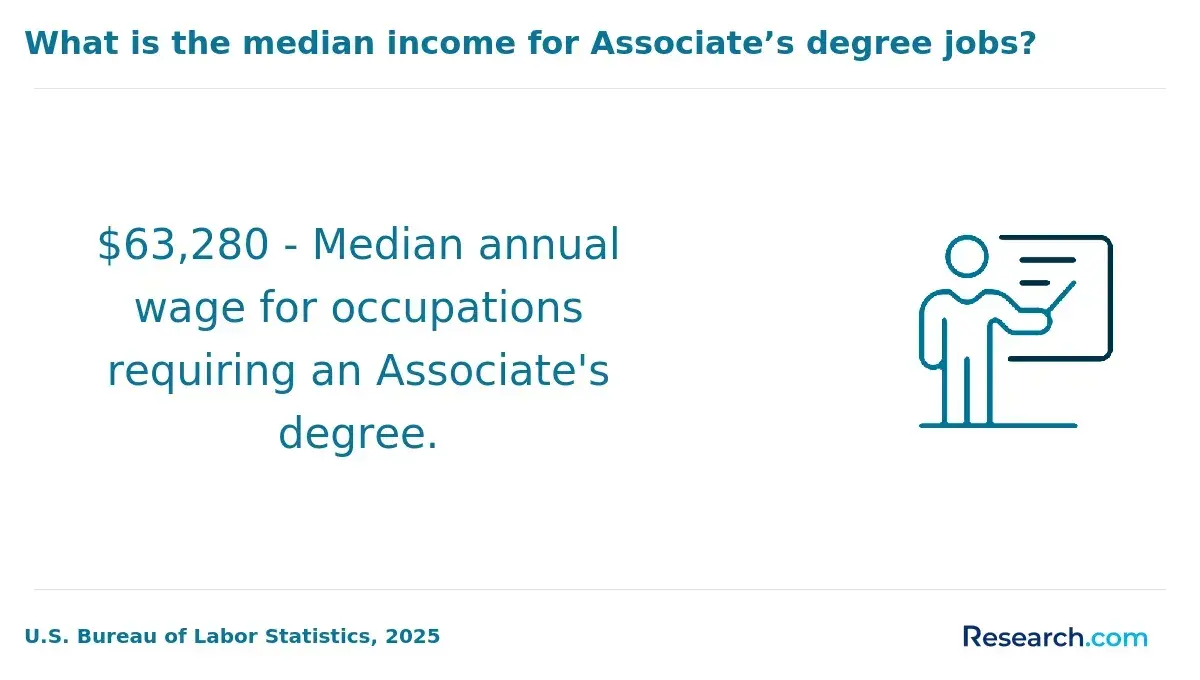
A healthcare administration degree can support salary growth for working adults, especially when it helps them qualify for supervisory, management, director, compliance, operations, or strategic roles. Typical earnings range from $60,000 to $100,000 annually, but actual pay depends on role, employer, location, experience, degree level, specialization, and organizational size.
The degree itself does not guarantee a raise. It is most likely to improve earning potential when paired with relevant work experience, measurable accomplishments, leadership ability, and a clear plan for advancement.
- Industry Demand: Growth in healthcare services increases the need for administrators who can manage complex operations, staffing, budgets, compliance, and performance improvement.
- Role Advancement: Management and leadership positions often require or prefer a healthcare administration credential. Moving into roles with larger teams, budgets, or strategic responsibility can increase compensation.
- Employer Policies: Some organizations use degree requirements in promotion, pay-grade, or leadership-track decisions. Others may offer tuition assistance but not an automatic salary increase.
- Experience and Skills: Adults who combine the degree with years of healthcare, business, operations, finance, or compliance experience may be more competitive for higher-paying roles.
- Specialization: Skills in finance, informatics, quality improvement, compliance, policy, or operations can support movement into specialized roles with stronger salary potential.
Professionals should evaluate salary return before enrolling. Review job postings in your target market, note required degrees and experience, compare internal promotion criteria, and ask whether your employer recognizes the degree for advancement. Working adults considering clinical graduate pathways may also compare options such as the cheapest online acute care nurse practitioner programs, though those prepare students for a different professional track.
What Jobs Can Working adults Get With a Healthcare Administration Degree?
A healthcare administration degree can help working adults move into roles that involve operations, supervision, compliance, planning, finance, quality improvement, or organizational leadership. The best job fit depends on the student's prior experience. Someone with a clinical background may move into department management, while someone from business or administration may target operations, billing, compliance, or practice management.
- Healthcare Manager: Oversees daily operations in settings such as hospitals, clinics, physician practices, or outpatient centers. Responsibilities may include staffing, scheduling, budgeting, process improvement, and coordination across departments.
- Health Services Director: Manages programs, teams, policies, budgets, and performance goals. This role often requires strong knowledge of healthcare systems, regulations, leadership, and organizational planning.
- Compliance Officer: Helps organizations follow regulatory, ethical, privacy, documentation, billing, and internal policy requirements. Coursework in healthcare law, ethics, and quality systems can be useful for this path.
- Clinical Manager: Leads a department, service line, or clinical unit. This role is often a strong fit for professionals who already have clinical experience and want to combine it with administrative responsibility.
- Strategic Planner: Supports long-term organizational decisions, resource allocation, service development, market analysis, and operational growth. This path benefits from coursework in finance, policy, analytics, and strategy.
- Practice Administrator: Manages the business and operational side of physician offices, specialty practices, or outpatient clinics, including staffing, patient flow, billing coordination, vendor relationships, and performance reporting.
- Quality Improvement Coordinator: Works on patient safety, process improvement, reporting, and performance initiatives. This role may appeal to adults interested in measurable improvements in care delivery.
Working adults should compare job postings before choosing electives or specializations. If local employers emphasize analytics, compliance, long-term care, finance, or operations, selecting related coursework can make the degree more marketable. Some professionals also strengthen their healthcare career options by comparing affordable RN to BSN online programs, particularly if they want to combine nursing credentials with administrative growth.
What Graduates Say About Their Healthcare Administration Degrees for Working Adults
- : "Choosing an online healthcare administration degree program while working full-time was a game-changer for me. The flexible schedule allowed me to manage coursework without sacrificing my job, and I found the average cost of attendance quite reasonable compared to traditional programs. Since graduating, I've stepped into a leadership role, and the investment absolutely paid off. — Benny"
- : "Pursuing a part-time healthcare administration degree was a thoughtful decision during a busy career phase. Balancing work and study wasn't easy, but knowing the cost hovered around an affordable range helped me justify it. Reflecting now, completing the degree enhanced my strategic decision-making skills and opened doors I hadn't imagined. — Greyson"
- : "The decision to enroll in an online healthcare administration program while maintaining my professional duties was deliberate and focused. Despite concerns about cost, learning that averages were manageable for working adults gave me confidence. Completing the program has undeniably advanced my career, equipping me with the expertise needed for higher responsibilities. — Cooper"
Other Things You Should Know About Healthcare Administration Degrees
Working adults can balance part-time study with full-time work by enrolling in flexible programs offering evening or weekend classes. Additionally, many schools provide online modules, and allow customization of course loads to suit the professional commitments of students, facilitating a manageable schedule.
In 2027, prominent universities like Southern New Hampshire University and Purdue University Global offer highly flexible online programs. These programs are designed with asynchronous classes and support systems that cater to the schedules of working adults, facilitating balance between career, education, and personal life.
Entry requirements typically include a bachelor's degree from an accredited institution, a minimum GPA (often around 3.0), and relevant work experience. Some programs may require standardized test scores like the GRE. Specific prerequisites can vary significantly between institutions.
References
- Frequently Asked Questions about Healthcare Management Degrees and Careers - Healthcare Management Degree Guide https://www.healthcare-management-degree.net/faq/
- Bachelor’s degree in health care administration / management https://www.trevecca.edu/academics/program/bachelor-of-science-in-healthcare-administration
- Healthcare Administration Degree Programs https://www.healthcare-administration-degree.net/
- Healthcare Management Degrees: A Guide to Salary After Graduation https://www.edumed.org/medical-careers/healthcare-management/salary-and-pay/
- 8 Healthcare Administration Jobs You Should Know About https://globallearnerseducation.com/blog/8-healthcare-administration-jobs-you-should-know-about
- Healthcare Administration and Service Management https://www.sheridancollege.ca/programs/healthcare-administration-and-service-management
- Home https://www.husson.edu/online/blog/2024/11/types-of-healthcare-administration-careers
- What Can You Do With a Master’s in Healthcare Administration? https://www.mssu.edu/news/2025/04/healthcare-administration-degree-careers.php
- Loan Repayment Programs for Health Careers https://bhw.hrsa.gov/funding/apply-loan-repayment
- Health Care Administration Jobs: A Growing Career Path in High Demand https://www.columbiasouthern.edu/blog/blog-articles/2025/october/health-care-administration-jobs/