2027 Paying for an Online Ed.D. in Leadership and Learning in Organizations: A Tuition Benefit That Excludes Doctoral Degrees
Audited and Verified:
Our Editorial and Data Verification Process
Research.com uses government datasets, official education statistics and primary institutional information to support its career and degree guides. Our review process checks factual accuracy, occupational definitions, source dates and the requirements associated with the credentials discussed.
How This Article Was Fact-Checked
Our editorial team verifies salary estimates, employment projections, education requirements and program information against original data providers and official organizations. Salary figures are checked against the relevant occupational definitions and reporting periods. Information about licensure, accreditation and required in-person training is reviewed separately.
Fact-checked and verified on:

Co-Founder and Chief Data Scientist
An employer tuition benefit can make graduate study affordable - but it may stop at the doctoral level. If you are considering an online Ed.D. in Leadership and Learning in Organizations, that exclusion could leave you responsible for tuition as well as fees, travel, and time away from work.
This guide is for working leaders and learning professionals weighing that financial commitment. It explains what to confirm with your employer and the university, how to compare the full cost with available funding, and when a shorter development path may better serve your goal.
Key Things You Should Know
- If your employer's written policy excludes doctoral degrees, assume it will pay $0 toward Ed.D. tuition unless an authorized exception or separate funding agreement is approved in writing.
- Compare the university's charges and required travel with your actual funding - not a benefit advertised for graduate education generally. A doctorate can support advanced organizational learning work, but it does not guarantee promotion.
- The Bureau of Labor Statistics reports a $133,000 median annual salary for training and development managers, not for Ed.D. graduates specifically.
What is an online Ed.D. in Leadership and Learning in Organizations?
It is a practice-oriented Doctor of Education focused on how people learn, lead, and implement change in organizations. Depending on the university, students may study adult learning, leadership development, organizational change, and applied research while examining a problem in a workplace or other approved setting. "Online" describes where much of the instruction occurs; it does not necessarily mean self-paced study or no campus visits.
Program names and requirements differ. Before budgeting for a degree with this title, confirm the exact award, required project, and whether its emphasis fits your work. A leader seeking better evaluation of workforce training may need different preparation from someone pursuing school administration. The guide to choosing the right Doctor of Education study emphasis can help frame that academic comparison; it cannot establish whether your employer will fund a particular program.
Does an employer tuition benefit cover an online doctoral degree?
Not if the applicable policy expressly excludes doctoral degrees. An online Ed.D. remains a doctorate even if your employer covers online master's programs, graduate courses, or degrees in leadership. Your manager's support does not override a written benefit limit unless the person or office with approval authority grants an exception.
Ask benefits or HR staff for the policy that applies to your enrollment term and a written determination for the exact degree and university. Confirm whether the exclusion covers all doctoral coursework; whether a separate departmental development budget or sponsorship agreement is available; who can authorize it; and whether any approved support would be paid upfront or reimbursed after a successful term. Also ask about annual limits, continued-employment rules, and repayment obligations. Do not enroll assuming that a course can be reimbursed merely because its subject resembles eligible professional development.
Employer payment and tax treatment are separate questions. Federal rules may allow qualifying employer educational assistance for graduate study, but tax eligibility does not require an employer to offer doctoral coverage. If HR confirms the exclusion, compare unfunded options using education doctoral degrees by tuition level, then verify each university's current charges and requirements directly.
How much does an online Ed.D. in Leadership and Learning in Organizations cost?
There is no reliable single price for this degree. Universities may charge by credit, term, or program, and a quoted tuition figure may exclude fees or required in-person activities. When the employer benefit excludes doctorates, calculate the amount you would personally owe for each program rather than comparing advertised tuition alone.
The components below show what belongs in a like-for-like comparison. Obtain an itemized estimate from each university and identify which charges, if any, another funding source will actually cover.
| Cost component | What to verify | Why it changes the decision |
| Tuition and required fees | Charge basis, required credits, rate changes, and graduation fees | The lowest advertised rate may not produce the lowest total bill. |
| Online and in-person participation | Technology charges, required convenings, travel, and lodging | Online delivery does not eliminate attendance costs. |
| Time and project expenses | Leave from work, caregiving, materials, and approved project needs | These costs may affect affordability even when they do not appear on a tuition statement. |
| Confirmed funding | Scholarships, eligible aid, payment terms, or a signed employer agreement | Possible assistance is not a reduction in cost until its conditions are clear. |
Request a term-by-term estimate at your likely pace, including what happens if a project takes longer than planned. Compare the remaining cost with the responsibility you hope to gain: if the goal is to improve training evaluation or lead a specific change initiative, a targeted course and a supervised workplace project may be less expensive and more direct. Listings of affordable distance learning Ed.D. degrees are a starting point, not a substitute for an individualized cost estimate.
Accreditation must be checked for the institution offering the degree; the words "online Ed.D." do not establish accreditation. Confirm the university's institutional accreditation and that the doctoral award is included within its authorized offerings. If a school claims specialized recognition, check what it covers rather than assuming it applies to this particular degree.
Accreditation matters for academic quality assurance and may affect aid or how others assess the credential. It does not make an excluded doctorate eligible for your employer's tuition benefit, and it does not by itself establish eligibility for an educator license. Ask HR whether its policy imposes accreditation conditions on any separately approved support.
Relevant study may connect adult learning and leadership theory with organizational diagnosis, change implementation, research methods, and program evaluation. An applied project might ask whether a leadership-development initiative is meeting a defined organizational need. The curriculum and final deliverable are university-specific: do not assume a course assignment, team capstone, dissertation in practice, and research dissertation are interchangeable.
For an unfunded degree, inspect the required courses rather than paying for a program based on its title. If you already design training but need stronger measurement skills, check the depth of evaluation and methods instruction. If you want to lead cross-functional change, look for opportunities to practice stakeholder engagement and implementation - not just study leadership concepts.
Requirements vary by university and may include a completed graduate degree or specified graduate study, transcripts, professional experience, recommendations, and a statement explaining an organizational problem you want to address. Some programs may also assess research readiness or interview applicants. An education master's degree, a senior job title, and a fixed number of leadership years are not universal requirements.
Before paying an application fee, ask admissions to evaluate your academic eligibility and clarify how the program defines relevant experience. If you have prior graduate credits, distinguish credits that help you qualify for admission from credits the university will actually apply toward Ed.D. requirements. Only a formal evaluation can establish whether prior study reduces your remaining coursework or cost.
Completion time depends on the required course sequence, enrollment pace, project approvals, and any required convenings. A faster published schedule may rely on continuous enrollment and timely progress through a cohort. Confirm live-session attendance, group-work expectations, leave policies, and the charges that continue if you need additional time.
When the degree is self-funded, speed is a financial trade-off: a heavier schedule may limit work hours, while a slower one may extend fees or delay completion. Compare shorter Ed.D. course sequences only after checking whether their actual weekly commitments and final-project requirements fit your job and household.
The degree may be relevant to experienced professionals seeking greater responsibility in learning and development, organizational development, workforce training, consulting, or education administration. The work differs: a training manager oversees learning programs and staff, while an organizational consultant analyzes a client's operations and recommends changes. Employers will still assess your sector experience, leadership record, and ability to implement and evaluate projects.
Start with the role you want and examine its actual hiring requirements. For advancement within a college, Ed.D. options for organizational improvement in colleges may help narrow the academic fit, but an Ed.D. alone does not secure an administrative appointment. If your immediate goal is a larger training portfolio at your current employer, leading a measurable initiative with a mentor may be more useful than taking on an unfunded doctorate now.
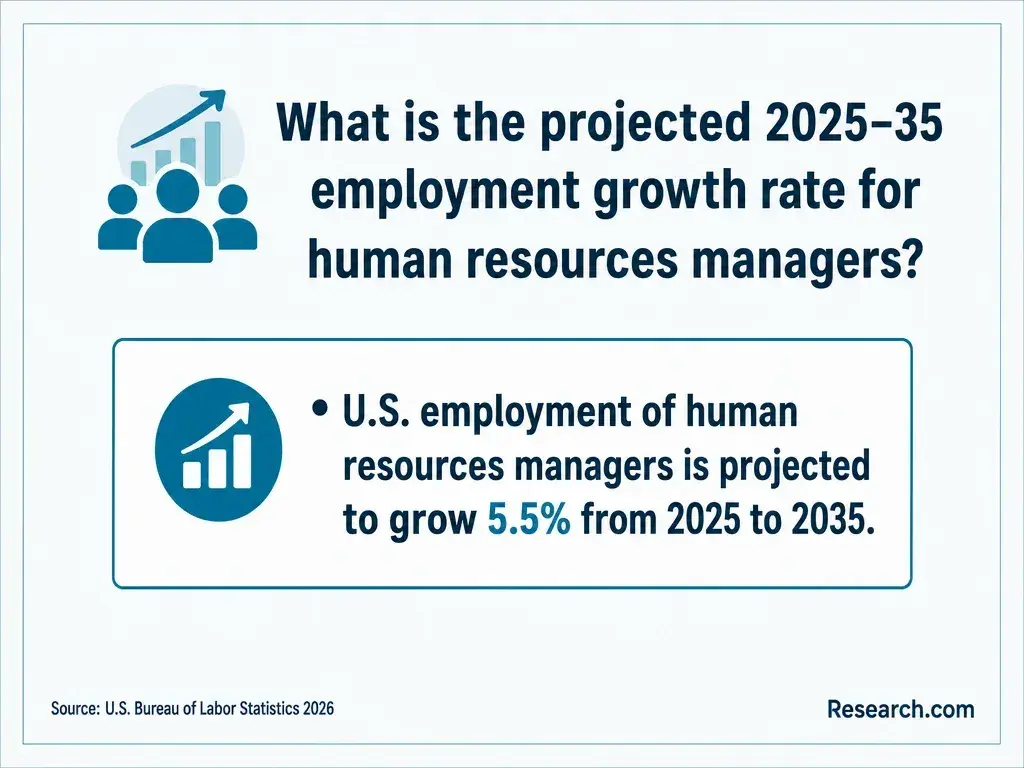
There is no dependable Ed.D.-specific salary figure: pay follows the occupation, employer, location, and level of responsibility. The Bureau of Labor Statistics reports a May 2025 median annual salary of $133,000 for training and development managers, with projected employment growth of 6.4% from 2025 to 2035. That occupational median includes workers with varied educational backgrounds; it is not a forecast of your pay after graduation.
For a self-funded decision, use compensation ranges for jobs you could realistically obtain with your experience. Ask whether your employer has a role that requires or rewards the doctorate, and avoid counting on a salary increase that has not been documented.
Do Ed.D. graduates need a license or professional certification?
Many organizational learning and development roles do not require a license simply because the employee holds an Ed.D. Certifications may be useful for particular methods or employers, but the doctorate does not automatically award them. Teaching, counseling, and school-administrator roles can have separate state-specific requirements.
If a regulated position is your goal, ask the university whether its exact program is designed for that credential and check eligibility with the relevant state authority before committing personal funds. A broadly focused organizational leadership doctorate should not be treated as a licensure pathway without that confirmation.
Other Things You Should Know About EdD Leadership
Possibly, but only if that budget permits the expense and the authorized approvers agree. Get the purpose, amount, payment method, and any conditions in writing before enrolling.
Read any sponsorship or reimbursement agreement for continued-employment and repayment terms. Also plan how you would fund future terms and, if your project uses workplace access, whether you could continue it.
Do not assume you can. Tax treatment depends on your circumstances and applicable rules; consult a qualified tax professional before including a deduction or credit in your budget.
A payment plan may spread bills across a term, but it does not reduce the degree's price. Confirm fees and due dates, then decide whether the payments fit your budget without relying on an unpromised promotion.
- Tax benefits for education: Information center | Internal Revenue Service https://www.irs.gov/newsroom/tax-benefits-for-education-information-center
- Your financial path to graduation | consumerfinance.gov https://www.consumerfinance.gov/paying-for-college/your-financial-path-to-graduation/
- Subsidized and Unsubsidized Loans | studentaid.gov https://studentaid.gov/understand-aid/types/loans/subsidized-unsubsidized
- Financing Options - Student Financial Services https://studentfinance.northeastern.edu/billing-payments/financing-options/
- Online Doctorate in Educational Leadership & Management (EdD) | Drexel University Online https://www.online.drexel.edu/online-degrees/education-degrees/oelm/index.aspx
- 2026 UNC Online EdD in Organizational Learning & Leadership https://online.unc.edu/online-doctoral-programs/online-edd-organizational-learning-and-leadership/
- Employer Tuition Assistance Plans May Help Pay for College | Campus https://campus.edu/blog/financial-aid/employer-tuition-assistance-programs-can-help-pay-for-college
- Online EDD in Education Administration | OU Online https://online.ou.edu/program/edd-in-education-administration/
- Tuition Reduction - [email protected] https://benefits.utah.edu/tuition-reduction/
- Employer-Provided Educational Assistance Benefits | aau.edu https://www.aau.edu/resource-library/employer-provided-educational-assistance-benefits-irc-sec-127