2027 Paying for an Online Ed.D. in Leadership and Learning in Organizations: A Nonprofit Employer's Sponsorship Proposal
Audited and Verified:
Our Editorial and Data Verification Process
Research.com uses government datasets, official education statistics and primary institutional information to support its career and degree guides. Our review process checks factual accuracy, occupational definitions, source dates and the requirements associated with the credentials discussed.
How This Article Was Fact-Checked
Our editorial team verifies salary estimates, employment projections, education requirements and program information against original data providers and official organizations. Salary figures are checked against the relevant occupational definitions and reporting periods. Information about licensure, accreditation and required in-person training is reviewed separately.
Fact-checked and verified on:

Co-Founder and Chief Data Scientist
A nonprofit may benefit from an employee's doctoral study without being able to justify an open-ended tuition commitment. For staff members considering an online Ed.D. in leadership and learning in organizations, and the leaders who would approve it, the decision is whether the degree addresses a mission-critical capability gap at an affordable, manageable cost.
This guide shows how to propose a defined sponsorship, account for study and project demands, and compare the doctorate with less expensive development options. The goal is an agreement that serves the organization as well as the employee.
Key Things You Should Know
- Propose a capped, written commitment tied to a defined organizational need, approved expenses, study time, and review points, not an informal promise to "support the doctorate."
- Request the program's full cost and attendance schedule before approval; tuition alone omits fees, travel, work coverage, and possible project expenses.
- An Ed.D. is most defensible when sustained leadership and evaluation responsibilities justify doctoral-level preparation. A targeted course or supervised project may meet a narrower need at lower cost.
What Is an Online Ed.D. in Leadership and Learning in Organizations?
An Ed.D. in leadership and learning in organizations is a practice-oriented doctorate focused on how people learn, lead change, and improve performance within institutions.
Programs with similar names differ: one may emphasize adult learning and organizational development, while another concentrates on educational administration. "Online" describes where much coursework occurs; it does not establish that attendance is self-paced or that campus visits are optional.
For a nonprofit, the relevant question is whether the curriculum strengthens work the employee can actually lead: developing staff or volunteers, evaluating programs, improving knowledge-sharing, or guiding change across teams. Compare types of Ed.D. programs and concentrations against those duties. Confirm that a claimed concentration is formally awarded rather than simply represented by an elective.
How Can a Nonprofit Employer Sponsor an Online Ed.D. for Employees?
The strongest proposal is a bounded investment request, not a claim that a doctorate will pay for itself. An employer might pay the university directly, reimburse eligible expenses after satisfactory completion, provide paid study time, or combine limited funding with scheduling support. These are different commitments; none exists until authorized in writing under the organization's policies.
Give the executive director, finance lead, or board committee a short proposal with the following decision points:
- Organizational purpose: Identify a specific need, such as improving supervisor development or program evaluation, and explain why current staff capacity is insufficient.
- Degree fit: Match required courses and the culminating project to the employee's responsibilities. Compare a certificate, mentorship, or external evaluation support if those could solve the problem sooner.
- Financial ceiling: State the maximum employer contribution, covered expenses, payment schedule, budget source, and conditions for continued support.
- Work arrangement: Specify any release time, class or convening conflicts, temporary work coverage, and who approves schedule changes.
- Accountability: Set review dates and feasible work-related deliverables, such as an approved needs assessment or evaluation plan, not promised improvements that have not been measured.
- Protections: Address funding interruptions, leave or departure, any repayment provision, and who decides whether organizational data may be used for academic work.
Keep degree sponsorship separate from permission to conduct a workplace research project. A capstone may need faculty approval, employer authorization, data-access controls, and institutional ethics review. The employee should not promise access to staff, volunteers, beneficiaries, or confidential records as a condition of funding.
Before signature, finance and payroll should check the organization's education-assistance policy and applicable IRS rules. Tax treatment, reimbursement timing, and any service or repayment agreement require individual review; an employer's approval does not make every payment tax-free.
How Much Does an Online Ed.D. in Leadership and Learning Cost?
There is no responsible single price for this degree category. The organization needs a written estimate from each university showing whether tuition is charged per credit, term, or program, the credits required, mandatory fees, likely annual increases, and charges that continue during a project or dissertation stage.
Education doctorate fees and total study costs provide useful comparison context, but the proposed program's current billing terms control the sponsorship request.
The table separates costs that appear on a university bill from costs a nonprofit may otherwise overlook. A funding proposal should say which party bears each category rather than treating the entire estimate as tuition.
| Cost category | What it can include | Budget significance |
| University charges | Tuition, mandatory fees, technology charges, and continuing enrollment | May change with pacing or additional terms |
| Attendance costs | Required travel, lodging, and accessibility-related arrangements | Can arise even in an online program |
| Workplace costs | Paid release time and coverage for duties | May affect a small team more than the tuition payment |
| Project costs | Approved materials, data support, or implementation expenses | Should not be presumed to be part of tuition |
A defensible ceiling is based on the university's documented charges plus explicitly approved incidental costs, not a projected salary increase. Ask how the agreement handles price increases, slower completion, scholarships, and expenses incurred after the employer's funding period ends. Financial aid and loans may be available, but professional doctorates should not be presumed to offer PhD-style funding.
Verify that the university holds institutional accreditation recognized by the U.S. Department of Education and confirm the accreditation applies to the degree-awarding institution. The university's current accreditation disclosure and the accreditor's directory are appropriate places to check; a program's marketing language alone is not enough.
Then determine whether the employee's goal requires anything more. A general leadership and learning Ed.D. does not automatically meet state requirements for principal, superintendent, teacher, or other regulated credentials. If licensure matters, obtain the program's applicable disclosure and check with the relevant state authority before including that outcome in a sponsorship proposal.
Relevant study may include adult learning, organizational diagnosis, change leadership, research methods, and program evaluation. The nonprofit should examine required courses and project expectations rather than assuming every program teaches these subjects equally.
A proposal is more persuasive when it connects specific learning to decisions the employee is authorized to make—for example, assessing whether a volunteer-training problem reflects instruction, scheduling, supervision, or another barrier.
The culminating requirement also matters. Some Ed.D. programs emphasizing applied culminating work use a capstone rather than a traditional dissertation, but "applied" does not mean the employee can substitute an ordinary work assignment.
Confirm the university's project rules and faculty supervision. Any proposed use of nonprofit data needs separate organizational permission and appropriate privacy and ethics review.
Requirements vary by program. Schools may evaluate prior graduate education, academic record, professional experience, recommendations, a statement of purpose, and evidence that the applicant can undertake doctoral work. Some request an interview or additional materials. A nonprofit leadership title, or the employer's willingness to pay, does not establish admission eligibility.
Before seeking final sponsorship approval, the employee should ask admissions which degree and experience rules apply, whether previous graduate study supports eligibility, and whether any credits could actually count toward the Ed.D.
Those are separate decisions. A credible application and employer proposal should describe real responsibilities and a feasible organizational problem without claiming that a workplace project, dataset, or research approval has already been secured.
Completion depends on required credits, course sequence, enrollment pace, and the culminating project; the university's published plan is the starting point, not a guarantee. For sponsorship purposes, request the expected term-by-term schedule and the maximum time allowed to finish. Ask when live classes, group meetings, campus convenings, and project milestones occur.
A small nonprofit should also plan for workload peaks. An employee may manage routine coursework alongside their job but need different coverage when collecting approved project evidence or completing major writing. The agreement should specify when employer funding and release time end if progress takes longer than planned.
Online study can preserve employment and reduce routine travel, which may make sponsorship practical for a nonprofit that cannot spare a staff member for campus-based study.
It is not automatically cheaper or more flexible: live sessions, team projects, and required convenings can still disrupt work. Compare affordable distance learning Ed.D. degrees using full attendance costs and actual scheduling requirements, not advertised tuition alone.
A campus-based option may be preferable if its faculty, research support, local partnerships, or schedule better serve the employee's goal. The deciding measure is whether either format allows the employee to complete the required work without compromising essential nonprofit services or taking on an unaffordable commitment.
For an established nonprofit professional, plausible goals include broader responsibility for staff development, program learning and evaluation, organizational change, or executive decision-making.
Movement into consulting, workforce development, or higher education may also be possible when prior experience fits the role. For those exploring partnerships with colleges, college leadership development through organizational leadership doctoral study is an adjacent path, not an automatic career outcome.
In the sponsorship proposal, identify the responsibilities the organization expects the employee to take on after study and who will provide authority and mentorship.
If the role does not require advanced research or sustained change leadership, a shorter development program may be a better use of limited mission funds. A doctorate alone does not confer an executive appointment or educator licensure.
What Salaries and Job Outlook Can Ed.D. Graduates Expect?
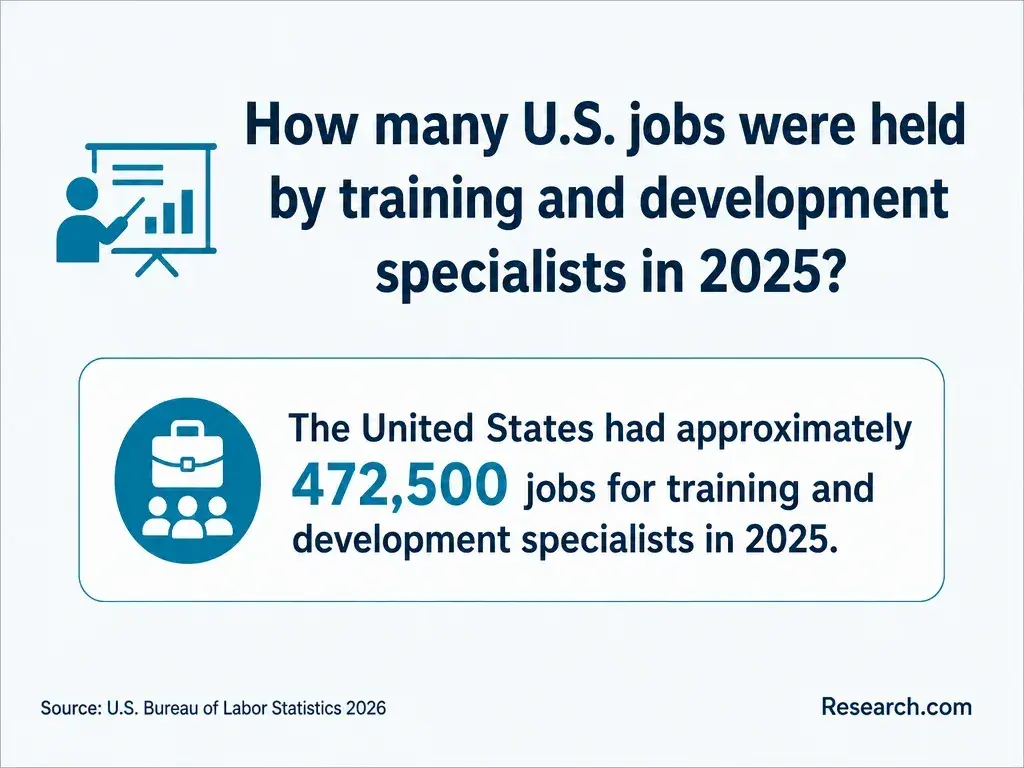
The U.S. Bureau of Labor Statistics reports a May 2025 median annual salary of $133,000 for training and development managers, with employment projected to grow 6.4% from 2025 to 2035.
That occupation is relevant to organizational learning, but its national median is neither a nonprofit salary benchmark nor an expected Ed.D. graduate outcome. Managerial experience, organization size, location, and available budget affect a specific job offer.
A nonprofit should therefore evaluate sponsorship primarily against its mission and workforce plan, not a speculative payback from promotion. The employee can assess personal affordability separately, including what happens if compensation and responsibilities remain unchanged after graduation.
Other Things You Should Know About EdD Leadership Programs
Only if the grant terms and applicable approvals permit that expense. Have the grants and finance teams confirm allowability before naming restricted funds in the proposal.
That depends on capacity. Written eligibility criteria and a consistent approval process can help the organization compare requests fairly, even if it can fund only one at a time.
Ownership and publication rights depend on university rules, employment agreements, and any project or data-use agreement. Clarify them before work begins; academic permission to complete a project is not permission to disclose nonprofit information.
Possibly, but the organization should first confirm its authority to make the payment, the funding source's restrictions, and the tax and contractual treatment. Do not assume an employee education-assistance policy applies to volunteers.
- Employer-offered educational assistance programs can help pay for college | Internal Revenue Service https://www.irs.gov/newsroom/employer-offered-educational-assistance-programs-can-help-pay-for-college
- Types of Financial Aid: Grants, Work-Study, and Loans | studentaid.gov https://studentaid.gov/understand-aid/types
- Online EdD Admission | UD-EDU https://educationonline.udayton.edu/edd/admission/
- Tuition and Financial Aid - UNC-Chapel Hill Online https://online.unc.edu/online-doctoral-programs/online-edd-organizational-learning-and-leadership/admissions/tuition-financial-aid/
- Unlocking Opportunity: How Tax Policies Like Section 127 Can Drive Employer Partnerships - UPCEA https://upcea.edu/unlocking-opportunity-how-tax-policies-like-section-127-can-drive-employer-partnerships/
- and Ask For - Employer Tuition Reimbursement Benefits | Harvard Extension School https://extension.harvard.edu/blog/how-to-use-and-ask-for-employer-tuition-reimbursement-benefits/
- EdD in Educational Leadership - The University of Alabama | UA Online https://online.ua.edu/degrees/edd-in-educational-leadership/