2027 Online Ed.D. in Leadership and Learning in Organizations: Comparing Coursework in Performance Management
Audited and Verified:
Our Editorial and Data Verification Process
Research.com uses government datasets, official education statistics and primary institutional information to support its career and degree guides. Our review process checks factual accuracy, occupational definitions, source dates and the requirements associated with the credentials discussed.
How This Article Was Fact-Checked
Our editorial team verifies salary estimates, employment projections, education requirements and program information against original data providers and official organizations. Salary figures are checked against the relevant occupational definitions and reporting periods. Information about licensure, accreditation and required in-person training is reviewed separately.
Fact-checked and verified on:

Co-Founder and Chief Data Scientist
Two online Ed.D. programs can both promise expertise in organizational performance while teaching very different skills. One may emphasize employee feedback and talent systems; another may focus on learning transfer, organizational diagnosis, or evaluating an improvement initiative.
For learning and development professionals and emerging leaders, that distinction affects whether doctoral coursework will help solve the performance problems they actually face. This guide shows how to compare course descriptions, methods training, and applied projects - and when a narrower qualification may be the better choice.
Key Things You Should Know
- Compare the work, not the course title: Performance management may mean employee appraisal, learning effectiveness, team improvement, or organization-wide measurement.
- Look for an evidence-to-action sequence: The strongest fit pairs diagnosis and sound measurement with implementation, feedback, and evaluation - not dashboards alone.
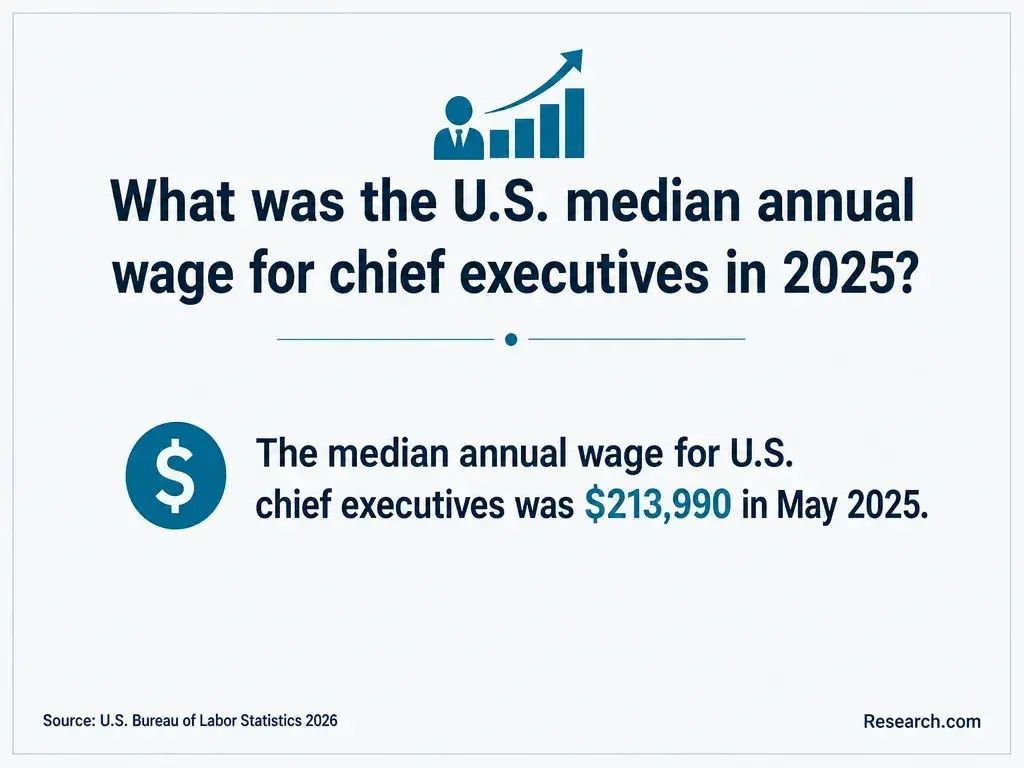
- Keep career outcomes in context: The U.S. Bureau of Labor Statistics reports a $133,000 median annual salary for training and development managers in 2025; that occupational median is not an expected Ed.D. graduate salary.
What Is an Online Ed.D. in Leadership and Learning in Organizations?
An online Doctor of Education (Ed.D.) in leadership and learning is a practice-oriented doctorate concerned with how people learn, how organizations change, and how leaders use evidence to improve results. Programs with similar names can differ substantially: one may center workplace learning, while another emphasizes educational administration or organizational development. The exact degree title, curriculum, and final project depend on the institution.
In this context, performance management means setting goals, understanding barriers to performance, providing support and feedback, and assessing progress. It is broader than an annual employee review. A team missing service targets, for example, might need better training - but unclear procedures, inadequate tools, or conflicting incentives could be the larger problem. Relevant coursework should help a leader distinguish among those explanations before prescribing a solution.
How Does Performance Management Coursework Differ Across Online Ed.D. Programs?
Programs rarely use a common definition of performance management. The comparison below describes curricular emphases to look for, not verified offerings or formal concentrations at any particular school. Read required-course descriptions and recent syllabi to determine which emphasis a program actually provides.
| Coursework emphasis | Typical questions and work | Best fit - and limitation |
| Talent and employee performance | Goal setting, coaching, feedback systems, competency models, and appraisal practices | Useful for talent or HR leaders; may give limited attention to learning evaluation or systems-level causes |
| Workplace learning and performance | Needs assessment, adult learning, performance support, and whether new skills transfer to work | Useful for learning and development professionals; training outcomes alone do not establish organizational impact |
| Organizational improvement | Process diagnosis, culture, incentives, change implementation, and cross-team measures | Useful for leaders tackling complex operational problems; may offer less depth in individual coaching |
| Evaluation and analytics | Choosing indicators, assessing data quality, interpreting results, and communicating uncertainty | Useful when evidence must guide decisions; technical tools are no substitute for authority to implement change |
A course titled "Performance Management" is not automatically more relevant than a sequence in organizational diagnosis, adult learning, and program evaluation. Conversely, a program that mentions performance only in broad marketing language may not provide enough focused practice. Check whether the relevant courses are required or elective, how often electives run, who teaches them, and what students produce.
For an especially revealing comparison, ask each program for an anonymized assignment prompt. A useful prompt might require students to separate a performance symptom from its possible causes, justify measures, propose an intervention, and explain how they would evaluate it. A prompt limited to designing an appraisal form develops a narrower skill set.
What Do Students Learn in an Online Ed.D. in Leadership and Learning?
Beyond its performance-focused courses, a leadership and learning Ed.D. may combine adult learning, organizational change, leadership theory, and applied research. For this article's decision, the important question is whether students can connect those subjects: diagnose a work problem, select an appropriate response, implement it with stakeholders, and assess what changed.
Research preparation matters because performance measures can mislead. Course completion or favorable training surveys may show participation or satisfaction, not improved work. Stronger coursework addresses baseline evidence, measurement quality, alternative explanations, and the limits of conclusions drawn from small workplace evaluations. It should also cover appropriate permission and privacy protections when employee or learner information is involved.
Check the final doctoral requirement separately from ordinary course assignments. Some programs use a dissertation in practice; others require a differently structured dissertation or capstone. Readers considering applied-project routes through an education doctorate should verify what their chosen program actually requires and whether a workplace performance project is eligible. An employer's willingness to host a project does not replace faculty approval or authorization to use organizational data.
Online delivery can make doctoral study possible without relocating, but it does not make a cohort self-paced. Live classes, group meetings, fixed deadlines, and campus convenings may still apply. Campus-based study may offer more routine in-person contact; online study may be preferable if it lets a working leader remain close to the organization where they hope to investigate a performance problem. Neither format is inherently better at teaching evaluation or change implementation.
Compare the actual timetable and support for applied work, not the delivery label. Ask when live sessions occur, whether attendance is mandatory, how teams coordinate, whether campus visits are required, and how faculty supervise projects when students work at different sites. Travel and missed work can also change the financial comparison; education doctorate tuition and affordability are best considered alongside fees and any required convening costs.
Requirements vary by institution. Programs may request graduate transcripts, evidence of professional experience, recommendations, a statement of purpose, and an interview. Some require a completed master's degree; others define acceptable graduate preparation differently. A background outside education does not automatically disqualify an applicant whose work demonstrates leadership, training, or organizational problem-solving.
For a performance-management focus, applicants can make a stronger case by describing a real problem they have responsibility to address, what evidence is available, and what they still need to learn. They should not claim access to confidential data or promise that a proposed project has already been approved. Applicants with an Education Specialist degree can use education specialist to doctoral degree planning as a starting point, but must ask the institution separately whether prior credits meet admission criteria and whether any will apply to Ed.D. requirements.
Completion time and total cost depend on required credits, course sequence, enrollment pace, tuition policy, fees, and the final project. An advertised completion schedule may assume continuous enrollment and timely project approvals. Ask for the degree plan for your intended entry term, including when performance-related electives are available and what happens if an employer change interrupts a workplace project.
Request a written estimate that separates tuition from mandatory fees, books or software, travel, and project-related expenses. Employer reimbursement deserves its own check: eligibility, annual limits, grade conditions, and repayment obligations can materially change what you pay. Use planning tuition for an online Ed.D. to compare affordability, then obtain an institution-specific estimate before making a commitment.
Institutional accreditation is an essential verification point, but it does not tell you whether performance management is taught in depth. Confirm the institution's accreditation and the exact degree it awards. Then assess curricular quality through required courses, faculty expertise, research-methods preparation, student support, and examples of permissible final-project formats.
Do not interpret accreditation as approval for a particular professional certification or state-regulated education role. If an institution advertises specialized recognition or licensure preparation, check its stated scope and the relevant authority's requirements. For the performance-management decision, accreditation is a necessary screening question; evidence of substantive coursework is the deciding one.
The most direct fit is often an experienced learning, talent, or organizational leader who wants to take on more complex diagnosis, evaluation, and change responsibilities. Training and development managers oversee learning initiatives and staff; organizational consultants may analyze processes and recommend improvements. A professional already doing that work can use an applied doctoral project to demonstrate how they frame a problem, work with stakeholders, and interpret evidence.
The degree alone does not qualify someone for a director role or substitute for experience managing people, budgets, and implementation. Someone seeking mainly to improve performance reviews or learn an analytics tool may get a more direct return from targeted training, supervised projects, or an employer leadership program. An Ed.D. becomes more compelling when the intended work requires sustained inquiry across learning, leadership, and organizational systems.
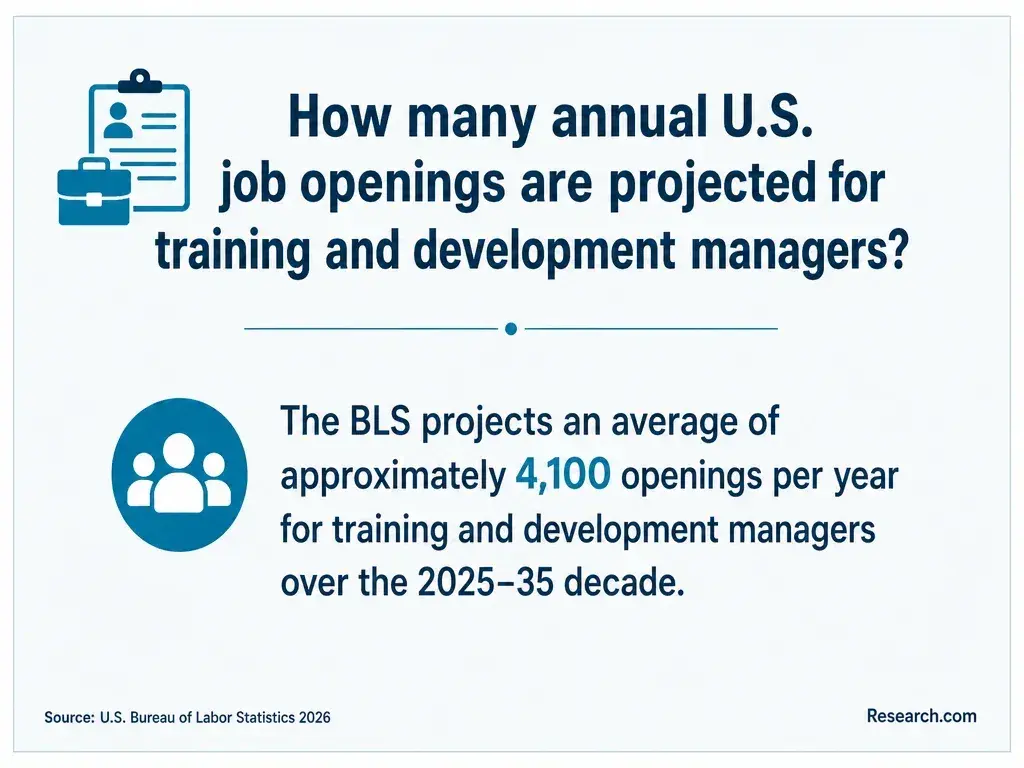
There is no single reliable salary for graduates of organizational leadership Ed.D. programs. Pay depends on occupation, sector, location, responsibility, and prior experience. The U.S. Bureau of Labor Statistics reports a 2025 median annual salary of $133,000 for training and development managers. That figure describes workers in the occupation, not people with this doctorate, and it cannot predict a graduate's raise or promotion.
For a financial decision, compare the roles you can realistically pursue with and without the degree, then weigh the full study cost against employer support and the value of the skills you expect to use. Professionals exploring organizational leadership doctoral study on a budget should be particularly cautious about using a management salary as a return-on-investment assumption if they do not yet have management experience.
What Certifications or Licenses Do Ed.D. Graduates Need?
Performance management and organizational learning roles generally do not have a single license conferred by an Ed.D. Employers may value role-specific certifications or demonstrated expertise, but a certification is separate from the doctorate. If the target is a regulated school leadership position, a broadly focused leadership and learning Ed.D. should not be assumed to meet principal, superintendent, or teacher licensure requirements.
Start with the target job description. Identify any required license or preferred certification, then confirm eligibility with the relevant licensing body or certifying organization and ask the university what, if anything, its program is designed to fulfill. That check prevents a useful organizational leadership degree from being mistaken for a credential it does not award.
Other Things You Should Know About EdD Leadership
Not necessarily. Doctoral coursework may emphasize diagnosis, measurement, and leadership decisions rather than platform administration. Request a syllabus if proficiency with a specific system is your goal.
Potentially. A volunteer setting can raise meaningful questions about goals, support, and feedback, but the program must approve the project scope and the organization must authorize any proposed data access.
There is no universal model requirement. Students should use a framework appropriate to the problem, explain its limitations, and follow their program's assignment and final-project rules.
Only if university rules and the organization permit it. Remove or obtain permission for confidential data, identifiable details, and proprietary materials; an appropriately redacted summary may be safer.
- Diversity, Equity, and Inclusion Efforts at a Departmental Level | nih.gov https://pmc.ncbi.nlm.nih.gov/articles/PMC8444514/
- General Schedule Qualification Policies | U.S. Office of Personnel Management https://www.opm.gov/policy-data-oversight/classification-qualifications/general-schedule-qualification-policies/
- Performance Management Overview (For Managers) | utexas.edu https://hr.utexas.edu/manager/pm/overview
- Effective Performance Management - Penn Human Resources https://www.hr.upenn.edu/for-managers/performance-management/effective-performance-management
- 2026 UNC Online EdD in Organizational Learning & Leadership https://online.unc.edu/online-doctoral-programs/online-edd-organizational-learning-and-leadership/
- Managing and Evaluating Performance | umn.edu https://hr.umn.edu/supervising/modules/Managing-and-Evaluating-Performance
- Online Ed.D. in Leadership and Learning in Organizations | VU-EDU https://peabodyonline.vanderbilt.edu/edd-in-organizational-learning/
- Doctor of Education in Organizational Leadership, Culture and Change | Thomas Edison State University https://www.tesu.edu/degrees-programs/doctoral/edd.php