2027 Online Ed.D. in Leadership and Learning in Organizations vs. a Master's in Industrial-Organizational Psychology: Which Fits Your Goals?
Audited and Verified:
Our Editorial and Data Verification Process
Research.com uses government datasets, official education statistics and primary institutional information to support its career and degree guides. Our review process checks factual accuracy, occupational definitions, source dates and the requirements associated with the credentials discussed.
How This Article Was Fact-Checked
Our editorial team verifies salary estimates, employment projections, education requirements and program information against original data providers and official organizations. Salary figures are checked against the relevant occupational definitions and reporting periods. Information about licensure, accreditation and required in-person training is reviewed separately.
Fact-checked and verified on:

Co-Founder and Chief Data Scientist
An online Ed.D. in leadership and learning and a master's in industrial-organizational psychology can both lead to work on organizational improvement, but they prepare you to approach it differently. One emphasizes leading learning and change; the other emphasizes applying psychological research to workplace questions.
If you are weighing a doctoral investment against a more focused master's degree, the distinction affects your coursework, schedule, costs, and next career move. This comparison will help you match each path to the work you want to do - and identify when neither degree is necessary.
Key Things You Should Know
- Choose an Ed.D. if you already lead people or programs and need doctoral-level preparation to guide organizational learning, change, and applied inquiry.
- Choose an I-O psychology master's if your goal is to assess workplace behavior, develop evidence-based talent practices, or strengthen your quantitative research skills.
- Neither degree guarantees advancement: the median annual pay for training and development managers was $133,000 in May 2025, but that occupation generally depends on substantial relevant experience.
What Is an Online Ed.D. in Leadership and Learning in Organizations?
An online Doctor of Education (Ed.D.) in leadership and learning in organizations is a practice-oriented doctorate. Programs with this focus examine how adults learn at work, how leaders implement change, and how organizations use evidence to improve programs or performance. The exact degree title and curriculum vary by institution.
"Online" describes where much of the instruction occurs, not necessarily when it occurs. A program may require live classes, cohort meetings, group projects, campus visits, and an approved capstone or dissertation in practice. Its applied project may involve evaluating a learning initiative or investigating an organizational problem, subject to faculty requirements and appropriate organizational permissions.
This route is most useful when you can connect doctoral study to responsibilities you already hold or are realistically positioned to assume. If your interest is narrower - such as instructional design or talent analytics - compare actual course requirements before committing. A guide to choosing an Ed.D. concentration can help you distinguish a formally offered concentration from a few related electives.
How Does an Ed.D. Compare With a Master's in Industrial-Organizational Psychology?
Industrial-organizational (I-O) psychology applies psychological theory and research methods to work. Its practitioners may study employee selection, assessment, motivation, teams, leadership, and workplace behavior. The overlap with an Ed.D. is real, but shared topics do not mean identical preparation.
The comparison below centers on the work each degree is designed to support. Individual programs can differ substantially, so use it to frame questions for schools rather than to assume a particular course or project is required.
| Decision factor | Leadership and learning Ed.D. | I-O psychology master's |
| Primary emphasis | Leading learning, improvement, and organizational change | Studying workplace behavior and designing evidence-based people practices |
| Typical methods emphasis | Applied inquiry and evaluation tied to a practice problem | Psychological measurement, research design, and statistical analysis |
| Likely culminating work | Program-specific capstone, dissertation in practice, or other doctoral project | Program-specific thesis, internship, practicum, or applied project |
| Best initial fit | Established leaders seeking broader responsibility for learning or change | People seeking deeper technical preparation for talent research or assessment |
An Ed.D. can be the stronger fit for a training manager who needs to lead a cross-organization development strategy and evaluate its implementation. An I-O master's may be more direct for someone aiming to design selection assessments or analyze employee survey results. If neither target requires a new degree, a supervised project, methods course, or employer development program may offer a better first step.
Which Careers Can Each Degree Prepare You For?
An Ed.D. may support progression into learning and development leadership, organizational development, workforce development, or education-adjacent administration. An I-O master's can support work in talent assessment, people analytics, employee research, organizational consulting, or related human resources functions. Both can be relevant to consulting, but clients and employers will also look for demonstrated results and sector knowledge.
For a career changer, the distance between your current work and your target role matters more than the degree's title. A training specialist who has led program evaluations may be positioned to pursue learning management; a leader moving into assessment work may first need stronger statistics, measurement, and employment-practice knowledge. Neither credential alone establishes readiness to direct a department or independently advise clients.
Institutional leadership is another distinct goal. If you want to manage learning or change in a college, examine organizational leadership Ed.D. study for institutional leadership goals alongside the institution's actual hiring requirements; a general organizational doctorate is not a substitute for experience in higher education operations.
Ed.D. coursework commonly connects adult learning, leadership, organizational culture, change implementation, and applied research or program evaluation. The practical question is whether the curriculum teaches you to diagnose a problem, work with stakeholders, implement a response, and judge its limitations - not simply whether it includes a course called "leadership."
I-O psychology master's coursework commonly emphasizes research methods, statistics, psychological measurement, personnel selection, performance, motivation, and organizational behavior. That foundation can be especially valuable when your target work involves interpreting assessment evidence or deciding whether a people practice measures what it claims to measure.
Compare syllabi and required sequences, not just catalog descriptions. If you want to evaluate a leadership-development program, ask how each degree teaches measurement and implementation. If you want to build selection assessments, check for substantive psychometrics and relevant applied work; an Ed.D. course in analytics alone may not provide equivalent preparation.
Online study can reduce relocation or commuting, but it does not necessarily reduce scheduled commitments. A working professional should confirm live-session times, attendance rules, group-work expectations, required campus convenings, and whether the culminating project depends on access to an organization. An online cohort can be a poor fit if its meetings routinely conflict with your work hours.
Campus-based programs may provide more routine in-person contact with faculty, research teams, and local employers, while requiring a feasible commute or move. Either format can offer strong mentorship - or limited access to it. Ask to see a sample term schedule and how students obtain faculty guidance, internships where applicable, and project support. For an Ed.D., also ask what happens to the applied project if you change employers.
Requirements vary by institution. An Ed.D. may expect a completed master's degree, relevant professional experience, recommendations, a statement of purpose, and evidence that you can investigate a practice problem. An I-O psychology master's may admit applicants from several undergraduate fields while expecting preparation - or preparatory coursework - in psychology, statistics, or research methods. Tests, interviews, minimum grades, and experience rules must be checked with each program.
Prior leadership work can strengthen an Ed.D. application even if your earlier degree is outside education. For an I-O application, explain how your experience connects to workplace research or talent decisions and address any methods gaps. If you have unfinished doctoral coursework, review Ed.D. pathways for students with prior doctoral study, then request a written school-specific evaluation: credits considered for admission are not necessarily credits applied toward the new degree.
A master's is generally the shorter academic route; a part-time professional doctorate usually involves a longer commitment, particularly when a doctoral project follows coursework. Neither label establishes your completion date. Credit requirements, enrollment pace, course availability, project approval, and leave policies determine the actual timeline.
Compare the total amount you would have to pay, not just advertised tuition. Request a written estimate covering required credits, mandatory fees, technology charges, travel for any convenings, and likely increases during your expected enrollment. Account separately for time away from paid work and any employer reimbursement conditions. Online Doctor of Education tuition planning offers a starting point, but the school's current charges and your own aid offer should control your budget.
The financial test is role-specific: identify a job or responsibility you could reasonably pursue, determine whether employers value the proposed degree for it, and compare that benefit with the full cost and time commitment. Do not assume doctoral tuition will be offset by a promotion.
Organizational learning and many I-O-related business roles do not have a universal license attached to either degree. An Ed.D. in organizational leadership does not, by itself, qualify you for a teacher, principal, or superintendent license. Likewise, an I-O master's should not be treated as automatic permission to use a protected psychologist title or provide regulated psychological services.
Check the specific activities and titles you plan to use with the relevant state licensing authority and ask the program for its licensure disclosures. Optional professional certifications may matter to particular employers, but they are separate credentials with their own requirements.
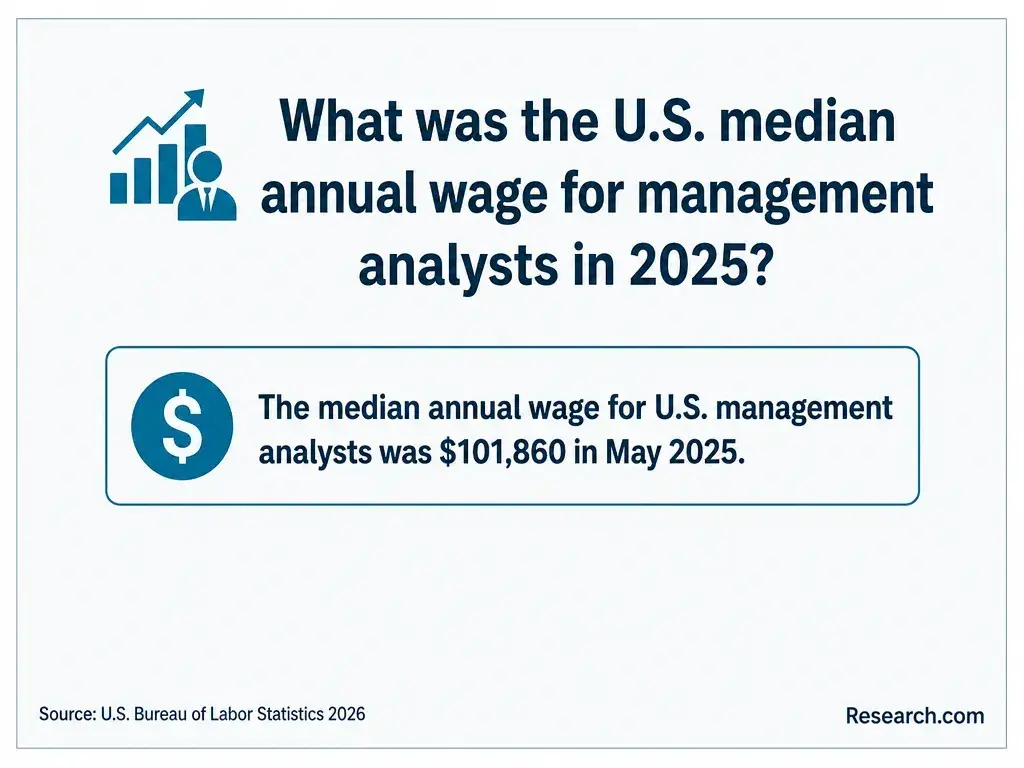
Neither degree has a single salary: graduates pursue different occupations at different experience levels. These US Bureau of Labor Statistics occupation figures provide context for roles related to learning, management, and consulting - not estimates of what graduates of either program will earn.
| Occupation | Median annual pay, May 2025 | Projected employment change, 2025-2035 |
| Training and development managers | $133,000 | +6.4% |
| Training and development specialists | $69,280 | +10.8% |
| Management analysts | $101,860 | +10.1% |
The manager figure reflects an occupation that generally requires substantial experience; it is not an entry salary for an Ed.D. graduate. The specialist and analyst outlooks show potential demand in adjacent work, not degree-specific job placement. Compare postings for your target role and location to see which skills, credentials, and experience employers actually request.
How Can You Choose an Accredited, Reputable Program?
Begin by verifying the institution's accreditation through its recognized accreditor and confirming the exact degree awarded. Then compare the requirements that affect your goal: methods depth for I-O work, leadership and learning practice for an Ed.D., faculty expertise, applied opportunities, format, total cost, and published student outcomes. Institution-level accreditation alone does not establish specialized licensure eligibility.
Before applying, ask each school for its current curriculum, a sample schedule, project or thesis requirements, total-cost estimate, and any available completion or career-outcome data with clear definitions. For an Ed.D., ask who approves project sites and what support is available if organizational access falls through. When comparing affordable doctoral education in organizational leadership, treat a lower advertised price as one factor - not evidence that the program offers the preparation or support you need.
Choose the Ed.D. when your next realistic step calls for leading organizational learning and change at a broader level. Choose the I-O master's when you need focused workplace-research and assessment preparation. If your next move mainly requires experience, test it through a relevant project or mentorship before paying for either degree.
Other Things You Should Know About EdD Leadership
Yes, if you meet the Ed.D. program's requirements. The combination can pair workplace measurement with leadership practice, but ask whether the second degree would add capabilities your target role actually needs.
No. A practice-oriented Ed.D. and a research-focused I-O psychology PhD have different academic aims. If you want to conduct independent psychological research or pursue roles specifying a psychology doctorate, compare the PhD's training and hiring expectations directly.
It depends on the service. An I-O master's may align with assessment and people-research projects; an Ed.D. may align with learning strategy and change implementation. In either case, clients will want relevant experience, sound methods, and a clear record of work.
Seek a supervised workplace project, such as evaluating a training program or analyzing an appropriately authorized employee survey. The tasks you find most engaging - and the skills you discover you lack - can clarify whether either degree is worth pursuing.
- Accreditation in the U.S. | ed.gov http://www.ed.gov/laws-and-policy/higher-education-laws-and-policy/college-accreditation/accreditation-in-the-us
- Types of Financial Aid: Grants, Work-Study, and Loans | studentaid.gov https://studentaid.gov/understand-aid/types
- Program Eligibility, Written Arrangements, and Distance Education | 2024-2025 Federal Student Aid Handbook https://fsapartners.ed.gov/knowledge-center/fsa-handbook/2024-2025/vol2/ch2-program-eligibility-written-arrangements-and-distance-education
- Graduate Admission Requirements | University of Cincinnati https://www.admissions.uc.edu/apply/graduate/requirements.html
- Industrial and Organizational Psychology | apa.org https://www.apa.org/education-career/guide/subfields/organizational
- What's the Difference Between Asynchronous and Synchronous Learning? | Ohio State Online https://online.osu.edu/content-hub/blogs/whats-the-difference-between-asynchronous-and-synchronous-learning/
- The Impact of Organizational Development (OD) Methodology | Regent University https://www.regent.edu/journal/journal-of-practical-consulting/impact-of-organizational-development/
- Leadership and Talent Development | Graduate Programs | The University of Southern Mississippi https://www.usm.edu/graduate-programs/leadership-talent-development.php
- Organizational Psychology vs. Industrial-Organizational Psychology | William James College https://www.williamjames.edu/news/organizational-psychology-vs-io-psychology.html