2027 Vanderbilt Ed.D. in Leadership and Learning in Organizations: How to Compare the Program with an Executive MBA
Audited and Verified:
Our Editorial and Data Verification Process
Research.com uses government datasets, official education statistics and primary institutional information to support its career and degree guides. Our review process checks factual accuracy, occupational definitions, source dates and the requirements associated with the credentials discussed.
How This Article Was Fact-Checked
Our editorial team verifies salary estimates, employment projections, education requirements and program information against original data providers and official organizations. Salary figures are checked against the relevant occupational definitions and reporting periods. Information about licensure, accreditation and required in-person training is reviewed separately.
Fact-checked and verified on:

Co-Founder and Chief Data Scientist
Vanderbilt's Ed.D. in Leadership and Learning in Organizations and an Executive MBA can both appeal to experienced professionals, but they develop different kinds of leadership capability. The choice matters if you must justify graduate study to an employer, fit it around a demanding job, or use it to move into a different role.
This comparison focuses on what each pathway teaches, how its work may support your goals, and which program details to confirm before committing.
Key Things You Should Know
- Choose Vanderbilt's practice-oriented Ed.D. when your main goal is to improve organizational learning, leadership development, or change through applied inquiry; choose an Executive MBA when you primarily need broader business and financial management preparation.
- Compare each program's actual schedule, project requirements, and full cost - not just its online or executive label. Request written, entry-term-specific details before enrolling.
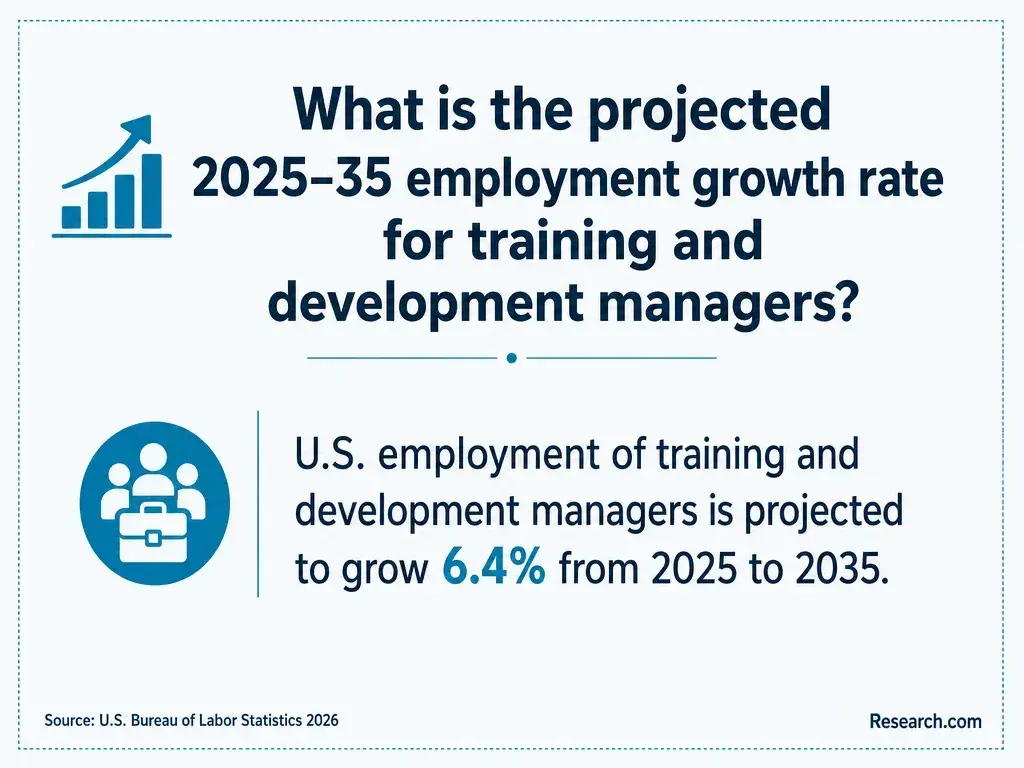
- Neither degree guarantees advancement: the U.S. median pay for training and development managers was $133,000 in May 2025, but that occupational figure is not a Vanderbilt graduate salary.
What is Vanderbilt's Ed.D. in Leadership and Learning in Organizations?
Vanderbilt University's Peabody College offers the online Doctor of Education in Leadership and Learning in Organizations, commonly called LLO. It is a practice-oriented doctorate for professionals interested in how organizations develop people, use evidence, and implement change. Its organizational focus can be relevant to business, healthcare, government, nonprofits, and education; it should not be mistaken for a school-administrator licensure program.
The distinction from an Executive MBA is the central one: an Ed.D. asks how leaders can diagnose a learning or organizational problem, investigate it responsibly, and improve practice. An Executive MBA generally emphasizes decisions across business functions. Both may discuss leadership, but shared vocabulary does not mean equivalent training.
How does Vanderbilt's Ed.D. compare with an Executive MBA?
The comparison below describes Vanderbilt's LLO focus alongside the typical purpose of an Executive MBA. Executive MBA curricula and projects vary by school, so use a specific school's published requirements for a final comparison.
| Decision factor | Vanderbilt LLO Ed.D. | Executive MBA |
| Primary objective | Improve leadership, learning, and organizational practice using applied inquiry. | Strengthen management decisions across business functions. |
| Likely academic emphasis | Organizational learning, change, leadership, and methods for investigating practice. | Finance, accounting, strategy, operations, and other management disciplines. |
| Applied work | Doctoral-level investigation and an approved culminating project, subject to program rules. | School-specific team, consulting, or strategy projects; usually not a doctoral research requirement. |
| Most relevant gap | Leading and evaluating how people and organizations learn or change. | Managing budgets, markets, operations, and enterprise strategy. |
| Credential | Doctor of Education. | Master of Business Administration. |
An experienced learning-and-development leader seeking stronger evaluation and change skills may get a closer fit from LLO. A leader moving into a general manager role with substantial financial accountability may benefit more directly from an Executive MBA. If neither credential fills the specific gap, an employer-sponsored project or targeted course may be the better investment.
Is Vanderbilt's online Ed.D. accredited and reputable?
Vanderbilt University is institutionally accredited by the Southern Association of Colleges and Schools Commission on Colleges. Online delivery does not make its Ed.D. a separate, unaccredited institution. Institutional accreditation, however, does not establish that LLO prepares students for principal or superintendent licensure, grants a professional certification, or meets an employer's particular promotion rule.
For this decision, reputation is most useful when tied to evidence: examine the faculty and courses relevant to your goal, the support available for applied work, and any program-specific outcomes Vanderbilt publishes. Ask how career outcomes are defined and measured rather than treating the university's name as proof of an individual return on investment.
LLO centers on leadership and learning in organizations, connecting organizational change and adult development with the use of evidence in professional practice. That combination is more relevant to diagnosing why a workforce initiative is not working than to mastering the accounting or corporate finance commonly taught in an Executive MBA.
Look beyond course titles when comparing curricula. Ask Vanderbilt for the curriculum and culminating-project handbook applicable to your entry term: which methods courses are required, what the approved project must produce, whether students work in teams, and what access to an organization is needed. A workplace assignment is not automatically an approved doctoral project, and exposure to research methods alone does not make someone a specialist in every evaluation technique.
Applicants should use Vanderbilt's entry-term admissions page for authoritative degree, transcript, experience, recommendation, statement, and testing requirements. Those conditions can change; do not assume that a particular job title, an education major, or an Executive MBA automatically establishes eligibility or competitiveness.
A persuasive application should connect actual leadership responsibilities to a specific organizational learning or change problem. Explain decisions you have made, evidence you have used, and why doctoral-level inquiry would improve your practice. If you already hold an education specialist degree, reviewing Ed.S.-to-Ed.D. transition requirements can help you frame questions, but only Vanderbilt can determine whether prior study meets its admissions rules or applies toward its degree.
Do not compare a quoted Ed.D. tuition figure with an Executive MBA's advertised program price until both schools specify what is included. Vanderbilt's applicable credit requirements, tuition rate, fees, and expected sequence - and a particular MBA's program charges - should be confirmed for the same intended entry period. This article does not assign a total cost or completion time without those verified inputs.
Request an individualized estimate that accounts for required coursework, fees, any campus travel, lodging, and possible extra enrollment if a project takes longer than planned. Compare that with the Executive MBA's travel and required meeting costs, then subtract only employer assistance confirmed in writing. If price is decisive, affordable distance learning Ed.D. degrees provide a useful comparison set; a lower advertised tuition is not necessarily a lower total cost.
Online study reduces routine commuting, not necessarily the demands of doctoral study. Before choosing LLO over an Executive MBA, obtain the required live-session schedule, attendance policy, group-work expectations, campus-convening requirements, and typical project milestones for your cohort. Obtain the same information from the MBA: an executive schedule may concentrate obligations into weekends or travel blocks rather than eliminate them.
Test both calendars against work deadlines and responsibilities at home, including the time needed to coordinate a collaborative project. If you are returning after unfinished doctoral study, education doctorate completion after a doctoral study break raises a separate question: ask Vanderbilt whether previous work affects admission or degree progress rather than assuming that online enrollment shortens the path.
LLO may support experienced professionals pursuing greater responsibility in learning and development, organizational development, leadership development, workforce improvement, or consulting. Those roles differ: a training manager oversees programs and staff; an organizational consultant diagnoses and advises on operating problems; a higher-education administrator works within institutional governance and budgets. The Ed.D. can deepen relevant practice, but employers will still assess leadership results, sector knowledge, and functional experience.
For a college administrator, the choice may be between developing organization-wide learning and change capability and gaining broader business-management preparation. Organizational leadership doctoral options for college administrators can widen that comparison. Neither LLO nor an Executive MBA should be treated as automatic qualification for a regulated education role or a senior appointment.
There is no single Ed.D. graduate salary. U.S. Bureau of Labor Statistics figures describe occupations across many employers and education backgrounds, not returns attributable to Vanderbilt. For example, the May 2025 median annual pay for training and development managers was $133,000, with employment projected to grow 6.4% from 2025 to 2035. That is relevant if you already have the experience to compete for management roles; it is not a likely starting salary for everyone who earns LLO.
Judge the degree against a target job, not the highest-paying adjacent occupation. Review actual openings for required management experience, financial responsibility, evaluation skills, and credentials. An Executive MBA may address a business-function gap more directly, while an Ed.D. may better support roles that require credible leadership of learning and organizational change.
How should you choose between Vanderbilt's Ed.D. and an Executive MBA?
Start with the responsibility you want to hold next, then identify the capability you cannot yet demonstrate. For a learning leader who must evaluate initiatives and guide complex change, compare Vanderbilt's methods and project expectations with that work. For an operations leader seeking enterprise-wide financial and strategic responsibility, compare Executive MBA courses and employer recruiting access with the same goal.
Before applying, take these steps so the comparison reflects your situation rather than either degree's reputation alone:
- Collect several target job descriptions and mark the experience, business skills, research skills, and credentials each requires.
- Request the entry-term curriculum, full cost estimate, attendance rules, and culminating-project requirements from Vanderbilt and each Executive MBA program.
- Ask your employer which qualification it values, what work or project access it can provide, and precisely what education costs it will reimburse.
- Choose the lower-cost alternative if a specific course, supervised initiative, or leadership assignment can close the gap without another degree.
Public-sector and higher-education employees should also check whether reimbursement limits or pay structures change the calculation. Comparing funding for higher education leadership doctorates can help organize those questions, but employer sponsorship and institutional aid must be confirmed individually.
Other Things You Should Know About EdD Leadership
Possibly. Confirm Vanderbilt's project rules and obtain the organization's permission before assuming your workplace, data, or job duties can be used.
Tell your program advisor promptly. A change may affect access or project scope; only the program can approve a revised plan.
Not automatically. Check organizational agreements, confidentiality obligations, participant permissions where applicable, and Vanderbilt's academic and research-review requirements before sharing results.
Generally, no. A certifying body determines its own eligibility and renewal rules. Check the specific credential before treating degree coursework as a substitute.
- Cost of Attendance (Budget) | 2026-2027 Federal Student Aid Handbook https://fsapartners.ed.gov/knowledge-center/fsa-handbook/2026-2027/vol3/ch2-cost-attendance-budget
- Types of Financial Aid: Grants, Work-Study, and Loans | studentaid.gov https://studentaid.gov/understand-aid/types
- Plan and Pay for Higher Education - State Controller's Office https://www.sco.ca.gov/eo_higher_education.html
- EMBA Admissions | Tuition & Financial Aid | Owen Graduate School of Management https://business.vanderbilt.edu/emba/admissions/tuition-financing/
- Graduate Outcomes | University of Denver https://www.du.edu/academics/graduate-outcomes
- Leadership and Learning in Organizations Online Ed.D. | Peabody College of Education and Human Development https://peabody.vanderbilt.edu/academics/edd-programs/online-leadership-learning-organizations/
- Ed.D. Admissions - Peabody | Vanderbilt University Online https://peabodyonline.vanderbilt.edu/edd-in-organizational-learning/admissions/
- Executive MBA vs Master's Degree: What's the Difference? | Wharton Executive MBA https://executivemba.wharton.upenn.edu/executive-mba-vs-masters-degree/
- Is an Executive MBA worth it? Breaking down the ROI | Uncover IE https://www.ie.edu/uncover-ie/is-an-executive-mba-worth-it-breaking-down-the-roi/